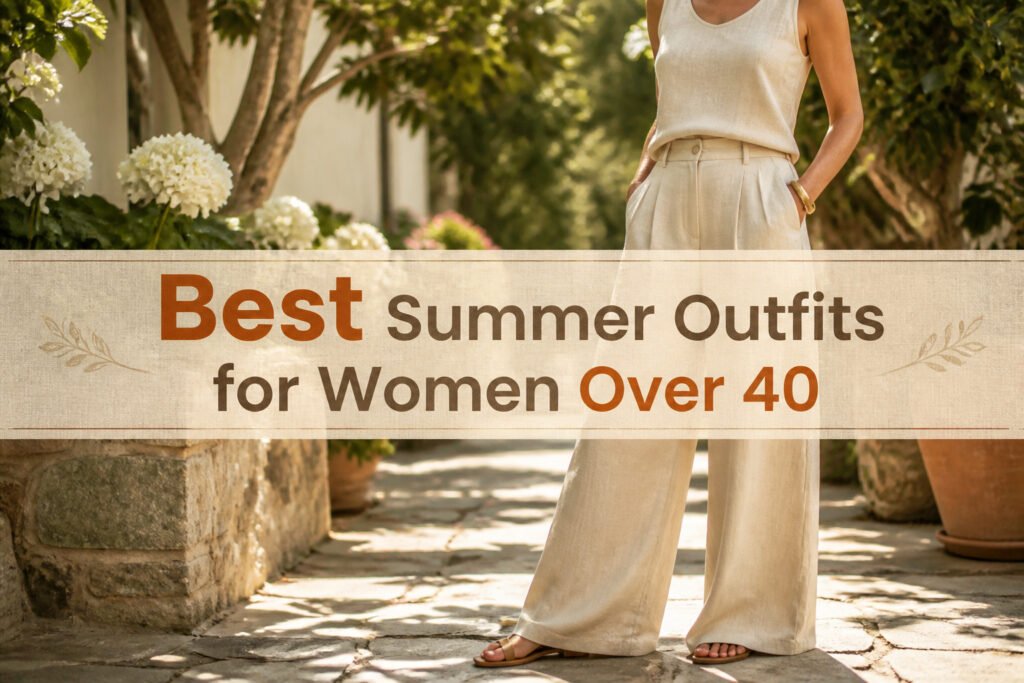
The best summer outfits for women over 40 are built around structure that breathes: waists that define without gripping, fabrics that hold shape through humidity, and proportions that lengthen rather than shorten the frame. What changes everything is fit.
A linen tank tucked into matching wide-leg pants reads as a deliberate jumpsuit alternative, but only if the leg is wide enough to balance the clean top.
Get that wrong and the silhouette turns utilitarian in a way that reads younger but not better.
Denim Shorts and a Breezy Top
The four ways to wear this start with an eyelet or gauze top, which runs cooler against the skin than a t-shirt and reads more intentional for a weekday.
A shorter eyelet cut, around size S, sits untucked with mid-rise shorts in a 6 without looking sloppy. A graphic tee works too, though the top is what keeps the outfit age-appropriate rather than teenage.
For something sharper, a blouse with the same shorts and platform sandals hits a casual-chic register that a linen button-down especially flatters.
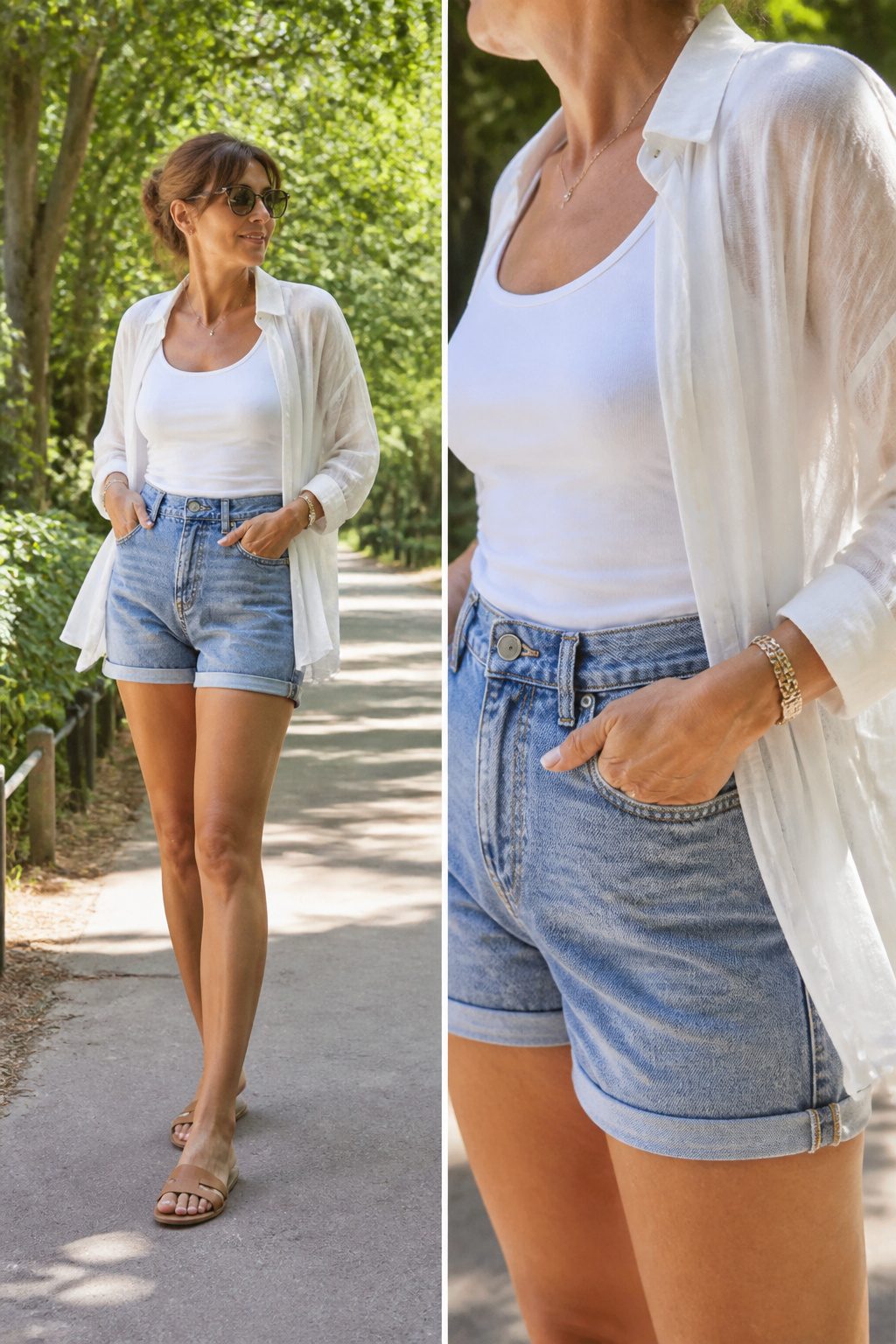
The combination I reach for most is a fitted tank, tucked fully into high-waisted denim shorts, with a white gauze long sleeve top layered over it.
The high waist lengthens the leg line, and at 5’5" or 5’6" this proportion is the one that actually works without shortening the torso.
The gauze layer handles temperature shifts that would make a jacket suffocating; it fits close to the body in a size S so it does not overwhelm the frame.
Size M for the tank gives enough room to tuck cleanly without bunching.
Olive Shorts and a Black Top
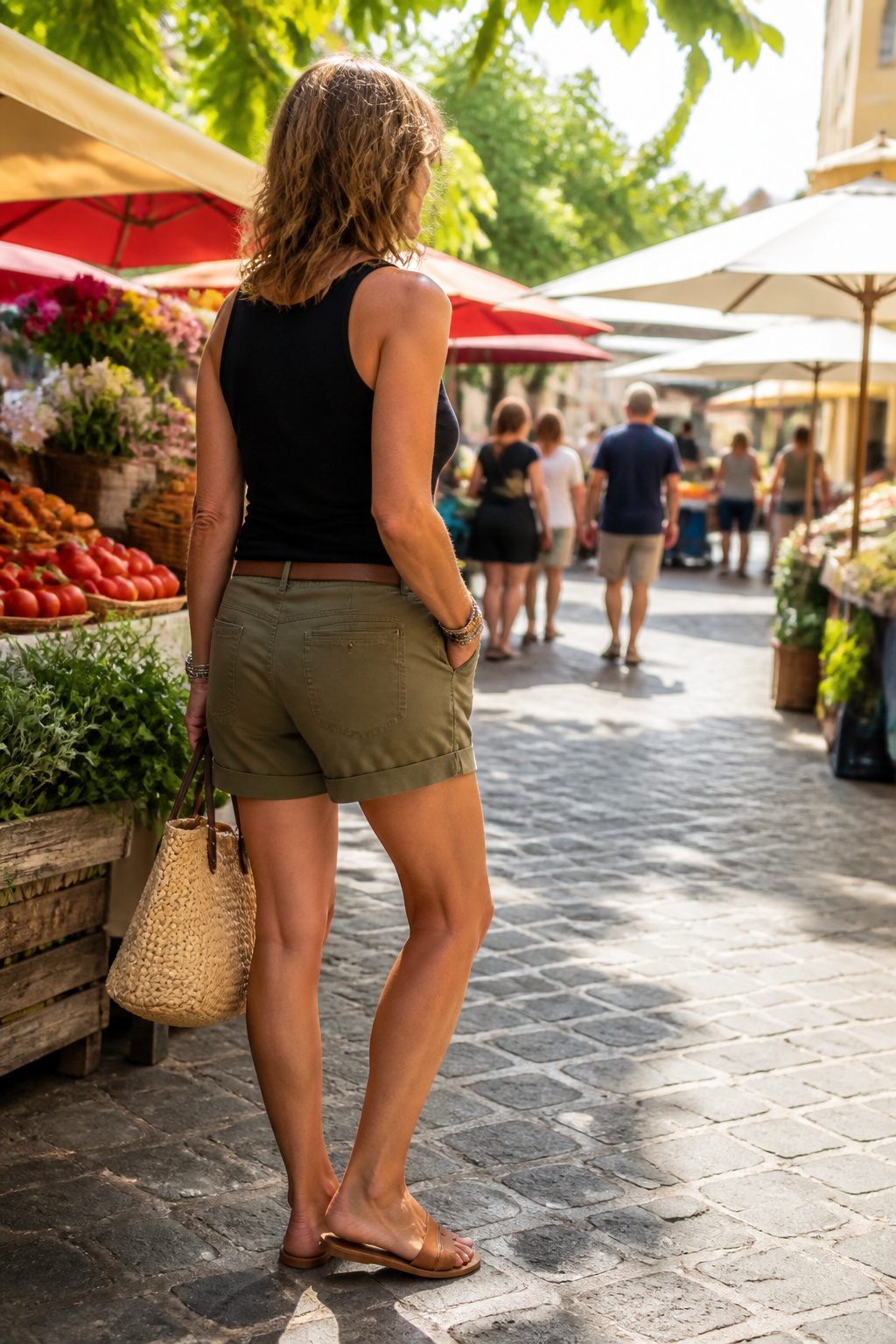
Olive shorts with a black top is the combination that keeps pulling me back when I want to look intentional without looking like I tried.
The green reads as a neutral that still has personality, and against black it sharpens up into something that works for a Saturday market or a casual dinner without changing shoes.
What convinced me, reading through how this pairing gets styled, is that olive functions as a bridge color between true neutrals and actual color. It plays with navy, cream, tan, and even burgundy the way khaki never quite manages.
A woman building a wardrobe from blocks rather than trends gets more mileage from one pair of olive shorts than from three pairs in louder colors she’ll tire of by July.
The black top does the heavy lifting of grounding the outfit. Where white would read sporty and cream would soften the whole thing into weekend-only territory, black keeps the edge.
A fitted tank, a slubbed tee with a decent neckline, or a short-sleeve knit all work; the consistency is in the darkness above and the earth tone below.
Fit matters more than fabric here. Olive shorts cut too long or too full start looking like surplus gear.
Mid-thigh, flat front, with a waist that sits at the natural waistline or just below, reads polished on most women over 40 because it defines the silhouette without clinging. The black top should skim rather than hug.
That contrast of structured bottom and relaxed top is what makes the pairing feel designed rather than thrown on.
Colored Shorts or Pants With a Better-Than-Basic Top
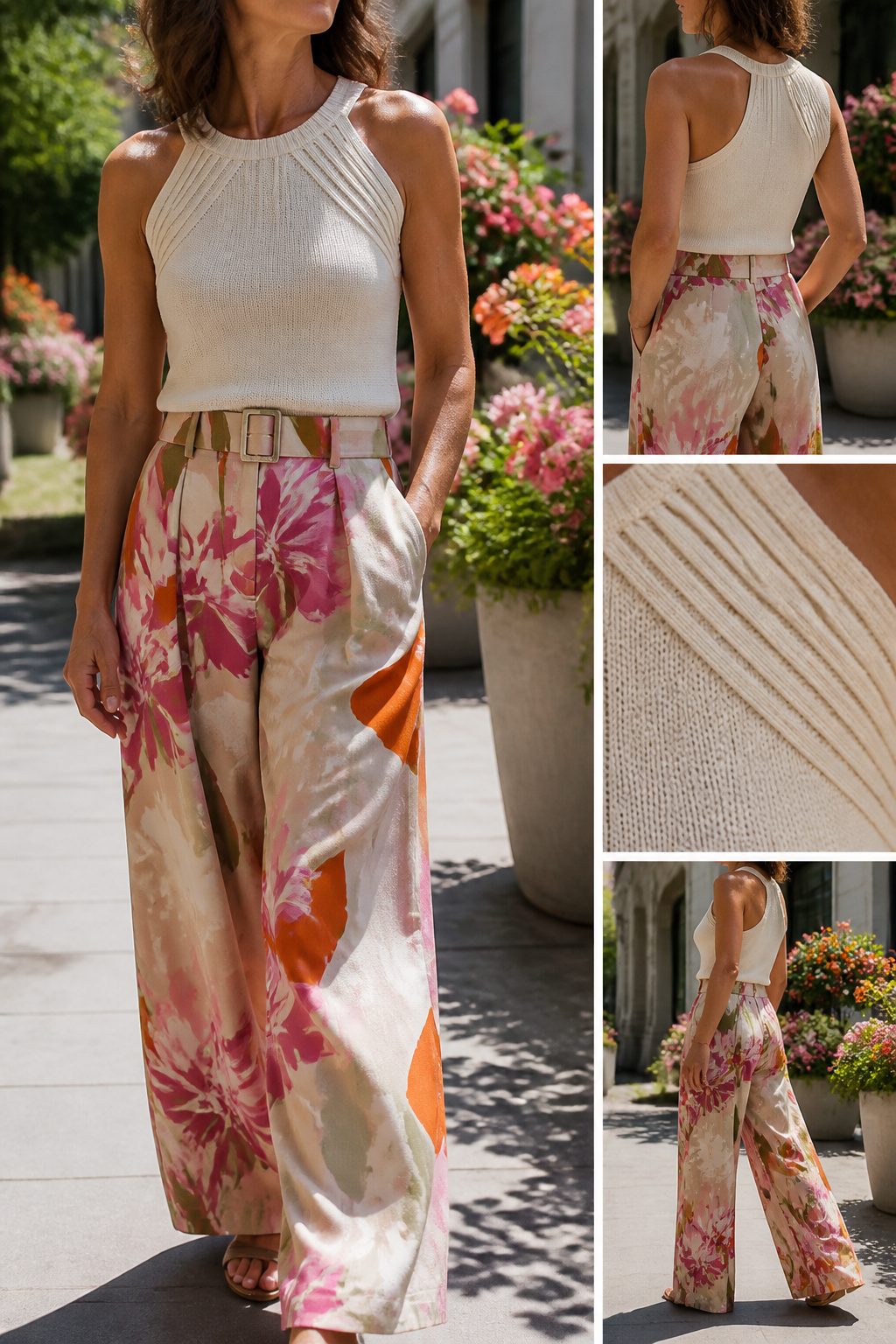
A "better-than-basic" top earns its place by doing something a basic tee refuses to: it holds its own shape so you do not have to rely on jewelry or a jacket to finish the look.
That means a collar that stands up, a sleeve with volume, or fabric thick enough to skim rather than cling. The sources point to three versions that work.
A knit tank with inset panels at the arms and a curved hem, tucked into wide-leg pants, reads as intentional rather than thrown-on. A linen button-down over cut-off shorts and platform sandals gives the same shorts a grown-up frame.
Or take a peasant blouse with some gathering at the neck or sleeve: the volume balances the casualness of denim or cargo joggers without drifting into costume. Cotton reads relaxed; linen steps it up.
The wrong top is the one that disappears.
A Dress With a Defined Waist
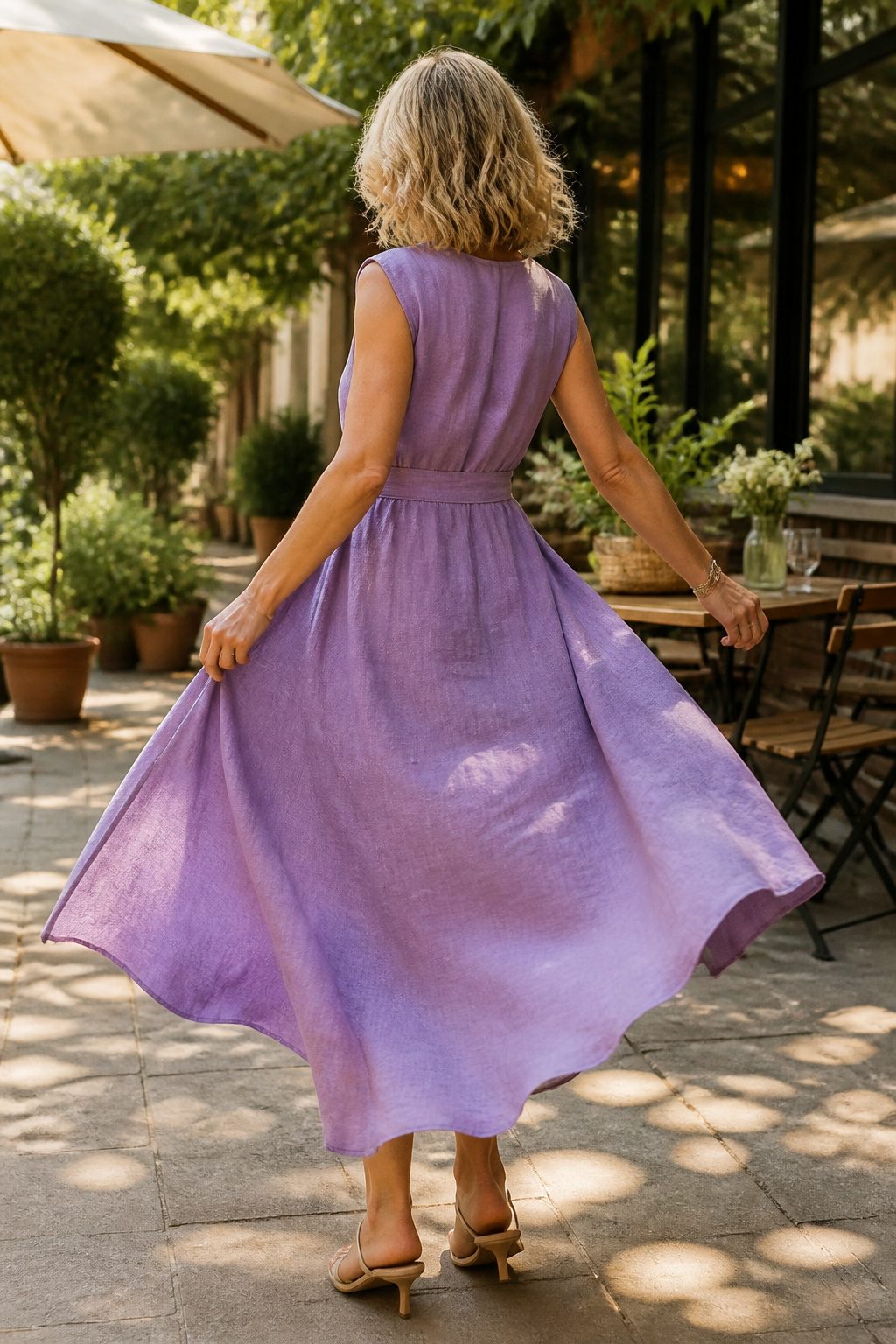
A defined waist is the single structural choice that separates a dress you look finished in from one that wears you.
After forty, the shift toward shape becomes less about preference and more about how fabric falls on a body that keeps changing.
A waistband gives the eye a place to land, and that small anchor lets the rest of the silhouette move without looking like you are hiding inside it.
The difference from the sack dresses trending twenty years younger is exactly that: those shapes rely on a straight column of fabric and a body underneath that still reads as intentional without intervention.
On most of us, the same cut pools at the middle or hangs from the shoulders like a tent.
A defined waist, even a loose one, creates the architecture that poplin or linen needs to read as pulled-together rather than thrown-on.
Linen and breathable cotton matter here because they hold the structure without fighting it. A linen shirtdress with a belt or a poplin dress with a fitted waistband keeps its shape through humidity, where thinner, slinkier fabrics collapse and cling.
The belt does not need to cinch; it only needs to suggest where the waist lives. That slight definition, paired with fabric that actually breathes, is what moves the dress from errands to dinner without a change.
Linen Tank and Linen Pants
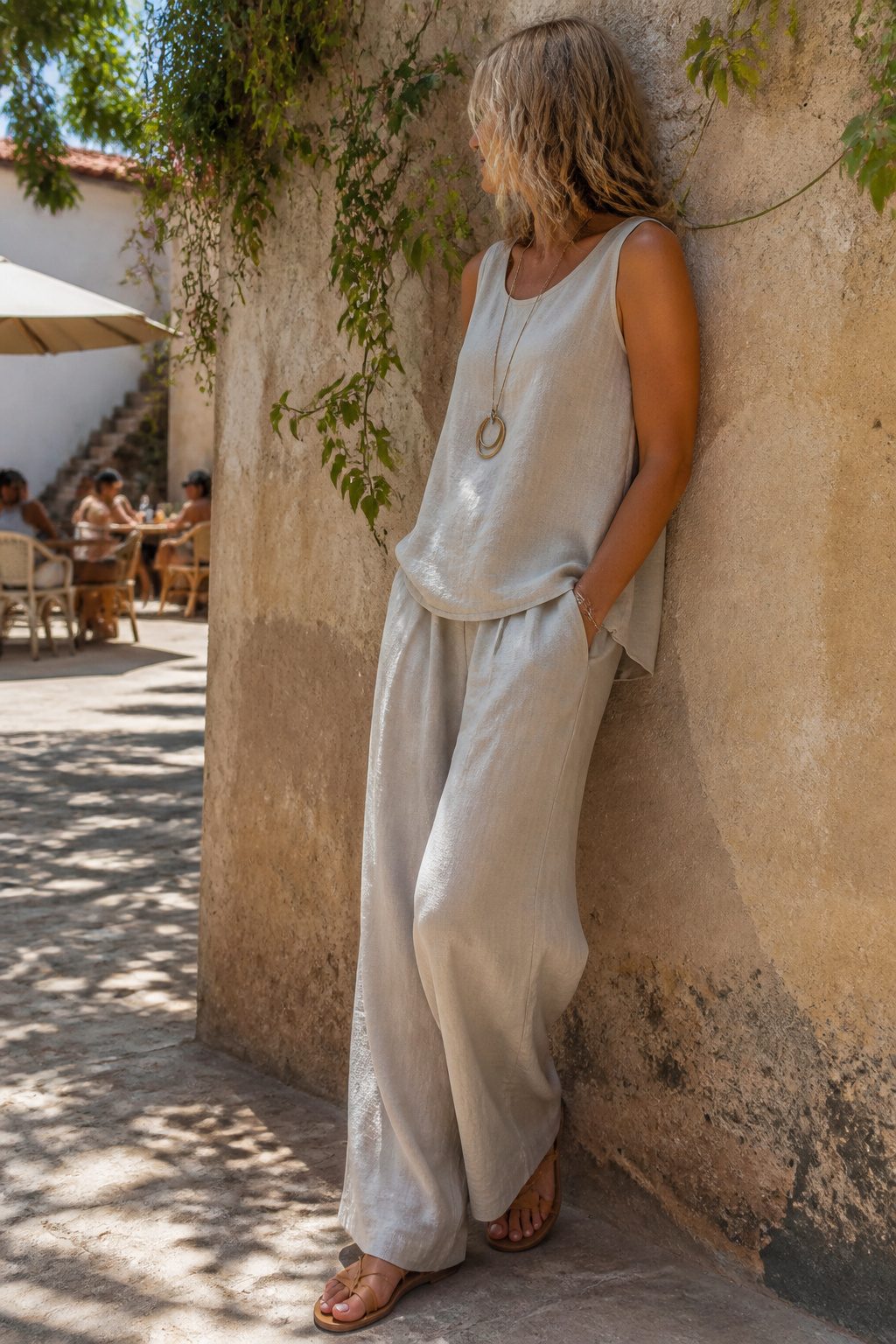
A linen tank and matching wide-leg pants read as a single, deliberate choice while still letting you use the pieces on their own.
The fabric wrinkles, and that is not a flaw you work around so much as a texture you accept in exchange for what linen does in heat: it breathes, it dries fast, and it does not cling.
I tuck the tank all around so the line reads like a jumpsuit, which takes the decision-making down to almost zero in the morning.
A knit inset at the armhole keeps the fit comfortable and adds a small detail that keeps the set from looking like sleepwear.
The pants need a wide leg to balance the tank’s clean line; anything narrower and the silhouette turns utilitarian in a way that reads younger but not better.
For what it is worth, the sources that push this look consistently pair it with flat sandals and small earrings, letting the cut and the fabric carry the whole thing.
Printed Pants With a Tee or Tank
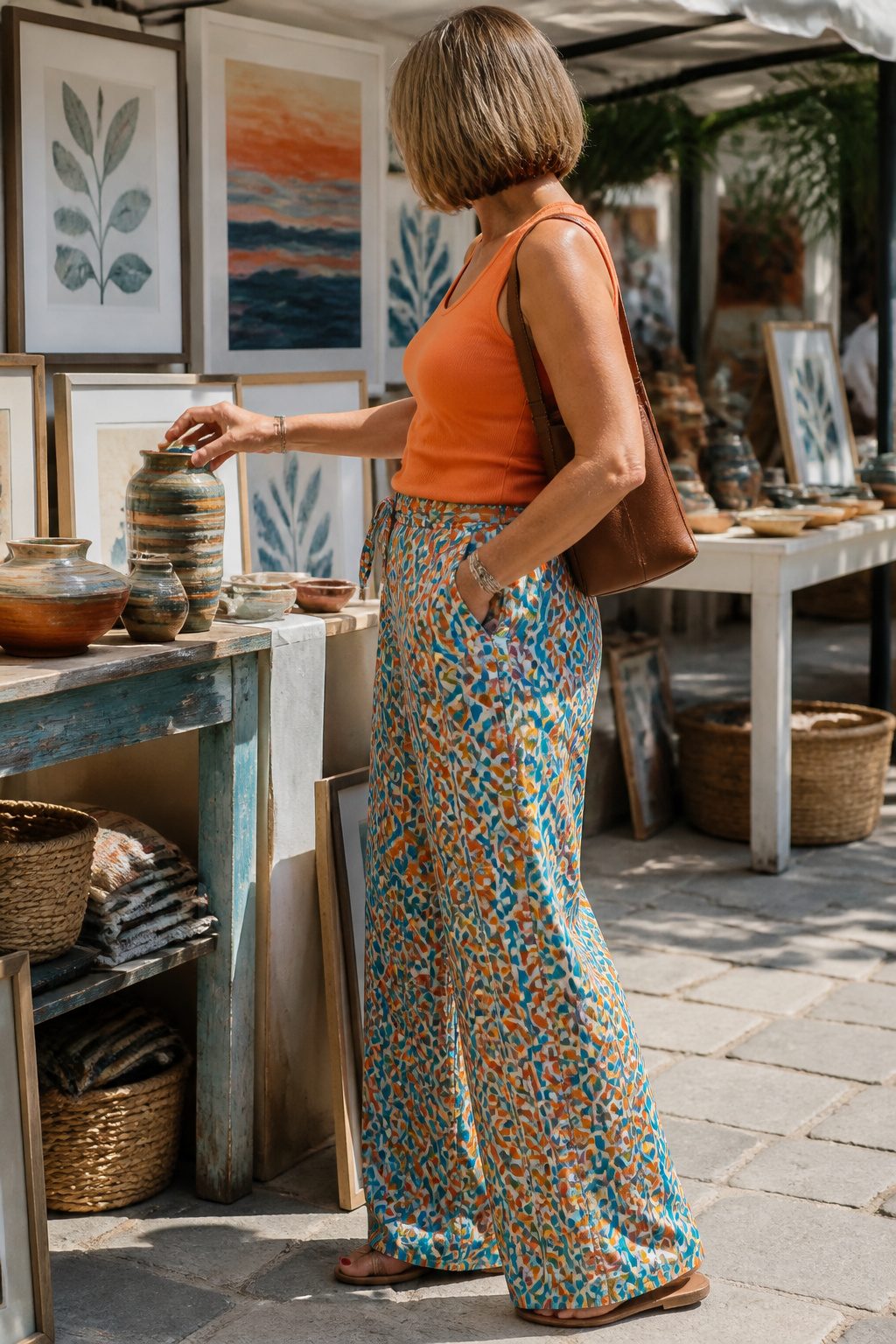
Printed bottoms do the heavy lifting so the top can stay quiet.
A geometric or small-scale print in cotton or rayon reads intentional without drifting into resort territory; the trick is avoiding anything that looks like it came with a matching sarong.
The source I trust on this keeps the top deliberately plain, a basic tee or tank in one of the colors already living inside the print.
She calls the move "color pulling," and it works because the eye finds the match without knowing it found the match.
Both of her go-to pairs are under $35: one from Amazon in enough colorways that most women find a workable palette, the other from Kohl’s with a wide waistband that can sit tricky on some but wins points for refusing to wrinkle.
I like that she flags the waistband issue upfront rather than softening it. A tank or tee in a pulled color, tucked or not depending on the rise, gives the look its structure.
The print carries the outfit; the tee just keeps it from shouting.
Flowy Pants and a Gauzy Top
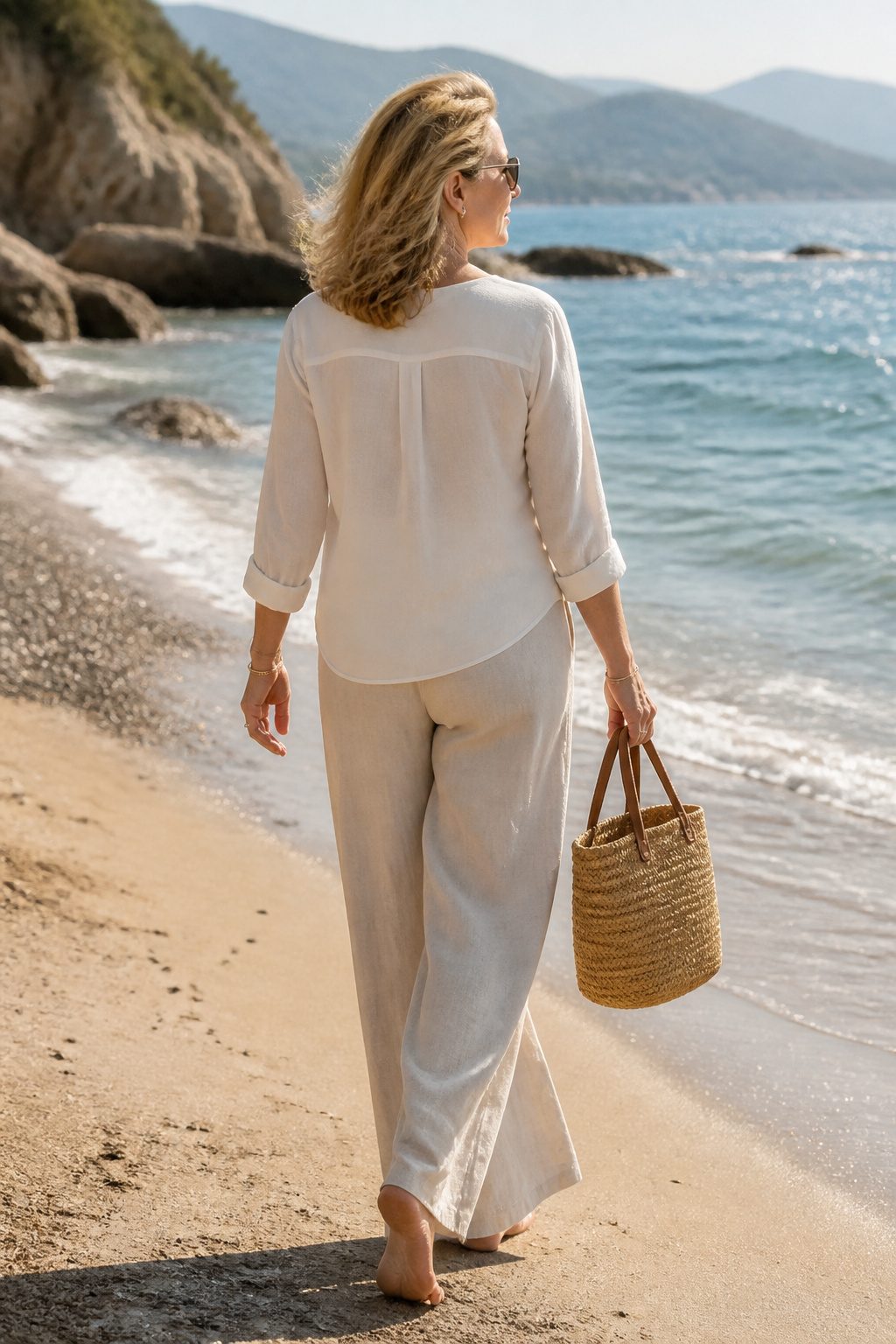
Flowy pants with a gauzy top sit in its own category because the fabric pairing does work that linen or printed versions simply do not.
The pants need to be lightweight enough to move like a skirt, and the top needs to be sheer enough that air passes through both layers without getting trapped between them.
That double-breathability is what keeps this combination cooler than shorts on the stickiest days, not marginally but noticeably.
The texture contrast matters too. A fully opaque blouse against flowy pants reads as two separate pieces of a work outfit.
Gauze against the same pants softens the whole silhouette into something that looks intentional for a Saturday market or a dinner outside.
The waistband being fully elastic helps; nothing breaks the line like a stiff closure digging in when the fabrics are meant to float.
I have seen this formula treated as the backup plan for women who no longer want to wear shorts, but that sells it short. The sources treat it as a first choice, and the comfort level explains why.
Several colorways are usually available, and the sizing runs straight through plus and tall, which suggests the brand knows who is actually buying them.
Flowy Pants and a Blouse
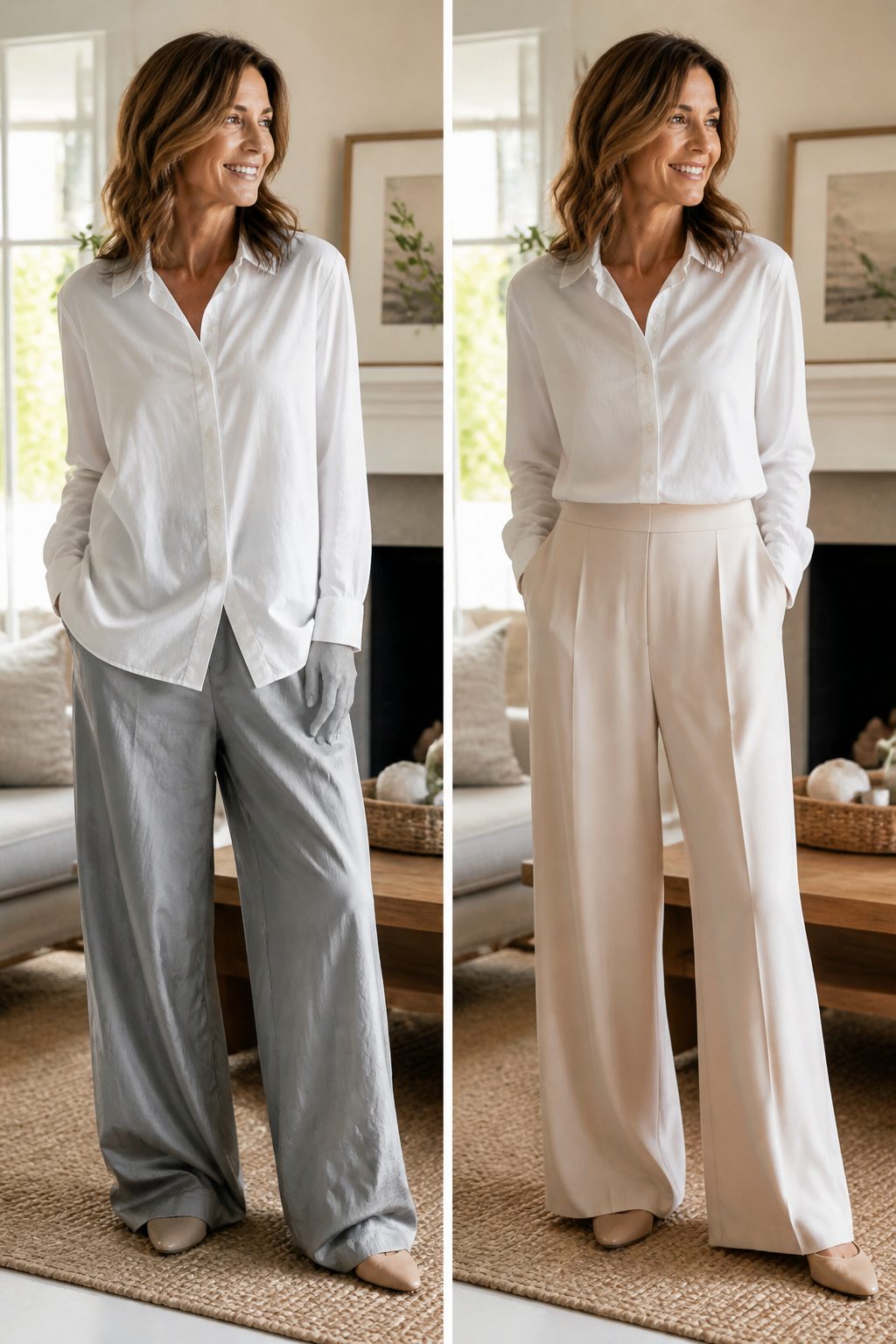
The same pair of flowy pants shifts entirely when you trade the t-shirt for a blouse.
Where a gauzy top keeps things casual and beach-adjacent, a blouse with enough body to hold its shape pulls the look toward dinner or a meeting you did not plan for.
The fabric matters here: too stiff and you fight the pants all day, too soft and you lose the architecture that makes this combination work.
I look for a weave that stands away from the body at the shoulders and collar, then drapes cleanly rather than clinging.
Color echoing helps bridge the gap. One version I kept returning to paired black flowy pants with a print that picked up the same black, plus red in earrings to match the top’s accent.
The pants stay identical, the size stays the same, but the register changes because the top now carries intention rather than ease.
Elastic at the waistband still means EXTRA comfort, so you are not sacrificing the breezy factor that made these pants worth owning. You are simply choosing which version of yourself they serve that day.
Wide Leg Jeans and a Gauze or Linen Top
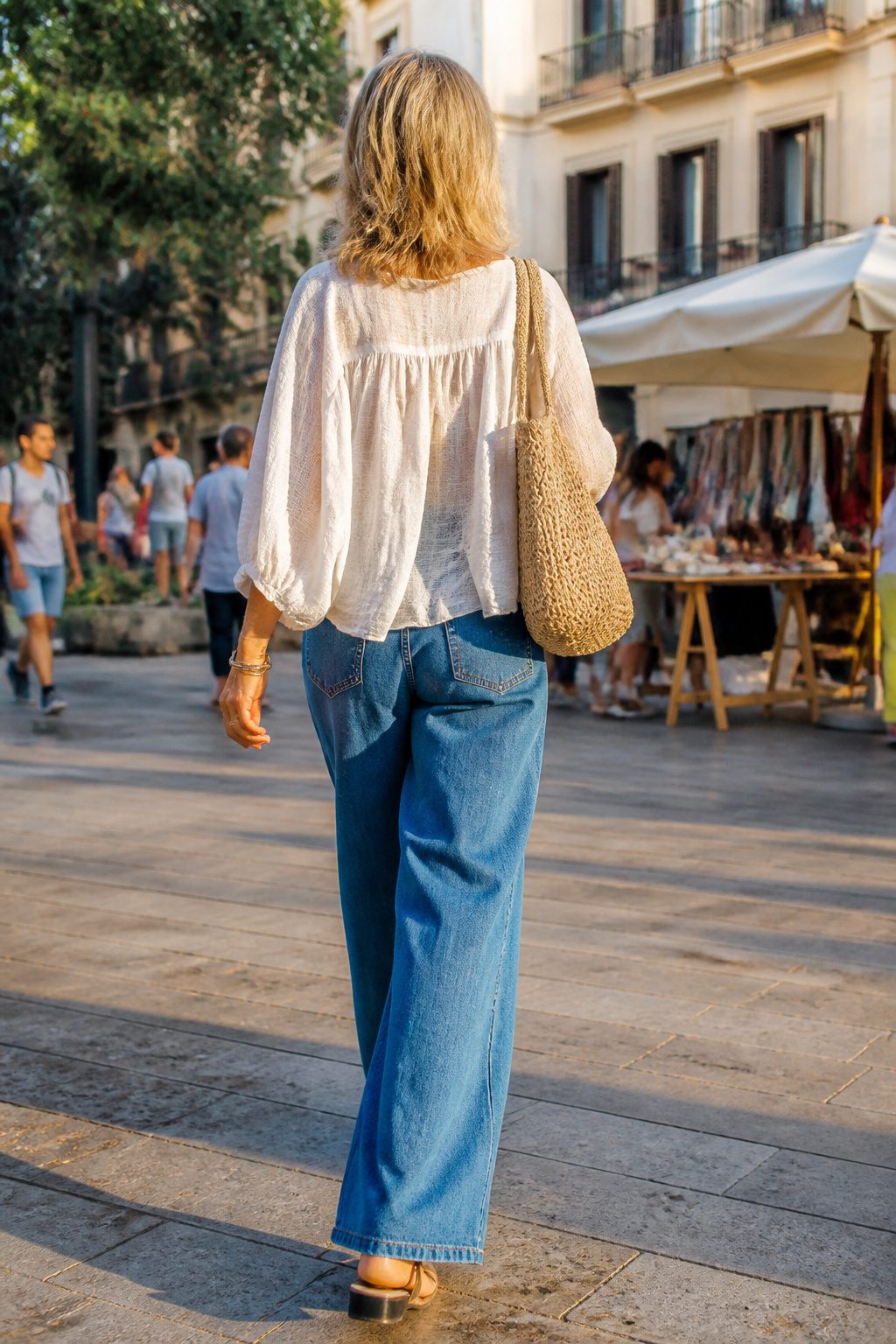
Wide leg jeans fill the gap when you want denim but the shorts sections feel too casual.
The silhouette carries more presence than cutoffs, and the extra volume through the leg moves air better than skinny styles that cling from hip to ankle. A gauze or linen top is what keeps this from reading as heavy.
Those fabrics weigh almost nothing against the body, and the contrast between their looseness and the structured denim gives the outfit intention rather than default.
The split hem on some wide leg styles helps here too, breaking the line so the jeans do not swallow your shoe. Platform sneakers or a slight heel keep the proportions honest; flats can work but may need a hem.
Compared to denim shorts with the same breezy top, this sits one notch higher on the dressed spectrum: still easy, still cotton and air, but the longer line reads more deliberate.
Printed Skirt and a Basic Tank or Tee
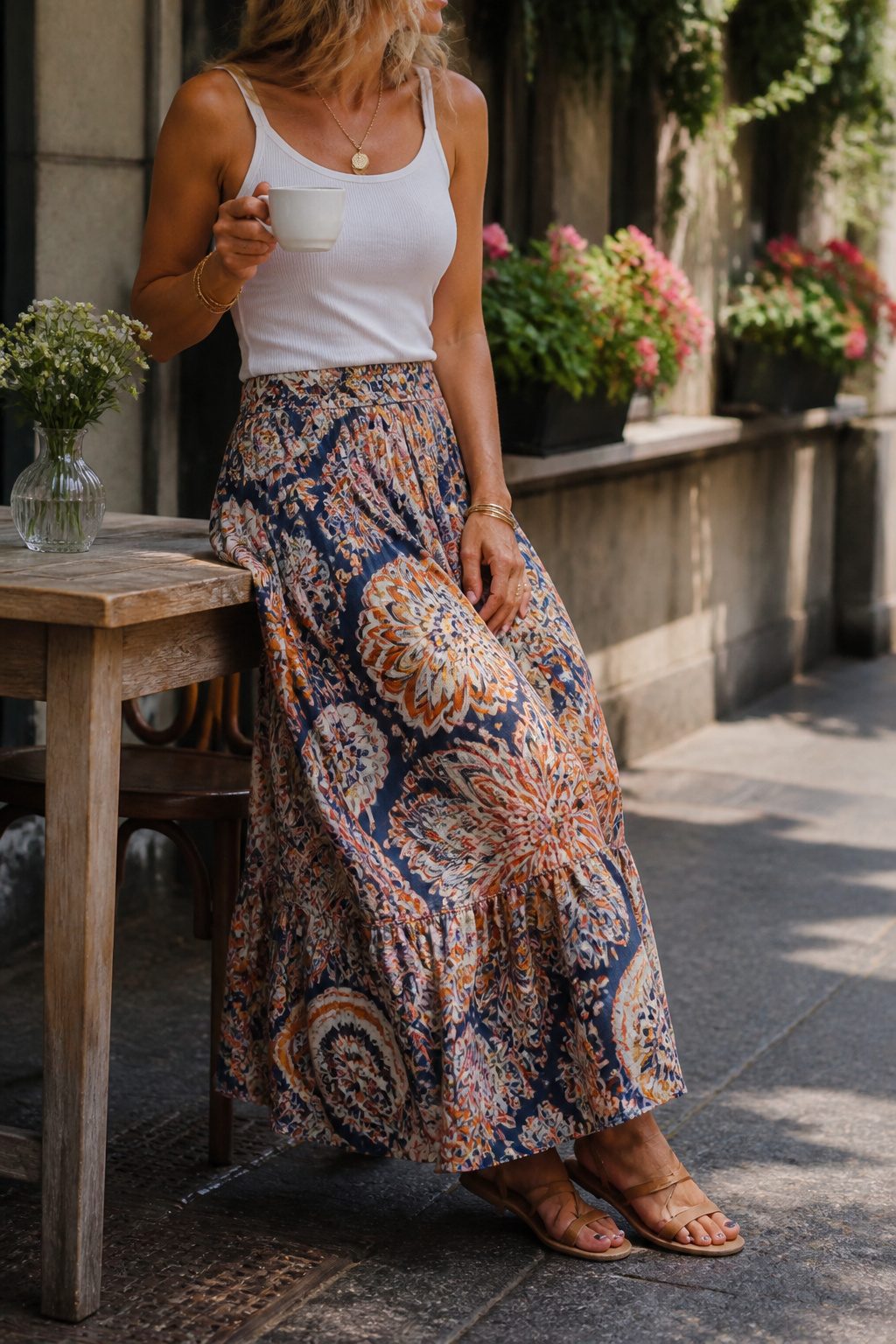
Printed skirts carry the same logic as printed pants, but they land differently on a body that runs warm. The movement matters: fabric that sways instead of clinging to the thigh makes a 90-degree afternoon bearable.
Length sits at the decision point. A hem that hits at or just below the knee keeps the look intentional without veering into territory that feels borrowed from a twenty-year-old’s closet.
The print scale follows the same rule as the pants: medium-to-large motifs read cleaner than tiny, busy repeats on a frame with more presence.
The top stays deliberately plain. A basic tank or tee in a color pulled straight from the skirt’s own pattern does the cohesion work for you.
No guesswork, no standing in front of the mirror wondering if mint "goes with" coral. If the skirt carries navy and terracotta, the tee is navy or terracotta.
This is the same color-pulling strategy, just with a waistband instead of a fly. The necklace can step up, since the neckline is simple, but the top itself stays unremarkable on purpose.
Skirt and a Graphic Tee
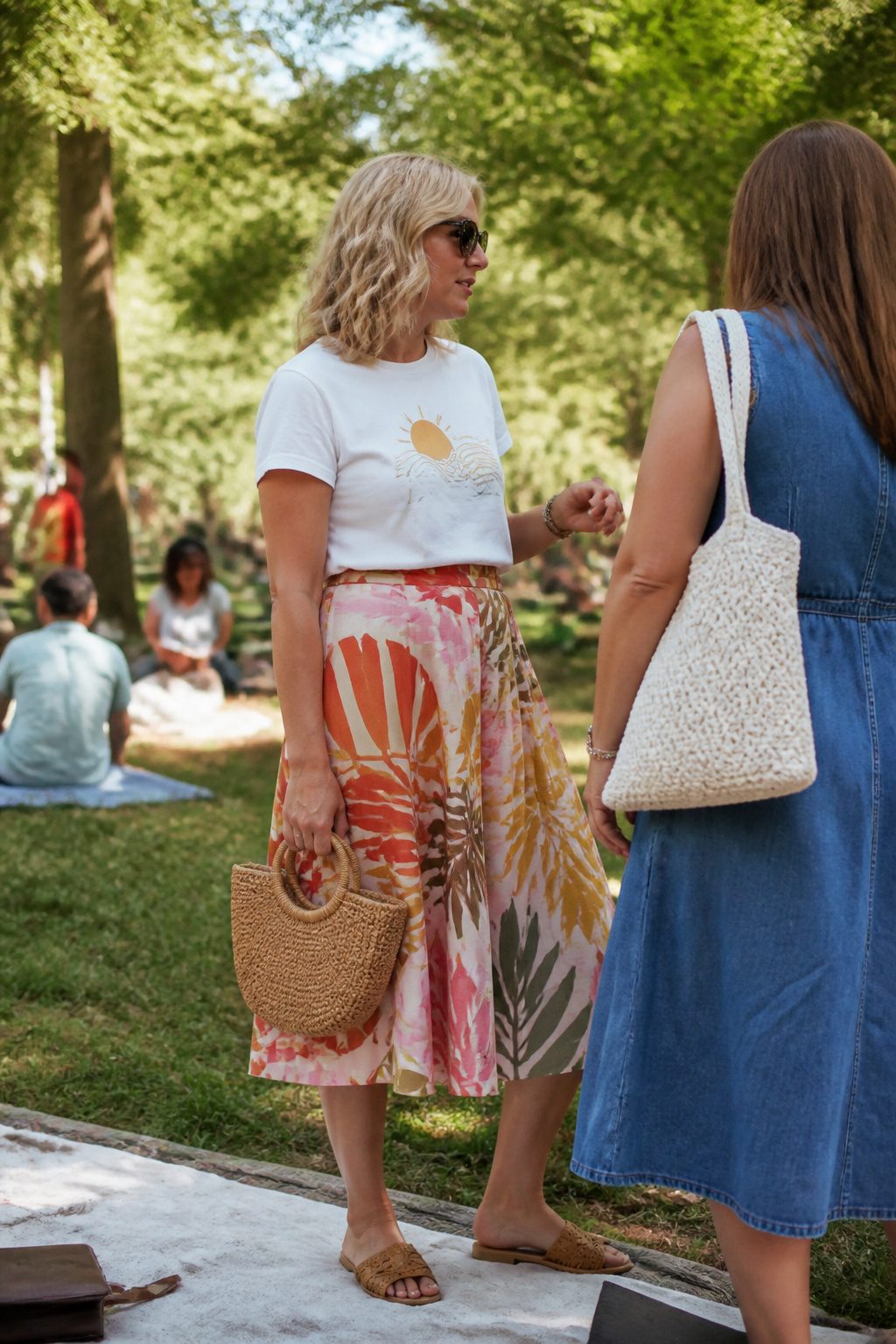
A graphic tee with a skirt lands differently than the same tee with denim shorts. The shorts read weekend and casual; the skirt adds enough structure to make the pairing feel intentional.
I look for retro-inspired graphics or small-scale prints rather than loud logos or slogans. A giraffe print in black and white, or a short "Ciao" script in a single color, keeps the reference subtle.
Color coordination matters more here than with solids. A red-and-white spotted skirt works with a white tee that picks up the red in its lettering, even if the match is not exact.
The same principle holds for black-and-white patterns: the light tone in the skirt can drift toward ecru without breaking the scheme.
The tee should also hit at a shorter length, one that does not need tucking to look finished with a waistband. At $12 for the giraffe version, this is a low-stakes place to test whether a graphic still feels like yours.
Breathable Fabrics That Hold Their Shape
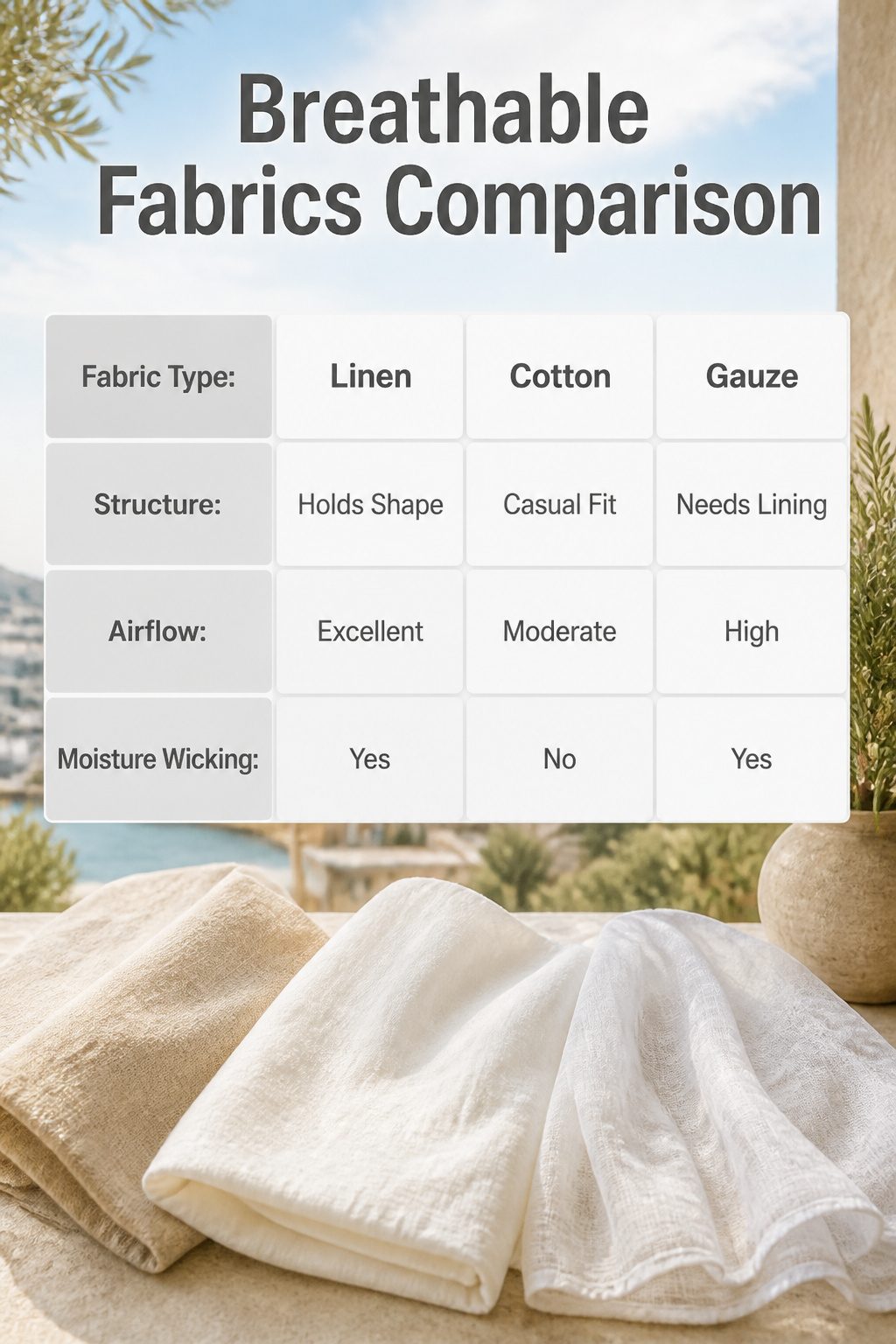
Breathable fabric stops being a nice-to-have somewhere in your early forties. The body handles heat differently now, and a blouse that felt fine at thirty-five turns sticky and shapeless by noon.
I learned this the hard way at an outdoor lunch last July, watching a cotton-poplin shirt cling where it used to skim.
Linen wins for structure. It wrinkles, yes, but the weave lets air pass through while the fiber itself pulls moisture away from skin.
A linen blazer keeps the line of a jacket without trapping the heat a wool blend would; Caroline de Maigret built a whole summer office look around exactly that logic.
Linen blazers are particularly useful in the summer when you work in an office and want to look professional without sweating when you step outside.
The point is professional coverage without the greenhouse effect. Cotton handles the same job more casually, lighter in weight but prone to going limp in humidity; save it for days without back-to-back meetings.
Gauze is the outlier here, so open in weave that it needs a lining or a camisole beneath, which defeats the purpose unless the cut is deliberately layered.
The real mistake is choosing any of these in a weight too thin to recover its shape after sitting. A linen top that bags at the knees by three o’clock reads careless, not relaxed.
Hold the fabric up to light in the store; you should see pinpricks of air, not a solid sheet.
Lightweight Layers for Shifting Temperatures
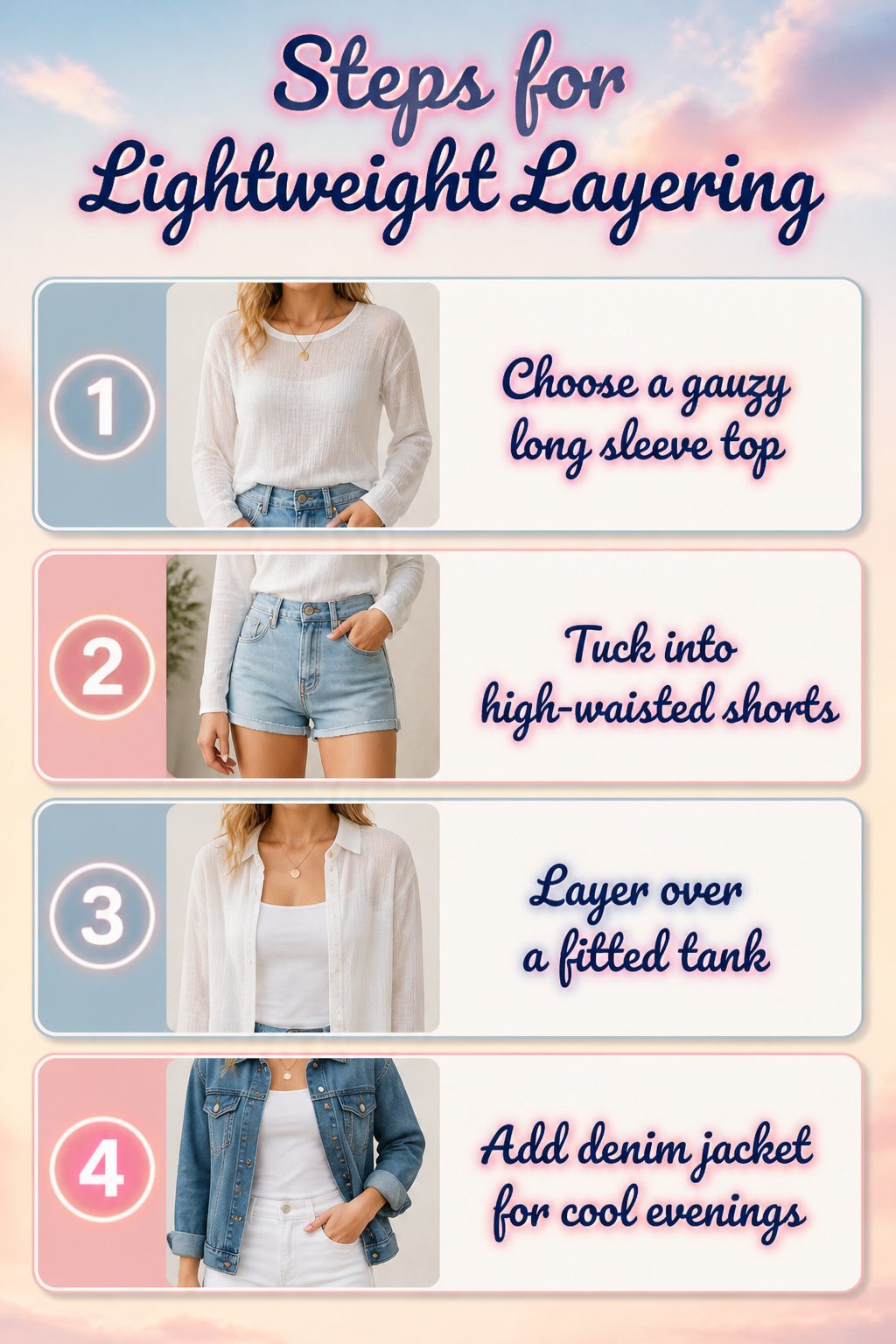
A gauzy long sleeve top sits in that gap between bare arms and a jacket that suddenly feels like a mistake once the sun climbs past ten.
The fabric is the point: open enough to let air move, substantial enough that a morning breeze or aggressive office AC doesn’t turn goosebumps into the main event.
I keep one in white, close-fitting rather than oversized, because a layer that adds volume on top of volume reads sloppy by noon.
The move is to wear it as a shirt, not a cover-up. Tucked into high-waisted denim shorts with a fitted tank underneath, the gauze becomes the outfit rather than an afterthought.
Same logic with flowy pants: the fully elastic waistband keeps you comfortable, and the gauzy top keeps the whole thing from looking like sleepwear.
A denim jacket works harder for actual temperature drops, especially over a sleeveless top with white jeans.
The trick is treating it as part of the look from the start, not something you tie around your waist by one o’clock and lose by three.
Choose the jacket when you know the evening will cool off; reach for gauze when the day shifts constantly and you need to adapt without the full costume change.
Fit and Movement
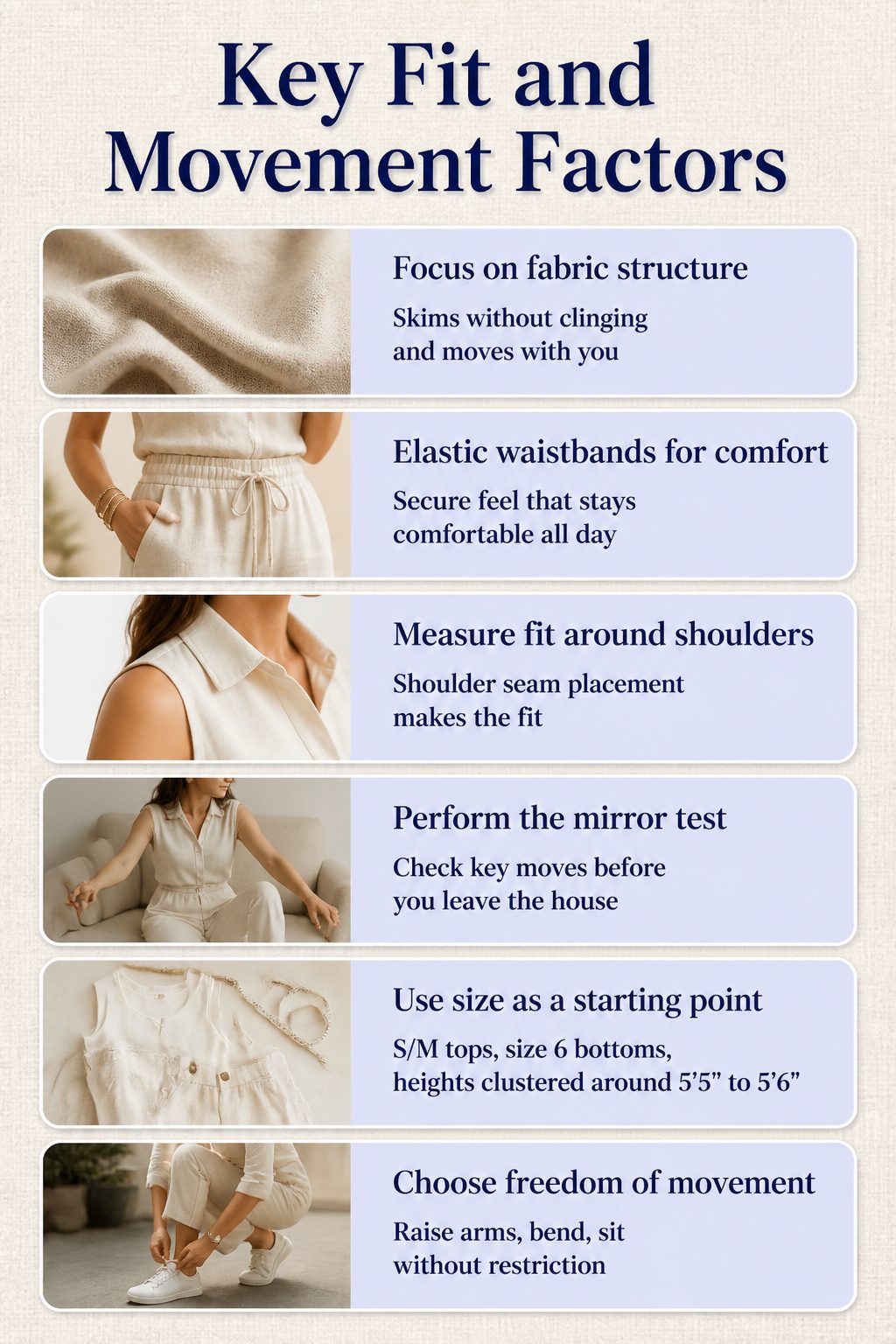
The best summer outfits for women over 40 start with where fabric meets body, not where it meets trend.
Structure matters more now: a garment needs enough shape to skim rather than cling, but still bend and recover as you move through a day that might include a morning walk, a midday meeting, and an evening patio dinner.
I notice this most in the waist. Elastic alone, like the snug band on that Scout romper, can feel secure but turn restrictive by afternoon.
A tie that looks functional but serves only as decoration misses the point entirely.
What works better is a waist that holds definition without grip: a soft fold of fabric, a side panel with stretch knit built in, a seam that sits at the natural waist rather than riding up or slumping below it.
Size references from what I see working: S/M tops, size 6 bottoms, heights clustered around 5’5" to 5’6". These are common anchor points, not rules.
Someone at those measurements might find a medium in a romper cut small still too tight; someone else at a 10 might wear the same piece with room to spare.
The number on the tag matters less than where the shoulder seam lands and whether you can raise your arms without the whole torso riding up.
The mirror test is simple. Sit down.
Reach across your body for the opposite armrest. Bend to tie a shoe.
If the neckline gapes, the hem hikes, or you feel the urge to adjust before you’ve even left the house, the fit is wrong regardless of how it looks standing still.
Sandals, Hats, and the Bag That Finishes It
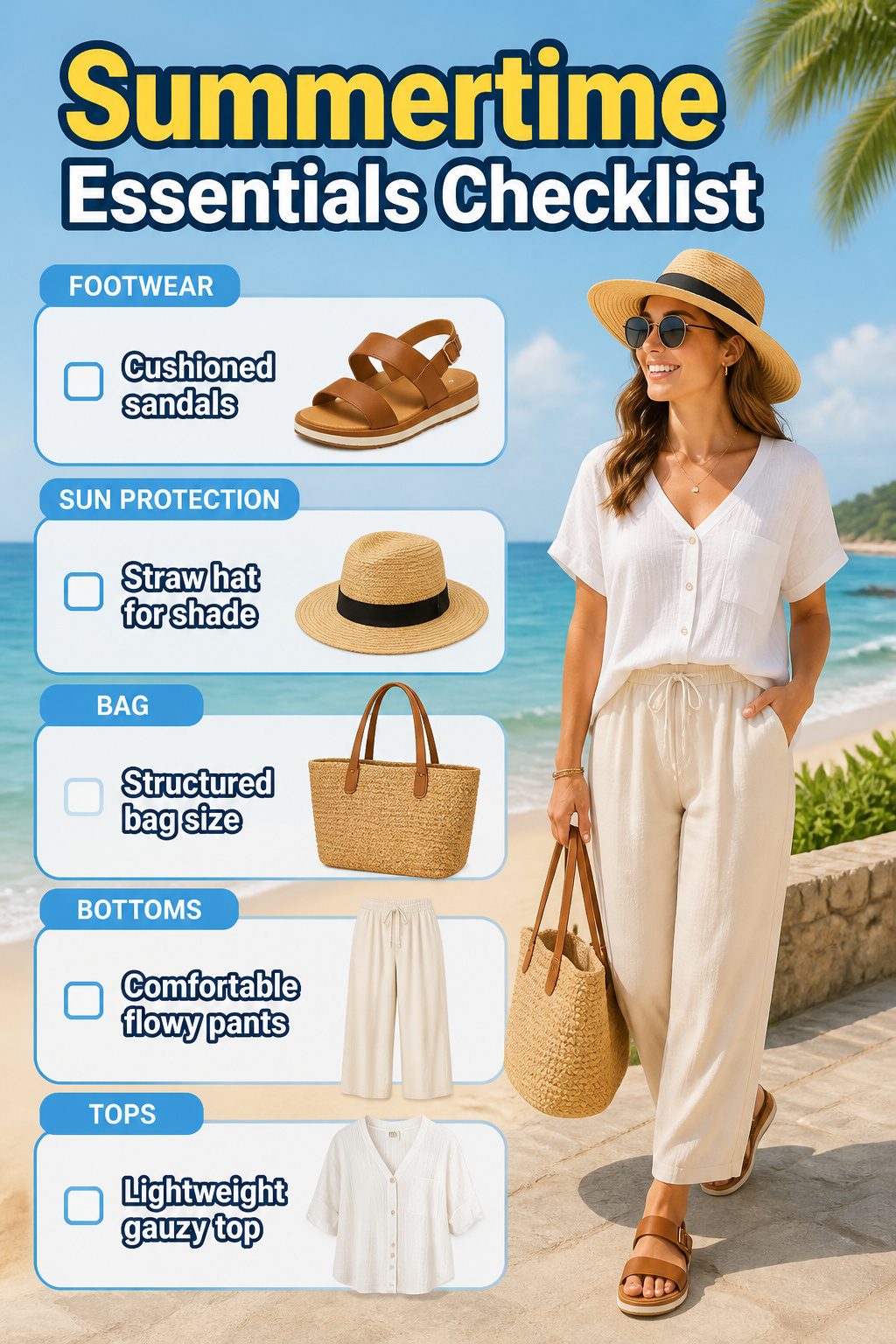
Sandals with a cushioned footbed and sturdy sole carry a full day of walking without the foot fatigue that flatter styles invite.
A sole height between one and two inches hits the practical balance: enough to keep a trouser hem from dragging, low enough that your ankle does not flex unnaturally on uneven pavement. Strap placement matters more than ornament.
An ankle strap visually shortens the leg; a single broad strap across the instep keeps the line longer and stays secure.
A straw hat or fedora does more than shade; it frames the face you already have. Wider brims, roughly four inches or more, balance a longer face.
Narrower brims, closer to two and a half to three inches, keep a round or heart-shaped face from reading wider than it is. Tilt the crown slightly back so the brim does not cast a shadow on your features.
The bag should relate in scale to the pieces around it. A tote with a linen tank and pants looks proportionate because it repeats the relaxed volume.
A small structured bag against the same outfit competes and feels tourist-bought. Match the bag’s visual weight to the fabric weight: canvas or woven leather for airy shapes, something firmer only when the clothes themselves hold more structure.