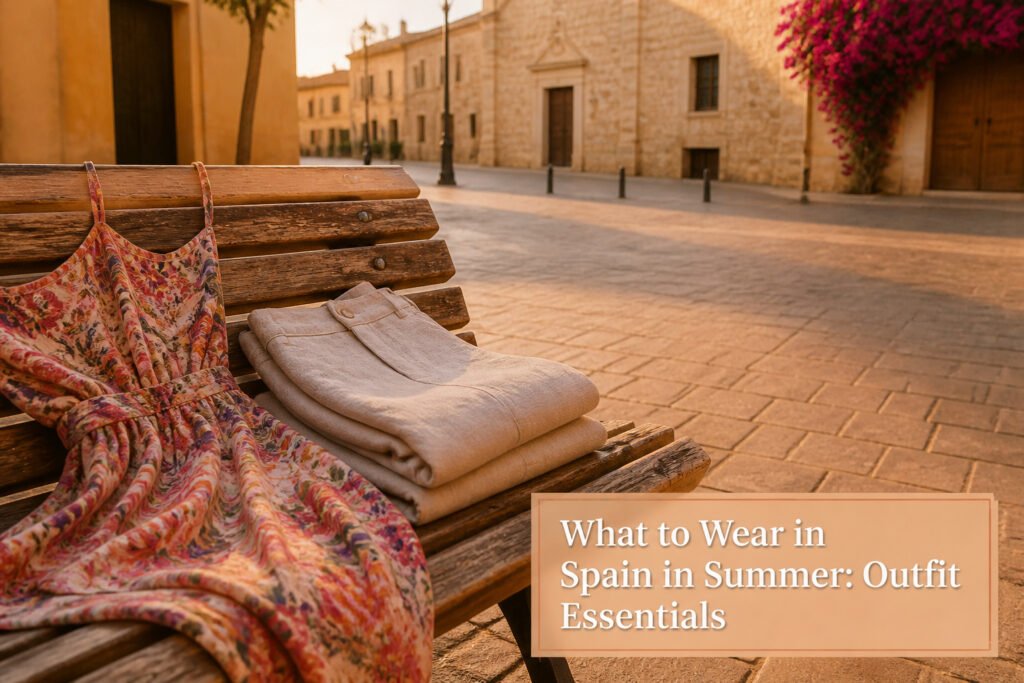
The nine pieces that make a Spain outfit work in summer are linen trousers, a midi dress, tailored shorts, flat leather sandals, minimal sneakers, espadrilles, a structured crossbody, a light cardigan, and a silk scarf. The catch is fabric weight and fit: polyester traps heat at 100°F Madrid afternoons and gym shorts read as sloppy at any café after dark. A 150 to 200 gsm linen weave hits the right balance, substantial enough not to turn sheer but open enough to move air against your skin.
1. What Women Should Wear in Spain in Summer
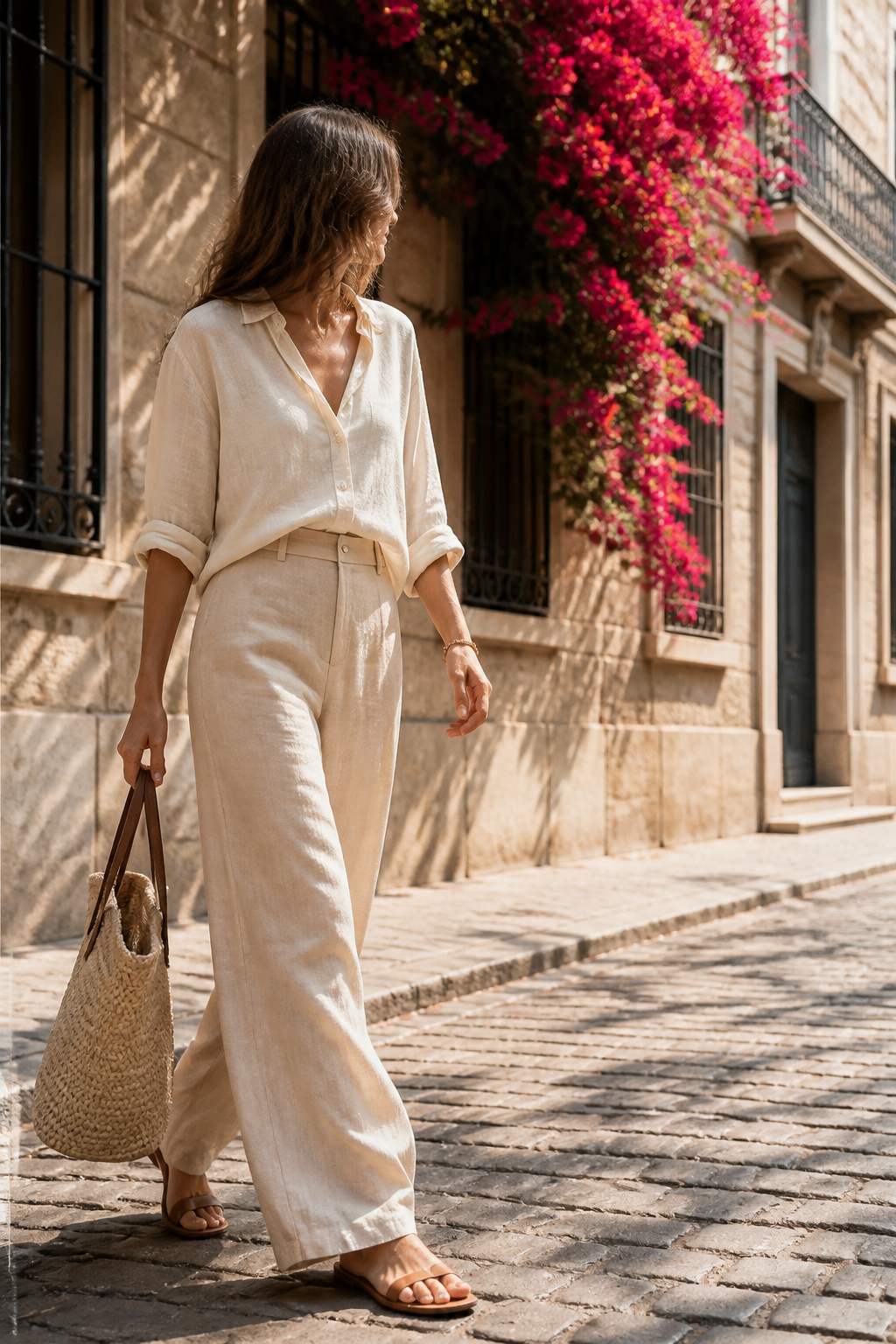
Breathable linen and cotton, lightweight dresses, tailored shorts, and comfortable flat sandals are what work for a Spain outfit when the heat climbs past 90°F and keeps going. Madrid and Seville regularly hit 100°F (38°C) in July and August, and even coastal cities like Valencia push into the mid-90s with humidity above 80%. Natural fibers matter here: linen wrinkles are acceptable in Spanish style, but polyester traps heat and shows sweat in ways that read as careless rather than relaxed.
The bigger adjustment is that Spanish summer style runs more polished than American casual. Where athleisure and athletic shorts read as normal at home, the same outfit looks underdressed at a Madrid café or walking through Toledo. The pieces need to look intentional even when they are simple: a cotton midi dress with a structured crossbody, or linen trousers with leather espadrilles rather than flip-flops. Spanish women build their summer wardrobes around neutral bases with strategic color, and that same approach keeps a visitor from looking like she wandered in from the gym.
Linen outperforms cotton in humid coastal conditions, so the mix of fabrics depends on whether the itinerary leans inland or toward the Mediterranean.
2. Breathable Fabrics That Hold Up to Heat
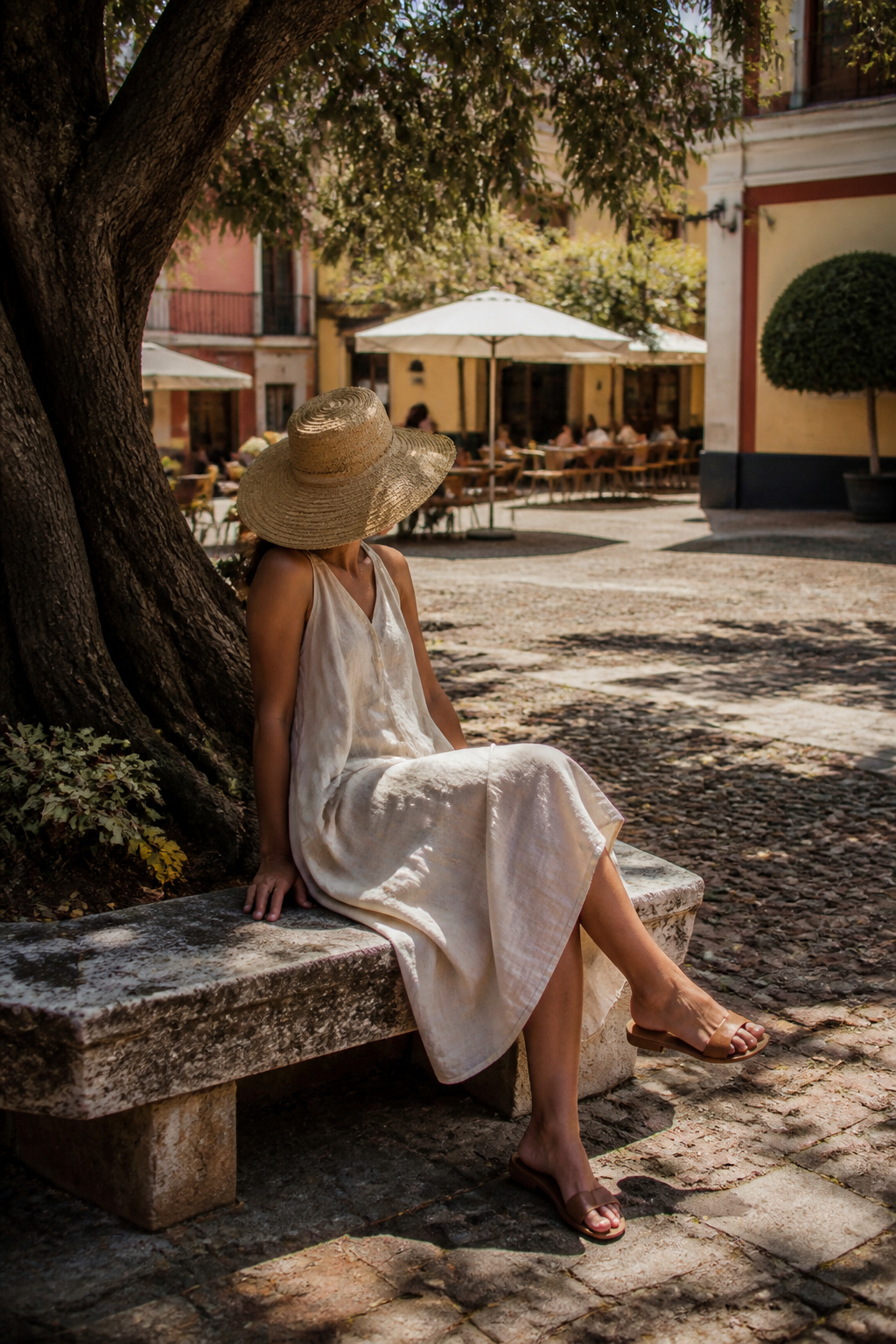
Linen, cotton, and other natural fibers are the only fabrics that make sense once temperatures climb past 95°F in Madrid or Seville. I used to pack the quick-dry synthetics I wore for hiking, the ones labeled "moisture-wicking," and spent entire afternoons feeling like I was wrapped in plastic. Those materials trap heat against your skin and announce every drop of sweat. Linen wrinkles, and in Spain nobody cares; the crumple reads as relaxed rather than sloppy, especially in white or cream tones that also reflect heat. A 150 to 200 gsm linen weave works best for trousers and dresses, substantial enough not to turn transparent but open enough to let air move through. Pure linen outperforms cotton once humidity hits 80% along the Valencia or Málaga coast, though a lightweight cotton poplin runs a close second for shirts and midi dresses. The difference is immediate the moment you step from a sun-baked plaza into actual shade.
3. Dresses for Days of Walking and Evening Dinners
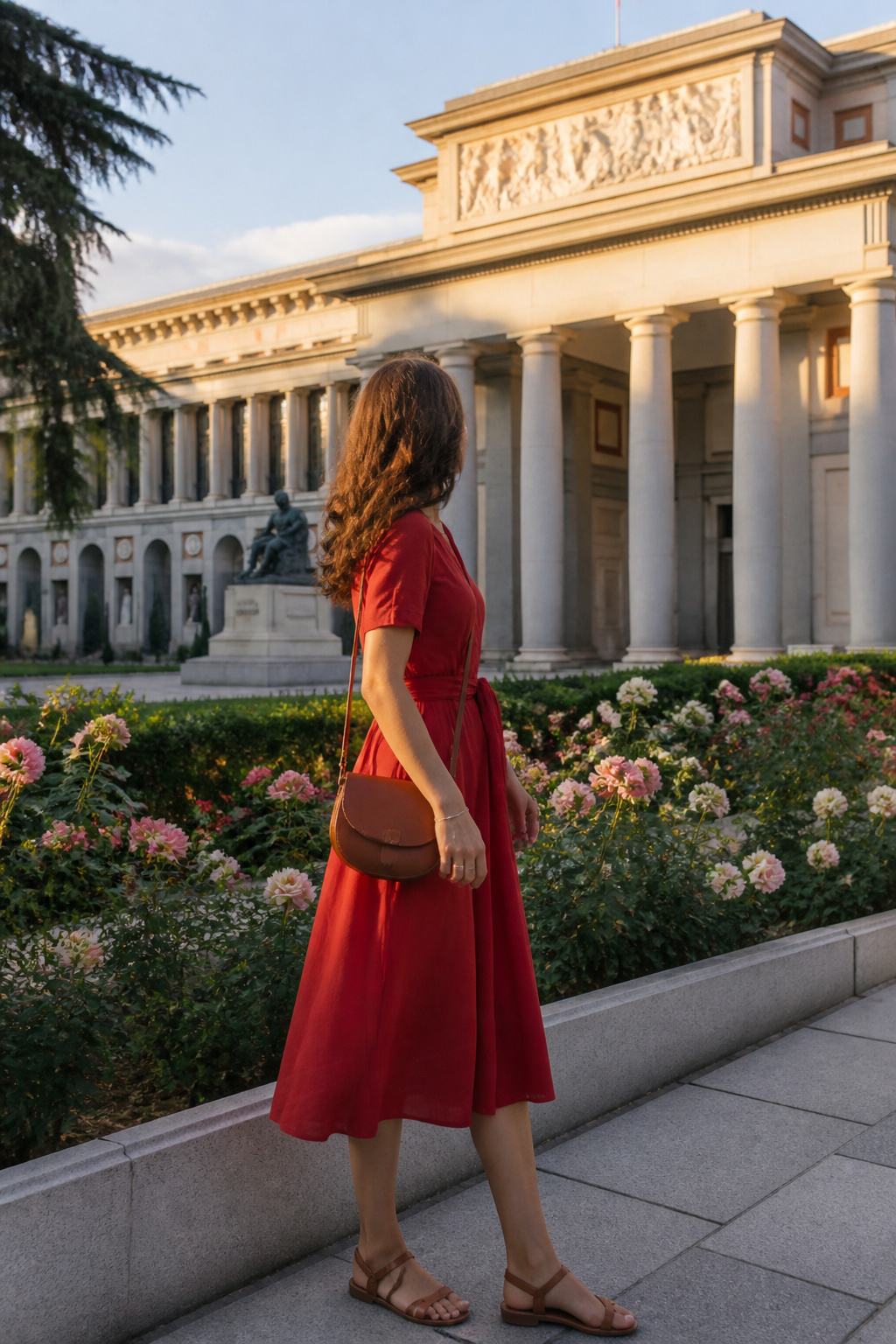
A midi dress in breathable linen or cotton handles the full stretch of a Spanish summer day without a second thought. Mine has gone from the Prado at ten in the morning to a nine o’clock dinner in Lavapiés with only a bag swap, and the same dress worked for both because the neckline sits high enough to step into a church but open enough to stay cool when the afternoon hits 95°F. Sleeve length matters more than you expect. Cap sleeves or a flutter sleeve cover the shoulder requirement at cathedrals while still moving air; a full sleeveless cut leaves you buying a scarf at the door or skipping entry entirely. I tried a strappy sundress once in Toledo and spent the cathedral visit with a cardigan knotted around my shoulders, which defeated the point of the heat. Maxi lengths add coverage for modesty and sun protection both, though a skirt that brushes the ankle on flat sandals can turn into a tripping hazard on uneven cobblestones. The ones that work best have a defined waist or a belt you can cinch, something that keeps the shape from reading as a tent when you are seated at dinner. A red midi in a warm tone reads right against Spanish stone and golden evening light in a way cooler colors simply do not.
4. Trousers and Shorts That Look Polished
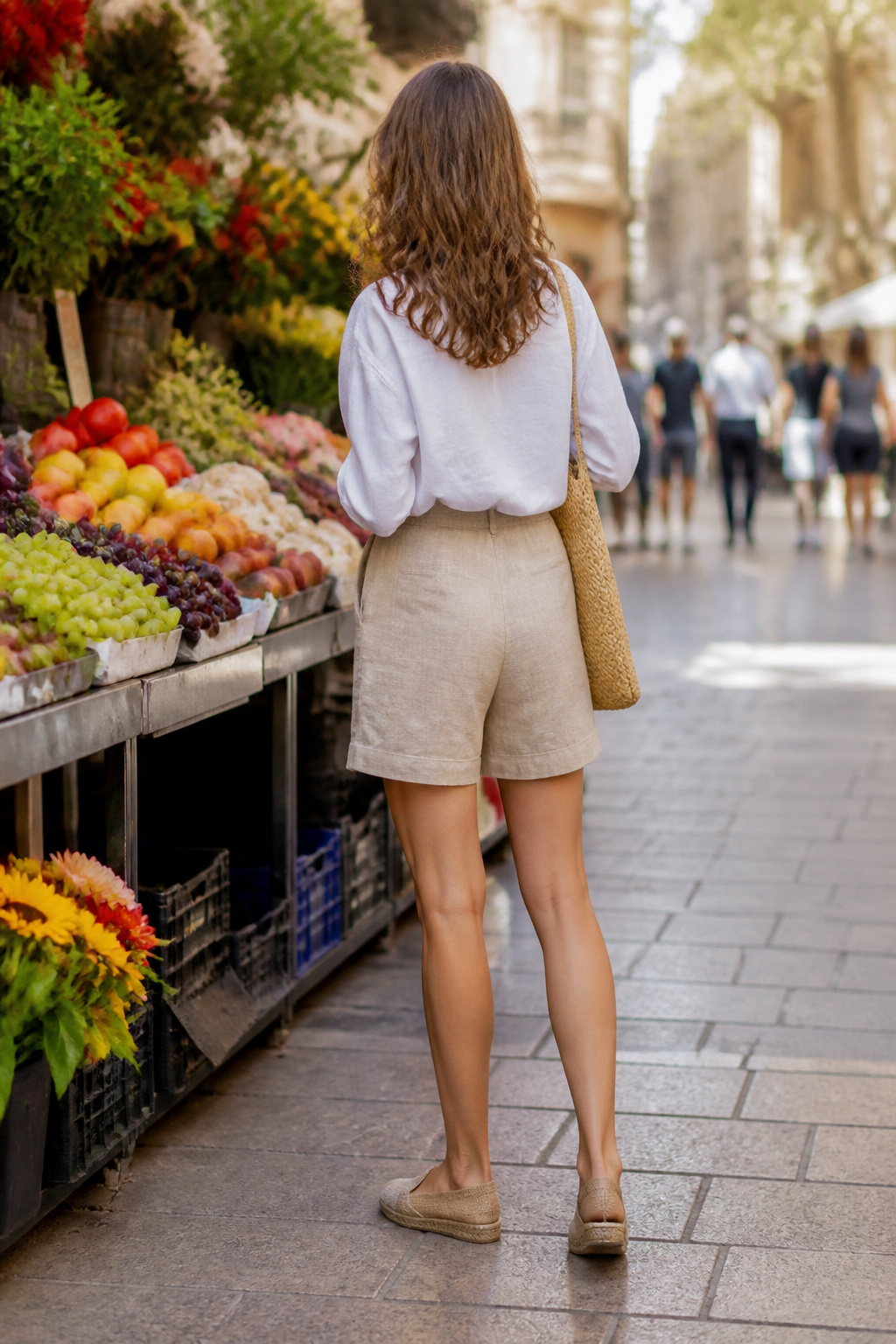
Tailored shorts and wide-leg linen trousers are the two pieces that let you skip dresses entirely without looking like you just came from the beach. Shorts are acceptable in Spanish cities, but only when they are tailored, not cutoff or athletic. Spanish summer style runs more polished than American casual, and gym-style athletic shorts or heavily distressed denim read as sloppy in Madrid or Barcelona. A well-fitted linen or cotton short in a neutral tone hits the right note for sightseeing and casual lunches alike.
Linen wide-leg trousers in white, beige, or tan are the signature alternative. They are loose enough for airflow but tailored enough to look intentional, and you will see them everywhere from Madrid to Barcelona. The same fabric rules apply to shorts: linen or cotton, not synthetic, and a length that is not very short. Midi or maxi skirts fill the same gap for those who prefer them, but the trousers do the work of looking put together while staying cool.
5. Footwear for Cobblestones and Long Days
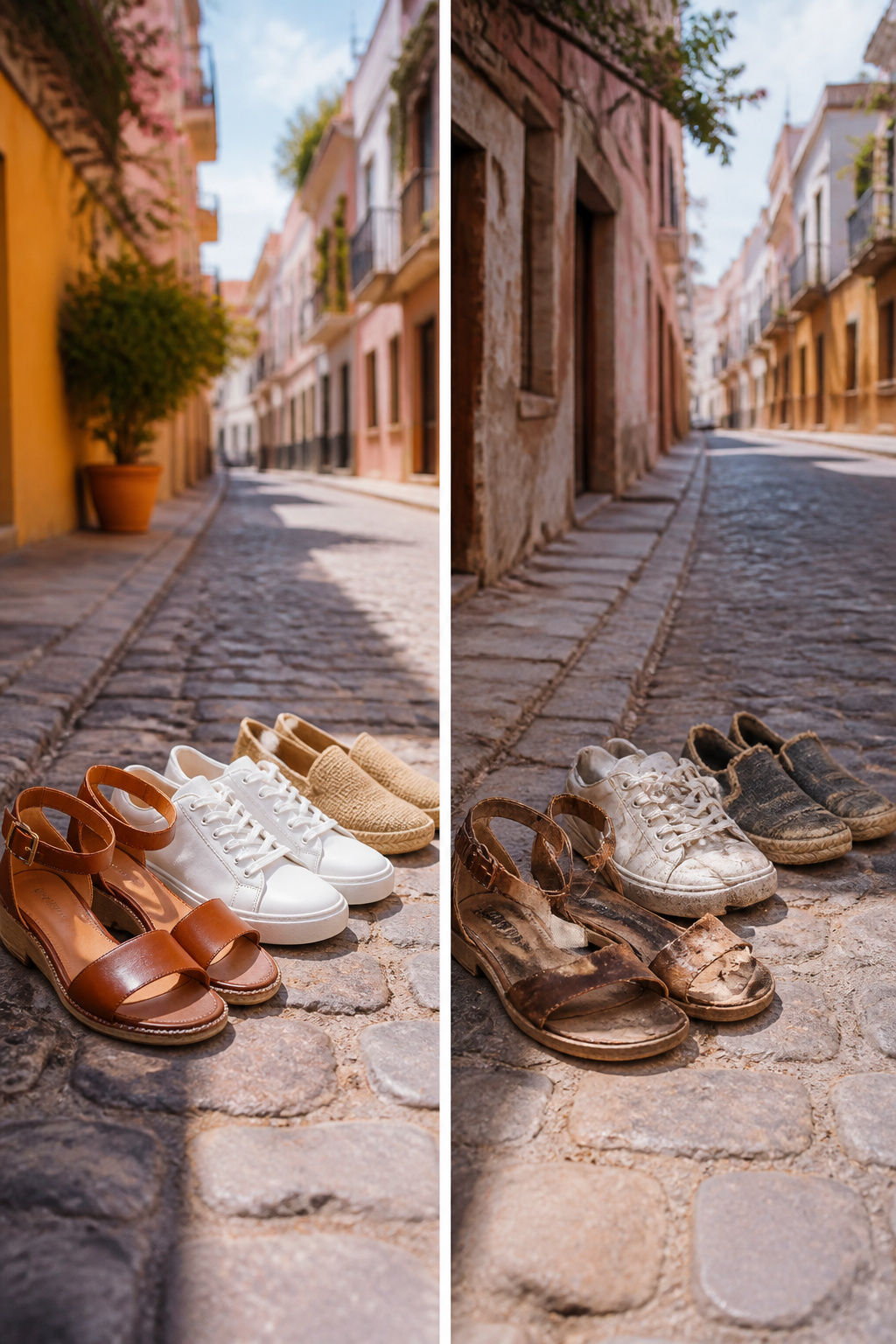
Cobblestones in Spanish cities are beautiful until you are limping back to your hotel with a blister the size of a euro coin. Flimsy soles do not survive uneven stone for more than a few hours, and a trip can unravel fast from the feet up. Three shoe types have proven reliable for full days of walking: flat leather sandals with secure ankle or toe straps, minimal low-profile sneakers in white or neutral tones, and espadrilles.
I have learned to check the sole before packing anything. Leather sandals with actual structure, not the paper-thin kind, hold up on hills and rough pavement without sliding around. Minimal sneakers work for the days when you are covering serious ground, though heavy athletic styles run too hot and look bulky against lighter summer clothes.
Espadrilles are the choice that signals you have paid attention. Spanish women wear them constantly, and locally made alpargatas from brands like Castañer or CristinaLagardera in Valencia carry the history: thick woven soles that started as country footwear, now refined into something that works with linen trousers or dresses. They give a small lift without the hazard of heels on wet stone. The rope sole grips better than it looks, and the canvas breathes in the heat. Skip flip-flops entirely in city centers; they offer no support and mark you immediately as someone who did not consider the ground underfoot.
6. Accessories That Earn Their Luggage Space

A structured crossbody bag solves two problems at once in Spanish cities: keeping your hands free for gelato or metro cards, and sitting close enough to your body that you notice if someone brushes the zipper. The sources note that Barcelona and Madrid get crowded in summer, and a bag that locks or sits against your front buys you the mental space to actually look at architecture instead of your own shoulder.
Sunglasses are non-negotiable under that light. The Spanish sun is genuinely bright, and sporty frames read as tourist gear against the dainty gold hoops and layered necklaces you’ll see on local women. A classic shape in tortoise or black blends better.
For hats, brim width matters more than style. Three to four inches shades your neck and ears without turning into a wind sail on coastal boardwalks or rooftop terraces. Anything wider fights you; anything smaller just decorates your head while the sun burns below it.
These three items are what travelers most often leave behind, then buy at inflated airport prices or do without. The bag especially: sources agree that a compact, neutral crossbody in olive, tan, or black earns its place in a carry-on that has to work for ten days straight.
7. Colors That Fit the Light

Warm neutrals and Mediterranean colors do the heavy lifting in a Spanish summer wardrobe. Terracotta, olive, soft black, and cream read as intentional against limestone walls and terracotta rooftops without forcing the all-white formula Pinterest tends to push. Olive in particular shifts from day to evening without looking like you tried, and soft black holds its depth in the golden light that bounces off tile and stone.
White has its place, but it shows sweat within an hour in 95°F Madrid afternoons and picks up dust from cobblestones faster than you’d expect. Bright synthetics fade hard after a week of sun exposure, and pale colors that turn sheer with moisture are a mistake you notice once you’re already out the door. The warmer neutrals hide the travel wear better, mix across more pieces, and still photograph clean against that particular Spanish light.
8. Light Layers for Air Conditioning and Cool Evenings
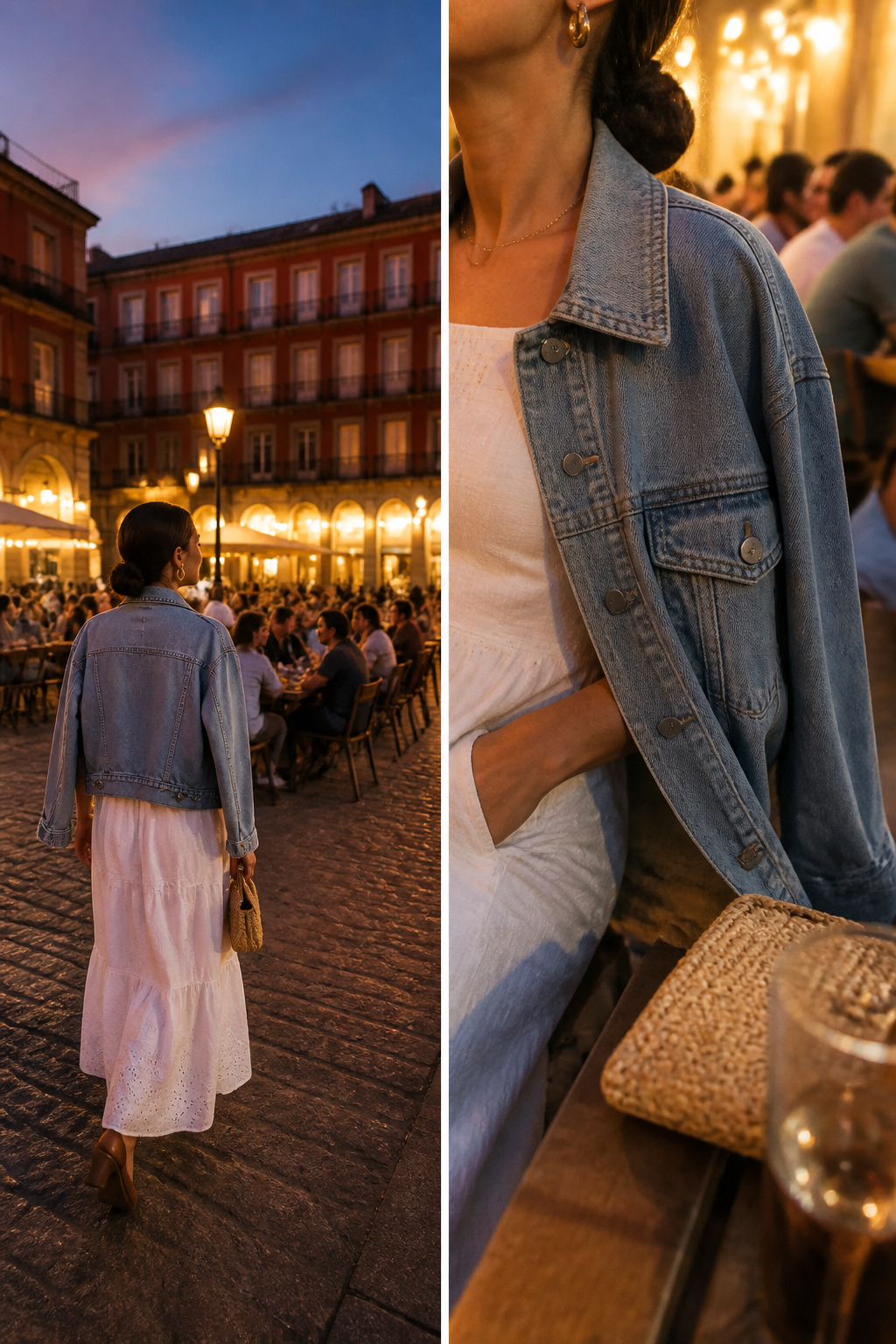
Spanish restaurants and museums run their air conditioning hard enough that a sleeveless cotton dress can feel wrong within minutes. I pack a light cardigan specifically for this, something thin enough to roll into a day bag but long enough to cover my shoulders when the vents are blowing directly overhead. The Prado in Madrid, in particular, seems to keep temperatures low enough to preserve the Goyas, not the visitors.
Evenings in Madrid drop to around 18°C (64°F), which is pleasant on a terrace but chilly once you’ve been walking in 35°C (95°F) heat all afternoon. A denim jacket bridges that gap without looking like you gave up on the trip. Northern coasts like San Sebastian and Bilbao stay even cooler, averaging 22–25°C (72–77°F) in summer, so layers there are non-negotiable rather than optional.
A silk scarf is the piece I resisted for years and now use constantly. Spanish women treat scarves as practical tools, not accessories, and the local shops know it. It covers shoulders for church entries, warms a neck when the metro car is over-cooled, and weighs next to nothing. Natural fibers matter here too: a cotton or linen layer breathes when you step back outside, while polyester traps heat against skin that’s already been shocked by the temperature swing.
9. What to Leave at Home
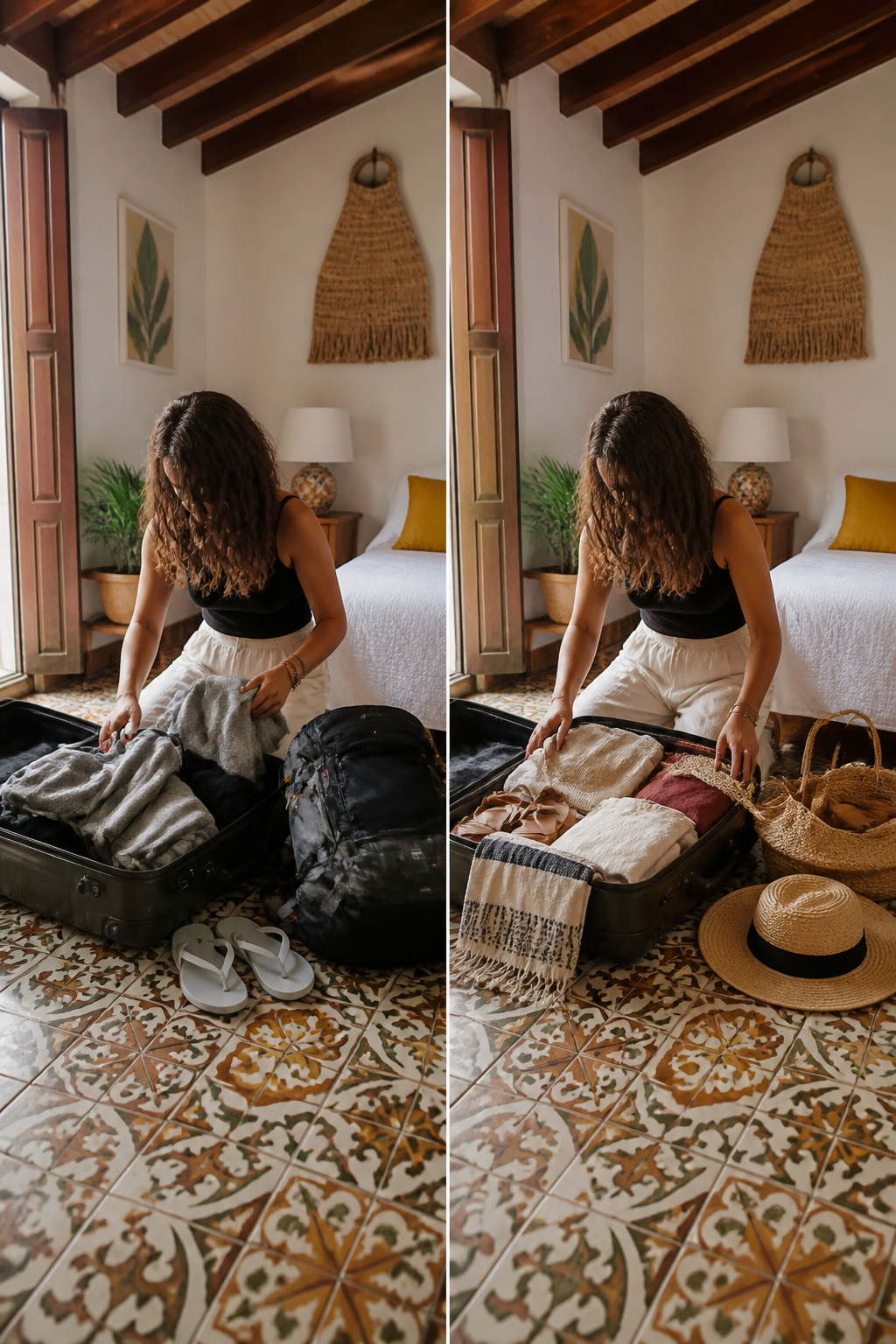
The oversized backpack is the fastest way to read as a target in Madrid or Barcelona. I watched a couple on the metro last June, both wearing 40-liter hiking packs with hip belts and rain covers dangling, and every pickpocket in the car knew their itinerary before they spoke. A slim crossbody or a structured tote carries exactly what you need for a day of walking and does not broadcast tourist.
Heavy athleisure fails on two counts. The synthetic weight traps heat against your body in a way linen or cotton never would, and the look itself signals that you missed the memo. Spaniards run errands in fitted trousers and leather sandals, not gym shorts and moisture-wicking tanks. The same comfort is available in lighter fabrics that do not close doors at restaurants or churches.
Flip-flops outside the sand read as careless, full stop. Rubber thongs in a city center or at a cultural site suggest you are not really present for where you are. Leather sandals or espadrilles handle the same heat with the intention that Spanish norms expect.
Evening demands its own upgrade. The jeans and sneakers that carried you through the Prado at noon will not pass at a 10 PM dinner in Seville or at a club door in Madrid. A blazer, a silk scarf, or simply a change of shoes bridges that gap. Athletic shoes and shorts will get you turned away.
How Hot Spanish Summers Actually Get
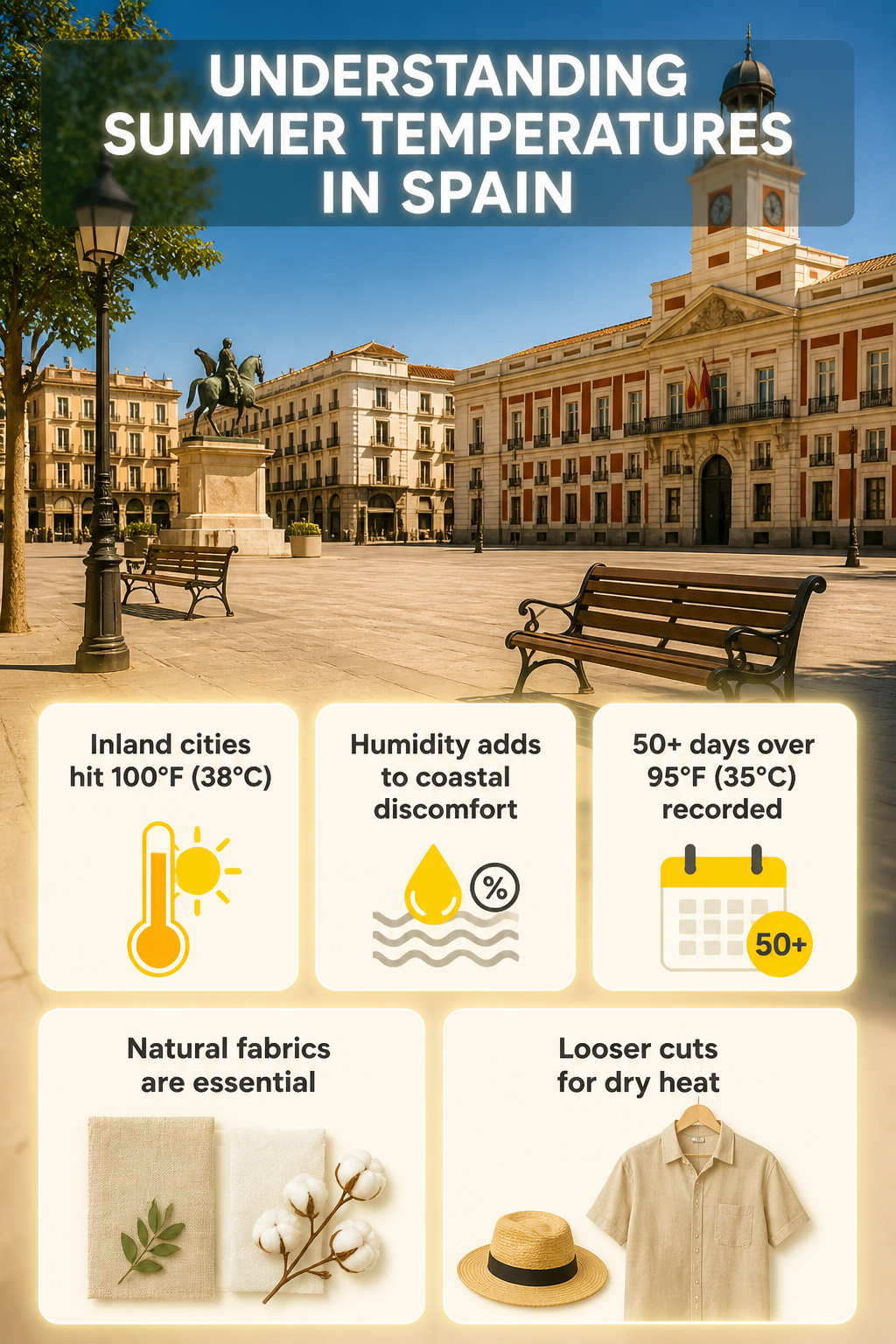
Spanish summer heat lands differently depending on where you stand. Inland cities like Madrid and Seville push toward 100°F (38°C), while coastal Barcelona and Valencia sit lower on the thermometer but carry heavier humidity. That 80–100°F (27–38°C) spread is the number that should drive every fabric choice in your bag.
I learned this the hard way on a July trip to Madrid when a polyester blouse I thought looked crisp turned into a personal sauna by 11 AM. The dry heat there is relentless; AEMET recorded over fifty days above 95°F (35°C) in summer 2025, and the pavement radiates it back at you. Seville runs similarly scorching. Coastal relief sounds better until you are walking the Gothic Quarter in 85°F with Mediterranean moisture clinging to your skin, and suddenly linen’s breathability matters just as much.
The difference between inland dry heat and coastal humidity means one fabric recommendation does not fit all. Lightweight open-weave cotton and linen work everywhere, but the cut shifts: looser silhouettes for Madrid’s oven, slightly more structured pieces that still vent for Barcelona’s damp. Both demand natural fibers that move air against your skin, because synthetic traps that 100°F reality and holds it close.
Why Spanish Style Runs More Polished Than American Casual
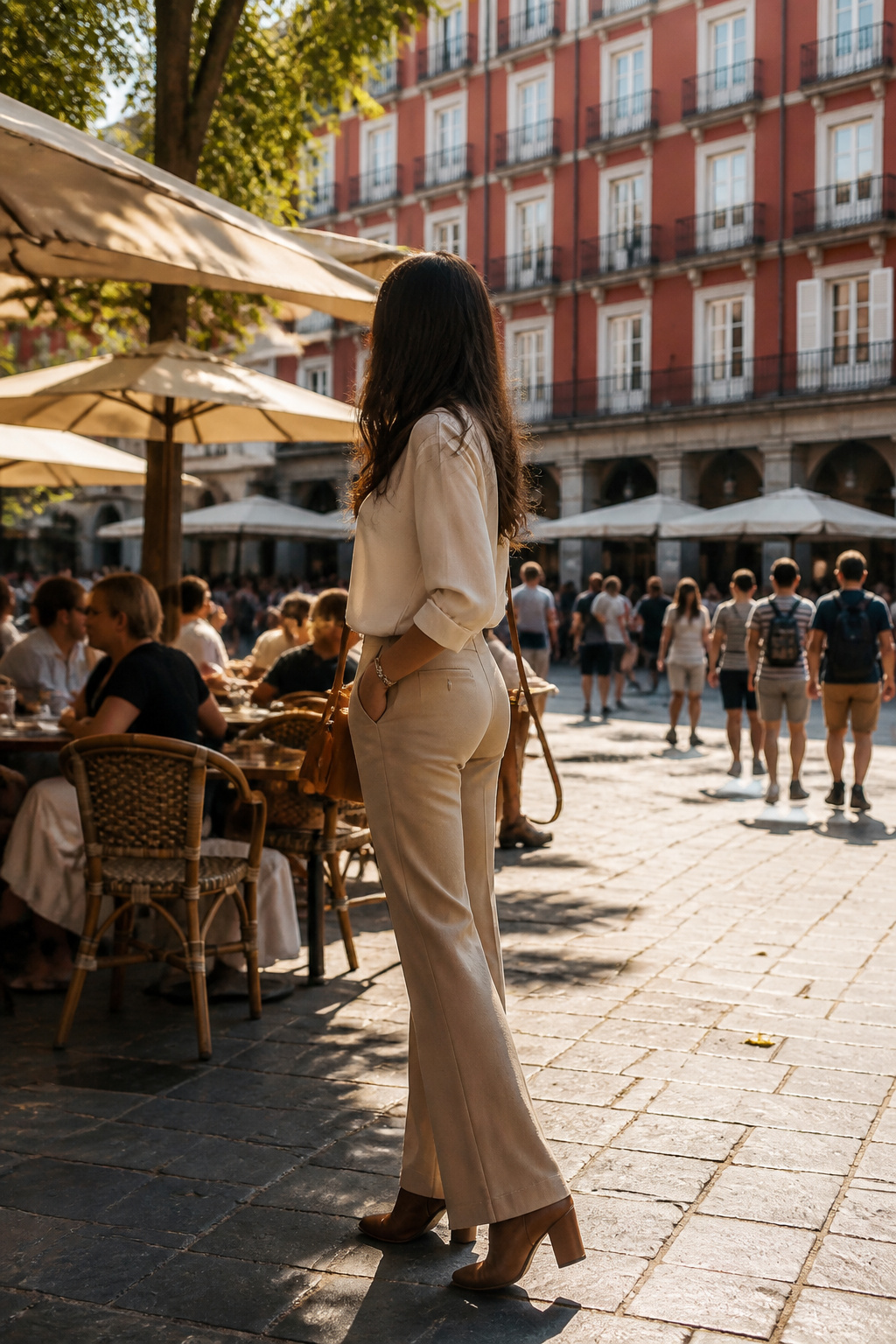
Spanish style sits somewhere between Italian formality and the looser Mediterranean ease you might expect, and that middle ground is what makes packing for Spain trickier than throwing on the same weekend uniform you wear at home. Americans default to athletic shorts and athleisure for hot weather; Spaniards reach for fitted cuts in breathable fabrics, even for a grocery run. The difference reads immediately in any restaurant after dark. A 2024 hospitality survey found 72% of sit-down restaurants in Madrid and Barcelona expect smart casual at dinner, and Spaniards eat late, between 9:30 PM and 11:30 PM, dressing noticeably better for those evening meals than for lunch. Churches and even casual tapas bars reward looking intentional rather than convenient.
The regional split matters, though less than some guides suggest. Madrid runs more conservative, with fashionable layers and less skin on show. Barcelona relaxes that somewhat, but the baseline polish still holds. Either city, the woman in well-fitted trousers and a neutral base with a single color pop looks local; the one in running shorts and a oversized tee looks like she is headed to the gym she will not find.
Packing for Mix-and-Match Versatility

A striped shirt and solid pants, or the reverse, gives you four combinations from two pieces. I pack two of each, linen or cotton, and that covers most days. The real constraint is what you carry on your back, not what you own. A carry-on forces the decision: does this piece earn its weight in outfits? If the answer is one, it stays home.
Breathable fabrics mean you can re-wear without announcing it, which is how the math works. Flat sandals, minimal sneakers, and one anti-theft crossbody handle cobblestones and cathedral dress codes alike. The travel gear shapes the clothing choices more than people admit. A water bottle and sunscreen take up pocket and bag space; sleeves you can roll, and collars you can flip, matter because your hands stay free.
My count: four tops, two bottoms, one dress, two shoes, one bag. That is ten pieces, thirty-plus outfits if you count the dress alone and the stripes against each solid. The 60% overpacking figure you see quoted is real, and the fix is not willpower. It is a rule that each item must pair with at least two others before it goes in the bag.
Evening Outfits for Dining and Nightlife

Spanish evenings demand a deliberate step up from the day’s heat-ready outfit. The same breathable dress that carried you through a Valencia afternoon feels underdressed by 10 p.m., when locals emerge for dinner at an hour most Americans consider late-night. I learned this the hard way in Madrid, arriving at a Malasaña restaurant in flat sandals and a cotton sundress while every woman around me had swapped in heeled boots, tailored pants, and a blazer or quality top. The shoe swap alone signals you understand the shift: athletic shoes and shorts get turned away at club doors in Chueca and Barcelona’s Port Olimpic, and even casual tapas bars reward the effort of a fitted dress with minimal, intentional accessories.
A full change back at the hotel often takes less luggage space than you’d expect. One pair of tailored pants and a lightweight top transforms the look without the bulk of a second dress. Seville’s Alameda district, where flamenco nights run late, is the place I felt most glad I’d packed that upgrade: the red midi dress and white heels that seemed dramatic in my suitcase looked merely appropriate once the music started. The paseo, the dinner, the nightclub, each transition asks for that subtle wardrobe upgrade.
Frequently Asked Questions
What should women wear in Spain in summer?
Women should wear breathable linen and cotton pieces, lightweight midi dresses, tailored shorts or wide-leg linen trousers, and flat leather sandals or espadrilles. Natural fibers matter because temperatures regularly hit 100°F in Madrid and Seville, and polyester traps heat while showing sweat. Linen wrinkles are acceptable in Spanish style, and warm neutrals like terracotta, olive, and cream mix easily across outfits.
Can you wear shorts in Spain?
Tailored shorts are acceptable in Spanish cities, but athletic or cutoff styles read as sloppy. A well-fitted linen or cotton short in a neutral tone works for sightseeing and casual lunches. Spanish summer style runs more polished than American casual, so the cut and fabric need to look intentional rather than like beachwear.
What shoes should you wear in Spain?
Flat leather sandals with secure straps, minimal low-profile sneakers in neutral tones, and espadrilles are the three reliable choices for Spanish cities. Flimsy soles and flip-flops fail on cobblestones within hours, and athletic sneakers look bulky against lighter summer clothes. Spanish-made alpargatas with thick woven soles grip wet stone and signal you understand local style.
Is Spain very hot in summer?
Yes, Madrid and Seville regularly reach 100°F in July and August, while coastal cities like Valencia and Barcelona sit in the mid-90s with humidity above 80%. Inland heat is dry and relentless, but coastal humidity makes linen’s breathability just as essential. AEMET recorded over fifty days above 95°F in Madrid during summer 2025.