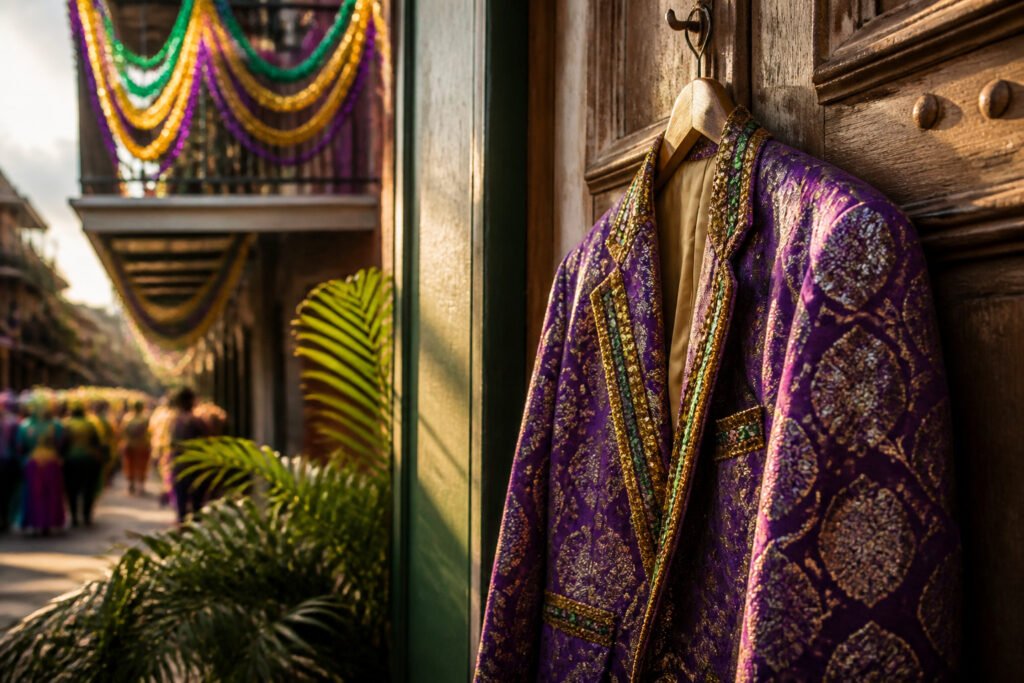
A Mardi Gras outfit is a costume, accessory set, or color-coordinated look built around purple, green, and gold for Carnival season in New Orleans. The catch is that February temperatures swing from 48° to 65°F, so the same sequined dress that catches balcony light needs a lining you can peel off once the crowd warms you up. The Mardi Gras Museum of Costumes & Culture on Conti Street rents pieces with real parade history if you want to look like you belong on the route rather than in a souvenir shop.
1. Costume Ideas

A sequined dress catches the light on every balcony and float, but February in New Orleans runs 48° to 65°, so that same dress needs a breathable lining or a layer you can peel off once the crowd warms you up. Tulle skirts solve this neatly: the netting lets air move through while still reading as costume, not cocktail attire. Feathers on a mask or shoulder piece photograph beautifully and weigh almost nothing, which matters when you are wearing the thing for eight hours straight. The mask itself is the piece most people remember. A feathered one, especially on Fat Tuesday, lets you feel hidden enough to dance badly and still recognizable enough for friends to find you. Themed outfits run the full range, and the bar is genuinely high; New Orleans takes costuming seriously. What separates the memorable from the miserable is fabric choice. Sequins, tulle, and feathers all share one advantage: they look elaborate without trapping heat. A costume that looks spectacular but cannot fit through a doorway, survive a public restroom, or hold together until midnight is a costume you regret. Pack it carefully if you are flying in. Masks crush, headdresses warp, and nothing kills the mood faster than arriving with a centerpiece that looks slept on.
2. Accessories
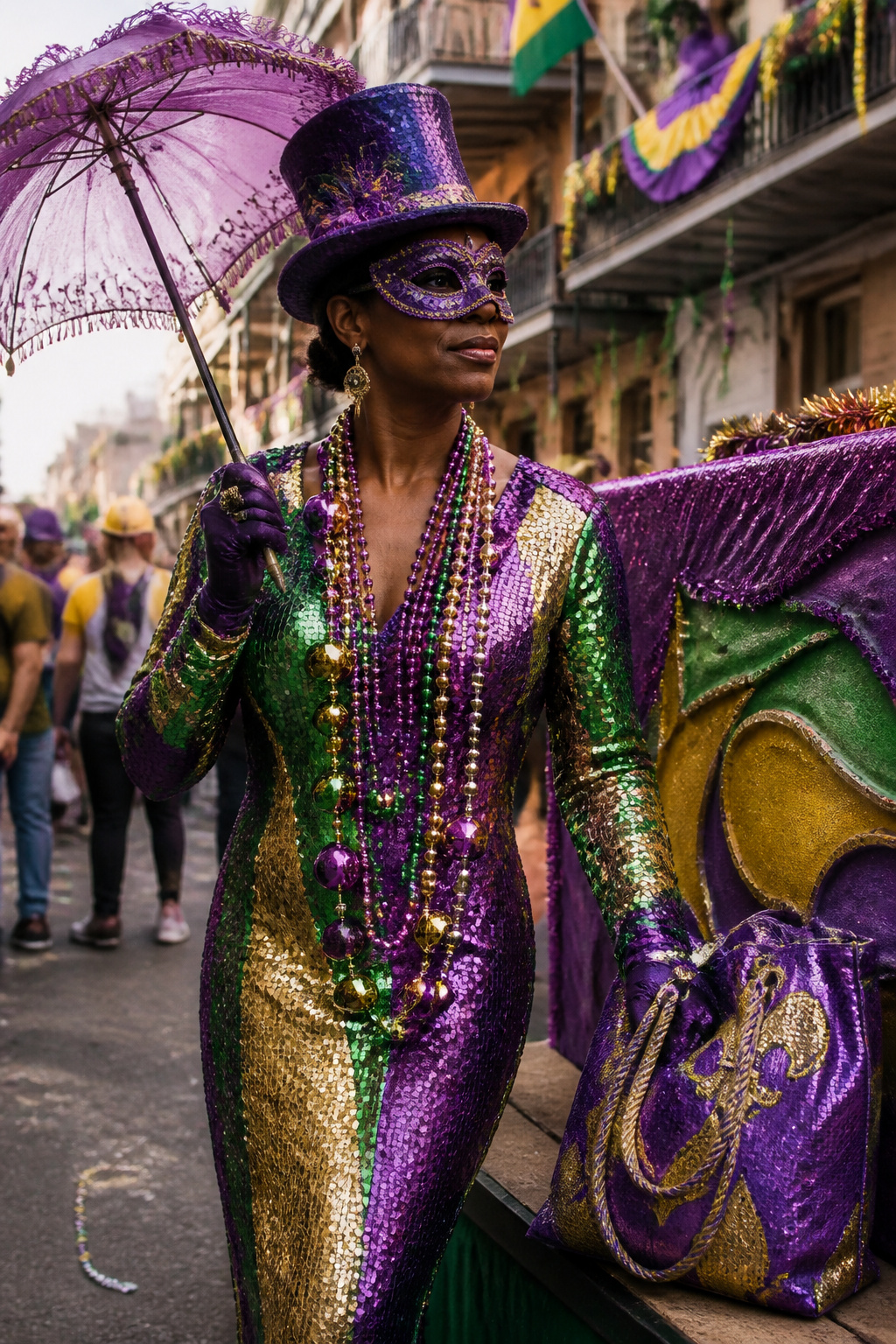
A mask, beads, and a hat should finish the look without turning into the whole look. Last year I watched someone in a sequined dress get completely swallowed by a feathered fascinator the size of a dinner plate; the dress was gorgeous, but nobody saw it. The mask sets the tone, so pick one that leaves your outfit visible: a simple eye-mask in purple, green, or gold if your clothes are already busy, or a more elaborate piece if you’re wearing something solid. Beads work the same way. Costume necklaces, earrings, bangles, and bracelets in the Carnival colors add rhythm, but they should echo what you’re wearing rather than shout over it. One strand of good beads beats five tangled ones. A top hat or smaller headpiece frames the face and photographs well, though a massive wig or boa can tip into costume territory fast. If you’re carrying anything, a tote bag in a matching color keeps your hands free for catching throws, and it ties the palette together without adding another competing element. The goal is to look festive, not like the parade float itself.
3. DIY Costume Tips
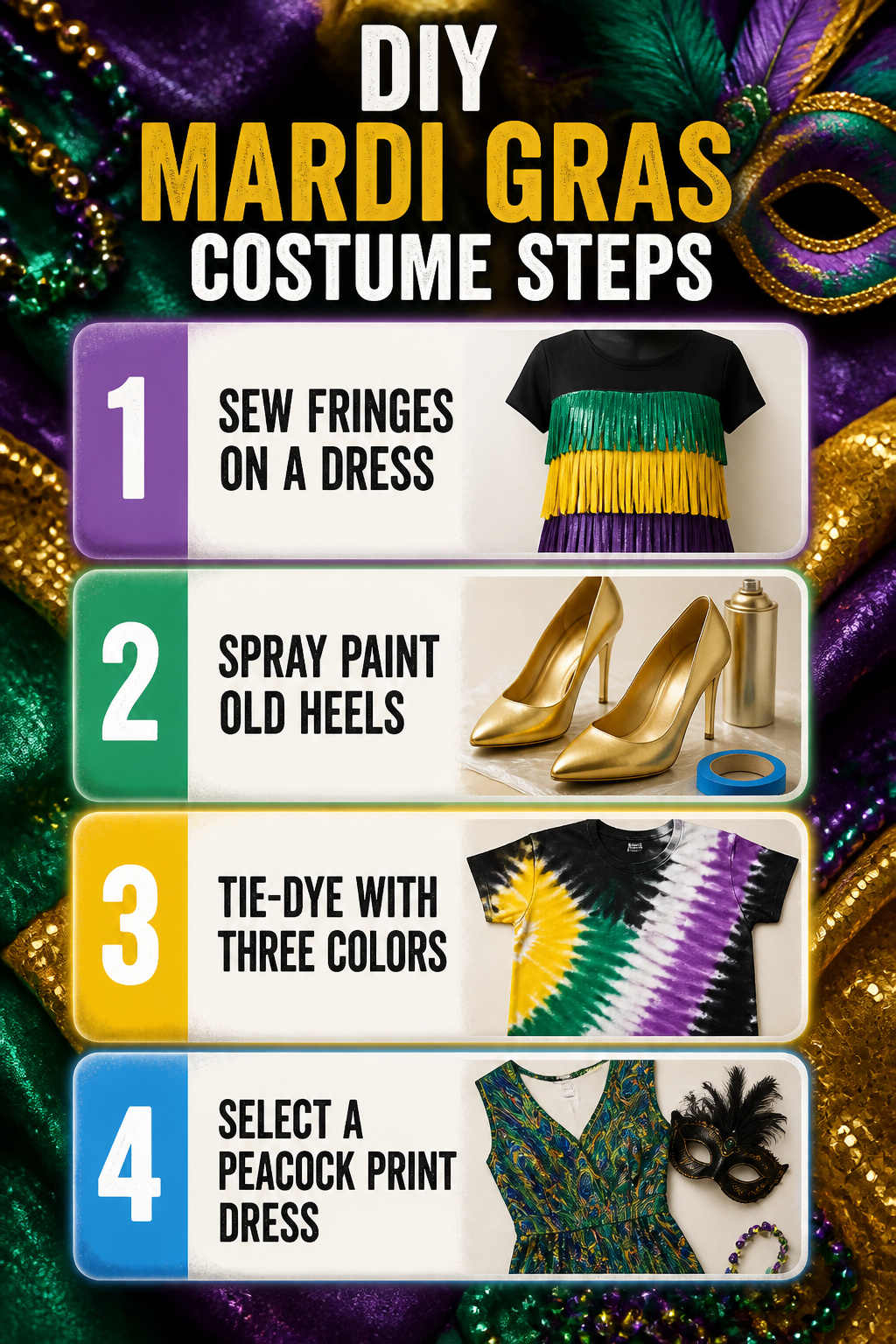
Sewing rows of green, yellow, and purple fringes onto a black slip or T-shirt dress turns a basic piece into something that reads as a flapper dress under parade lights. The trick is spacing: three-inch gaps between rows keeps the movement loose rather than costume-heavy. I have had better luck with jersey T-shirt dresses than actual slips; the weight hangs correctly and the stitches do not pull through after one wear.
Gold spray paint on an old pair of heels works if the shoe is leather or faux leather to begin with. Satin or fabric uppers turn stiff and crack where they flex. Test the underside of the heel first, and mask the sole with painter’s tape unless you want a gold footprint on your host’s floor.
For a tie-dye option, the three-color sequence matters. Dye yellow first on the untied section, then tie that off and expose a new section for green, then tie again and hit the last open area with purple. What stays tied stays white. The result is a white, yellow, green, purple, and black shirt that reads Mardi Gras without needing a mask to signal the theme.
A peacock print dress pulled from the back of a closet already carries the right color story: greens, blues, and golds that sit naturally in the palette. Pair it with a black masquerade mask and you are done. The same logic applies to any sequin skirt or top in one of the three colors; ground it with black and add a scarf in the remaining two.
4. Color Schemes
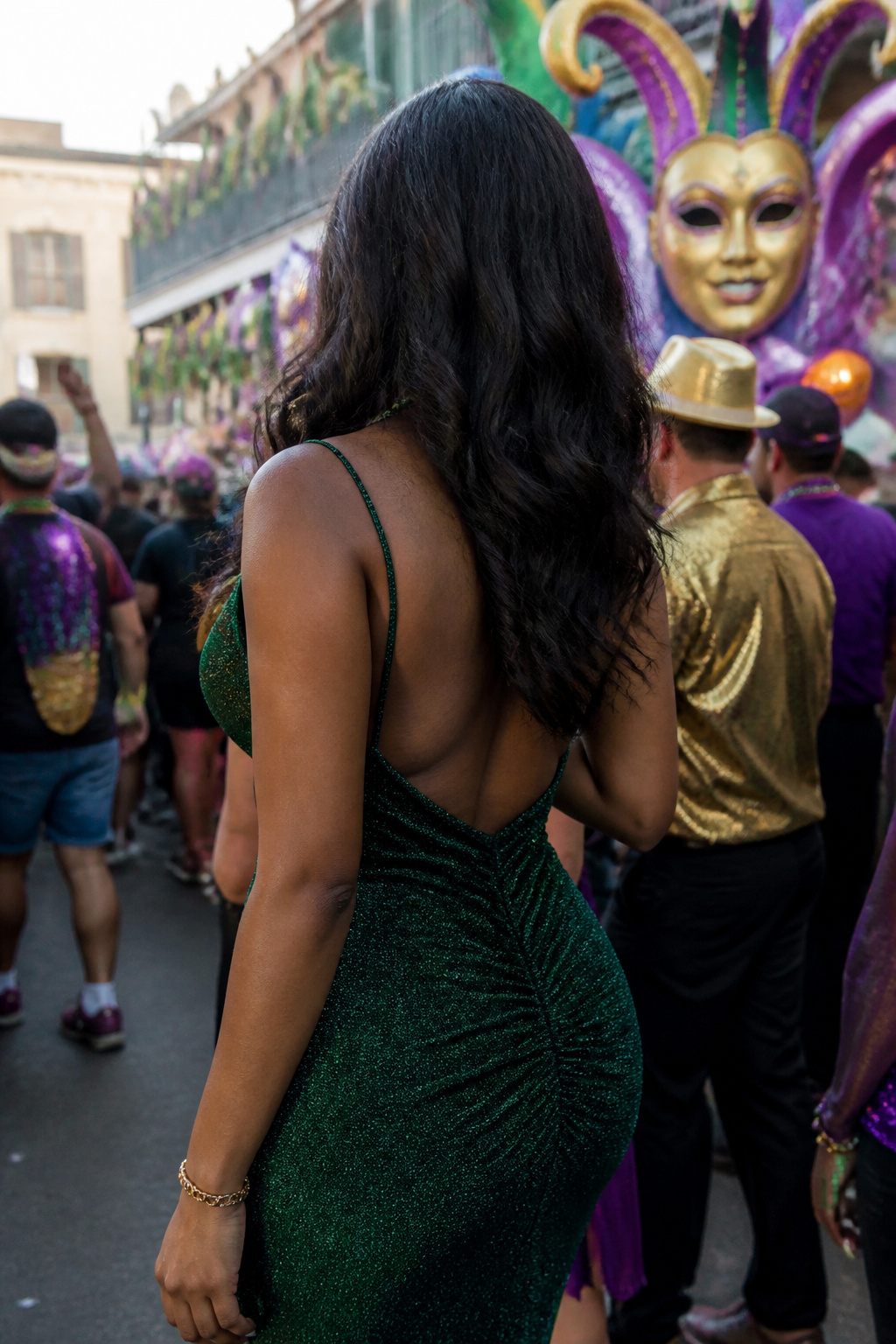
Purple stands for justice, green for faith, and gold for power, the three colors that have defined Mardi Gras since the Rex parade adopted them in 1892. Wearing all three at once can turn into a traffic-light mess fast, so pick one color to own and let the other two whisper. A deep green dress with a single gold bracelet and a purple lip reads intentional; a dress that splits the difference between all three reads like a costume shop exploded. Last year I tried a peacock print blouse, which carries green and purple in a single pattern, and kept the rest black. It worked because the colors had already been negotiated by the print itself. Sequins and beads in these shades catch light differently than matte cotton or velvet, so texture becomes your balancing tool: one shiny surface, two quiet ones. If you are building from pieces you already own, a black liquid leather skirt or a simple LBD does the heavy lifting while a mask, a scarf, or costume jewelry supplies the color in doses you control.
5. Shopping Locations

The souvenir shops along Decatur Street are the quickest stop for a simple mask in the traditional Carnival colors, plus hats, feather boas, and shirts in purple, green, and gold. Prices stay low, which matters when you are dressing for one long weekend and do not want a closet full of feathers afterward.
For a rental that actually looks like you belong in a parade, the Mardi Gras Museum of Costumes & Culture at 1010 Conti Street keeps what may be the largest personal costume collection in the city. Carl Mack, the owner and costumer behind it, built the museum between N. Rampart and Burgundy streets to tell the story of the walking clubs, Mardi Gras Indians, krewe royalty, and Cajun Mardi Gras. The closet is open for rentals, and the pieces carry the weight of real parade history rather than factory polyester.
Fifi Mahony’s at 934 Royal Street is where I would send anyone whose mardi gras outfit depends on hair. The wig collection is serious, and the staff guides you through trying them on rather than leaving you alone in a mirror. The line builds in the days before Fat Tuesday, so the earlier you go, the more attention you get.
Costume Comfort

A Mardi Gras outfit that looks incredible at 9 AM can feel like a prison by 6 PM if you forgot to test it for real life. The parades run long, the streets close to traffic, and cabs disappear, so comfortable shoes are non-negotiable for anyone planning to watch from the route. I have learned to skip the heels entirely for daytime events, no matter how tempting the costume photo might look, and pack them only for formal balls where walking distance is short.
Breathable fabrics matter just as much as the shoes do. February temperatures in New Orleans swing anywhere from 48° to 65°, and a heavy synthetic that felt right in morning chill turns suffocating when the sun hits and the crowd thickens. Cotton, linen blends, or anything that lets air move through the weave will keep you from peeling layers in the middle of a packed street. I also make sure whatever I wear allows me to use a public restroom without assistance, fit through standard doorways, and survive twelve hours without falling apart.
Weather Considerations
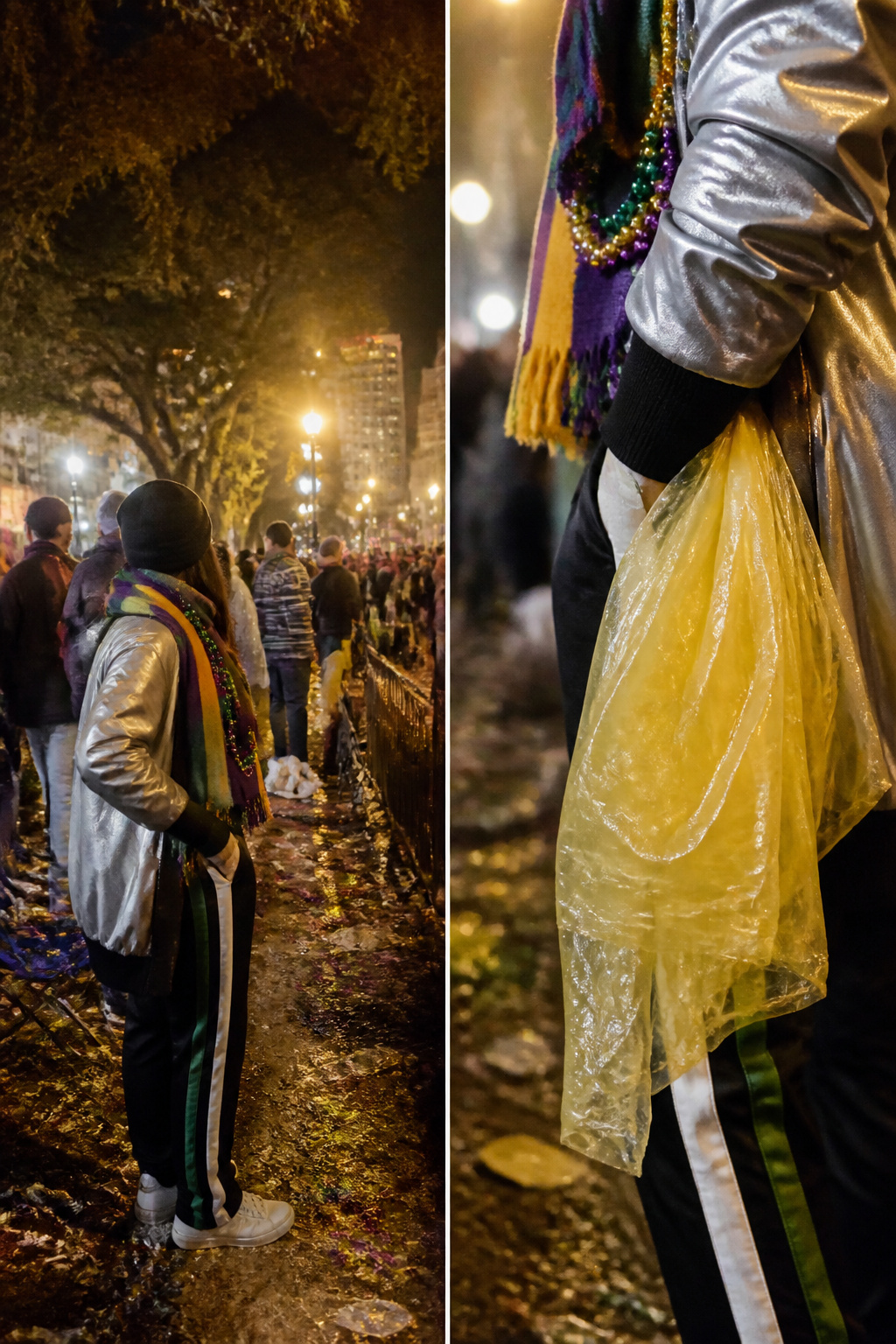
February weather in New Orleans runs from about 48° to 65°F, which sounds mild until you are standing on a parade route at 7 a.m. with wind cutting through a thin costume. Layers are the only sensible approach: a base you can strip down to by afternoon, plus something warm enough for the gaps between parades when the sun drops.
Rain is the real party-crasher. A cheap plastic poncho beats an umbrella in a crowd every time, and rain boots are non-negotiable. Mardi Gras muck is exactly what it sounds like, a festive slurry of mud, parade debris, and thousands of feet. Regular shoes will not survive it. Pack a raincoat or poncho, keep the boots on, and accept that your bag needs room for water and a phone charger too.
Cultural Significance

The first Mardi Gras on American soil may have happened in 1702 in Mobile, Alabama, or in 1699 near what became New Orleans, depending on which historian you ask. French settlers or explorers marked the day with masked balls, street parties, and lavish dinners. By 1827, students in New Orleans were already parading through the streets in colorful costumes inspired by Paris, and the first recorded parade followed ten years later. The Spanish occupation shut the celebrations down, but they came back in 1812 once Louisiana joined the United States.
That history matters when you are choosing a mardi gras outfit because the clothes are doing more than looking festive. The masking, the color, the collective joy in the street all come from nearly 320 years of practice. An outfit that nods to those roots, even loosely, connects you to the reason people are out there in the first place.
Frequently Asked Questions
What should I wear to a Mardi Gras party?
Pick one color from the traditional trio of purple, green, and gold to own, and let the other two whisper through accents. Sequins, tulle, and feathers all read festive without trapping heat, which matters when you are wearing the outfit for eight hours. A mask finishes the look, but keep it sized so your clothes still get seen.
Where can I buy Mardi Gras costumes?
Decatur Street souvenir shops carry the quickest masks and accessories in Carnival colors. For rentals with real parade history, the Mardi Gras Museum of Costumes & Culture at 1010 Conti Street opens its closet. Fifi Mahony’s on Royal Street is the stop for wigs, and Uptown shops like Funky Monkey, Miss Claudia’s Vintage Clothing & Costumes, and Uptown Costume & Dancewear on Magazine Street round out the hunt.
How do I make my own Mardi Gras costume?
Sew green, yellow, and purple fringes onto a black T-shirt dress with three-inch gaps between rows for loose movement. Gold spray paint works on leather or faux leather heels if you mask the sole first. A peacock print dress or any sequin piece in one Carnival color, grounded with black, does the work without starting from scratch.