The best going out outfits are built on pieces that shift registers with a single swap. That only works if the base garment is cut from fabric weighty enough to catch bar light without collapsing into costume. A mid-weight silk blouse and the same pair of tailored trousers can read office Tuesday or Saturday reservation depending on whether you reach for chunky loafers or a 2.5-inch block heel you can actually walk in.
1. Casual Dresses
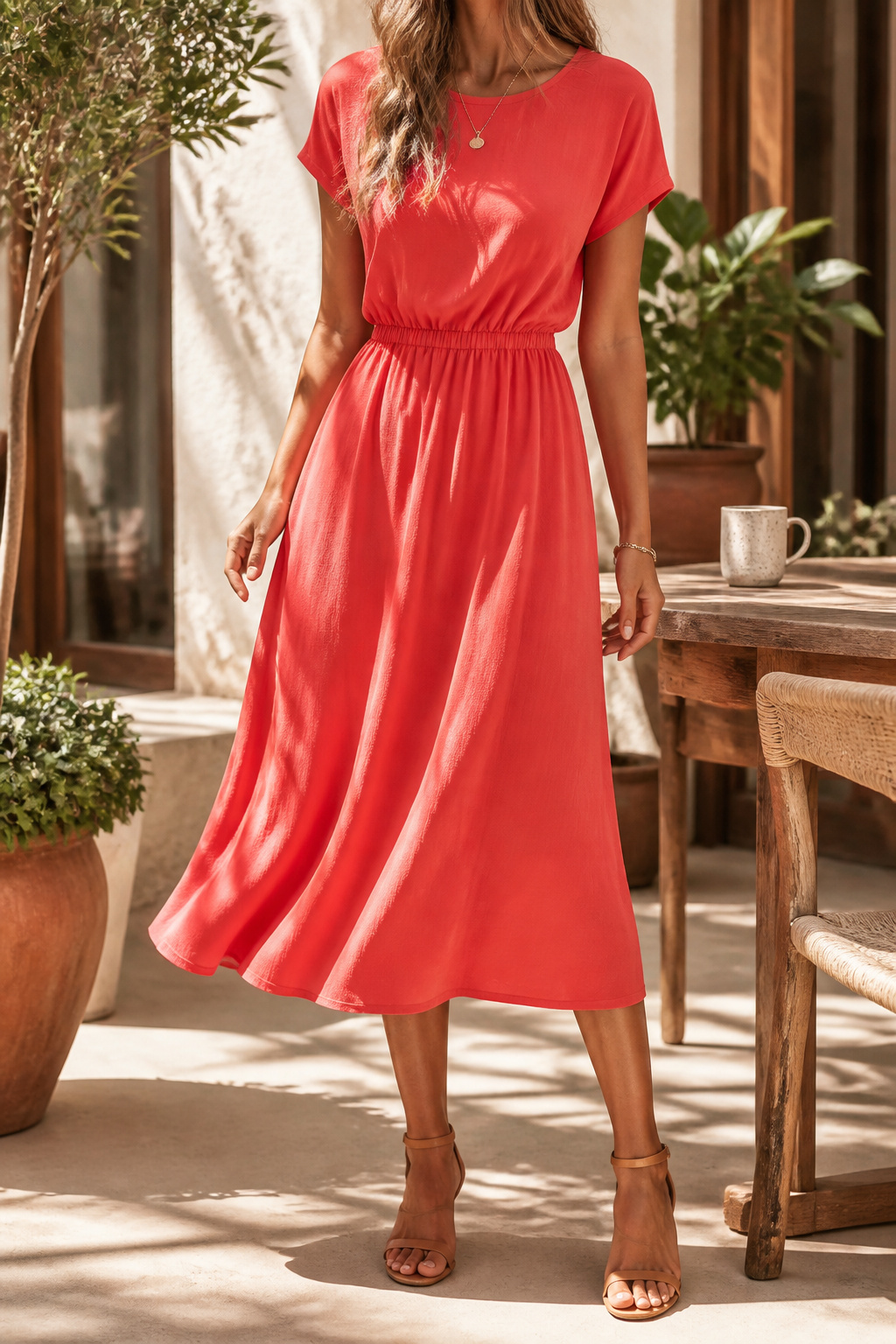
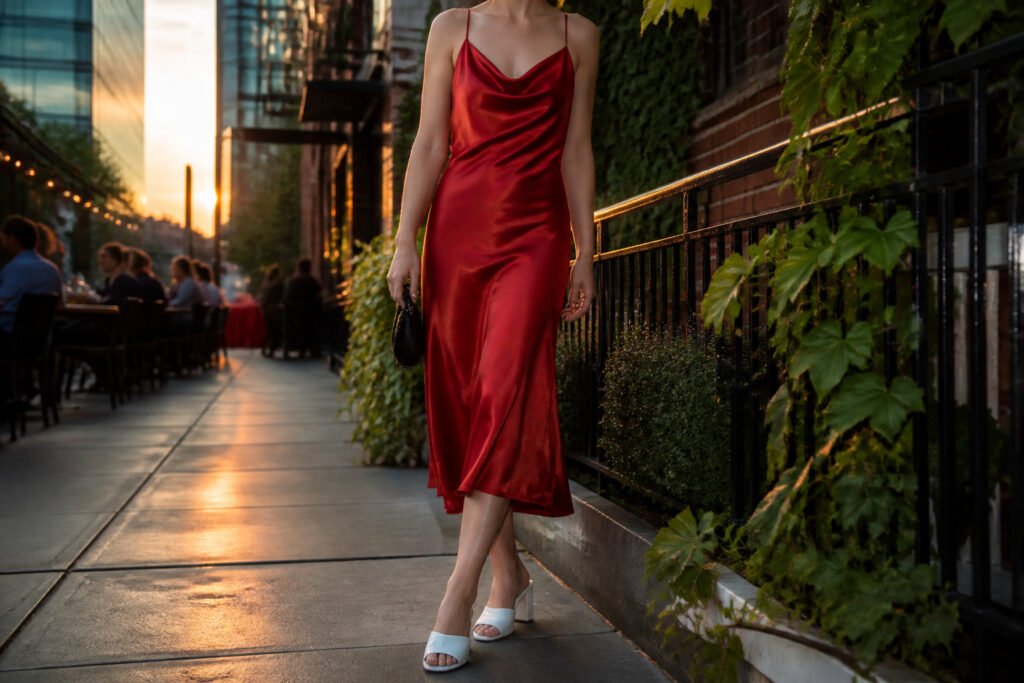
A casual dress is the one-piece answer to standing in front of your closet with twenty minutes to get out the door. The right fabric does most of the styling work before you even reach for shoes. A cotton knit reads coffee date until you swap in heeled sandals; the same dress in satin-weight viscose looks finished enough for a reservation with nothing more than pointed flats and a belt pulled one notch tighter.
Sleeve length changes where you can wear it. A long sleeve in breathable crepe carries through a restaurant that blasts AC in July, while a sleeveless cut with a higher neck line works under a blazer or alone for outdoor drinks. Midi lengths hit the practical sweet spot: short enough to move in, long enough that bar stools and breezes aren’t a calculation.
Body shape matters most at the waist. An elastic or shirred waistband forgives where a fixed band pinches; a true wrap dress lets you adjust through the evening rather than committing to one fit at 6 p.m. I’ve watched friends size up for hips and end up swimming in the shoulders, so the cut matters more than the number on the tag.
Shoes shift the whole register. Chunky loafers ground a floral print for daytime; swap to strappy heels and the same dress reads evening without changing anything else.
2. Jumpsuits

A jumpsuit does the work of a full outfit in one zip. The torso length is what makes or breaks the fit, so checking the rise measurement before ordering saves the return trip. Too short and the waistband sits under your ribs; too long and the fabric pools at your ankles even when the inseam is right.
Belted styles work when the belt sits at your actual waist, not where the designer guessed it might be. Skip the belt entirely on drop-waist or wide-leg cuts, since breaking the vertical line defeats the point of wearing one piece. For jackets, cropped lengths that hit at the waistband keep the leg line intact. Anything longer than hip-length turns the silhouette into a shapeless column, which is the look you’re trying to avoid by choosing a jumpsuit at all.
I have learned to scope out bathroom situations before committing to a jumpsuit for the night. One-piece construction means full disrobing in a stall, so venues with narrow doors or hooks placed too high turn a two-minute break into an awkward production. A wrap-front or button-placket style helps, but most going-out cuts don’t bother with that convenience.
3. Stylish Tops
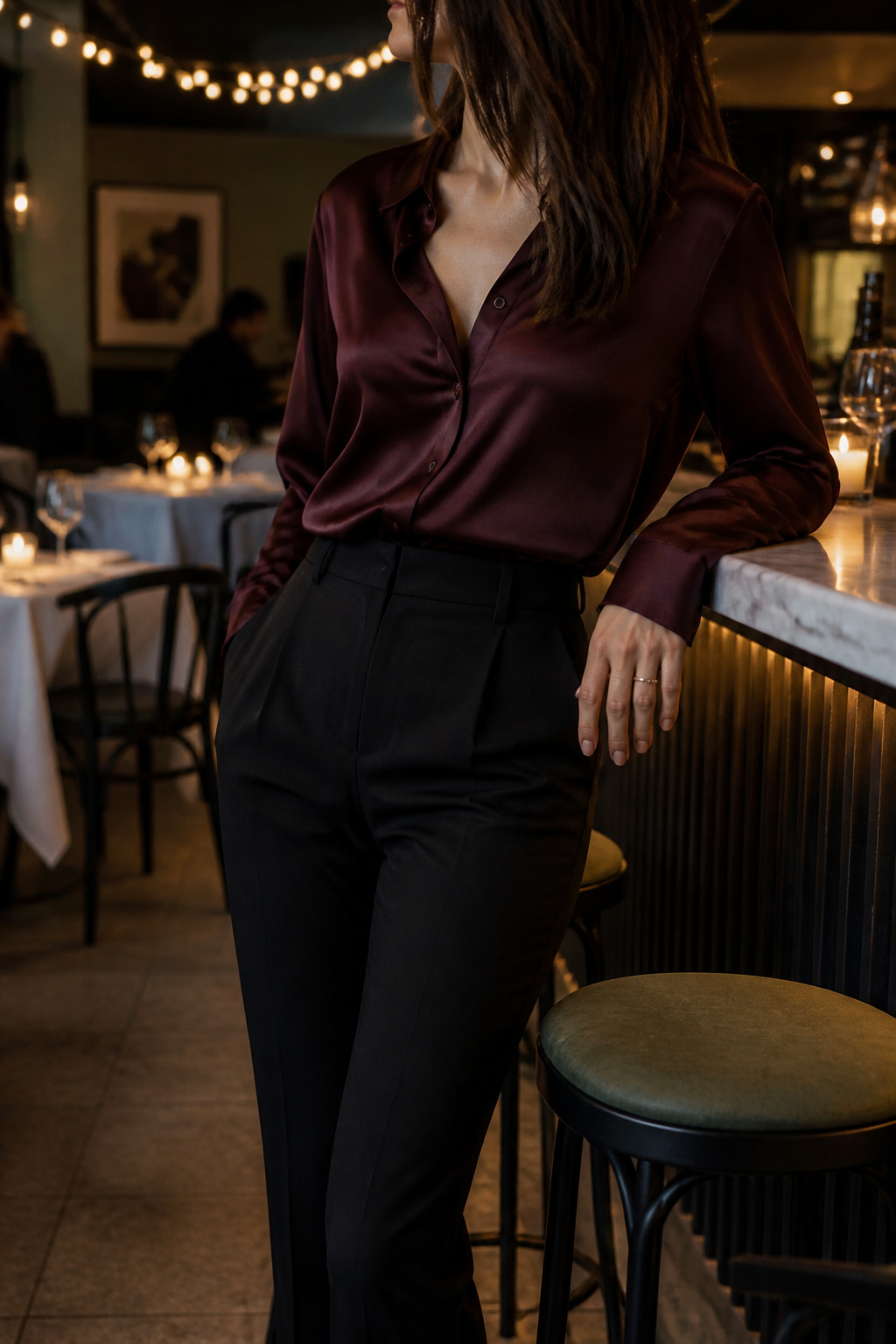
A mid-weight silk or satin blouse carries most of the visual weight in a going out outfit, which means you can pair it with jeans you’ve owned for years and still look dressed for the room. Fabric matters more than cut here: anything too sheer turns muddy under bar lighting, while a crepe or heavier charmeuse catches and reflects the glow in a way that registers on camera without looking like costume.
Neckline shapes the occasion more than people admit. A deep V or draped cowl reads evening immediately; a high neck with a keyhole keeps things formal enough for a dinner that might end at a lounge. For body shape, a boat neck or wide square opening balances hips and photographs as intention rather than accident.
Tucking changes the whole proposition. A silk blouse stays tucked if the fabric has enough weight and the waistband is fitted; lighter jerseys almost always ride up by the second drink. Structured tees with a clean hem, the kind that hit at mid-hip, work untucked with a narrow pant and need no adjustment all night.
Color is where the closet math pays off. A bone or warm white top pairs with black trousers, navy, olive, or even a washed denim without clashing. Rust and burgundy do the same work through colder months. One blouse in that range replaces three trend colors you would wear twice and abandon.
4. Tailored Pants
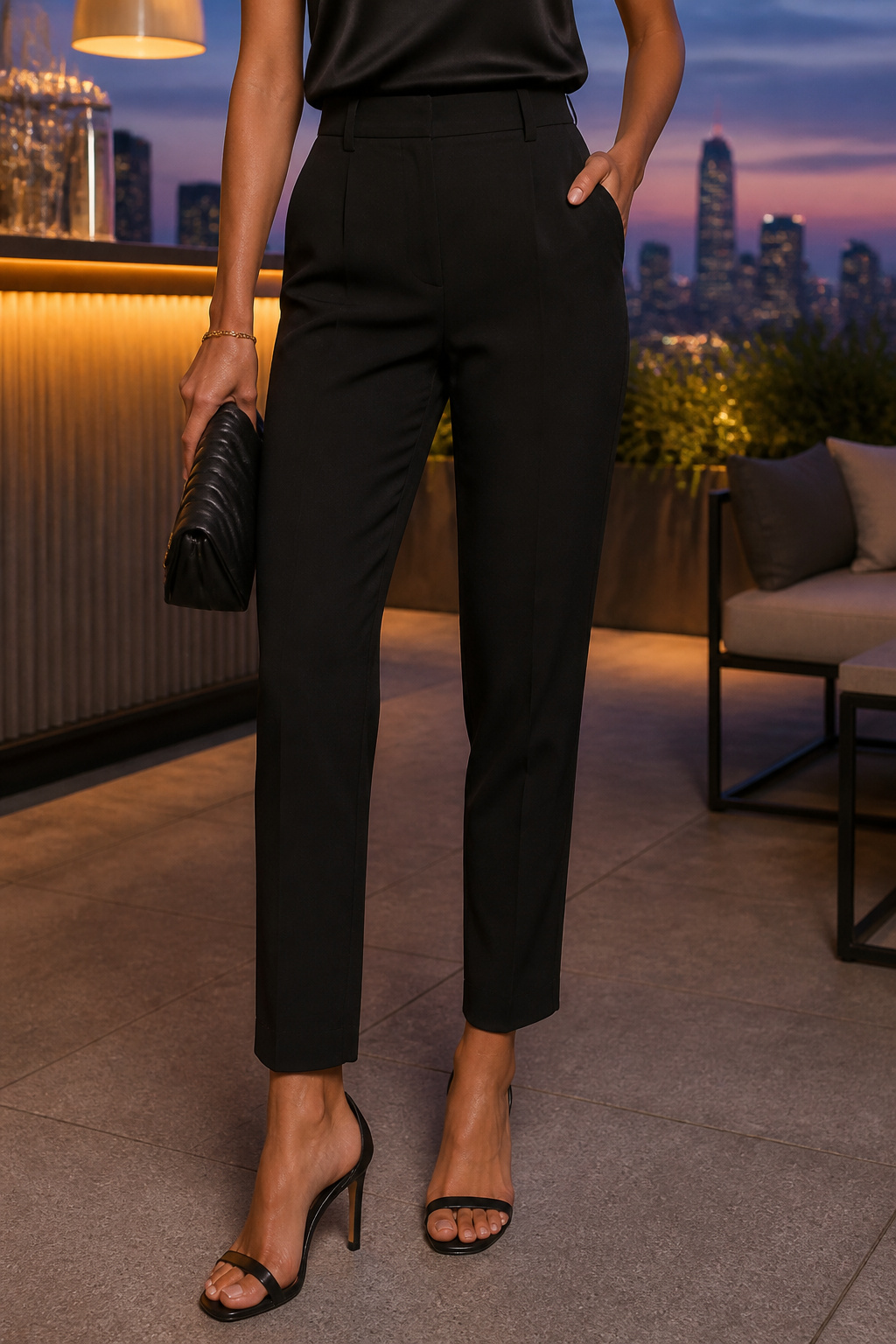
Tailored pants only work for a night out if they recover immediately after you sit. A pair I wore three weekends straight has enough stretch woven into the wool that the knee bags vanished within a minute of standing. Without that recovery, you spend the evening aware of your own creases.
Mid-rise cuffs the wrong way when you pair them with cropped tops. High-rise anchors the waist and lets you tuck or half-tuck without the shirt floating above the band. I learned this watching a friend adjust her silk cami across a four-hour dinner; the high-rise pair she borrowed the next weekend needed no touching.
Fabric weight is what separates these from the pair you wore to the meeting earlier. Anything above 10 oz reads corporate under bar lighting. Lighter twills and crepe-backed satins move differently and catch light on their own terms. The line you want is intentional, not managerial.
For hip width: wider-leg trousers balance fuller hips by carrying the eye straight down; slimmer cigarette cuts need structure through the waist to avoid pulling. A pair with gentle tapering through the ankle, neither peg nor palazzo, has been the most borrowed item in my closet for two years. The seam allowance held through dancing, crouching for cabs, and one incident with bar stools that were too high.
5. Statement Shoes
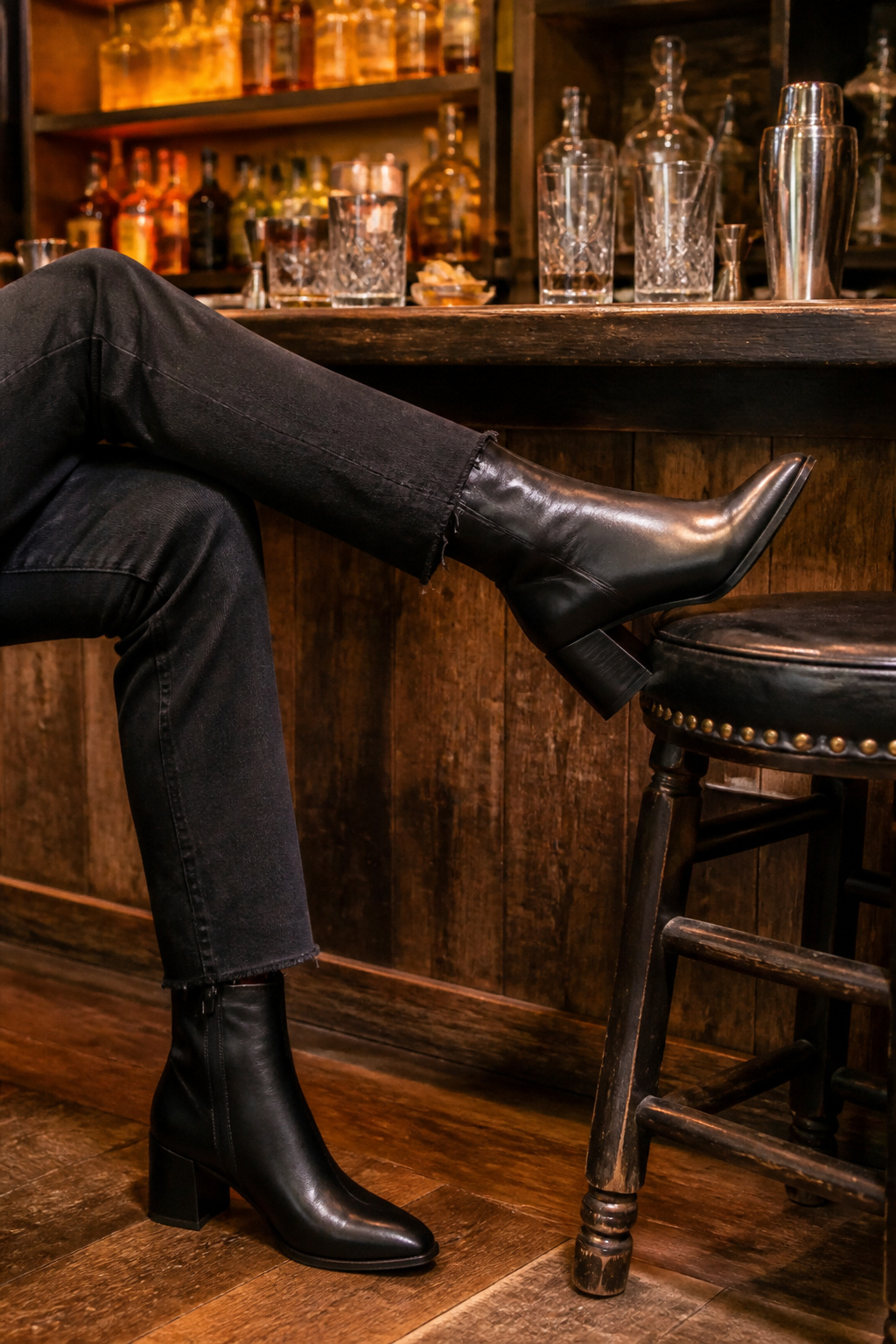
Statement shoes have pulled more of my outfits across the finish line than any single top or jacket ever has. A heeled boot in smooth leather survives spilled drinks without the suede meltdown I have watched happen at crowded bars, and the 2.5 to 3 inch block heel gets me through four hours without the grimace of a stiletto. Dressy flats in a pointed toe do the same leg-lengthening work when I am done with heels entirely; the rounded ones I owned for two seasons always shortened my ankle line in photos, so those left my closet first. The sweet spot is a heel you can walk in, in a material you can wipe down, and a shape that extends rather than interrupts the leg.
6. Layering Pieces

A cardigan that hits at the hip looks borrowed from the office; one that skims mid-thigh reads like part of the outfit from the door. Length matters because it tells people whether you planned this or grabbed it from the car. With dresses, I want something that extends the silhouette, not breaks it, so I look for layers that end where the dress does or go a few inches below. With pants, a cropped jacket keeps the leg line clean, which is the whole point of most going-out bottoms.
Fabric does the real work of making a layer look intentional. Knits with some weight to them, like a fine merino or a dense cotton blend, drape instead of clinging, and that drape is what separates styled from sloppy. Thin jersey just hangs there and telegraphs that you are cold. I skip anything with too much stretch in the body; it bubbles at the waistband by hour two.
Temperature is where I draw hard lines. Below fifty degrees, I reach for leather, structured enough to look like the outfit’s outer shell rather than a cover-up. Between fifty and sixty-five, a denim jacket works because the stiffness holds its own shape against whatever is underneath. Above that, if I need anything at all, it is a knit layer I can tie around my shoulders or wear open without it adding bulk I did not plan for.
7. Accessories
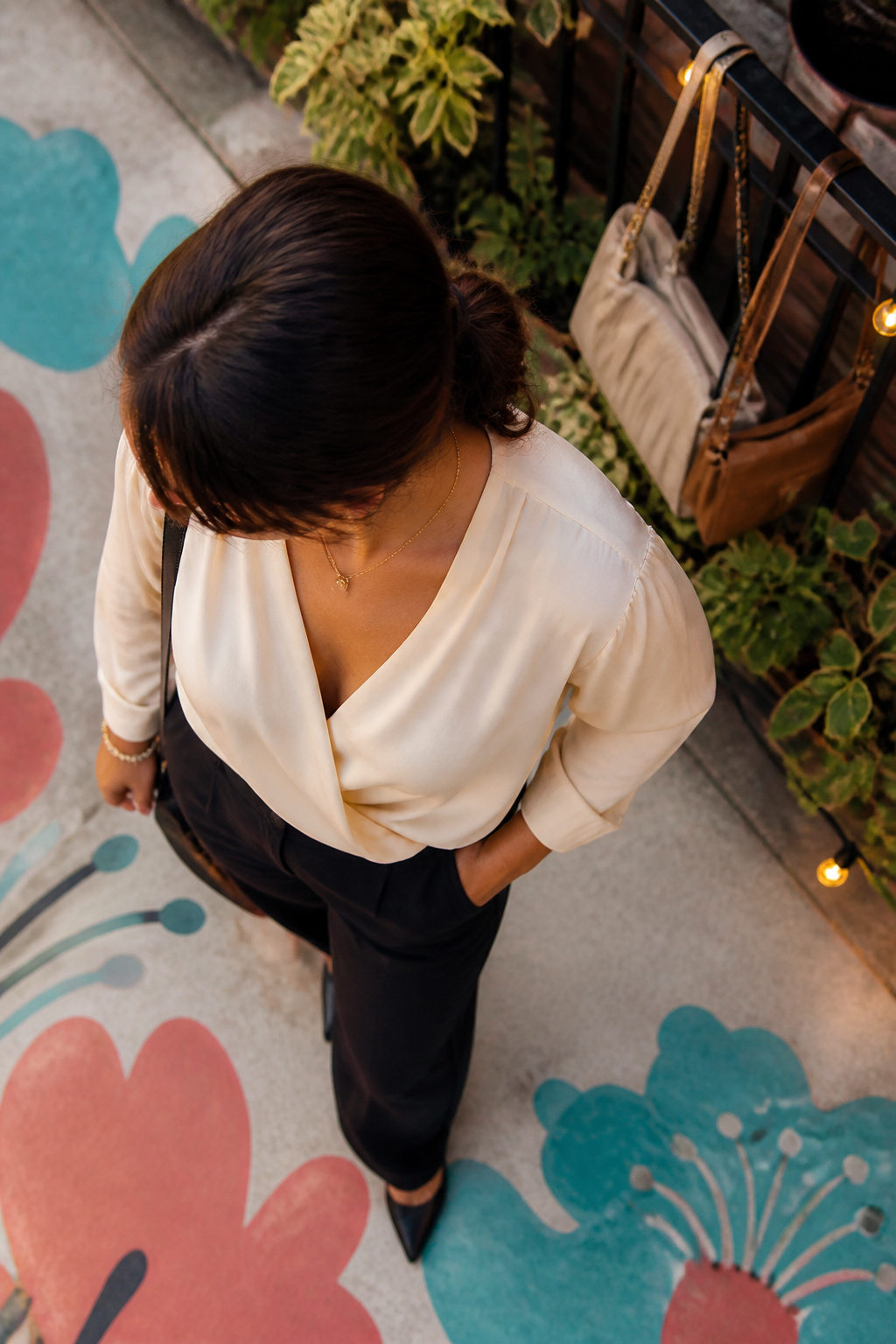
Jewelry, bags, and belts are where a repeated outfit becomes yours. A chain that hits just below the collarbone clears most necklines without competing, and that length is the one I reach for first.
For earrings, weight matters more than size. Anything over about eight grams per ear starts to ache by hour four, and by hour six you are discreetly touching your lobes in the restroom. I learned this at a wedding where I swapped studs in the car halfway through dinner. Now I test new pairs by wearing them through a full workday before they see a night out.
Bags need to fit a phone, keys, and lipstick without becoming the outfit. A structured mini around six by eight inches hits that balance; anything smaller and you are holding your phone, anything larger and the bag wears you. I lost a clutch once because it had no strap and I set it down to free both hands. I avoid anything without a shoulder or wrist strap now, no matter how sleek it looks on the shelf.
Belts do the least and fail the most. A cheap one cracks at the buckle hole you use most, usually the third one in. I buy leather with a metal keeper now, and I spend enough that replacing it every two years feels reasonable, not wasteful.
Mixing Pieces Into New Outfits
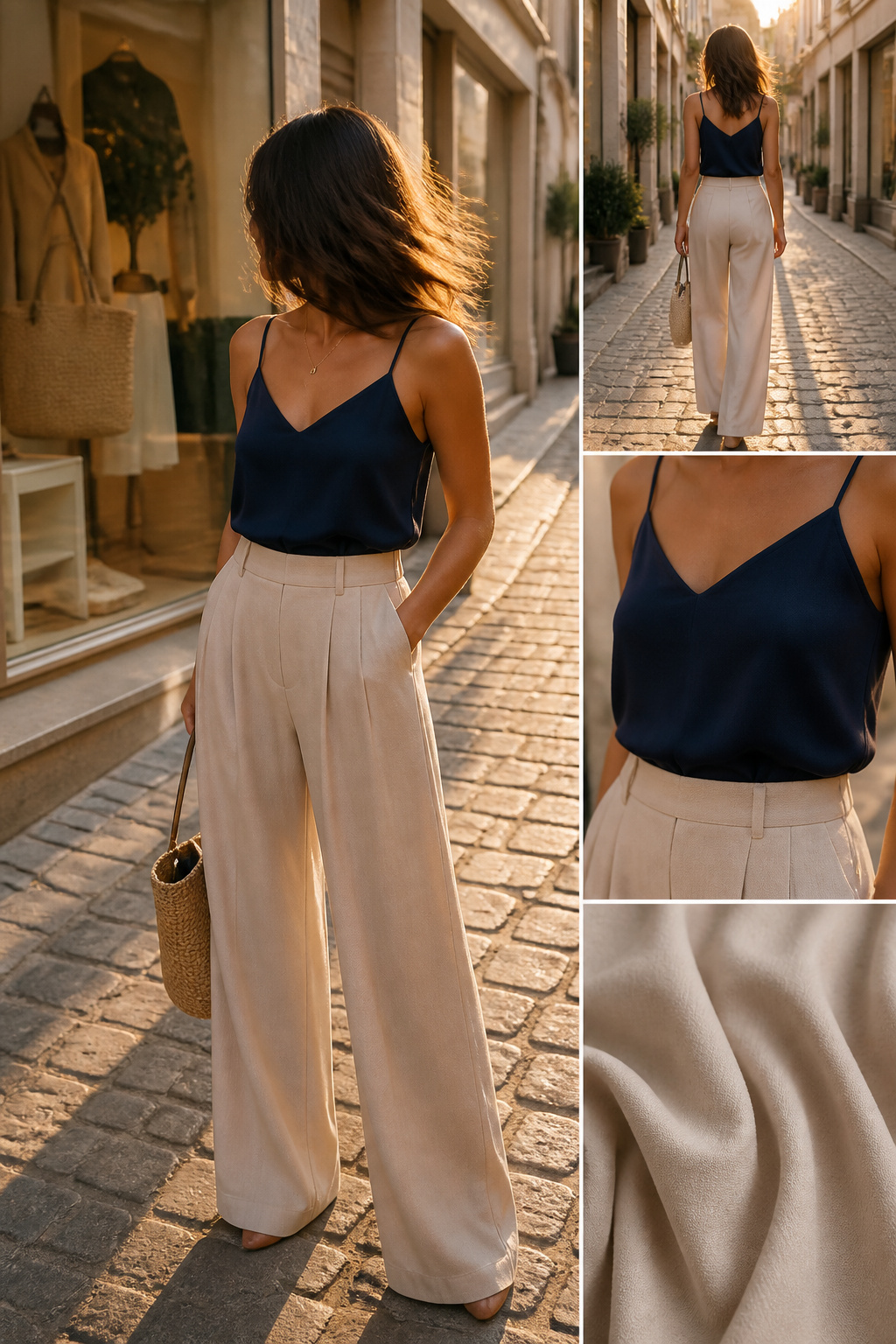
A small wardrobe multiplies fast when you know the balance rule: one fitted piece against one loose piece, never both at once. A body-skimming top needs wide-leg pants or a full skirt to breathe; a structured blazer only works over something that moves.
Color is what makes the math feel easy. Navy, camel, black, and ivory talk to each other without argument. Add one accent, rust or olive or a soft blue, and the outfit reads intentional rather than accidental. The mistake is treating every item as the star. One statement piece per outfit, everything else quiet. A sequined top dies next to patterned pants and chandelier earrings; pair it with black trousers and small gold hoops and it finally gets to speak.
The combinations that last come from this discipline. A silk camisole you already own, the tailored pants from Tuesday’s meeting, the blazer from Thursday, and suddenly you have Saturday night without a new purchase. The pieces you buy should know each other before they ever hang in your closet.
Comfort That Lasts the Whole Night
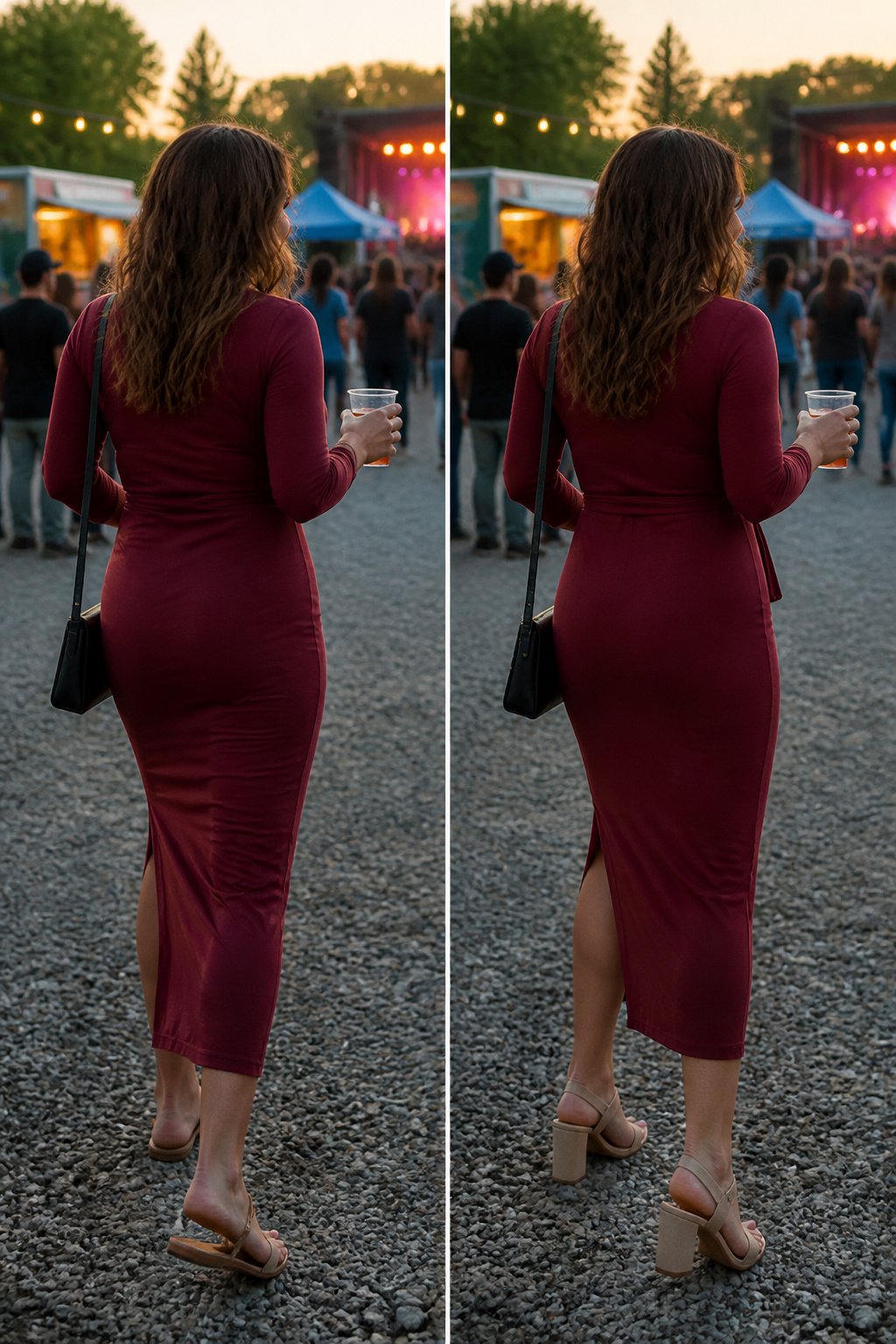
The fabric matters more than the cut once you have been on your feet for two hours. Dresses with at least 5% spandex woven through the bodice recover their shape instead of bagging at the knees where you have been sitting, and a waistband that sits at the natural waist, not two inches below it, will not start digging after the first round of drinks. For shoes, I test in the store by standing on my toes for a full minute. Anything that pinches then will pinch by nine o’clock.
I wore a midi-length wrap dress in a ponte knit to a four-hour standing concert last spring. The skirt had enough weight to keep its line even with a crossbody bag pressed against it, and the block heel sandals I paired it with had a strap across the instep that stopped my foot from sliding forward. I still changed before the next show. Swapped the heel for a lower shaft boot with a rubber sole, added bike shorts under the skirt for thigh coverage, and picked a top with a deeper armhole so I could raise my arms without the whole bodice lifting. The dress stayed. The shoes did not.
What Changes by Season
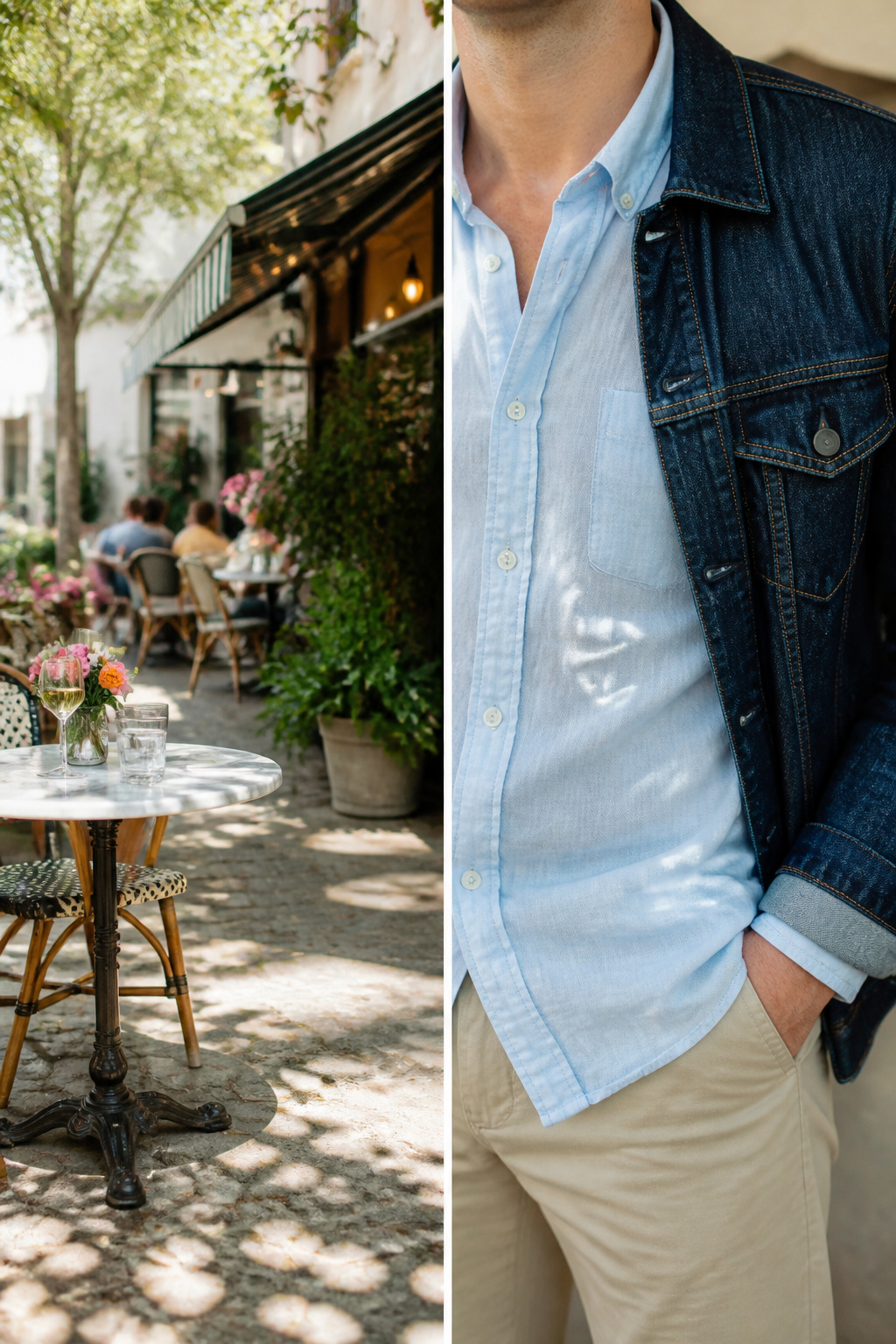
A cotton twill plaid workshirt in July sounds absurd until you are the one sweating through a bar with broken AC. Summer going-out fabric needs to breathe, and I have learned to look for the lightest possible weave that still holds a shape: open cotton, linen blends, anything that lets air move without collapsing into wrinkles the moment you sit. The same cotton twill that Wallace & Barnes uses for fall, I skip entirely until October.
Layering order matters more than the pieces themselves. I put the removable layer on the outside: a light jacket or overshirt I can tie around my waist or drape over a chair without the outfit underneath looking like an afterthought. Inside, a sleeveless base or thin knit that stands alone. The mistake is building an outfit that needs the layer to work, then losing it to a overheated venue.
Color shifts between seasons are where I used to default to black in December out of laziness. Now I move toward muted Scottish lambswool in soft crewnecks, speckled Aran knits, the occasional Kelly green or pink Shaggy Dog if the mood is right. These read as chosen, not as resignation to the dark. The heavier chino and the proven trucker jacket come in when the temperature actually demands it, usually around the first real cold day, and I keep the palette intentional even then.
What I Have Learned About Fit for My Shape
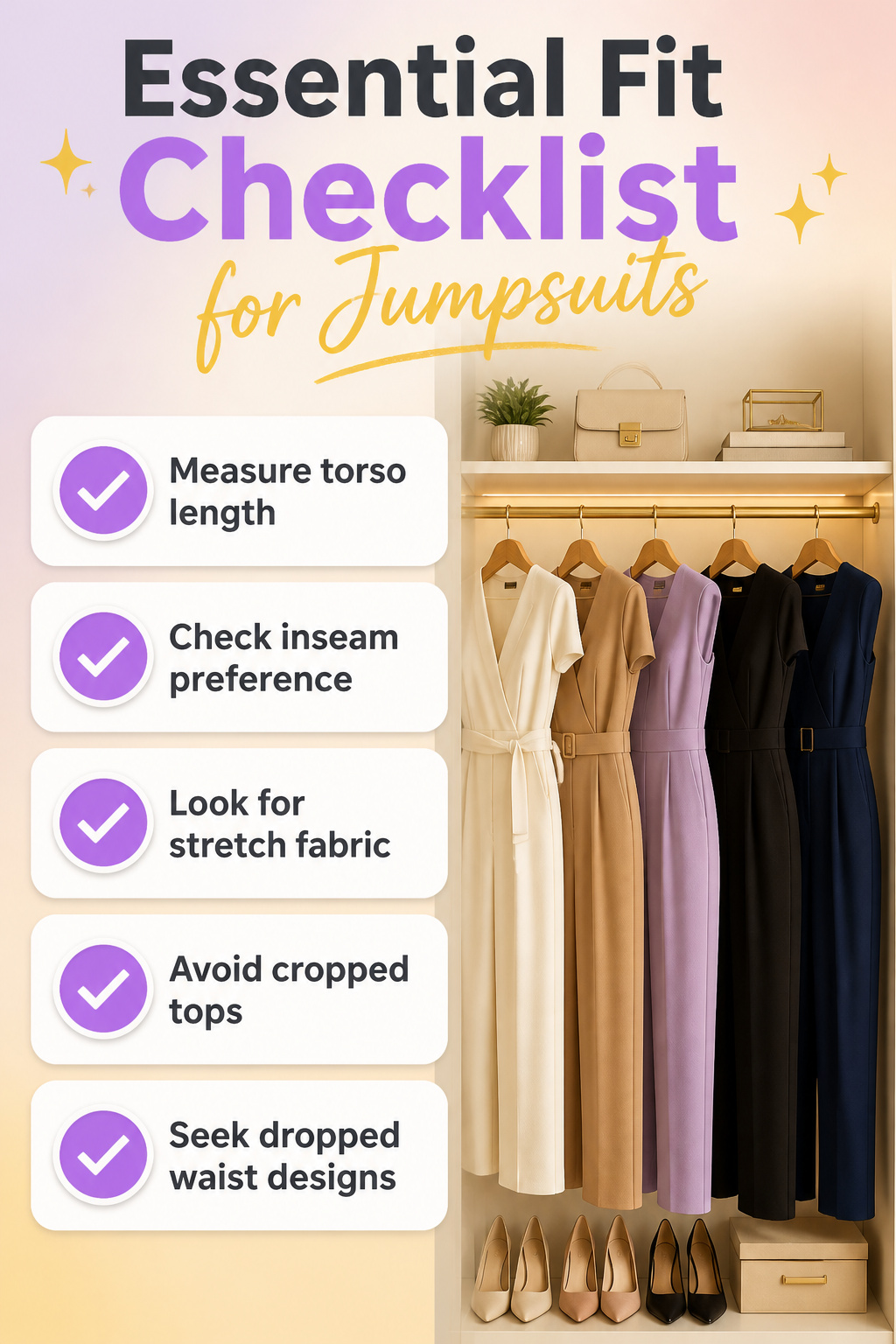
A jumpsuit lives or dies on torso length, not the size on the tag. I spent two years ordering the "right" size and sending half of them back before I started measuring from shoulder to crotch on pieces I already owned that worked. That single number now predicts whether a going-out jumpsuit will gap, ride up, or look like a borrowed uniform.
The proportions I abandoned first were the ones stylists kept recommending: wide legs with a cropped top for "balance," or anything belted at the natural waist to "create an hourglass." On my longer torso, both read as costume. The cropped top left a strip of midsection I did not want bare; the belt sat too high and shortened my legs. I now look for a dropped waist or a seam that hits closer to the hip, which lengthens the lower body without requiring heels.
Online, model photos are essentially useless for this. I keep a three-item checklist on my phone: torso measurement, inseam preference, and whether the fabric has stretch or structure. If the product page does not list a torso length, I skip it. The last jumpsuit I kept, a structured crepe with a slight drop waist, matched my number exactly and needed no tailoring. The three before it, all sized correctly by chest and hip, went back because the torso was an inch short.
Frequently Asked Questions
What should I wear for a casual night out?
A stylish top in mid-weight silk or satin paired with tailored pants and statement shoes gives you a polished look without overthinking it. The blouse carries the visual weight, so even jeans you’ve owned for years can work if the fabric catches the light right. Finish with shoes you can actually walk in, a heel between 2.5 and 3 inches or a pointed flat that lengthens the leg.
How do I style a jumpsuit for a night out?
Check the torso length before anything else; measure from shoulder to crotch on a jumpsuit that already fits and match that number. Add a cropped jacket that hits at the waistband to keep the leg line clean, and skip the belt on drop-waist or wide-leg cuts so you don’t break the vertical line. Scope out bathroom access first, since one-piece construction means full disrobing in a stall.
What are some trendy outfit ideas for going out?
Build from versatile pieces that mix across occasions: a casual dress in satin-weight viscose, a mid-weight silk blouse, tailored pants with recovery stretch, and one solid jumpsuit with the right torso length. One statement piece per outfit, everything else quiet. A small wardrobe multiplies fast when you pair one fitted item against one loose item and keep colors in a tight range of navy, camel, black, ivory, and one accent like rust or olive.