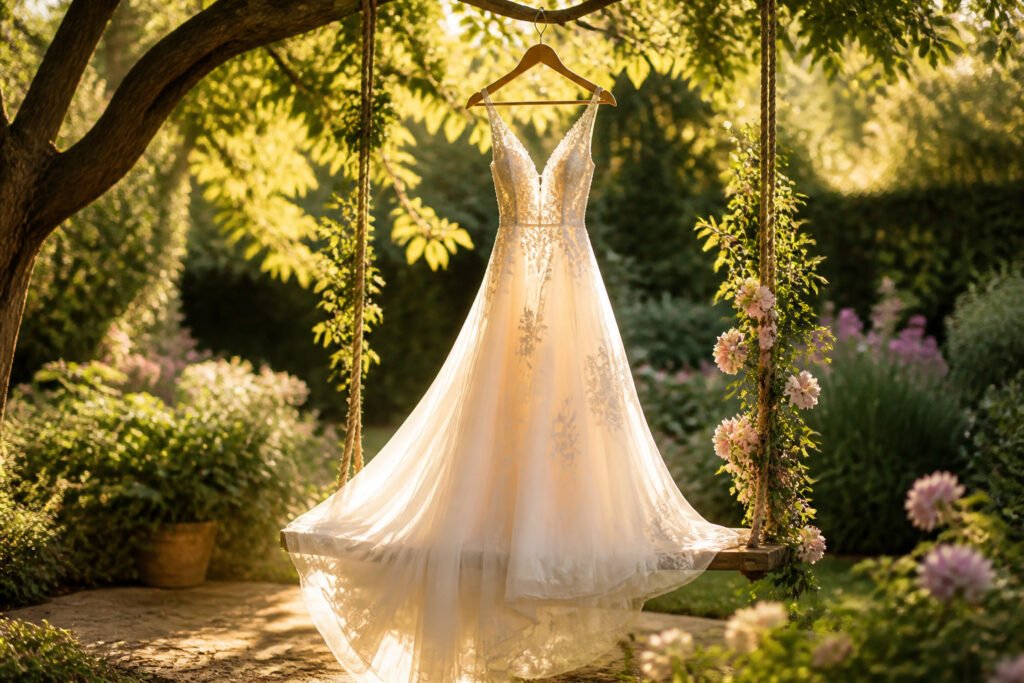
A bride dress is any wedding gown chosen for the ceremony, and the right one depends on which silhouette flatters your body, suits your venue, and lets you move through the day without fighting the fabric. The A-line alone ranges from light chiffon to formal satin, with prices for ball gowns running $990–$3400 depending on tulle layers and bodice construction. What most guides skip is how much the timeline matters: lace and tulle build slowly, layer by layer, and four to seven months is standard even for made-to-order gowns with minor changes.
A-Line Dresses

The A-line silhouette narrows at the waist and widens gradually toward the hem, forming that clean triangular shape that flatters nearly every body type without requiring a specific figure underneath. What convinced me, reading through a dozen of these bridal guides, is how consistently this shape gets recommended as the starting point, the safe choice that still photographs beautifully rather than looking like a default.
The structure does the work. A defined waist gives you shape; the flare from the hips down hides whatever you want hidden and creates movement when you walk. It does not cling, so you are not managing fabric tension all evening.
For fabrics, lighter materials like chiffon or organza keep the A-line from reading heavy, while satin gives it more formal weight. Necklines matter too: a sweetheart or V-neck balances the volume below, and a higher neckline can turn the same skirt shape modest without looking costumed. The versatility is real. You can find an A-line bride dress in nearly any bridal collection, at nearly any price point, which is exactly why so many guides treat it as the core option to try first, even if you end up somewhere else.
Ball Gowns
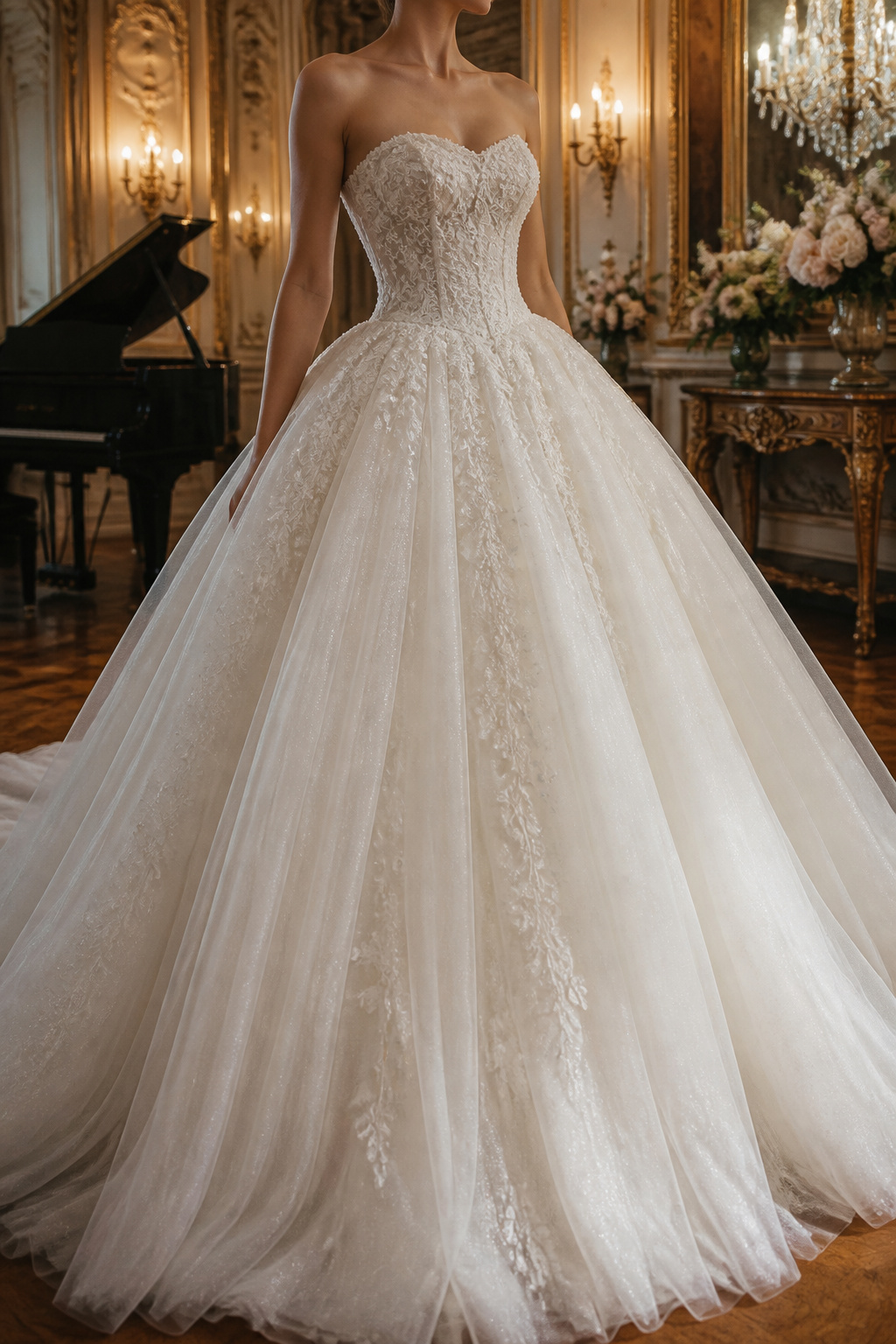
A fitted bodice and full skirt in layers of tulle is what defines the ball gown silhouette, and the effect is deliberately dramatic. The structure cinches at the waist and explodes outward, which flatters pear shapes and anyone who wants to emphasize the waist while minimizing hips. That same volume can overwhelm petite frames, though, and the weight matters more than most brides expect. Tulle layers add up fast; walking down an aisle feels manageable until you’re navigating a receiving line or dancing in one for three hours. The $990–$3400 range reflects this construction honestly. Simpler bodices with standard tulle sit at the lower end, while sculpted basque waists with box-pleated skirts and beaded bodice accents push toward the top. If the fantasy of the entrance is worth the trade in mobility, this is the silhouette that delivers it.
Mermaid Dresses

A mermaid bride dress fits like a second skin through the bodice, waist, and hips, then breaks into a flare at or below the knee. The line demands a body that carries curves in proportion, because every seam follows the figure with nowhere to hide. What separates the women who walk out smiling from the ones who tug at the fabric all night is usually posture and practice in the fitting room, not measurements on a chart. Satin gives the silhouette its liquid drama, catching light as you move, while structured lace adds texture without the weight that would pull the skirt out of shape. I have watched enough fittings to know that trumpet variations, which flare higher on the thigh, read as softer and more forgiving, though the difference is only inches. The women who own this look tend to have tried on safer shapes first and found them swallowing what makes them distinct.
Sheath Dresses

A sheath bride dress falls straight from the shoulders with no defined waist, letting the fabric itself do the work. The cut reads as minimalist because there is nowhere to hide: every seam and drape shows. Chiffon and crepe handle this honesty well, chiffon for soft movement and crepe for a cleaner, more architectural line. The silhouette suits leaner frames naturally, since it follows the body rather than sculpting it, and it feels right for pared-back settings where a grand skirt would look out of place. Lace can soften the line, as seen in designs with a sweetheart neckline and low back, but the sheath works best when the bride wants the day, not the dress, to take up space. Keep the fabric light if the wedding is outdoors or intimate; heavier materials fight the simplicity that makes this shape worth choosing.
Fit and Flare
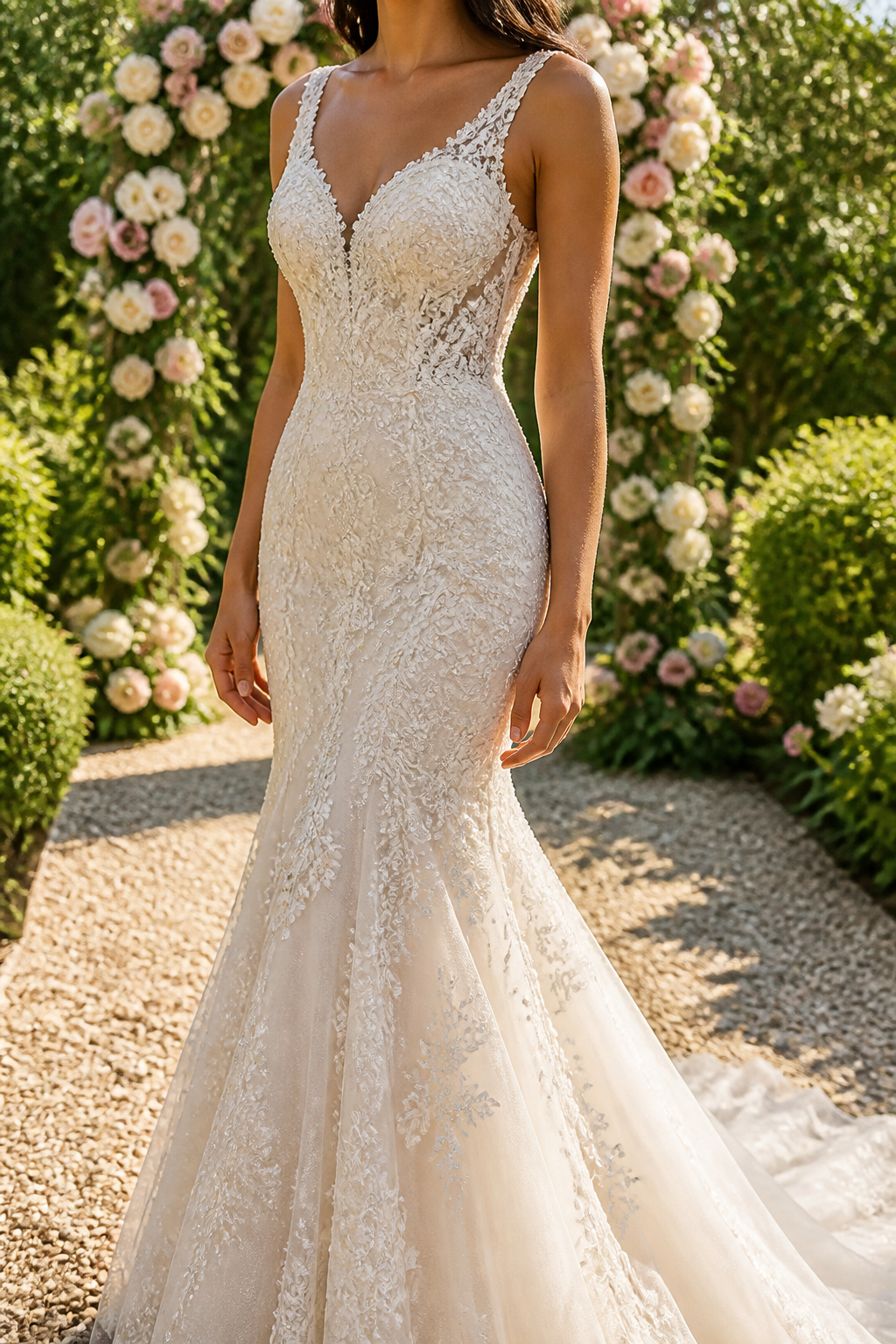
A fit and flare bride dress starts its flare at mid-thigh, not at the knee or lower calf where a true mermaid begins. That higher break point creates a softer, more forgiving line through the hips and seat. You get some of the sculpted effect of a tighter gown without the full drama of a mermaid’s severe taper.
Allure Bridals builds this shape with beaded and sequin lace appliqués layered over sparkle tulle, contouring the body before the skirt opens out. The construction reads as luminous rather than theatrical, which is why this style works for brides who want definition without feeling costumed.
Between an A-line and a mermaid, the fit and flare sits at a practical middle. It keeps the waist visible, skims rather than squeezes the hips, and still lets you walk and sit without the structural constraints of a gown that flares below the knee. Azazie offers the shape in stretch satin and in satin with crepe backs, which suggests the style has enough demand to warrant fabric variations at different price points. The stretch options matter here, because a fit and flare that lacks give can pull across the hips and ruin that clean break into the skirt.
Column Dresses

A column dress keeps the same narrow line from shoulder to hem, but with just enough built-in shaping to follow the body rather than cling to it. The difference from a sheath is subtle: a sheath skims, while a column actually structures. That makes it the choice for women who want clean geometry without the drama of a flare.
The silhouette reads modern and architectural, almost gallery-like in its restraint. It works best on long, straight figures where the vertical line has room to travel, or on athletic builds where the slight shaping creates curve where there is little. Petite women sometimes find the unbroken line overwhelming; the eye has nowhere to rest, and the effect can flatten rather than elongate.
Fabric choice matters more here than with almost any other bride dress style. A column in heavy silk faille holds its architecture and photographs with shadow and edge. The same cut in soft jersey collapses into something nearer a nightgown. If you are drawn to this shape, budget for structure: boning, a defined waist seam, or a heavier cloth that does its own work.
Short and Non-Traditional Lengths
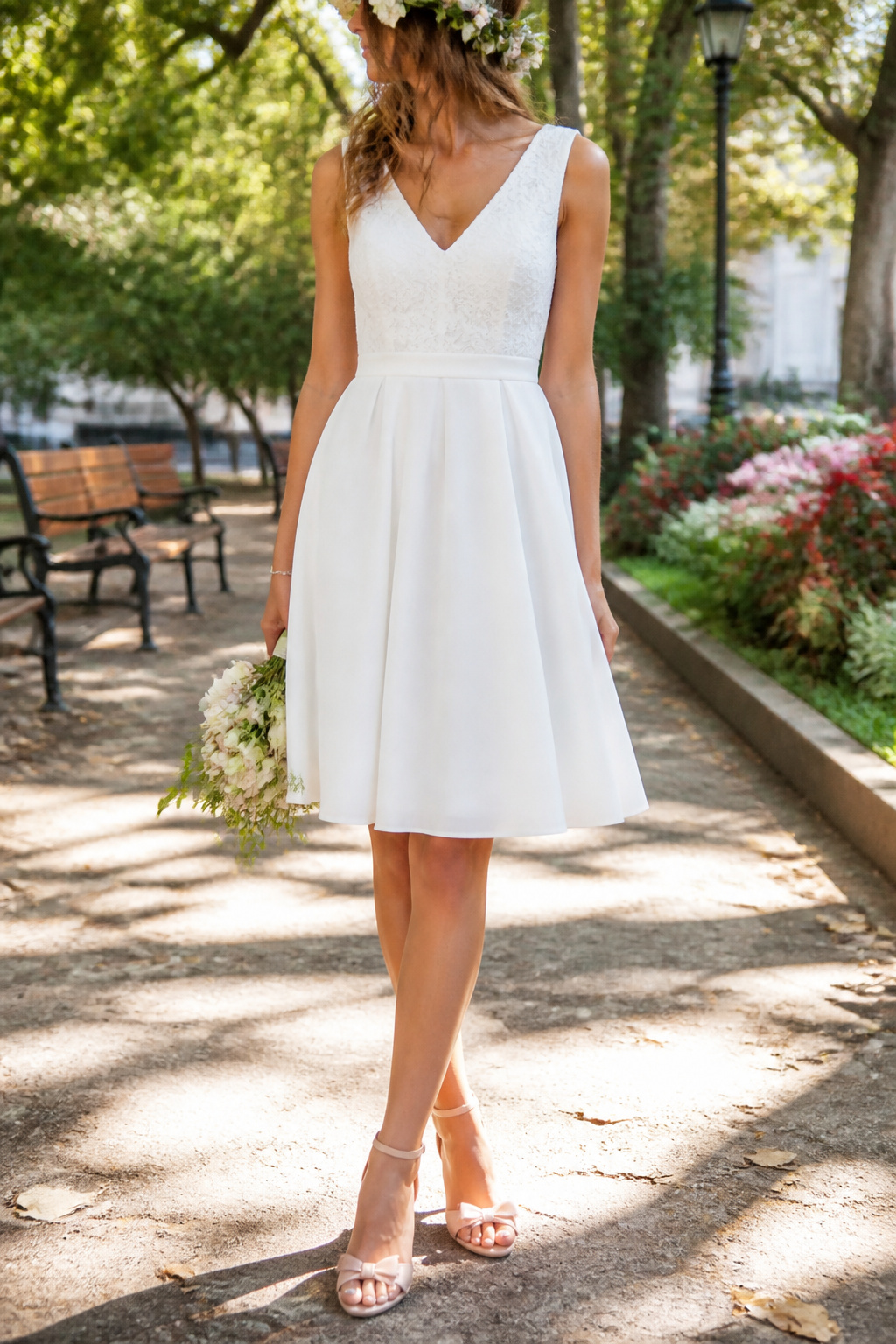
Tea-length, knee-length, and mini bride dress styles strip away the formality that makes floor-length gowns feel obligatory, and that freedom comes with its own set of calculations. A hem that hits mid-calf or higher works best when the wedding itself is loose in structure: backyard ceremonies, city hall exits, receptions where dancing matters more than procession. Second marriages often suit them too, not because the moment matters less, but because the wearer already knows what dragging tulle through grass feels like and opts out.
The real friction hides in accessories. A shorter hemline throws off the proportion of a cathedral veil, which suddenly reads costume instead of romantic. Shoes become unavoidable focal points rather than hidden lifts, so scuffed soles or last-season dye jobs face direct scrutiny. Jewelry that felt balanced against acres of satin can look stranded against bare collarbone and knee. What convinced me, reading through how stylists handle this, is that the shorter the dress, the more deliberate every choice above it needs to be. A cropped veil or fresh pair of heels isn’t compromise; it’s the point.
Vintage Styles
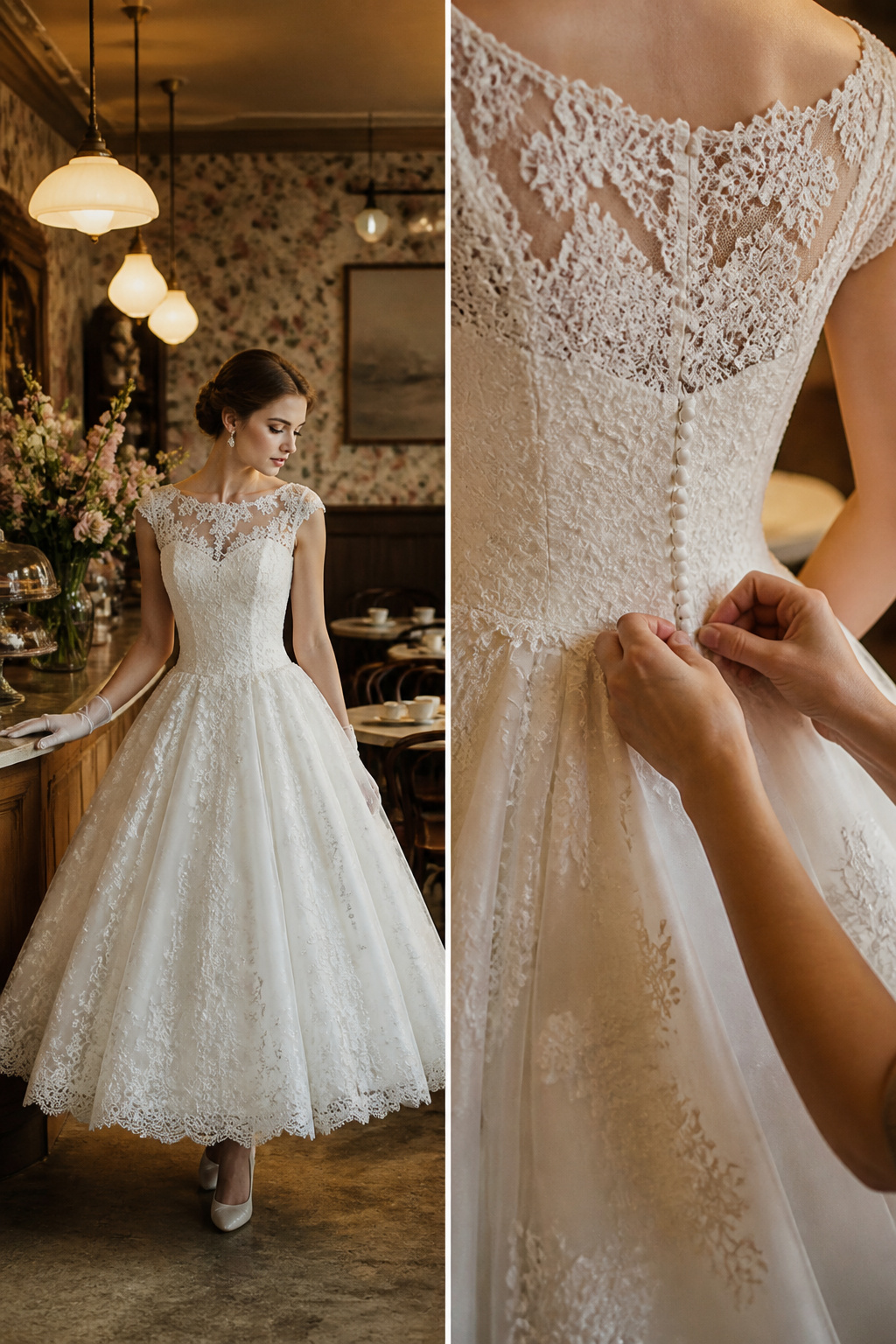
Vintage bride dress styles pull from three eras that actually feel different on the body, not just in a photograph. The 1920s dropped waist sits low on the hip and hangs straight, which can flatten the chest and lengthen the torso in a way that reads elegant rather than boxy if the beading is dense enough to add structure. A 1950s full skirt needs real crinoline underneath to hold its shape; without it, the dress collapses into a costume. The 1970s bohemian lace runs lighter, usually with a flutter sleeve or a low back that moves well for outdoor ceremonies but can read too casual in a formal church.
True vintage means a garment made in that era, while vintage-inspired is new construction referencing the cut. The distinction matters for sourcing. True vintage turns up in estate sales, specialized boutiques, and online resale where condition and precise sizing are gamble. Vintage-inspired lines from contemporary designers offer the silhouette with modern zippers, adjustable closures, and fabric that will survive dry cleaning. If you want the real thing, budget for restoration: seams weaken, silk shatters, and a 1950s bodice was built for a different foundation garment than what most of us wear now.
Plus-Size Wedding Dresses

Plus-size bridal lines have finally moved past the token-gesture era of simply grading up a size 8 pattern, but the gap in honest sizing data is still real. What convinced me, reading through a dozen of these collections, is how rarely a brand publishes the actual body measurements their 18 or 22 is built for. You are left to order blind or fight through bridal salon gatekeeping to find out.
Strap width and boning placement matter more than silhouette choice for fuller figures. A three-quarter inch strap digs where a two-inch strap distributes; internal corsetry with vertical boning at the side seams, not just center front, actually shapes rather than squeezes. The A-line and fit-and-flare shapes that get recommended so often work because they clear the hip without mystery volume, but a well-structured sheath with strategic seaming can do the same if the construction is there.
Brands that build from extended blocks rather than grading up tend to place the waist point and bust apex correctly for torso length that increases with size. That is the difference between a dress that sits at your actual waist and one that floats two inches above it looking like a mistake. Ask directly whether the sample you are trying is the brand’s true plus block or a scaled original; the answer tells you whether alterations will be minor or a rebuild.
Sustainable Bridal Options

A bride dress built from deadstock fabric or recycled material carries a smaller footprint before it ever reaches the altar, and a few labels now make that the starting point rather than the afterthought. Reformation sorts its bridal selection by exactly those filters: organically grown, recycled material, or deadstock, alongside ready-to-ship timelines that run shorter than traditional salon orders. The tradeoff sits in both cost and calendar. A Katia Dress runs €398, a Sammie Silk Dress the same, while the Aniela Silk Chiffon Dress pushes to €890, with sizing spanning XS through 3X and shoes from 5 to 11, including half sizes. Local production can trim shipping emissions, though it rarely trims the price. What matters more than any tag is the question behind it. Ask whether a brand means "sustainable" as a fiber content or as a full chain, whether the silk is peace silk or merely conventional silk in a green wrapper, and whether the deadstock was rescued or simply purchased cheap and marketed up. The €248 Rune Dress and €348 Teyah Dress look similar on a screen; the difference lives in what the factory floor actually looked like.
Fabrics That Change Everything
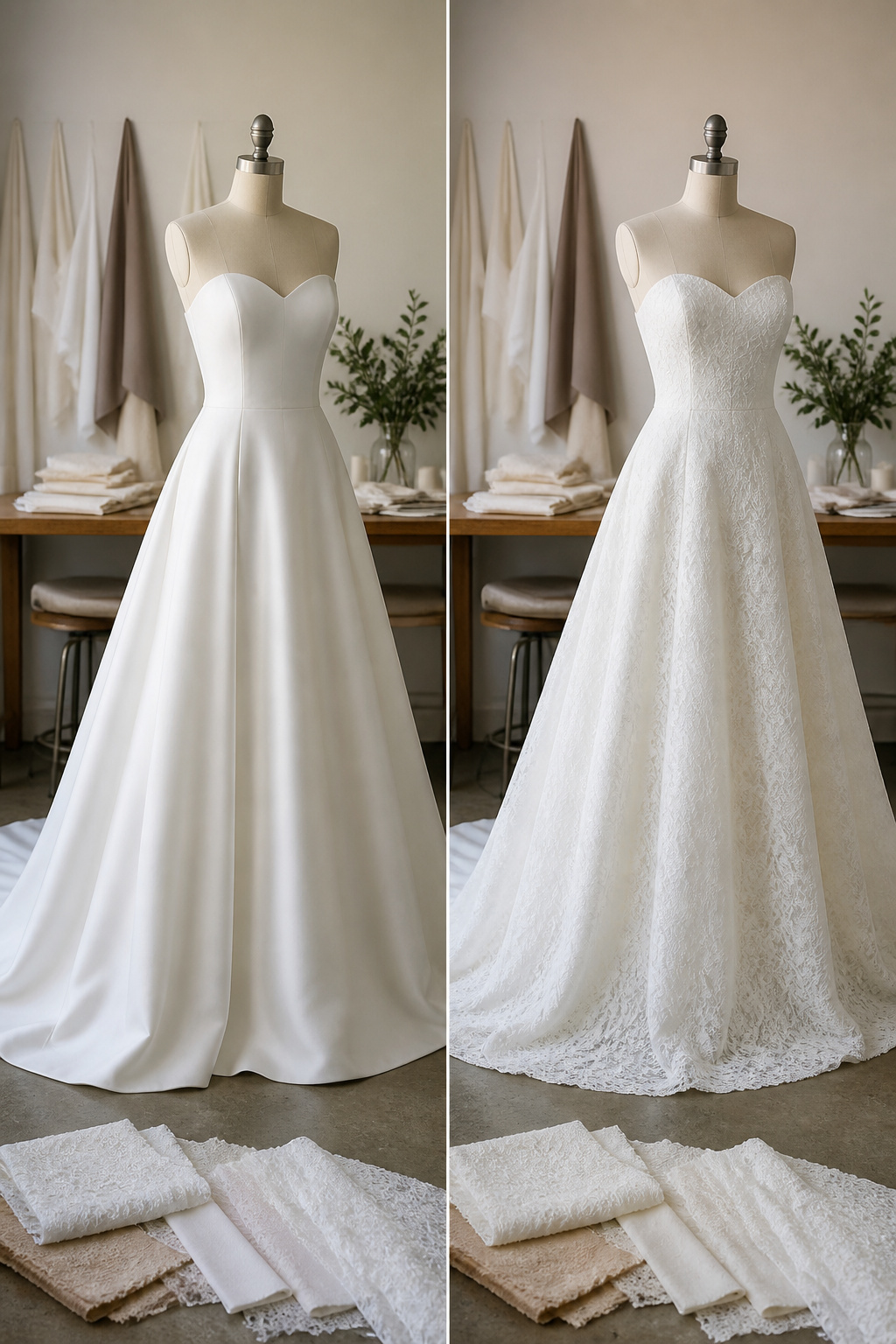
Satin gives a bride dress its structure and weight, which is why it holds the sculpted basque waist and clean lines of an A-line so well. The fabric reflects light directly, so it photographs with a distinct sheen that can look either luminous or flashy depending on the venue lighting. I have seen this go wrong in outdoor ceremonies where midday sun turns that sheen into glare.
Lace builds dimension through layering, the way floral appliqués over Chantilly base create depth without bulk. A sheer bodice in lace reads as airy in person but can photograph flat if the underlayers are too dense. Budget $1,750 and up for built-up lace work, since the hand-placed beading and sequins add construction hours.
Chiffon and tulle handle movement differently. Chiffon drapes straight and soft, the right choice for a deep V-neckline that needs to fall cleanly without bunching. Tulle stands away from the body, which is why it supports ruched bust details and volume without weight. Neither forgives a rushed timeline: tulle skirts need multiple fittings to set the exact pouf, and chiffon hems are unforgiving if shortened late. A 4–7 month construction window exists partly because these fabrics cannot be rushed; satin can be seamed and pressed faster, but lace and tulle build slowly, layer by layer.
Necklines and What They Do to Your Face
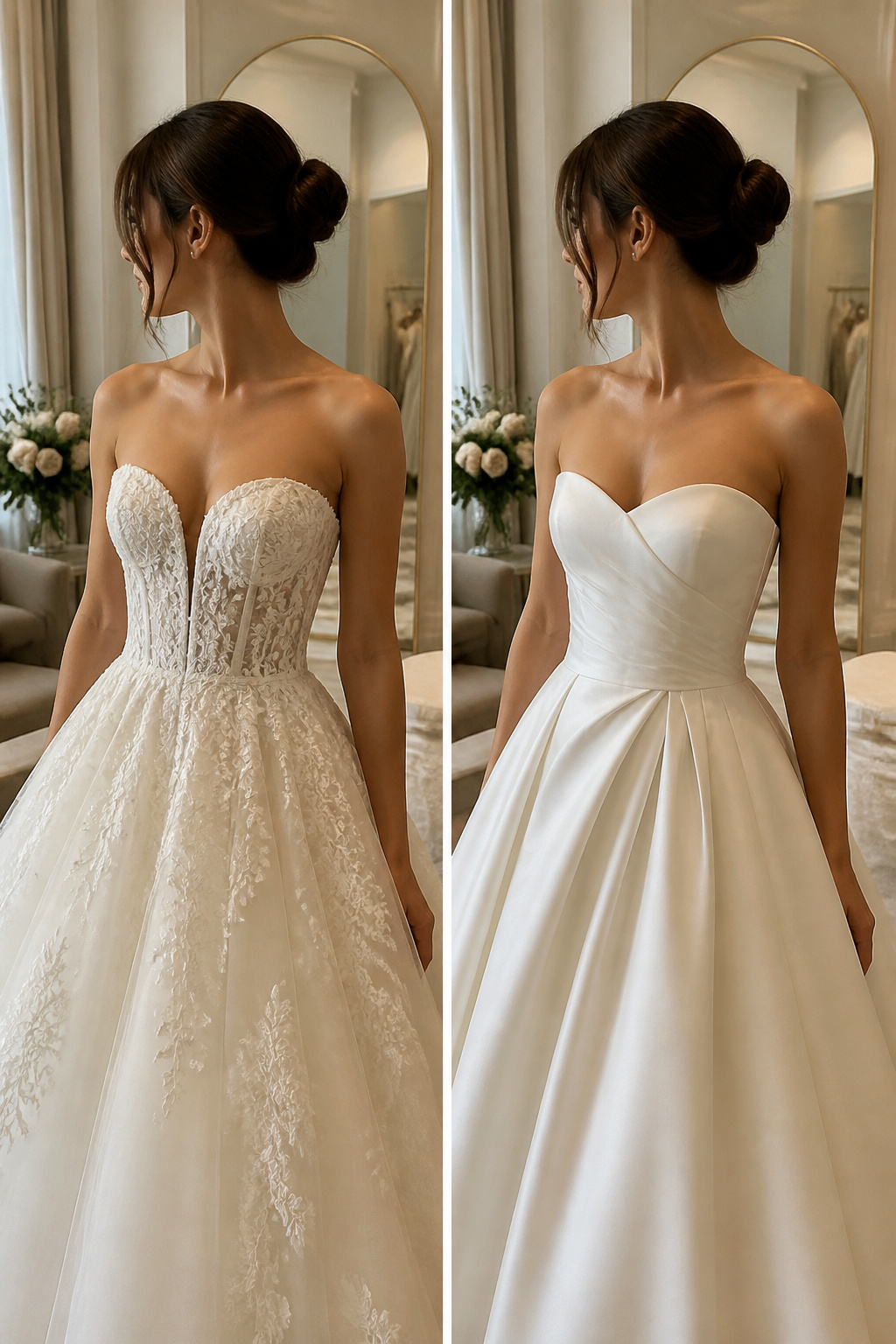
A sweetheart neckline curves in two arcs across the chest, creating a heart shape that visually widens the collarbone area. That extra horizontal line tends to make a short neck look shorter, but it balances narrow shoulders nicely. A delicate pendant on a short chain sits right in the center gap, which is the only jewelry placement that really works there; earrings compete with the shape instead.
V-necks run a single diagonal line from shoulder point to center chest. The downward point pulls the eye vertically, so this is the neckline that adds length to a short neck or softens a round face. A broader V, rather than a plunging one, also narrows the appearance of broad shoulders by breaking up their horizontal span. A pendant drops straight into the opening and looks intentional; a choker fights the geometry.
Off-the-shoulder bands sit below the shoulder joint, exposing the full collarbone. That horizontal emphasis makes shoulders look wider, so I would skip this one if that is already a concern. The bare expanse needs something, though, so a collarbone-grazing necklace or statement earrings fill the space without cluttering the line.
Bateau necklines run straight across from shoulder to shoulder, close to the collarbone. They shorten the neck visibly and add width to the upper body, which can feel boxy on a larger bust. A brooch or pin at the center breaks the line slightly, but necklaces rarely sit right against that edge.
Illusion necklines layer sheer fabric over a deeper cut underneath. The sheer creates a softer boundary than skin alone, so the visual length of a V or the coverage of a higher neck happens without the harsh line. A pendant hangs below the sheer panel, visible through it, which keeps jewelry simple and centered.
Accessories That Complete the Look
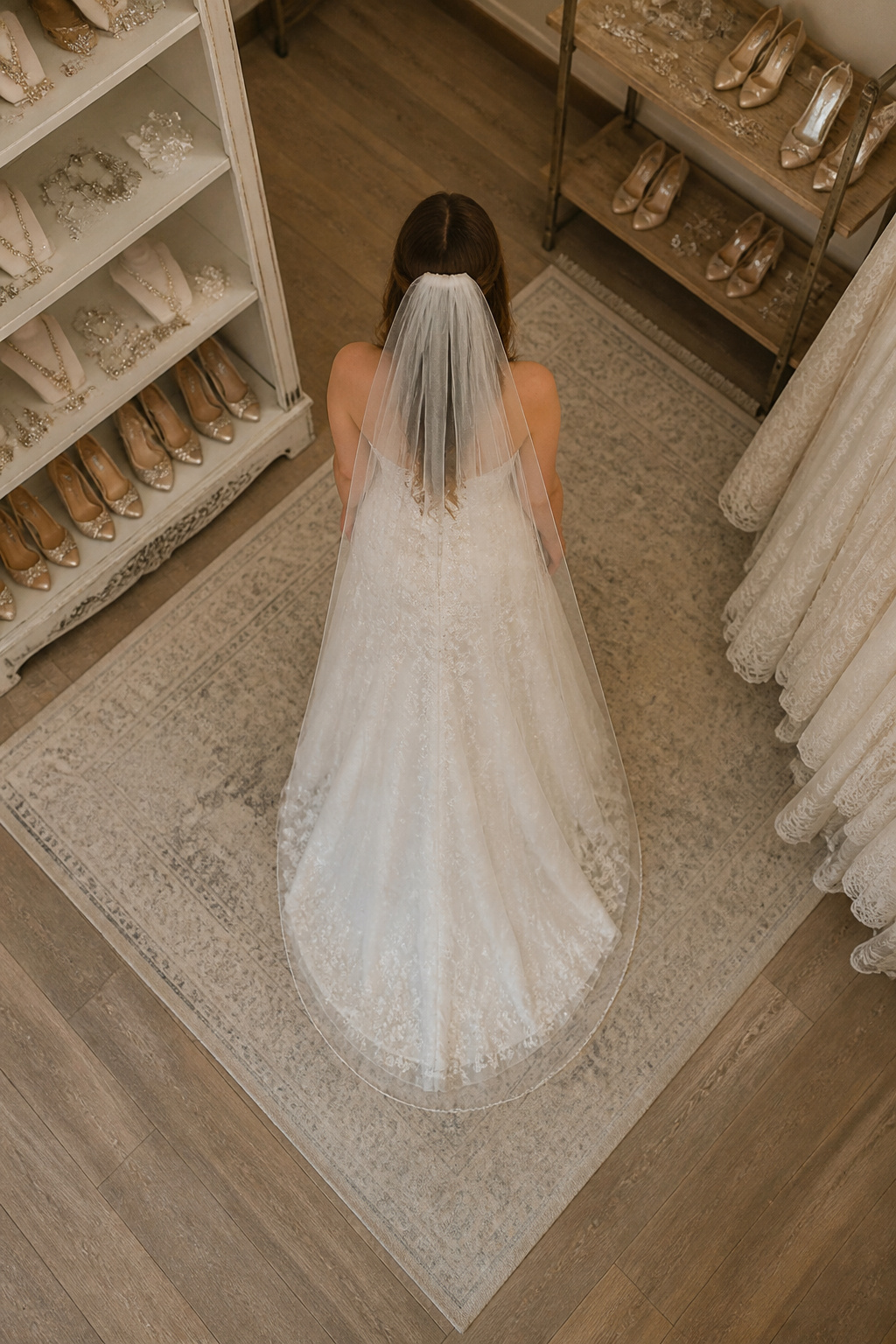
A fingertip veil hits the same line as an A-line hem and keeps the silhouette clean; anything longer fights the shape and makes walking up an aisle feel like a choreographed escape. The dress with heavy lace or beading already has its statement, and piling on a statement necklace turns the neckline into a shouting match. I learned this watching a friend wrestle with her decision in a salon mirror, adding then subtracting a crystal collar until the unadorned version won by a mile.
Shoes matter more than the photos suggest. A three-inch heel gives most gowns the right floor clearance without the wobble of anything taller, and the hidden pair is where comfort actually lives. Hair pieces work best when they echo one detail from the dress, a pearl button or a metallic thread, rather than introducing a whole new motif. The common mistake is treating the head, neck, hands and feet as separate contests instead of one composition. Veil off for the reception, hair piece on, and the look shifts without starting over.
Customization and Timeline
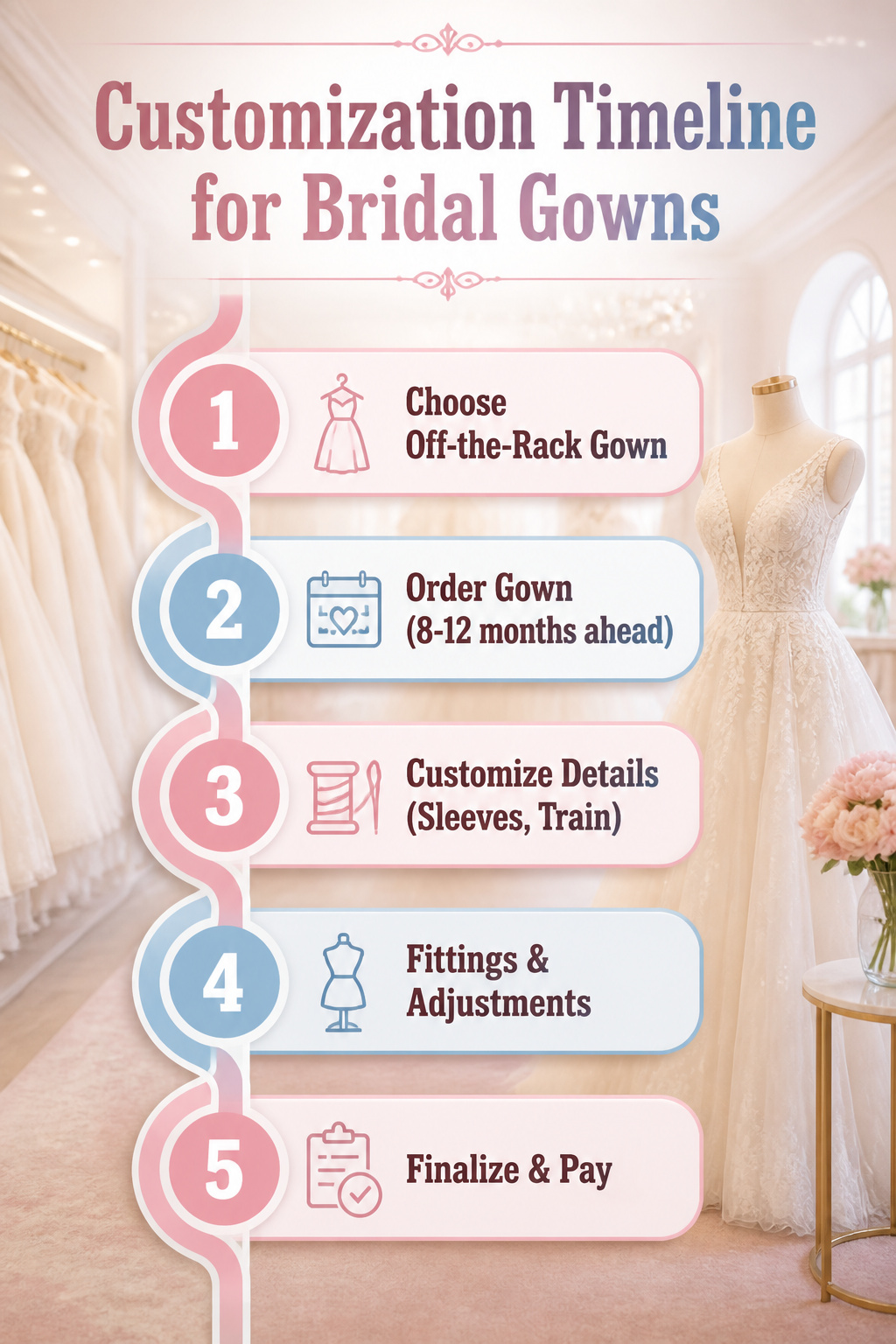
Most off-the-rack bride dress styles leave room for meaningful changes without starting from scratch. Sleeve length, train length, embellishments, and neckline depth are the usual suspects a seamstress or the house itself can adjust. I spent an afternoon comparing notes from several bridal houses and the pattern holds: the more you change, the longer you wait and the more you pay.
Four to seven months is the standard construction window for a made-to-order gown with any customization at all. Order no later than eight months out if you want breathing room for fittings, and ten to twelve months is saner for peak-season Saturdays. Rush fees stack fast when you cut that timeline short.
Cost jumps are harder to pin down because they vary by house, but adding sleeves, swapping a sweep train for a chapel length, or scattering additional beading each nudges the total upward. Some houses bake minor changes into the base price; others itemize everything.
Lovely Bride operates nineteen locations across the US and offers customization services in-house, which saves the step of finding an outside seamstress. That convenience matters more than I expected when I mapped out what "custom" actually costs in time versus money.
What I Learned Ordering My Own Dress

The first bridal salon I walked into had me convinced I wanted a mermaid silhouette. The online photos made the shape look dramatic and modern, and I had mentally filed away "hourglass equals mermaid" as a simple rule. On my body, the boning cut in at the hip and the flare hit too low, turning what looked sleek on the model into something that shortened my legs and emphasized nothing I wanted emphasized. Try the silhouette you think you will hate was the advice I ignored, and the A-line I eventually chose only happened because a consultant quietly handed it to me while I was changing.
Fabric was the other surprise. Online, satin reads as heavy and old-fashioned; in person, the lighter duchess satins have a glow that photographs catch completely differently than the matte crepe I had pinned on my board. The mistake that cost me was timing. I ordered eight months out thinking that was generous, but the particular weave I fell for required an extra six weeks the salon only mentioned after the deposit. If I did it again, I would touch fabric in person before I pinned a single photo, and I would ask about production timelines before I asked about price.
Frequently Asked Questions
What are the different styles of wedding dresses?
The main bride dress silhouettes are A-line, ball gown, mermaid, sheath, fit and flare, column, and short or non-traditional lengths. A-line narrows at the waist and widens toward the hem, ball gowns have a fitted bodice and full tulle skirt, mermaid shapes fit through the bodice and hips before flaring at or below the knee, and sheath or column styles fall straight without a defined waist. Vintage styles pull from the 1920s, 1950s, and 1970s with distinct era-specific cuts.
How long does it take to make a wedding dress?
Four to seven months is the standard construction window for a made-to-order gown with any customization. Order no later than eight months out for fitting breathing room, and ten to twelve months is safer for peak-season Saturdays. Rush fees add up fast when timelines get cut short, and fabrics like lace and tulle build slowly layer by layer and cannot be rushed.
What fabrics are commonly used for wedding dresses?
Satin, lace, chiffon, and tulle are the core fabrics that shape how a bride dress looks and moves. Satin gives structure and a distinct sheen that photographs dramatically, lace builds dimension through layering, chiffon drapes soft and straight for clean necklines, and tulle stands away from the body to support volume without weight. Crepe, organza, silk faille, and mikado also appear regularly in bridal collections.
What accessories should I consider for my wedding dress?
Veils, jewelry, and shoes are the three accessories that complete the look, but each needs deliberate pairing with the dress shape. A fingertip veil keeps an A-line silhouette clean while longer veils fight the shape; heavy lace or beading on the dress means keeping jewelry minimal; and a three-inch heel gives most gowns proper floor clearance without wobble. Shoes face direct scrutiny with shorter hemlines, so they need to be clean and current.
Are there sustainable wedding dress options available?
Yes, some brands now build bride dress collections from deadstock fabric, recycled material, and organically grown fibers rather than treating sustainability as an afterthought. Reformation filters its bridal selection by these exact categories, with options like the Katia Dress at €398 and the Aniela Silk Chiffon Dress at €890, sizing from XS through 3X. The key is asking whether a brand means sustainable as fiber content only or across the full production chain, since marketing terms often outrun actual practice.