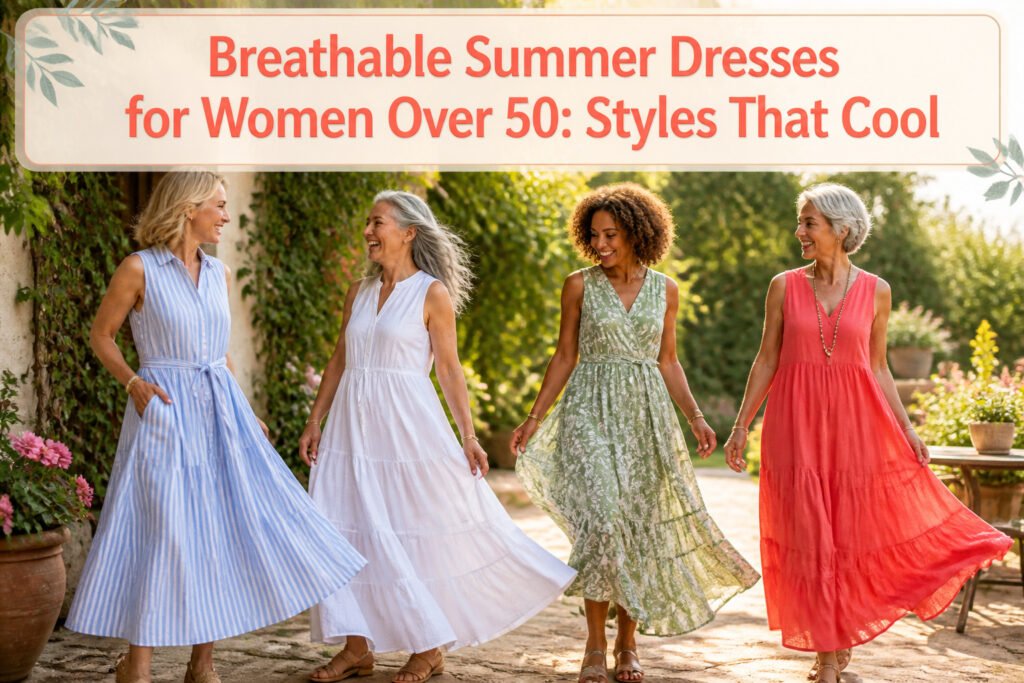
The Cotton Tiered Maxi Dress is the top pick because its 100% organic cotton poplin breathes like gauze while still looking finished enough for dinner, and the gathered waist keeps the tiered skirt from reading as a tent.
Women who run very warm and want the absolute least fabric against their skin should look at the sleeveless shirtdresses instead.
That maxi only works, though, if you are willing to wear a floor-length hem. The coverage blocks sun on legs that have already seen enough of it, but the length itself trips some people up on stairs or in cars.
Side pockets matter more than they should; once you start carrying your phone and reading glasses there, going back feels like a regression.
1. Sleeveless Dresses
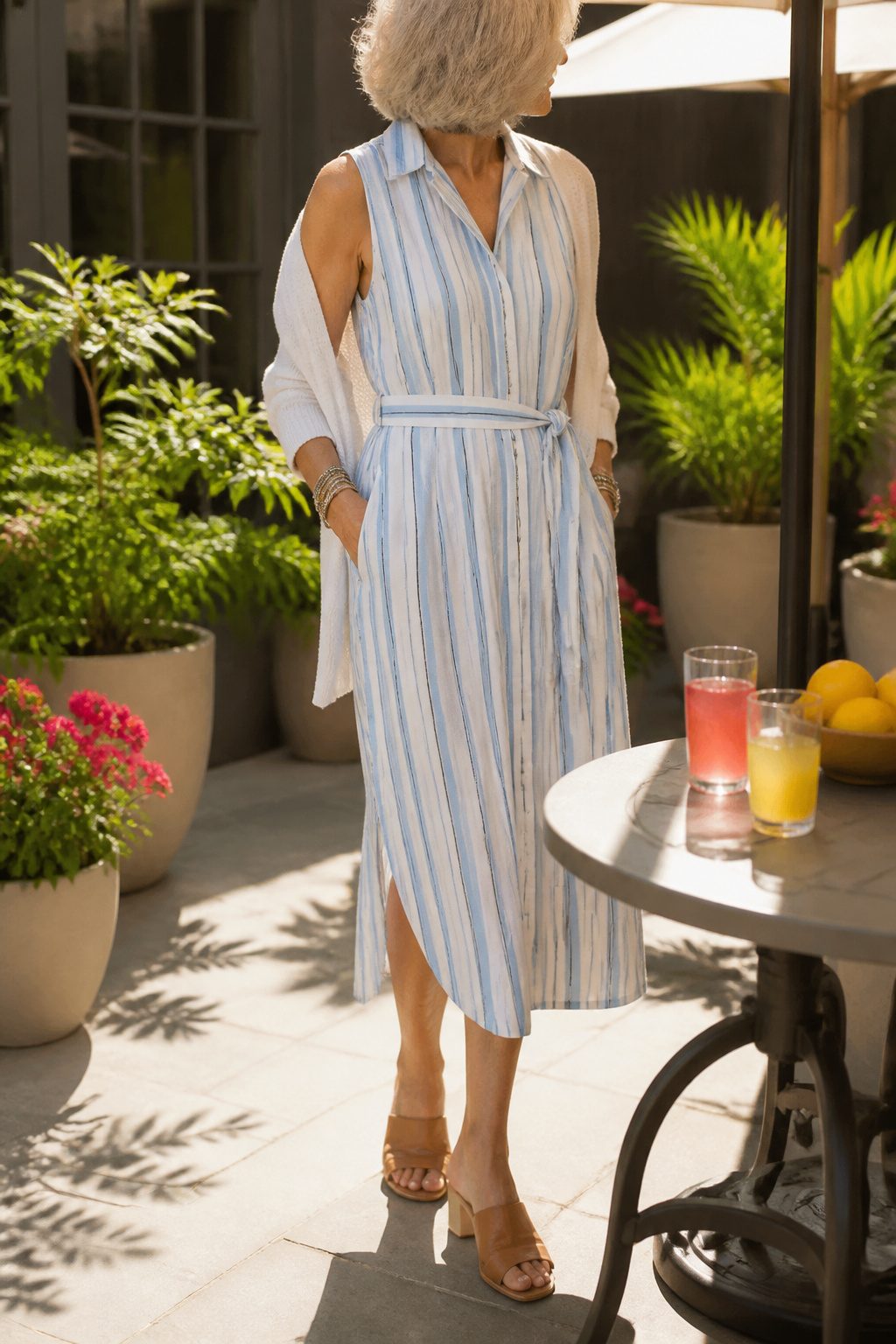
Less fabric against the skin means air moves where you need it most, which is why sleeveless dresses read as the coolest option on genuinely hot days.
A lightweight linen cardigan or wrap layers over the top when you want arm coverage without the outfit turning heavy, and slipping it off again takes seconds once you are inside.
Women over 50 can absolutely wear sleeveless if the shape feels comfortable; the question is whether you want to, not whether you are allowed.
For those who prefer some coverage, flutter sleeves or a simple elbow-length layer give the same breeze with a different silhouette.
The Vince Camuto Striped Sleeveless Shirtdress runs 51 inches long, so it reads more maxi than midi on most frames. It is lined, sleeveless, and includes a fabric belt to cinch the waist or leave off for a looser line.
The blue-and-white stripe and spread collar keep it feeling fresh rather than fussy; white sandals finish it without much thought.
2. Maxi Dresses
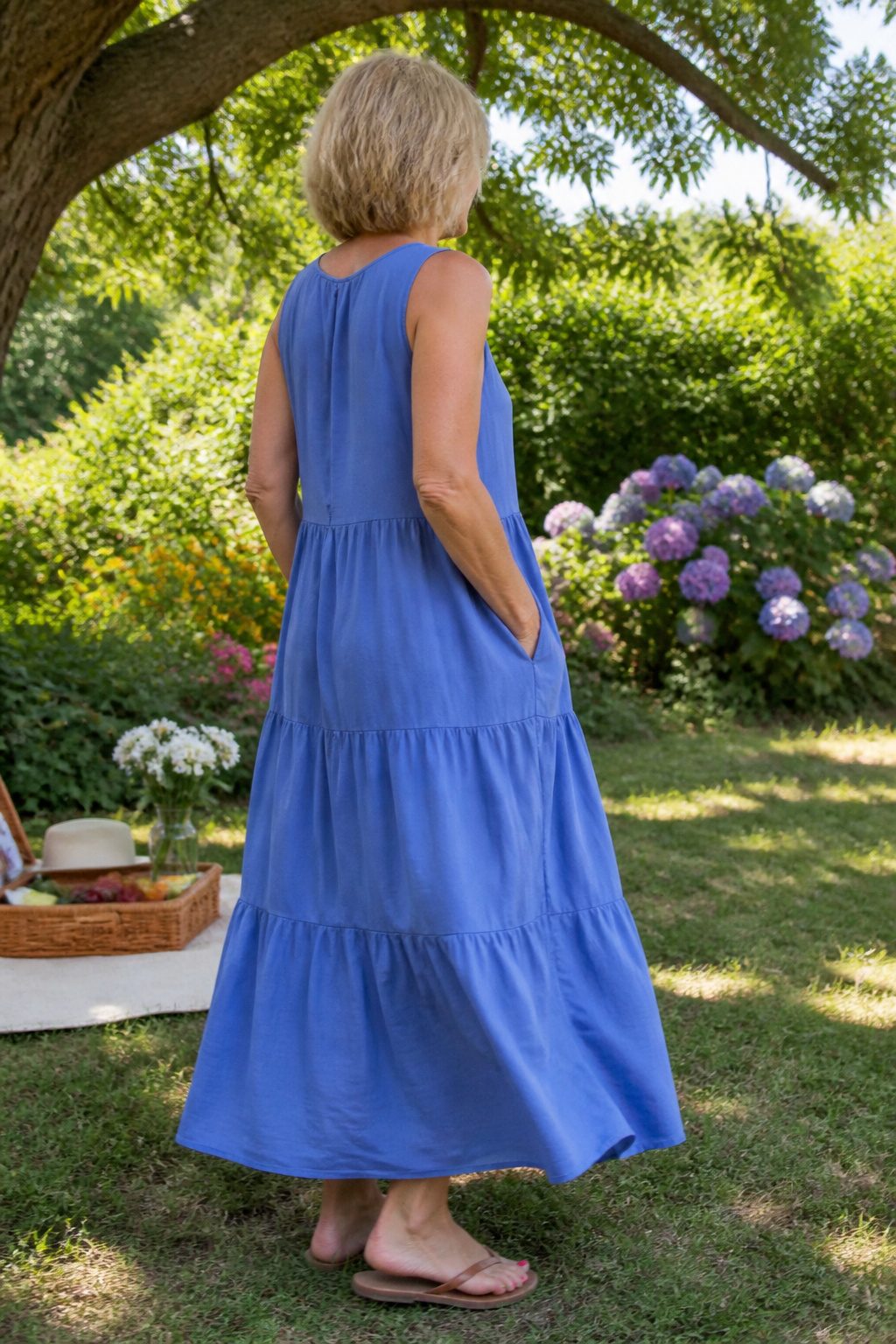
A maxi dress gives you the coverage most women want by fifty without turning into a walking sauna.
The floor-length cut blocks sun on legs that have already seen enough of it, and the loose column of air moving underneath does more cooling than any shorter skirt.
The Cotton Tiered Maxi Dress lands right where this logic lives. The 100% organic cotton poplin breathes like gauze but looks finished enough for a dinner reservation, and the gathered waist keeps the tiered skirt from reading as a tent.
Side pockets matter more than they should; once you start carrying your phone and reading glasses there, going back feels like a regression.
For something sharper, the Floral Sleeveless Maxi with its halter neckline and optional belt reads event-appropriate without the synthetic sheen that traps heat. The belt lets you cinch when you want shape or skip it entirely for airport comfort.
Both dresses work for a Saturday market, a garden party, or packing flat in a carry-on, which is the kind of versatility that justifies the closet space.
3. Midi Dresses
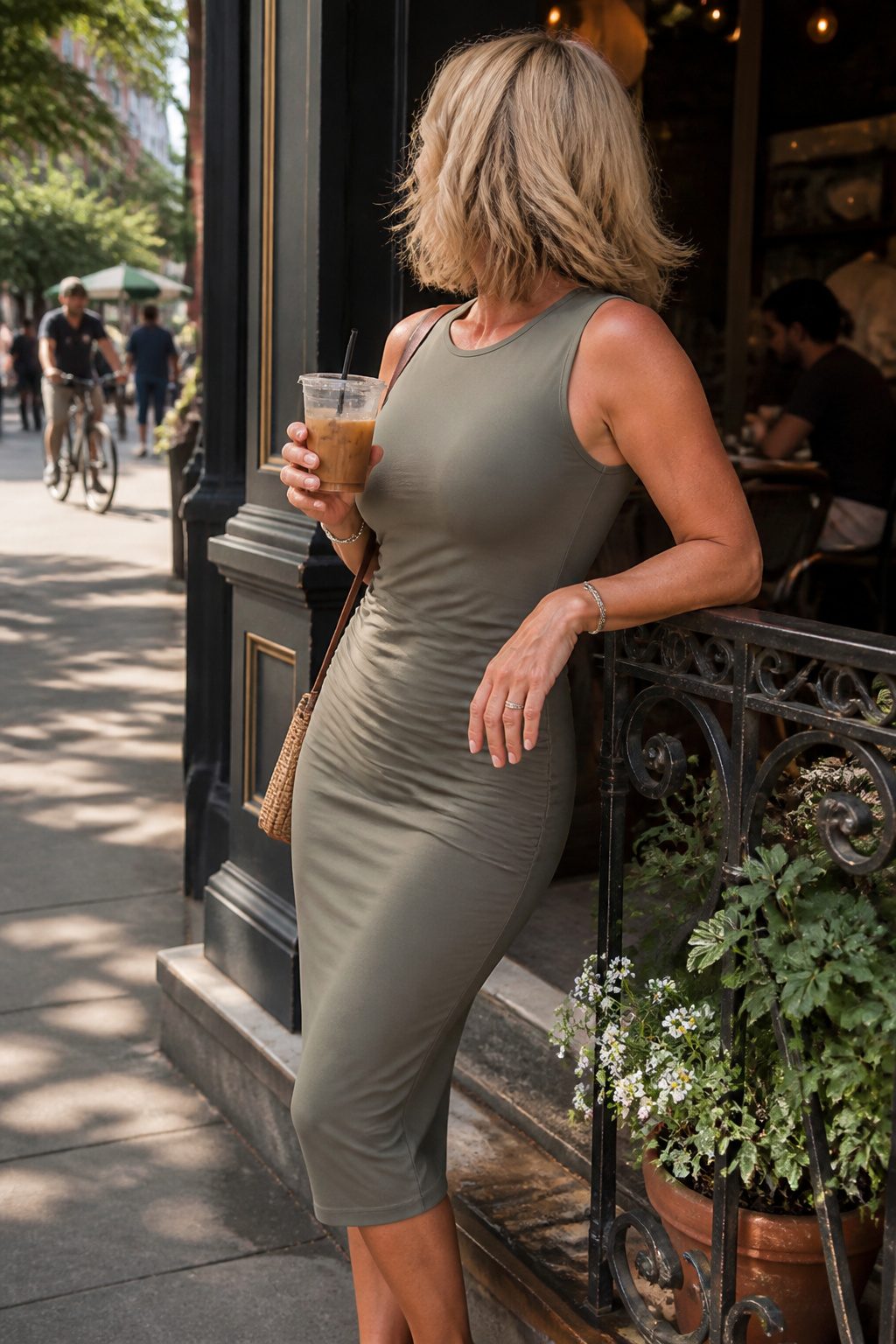
The midi hem settles right where the question of dress length usually starts.
After 50, the most flattering cut hits that middle ground between too short and too formal: it elongates the body without the self-conscious tug of a mini or the occasion-only feel of a floor-length gown.
This is the length readers ask about most, and the answer is simpler than the anxiety around it.
The Casual Bodycon Sleeveless Midi Dress gets this right with soft, stretchy fabric and ruching across the midsection. That gathered detail does the practical work of smoothing rather than clinging, and the sleeveless cut keeps it wearable through July heat.
Sizes run XXS to XL, and the range of brown, black, blue, and teal means it pairs with sneakers or heels without a full outfit change.
4. Shirtdresses
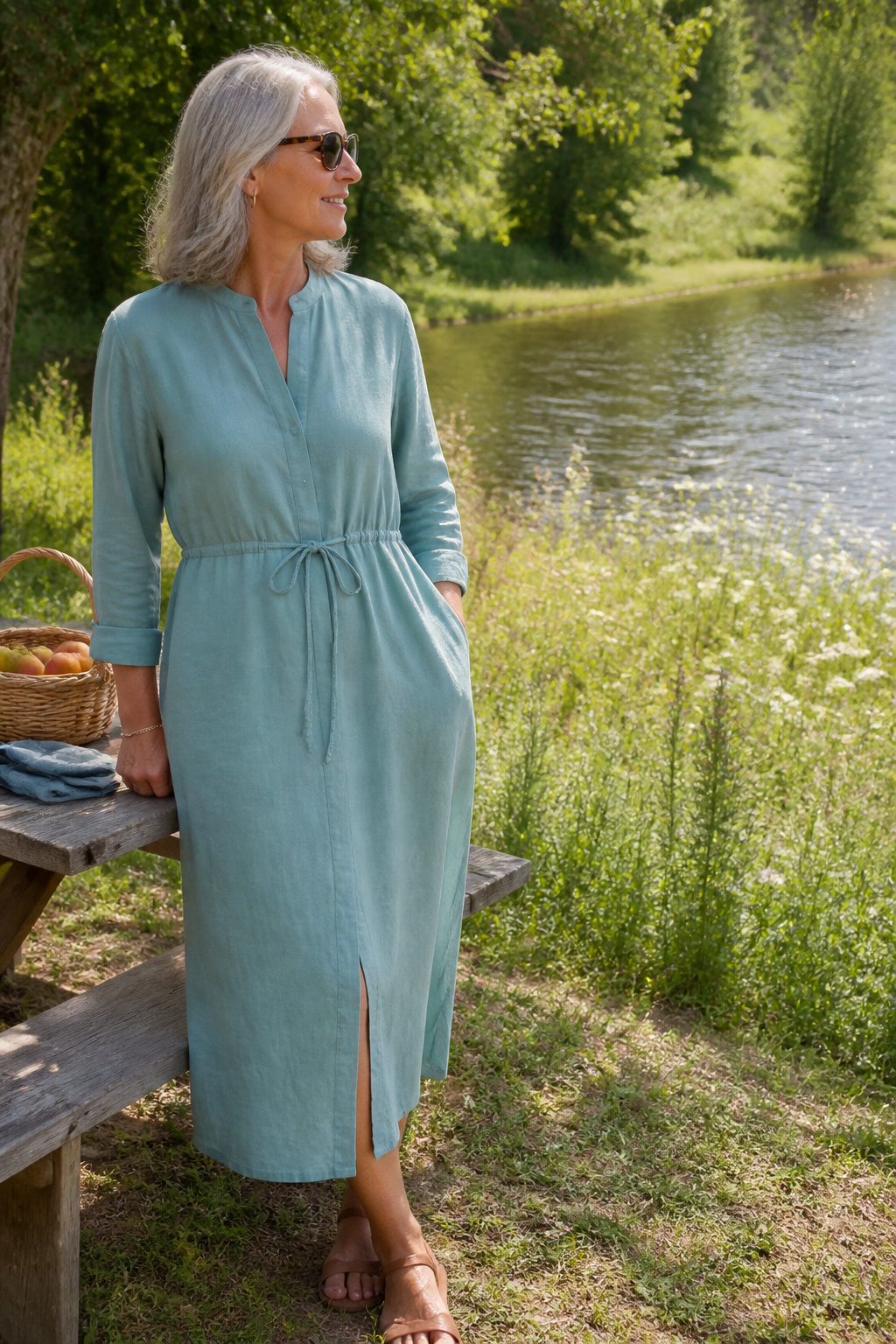
A shirtdress does the work of a blouse and skirt without the matching problem. The button-down front means you control the neckline and ventilation, and the waist definition keeps the shape from going boxy.
The Eileen Fisher Long Sleeve Shirtdress is 100% organic linen with that slightly rumpled texture that actually looks intentional in summer heat.
The mandarin collar and drawstring waist let you cinch it or leave it relaxed, and the aqua reads fresh without trying too hard.
Eileen Fisher runs large as a rule, so sizing down is the safer bet unless you want deliberately oversized.
For days when sleeves feel like too much, the Vince Camuto Striped Sleeveless Shirtdress carries the same versatility in a cooler cut. Stripes give it a little structure without demanding accessories, and the sleeveless line keeps the arm movement easy.
Both styles move from errands to dinner with nothing more than a shoe swap, which is the real test of a summer dress worth the closet space.
5. Wrap Dresses
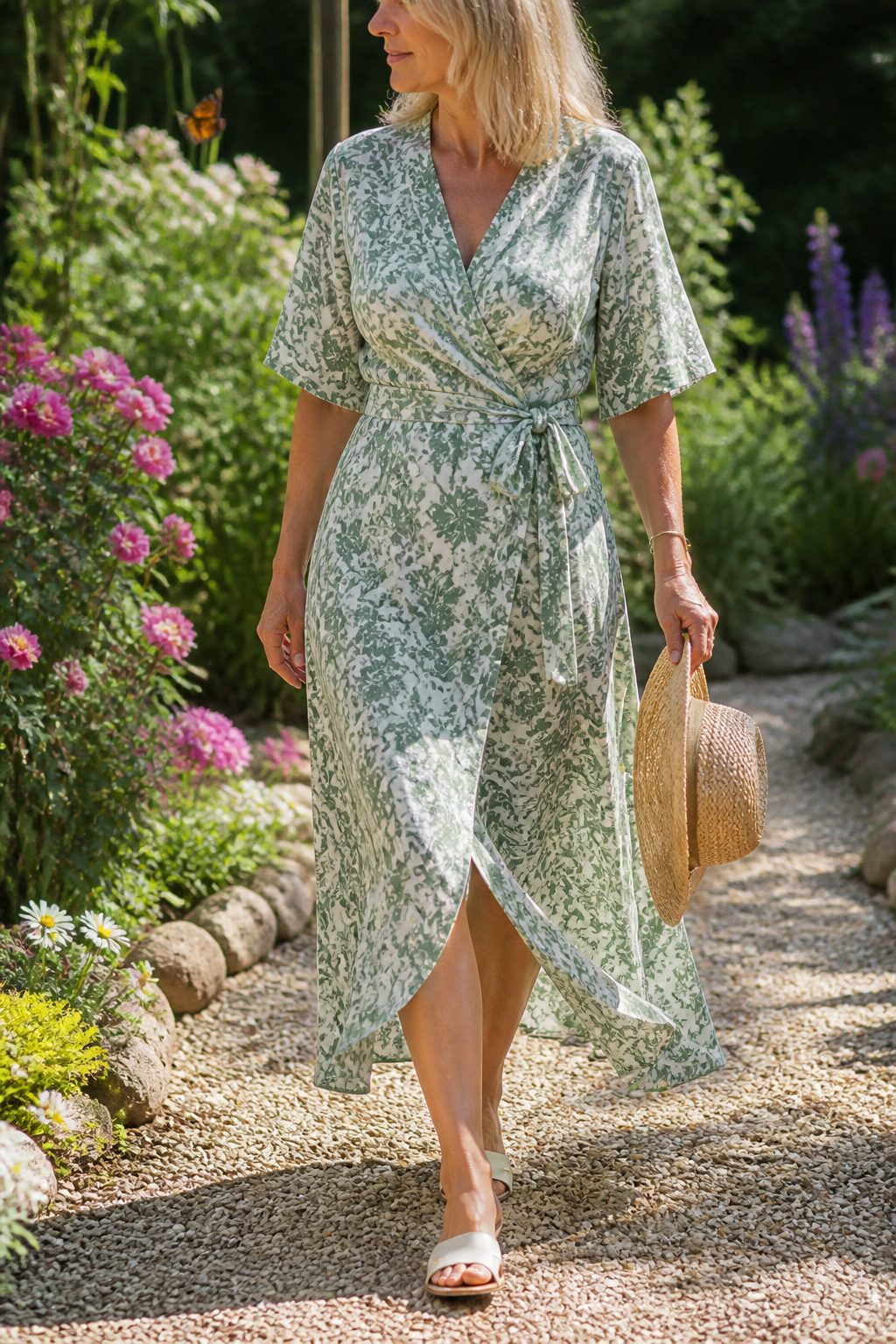
A wrap dress ties at the waist and lets you set the tension yourself, which is why it works across so many body types.
The crossover front creates shape without pulling tight anywhere, skimming over the midsection rather than pressing against it. For women carrying weight through the belly, the diagonal line of the wrap visually breaks up the torso.
For straighter figures, the gathered side and tied closure add definition where there otherwise isn’t much.
The silhouette sits right next to fit-and-flare territory: you get structure from the waist tie and movement from the skirt, but nothing feels rigid or pinned in place.
That matters on days when bloating shifts your size by noon, or when you want to look put together without sucking anything in.
Two groups should probably skip it. Anyone who finds the tie closure fussy to re-tighten after sitting, or who wants consistent coverage through the midsection without the potential for the front to gape or shift.
A fixed-waist dress with similar skirt volume will behave more predictably.
6. A-Line Dresses
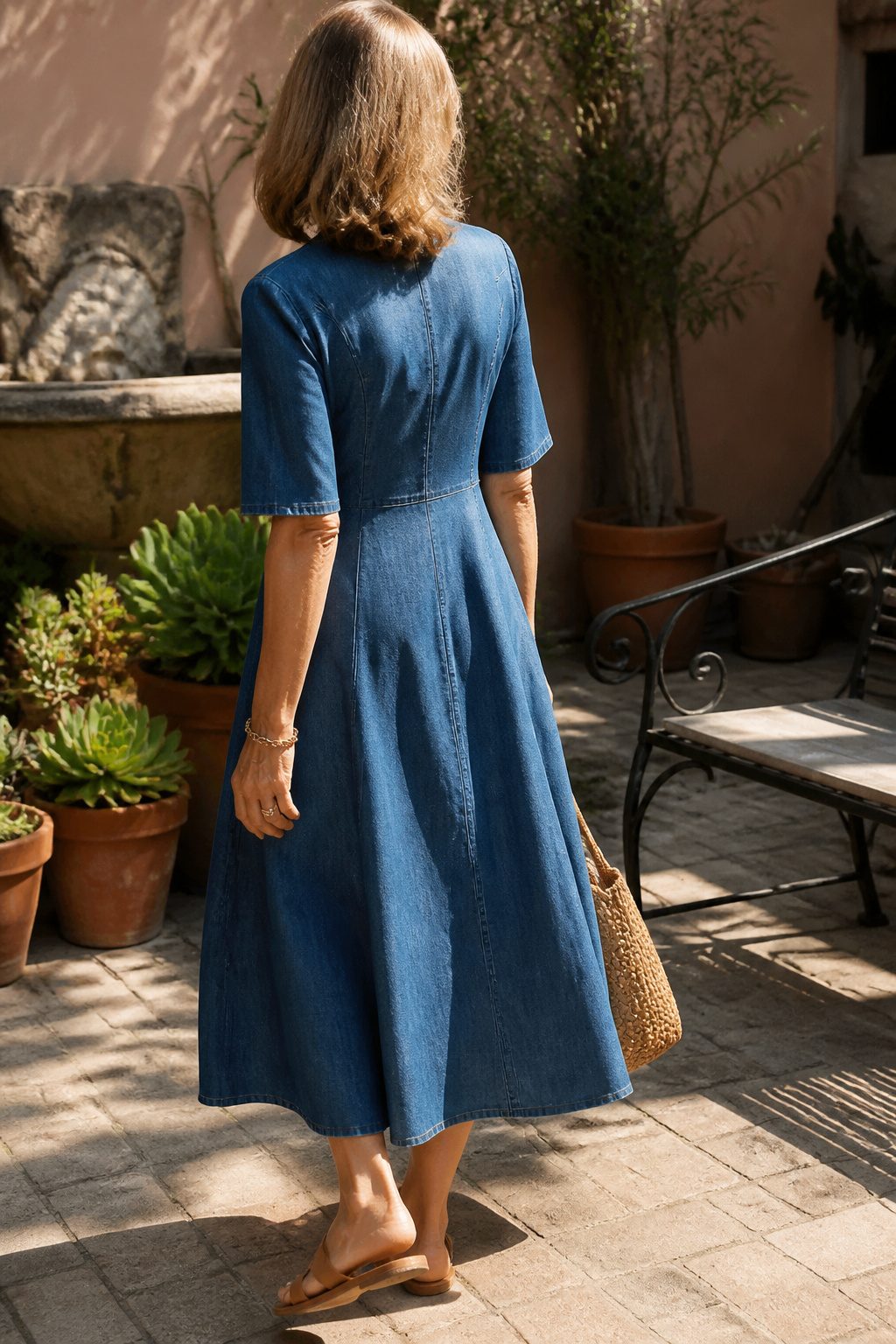
An A-line dress widens gradually from the shoulders, which means it skims the body without ever gripping.
That shape is why it keeps coming up as the answer for almost every midlife body concern: it defines a waist you want noticed, glides past a midsection you don’t, and balances hips that sit wider than your shoulders.
The structure is there, but nothing pinches.
The principle worth stealing is structure without restriction. A Vince cotton-linen denim A-line uses princess seams to keep the cut from going shapeless, and a collar with just enough stiffness to look intentional.
Elbow-length sleeves and side pockets finish it. Too loose and you drown; too tight and summer heat turns the dress into something you can’t wait to peel off.
The A-line lives in the middle, giving you movement, coverage, and a silhouette that still reads as put-together with flat sandals or sneakers.
7. Casual Dresses
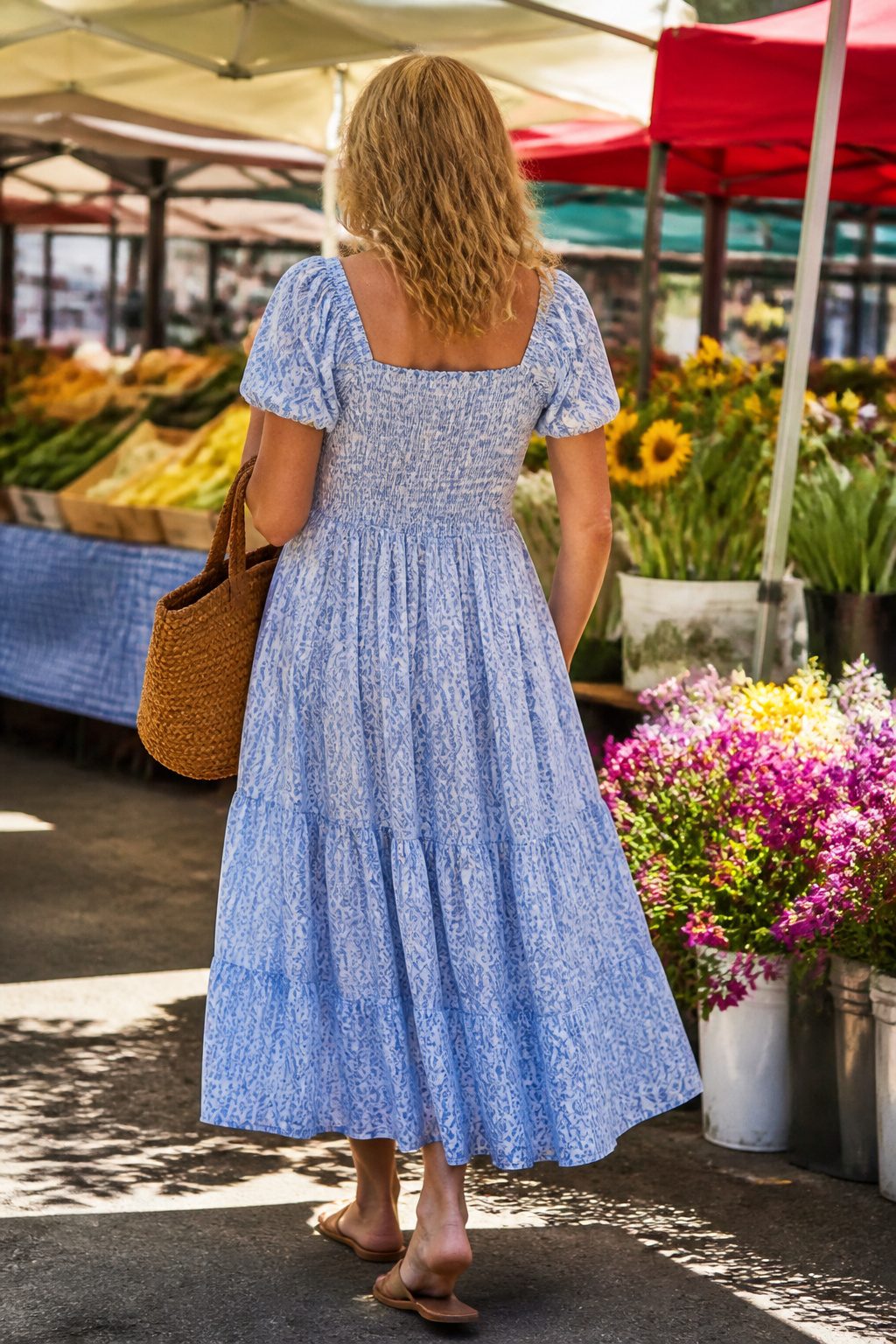
The Hill House Home Cosima Nap Dress is the kind of piece that makes casual look intentional rather than like you gave up.
Its fully-smocked bodice is genuinely bra-friendly, which still feels like a small miracle in summer dress design, and the boat neck frames the collarbone without demanding a strapless undergarment.
That structure matters after fifty, when a dress that simply hangs can read as sloppy rather than relaxed.
What separates polished casual from an afterthought comes down to three things the Cosima gets right: a defined waistline even in an easy shape, fabric that holds its own rather than clinging or collapsing, and a neckline that required a decision.
The smocking provides that waist definition without a belt you have to fuss with. Tiered skirts and gathered waists on similar cotton dresses work the same way, giving shape through construction rather than tightness.
A casual dress becomes sloppy when every element is loose at once: undefined waist, drooping fabric, neckline that looks like it slipped. The fix is usually one structured detail.
On the Cosima, it is the smocked bodice doing that work. On a tiered maxi, it is the gathered waist.
On a denim A-line, princess seams keep the shape from going sack-like. One anchor point is enough; the rest of the dress can breathe.
8. Floral Dresses
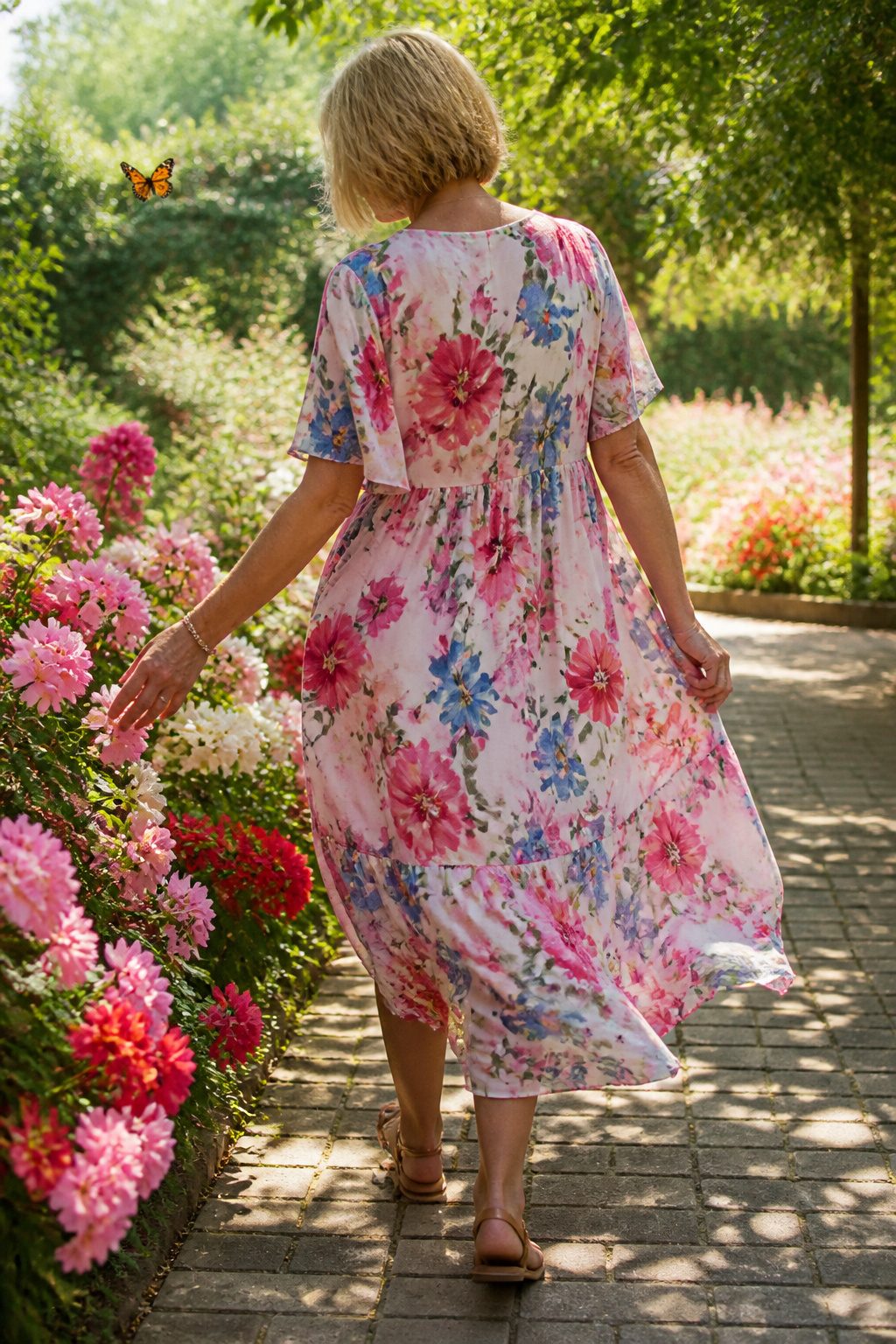
A floral print on the right fabric checks both boxes for summer: the pattern reads feminine, and the material underneath does the actual cooling. Cotton, linen, and rayon blends are the ones worth hunting for in this category.
They move air instead of trapping it against your skin, which is the difference between a dress you reach for and one that hangs in the closet while you sweat through something else.
Scale matters more than most people expect. A print that looked current five years ago often looks dated now because the flowers themselves were too small and too crowded.
Larger, more open florals with breathing room between the motifs tend to wear better season to season.
Eyelet fabric offers a compromise worth considering: the cutout texture gives you that same romantic feeling without relying on a print that might age fast.
What I skip are the heavy synthetics with a floral stamped on top. A dress can photograph beautifully online and still feel like wearing a plastic bag by noon.
The summer dresses that earn their keep are the ones that feel as good at 4 p.m. as they did when you first put them on.
Breathable Fabrics That Actually Keep You Cool
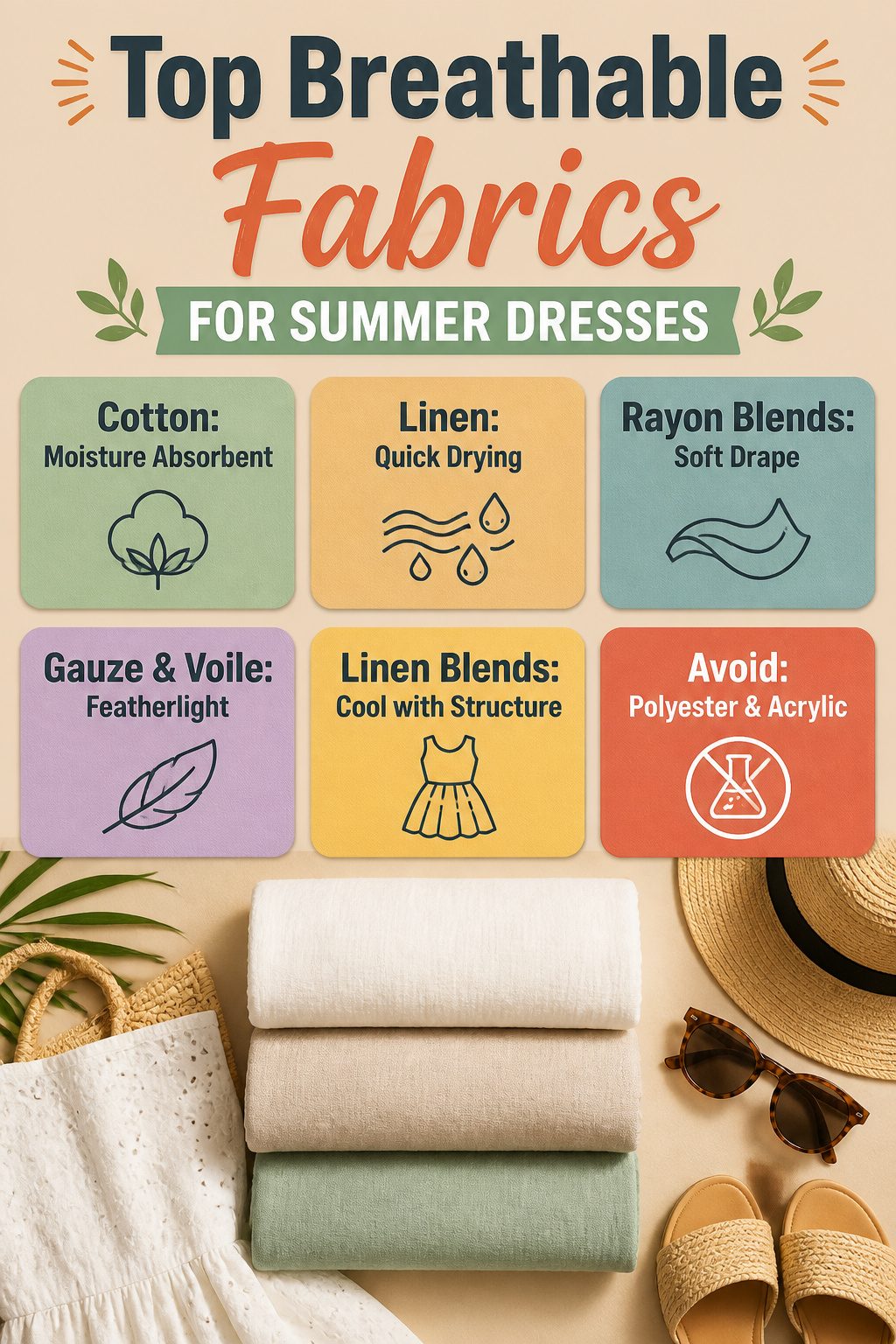
Cotton, linen, and rayon blends are the three materials that come up again and again for breathable summer dresses, and after sorting through why, the reason is straightforward.
These fabrics let air move through the weave rather than trapping it against your skin, which is what keeps you from feeling sticky the moment you step outside.
Cotton absorbs moisture instead of letting it pool, linen dries fast and actually gets softer with each wash, and rayon blends drape well without the synthetic cling that turns a cute dress into a sauna.
The weight matters as much as the fiber. Gauze and voile, both cotton-based, feel almost like wearing nothing, which is why they have become my go-to recommendations for anyone who runs warm.
Eyelet works the same way, the open weave doing the ventilation work for you, and it still reads classic rather than beach-cover-up.
Linen blends are worth watching for because pure linen wrinkles the second you sit down; a blend keeps the coolness but adds enough structure that you do not look like you slept in the dress.
What I skip entirely are the synthetics that look fine online and feel like plastic by noon. Polyester and heavy acrylic blends hold heat and odor, and no amount of flattering cut fixes that.
The dresses women actually reach for all summer are the ones that feel as good at 4 p.m. as they did at 10 a.m.
Coverage Without Bulk
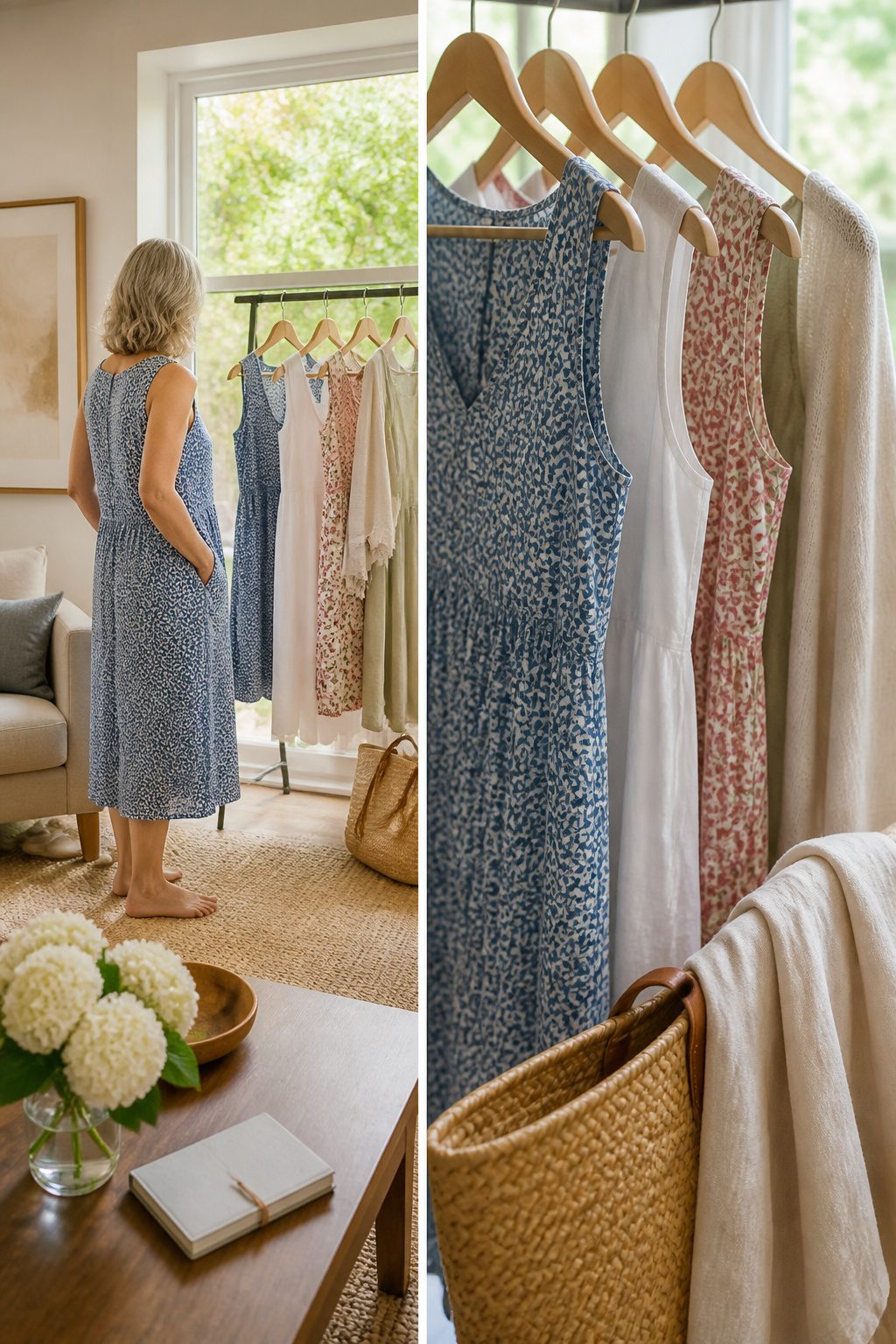
Arm coverage tends to be the first thing women over 50 ask about when summer heat hits, and the answer is less binary than it looks.
Cap sleeves or flutter sleeves give a little structure without trapping heat, which makes them the default for errands, church, or anywhere the air conditioning works too well.
Elbow-length sleeves in cotton or linen read more polished and solve the problem outright, though they do narrow the fabric choices since anything heavier defeats the purpose.
Sleeveless dresses are often the coolest option simply because there is less fabric to manage, and the hesitation around them is usually outsized. Most people are not studying your arms; they are worrying about their own.
If you want the option to cover up, a linen cardigan or lightweight wrap lives in your bag and adds coverage without the bulk of a structured jacket.
I have seen the same sleeveless dress move from a hot afternoon to a cooler evening with nothing more than that swap.
The neckline matters almost as much as the sleeve. A bateau or higher neck gives more coverage than a scoop or V-neck, and the diagonal line of a surplice wrap can read polished without feeling exposed.
The point is to notice which combination you actually reach for, not which one looks right on a hanger.
What to Skip and Why
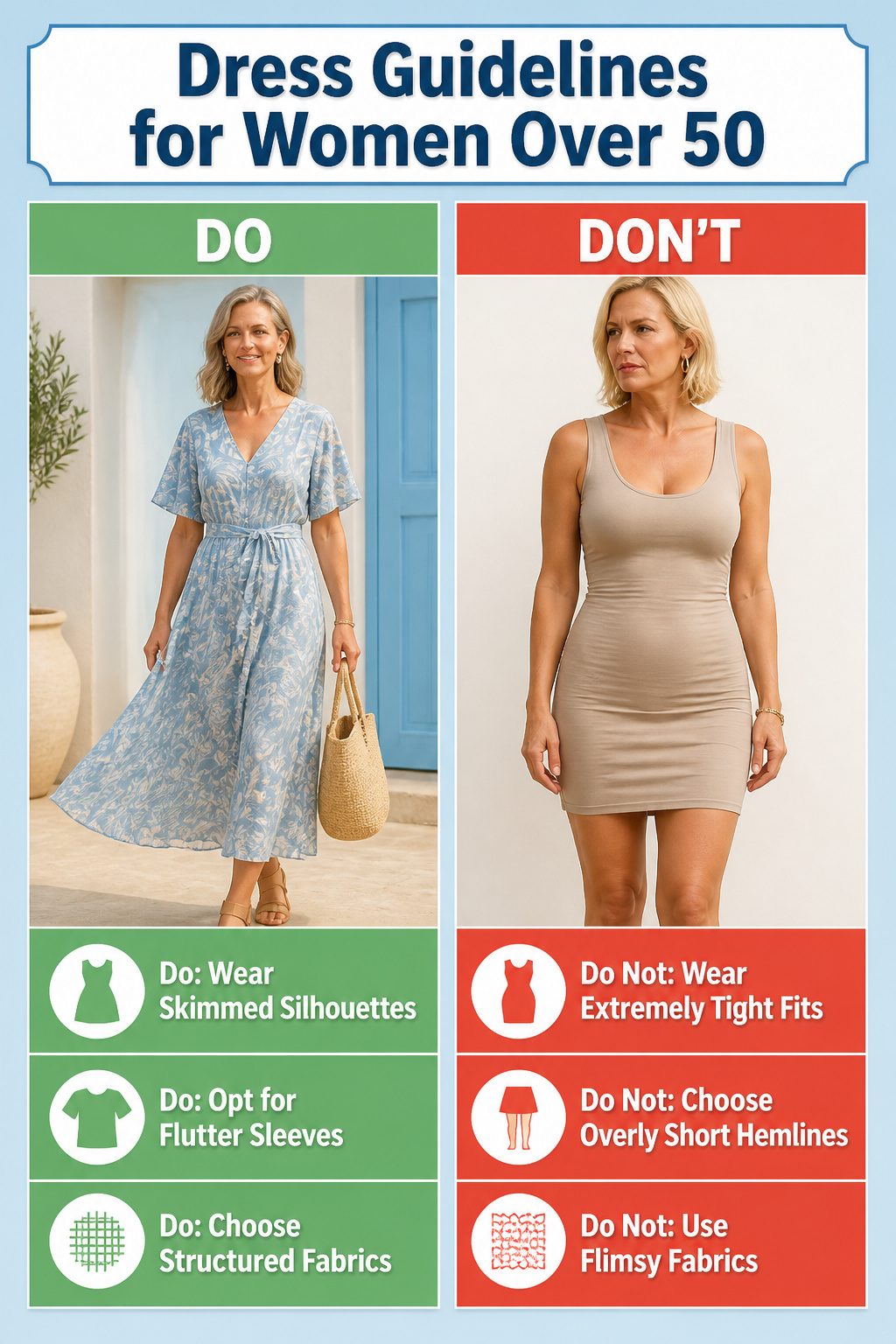
Breathable summer dresses for women over 50 lose their purpose fast when the cut works against the fabric. Extremely tight fits turn even the lightest linen into a sauna, trapping heat against skin that needs air to move.
The same dress in a skimmed silhouette breathes the way summer demands.
Overly short hemlines read less polished after fifty not because of some rule about knees, but because the proportion throws off the balance most of us have spent years refining.
A flutter sleeve or elbow-length jacket solves the coverage question without adding bulk; sleeveless itself is not the problem.
Flimsy fabrics are the third trap. Something too thin shows every line underneath and requires another layer, which defeats the point of a single cool piece.
The sweet spot is fabric with enough body to hold its shape through humidity, cut to move without clinging. That middle ground between restrictive and shapeless is where the best summer dresses live.
Dressing Up or Down the Same Dress
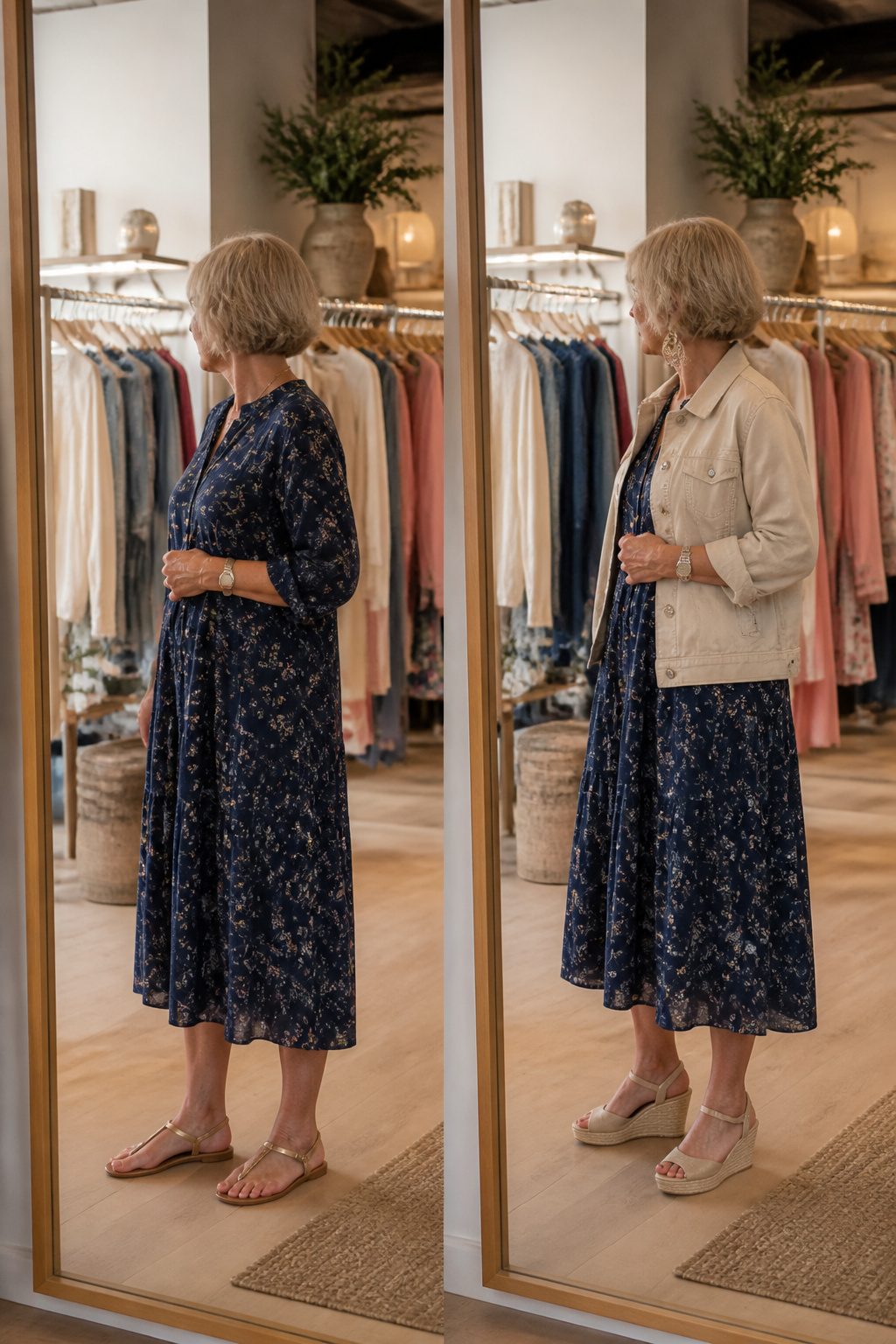
A breathable summer dress earns its hanger space when it handles more than one part of your day.
The same cotton voile midi that works with flat sandals and a crossbody for morning errands can shift to evening with wedge espadrilles, a structured jacket, and earrings that catch light.
Swapping the shoes changes the whole register of the outfit, and the jacket does the practical work of covering shoulders in over-air-conditioned restaurants while adding polish.
For travel, this versatility matters more. One dress that covers casual get-togethers and a dinner reservation saves suitcase real estate.
A simple maxi moves between those modes with just footwear and jewelry changes, sneakers for walking, wedges for the event.
The dress itself stays the same, which is the point of building around pieces that breathe and drape well rather than chasing single-use purchases.
What separates a dress that actually does this from one that merely claims to is the fabric weight and cut. Too flimsy, and it looks like a cover-up at any attempt to dress it up.
Too structured, and it fights the casual side. The sweet spot is a mid-weight natural fiber with enough ease to sit comfortably but enough shape to hold up to a real shoe and real jewelry.
Frequently Asked Questions
What length dress is most flattering after 50?
Midi lengths hit the sweet spot. They elongate the body without the self-conscious tug of a mini or the occasion-only feel of a floor-length gown, landing right in the middle ground between too short and too formal.
This is the length readers ask about most, and the answer is simpler than the anxiety around it.
Can women over 50 wear sleeveless dresses?
Yes, if the shape feels comfortable. The question is whether you want to, not whether you are allowed.
If you prefer some coverage, flutter sleeves or a simple elbow-length layer give the same breeze with a different silhouette, and a lightweight linen cardigan layers over the top when you want arm coverage without the outfit turning heavy.
What styles should women over 50 avoid?
Extremely tight fits, overly short hemlines, and flimsy fabrics. Tight fits turn even light linen into a sauna, short hemlines throw off refined proportions, and flimsy fabrics show every line underneath and require another layer that defeats the point.
The sweet spot is fabric with enough body to hold its shape through humidity, cut to move without clinging.