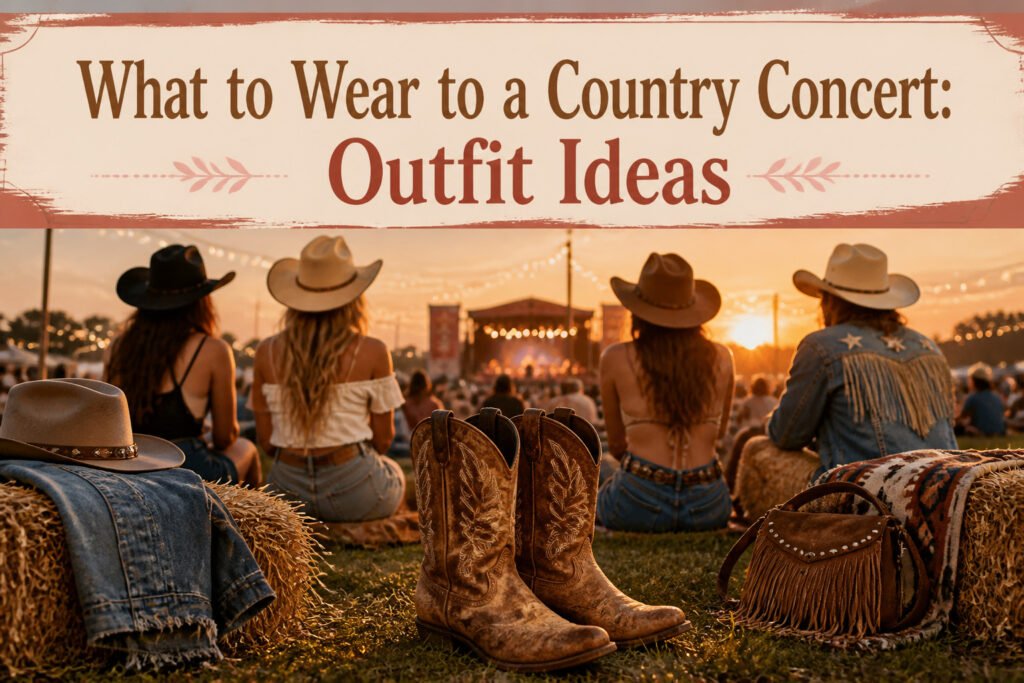
The seven best country concert outfits for 2026 all start with cowgirl boots, denim, and a top that can handle temperature swings.
What changes is how broken-in those boots actually are: a stiff new pair will blister your heels by the second song, so the leather needs miles on it before the venue.
I learned that in 2019 wearing a full Canadian tuxedo I regretted in every photo after.
What to Wear to a Country Concert
Cowgirl boots, denim, and a stylish top form the backbone of any country concert outfit. Skinny jeans tucked into boots work for cooler nights; denim shorts trade some coverage for comfort when the sun is still high.
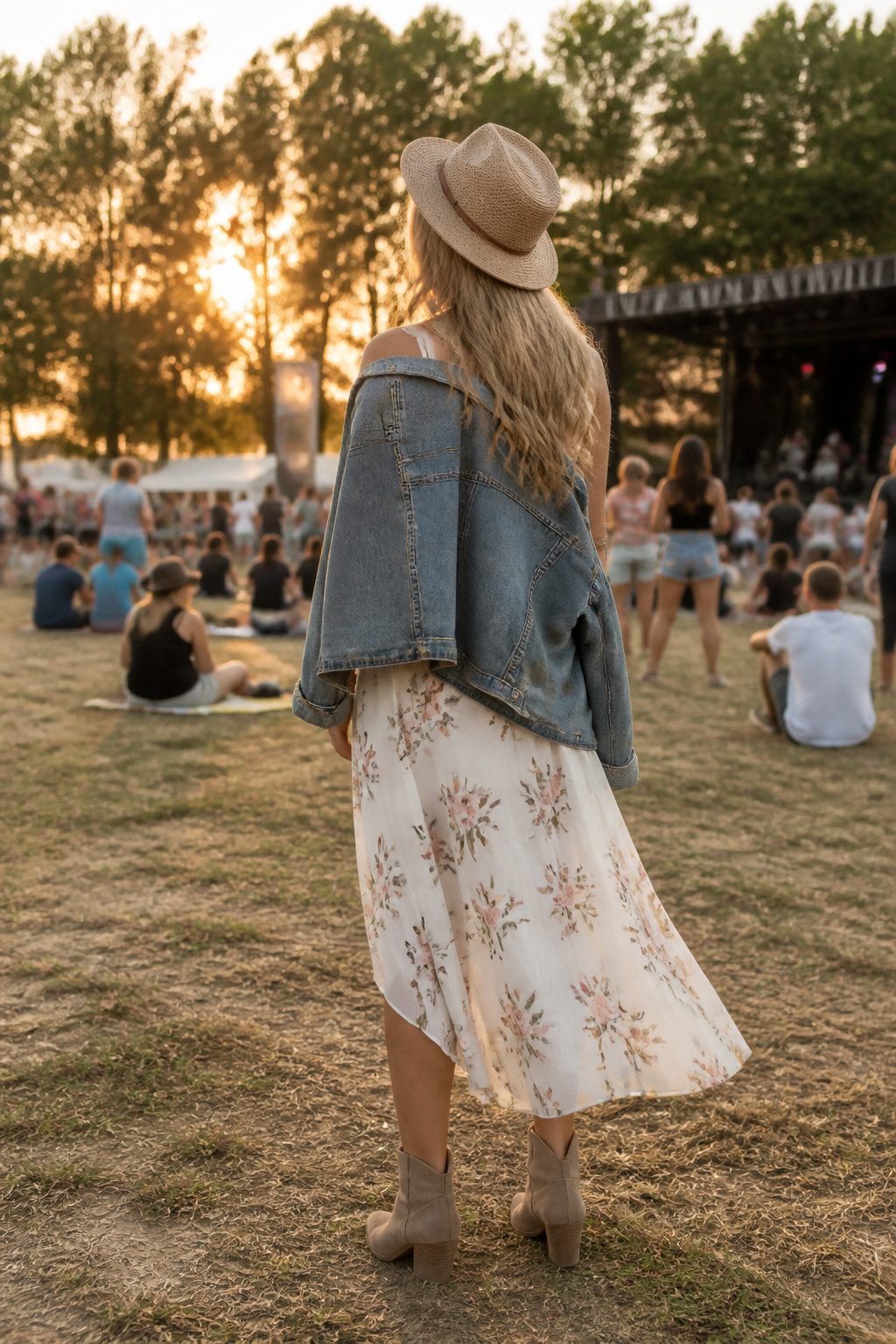
A flowy midi dress with a simple pattern handles warm weather without looking like you wandered in from a different genre, especially paired with short cowgirl booties.
Temperature drops fast once the headliner starts, so layering is what keeps the outfit practical.
A vintage denim jacket over a flannel or plaid top holds warmth and stays on theme; the bolo tie is optional, but the jacket is not if you are sitting in grass seats past 8 pm.
Fabrics matter more than most people notice. Linen and cotton breathe through long festival days; lightweight denim holds structure without turning into a sauna.
Denim-on-denim still works, though the vest-with-jorts version feels fresher now than the full Canadian tuxedo I wore to a show in 2019 and regretted in every photo after.
1. Cowgirl Boots
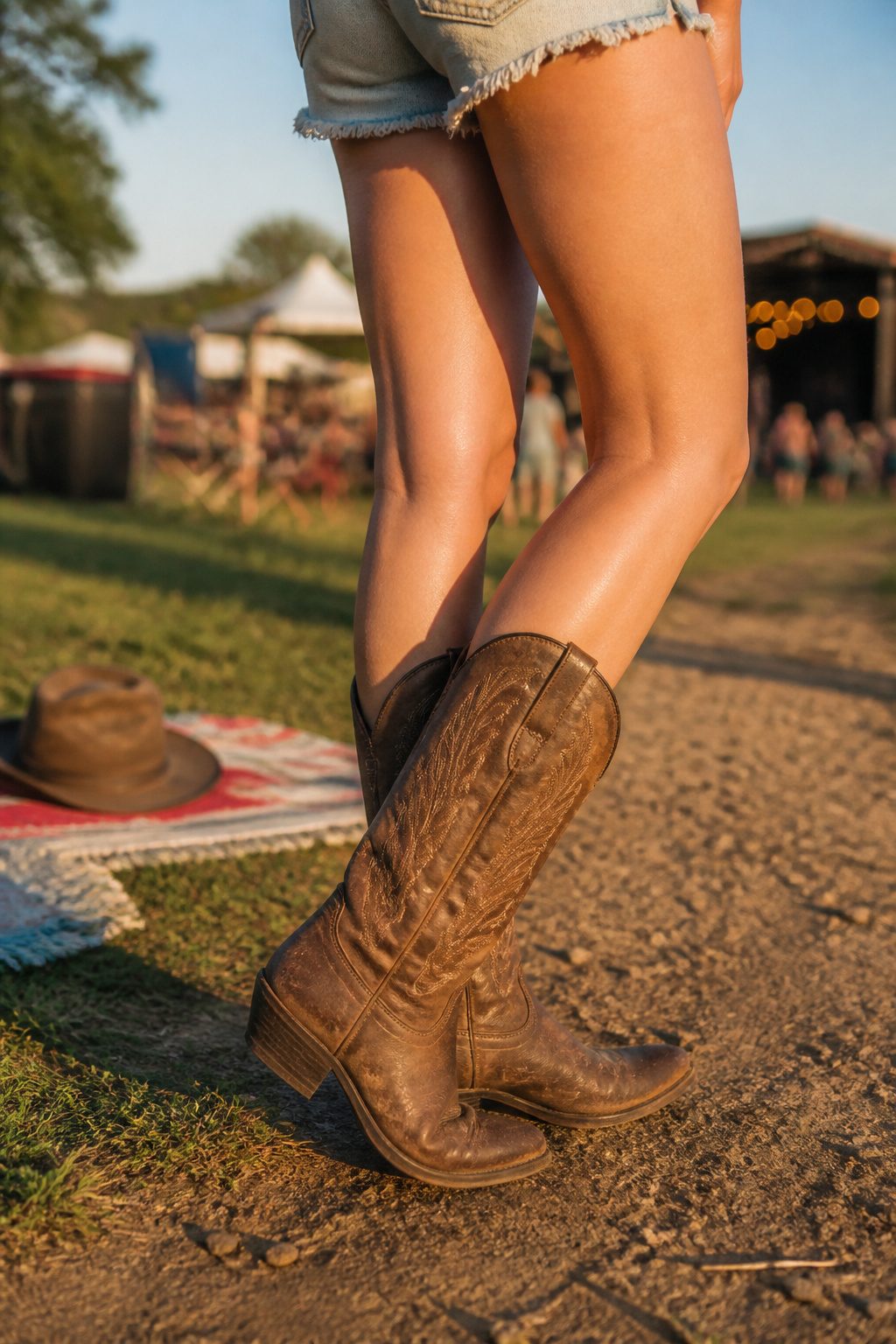
Cowgirl boots carry a country concert outfit in a way no other shoe manages.
The western silhouette reads instantly, but the real advantage is practical: a sturdy leather shaft and stacked heel hold up through hours of standing, walking between stages, and dancing on uneven ground.
I learned the hard way that the boots must be broken in before the concert. A new pair will blister your heels by the second song.
Wear them around the house, out to dinner, anywhere that puts miles on the leather before the show.
Classic washed brown tones are the safest bet, though bold colors or studded detailing work if the rest of your outfit stays simple.
Western ankle boots or chunky styles can substitute if you want something lower profile, but they read more generic. For indoor shows or urban venues, clean sneakers do the job quietly.
At an outdoor festival or dirt lot, though, boots give you the traction and durability that finish the look while actually protecting your feet.
2. Denim Jeans
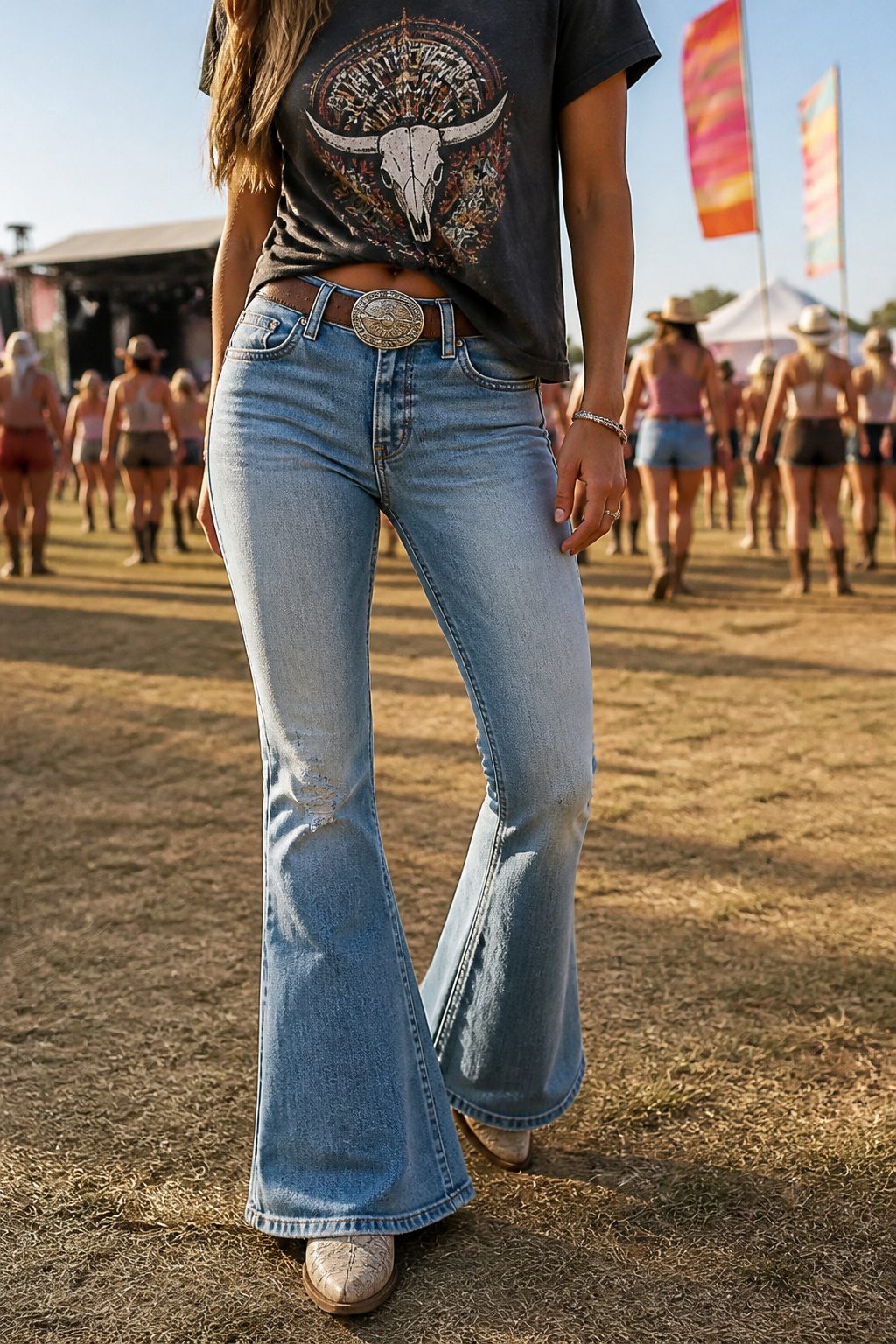
Denim is the fabric that carries a country concert outfit, and jeans are where the decision actually matters. Bootcut jeans flare from the knee and leave the right amount of room for a cowgirl boot shaft to show.
Skinny jeans work tucked into boots, but the shaft gets hidden and the silhouette reads more city than western.
Distressed denim fits the scene until the rips go too far; light fading and a few worn spots feel lived-in, while shredded knees and blown-out thighs look costume.
For summer shows, lightweight denim with stretch moves better in a crowd and keeps you cooler when the set heats up. The bootcut over skinny rule holds if you bought the boots to be seen.
3. Dresses
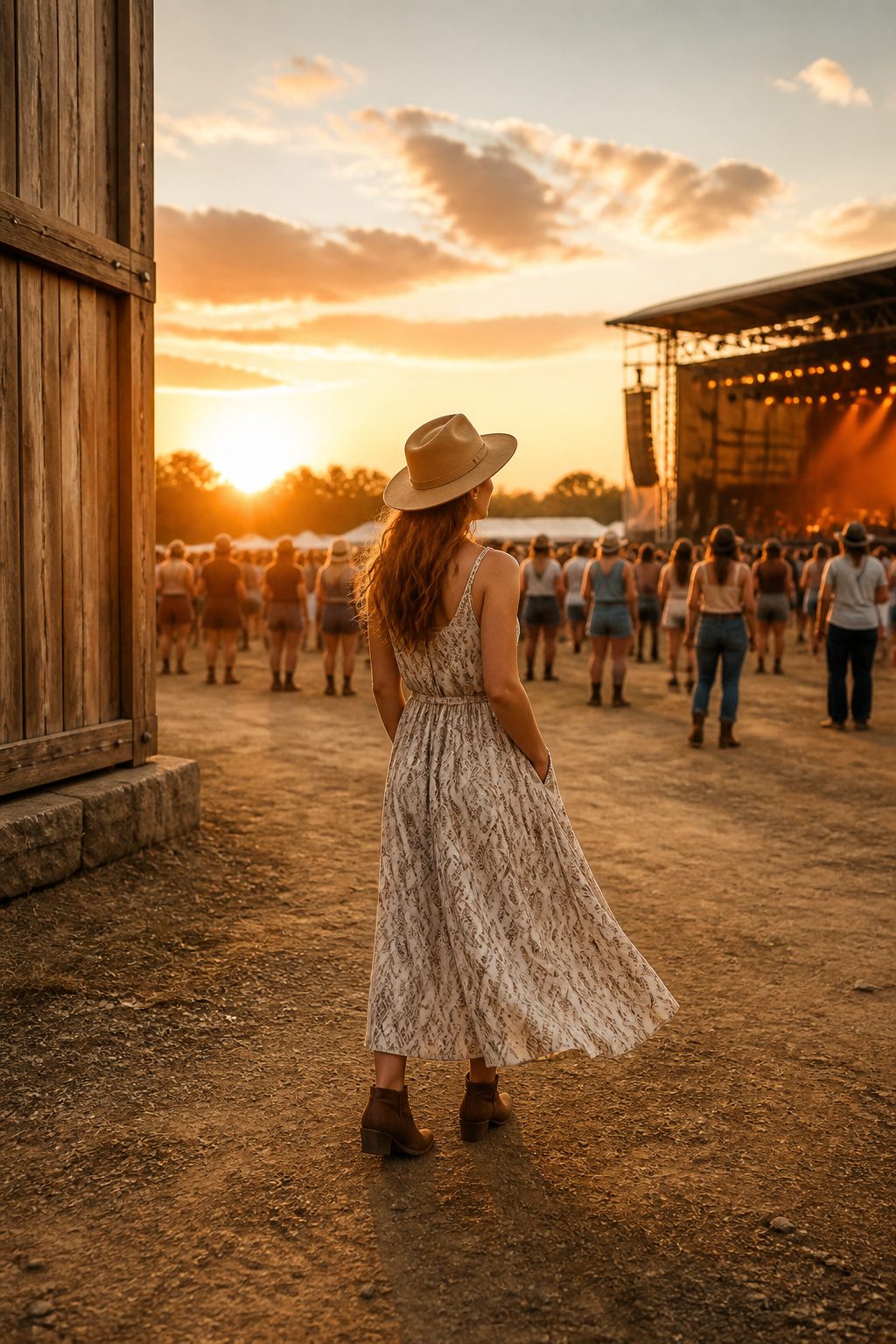
A midi dress with side pockets and adjustable straps solves most of the problems a country concert throws at you.
The length keeps you covered in stadium seats but won’t drag through festival dust, and the pockets mean your phone and lip balm stay within reach even when you’re two beers deep and the opener’s mid-set.
Flowy fabric that doesn’t cling is the real advantage here. Between late-afternoon heat and crowds pressed against the rail, a dress that sticks to your back becomes a distraction you don’t need.
Satin or lightweight cotton with some movement lets air circulate and still photographs well when the light hits right before sunset.
Western-style details, embroidery, or a simple geometric print read intentional without trying too hard.
Pair that midi with short cowgirl booties and you’ve hit the balance: dressy enough that the outfit works for dinner after, casual enough that you aren’t fussing with it in a field.
Solid colors or small florals feel classic; leopard print if you want the Nashville edge.
The same dress rewears for summer brunch or a picnic, so the cost-per-wear justifies skipping the fast-fashion piece you’ll retire after one Instagram post. A denim jacket layered on top handles temperature drops without killing the look.
4. Tops
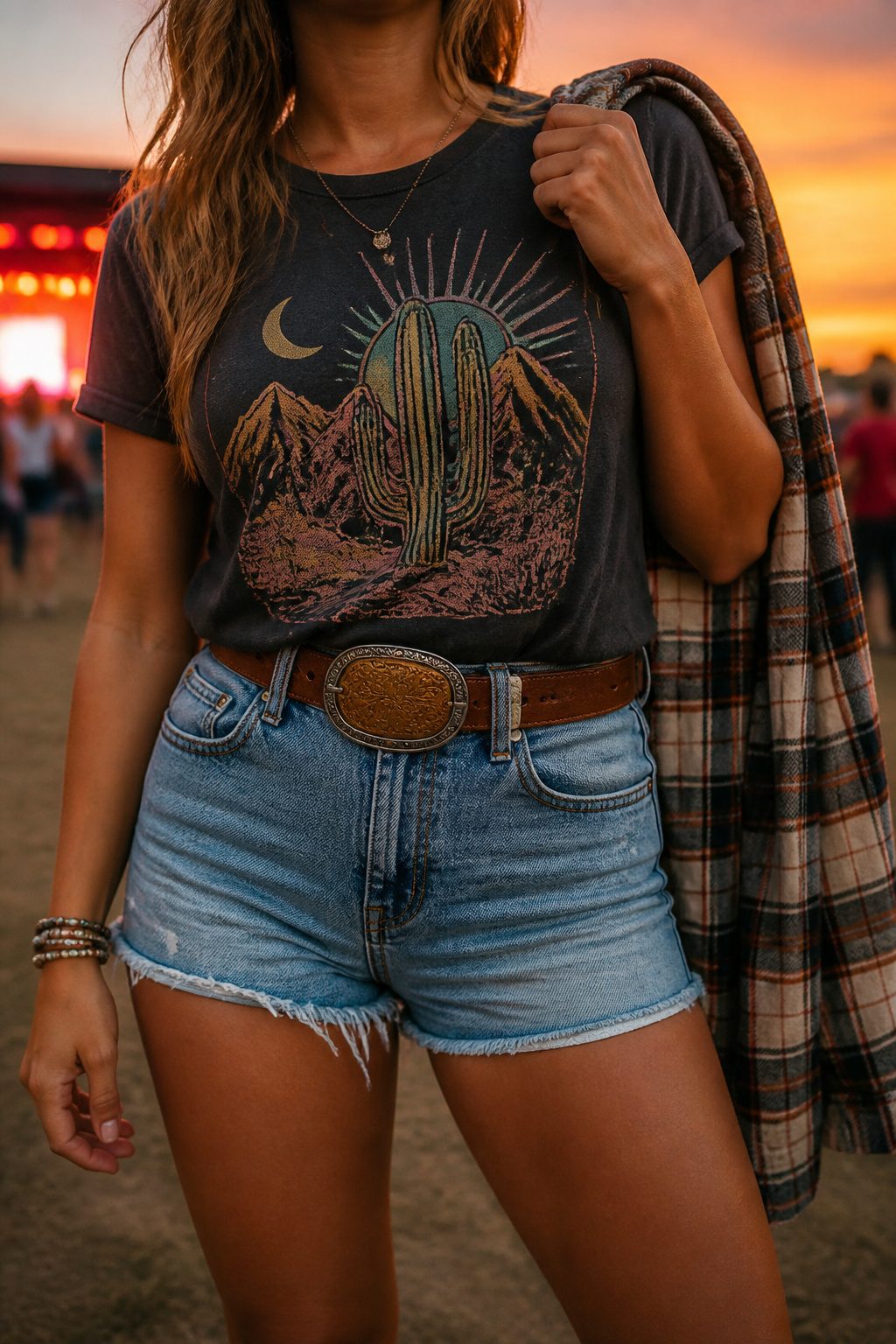
A worn-in graphic tee sets the loosest tone of the three, the kind of piece that reads right at a day festival where you’re standing on grass and ducking sudden rain.
The cotton weight matters more than the print, a mid-weight jersey keeps sun off without turning into a sauna by the third opener, and the same shirt works under denim come evening.
Flannel gives you the most mileage across a single day.
A brushed cotton or lightweight wool blend in a standard weight, roughly the heft of a chamois shirt, buttons over that tee when the sun drops and ties around your waist when the afternoon hits hard.
The pattern does enough visual work that the rest of the outfit can stay plain.
Off-the-shoulder tops trade some of that practicality for a sharper line, better suited to stadium seats and concrete floors where you’re not fighting dust or weather.
The cut leaves more skin exposed, so the fabric needs to carry more structure, a substantial cotton poplin or a lined blend that stays put without constant tugging.
That structure costs you layering options, the shirt won’t sit comfortably under much, so you commit to the look for the full show.
5. Shorts
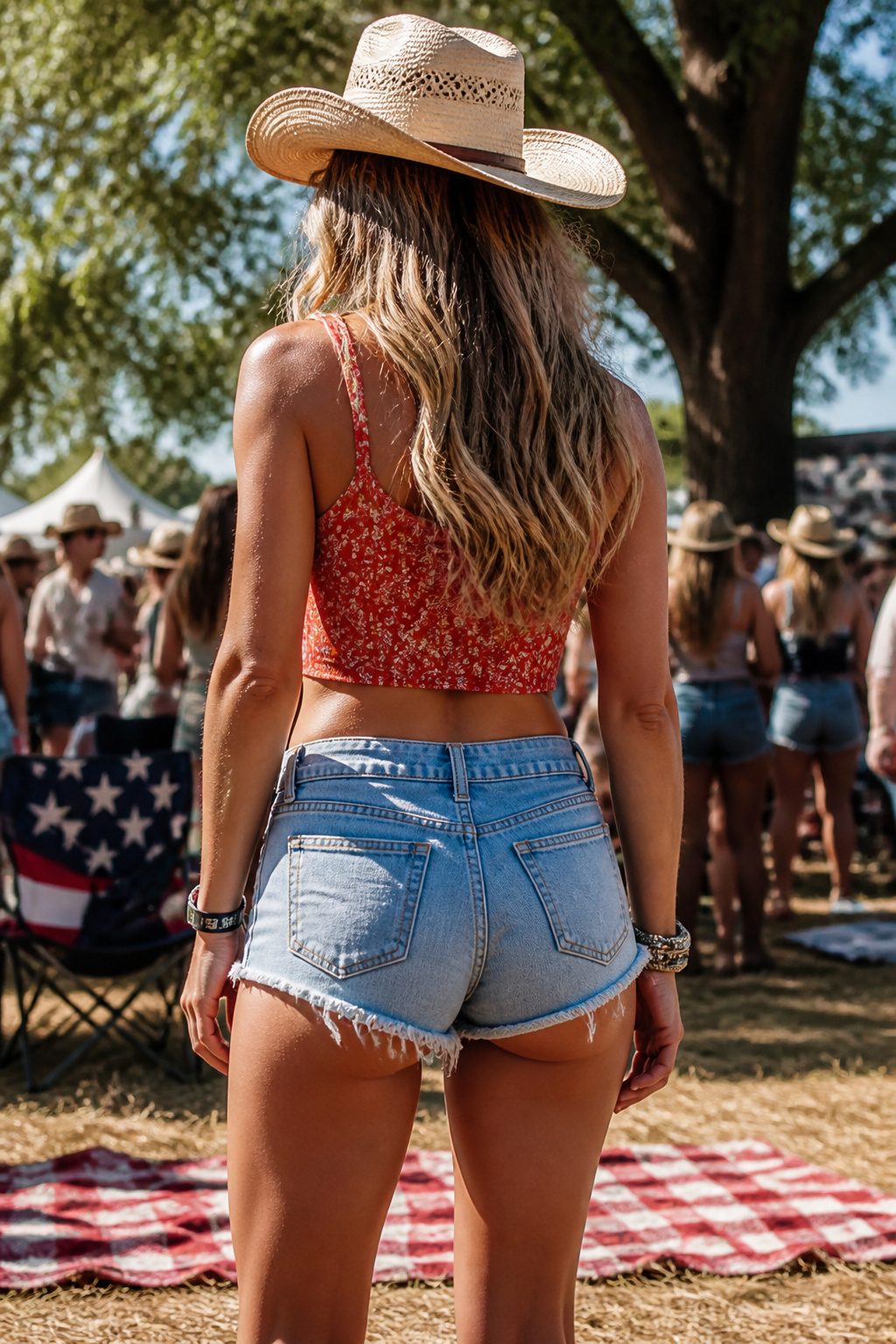
Denim cutoffs are the default summer country concert outfit for a reason, but the inseam length makes or breaks the look with boots.
A three- to five-inch inseam hits the sweet spot: short enough to keep you cool in festival heat, long enough that the hem does not bunch and ride up against tall boot shafts.
Anything shorter tends to disappear under the boot and look accidental, like you lost the rest of the jeans in the wash.
Baggy jorts in longer lengths read more laid-back and give you the coverage to move between stages without adjusting every ten minutes.
The top half matters just as much. A crop top or western-inspired button-up balances the leg exposure so the outfit feels intentional rather than unfinished.
Graphic tees work too, though the ones plastered with the headliner’s face can tip into costume territory if the rest of the look is already heavy on Y2K references.
The pockets on most denim shorts are functional front and back, which matters more than it should when you are juggling a drink, a phone, and a wristband all night.
6. Layering Pieces
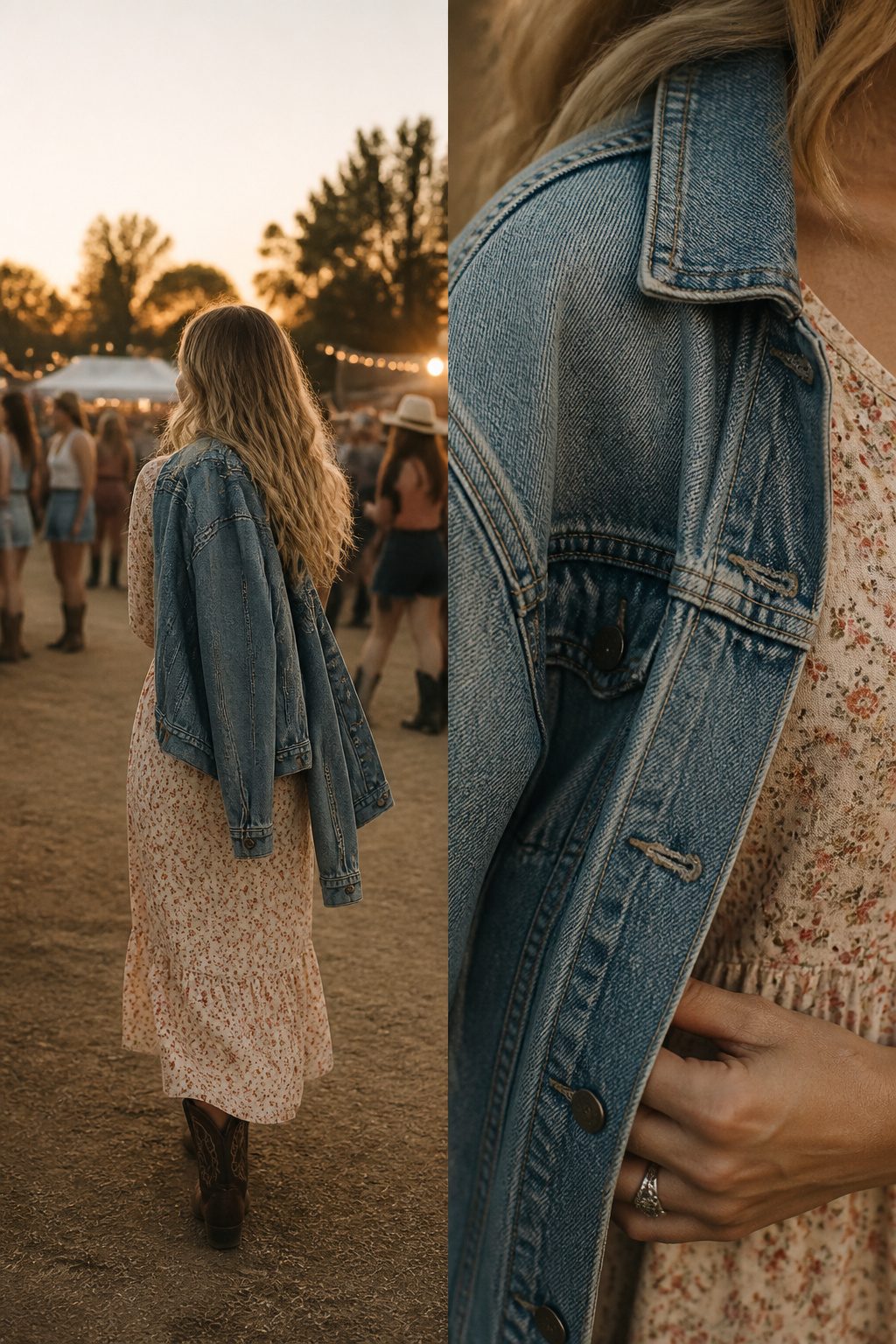
A denim jacket at a country concert is almost a reflex, but the weight matters more than people admit.
A rigid 14-ounce selvedge looks authentic but ties around the waist like a cinder block after sunset, and the stiffness catches on sequins or embroidery.
A 10-ounce stretch denim or a broken-in vintage wash drapes flat and stays put; you forget it is there when the temperature climbs.
Cardigans read softer than denim and bridge the gap between afternoon sun and cooler evening air.
A cotton-cashmere blend around 8–12 ounces adds warmth without the bulk of a sweater coat, and the open front keeps the outfit from looking like you stepped out of an office.
I have seen thick fisherman knits at outdoor shows that swallowed the whole look; fine-gauge ribs or a pointelle stitch keep the silhouette intentional.
Vests are the underused layer. A quilted nylon vest or a shearling-lined denim vest adds core warmth while leaving arms free for holding drinks or phone flashlight swaying.
They also do not compete with sleeve detail on a top the way a jacket would.
The formality shift is real: denim jackets ground a dress and make it casual, cardigans pull it toward brunch, and vests split the difference, reading practical without trying hard.
7. Accessories
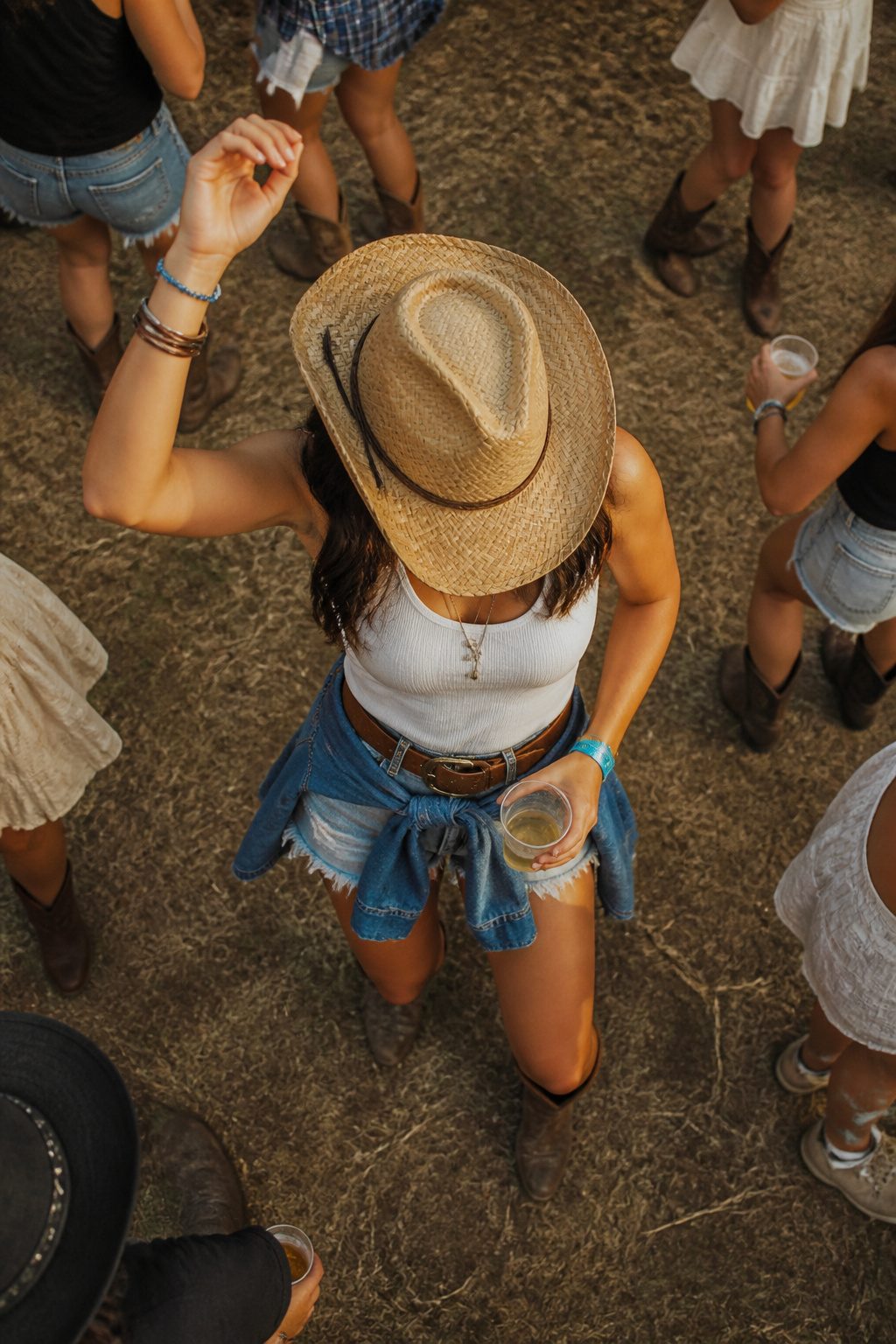
A hat does more than finish the look at an outdoor country concert.
It buys you hours of shade and gives the whole outfit its silhouette, so the choice between a classic cowboy hat and something lighter, like a trucker cap, is worth thinking through from the start.
Match the color to your boots if you want the traditional line, or skip the hat entirely and let your hair carry the style.
Belts work hardest with high-waisted jeans and dresses. A faux suede tassel belt sits right at that waist point and holds the eye without needing anything else nearby.
One strong belt plus one other accessory is usually enough; a third piece only works if the first two are quiet.
Layered necklaces give that western energy, but tangle fast once you’re moving. The fix is choosing ones with weight and stopping at two strands, or wearing a single stacked resin cuff instead.
Two or three strong pieces beat overcrowding every time, and you’ll keep track of them through a whole set without adjusting.
Dressing for Outdoor Festivals Versus Stadium Shows
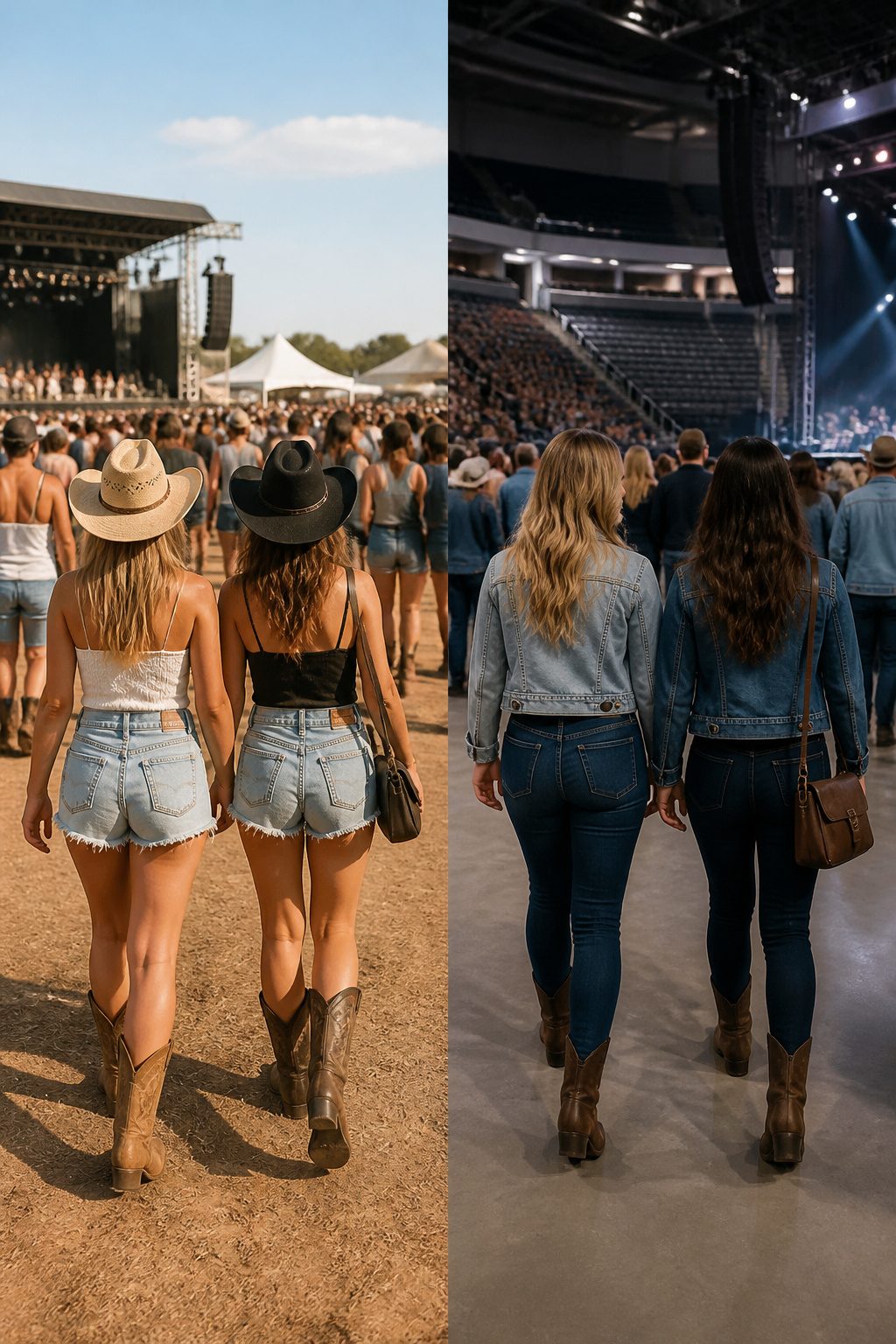
The venue changes more than the backdrop.
A country concert outfit built for a festival field needs to survive dust, grass, and hours of walking between stages, while the same look at a stadium show can lean cleaner and lighter because concrete and seating change every practical pressure.
For outdoor festivals, breathable fabrics that do not cling win over anything fashion-forward. Denim cutoffs and a graphic tee work because they tolerate dust and sweat without looking ruined by the end of the day.
A flowy romper or A-line sundress makes sense for the same reason: air moves through, and grass stains or spilled beer wash out easier than they would from something precious. Footwear matters most here.
Boots with dependable traction and a fit already broken in prevent the misery of blisters on uneven ground.
A straw cowboy hat and sunglasses are not decorative; they are sun protection you will need from the first opener to the headliner.
Stadium shows flip the priorities. Air conditioning means layers you can actually use, like a denim jacket or flannel overshirt, rather than sunscreen as your only shield.
Clean sneakers hold up fine on concrete and seated sections where you are not fighting terrain. The outfit can read more polished because the environment does not punish it.
A hat still works, but sun angle matters less, so a trucker cap or nothing at all is fine.
Two ways to play this: dress for the worst condition you will face, or split the difference with pieces that move between both. The festival-first approach wins if you buy one outfit and wear it everywhere.
Weather Adaptations
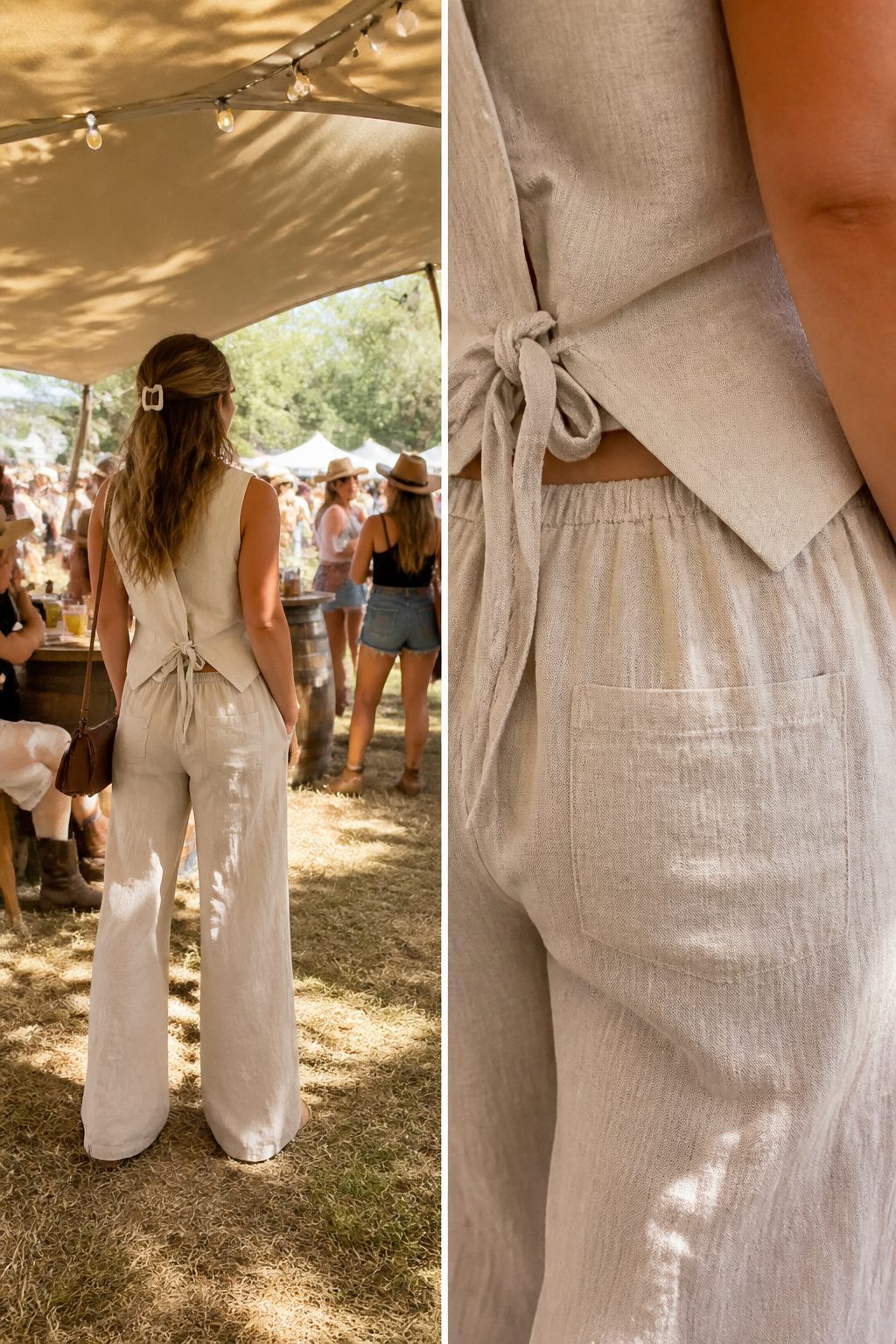
Summer heat at an outdoor country show means linen and lightweight cotton are the fabrics that actually work.
I learned this the hard way after sitting through a July set in a polyester blend that clung like a wet towel the moment the sun hit.
Linen wrinkles, but it breathes; lightweight cotton holds its shape longer and still moves air. Moisture-wicking blends are worth the extra cost if you run warm, since they pull sweat off skin instead of trapping it.
The real question is when to layer. A denim jacket tied at the waist looks right for the genre, but it stops being enough somewhere around the mid-60s.
Below that, you need the layer on your shoulders, not your hips, and you should have packed it rather than worn it through the afternoon.
My rule: if the forecast low is under 65, bring a flannel or a light utility jacket in a bag you can check or stash under bleachers.
What you wear in at 4 p.m. should not be what you’re shivering in at 10.
Putting the Pieces Together
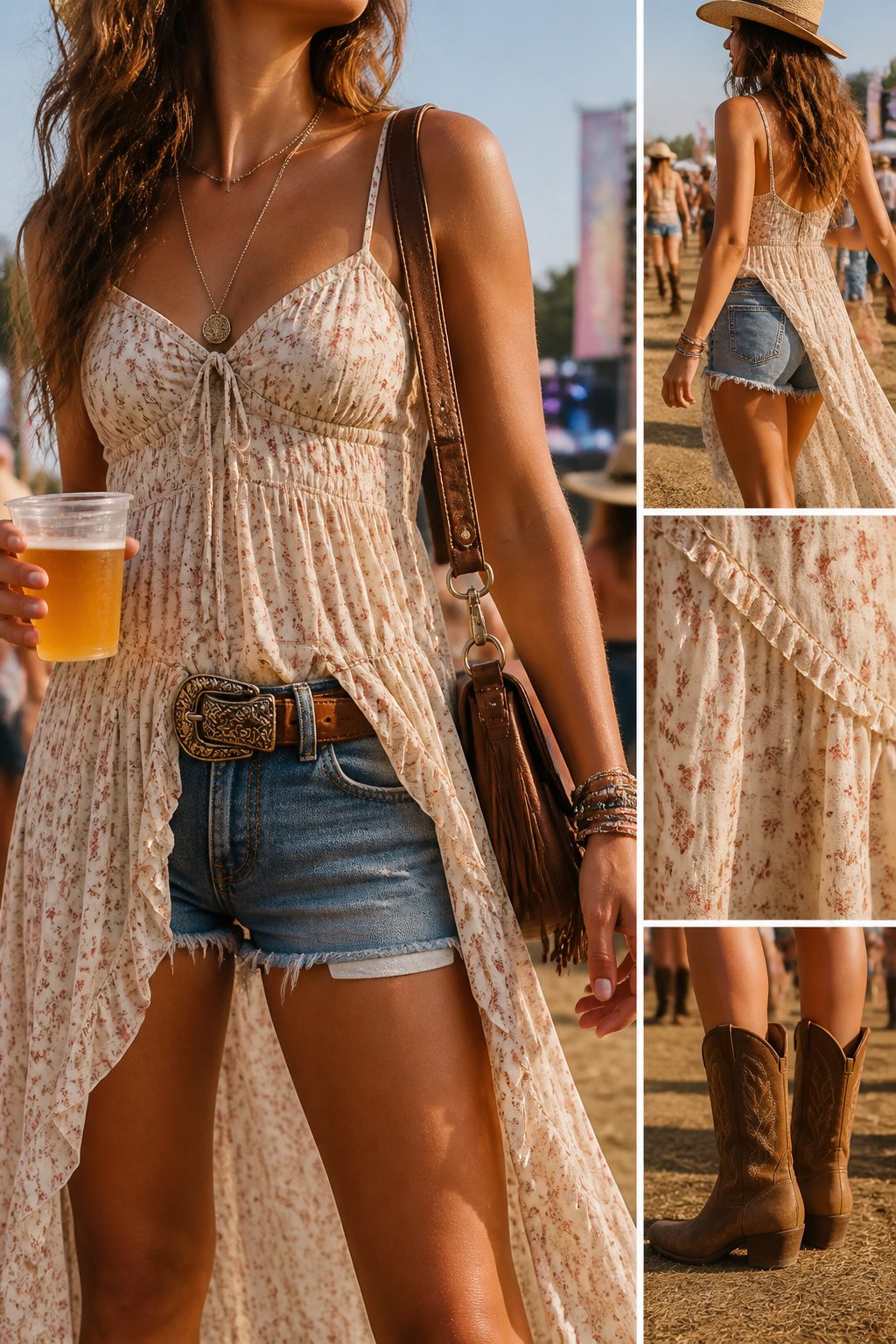
A hot outdoor festival demands breathability above everything else. My starting point used to be denim cutoffs and a graphic tee with boots, which works until you’ve walked five miles of dust and the waistband starts cutting in.
I swapped to an A-line sundress in a lightweight weave, layered necklaces, and a real straw cowboy hat instead of cheap costume versions that wilt by noon.
The romper-and-boots combination arrived later, after I watched someone move through a crowd with zero adjustment needed while I was tugging at a skirt.
Bandanas as headscarves earn their place when sweat starts dripping; oversized sunnies stay on through the actual dancing.
Cooled stadium shows flip the problem.
Studded booties with capris and a dressier top looked right in theory, but three hours of concrete standing in anything heel-adjacent taught me that the bootie is the cowboy equivalent of high heels, not a replacement for support.
I now wear full-shaft boots already broken in, never new, with a flowy dress that handles aggressive air conditioning without requiring a jacket I would lose in seats.
Spring weather is where most outfits collapse. A jacket or overshirt gives you an easy layer for cooler evenings, and breathable fabrics underneath handle the warmer afternoons.
Clean sneakers work for indoor shows, but boots make more sense outdoors where traction matters and the lot turns muddy without warning. The hat still protects from sun that appears unexpectedly between clouds.
My own spring formula settled after one soaked-through cotton dress: now it’s the sundress base, boots I can actually walk in, and a layer I can tie around my waist when the temperature swings.
Frequently Asked Questions
What should I wear to a country concert?
Cowgirl boots, denim, and a stylish top form the backbone of any country concert outfit. Skinny jeans tucked into boots work for cooler nights, while denim shorts trade coverage for comfort in the heat.
A flowy midi dress with a simple pattern handles warm weather without looking out of place, especially paired with short cowgirl booties.
Are dresses appropriate for a country concert?
Yes, and a midi dress with side pockets and adjustable straps solves most problems a country concert creates.
The length keeps you covered in stadium seats but won’t drag through festival dust, and flowy fabric that doesn’t cling lets air circulate when crowds press in.
Pair it with short cowgirl booties and the outfit works for dinner after the show.
What shoes should I wear to a country concert?
Cowgirl boots carry a country concert outfit in a way no other shoe manages.
The western silhouette reads instantly, but the practical advantage matters more: sturdy leather and a stacked heel hold up through hours of standing, walking between stages, and dancing on uneven ground.
Break them in before the show or expect blisters by the second song.
How do I layer for a country concert?
A vintage denim jacket over a flannel or plaid top holds warmth and stays on theme when temperatures drop after sunset.
For something softer, a cotton-cashmere cardigan around 8–12 ounces adds warmth without bulk, and a quilted or shearling-lined vest adds core heat while leaving arms free for drinks and phone flashlight swaying.
What accessories complete a country concert outfit?
A hat buys hours of shade and gives the whole outfit its silhouette, whether you choose a classic cowboy hat or a lighter trucker cap.
A faux suede tassel belt works hardest with high-waisted jeans and dresses, sitting right at the waist without needing anything else nearby. Two or three strong pieces beat overcrowding every time.