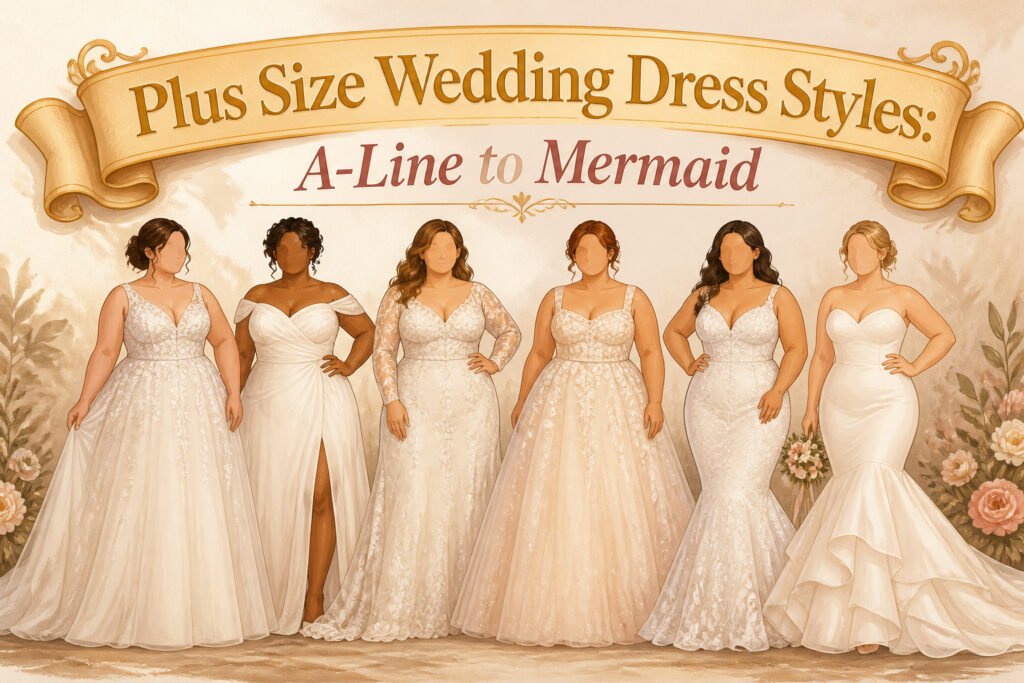
A plus size wedding dress is any bridal gown built in sizes that account for fuller busts, wider hips, and waists that do not scale in fixed proportion to the rest of the body.
The catch is that most manufacturers simply enlarge a size 8 pattern, which means the internal structure fails by hour three.
Madi Lane is one of the exceptions: they build their own cups with a lingerie manufacturer, adding actual depth and width rather than flattening the bust to fit a standard template.
A-Line Dresses
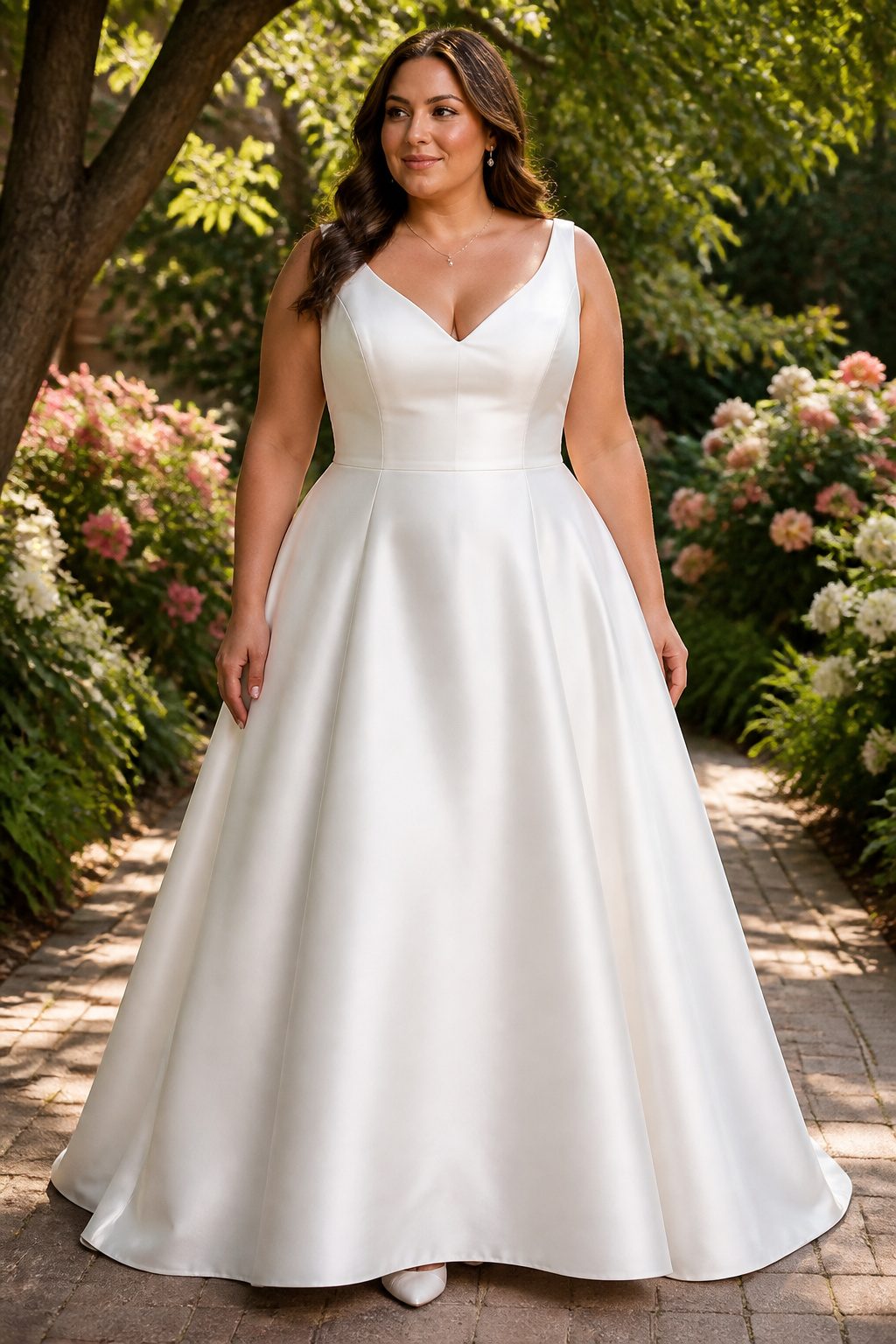
The A-line silhouette earns its reputation as the most widely recommended choice for plus-size brides for sound structural reasons.
A fitted bodice that nips in at the natural waist, paired with a skirt that flares gradually rather than dramatically, creates a vertical line that balances the figure without adding bulk at the hips or thighs.
Where the waist seam actually sits makes or breaks the effect: too high and the torso looks compressed, too low and the flare starts from the wrong point and widens the silhouette from the midsection instead of the waist.
Construction matters as much as shape. Princess seams through the bodice allow the fabric to follow curves rather than tenting over them, and a well-placed waistband, whether satin or invisible, anchors the eye at the narrowest point.
Sizes at major retailers run 2–28, which means the A-line is available across the full range, though the proportions of bodice to skirt length vary enough that trying the specific style matters more than ordering by number alone.
Ball Gown Dresses
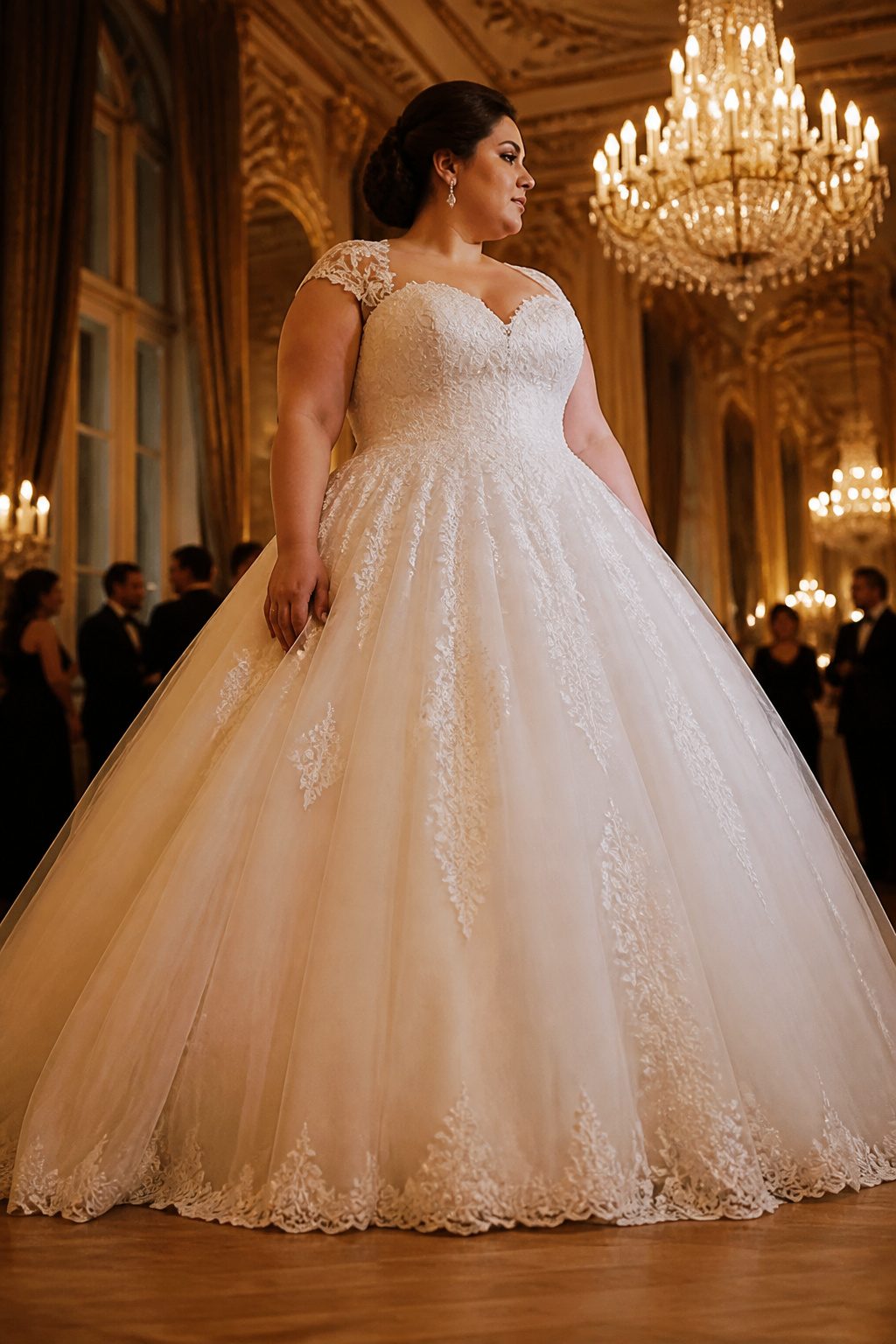
A ball gown’s full skirt builds its own architecture, which means the waistline reads smaller by comparison without relying on your body to do the shaping work.
The volume starts at the natural waist and falls outward in structured panels, so the eye registers the narrowest point first and reads everything below as deliberate drama rather than silhouette.
That structure comes with weight. Multiple layers of tulle or crinoline underneath add literal pounds, and after three hours of standing for photos, the hips and lower back notice.
Dancing requires planning too: the skirt has to be gathered or bustled, or you spend the reception steering fabric around chair legs and guests’ feet.
Fabric choice controls whether the volume looks sculptural or overwhelming. Stiff duchess satin, organza, and certain mikados hold the dome shape with fewer underlayers, which trims bulk where it matters.
Softer chiffons and lightweight satins collapse without heavy petticoats and end up adding more hidden material than a crisper cloth would need. If the skirt already contains built-in structure, you save weight and keep the line clean.
Fit and Flare Dresses
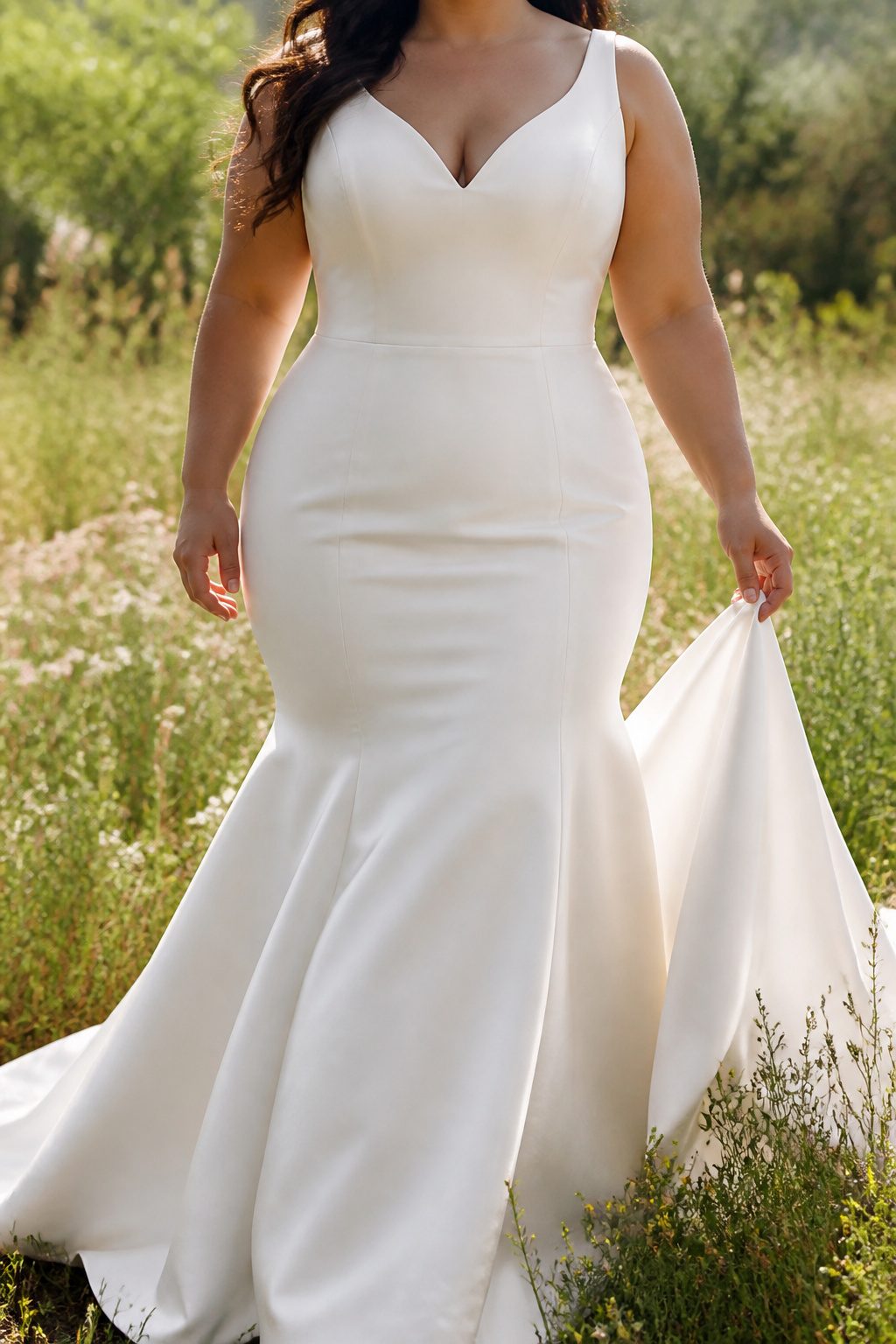
A fit and flare plus size wedding dress skims the body through the bodice and hips, then breaks away somewhere around mid-thigh.
That flare point is what separates it from a mermaid gown, which holds tight all the way to the knee or lower before it kicks out.
The earlier release gives you more room to move and sit, and the silhouette still reads as shaped rather than straight.
The construction that matters most sits right at that transition. A clean hip seam that ends cleanly at the thigh keeps the skirt from looking like an afterthought added to a sheath.
You want the fabric to release smoothly, not bunch or tent where the body is fullest.
In my experience reading through how these are built, the best versions use internal structure at the waist to anchor the shape, then let the skirt fall without extra bulk through the hip.
This cut tends to work well on hourglass and pear shapes because it follows the waist and gives volume where the hip and thigh naturally carry it.
Apple shapes can wear it too, but the waist definition needs to hit at your actual narrowest point, not where a pattern claims it should sit.
Sheath Dresses
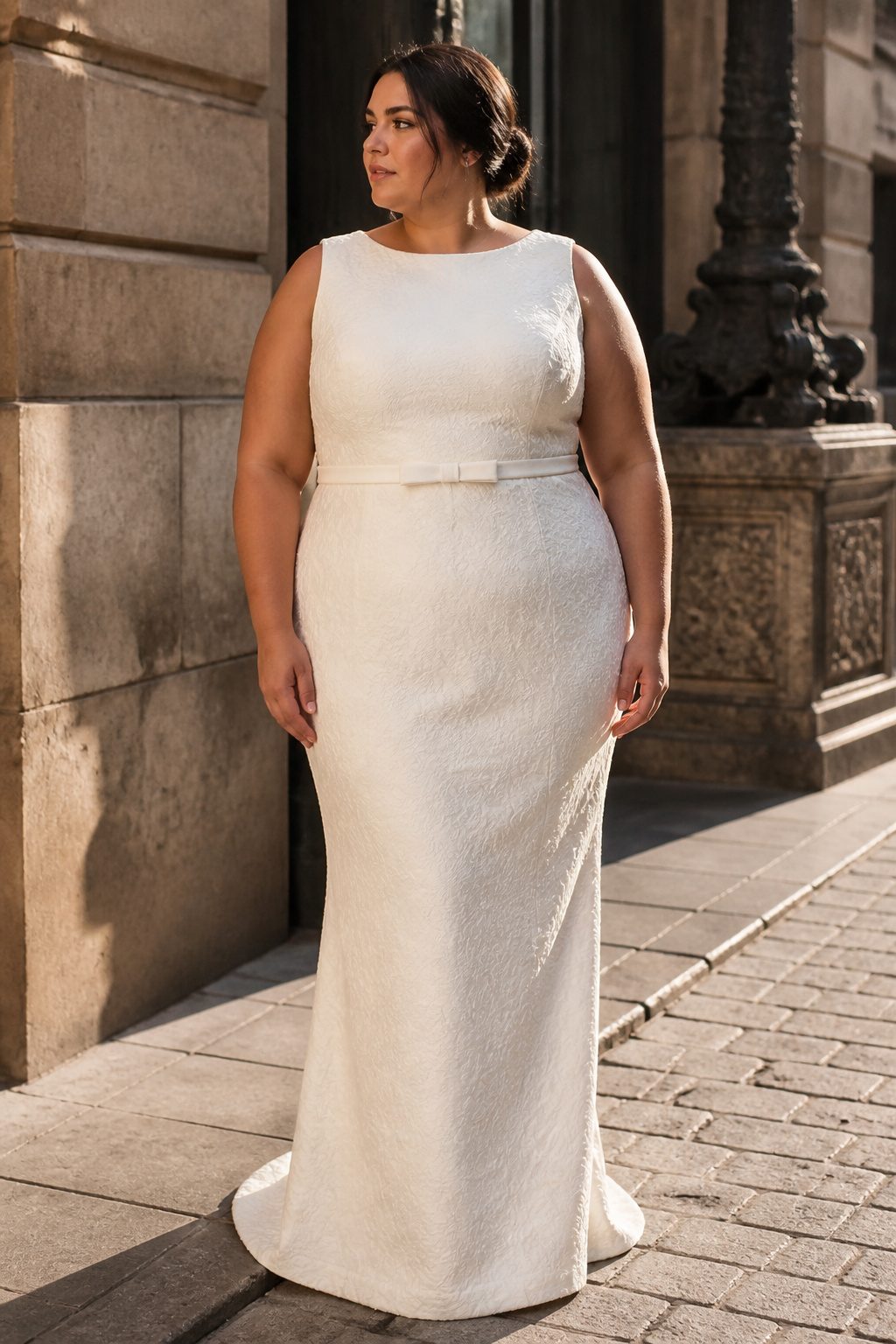
A sheath dress demands more from fabric and construction than any other silhouette in this lineup.
The straight cut from shoulder to hem leaves no room for fabric to misbehave, so jacquard or mikado will serve you better than crepe or soft satin. Those heavier cloths hold the line and skim rather than cling.
The internal engineering matters just as much. Corset boning scaled to the gown’s size keeps the bodice smooth and prevents that hitching-up motion that ruins photographs.
A Petersham belt inside the waistband carries the weight so the dress stays put through hours of standing and dancing. Breathable, moisture-wicking lining against the skin keeps the whole thing wearable from ceremony to last call.
This silhouette flatters least on figures with a pronounced difference between waist and hip measurements, since the straight line wants to ignore that curve rather than celebrate it. It also asks more of the bust than an A-line would.
Customized cup depth and width, sewn directly into the bodice, bridge the gap when off-the-rack proportions fail. Without that fusion construction, the sheath becomes a tube that highlights every place the body says no to a tube.
Tea-Length Dresses
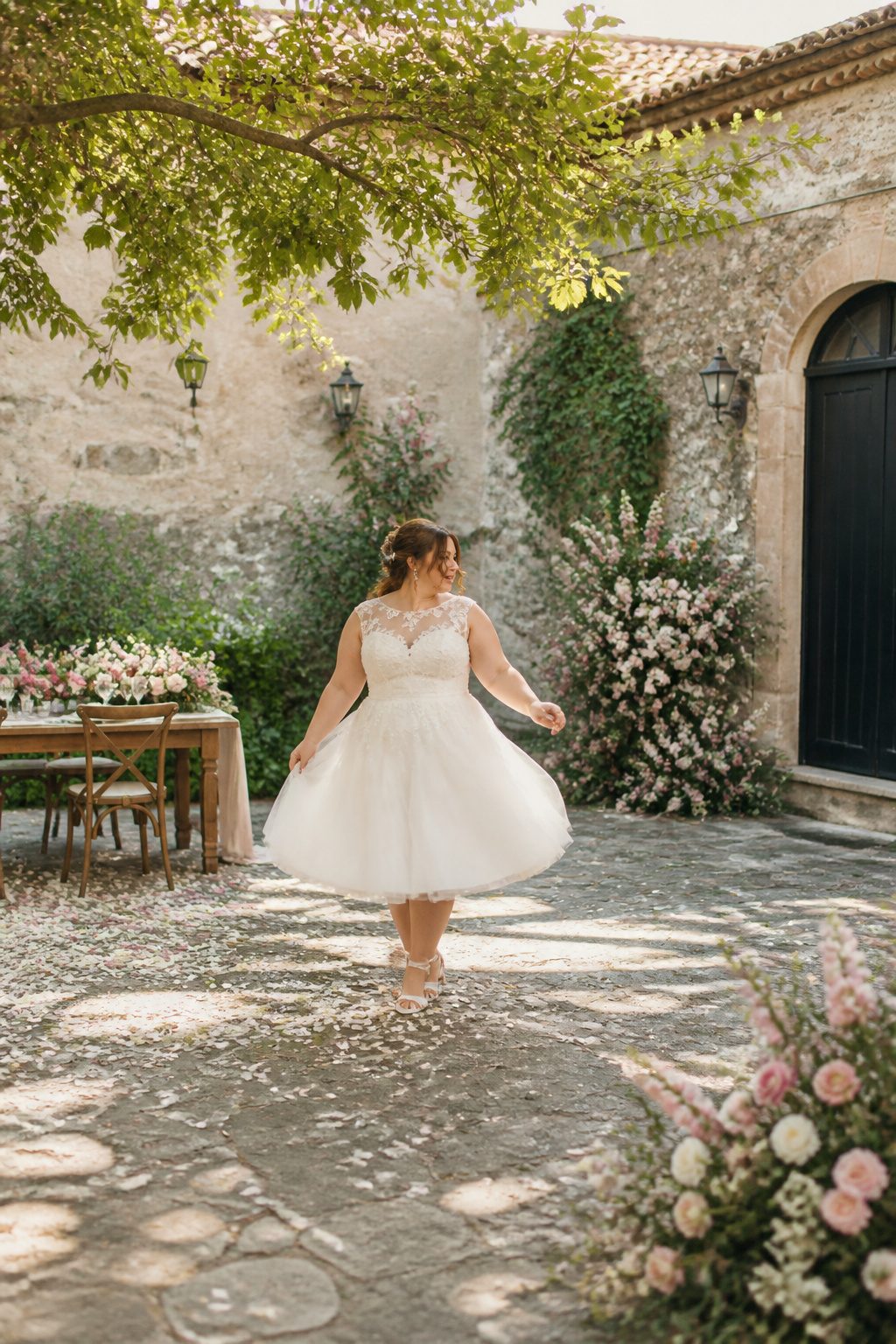
A tea-length hem hits between the ankle and mid-calf, and that single change rewires the whole proportion of a plus size wedding dress.
The skirt flares from a defined waist, so the eye keeps moving instead of stopping at the widest point. What you get is a silhouette that feels light without losing structure.
The retro pull is obvious the moment you see one: Audrey Hepburn, garden parties, the kind of wedding where the cake is small and the dancing starts early.
That nostalgia makes it a natural second-dress choice, something to change into after the ceremony when the grass is soft and heels have started to pinch.
It works for outdoor weddings because the hem stays clear of dew, gravel, and the hem-drag that turns a long skirt brown by cocktail hour.
The shorter cut puts your leg line on display, which means shoe choice matters more, not less. A nude pump lengthens; a metallic strappy sandal keeps the vintage thread alive; anything too heavy or platformed chops the leg back off.
The ankle is the narrowest part of the leg, and the tea-length cut frames it like a bracelet.
Fabric weight is the make-or-break detail. Too stiff and the skirt stands away from the body like a lampshade; too soft and it collapses into the hip.
A light organza or structured tulle holds the bell shape without adding volume underneath.
Two-Piece Dresses
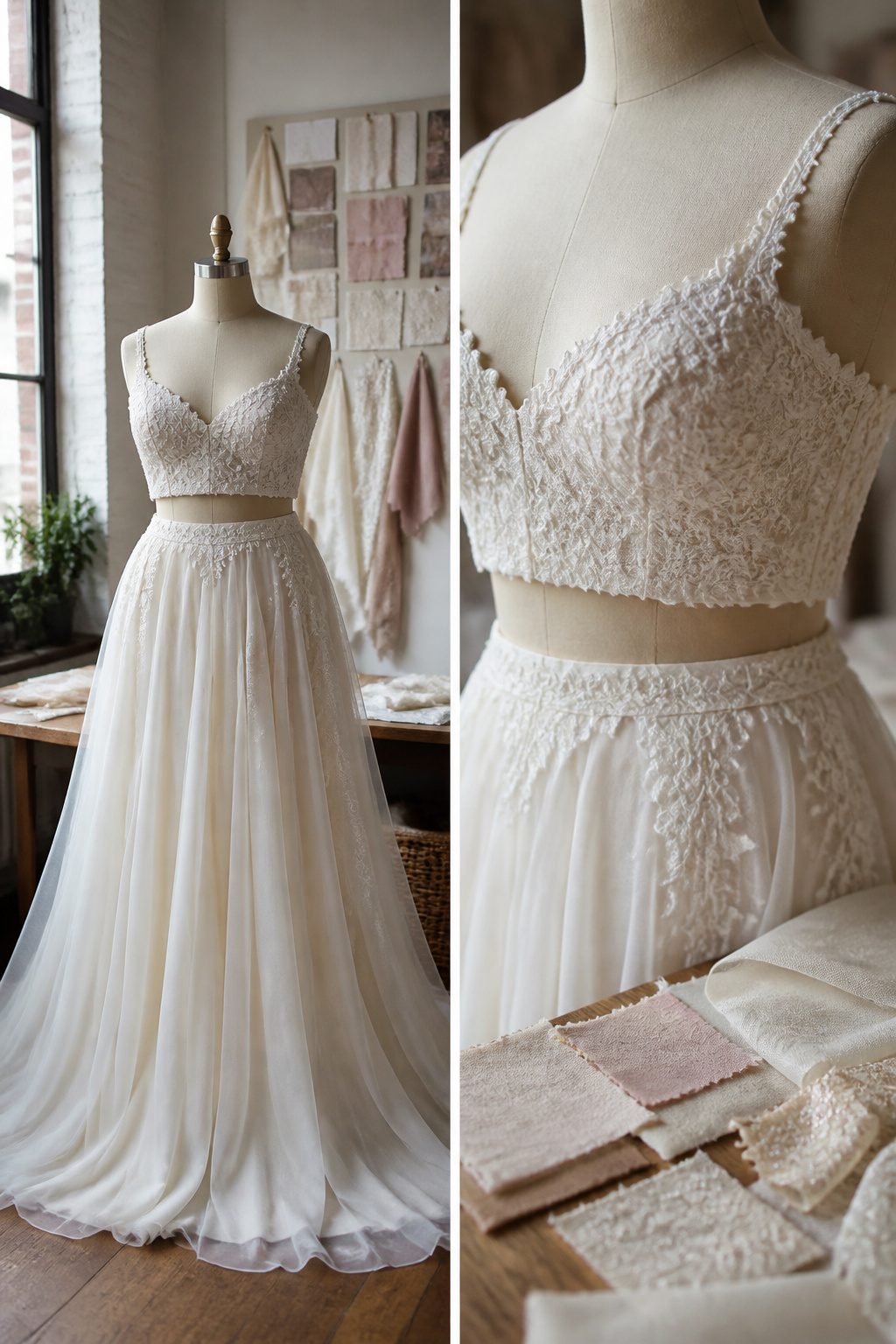
A cropped bodice paired with a full skirt, or a structured top with a flowing bottom, lets you order the bust and waist in two different sizes instead of forcing one number to fit both.
That matters more than it sounds. Most one-piece gowns size by the larger measurement and alter the rest, which can distort the neckline or strain the zipper.
With separates, the bodice closes cleanly at the bust while the skirt sits at the true waist, no gaping or pulling.
Apple shapes gain the most from this split, since waists and busts often sit two or more sizes apart.
Pear shapes can scale the skirt up while keeping the bodice fitted, and hourglass figures avoid the common problem of a dress that fits the hips but balloons at the chest.
The catch is selection. Separates show up less often in bridal salons than traditional gowns, and coordination, fabric matching, and color consistency between top and bottom fall to you.
If you find a line that offers the pairing, the extra effort pays off in a fit that no single zipper could match.
Mermaid Dresses
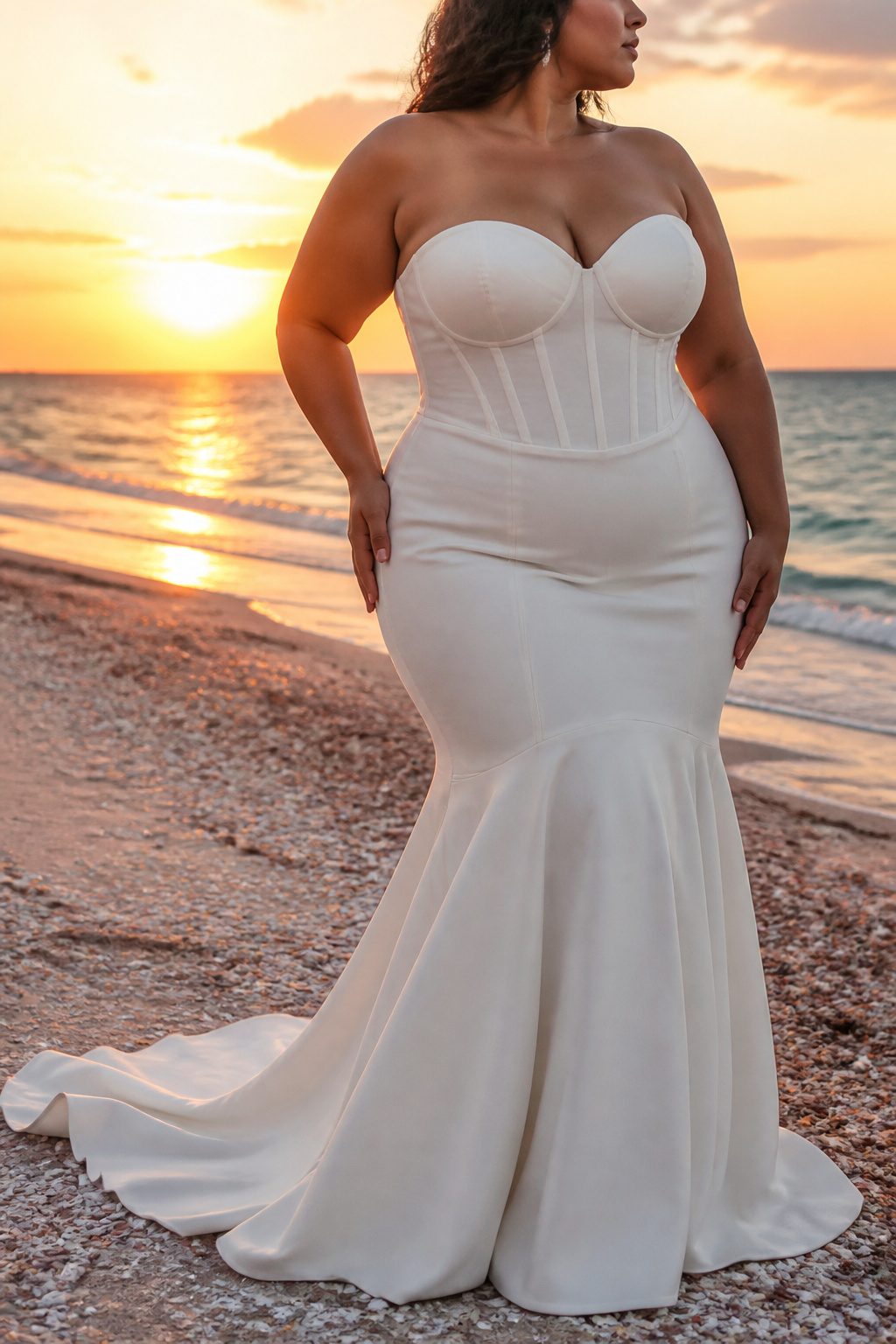
A mermaid silhouette fitted through the thigh and flaring at or below the knee demands more precise construction than almost any other plus size wedding dress shape.
The bodice and hip panels must be engineered to hold tension without pulling, which is why internal structure becomes non-negotiable at this scale.
Corset boning runs through virtually every ready-to-wear example worth considering, and not as an afterthought. The lightweight synthetic boning used in quality construction mimics the flexibility of whalebone while keeping the waist cinched and the fabric smooth under pressure.
Without it, the bodice wrinkles where the body moves, and the whole line collapses.
Fabric choice separates the gowns that hold their shape from those that sag by the reception. Structured materials with body, like duchess satin or heavy crepe, maintain the dramatic flare point.
Softer fabrics need more internal architecture to achieve the same effect, which adds weight and heat against the body during hours of wear.
The fit and flare silhouette sits nearby but differs in where it releases. Fit and flare begins its flare higher, typically at the hip rather than at or below the knee, which changes both the engineering and the proportions.
A mermaid asks more of the seamstress and more of the bride’s patience during fittings, but the payoff is a shape that celebrates curves with genuine drama rather than gentle suggestion.
What Fit and Comfort Actually Look Like
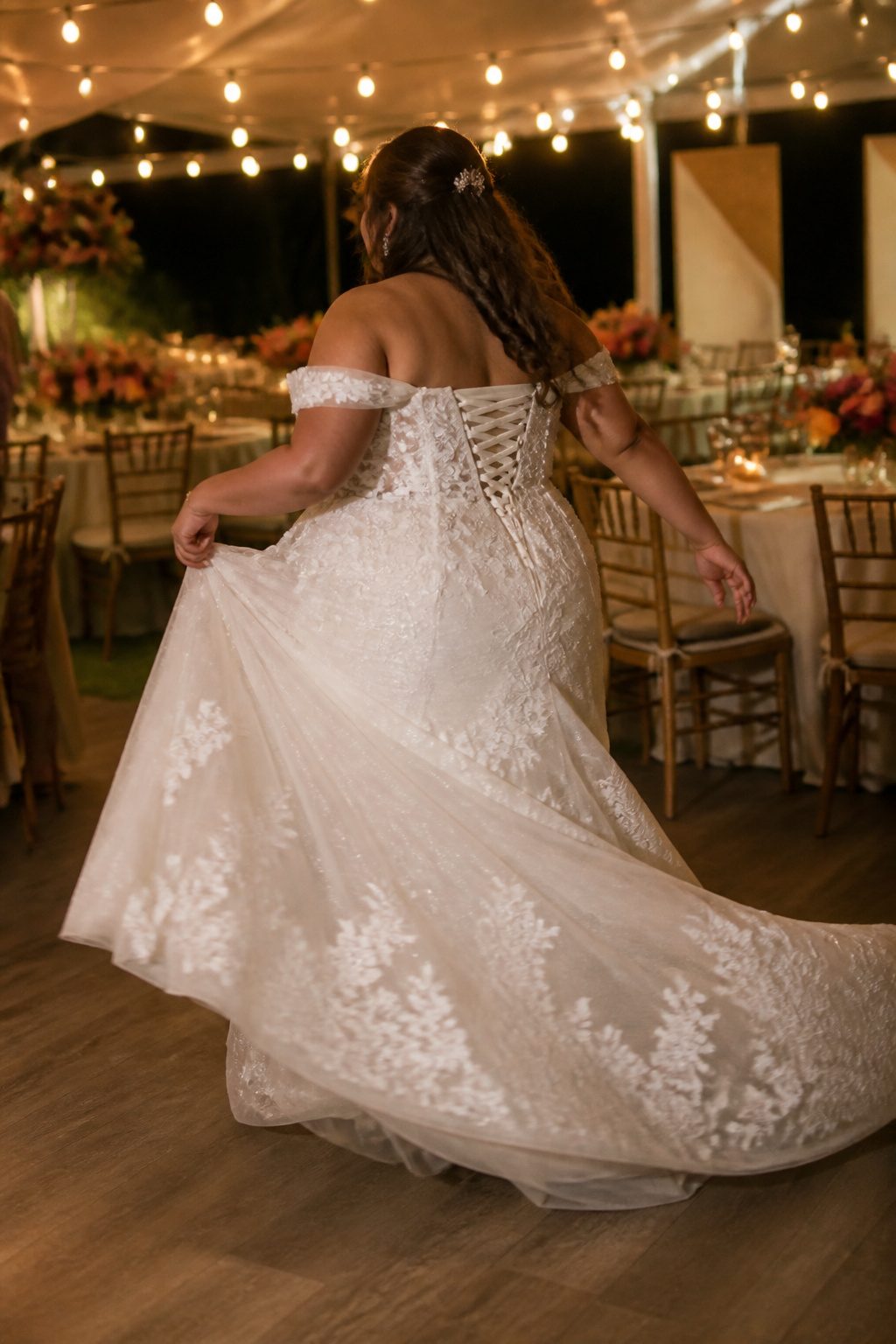
A dress that zips at the back does not mean it fits. The real test happens three hours in, when you sit for speeches, raise a glass, reach for a relative, and dance.
Sitting, breathing, raising your arms, dancing — those four motions separate a dress that photographs well from one you can actually wear through a wedding day.
Madi Lane builds this in at the pattern level. Their scaling accounts for how bodies change as sizes increase, especially where support matters.
The bust is its own system: their cups are sewn into the bodice with additional depth and width, closer to bra sizing than standard dress cups. For larger busts, this works with fusion construction that shapes without squeezing.
Corset boning sits in virtually all their styles, two excluded. The boning is synthetic and lightweight, meant to move while it supports.
It cinches the waist, keeps fabric smooth, and prevents the wrinkling that reads as cheap from fifty feet away.
At larger sizes, these details shift from nice-to-have to structural. A bodice without internal support relies on the body to hold the shape.
That trade fails over time.
Fabrics That Flatter
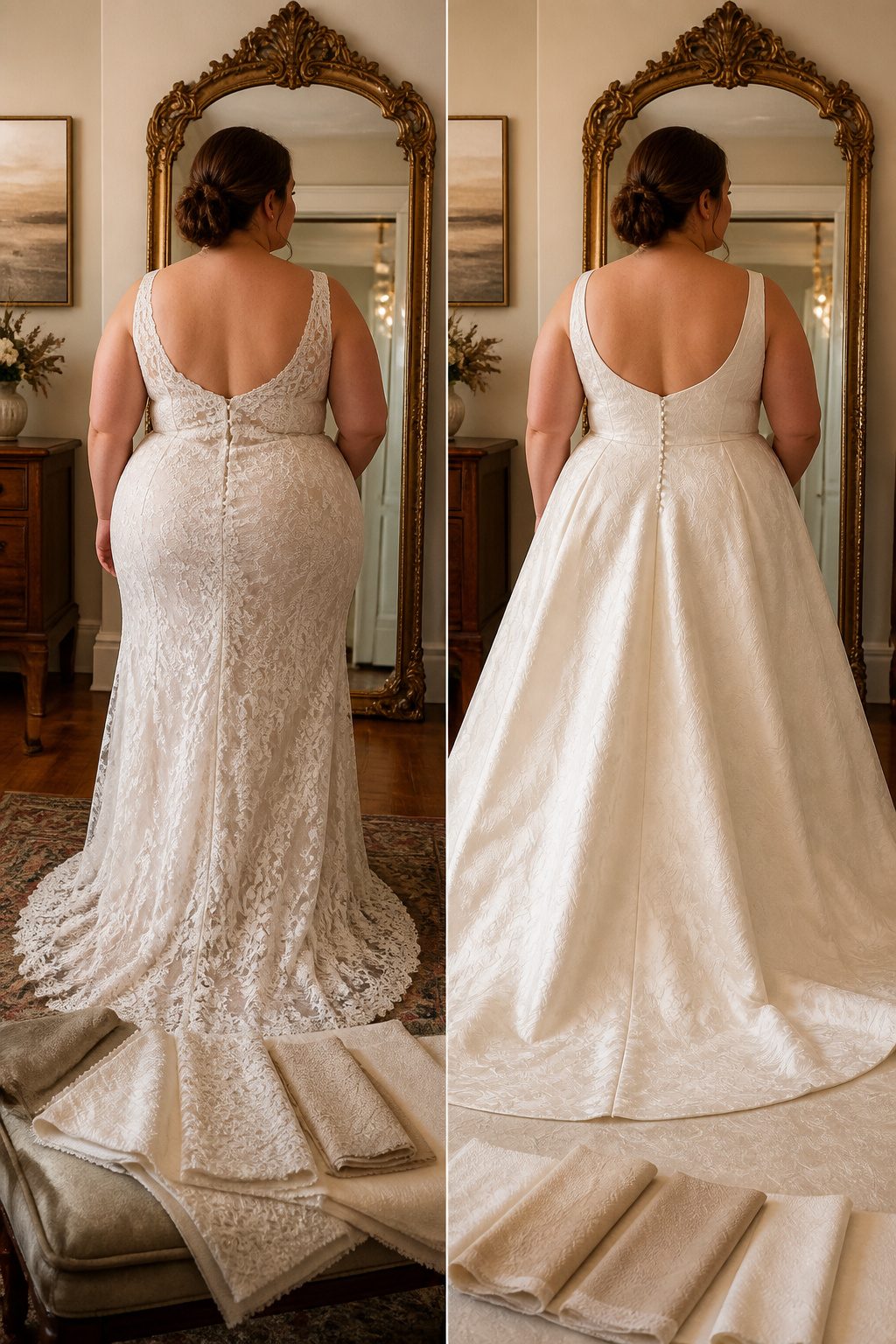
Heavier fabrics are the quiet workhorse of a flattering plus size wedding dress. Jacquard and mikado hold their own weight, which means they smooth over the body rather than tracing every line underneath.
The structure builds a clean silhouette from the inside out, and that matters when you are standing in photos for hours.
Lighter fabrics can go wrong fast. Chiffon, organza, and even some crepe de chine read as insubstantial on a fuller figure because they have nothing to push back against gravity or soft tissue.
They cling where they should float, and they telegraph every decision about undergarments straight to the surface.
Match the fabric to the shape. A structured A-line or ball gown needs the body that mikado or a substantial jacquard provides; without it, the skirt collapses into the hips instead of skimming past them.
A mermaid cut relies even more on this, since the fabric has to hold the flare at the knee without buckling.
Sheath dresses are the riskiest here, which is why the successful ones usually use a heavier crepe or double-layered construction.
The real problem is recovery, or rather the lack of it. Fabrics that bag at the knees or seat after thirty minutes of sitting will stay bagged.
What convinced me, reading through how these dresses are actually built, is that recovery matters more than hand-feel in the fitting room. A fabric that springs back keeps the line clean from the first look to the last dance.
Construction Details That Matter
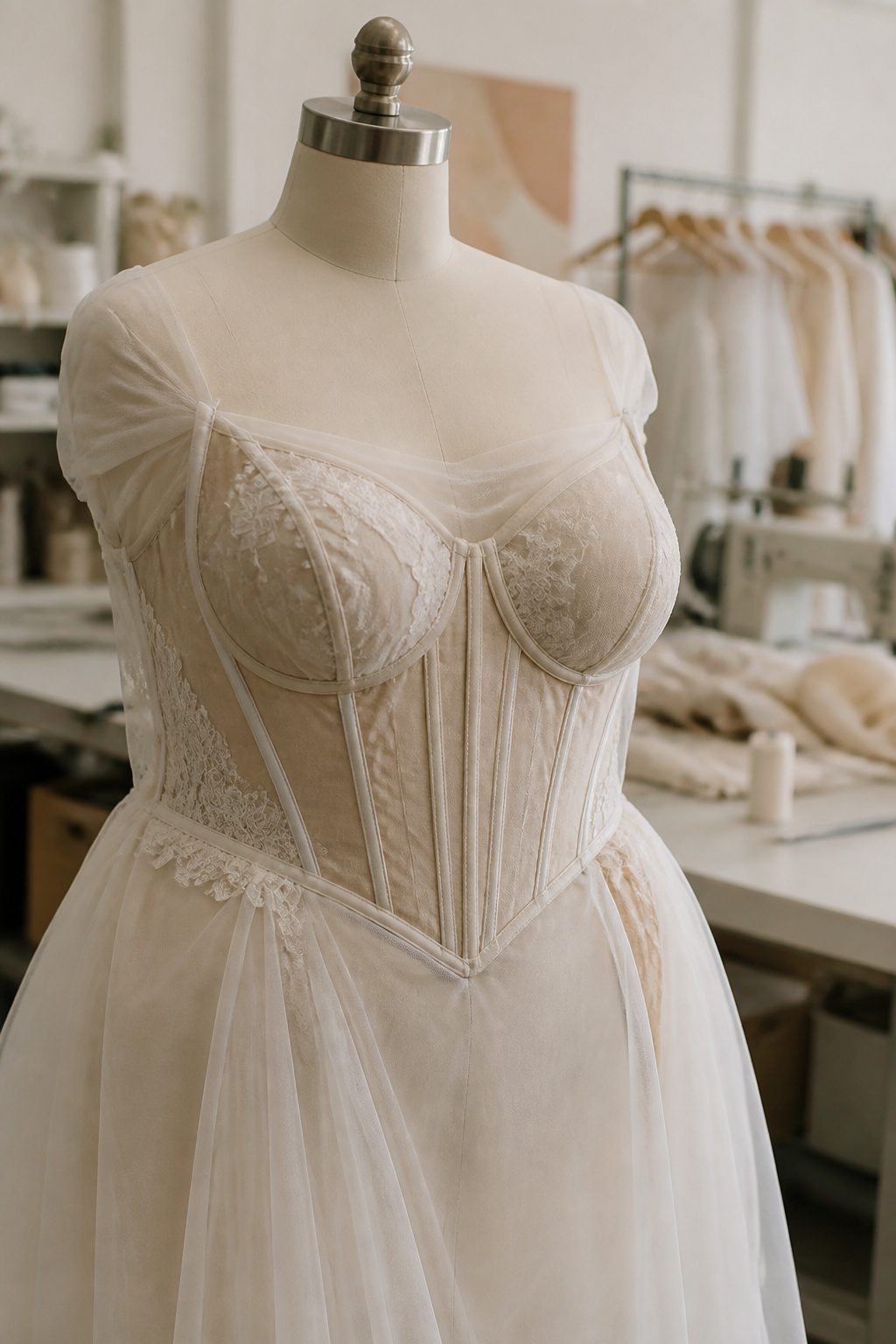
Internal construction makes or breaks a plus size wedding dress, and most standard bridal lines get this wrong by simply scaling up a size 8 pattern.
Boning, built-in cups, and waist stays are the difference between a gown that holds its shape and one that dumps all the strain onto side seams by hour three.
Madi Lane builds its own bust cups with a lingerie manufacturer, adding depth and width to match actual bra sizing rather than the usual flat template.
The cups are sewn directly into the bodice, which matters because bust measurements rarely track with the rest of the body as sizes climb.
Their boning uses lightweight synthetic material modeled on vintage whalebone, meant to move with you while keeping the waist cinched and the fabric smooth.
Della Curva works exclusively in sizes 16–34, and that focus shows in how they distribute weight through the bodice. Standard bridal construction often treats internal support as an afterthought; specialized scaling builds it into the architecture from the first pattern.
The result is less pulling across the back, less sag at the waistline, and a dress that does not feel like armor by the end of the night.
Frequently Asked Questions
What should I look for in a plus size wedding dress?
Look for internal structure that holds its shape without relying on your body to do the work.
Boning, built-in cups scaled to actual bra sizing, and a waist stay or Petersham belt keep the dress smooth and prevent that hitching-up motion.
The real test is whether you can sit, breathe, raise your arms, and dance after three hours without the gown dumping strain onto side seams.
Are there better fabric choices for plus size wedding dresses?
Heavier fabrics like jacquard and mikado outperform lighter options because they hold their own weight and smooth over the body rather than tracing every line underneath.
Lighter fabrics such as chiffon, organza, and soft crepe tend to cling where they should float and telegraph undergarment choices.
Recovery matters more than how the fabric feels in the fitting room; a cloth that springs back after sitting keeps the silhouette clean from ceremony to last dance.
Which silhouettes are best for plus size brides?
A-line and ball gown shapes earn their reputation as widely recommended starting points, though fit and flare, sheath, tea-length, mermaid, and two-piece styles all work when the construction matches the body.
A-line balances the figure with a gradual flare from the natural waist, while a ball gown’s full skirt makes the waist read smaller by comparison.
The right choice depends on which shape you feel good moving in, not on a fixed rule about body type.