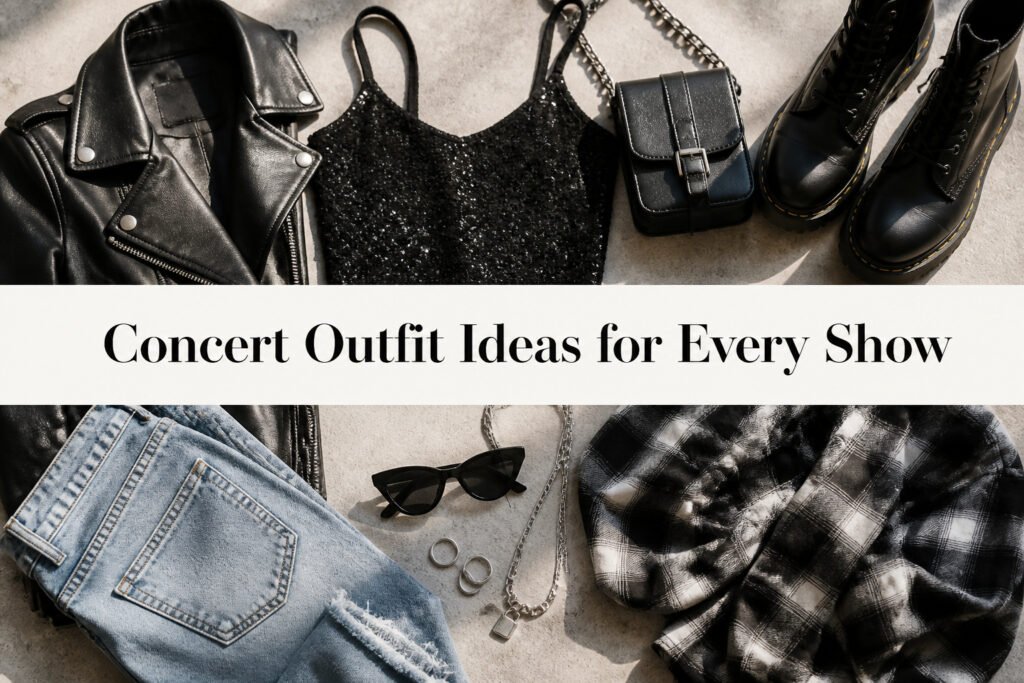
The right concert outfit depends on whether you are seated under a single bulb or pressed against a stranger under a wall of LEDs.
Rhinestones that electrify a stadium flash distraction in an intimate theater, and the same halter top that stays secure in a pit ties off into something else entirely by last call.
Mesh breathes when standing-room air does not, and the denim cut that survives a festival field handles stairs better than any stiletto sinking into grass.
1. Mini Dresses That Move With You
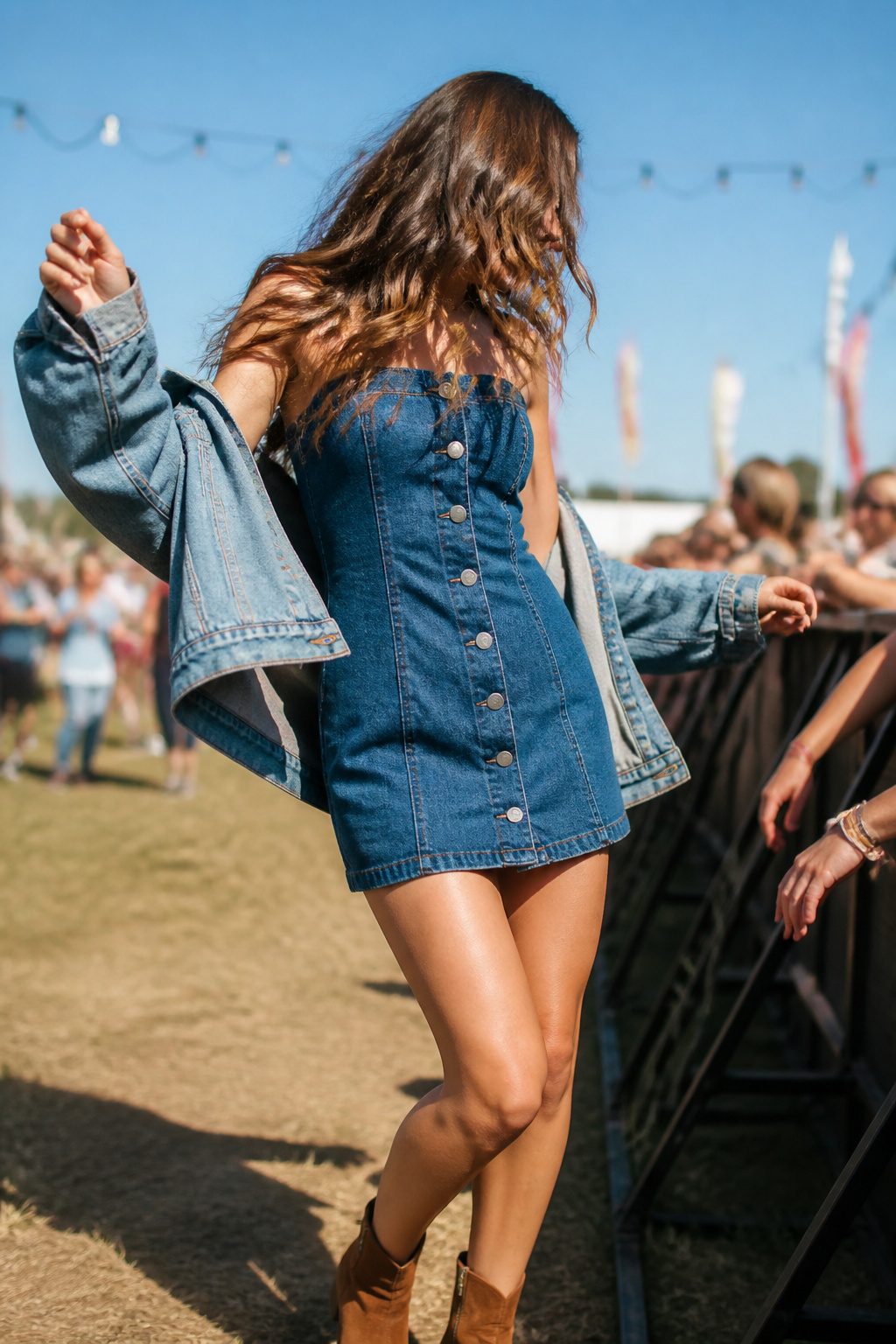
Short dresses earn their place at concerts through movement and air.
A floral mini keeps legs free for three-hour standing sets, and the cut works just as hard at an outdoor afternoon festival as it does under venue lights after dark.
I pick the neckline before I pick the print: a lower cut for seated theater shows where I am not reaching overhead, something more secure for general admission where arms go up and bodies press in.
Hemline follows the same logic. The denim button-front mini dress hits mid-thigh and stays put; the buttons add structure without extra layers.
For something that carries the whole look on its own, the Beverly and Beck Elena Mesh Maxi Dress layers short over long, breathing through mesh while still reading as dressed up.
A jean jacket and boots finish it, but the dress does the work.
2. Denim Shorts Built for Hours on Your Feet
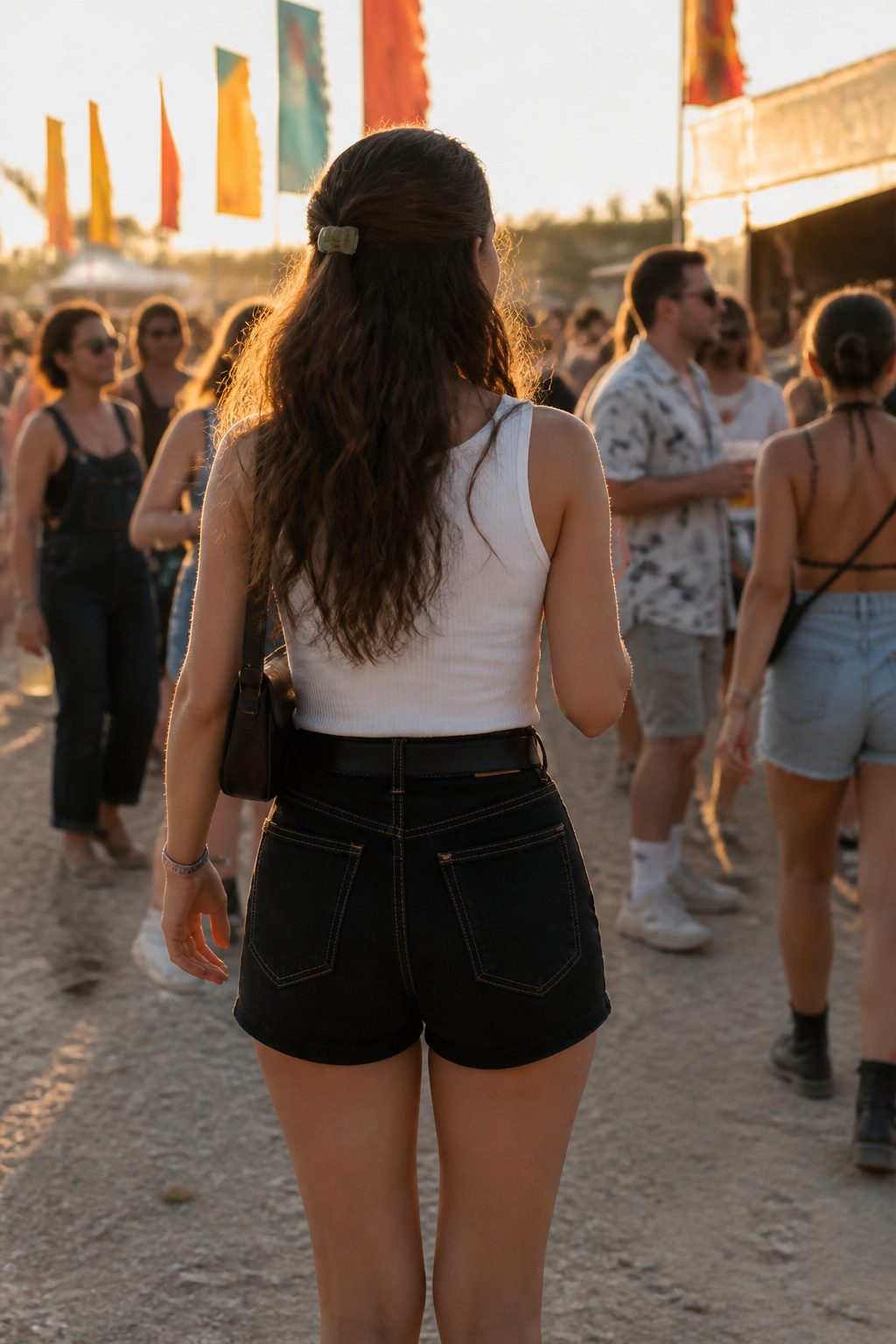
Low-rise denim shorts and three-hour sets do not mix. The waistband starts digging somewhere around the second opener, and by the headliner you are fidgeting more than dancing.
High-waisted cuts like the Pacsun Ivy High Waisted Festival Jean Shorts Contrast Stitch Black sit at the natural waist, so the band stays put above your hips and the pockets actually hold a phone without threatening to dump it every time you raise your arms.
The contrast stitch keeps them from looking like an afterthought.
Baggy fits solve the same problem from a different angle. The Pacsun Parker Baggy Jean Shorts Black Wash gives your thighs room to move and air to circulate, which matters more than people admit in a crowd pressed shoulder-to-shoulder.
I tuck in tanks or fitted tees to keep the silhouette intentional, sometimes adding a belt if the top needs anchoring.
An oversized band tee works too, but I half-tuck it or knot it at the waist so the shorts still read as a choice rather than a default.
3. Matching Sets for Instant Outfit
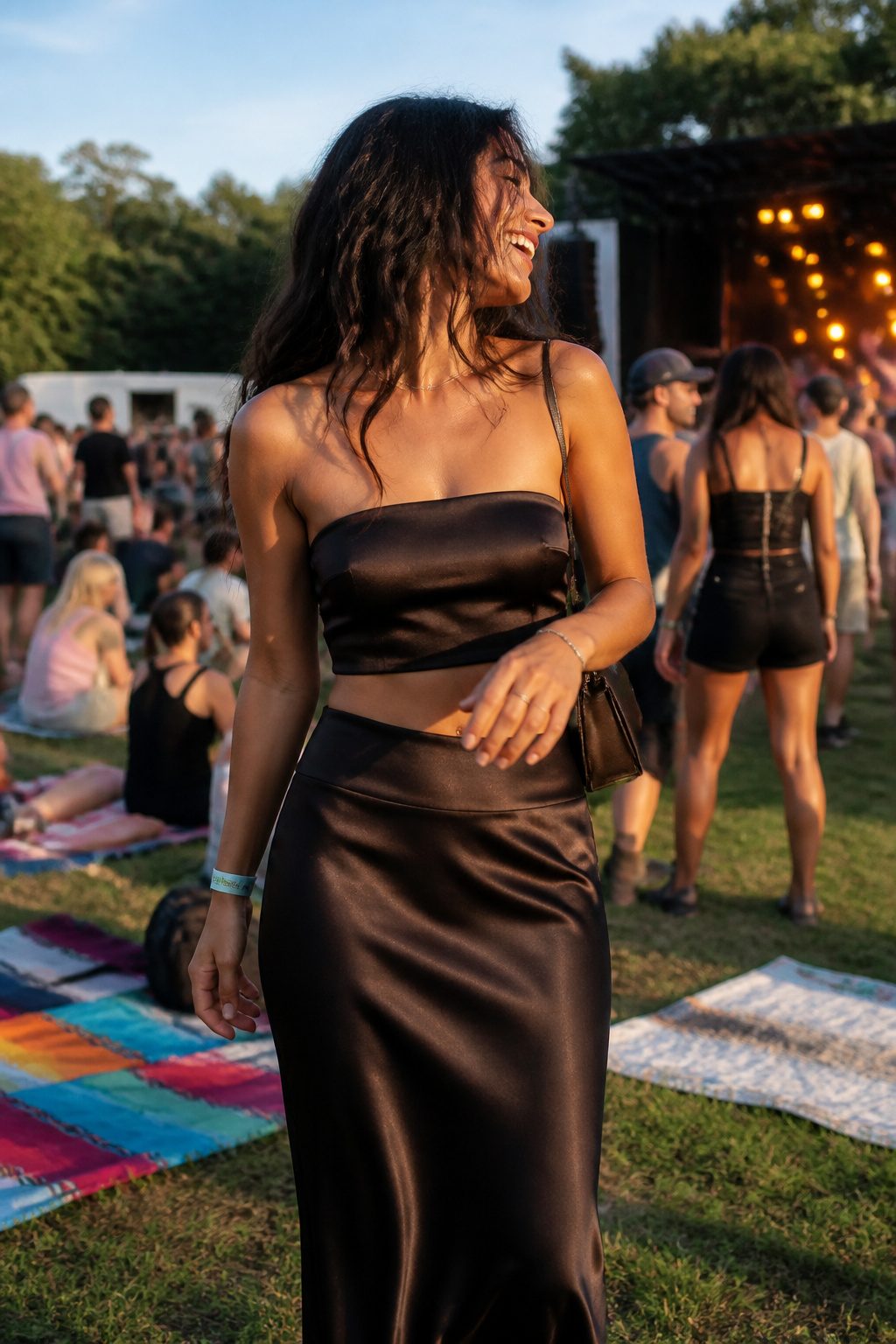
Coordinated tops and bottoms solve the real headache of getting dressed at a venue: no squinting at color matches under bathroom fluorescents or daylight that reads wrong on phone cameras.
The set is already decided, and the pieces split up later into a dozen other outfits.
For festivals, fabric choice matters as much as the cut. Linen-cotton blends and crochet knits survive being rolled into a bag without turning into a wrinkle map.
Satin skirt-and-top pairings need a flat pack between two layers of tissue, but they steam out in a hotel bathroom in ten minutes while you’re doing makeup.
I lay sets flat in the bottom of a weekender, shoes on top, nothing folded so small it creases at the stress points.
A crochet halter with matching shorts gives that boho texture without hunting down the right bottom half. For evening shows, a satin skirt set reads dressed-up without the risk of a mismatched top throwing the whole look off.
The real payoff is Sunday morning: those same pieces, separated, work for brunch or a Monday meeting with different shoes.
4. Graphic Tees Worth the Ticket Price
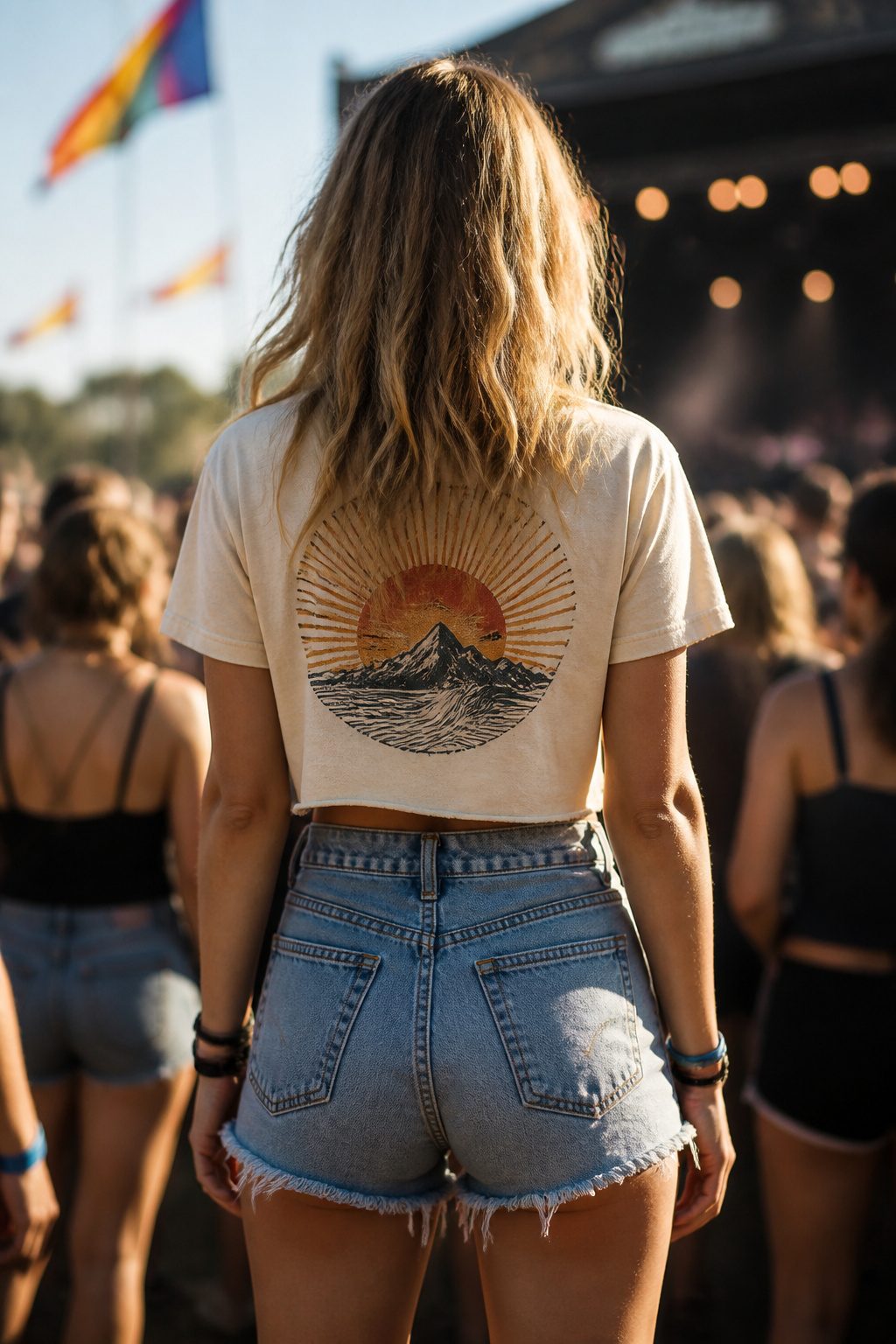
A graphic tee works best when the show is outdoors in summer, when temperatures inside the venue swing twenty degrees between the lobby and the pit, or when I want the option to layer under an open shirt once the sun drops.
The Metallica Lightning T-Shirt carries that worn-in band energy without looking like I grabbed it on the way out of the merch line.
Fit is where the tee earns its place. Cropped hits right for high-waisted bottoms and keeps me from swimming in fabric when it is ninety degrees on the lawn.
Oversized needs structure to avoid looking accidental: I pair it with something fitted below, or tuck the front into a waistband so the silhouette has a line. A full tuck works for indoor shows where I am not fighting humidity.
The mistake is matching the tee to the headliner too literally. A vintage-style graphic, something washed and cracked that reads as fashion rather than fandom, mixes better with tailored shorts or a rigid denim skirt.
Structured bottoms do the work. The tee supplies the attitude; the cut of what is below it supplies the intention.
5. Flowy Tops That Breathe
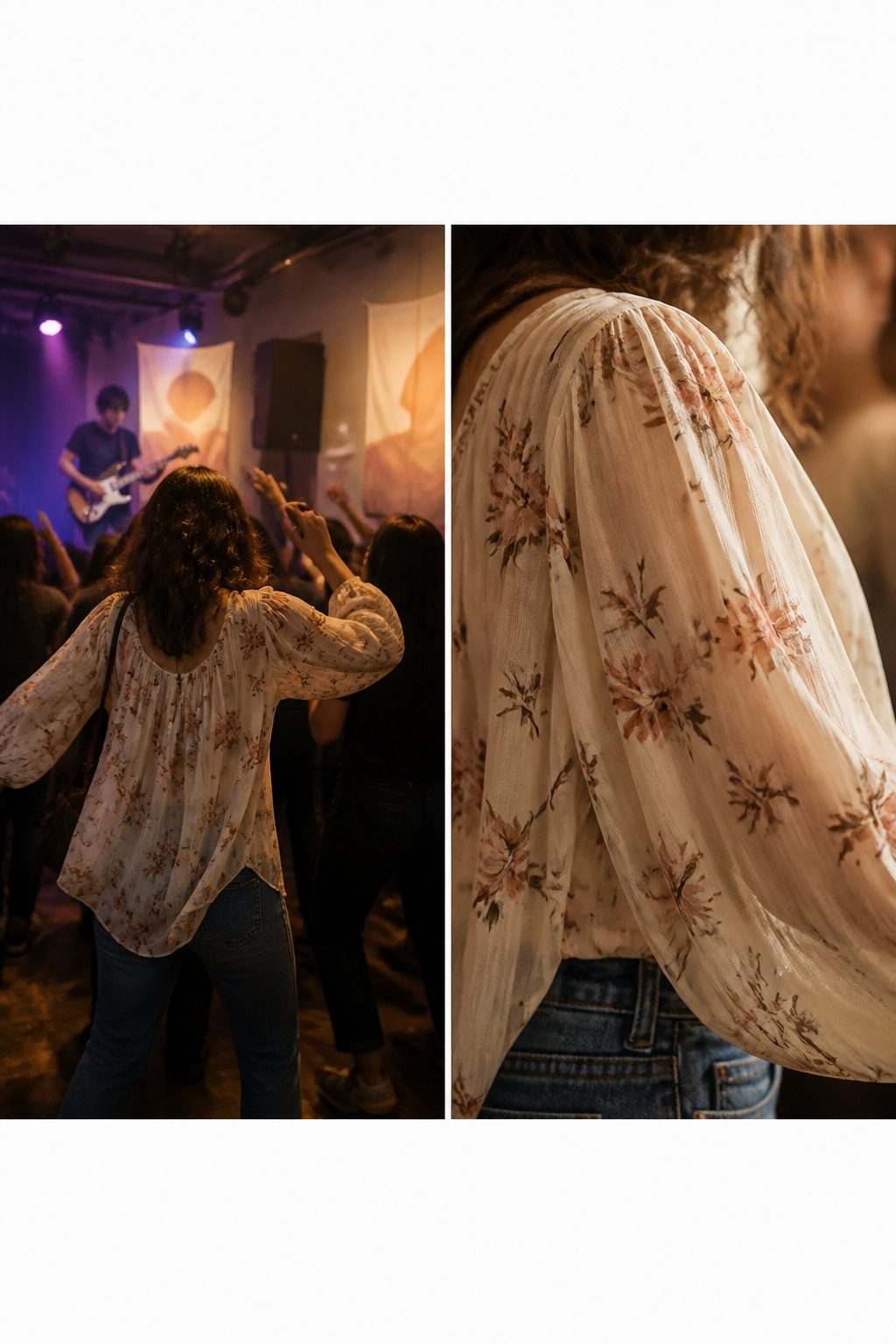
A lightweight blouse that actually moves air between your body and the crowd makes the difference between a show you remember and one you endure.
I learned this at a sold-out indoor set last summer where the temperature jumped twenty degrees the moment the lights dropped.
Silk and rayon are the fabrics I now skip; they darken under the arms before the opener finishes their first song, and that shadow does not recover under venue lighting.
Halter and off-shoulder styles solve a problem I did not know I had until I wore one. Straps slide when your arms are up for an hour straight.
A halter stays centered because the weight sits at the neck, and an off-shoulder cut anchors under the arms where there is no strap to lose at all. Both leave the back open, which is where I overheat first.
The Beverly and Beck Kylie Multi-Wear Halter Top is the piece I pack when I do not know where the night ends. I wear it halter-tied for the show itself, high and secure for jumping.
Afterward I reconfigure it as a low-back drape, one knot changed, and it reads as a different top entirely. Two outfits from one item that weighs less than my phone charger.
6. Rhinestone and Embellished Pieces
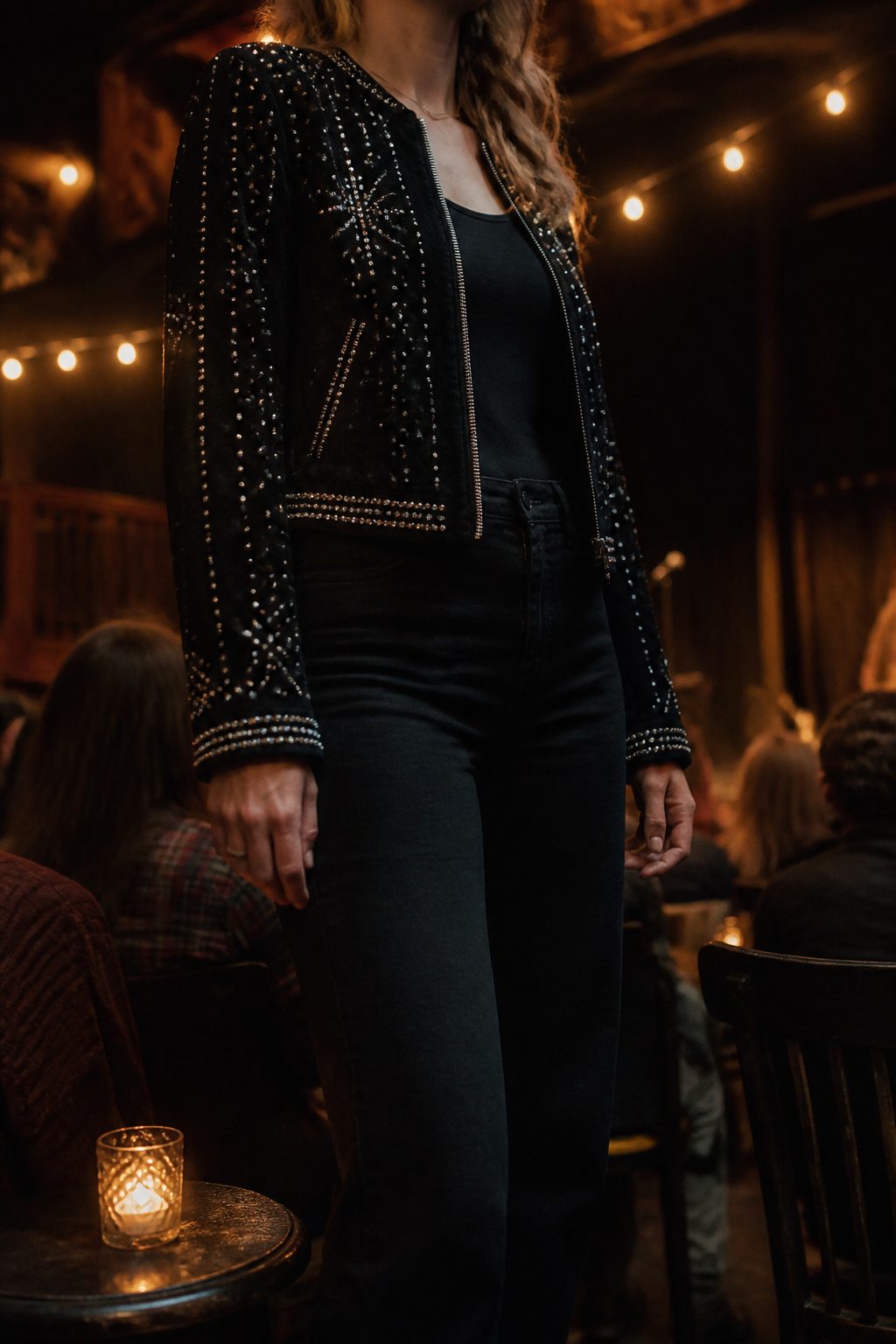
Sequins under stage lights behave like nothing else, catching every beam and throwing it back in scattered color that reads as energy rather than costume. The same beadwork at a Saturday farmers market looks like you took a wrong turn.
I stop at one embellished piece per outfit, and I place it high, on a collar or shoulder, where it catches light from the front without flashing the person behind me through a whole set.
Arena pop and country shows with their wall of LEDs can handle the reflection; an intimate acoustic room turns that same jacket into a distraction for the performer and everyone in your row.
I learned the hard way at a small theater show that even subtle rhinestone trim on a sleeve reads loud when the house lights drop to a single bulb.
Save the heavy pieces for New Year’s Eve shows and outdoor stadium tours where the scale swallows the shine and you need the help to read as dressed up at all.
7. Lightweight Layers for Venue Temperature Swings
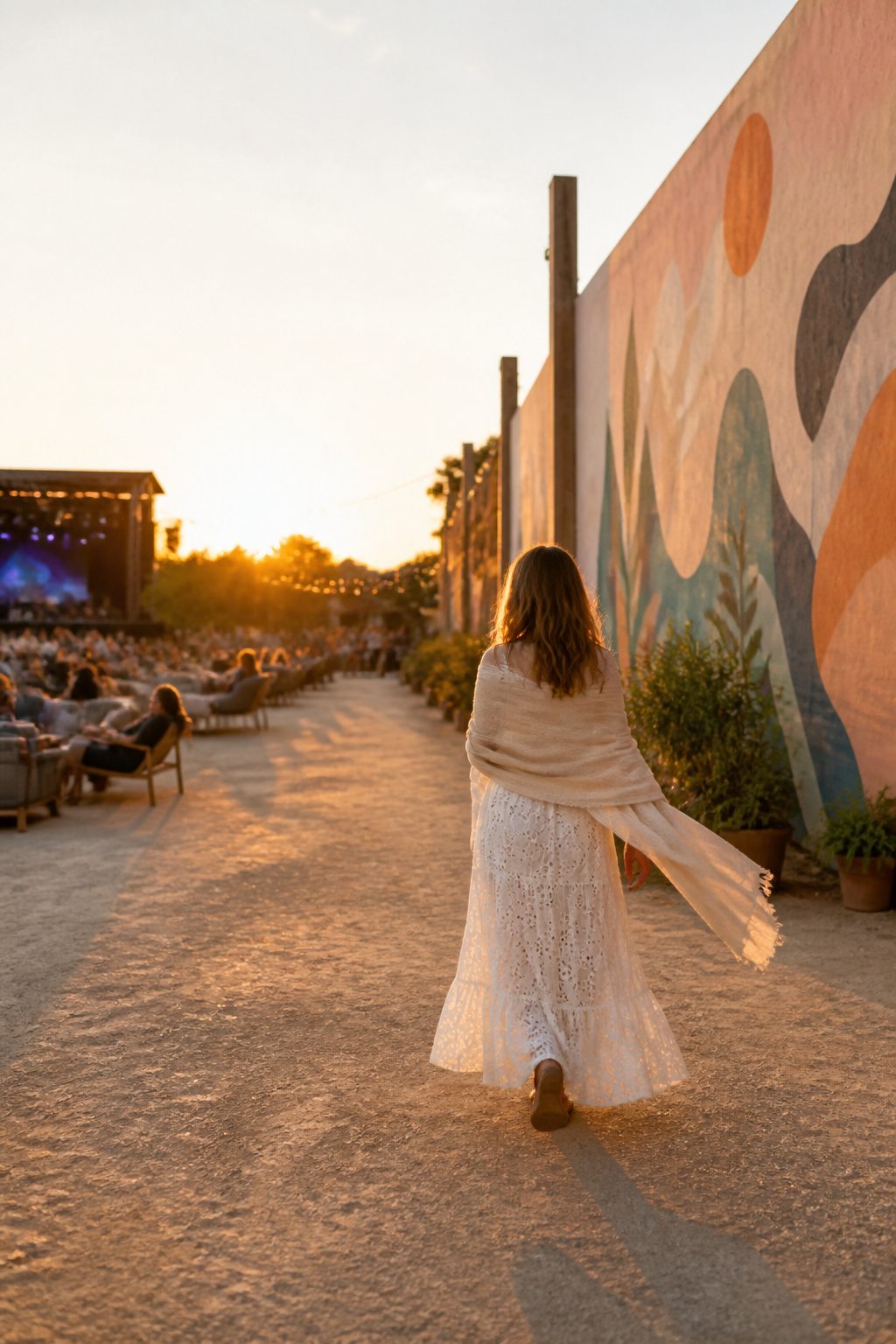
A striped crochet midi dress looks effortless at an outdoor opener, but the temperature drop once the sun goes down can turn it into a regret.
I plan for that swing by building around pieces that stay on my body, not in my hands. A denim jacket works over the crochet without looking like I grabbed a coat check ticket I’ll lose.
Sheer button-downs do the same job for a white eyelet maxi dress, giving just enough coverage without bulk.
Coats you have to carry once inside are the mistake I stopped making after one show. The security line, the crowd crush, the mosh pit if you’re close: a heavy layer becomes something to guard, not wear.
A shawl that ties at the waist solves this. It warms your shoulders during the walk from the lot, then sits flat against your hips when the room heats up.
No holding, no losing, no sweating under something designed for January.
8. Statement Accessories That Earn Their Place
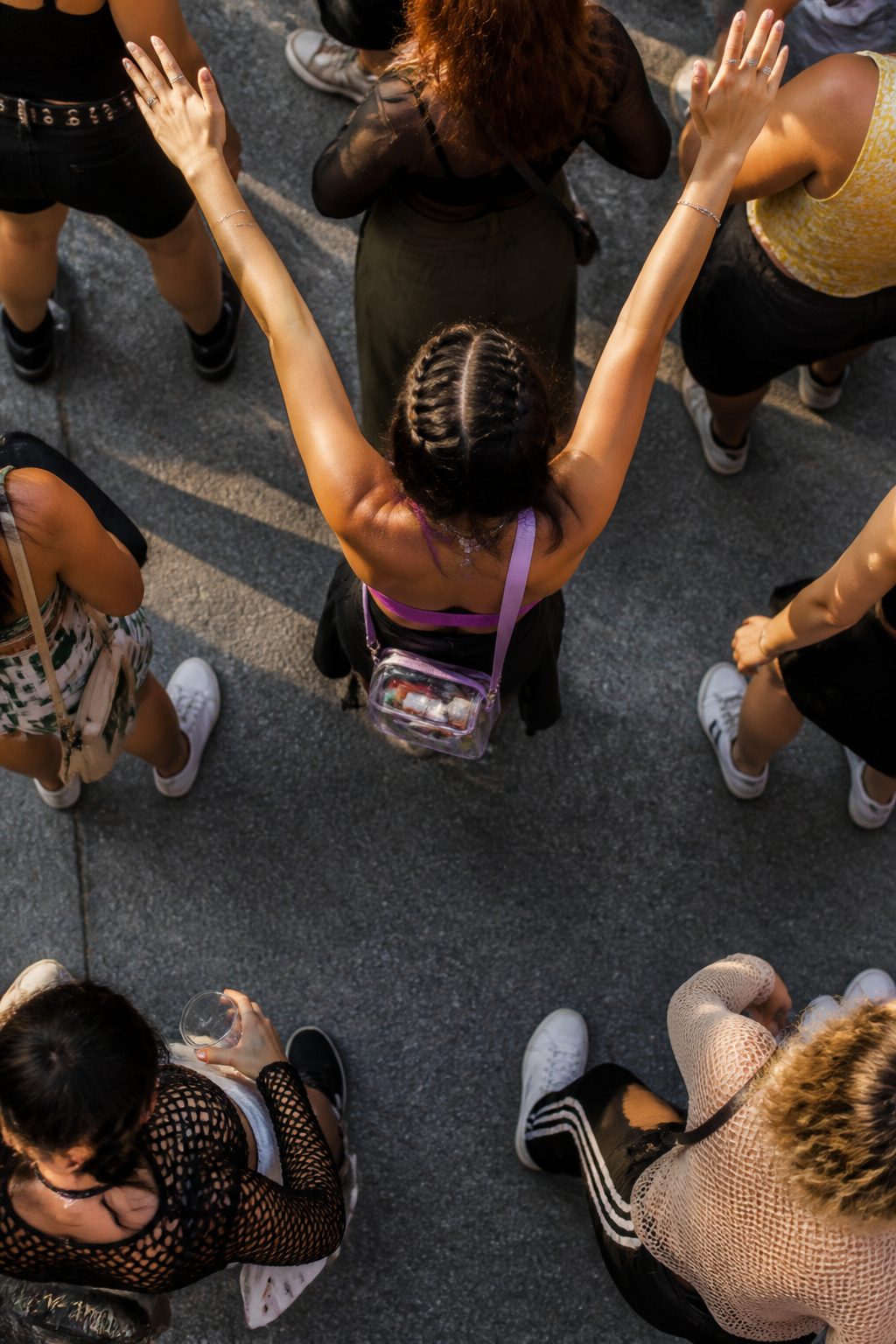
Venue security has made the bag question easy for most of us: the clear bag is now standard at large shows, and trying to argue your way in with anything opaque is a waste of a good parking spot.
I carry the smallest crossbody that fits my phone, ID, and a lip balm, which also solves the hands-free problem when both arms are up for the chorus.
Sunglasses are non-negotiable for daytime sets, and layered jewelry reads well under stage lights without the noise of one giant statement piece. The hat is where it gets complicated.
A wide brim saves your neck at an outdoor festival, but it blocks the view of everyone behind you once you move inside, and most venues make you remove it anyway.
My rule now is festival-only, and even then I pack a compact that fits in the clear bag for the switch.
The fit totally matters, but not if your feet are done by song three.
— Pacsun
Pacsun’s point carries straight to accessories: the best piece is the one you are not adjusting, removing, or regretting by the second act.
9. Cowboy Boots and the Country Concert Formula
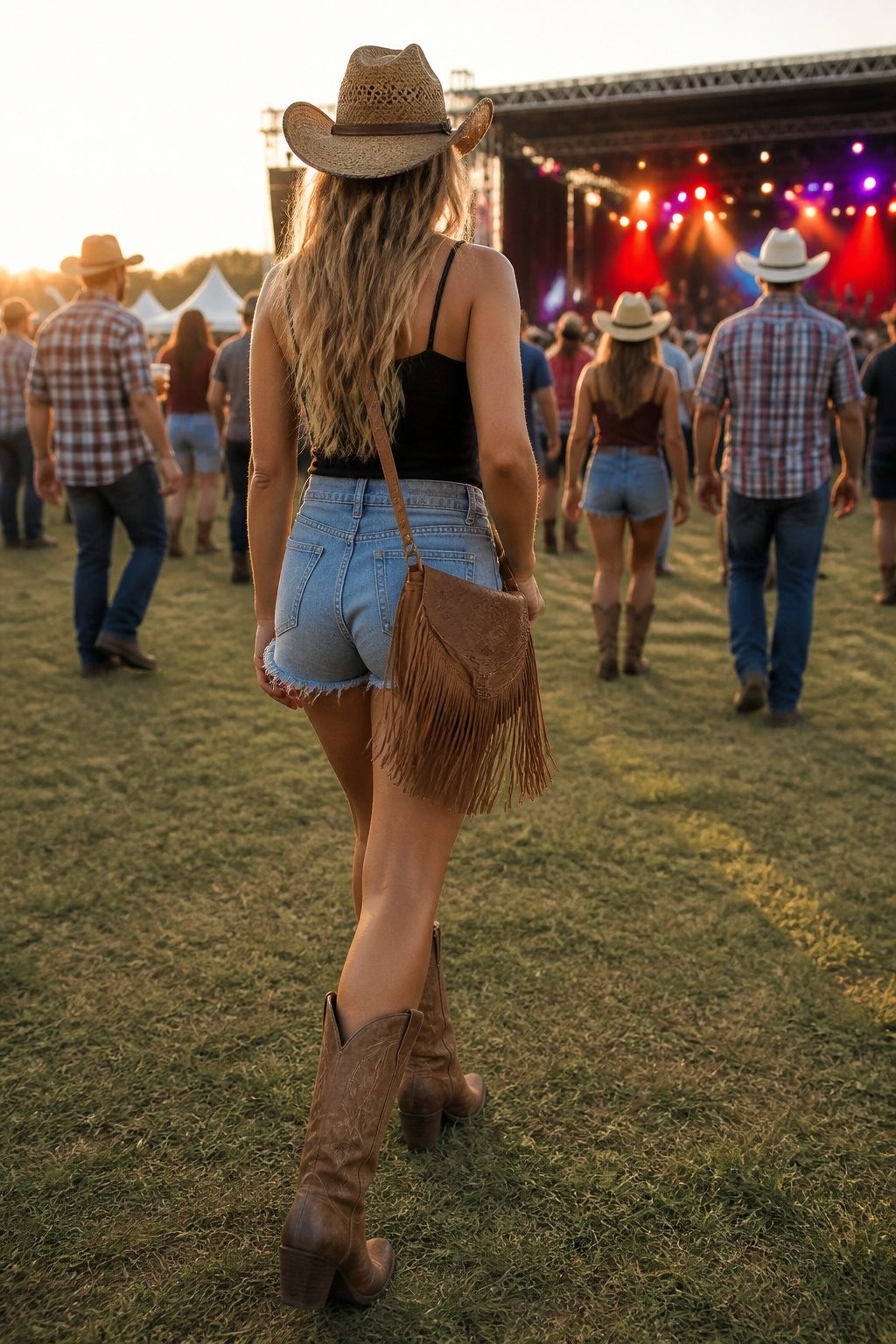
A country concert outfit lives or dies at the feet.
Boots with a stacked heel and real leather soles handle stadium stairs and festival fields better than any stiletto because the heel sinks into grass instead of aerating it like a spike, and the shaft keeps dust and beer off your jeans.
The fringe on a crossbody bag or jacket catches light when you move, which is the whole point of the genre’s visual language, but the boots are doing the actual work.
I break in a new pair by wearing them with thick socks for short walks around the neighborhood, not by committing to a three-hour show straight out of the box.
The leather needs to soften at the ankle crease and the ball of the foot before it will bend with you instead of against you.
I learned the hard way that expensive tooling and hand-stitched soles are not meant for mud: one rain-soaked outdoor show left a pair I loved with stained vamps and salt lines I never fully removed.
Now I rotate in rubber-soled alternatives or older boots I have already written off when the forecast turns.
The full Western look, head to toe, reads costume at a pop or rock show. The boots alone, though, pair with dark denim and a simple top and scan as practical footwear anywhere standing is involved.
Fringe stays home; the boots cross over.
10. Wide-Leg Jeans and the Return of Denim
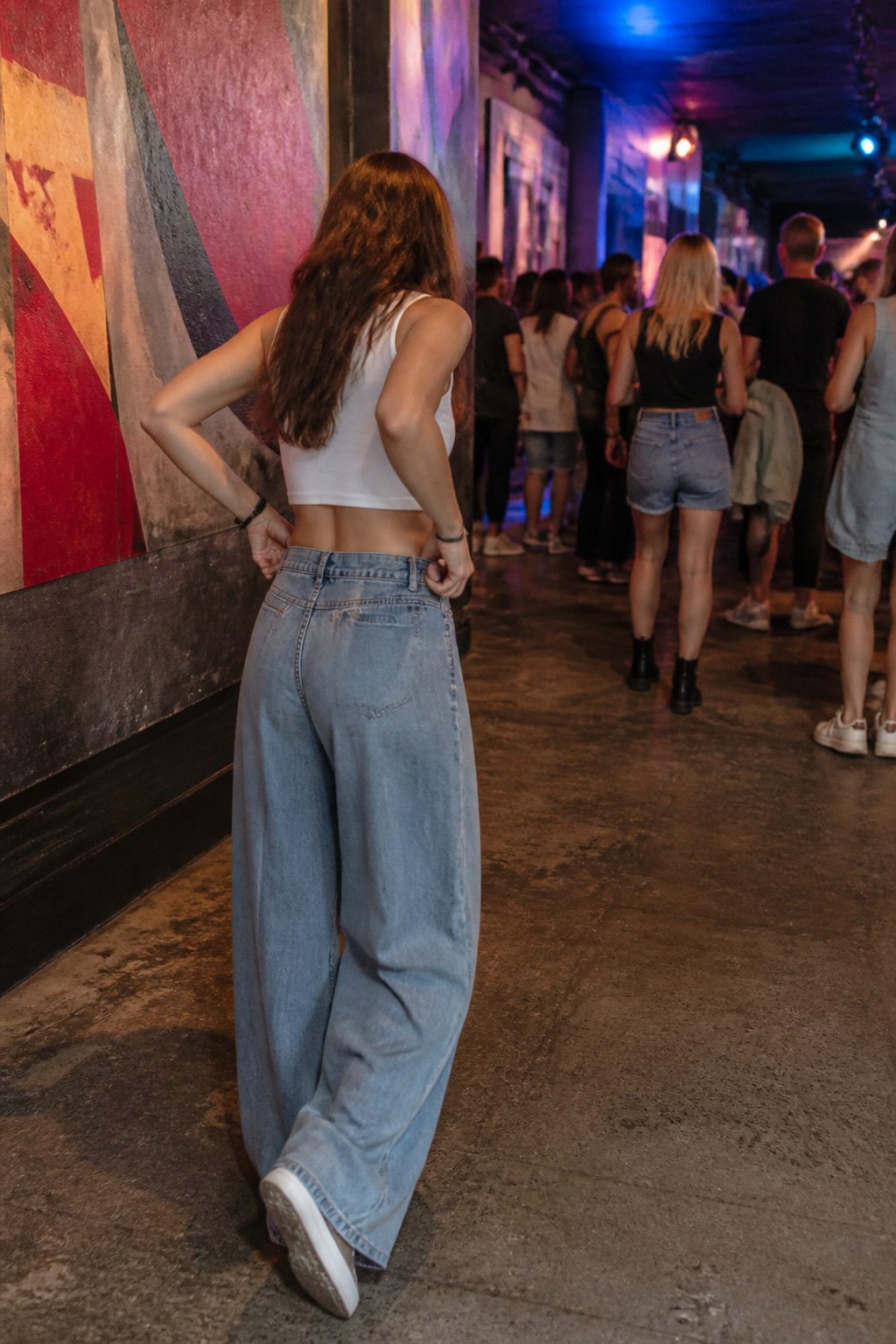
Skinny jeans left my concert rotation around the same time they left my everyday wardrobe, and the reason was practical.
Wide-leg denim gives you room to move, actual airflow against your legs in a packed venue, and the freedom to wear substantial underwear without every seam line showing through by the second set.
The volume photographs better too; in crowd shots where everyone else looks pinched and static, the drape of a wider leg catches light and motion in a way that reads as intentional rather than squeezed in.
For shorter frames, a raw hem you can cuff yourself or a quick tailor visit keeps the break from swallowing your shoe. Platforms or chunky sneakers balance the silhouette.
Delicate heels get lost in all that fabric and look like an afterthought, plus they sink into grass at outdoor venues.
I learned that one watching a friend spend an entire festival set in kitten heels, her heel caps buried in mud while the rest of us stood flat and stable.
Shoes That Survive the Standing Room
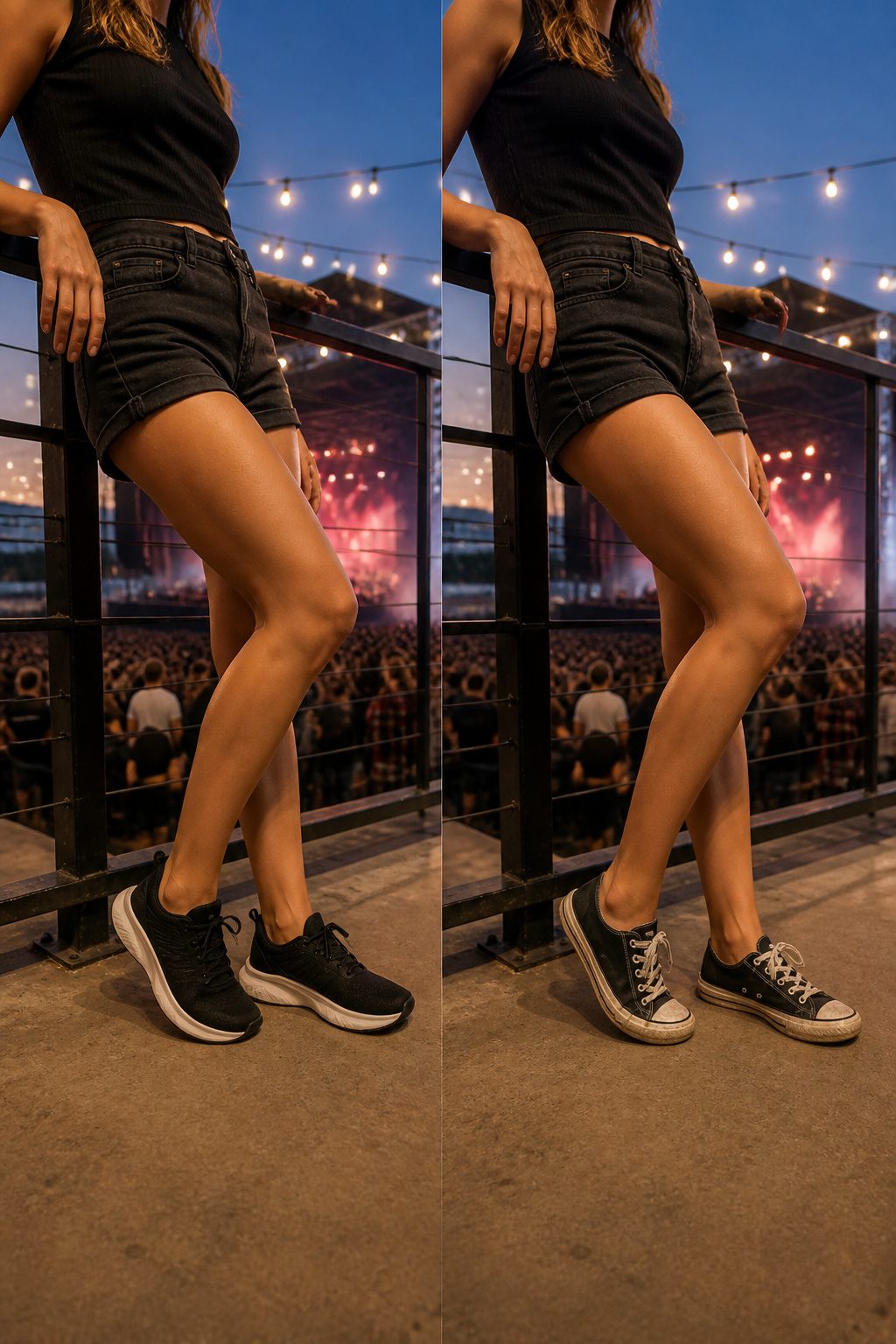
Sneakers with a real footbed win every time for standing-room shows.
I learned the hard way that breaking in new shoes at a concert is a mistake you only make once, and I spent the next morning limping through a pharmacy hunt for blister pads.
The pair I trust now has a molded EVA midsole that cups the heel and enough arch support that my feet still feel attached to my legs after four hours on concrete.
Low-heeled boots can work too, but only if the heel sits under two inches and the sole has some give. Anything taller shifts weight forward and turns your calves into a cramp factory by the second opener.
I skip platforms and thin-soled flats regardless of how clean they look with the outfit. Platforms add weight with every step; flats with no structure let the pavement hit back.
Blister prevention is simpler than the internet makes it: moisture-wicking socks, a thin layer of body glide at the heel, and shoes you have already worn for a full day of walking. The math is straightforward.
In my tested sneakers, I can stand six hours and still want dinner after. In boots with a real sole, four before I start shifting foot to foot.
In anything new or poorly cushioned, two hours is generous.
How I Pack for Outdoor Shows
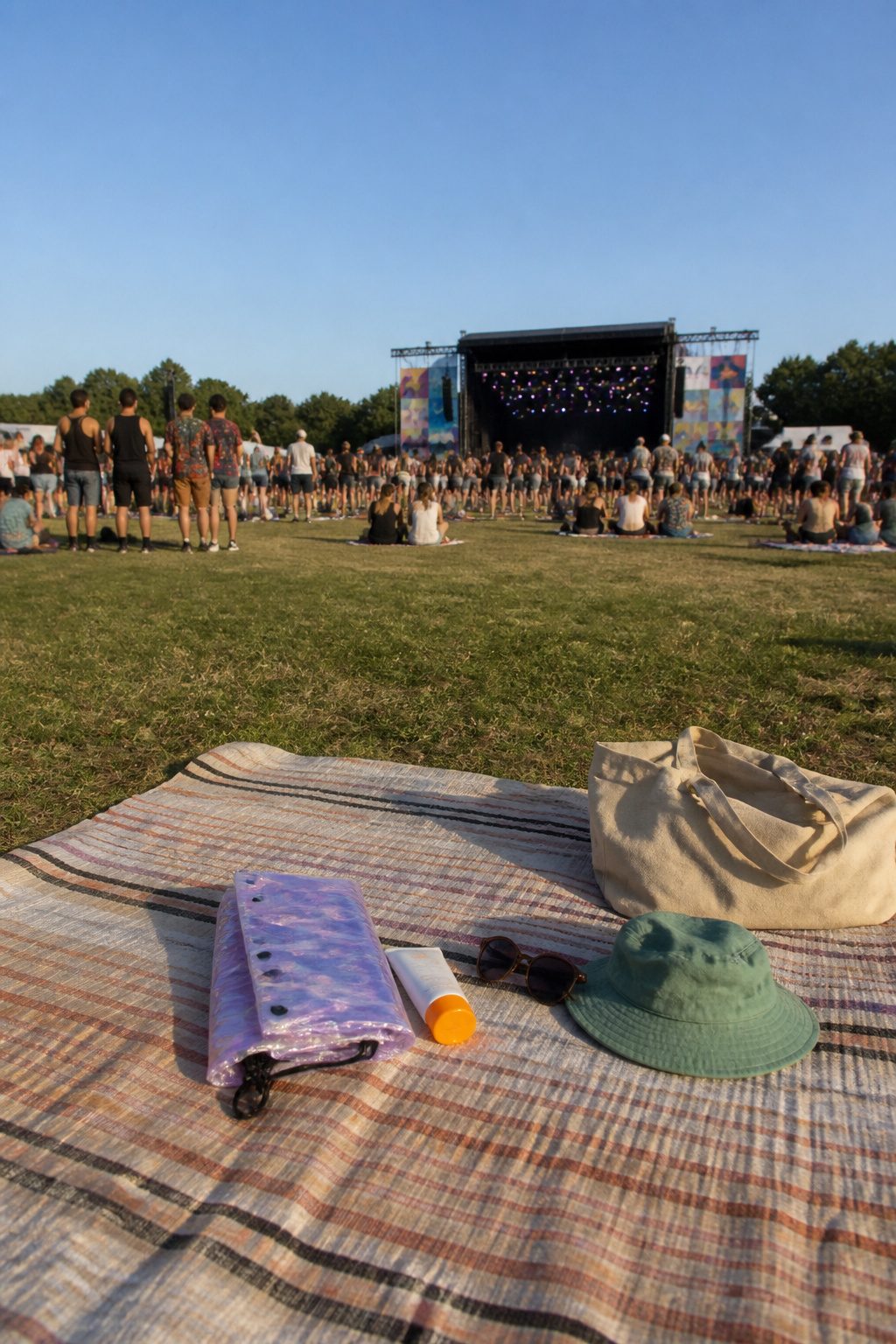
Sunscreen placement matters more than most people think at outdoor shows.
I learned the hard way that shoulders need to stay clear if you’re wearing a strapless top, since reapplying over exposed skin every two hours turns a cute look into a streaky mess.
I put SPF on before dressing, then carry a stick formula for touch-ups on arms and chest without risking the outfit.
A foldable poncho lives in my bag instead of any umbrella. Venues ban them for blocking sightlines, and the poncho packs to the size of a wallet while covering me and whatever I’m sitting on.
For temperature drops after sunset, I layer with intention: a thin long-sleeve tee under a breezy tank, or a cropped fleece tied at my waist until the lights go down.
Beach concerts bring their own problems. Sand destroys anything with a heel or a cavity, so flat sandals with secure straps are the only footwear that survives.
Wind is the other enemy. I skip anything that flows at the ends and rely on a low braid or a cloth headband that grips without looking like I’m trying too hard.
What I Check Before Leaving
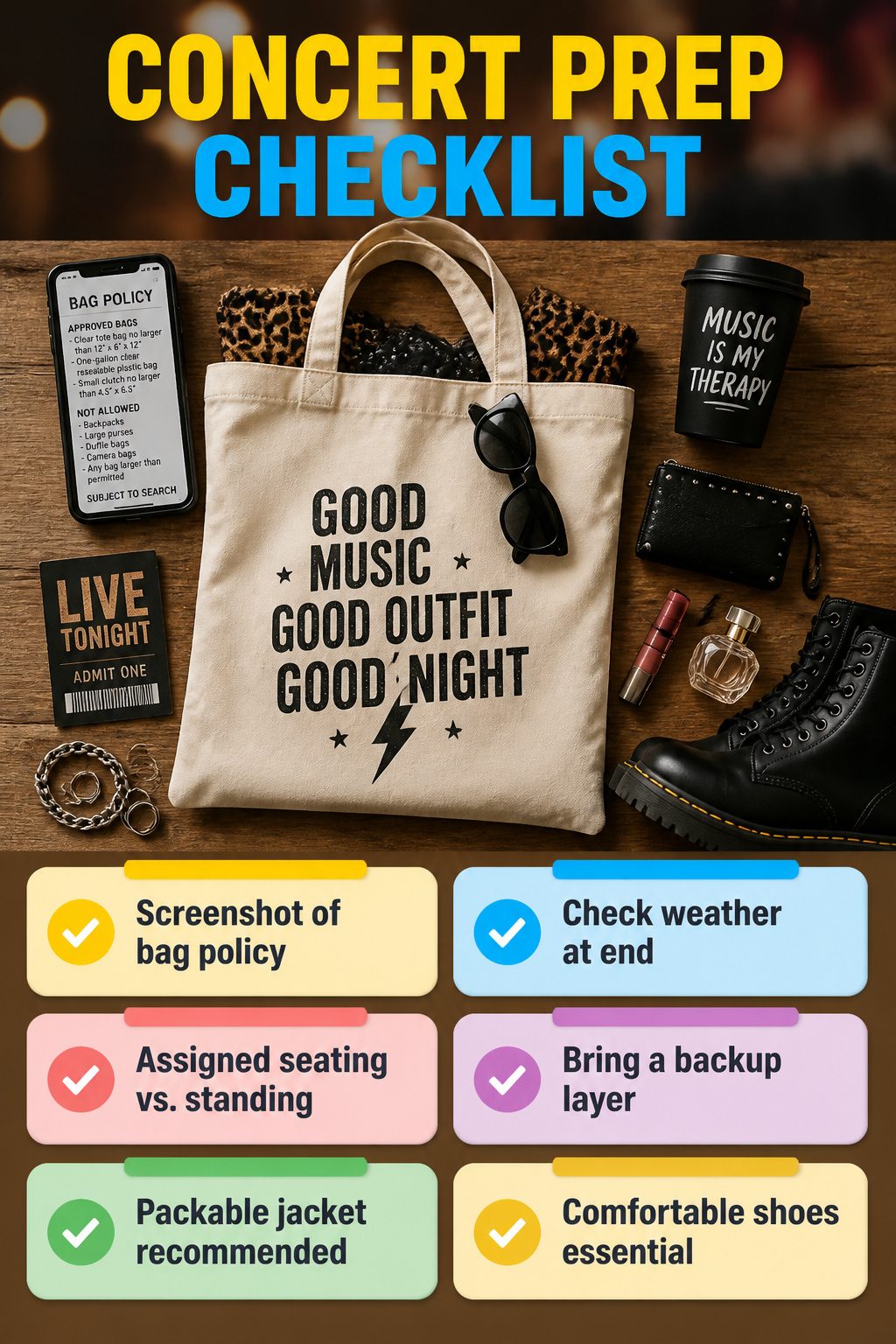
The bag policy gets me more often than it should.
Venues tightened rules in ways that do not show up on the ticket, so a screenshot of the policy saved to your camera roll beats an argument at the gate every time.
- Weather at show end time, not start: a 70-degree opener can drop to 55 by encore, and the walk to the car matters as much as the set.
- Assigned seating versus standing room changes what your feet need and how much you will sweat; I dress for the latter even when I have the former.
- One backup layer, always: a paper-thin packable jacket lives in my bag from April through October.
I ignored this list once, wore a cropped tank to an outdoor amphitheater in September, and spent the final two hours with my arms crossed against myself, too stubborn to leave for a sweatshirt. The forecast had said low seventies.
It lied.
How Body Shape Changes My Choices
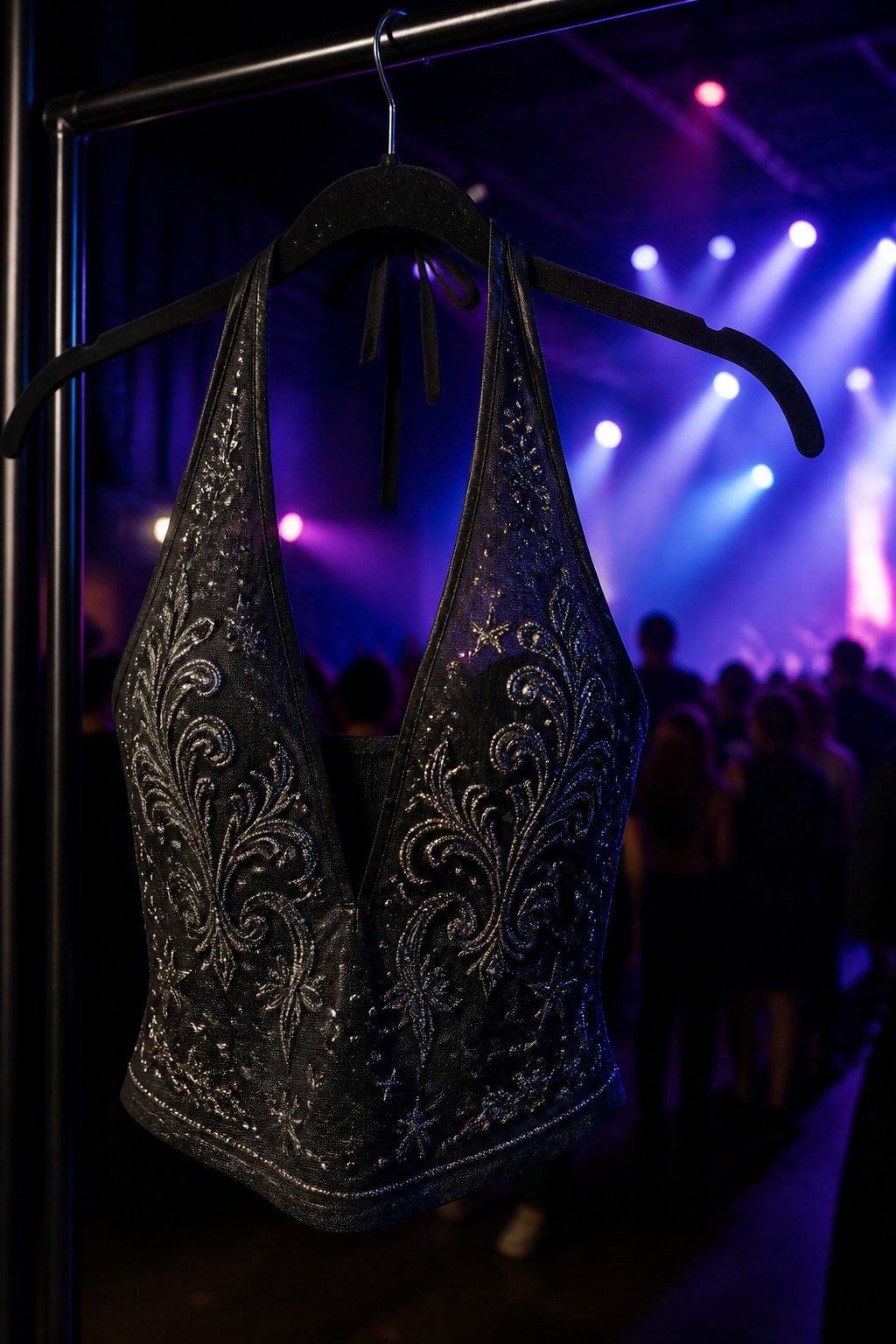
Waist emphasis matters more at a concert than in most photos because the crowd sees you from every angle while you’re moving.
A halter top that cinches slightly above the natural waist keeps the silhouette defined even when your arms are up, which is why I reach for that shape over boxier cuts when I know I’ll be dancing.
Sleeve length is the first thing I get wrong: a scarf-style neckline looks dramatic in the mirror, but those same flowing sleeves tangle with strangers’ bags in tight rows. Three-quarter length or a clean cap sleeve survives the squeeze better.
Wide-leg pants balance a fitted top for standing-room shows, but the leg line needs to clear the floor by an inch at least.
Anything pooling at the heel turns into a hazard in a dark venue, and I’ve learned that the hard way.
Breathable tops win over structured ones every time; the temperature swings from the sidewalk to the packed floor can hit twenty degrees, and a layer I can tie around my waist beats one I have to carry.
Occasion-appropriate means you can forget about your outfit and listen. Trend-following falls apart the moment a trend requires adjusting, pulling, or worrying about the angle.
The shows I remember are the ones where I stopped thinking about what I was wearing.
Frequently Asked Questions
What should I wear to a concert?
Pick a concert outfit that moves with you and matches the venue: mini dresses or matching sets for easy style, high-waisted denim shorts or wide-leg jeans for standing-room shows, and graphic tees or flowy tops when temperature swings are likely.
The right fabric matters as much as the cut; breathable materials keep you comfortable through three-hour sets.
How do I style a concert outfit?
Start with one intentional piece and build around it: tuck or half-tuck oversized tops to create a silhouette, add a single embellished item high on the body for stage lights, and finish with a layer that stays on rather than one you carry.
The goal is an outfit you can forget about once the music starts.
What are the best shoes for concerts?
Sneakers with a molded EVA midsole and real arch support win for standing-room shows, while low-heeled boots under two inches work for shorter sets.
Break in any footwear with full days of walking first; new shoes at a concert guarantee blister pads by intermission. Skip platforms, thin-soled flats, and anything taller than two inches.
What accessories should I wear to a concert?
Carry the smallest clear crossbody that fits your phone, ID, and lip balm; layer jewelry for stage light reflection; and add sunglasses for daytime sets.
Save wide-brim hats for outdoor festivals only, since they block sightlines indoors and most venues make you remove them anyway.