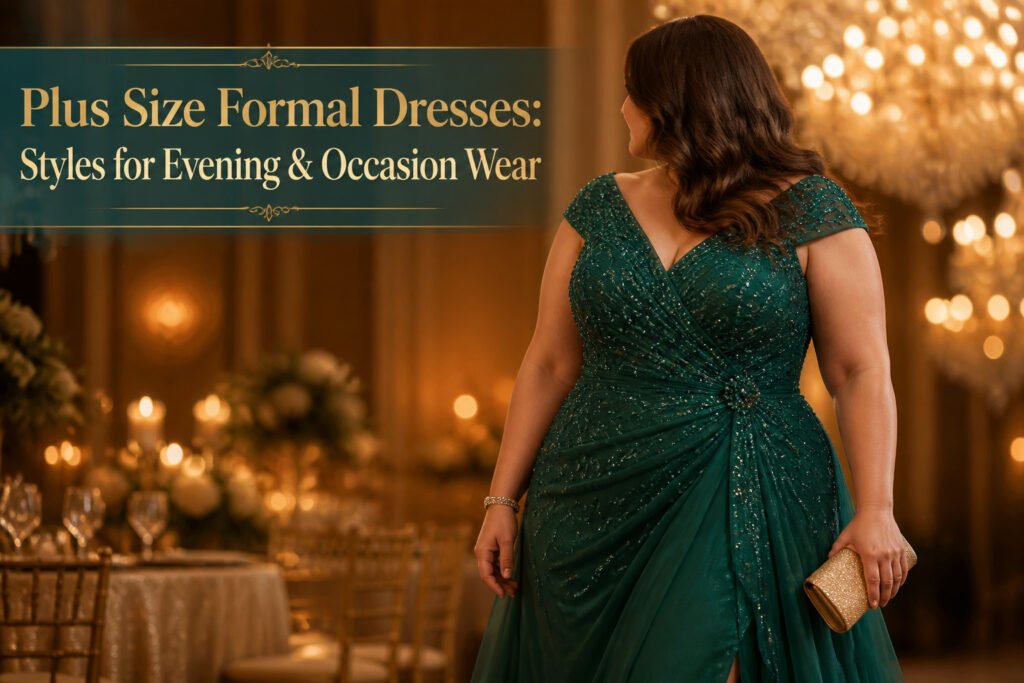
Plus size formal dresses are evening and occasion wear cut specifically for sizes 10 through 32, with construction that differs from straight-size formalwear in where the waistline sits and how much structure the bodice carries.
The gap between a dress that works and one that needs constant adjustment usually comes down to whether the pattern was graded for plus proportions from the start or scaled up as an afterthought, a difference that shows up most clearly in structured styles starting around $169.
1. Maxi Dresses
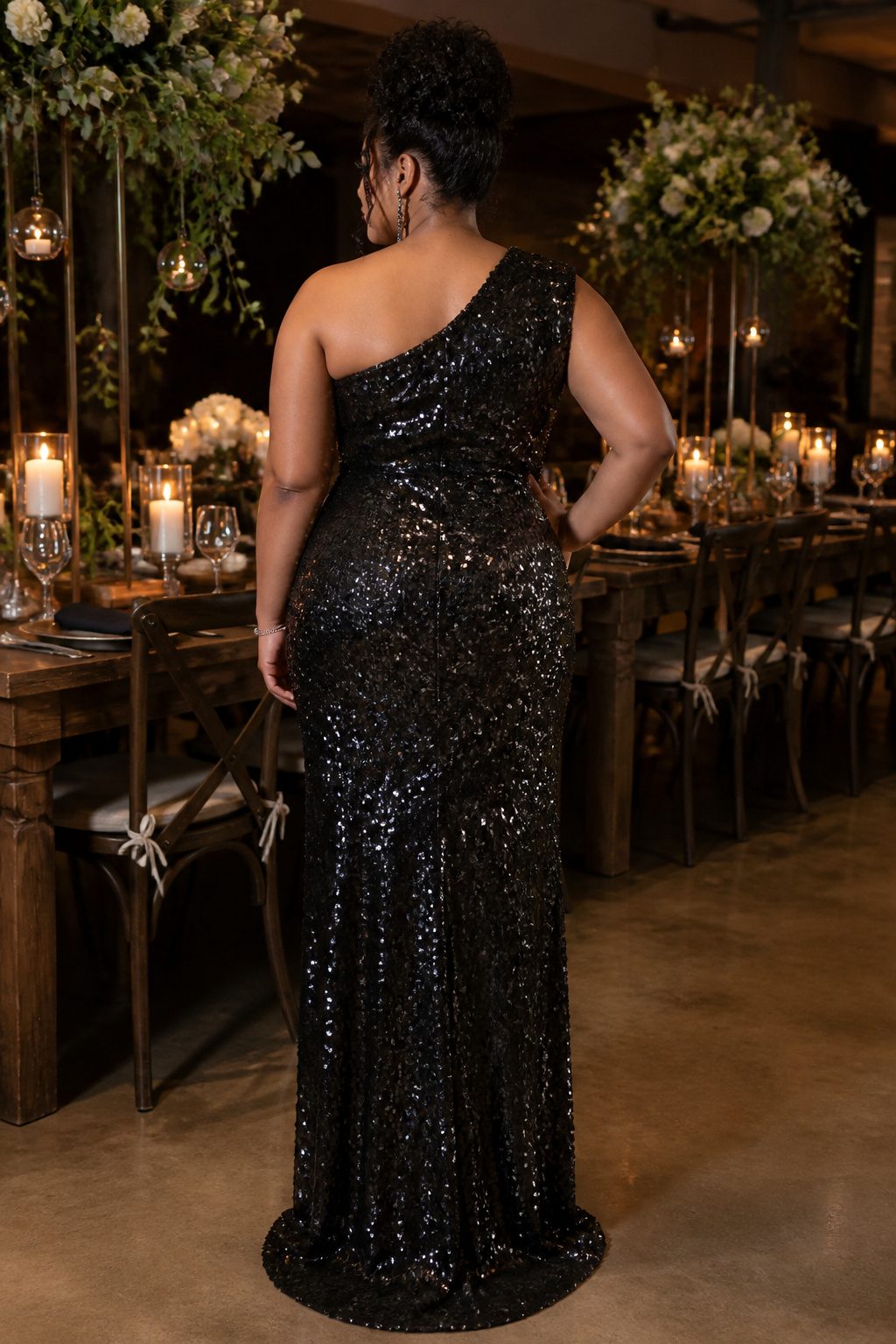
Full-length hemlines are where plus size formal dresses earn their keep at evening events. A maxi cut gives uninterrupted line from shoulder to floor, which reads as formal without demanding constant adjustment.
The Black One Shoulder Sequin Maxi Dress, priced at $169, illustrates how a single bare shoulder keeps the silhouette from reading as a column.
For something softer, the Emerald Off the Shoulder Pleated Satin Maxi Dress at $239 drapes rather than clings, the pleated skirt moving independently from the bodice.
Both sit within a range that runs $89–$444 across sizes 10–32, which covers most frames without needing custom work.
Satin handles candlelight better than sequin under direct flash, so the choice maps to venue as much as taste.
The one-shoulder sequin reads black-tie; the emerald satin suits a seated dinner where you are not the center of attention but still dressed for it.
2. Midi Dresses
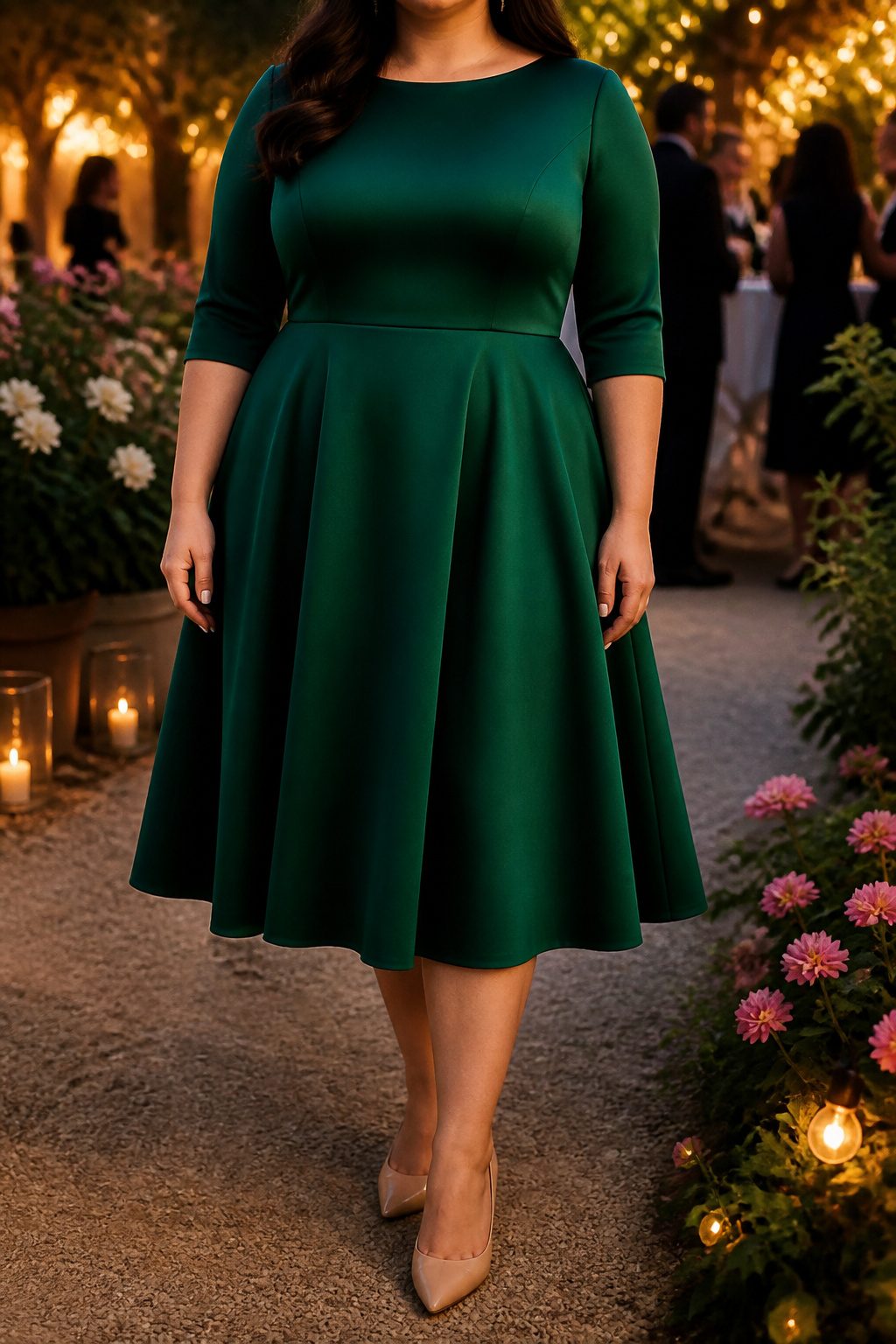
A midi hem lands between the knee and ankle, and that in-between length solves a specific problem: the cocktail hour where a full gown feels like overkill but jeans would get you turned away at the door.
The coverage reads as respectful without the weight of black-tie territory.
The cut matters more here than with shorter lengths. A-line skirts that start at the natural waist give structure without clinging; bias-cut fabrics skim rather than grip.
I have watched friends in sheath midis spend the whole night tugging fabric down, while those in slightly flared shapes actually sat through dinner without adjusting.
Sleeve length becomes your other decision point. Three-quarter sleeves keep the line formal; bare shoulders work only if the fabric has enough body to hold its own shape.
Jersey knits in this length tend to slump by hour three, so the dress you try on at 2 PM may not be the dress you want photographed at 9.
For footwear, the midi hem shows enough ankle that a closed-toe pump looks intentional rather than apologetic. Strappy sandals can feel too casual unless the dress fabric itself is substantial.
The safest bet is a mid-height heel in a color that matches your skin tone; it extends the leg without competing with the dress line.
3. Mini Dresses
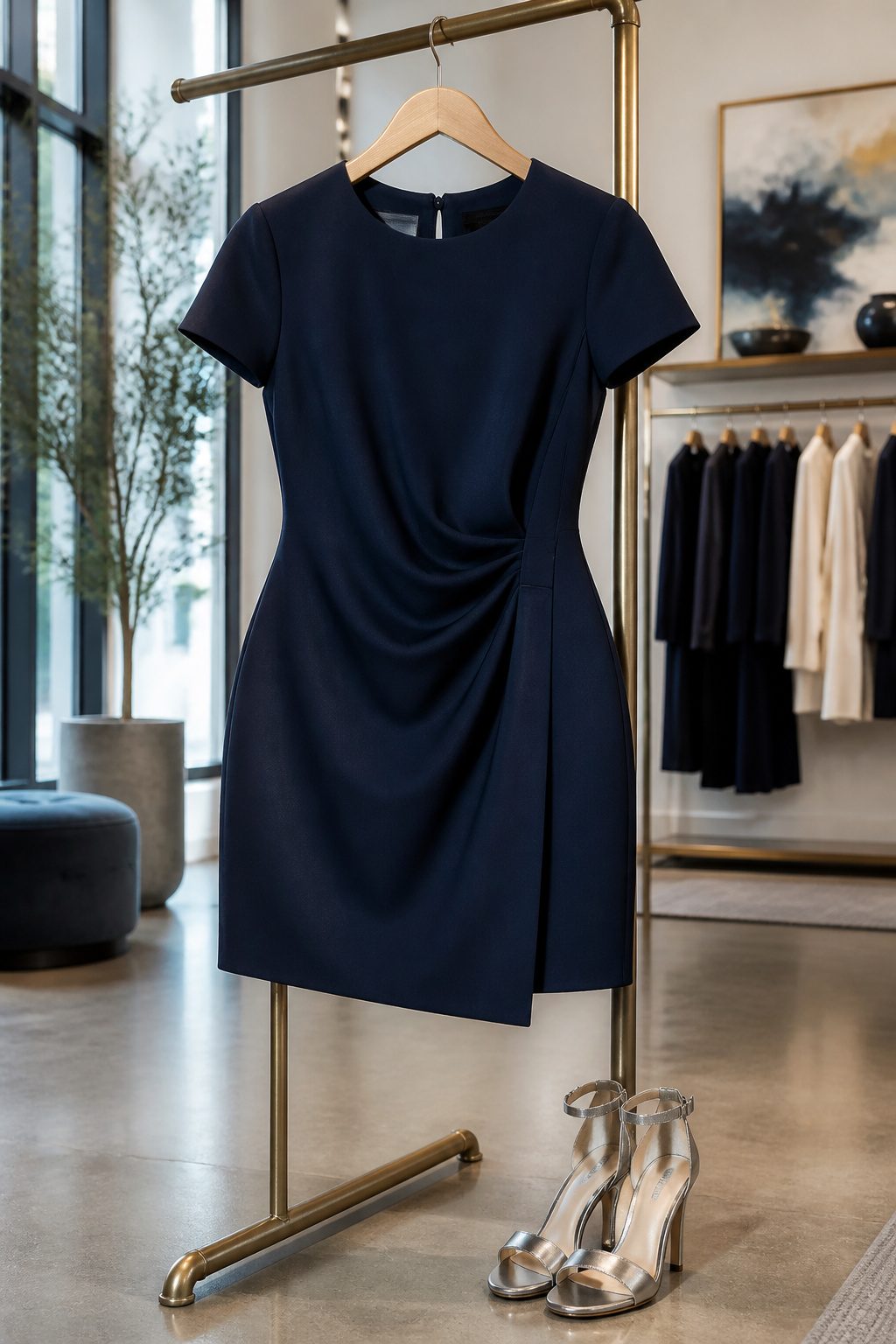
A mini dress in plus size formal dresses can read as cocktail or black-tie depending almost entirely on what happens below the hem. The dress itself stays the same; the shoe is what moves the register.
Satin or structured crepe in a deeper jewel tone carries more evening weight than a printed cotton or daytime jersey. That fabric choice is the first shift.
The second is the shoe. A strappy sandal or pointed pump in a metallic or dyed-to-match satin signals formal intent in a way a block-heel bootie or casual wedge does not.
The eye travels down, and the shoe tells the viewer how to read what came before.
Tights help here too. Sheer black in cooler months, or a bare leg with a higher heel in summer, both extend the line and keep the proportion from feeling truncated.
What breaks the effect is anything that competes with the dress: a heavy platform, a busy ankle strap that cuts the leg horizontally, or a boot that swallows the calf and visually shortens everything.
I have seen the same navy crepe mini work for a gallery opening with a low block heel and then a charity dinner with nothing changed but a higher stiletto and a switch to chandelier earrings.
The dress did not change; the styling did the entire job of reclassifying it. That is the practical advantage of the mini in a formal wardrobe: it asks for smart accessories rather than a second purchase.
4. Gowns
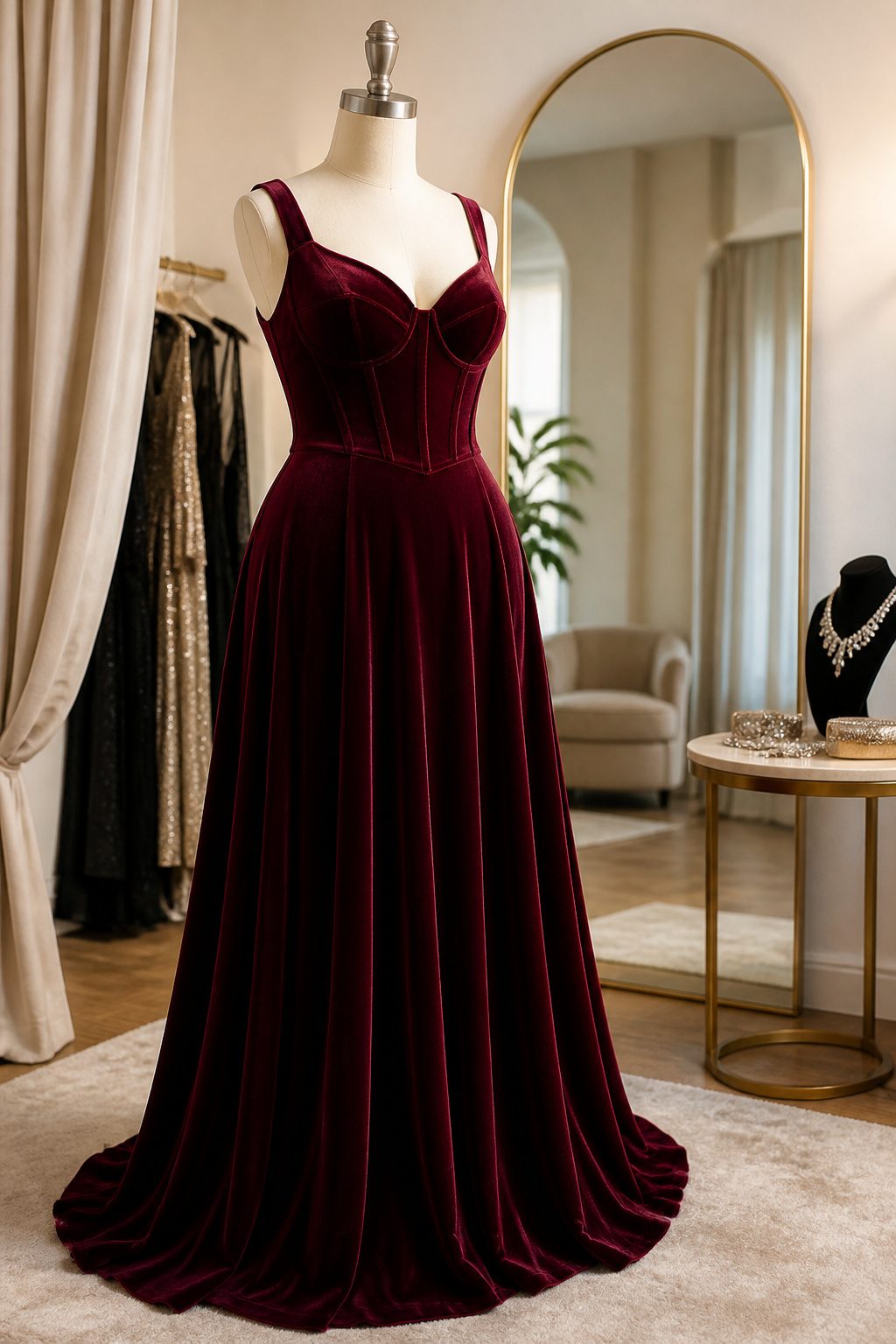
A gown is not a maxi dress with a longer hem. The construction carries more weight: boned bodices, lined skirts, and fabrics with enough body to hold a shape through an evening of sitting and standing.
That structure is what separates a plus size formal dress you wear to a black-tie gala from something you throw on for a summer wedding reception.
Floor length matters, but occasion weight matters more. A gown in a heavier crepe or satin will photograph differently, move differently, and read as formal in a way that a lightweight floral maxi never quite manages.
The neckline and sleeve choices also shift with the event. For a true gala, the dress code usually expects more coverage or more intention in its absence, and a gown’s construction actually supports that, holding its line without constant adjustment.
Color runs wider than people expect.
Sources offering customizable plus size evening dresses list choices that let you match the gown to the event’s tone rather than defaulting to black, though black remains the safest bet for a first formal purchase.
What convinced me, reading through the options, is that the same length can read as bridal-party appropriate or full red-carpet depending almost entirely on fabric weight and whether the bodice is structured. Start there when you shop.
5. Jumpsuits
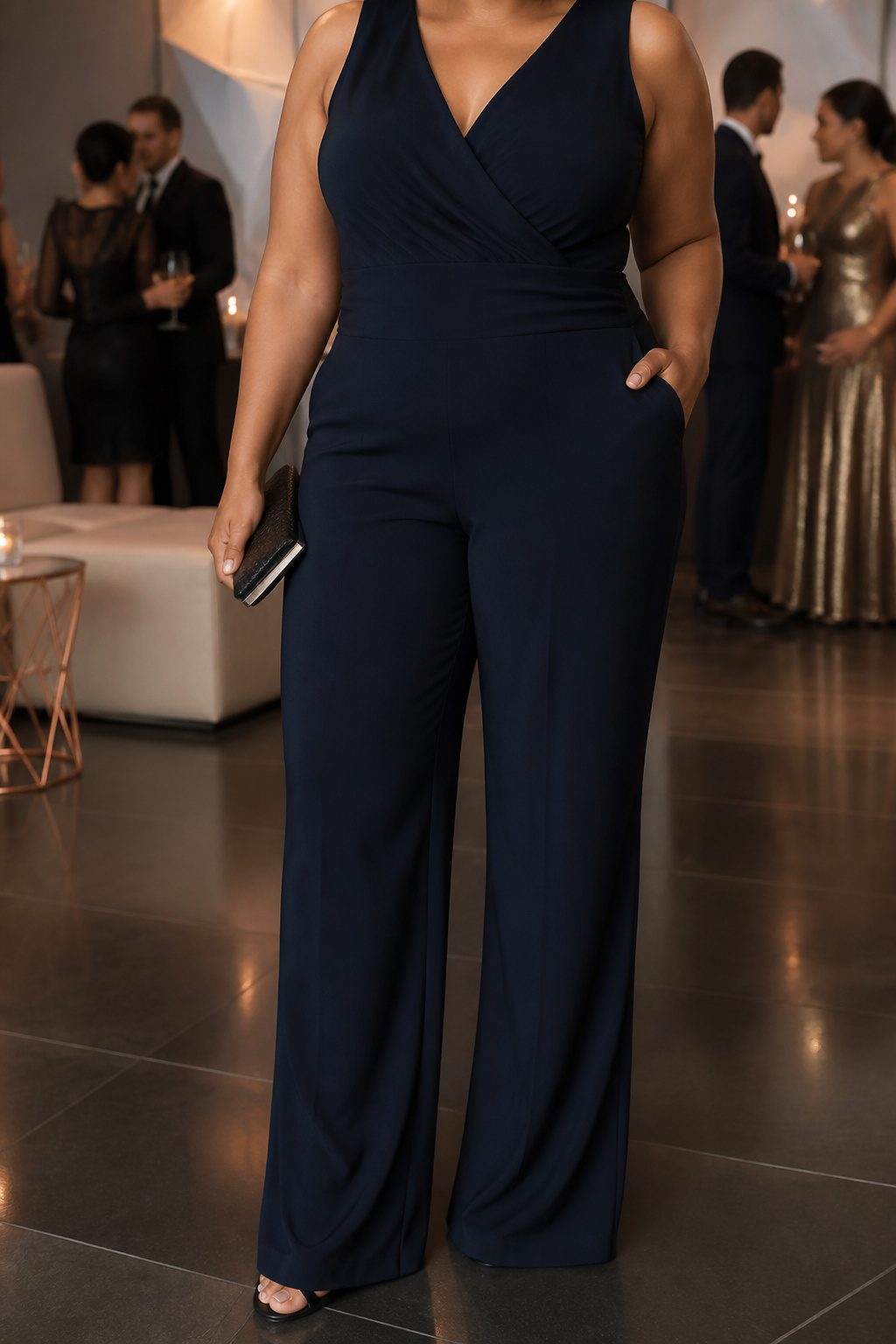
A crepe jumpsuit in midnight navy reads as formal the second the lights dim, while the same cut in cotton twill never quite gets there.
The fabric does the heavy lifting: liquid satin, heavy silk, or a structured crepe with a bit of body catch candlelight and move like occasion wear should. Tailoring seals the deal.
A defined waist, either built in or cinched with a slim belt, keeps the silhouette from sliding into workwear territory. Wide legs that pool slightly over a heel extend the line; tapered ankles pull it back toward the office.
I have watched a single jumpsuit cross that divide based on two details. One version had a plunging neckline with a discreet hook-and-eye at the sternum, plus a back vent that let the fabric sway when the wearer walked.
The other, identical from the waist down, had a standard crew neck and closed back.
The first drew compliments at a winter gala; the second, the same guest later admitted, had been worn to a client presentation the month before and nobody noticed.
For evening, look for a lapel or a shawl collar that frames the face, and sleeves that hit at the wrist or flare to the elbow. Sleeveless works only if the neckline earns the formality on its own.
A jeweled or draped closure at the shoulder can replace a necklace entirely.
6. Two-Piece Sets
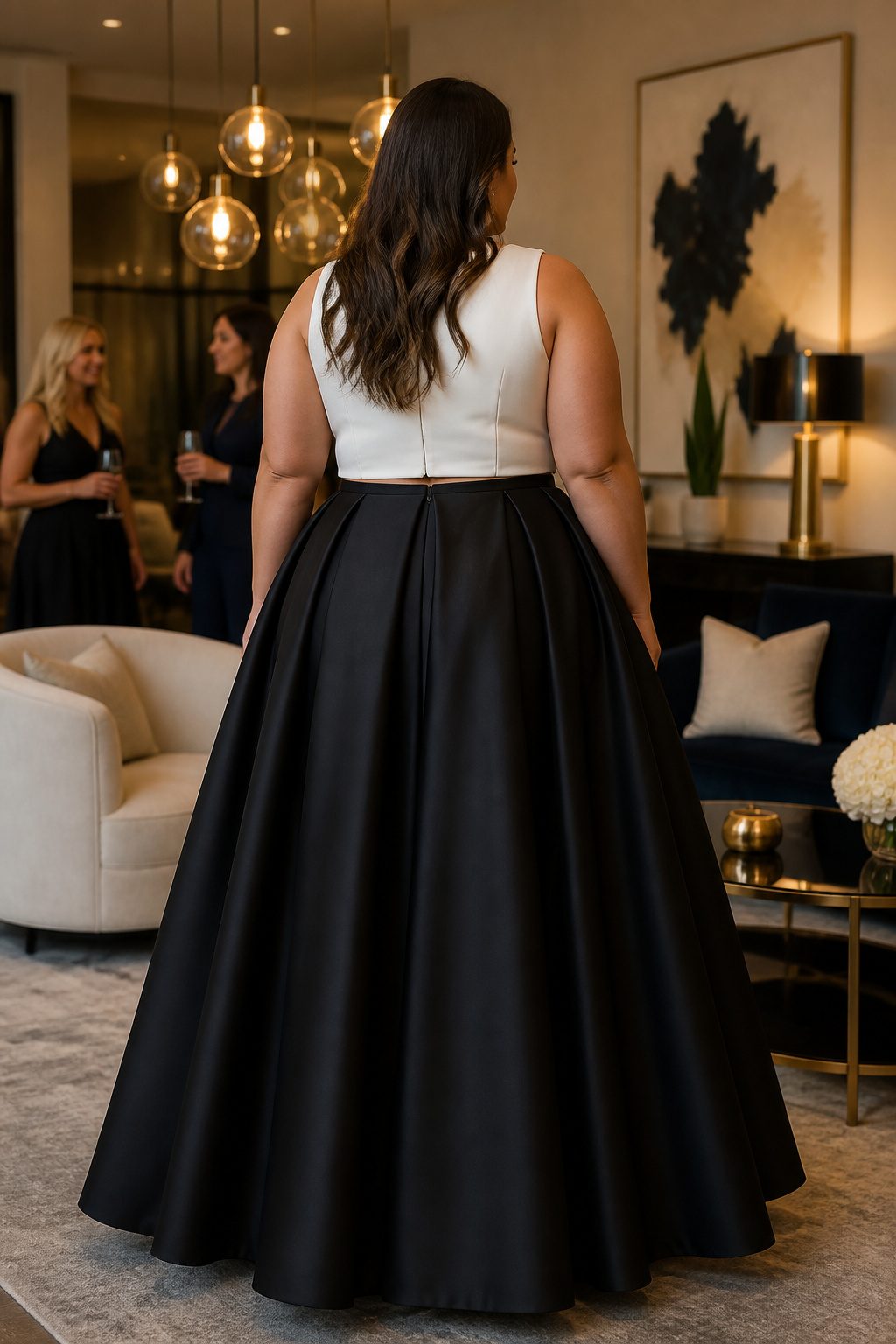
A matching top and skirt in plus size formal dresses can be split apart the next morning and worn to three more events. That is the practical case for two-piece sets, and it is a strong one.
The bottom half often reads as a full skirt or cropped trouser in a heavier fabric that holds its shape. The top can be a structured shell, a cropped jacket, or something with a sleeve that actually covers the arm.
Worn together, they scan as a single outfit. Separated, the skirt pairs with a silk blouse for a dinner, and the top goes back to dark denim on a Saturday.
Fit matters more here than in a one-piece dress. The waistline of the skirt and the hem of the top have to meet cleanly, or the whole thing looks like a mistake.
A gap of even half an inch ruins the line, so try the pair sitting down before you commit.
Some sets solve this with a peplum or a cropped jacket that is meant to float above the waistband rather than tuck in.
Color is where the versatility lives. A solid bottom in navy or black grounds almost any top you already own.
A printed skirt with a matching solid top gives you two directions: bold together, quiet when split. I have watched this math work in my own closet more times than I expected when I bought the first set.
Sizing Options
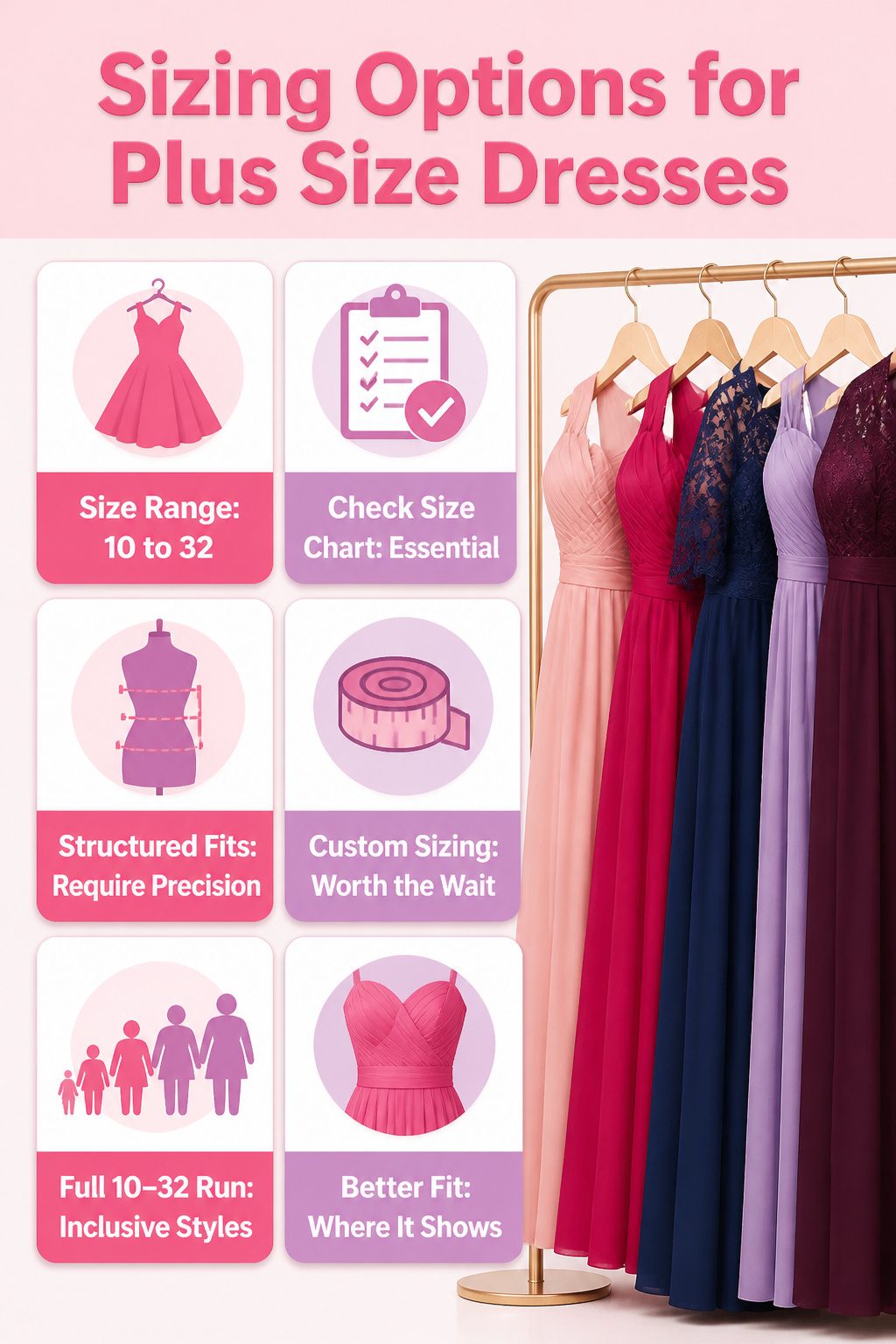
Most retailers carrying plus size formal dresses run from a 10 to a 32, though what each label actually puts on the tag varies enough to matter.
A 16 at one store fits like a 14 or an 18 somewhere else, and the waist-to-hip ratio changes too.
Check the size chart against your own measurements, not the size you buy in jeans, because "plus size" itself starts at different thresholds depending on who is cutting the pattern.
The spread from 10 to 32 matters because formal cuts are less forgiving than a wrap dress or a stretch knit.
Structured bodices and fitted waists need to land in the right place to work, and a dress that stops at 24 leaves out a lot of shoppers who still need occasion wear.
Some brands now carry the full 10–32 run in the same style, which means the design itself was graded properly rather than scaled up from a smaller block as an afterthought.
That shows in where the waistline sits and how the sleeves hang.
Custom sizing is worth the wait if the option exists. Standard sizes assume a set of proportions that match almost nobody exactly; formal fabric has little give, so an inch off at the bust or hip becomes visible.
Occasions
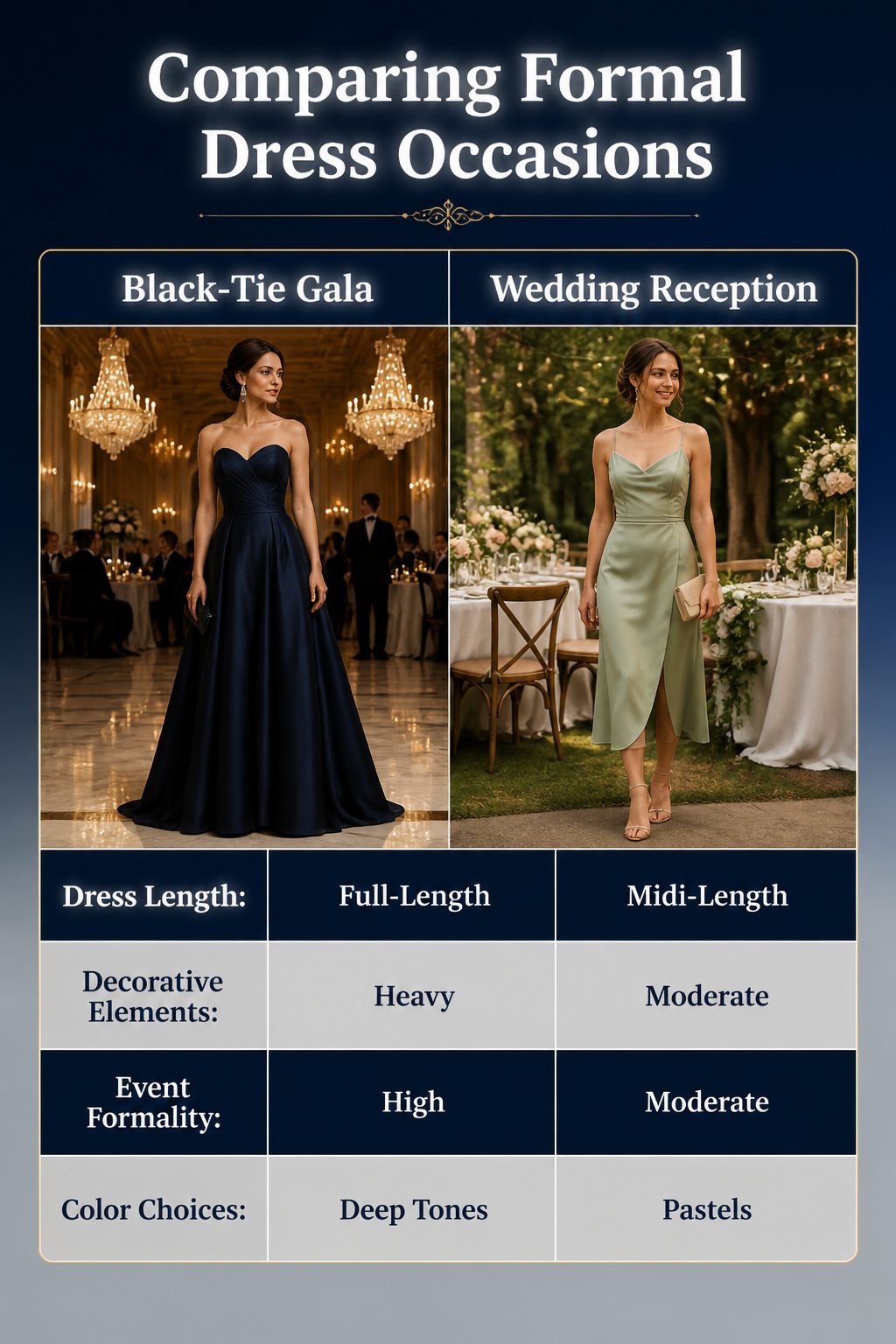
A long evening gown reads differently at a black-tie gala than it does at a wedding reception, and the gap matters more than most people expect.
For galas, the full-length silhouette is the baseline; anything shorter risks looking like you misread the invitation. Weddings give you more room to move, especially if the ceremony is outdoors or the reception runs cocktail-style.
In those cases, a midi-length formal dress or an elegant evening dress with a lighter fabric keeps you appropriately dressed without feeling overdressed beside guests in sundresses.
Proms sit in their own category. The event photographs heavily, so the dress tends to carry more decoration than you would wear to a fundraiser, and the floor-length gown dominates because the setting expects it.
Other formal gatherings, charity dinners, award ceremonies, the occasional opera opening, split the difference.
The code is "formal," not "black tie optional," which means the safest choice is the long evening gown, but a structured midi in a dark color passes if the cut is sharp enough.
Color signals formality too, though less reliably than length. Deep jewel tones and black lean more formal; pastels and bright prints read celebratory, which works for weddings and daytime events but can feel lightweight under ballroom chandeliers.
Customization
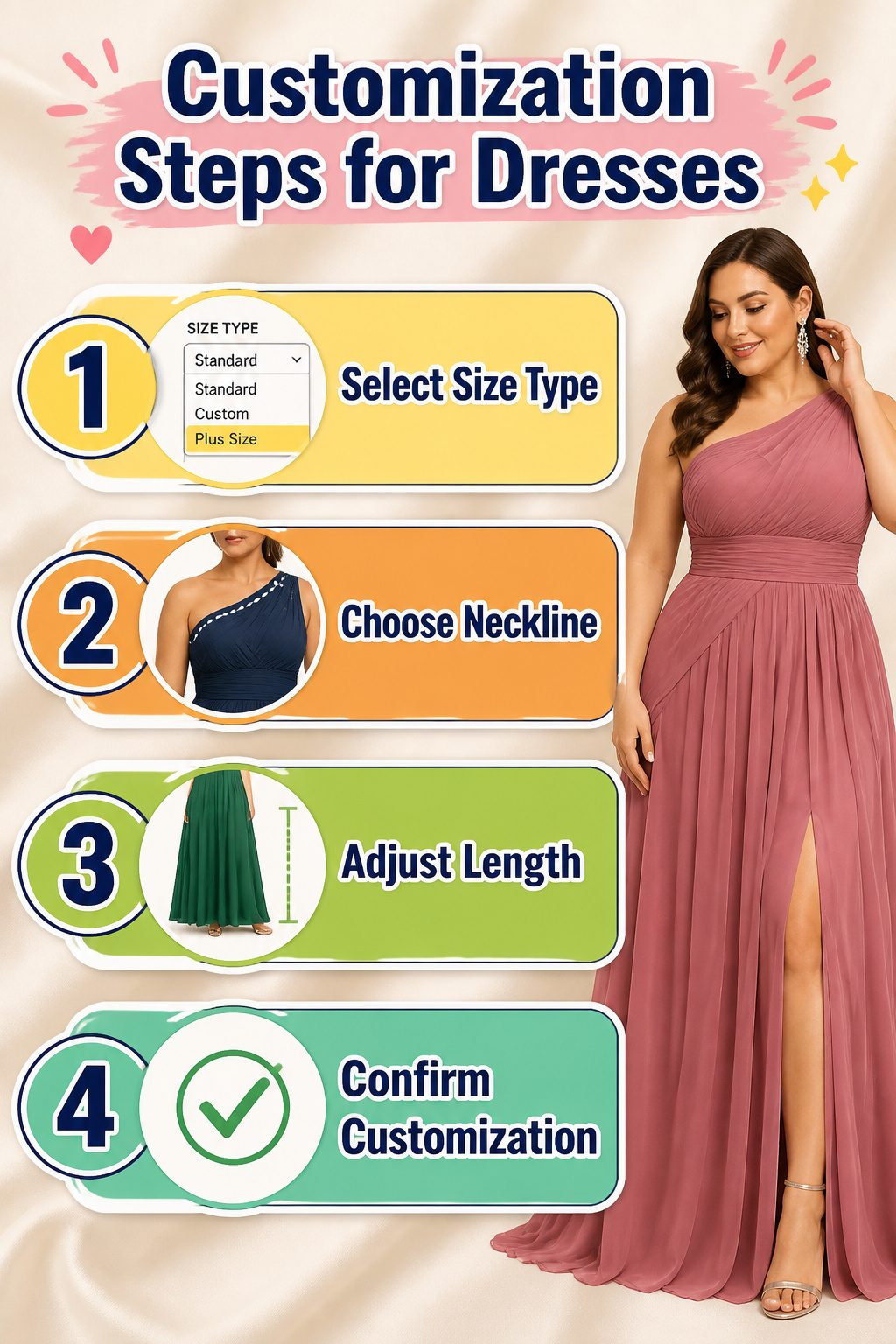
A neckline that sits an inch too high or a hem that brushes the ankle instead of the floor can undo the effect of an otherwise perfect plus size formal dress.
JJ’s House builds customization directly into its ordering flow: you select standard, custom, or plus size, then adjust the neckline and length before the piece is cut.
The neckline and length are chosen before the dress is made, not altered after, which means the proportions stay intentional rather than patched together.
This service sits at a mid-tier price point, roughly comparable to buying off-the-rack and paying for tailoring separately, though you skip the second round of fittings and the risk that a seamstress cannot let out a bodice that was never built for your measurements.
The tradeoff is time: custom work ships slower than ready-to-wear, so the option rewards planners and punishes anyone shopping a week before the event.
For the price tier, expect to land somewhere between fast fashion formalwear and boutique bridal. The value shows up most clearly in asymmetrical necklines or floor-length gowns where even skilled alteration can distort the line.
Accessories
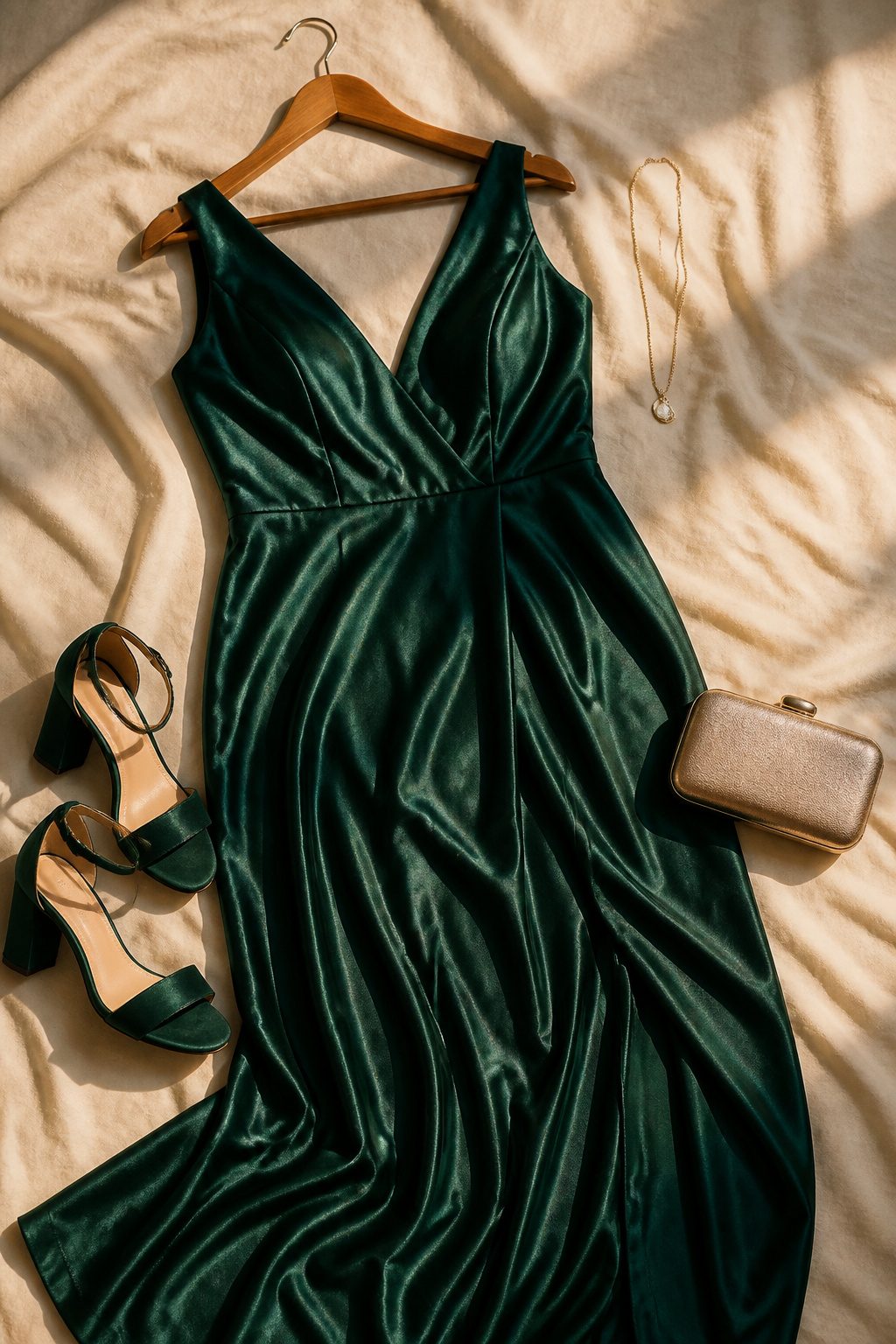
The right accessories on plus size formal dresses do more than fill space; they solve problems the cut of the dress created.
A deep V-neck that reads dramatic from across the room can feel unfinished up close, and a pendant that lands exactly at the hollow of the throat anchors the eye so the neckline feels intentional, not accidental.
I have watched friends spend twice as long choosing earrings as they did the dress, and usually they were right to.
Shoes carry more weight here than the source material admits.
A heel that is too slim throws the balance of a fuller skirt or a structured bodice, while a block heel or a refined platform underneath a gown keeps the vertical line clean without the wobble that ruins photographs.
The same pair in a satin match to the dress reads evening; in a metallic, it reads after-party.
The mistake is buying the shoe to match the dress color exactly and ignoring what the heel shape does to the overall silhouette.
A clutch should be small enough that you are forced to edit what you carry.
The temptation with a larger bag is to fill it, and a heavy shoulder throws off posture in a way that shows in every photo from the side.
Jewelry, shoes, and the clutch together should feel like three decisions made by one person, not three people who met at the event.
Price Range
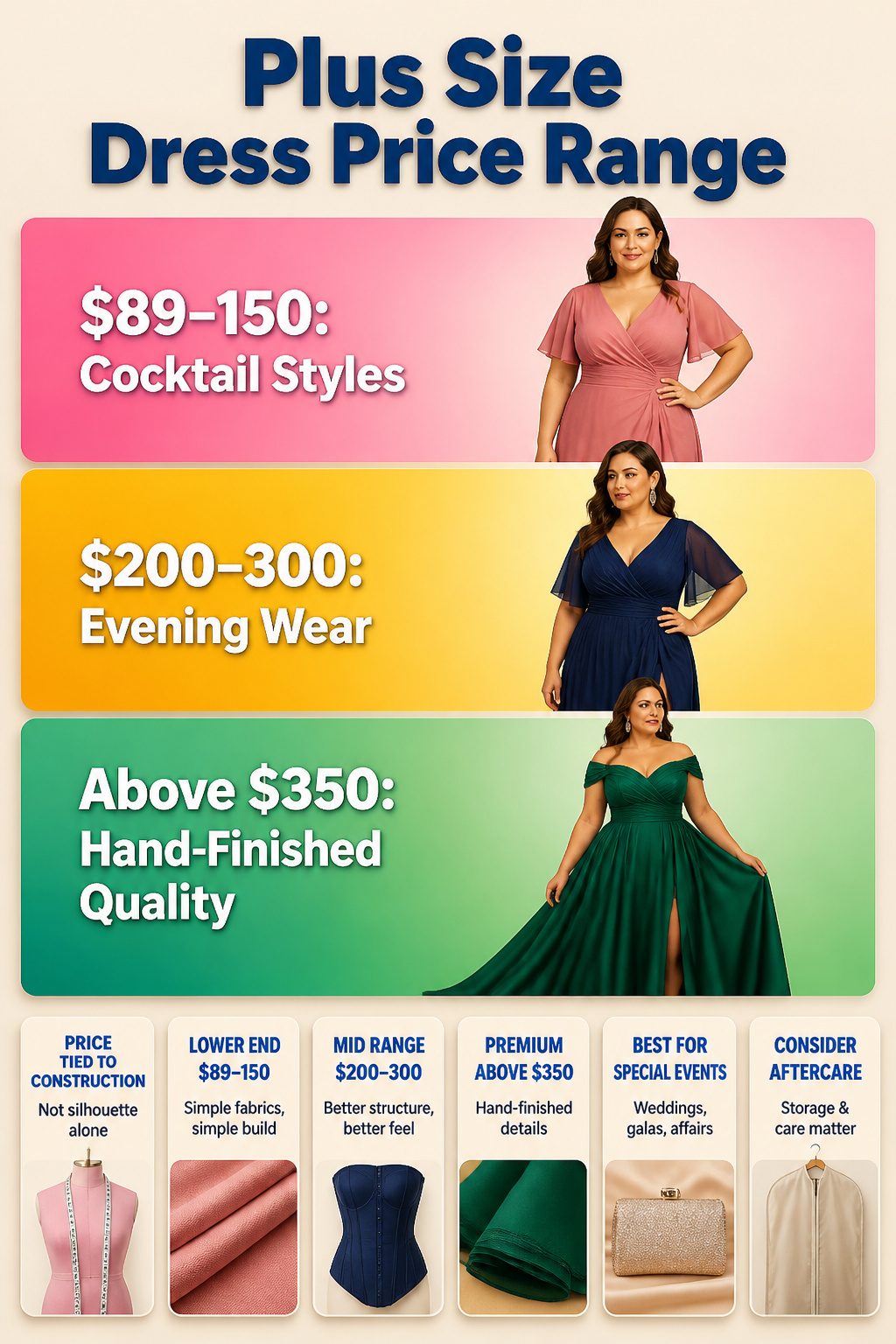
Plus size formal dresses run from about $89 at the entry point up to $444 for full-length gowns, and the spread between them comes down to fabric and construction more than silhouette alone.
The lower end of that range, roughly $89–$150, is where you find shorter cocktail lengths and simpler jersey or crepe styles: machine-friendly fabrics, minimal lining, zippers that stop at the waistband. These work.
I have ordered enough of them to know they photograph well and survive one or two dry cleans.
Move toward $200–$300 and the difference is tactile.
Bodices start to carry built-in corsetry or boning that actually distributes weight, skirts gain a second layer so they do not cling at the thigh, and linings become separate garments rather than fused backing.
This is the zone where a midi dress starts to feel like evening wear instead of office wear pushed late.
Above $350, you are paying for hand-finished seams, horsehair braid in the hem so the skirt holds its own architecture, and fabrics that need to be cut one layer at a time. Full gowns with trains sit here almost exclusively.
The question is whether the event justifies it. For a wedding you are attending, not one where you are the center, that upper price can feel like storage cost the morning after.
Frequently Asked Questions
What styles of plus size formal dresses are available?
Maxi dresses, midi dresses, mini dresses, gowns, jumpsuits, and two-piece sets are the main styles.
Maxi dresses run full-length from shoulder to floor, midi hems land between knee and ankle, and mini dresses read as formal through fabric choice and shoe pairing.
Gowns carry boned bodices and lined skirts, jumpsuits need liquid satin or heavy crepe to read evening, and two-piece sets split apart for multiple wears.
What occasions can I wear plus size formal dresses to?
Weddings, proms, black-tie galas, charity dinners, award ceremonies, and opera openings. Galas demand full-length gowns as baseline; weddings allow midi lengths or lighter fabrics; proms photograph heavily so floor-length dominates.
The safest choice for formal-not-black-tie events is a long evening gown, though a structured midi in dark color passes if the cut is sharp.
Can I customize my plus size formal dress?
Yes. JJ’s House builds customization into its ordering flow: you select standard, custom, or plus size, then adjust neckline and length before the piece is cut.
The proportions stay intentional rather than patched together after manufacture. The price sits mid-tier, comparable to off-the-rack plus separate tailoring, though custom work ships slower than ready-to-wear.