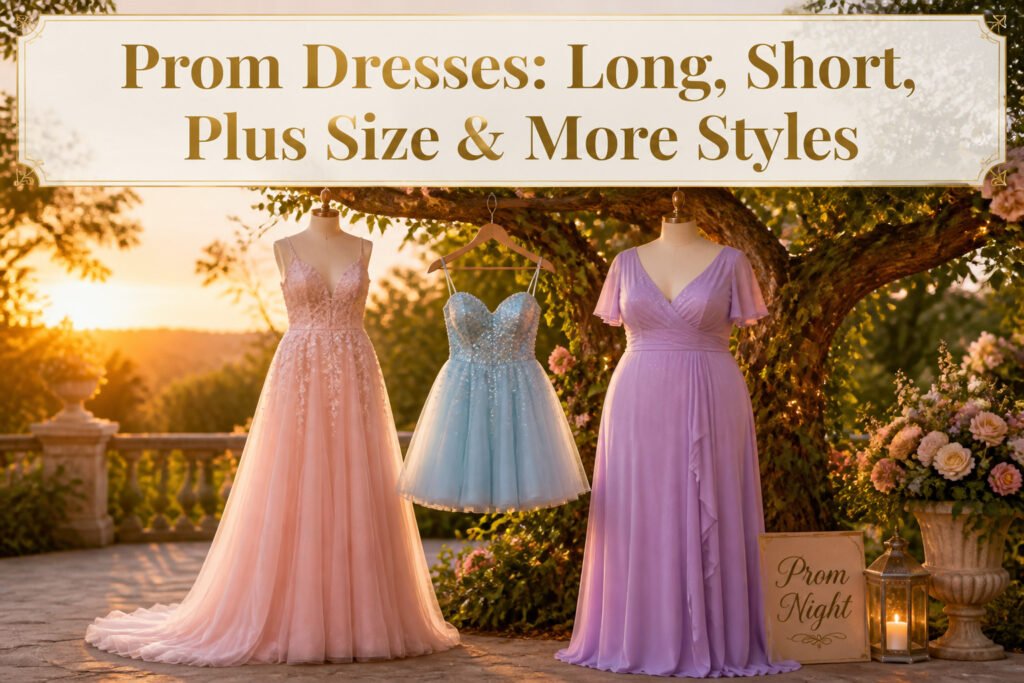
A prom dress is formal eveningwear worn to a high school prom, and the right one depends on length, silhouette, and fabric working together for your specific event.
Floor-length gowns running 58–63 inches remain the default, but short styles now make up 15–20% of inventory and suit smaller venues or heavy dancing.
The A-line silhouette is the safest starting point if you are ordering without trying on; its gradual flare from bodice to hem forgives more proportion variations than any other major cut.
1. Long Prom Dresses
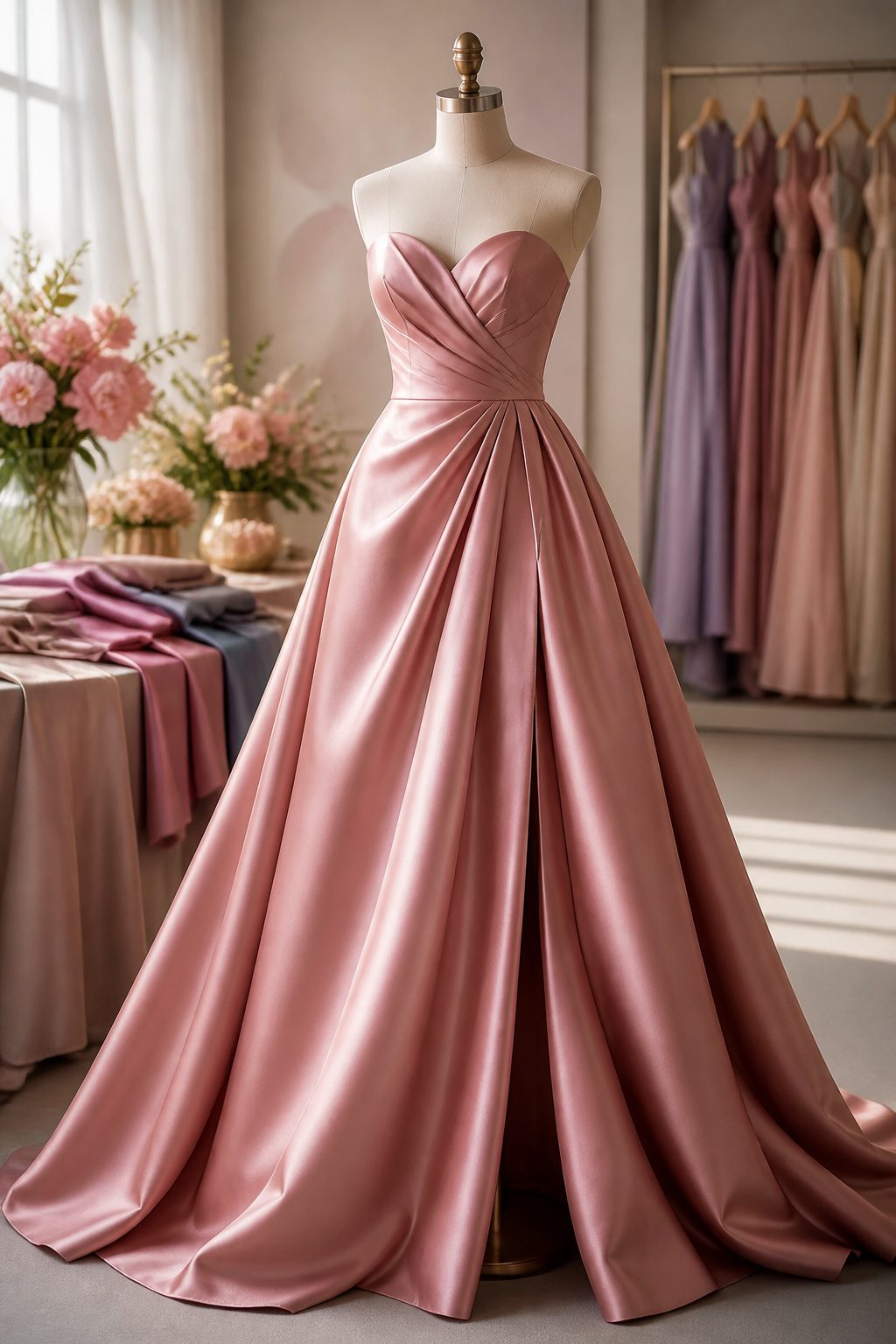
A floor-length hem running 58–63 inches from shoulder to hem is what most people picture when they hear prom dress, and for good reason.
That length hits the sweet spot for formal photography, the fabric pooling just enough under venue lighting to catch highlights without turning into a tripping hazard on the dance floor.
The silhouette options are where this length really earns its keep: A-line, ball gown, sheath, and mermaid all read more formal with a full skirt or train trailing behind.
Sweep and court trains add movement without the full drama of a cathedral length, which is why they dominate the floor at actual proms rather than just red carpets. Availability is another quiet advantage.
This is the length you’ll find across every price tier, from under $100 to over $400, simply because demand has made it the default. Before committing, check the listed measurements against the heel height you plan to wear.
A three-inch lift can shift that 58-inch hem from elegant to awkwardly high-water, and most retailers don’t account for your shoes in the numbers on the tag.
Heels help posture and drape, but if you prefer flats, a pointed-toe pair keeps the line formal rather than casual.
2. Short Prom Dresses
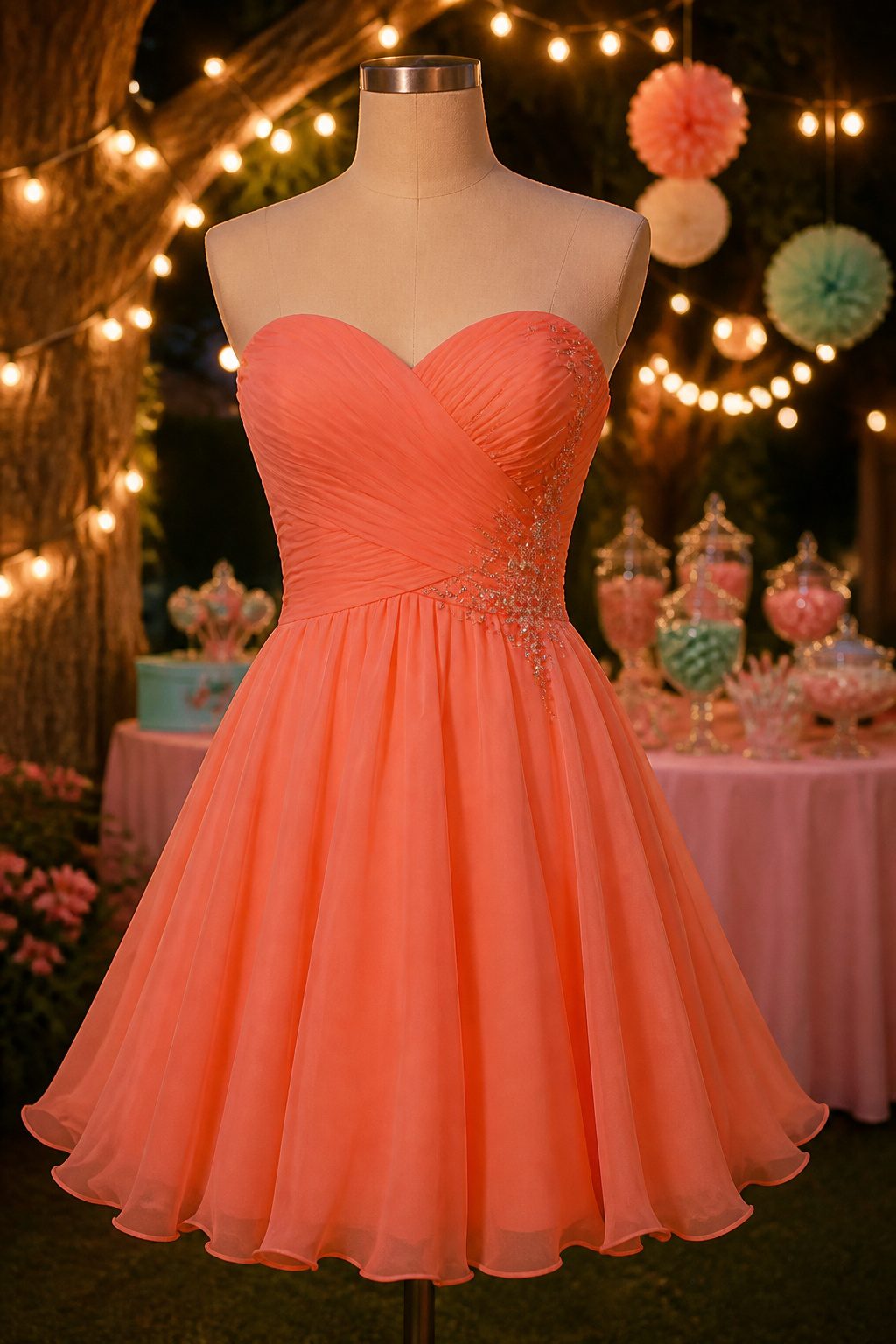
Short prom dresses run roughly 35–40 inches from shoulder to hem, landing anywhere from mid-thigh to just below the knee.
That range makes them the practical choice for smaller venues where a long train becomes a hazard, for nights heavy on dancing, or for proms held in late spring heat when floor-length satin feels like a personal sauna.
What started as a niche alternative has settled into the mainstream. About 15–20% of prom dress inventory now comes in shorter lengths, so the selection is no longer an afterthought of leftover styles.
Mini and knee-length cuts let statement shoes actually show, and the lighter silhouette tends to cost less in alterations since hemming a full gown is where budgets quietly bleed.
School dress codes still vary, so checking the specific rules matters before committing. A shorter dress reads as playful and modern, but for events with strict formality expectations, the balance shifts.
Two ways to play this: embrace the shorter length as the main event with bold accessories, or treat it as semi-formal flexibility and skip the pressure of black-tie performance entirely.
3. Plus Size Prom Dresses
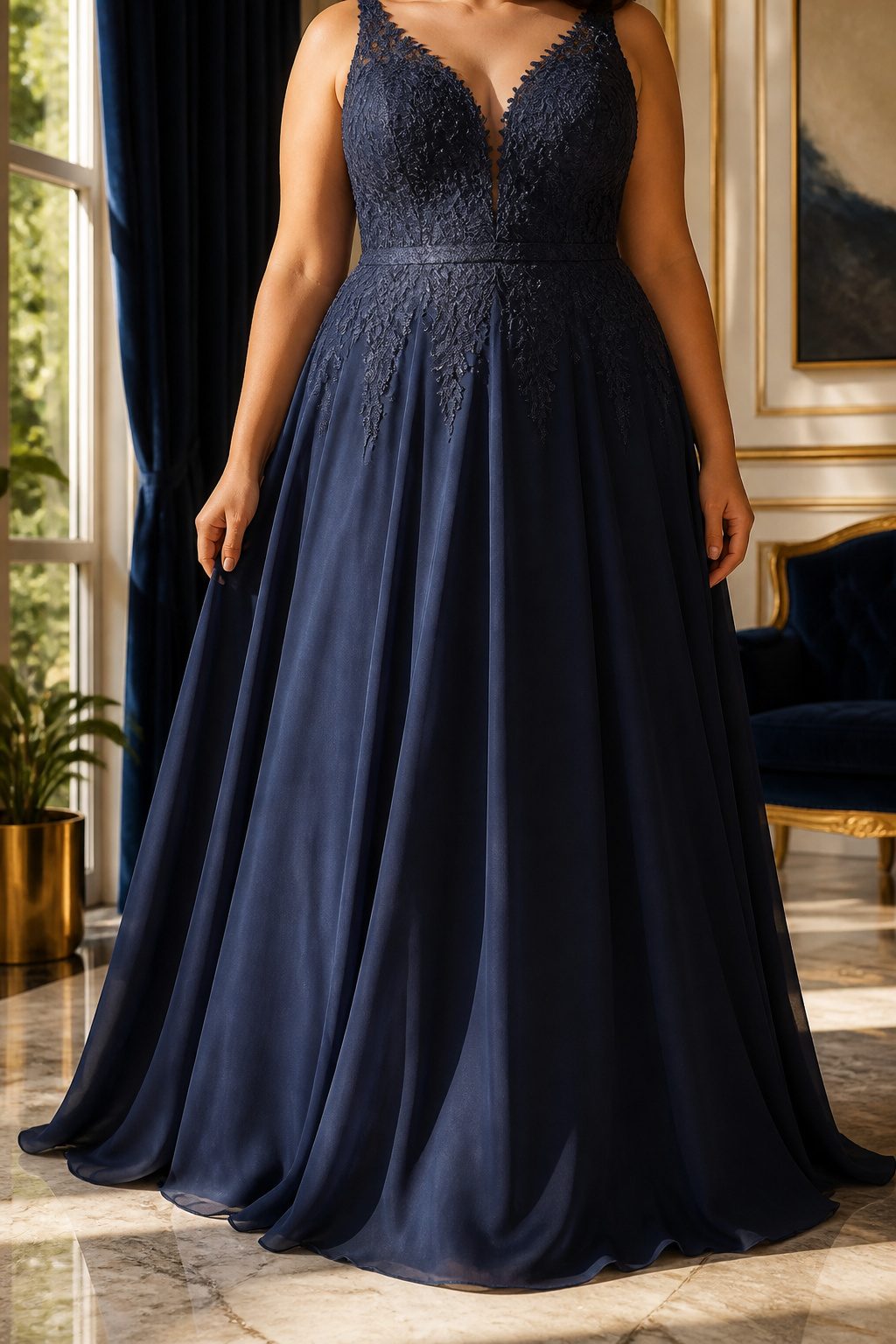
A prom dress in a plus size range needs three measurements checked against the brand’s own chart, not the size you wear to school.
Bust, waist, and hip each hit differently across formal construction, and standard grading assumptions fail most often at the waist-to-hip ratio where a line can pull or gap.
A-line and empire waist silhouettes give the most reliable fit across plus ranges because the skirt release hides where a hip grade runs narrow and the bodice structure carries the shape.
Corset styles with actual boning and lacing, not just a lace-up detail, can be adjusted to different torso lengths, which is where many plus-size formal dresses fail.
The five-year expansion of dedicated plus collections means these constructions are now designed from a block rather than graded up, so the armholes sit correctly and the bust points align.
4. A-Line Prom Dresses
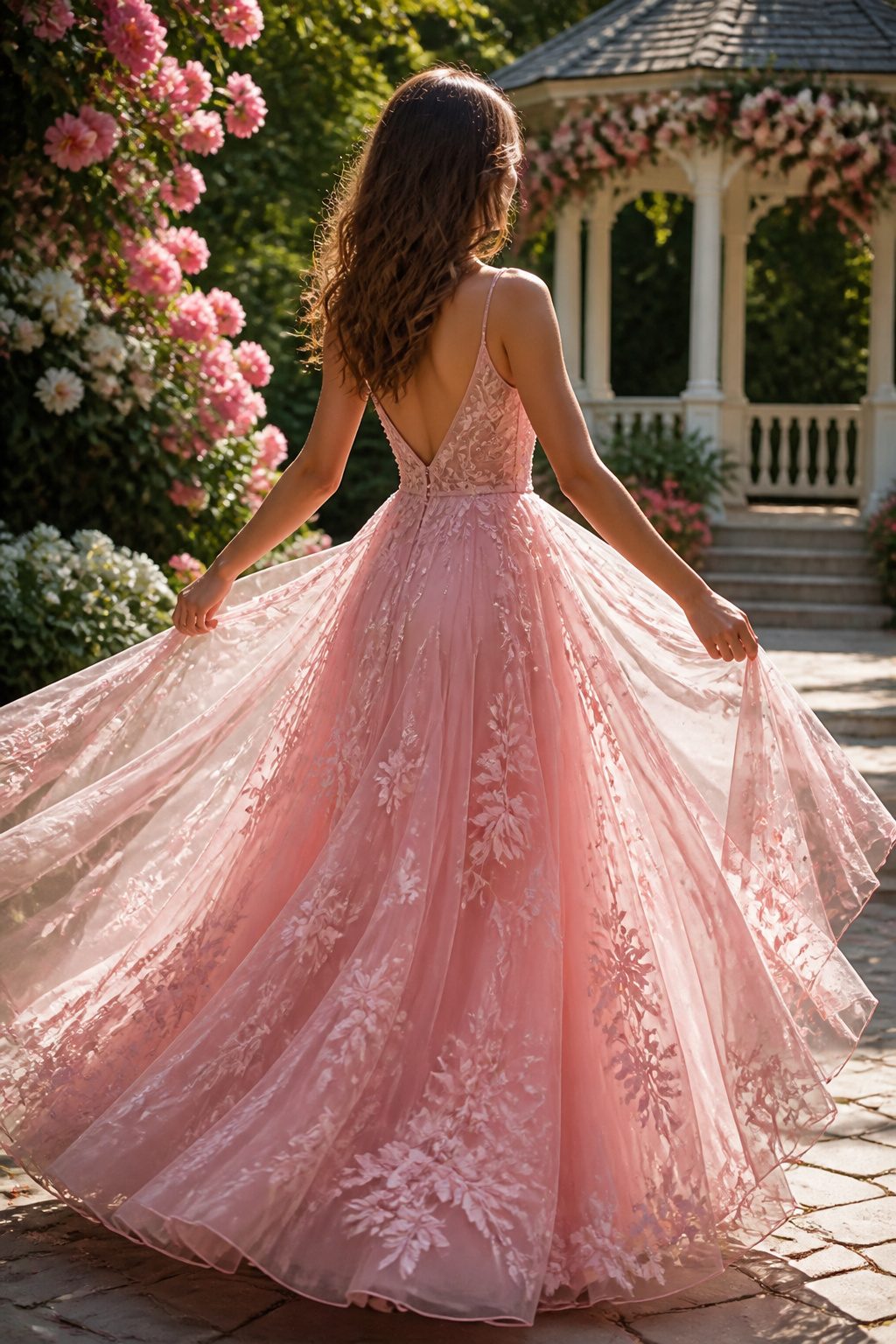
The A-line prom dress starts fitted through the bodice and widens gradually toward the hem, tracing the clean triangle of a capital A. That geometry is what keeps it the most forgiving shape in formal wear.
It balances shoulders and hips without either one dominating, and the waist can sit anywhere from empire to natural without breaking the line.
I have watched friends with no defined waist and friends with narrow hips both look comfortable in the same cut, which is rare.
The silhouette also crosses fabric weights without complaint.
Structured satin holds the A-line crisp and architectural, while flowing chiffon lets it drift into something softer. Ball gowns demand volume and mermaid demands stretch; A-line asks only that the skirt flare gently from the hip.
That tolerance for different materials means you are not locked into one season or formality level. If you are buying online without trying on, this is the shape least likely to arrive as a mistake.
5. Ball Gown Prom Dresses
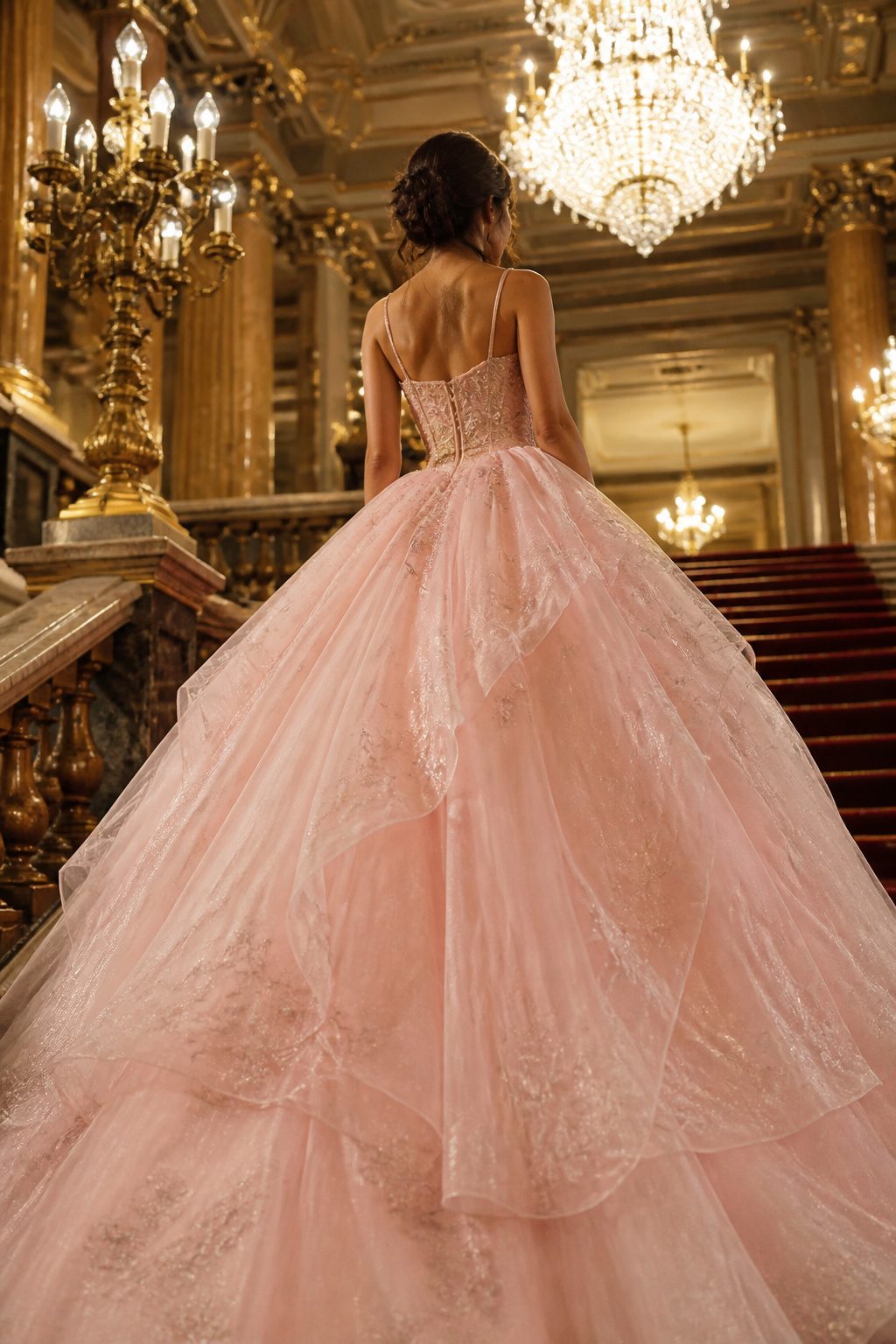
A ball gown prom dress builds its drama from the inside out.
The fitted bodice sits tight through the ribs while the skirt explodes outward, usually on a foundation of tulle layers or a crinoline underskirt that holds the shape without constant adjusting.
The full effect needs serious volume; a half-measure skirt reads as a deflated costume rather than formalwear.
That structure comes with weight. Walking, sitting, and dancing all take more effort, and the dress eats space in a crowded car or photo line.
This silhouette pulls the eye to the waist and away from the hips and thighs, which works well for pear-shaped or hourglass figures.
It does less flattering work on apple shapes, where the bodice fit can feel constricting and the skirt’s width adds overall mass rather than balance.
Expect to pay for the engineering.
Between the internal structure, the yardage, and the labor to assemble it, ball gowns cluster in the $250–$400 range and climb from there. It is the most expensive prom silhouette to produce, and the price gap over simpler cuts is real.
6. Mermaid Prom Dresses
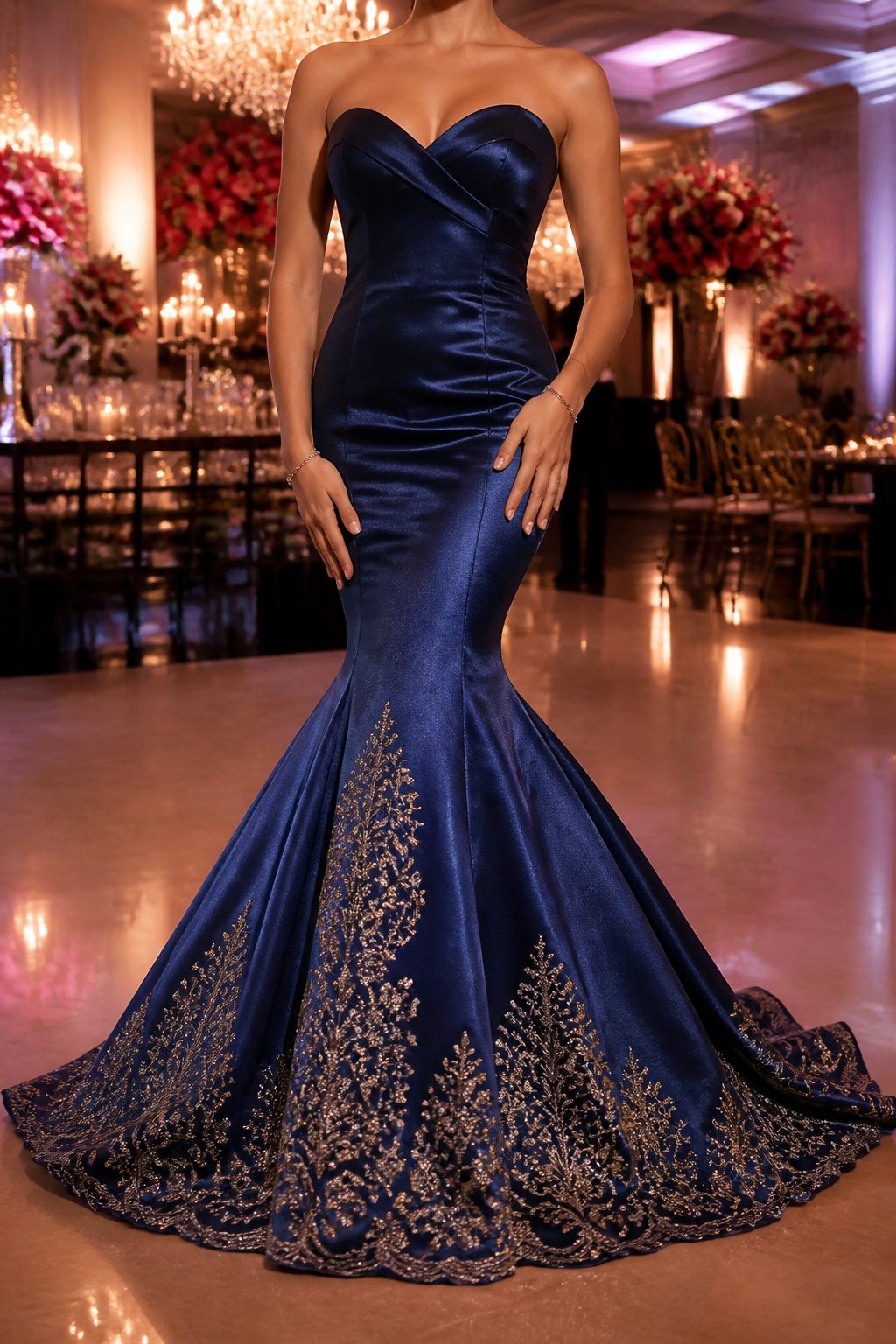
A mermaid prom dress contours through the bodice, waist, and hips before flaring toward the hem, which means the fit must be exact at every point or the whole silhouette collapses.
The waist and hip measurements matter most, since the fabric is essentially molded to the body with no room to hide a gap or a pinch.
Sheath and fitted designs create a similar streamlined effect, but they carry less skirt volume and therefore forgive more at the flare point.
Where the flare hits changes everything. A mid-thigh release reads leggier and more dramatic, while a knee or lower-calf flare shortens the line and can feel heavier in motion.
The lower the flare, the narrower the stride and the harder the sit; I have watched friends in lower-calf versions take stairs sideways and perch on chair edges rather than settle.
Check that the dress allows you to walk and dance comfortably before you commit, because this shape demands the most precision of any major prom silhouette and offers the least room to adjust after the fact.
7. Strapless Prom Dresses
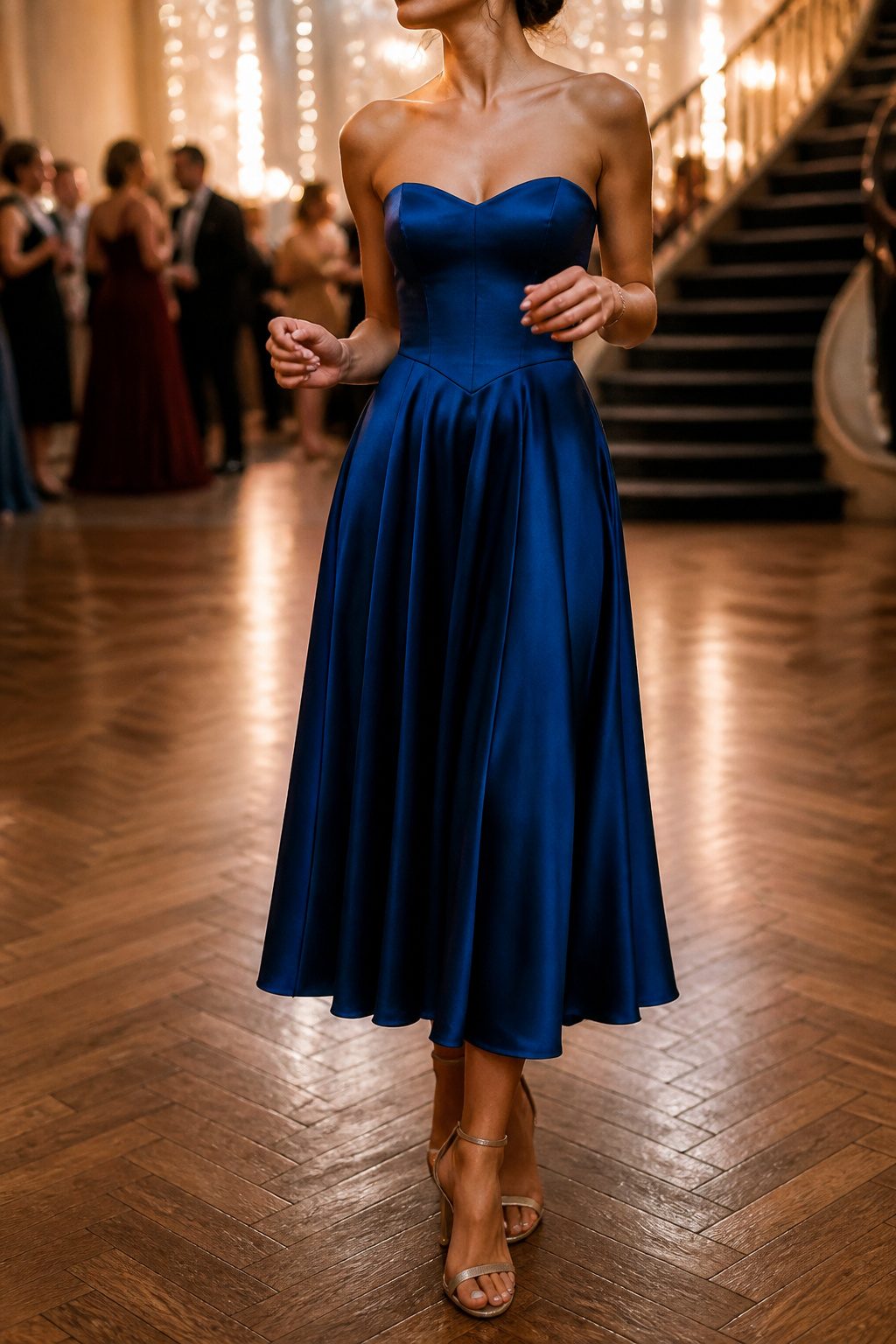
A strapless prom dress lives or dies on its bodice engineering. The neckline exposes the full shoulder and collarbone, which means the chest has to be held securely without any strap assistance at all.
Internal boning, gripper tape along the top edge, and a structured bodice are what keep the dress from sliding down when you raise your arms or bend to adjust your shoe.
That security comes at a cost to movement. A well-fitted strapless bodice limits how high you can lift your arms, so dancing with your hands overhead or reaching across a table feels restricted.
The fit demands precise upper-body measurement; too loose and you spend the night tugging, too tight and breathing becomes its own event.
Jewelry works differently here than with other necklines. The bare collarbone and shoulder line create clean space for a statement piece, and the absence of straps means no visual competition near your neck.
A collar-grazing necklace or dramatic earrings read clearly against the open expanse. The romantic finish of the bare shoulder does the framing work on its own.
8. Corset Prom Dresses
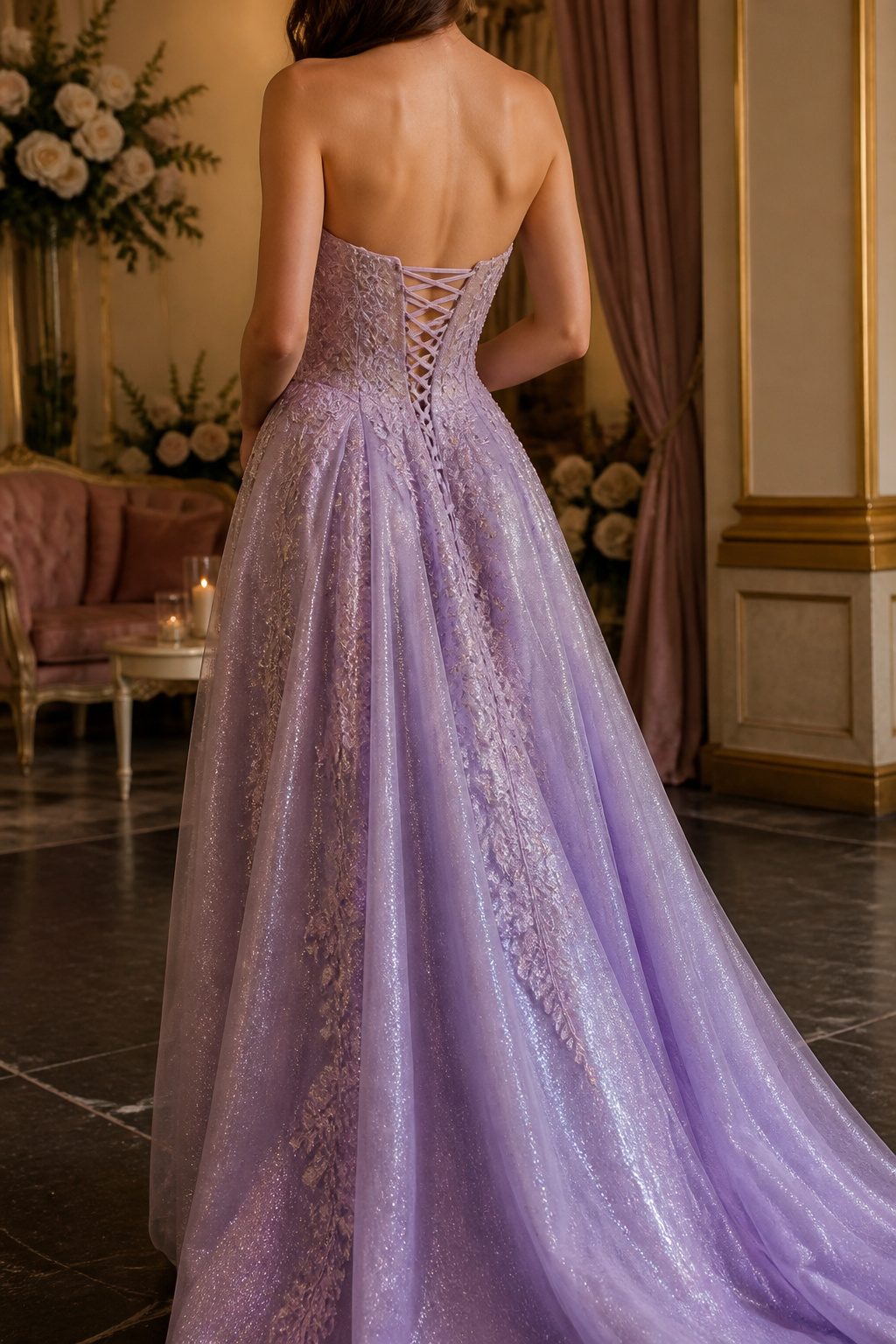
Corset lacing on a prom dress can be pure ornament or it can actually do work, and the difference matters when you are ordering online without a tailor on standby.
Decorative lacing overlays a zipper or a fixed bodice; the ribbon threads through loops that sit on top of a finished seam and the fit does not change when you tug.
Functional lacing runs through reinforced eyelets in the bodice itself and draws the fabric inward, letting you take the waist in by about one to two inches or ease it back out.
That range is enough to cover the gap between standard sizes, which is why corset construction tends to be the safer bet when your bust and waist land in different columns on the size chart.
The tradeoff shows up in the silhouette. A decorative corset detail keeps the dress shape as designed, which works well on structured fabrics that already hold their own shape.
Functional lacing lets you sculpt the waistline more aggressively, but it also means the dress needs a stiffer bodice to take the strain, and the lacing panel itself adds bulk at center back.
In photographs the difference reads as a slightly wider back seam, something to weigh if you are planning an updo that exposes it.
I have noticed that cheaper listings rarely specify which kind they are selling, and the return window on formalwear is often too short to find out the hard way.
The question worth asking before you buy is whether the lacing adjusts or merely decorates; the answer decides whether the dress adapts to you or the other way around.
9. Floral Prom Dresses
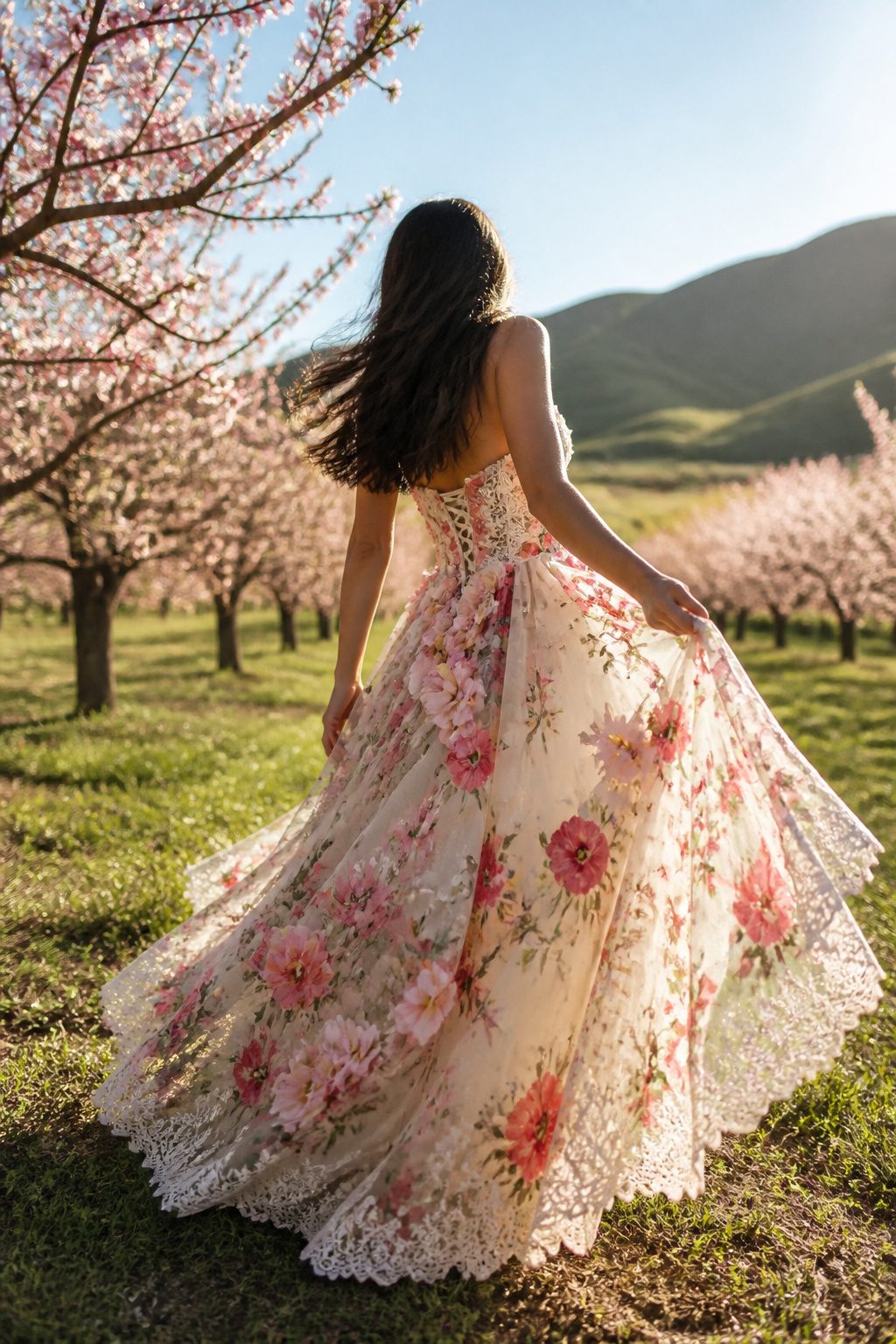
Small florals read as sweet; oversized blooms read as deliberate, and that distinction matters more than it used to.
A few years back, a floral prom dress meant pastel chiffon and a March-to-May window. Now dark grounds, navy or even black, carry the same prints into winter formals without looking like a garden party crash.
The scale shift is only half the story. Fabric treatment changes the whole effect: printed chiffon floats and photographs soft, embroidered lace adds texture that catches candlelight differently, and dimensional satin appliqué builds shadows that a flat print cannot touch.
A dark base with raised botanicals gives the drama of a solid gown while still reading as pattern.
Pastel grounds still work, but they need the right support. Pale pink printed chiffon can wash out under gymnasium fluorescents unless the lining is substantial.
Lace with white or ivory threadwork solves this by carrying its own depth. Three-dimensional elements, petals or leaves sewn to catch air as you move, travel best on heavier bases like satin where the weight balances the bulk.
Year-round availability changed how to shop this style. What was once a spring pre-order now sits in fall and winter collections, often in deeper palettes and on darker fabrics.
The same dress shape reads as entirely different occasions depending on whether the florals sit on cream or on ink.
10. Two-Piece Prom Dresses
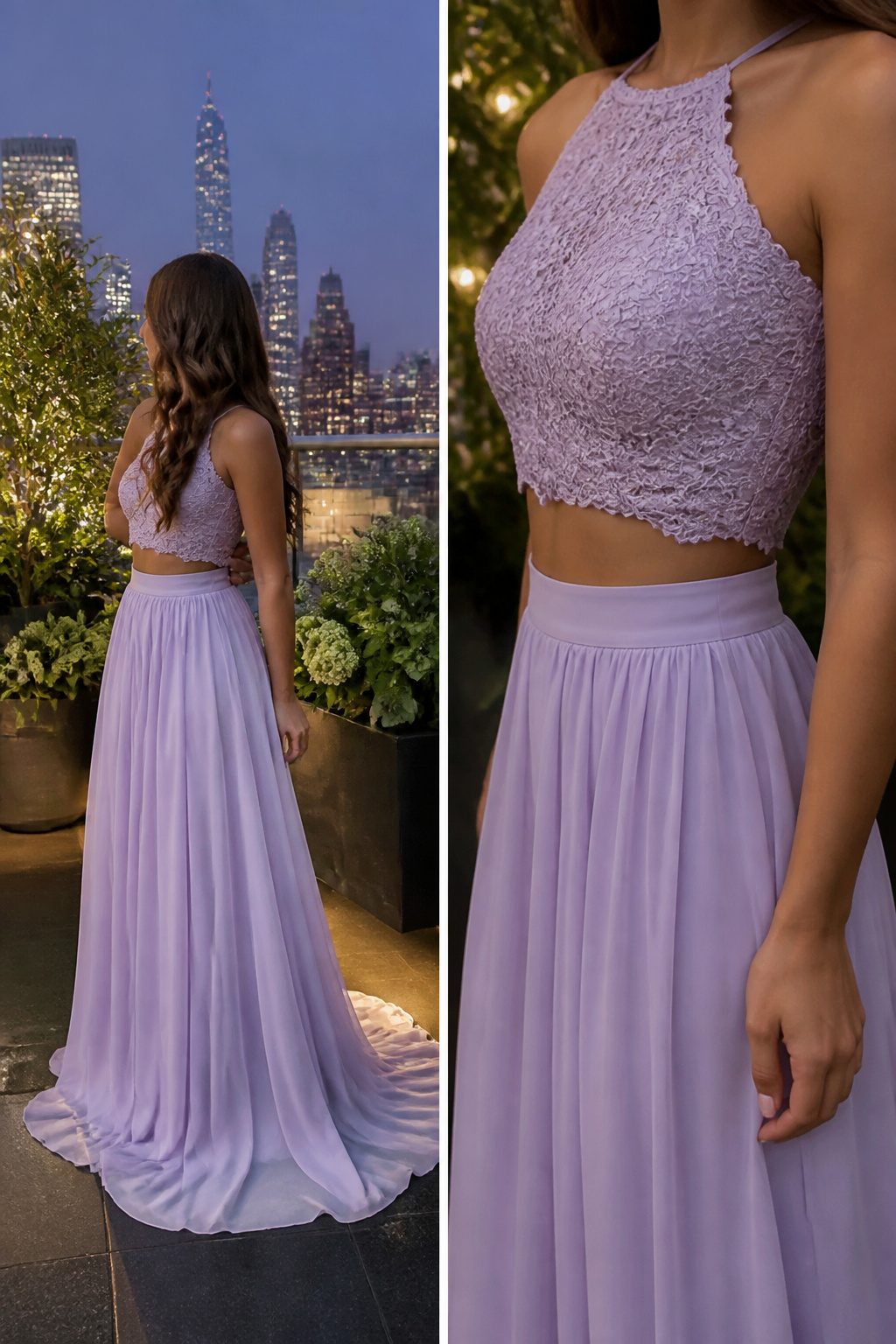
A two-piece prom dress breaks the look into a separate top and skirt, either physically connected at a seam or worn as true separates that happen to match. That separation is where the engineering gets interesting.
The waistline can sit high, at the natural waist, or dropped low on the hips, and the top can range from cropped to tunic-length, which changes the ratio of torso to leg entirely.
What convinced me, reading through a dozen of these, is that the real win is proportion control. Someone with a smaller ribcage and wider hips can size the top down and the skirt up without the compromise of a one-piece.
The skirt might get pulled out again for a summer wedding; the top could work with a different high-waisted bottom entirely.
The catch is alignment. Two pieces shift independently when you sit, dance, or reach for a drink.
A connected two-piece solves some of that, but true separates need careful waistband engineering, usually a wide band or internal grippers, to keep the break point from wandering.
Check this in the fitting room: raise your arms, twist, sit down. If the top rides or the skirt slips, the look falls apart in motion.
Dress Silhouettes and Body Shape
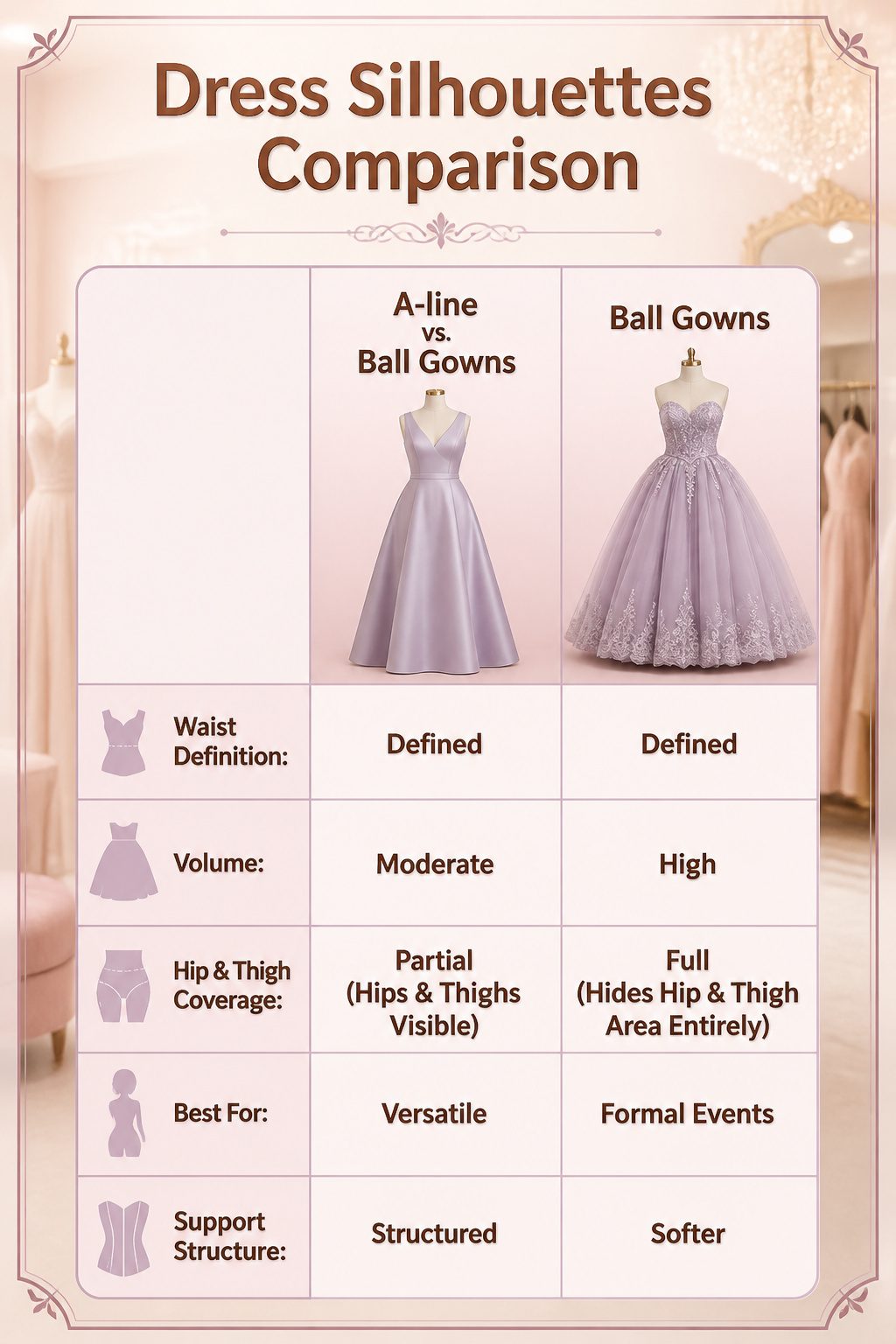
A-line dresses widen gradually from the shoulders through the hem, which makes them the most forgiving starting point if you are unsure about your proportions.
The shape leaves room through the hips and thighs without looking tent-like, and it photographs cleanly from most angles.
Ball gowns go further, pairing a defined bodice with a full skirt that hides the hip and thigh area entirely; the tradeoff is volume that can overwhelm a smaller frame or feel like too much dress in a crowded venue.
Mermaid and fit-and-flare styles do the opposite work. They hug the body through the torso and thighs before flaring at or below the knee, which emphasizes an hourglass or creates one where the waist is the narrowest point.
For broader shoulders, this silhouette balances the upper body by adding visual weight below.
Empire waists, with the seam sitting directly under the bust, draw the eye up and away from the midsection; they work well when you want definition higher on the body rather than at the natural waist.
Plus-size shopping runs smoother when you measure bust, waist, and hips against the specific size chart rather than defaulting to your usual clothing size.
Structure matters more here: boning, a defined waist seam, or a structured bodice provides the support that softer constructions lack.
The goal is a dress that holds its shape through the evening, not one that relaxes into something shapeless after an hour of sitting.
Dress Lengths and Formality Levels
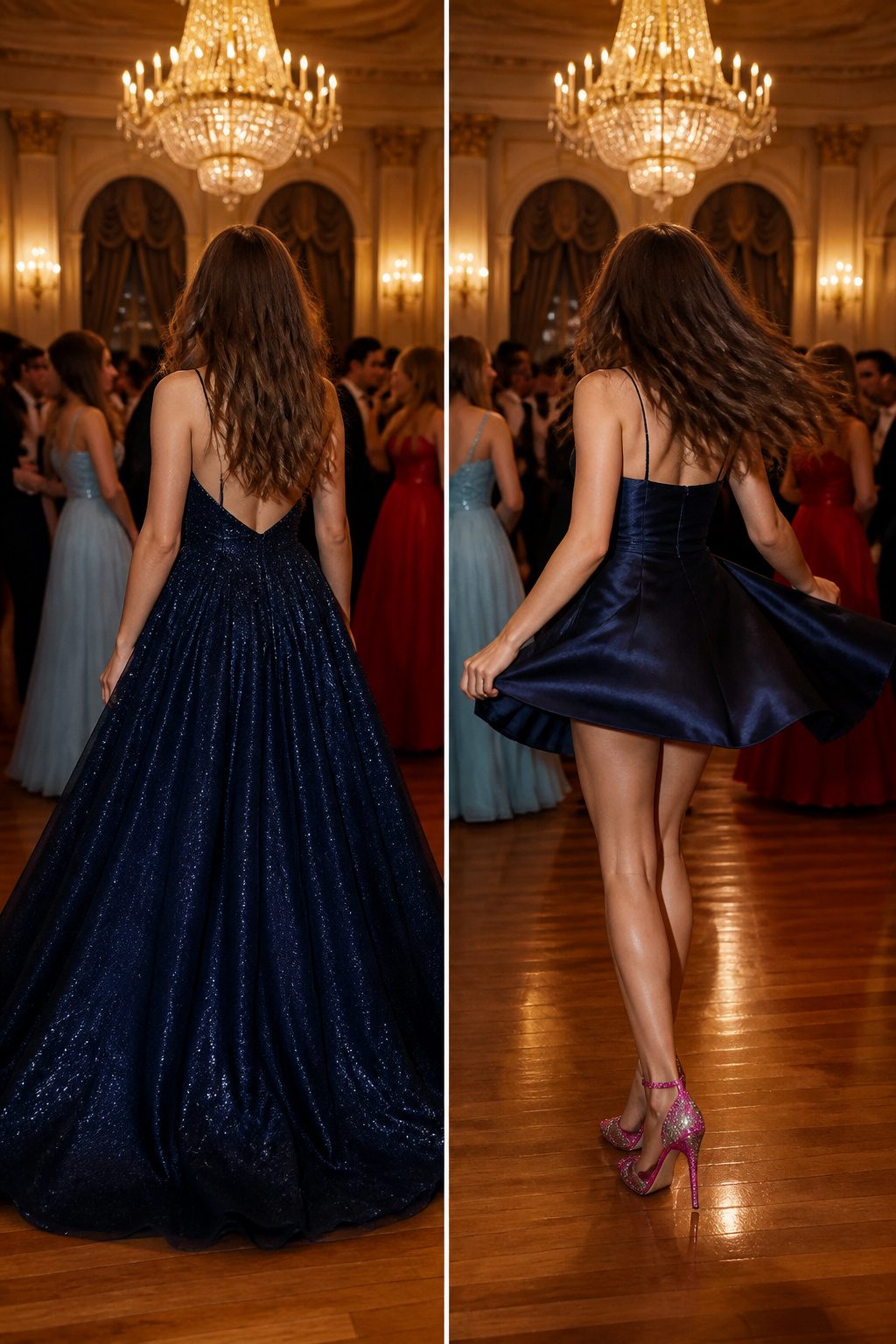
Floor-length gowns still set the standard for grand ballroom proms, where the expectation runs close to black-tie formality. A shorter dress works for semi-formal events, though a strict black-tie dress code almost always calls for the full length.
Tea-length and knee-length styles suit outdoor or more casual venues, and shorter lengths let statement shoes become part of the look rather than hiding them entirely.
Mini dresses make dancing easier, which matters more when your prom runs late into the night.
Check your school’s dress code first; length rules vary, and a hemline that feels secure on the dance floor beats one that demands constant adjustment. The shoe question is practical, not just aesthetic.
A floor-length skirt swallows your footwear, so the choice matters less. Go shorter, and your shoes share the frame with the dress, which means they need to earn their place.
Color Options That Photograph and Wear Well
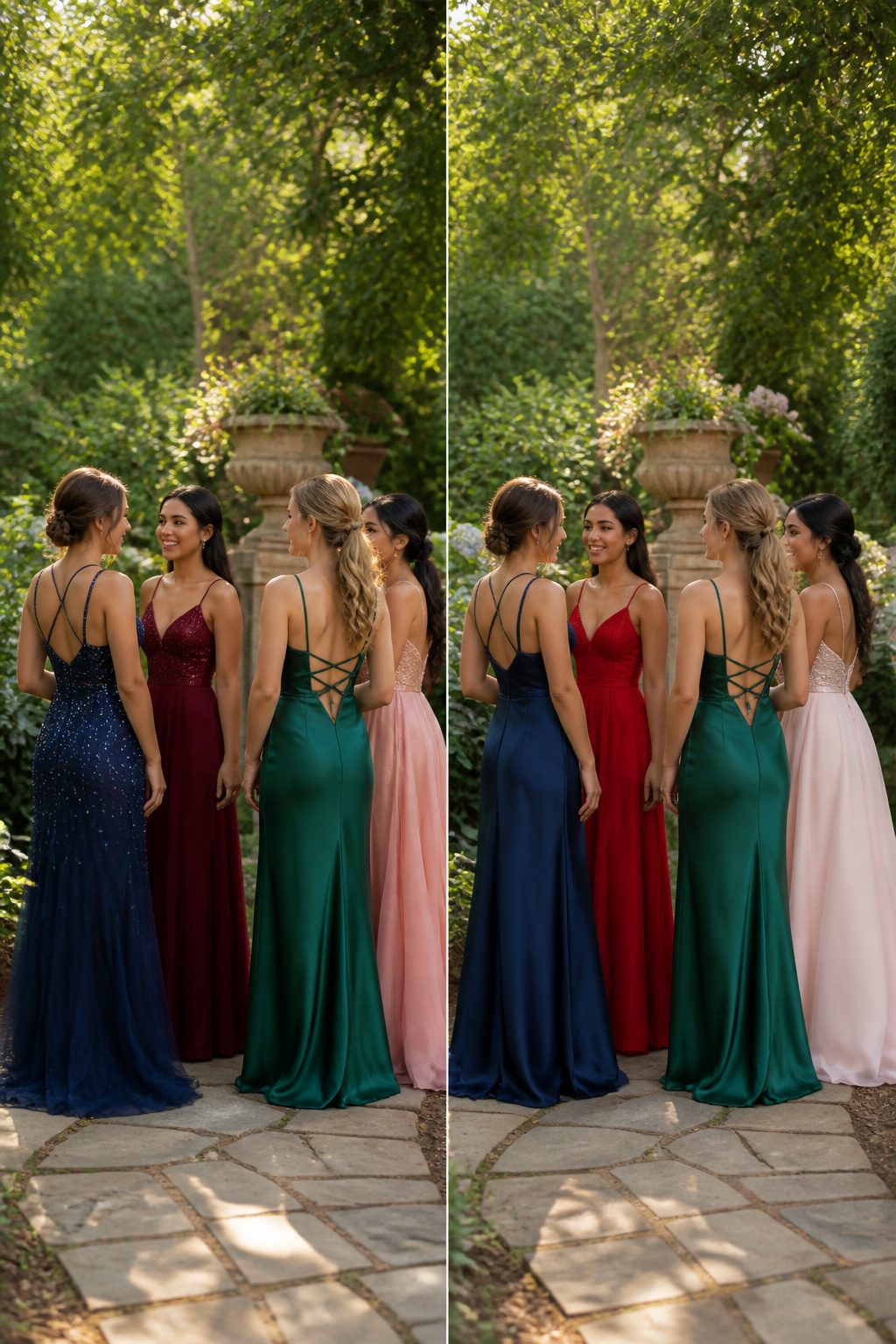
Black prom dresses read as polished in nearly every venue, and that reliability matters more than most people think until they see the photos.
Royal blue and navy share that same steadiness; both hold their depth under warm incandescent bulbs, cool LEDs, or the mixed lighting most hotel ballrooms actually run.
Red and the deeper jewel tones, emerald and dark green, behave the same way. The color you saw in the mirror is the color that shows up.
Pastels and softer tones like blush, light blue, and lilac do not forgive mixed light so easily. Warm bulbs pull them toward peach or yellow; cool LEDs drain them flat.
Deeper colors reproduce more reliably across lighting conditions than pastels, which is why a navy or black dress often looks more expensive in the group shot than the pale pink one that cost the same.
If you are set on a softer color, satin helps; its smooth glow gives the fabric some body even when the light does not.
Satin, Chiffon, Lace, and Sequin Fabrics
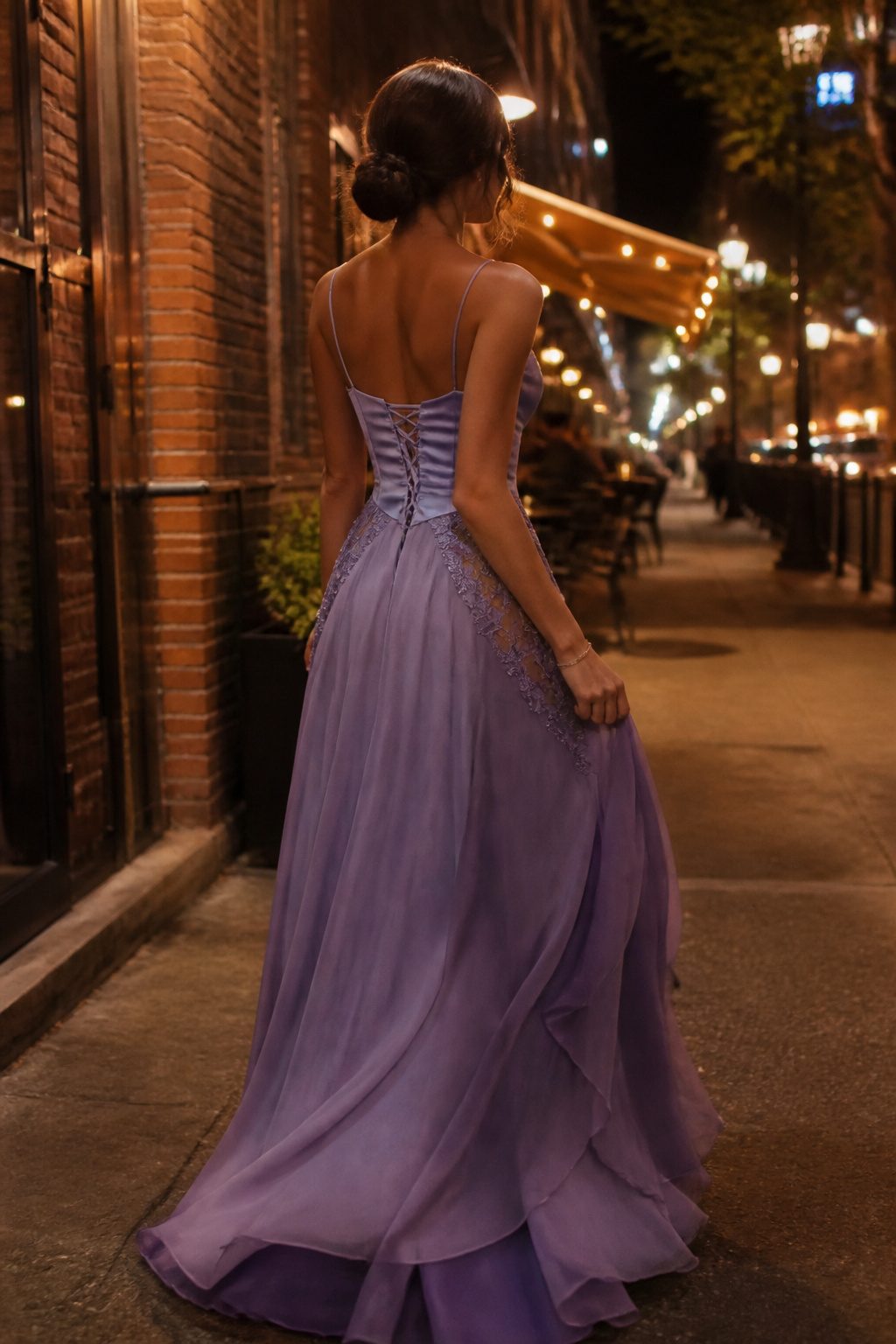
Satin holds structure and catches the light with a smooth, even glow that photographs well under venue lighting, but it can feel heavier through a long night of dancing.
Chiffon layers for softness and movement, floating rather than clinging, which makes it forgiving if you are between sizes or want to hide where the bodice meets the hip.
Lace adds texture and partial transparency, usually as an overlay or inset that breaks up solid color without going fully sheer.
Sequins create the highest surface reflection, though they add noticeable weight and the underside can abrade against bare arms or delicate underlayers after hours of wear.
Most prom dresses worth considering combine two or more of these. A satin bodice with chiffon skirt gives you the structured top you need for strapless support and the flowing bottom you want for movement.
Lace panels over a satin base are common for the same reason: the lace provides visual interest while the satin underneath does the actual shaping work.
Sequins tend to appear as accents rather than full construction, scattered across mesh or concentrated at the neckline where the reflection does the most work without the full weight penalty.
Accessories That Complete the Dress
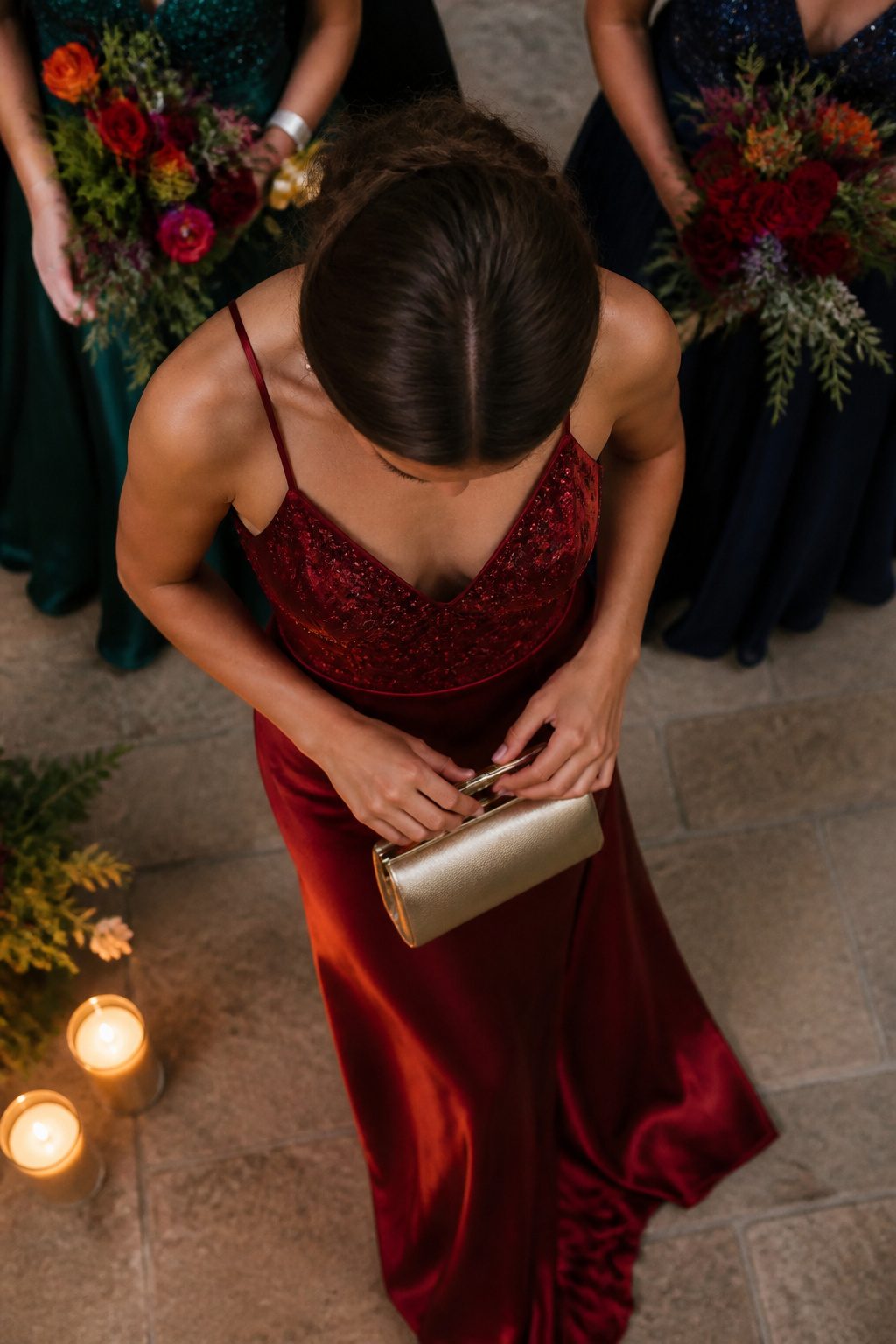
The rule for prom dress accessories is simple: let the dress do the deciding. A heavily beaded or sequined gown already carries enough visual weight, so simple earrings and a compact bag keep the look from fighting itself.
A minimalist satin dress, though, has room to spare. That is where bolder jewelry or shoes with some sparkle actually earn their place.
Shoes need to match the hem length in both look and function. A long formal dress hides most of the foot, which means the shoe should help the gown drape and move correctly.
Heels do this by shifting posture forward and keeping the fabric from pooling, but if flats are more your speed, pointed-toe styles or dressy sandals that echo the formality of the gown still work.
Either way, try the complete outfit together before the night arrives. Hem length, neckline, and how freely you can actually walk and dance all reveal themselves in that test run, not in the mirror at home.
A clutch only needs to hold the essentials: phone, lipstick, tickets. Anything larger competes with the silhouette you chose the prom dress for in the first place.
Frequently Asked Questions
What types of prom dresses are available?
Long, short, plus size, A-line, ball gown, mermaid, strapless, corset, floral, and two-piece prom dresses are the main styles covered for 2026.
Long dresses remain the default with the widest price range, while shorter lengths and two-piece designs have moved from niche alternatives into mainstream inventory.
How do I choose the right prom dress size?
Measure your bust, waist, and hips, then compare those numbers against the brand’s own size chart rather than defaulting to your everyday clothing size. Formal construction grades differently, and the waist-to-hip ratio is where most standard sizing assumptions fail.
What colors are best for prom dresses?
Black, royal blue, navy, red, emerald, and dark green photograph reliably across mixed venue lighting.
Pastels like blush and lilac can wash out under warm bulbs or cool LEDs, so if you prefer a softer shade, satin’s smooth glow helps the fabric hold some body.
What fabrics work well for prom dresses?
Satin holds structure and photographs with an even glow, chiffon layers for softness and movement, lace adds texture as an overlay, and sequins create high reflection though they add weight.
Most worthwhile dresses combine two or more, like a satin bodice with chiffon skirt for structure plus flow.
How should I accessorize a prom dress?
Let the dress decide. Heavy beading or sequins need simple earrings and a compact bag so the look does not fight itself.
A minimalist dress has room for bolder jewelry or sparkle on the shoes. Shoes must match the hem length in function too: long skirts hide the foot, while shorter lengths put footwear in the frame.