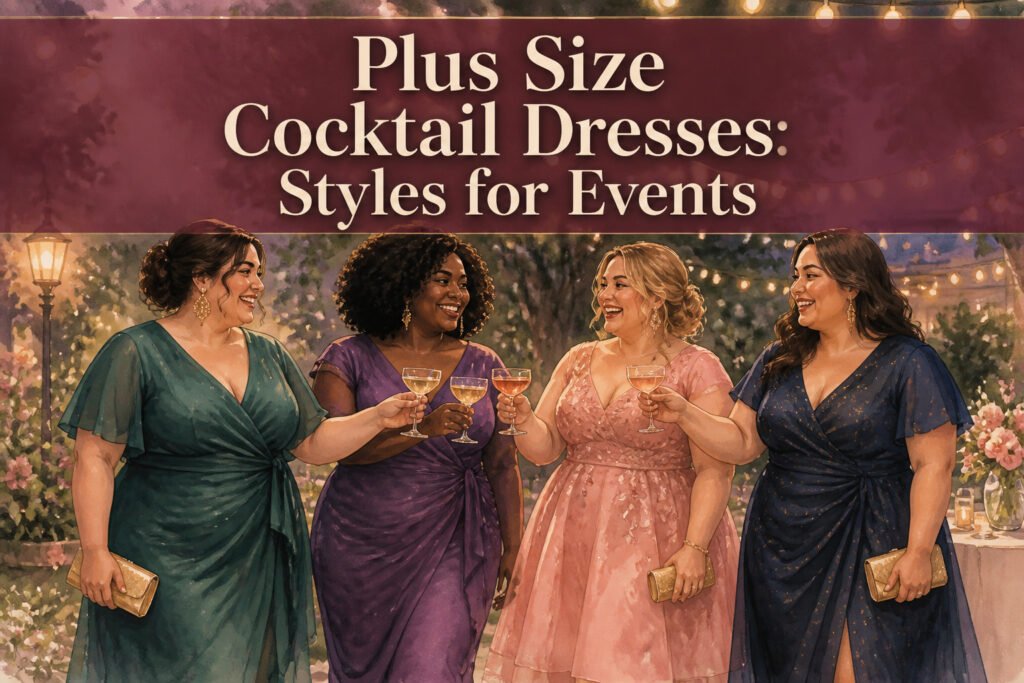
A well-chosen plus size cocktail dress does more than fit; it holds its shape through an evening of sitting, standing, and moving between rooms.
The difference between a dress that works and one that doesn’t usually comes down to construction details you notice only after you’ve worn it: a waist seam placed at the true waist, a lining that prevents creeping, or a skirt with enough structure to keep its volume past hour two.
Sizes run 10–32, though the number on the tag matters less than how the brand graded the pattern above 20.
Plus Size Bodycon Cocktail Dresses
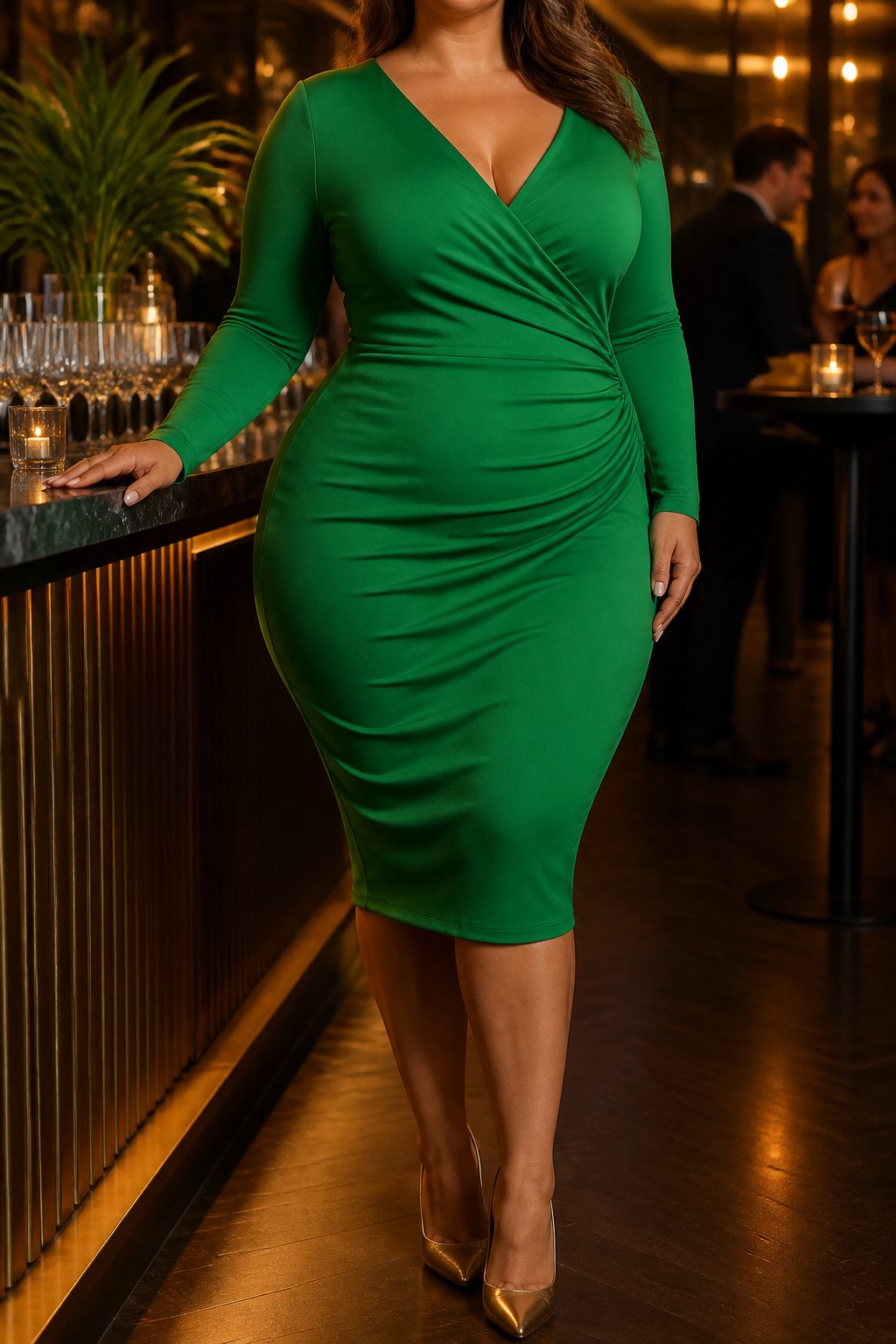
Stretch and seaming make or break a plus size bodycon cocktail dress on curves.
A good one uses panels that follow the body rather than squeeze it, with side seams that sit at the true waist and a lining that prevents the outer fabric from creeping.
Sizes run 10–32, though the fit changes dramatically across that range.
A bodycon works best when the event calls for confidence and the room temperature is predictable; thin jersey that breathes well will hold its shape through a seated dinner, while heavier ponte can feel like armor by hour three.
Watch for length that rides up when you sit, and for necklines that gap at the armhole on larger cup sizes. This silhouette rewards the patient shopper and punishes the rushed one.
Plus Size A-Line Cocktail Dresses
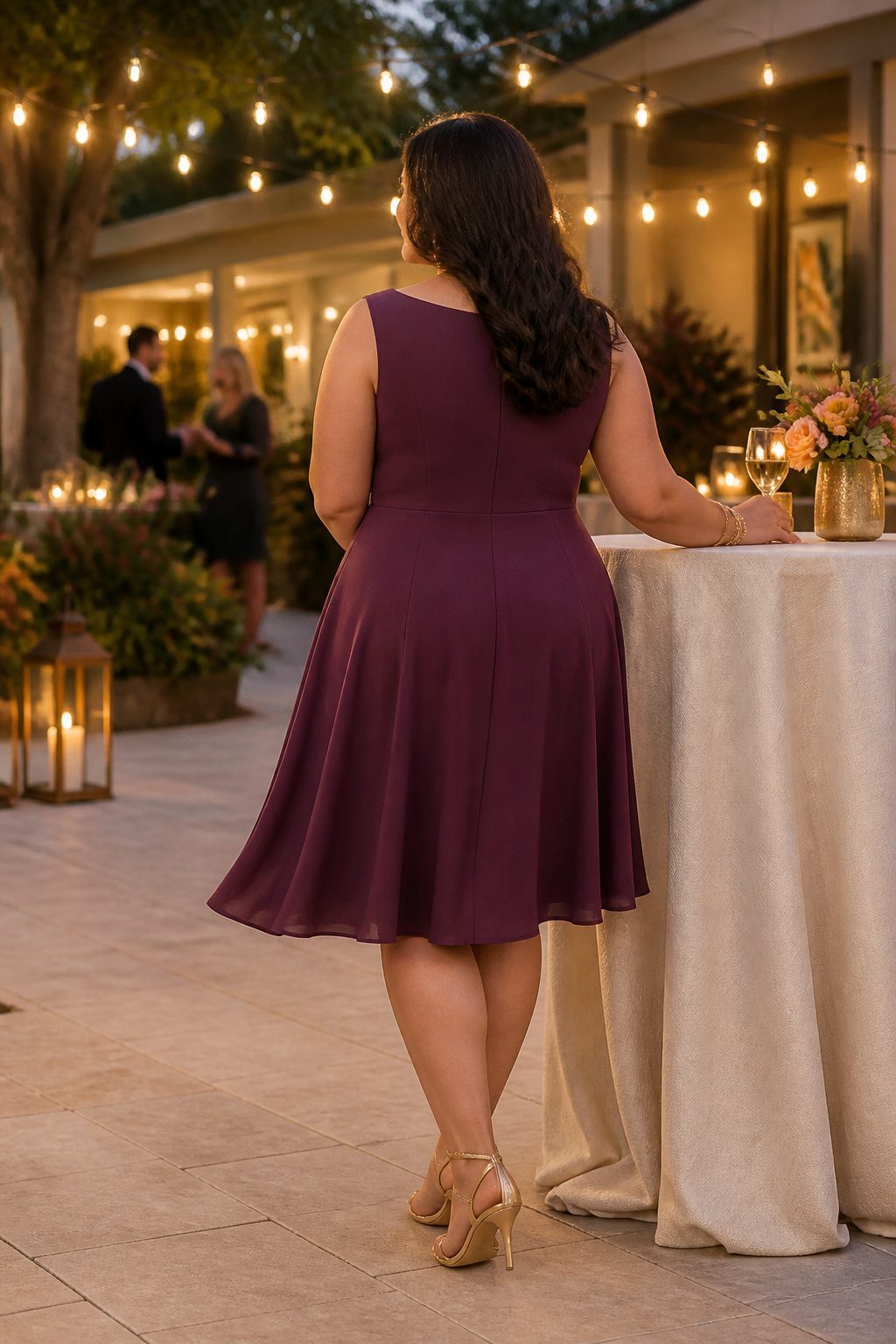
The A-line cut starts narrow at the shoulders and widens gradually toward the hem, forming that clean triangular silhouette that reads as polished without trying too hard.
It is the dress you reach for when you want to look intentional but not overdressed, and it has held that spot for decades because the shape does the work for you.
Fit and flare cinches at the waist and explodes into a skirt, which creates drama. The A-line skims past the waist and hips with a gentler slope, giving you movement without volume.
That difference matters in a crowded room: the A-line keeps its shape when you are seated at a cocktail table or reaching across a bar.
The cut suits almost every body shape, but it earns its keep on apple and rectangle figures. On an apple, the gradual flare balances a fuller midsection.
On a rectangle, it builds the illusion of a defined waist where there is less natural separation. Hourglass shapes can wear it, though they often prefer fit and flare for emphasis.
Pear shapes get enough hip room to avoid pulling, though the shoulder line can feel narrow compared to the hip; a boat neck or cap sleeve fixes that.
Plus Size Fit and Flare Cocktail Dresses
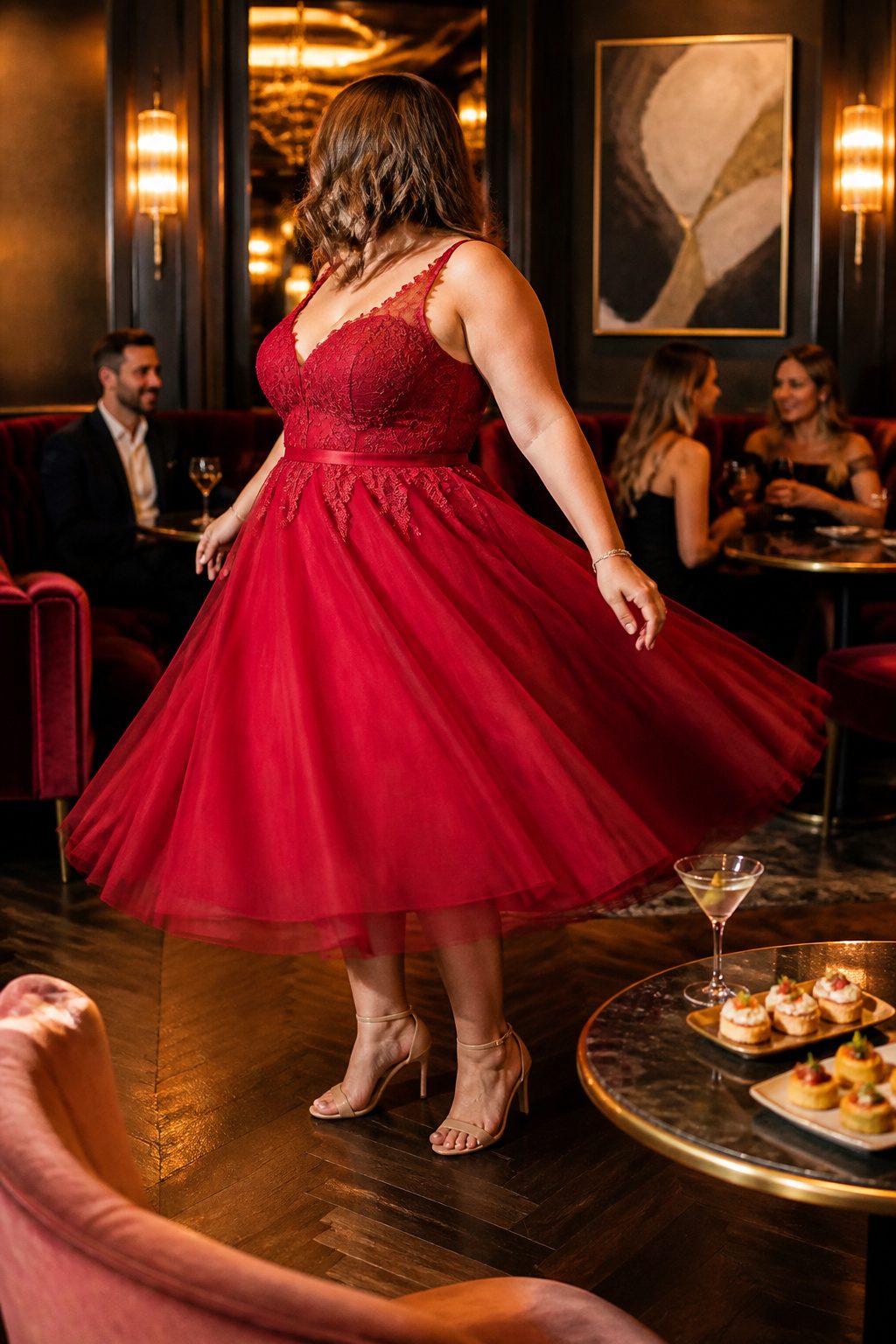
A fit and flare dress grips the bodice and waist, then kicks out from the hip into a skirt with real volume.
That construction matters for plus size cocktail dresses because the defined waist creates shape without clinging, and the fuller skirt moves independently of the thighs and midsection.
The difference from A-line is in where the flare begins: fit and flare starts at the waist, while A-line drops lower and skims the body without that same nipped-in definition.
The skirt needs enough structure to hold its shape through an evening of sitting and standing.
A limp fabric collapses into the hips and loses the silhouette entirely. Stiff tulle or a lined crinoline layer underneath solves this, though it does narrow your seating posture somewhat.
Occasion-wise, the drama of the skirt reads more party than boardroom.
Holiday gatherings, engagement celebrations, and any event where you will be photographed from the waist up suit this cut well. The proportions also balance beautifully under a cropped jacket if the room runs cold, which A-line volumes often do not.
Plus Size Mini Cocktail Dresses
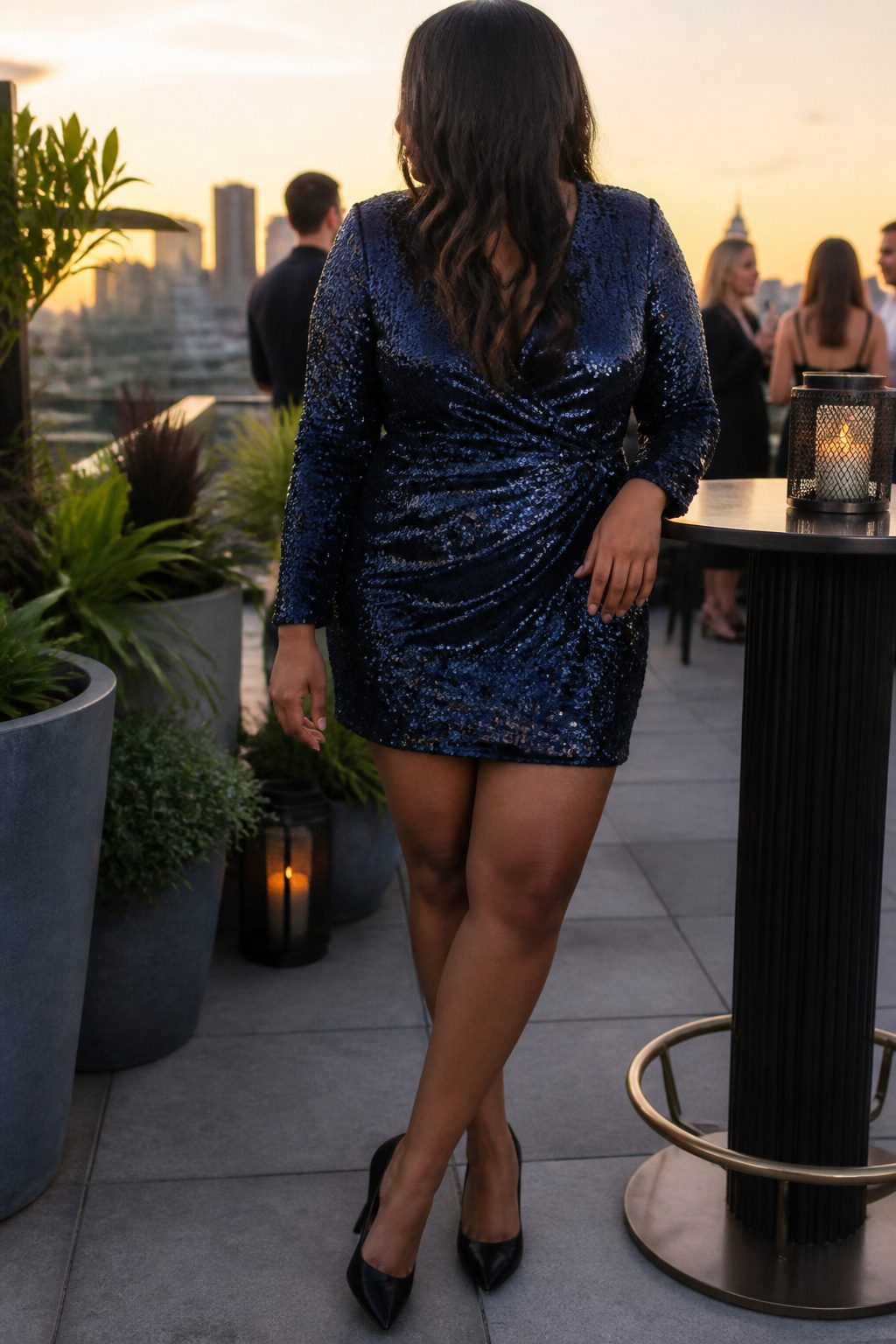
A mini cocktail dress in plus sizes typically hits mid-thigh, roughly two to four inches above the knee, which changes how you build the rest of the look.
The shorter hem means legs carry more visual weight, so hosiery and shoes do more work than they would with a midi or long dress.
Opaque tights in 60–80 denier keep the line clean and add warmth for winter events without looking like an afterthought.
Sheer stockings can feel dated against bare skin at this length; if you want sheerness, a micro-dot or small pattern reads more intentional. For shoes, a closed-toe pump or ankle-strap heel anchors the dress.
A platform or chunky heel adds stability and keeps the proportion from tipping too delicate, especially with bodycon or sequin minis that already read party-forward. A nude heel lengthens; black keeps it evening.
The mistake I see most often is treating a mini like it needs more coverage on top to balance the leg.
It does not. A one-shoulder, deep V, or open back works fine if the fit through the hips and waist is secure.
What fails is a shoe that disappears, like a barely-there sandal with no platform, which can make the whole outfit look incidental rather than chosen.
Plus Size Midi Cocktail Dresses
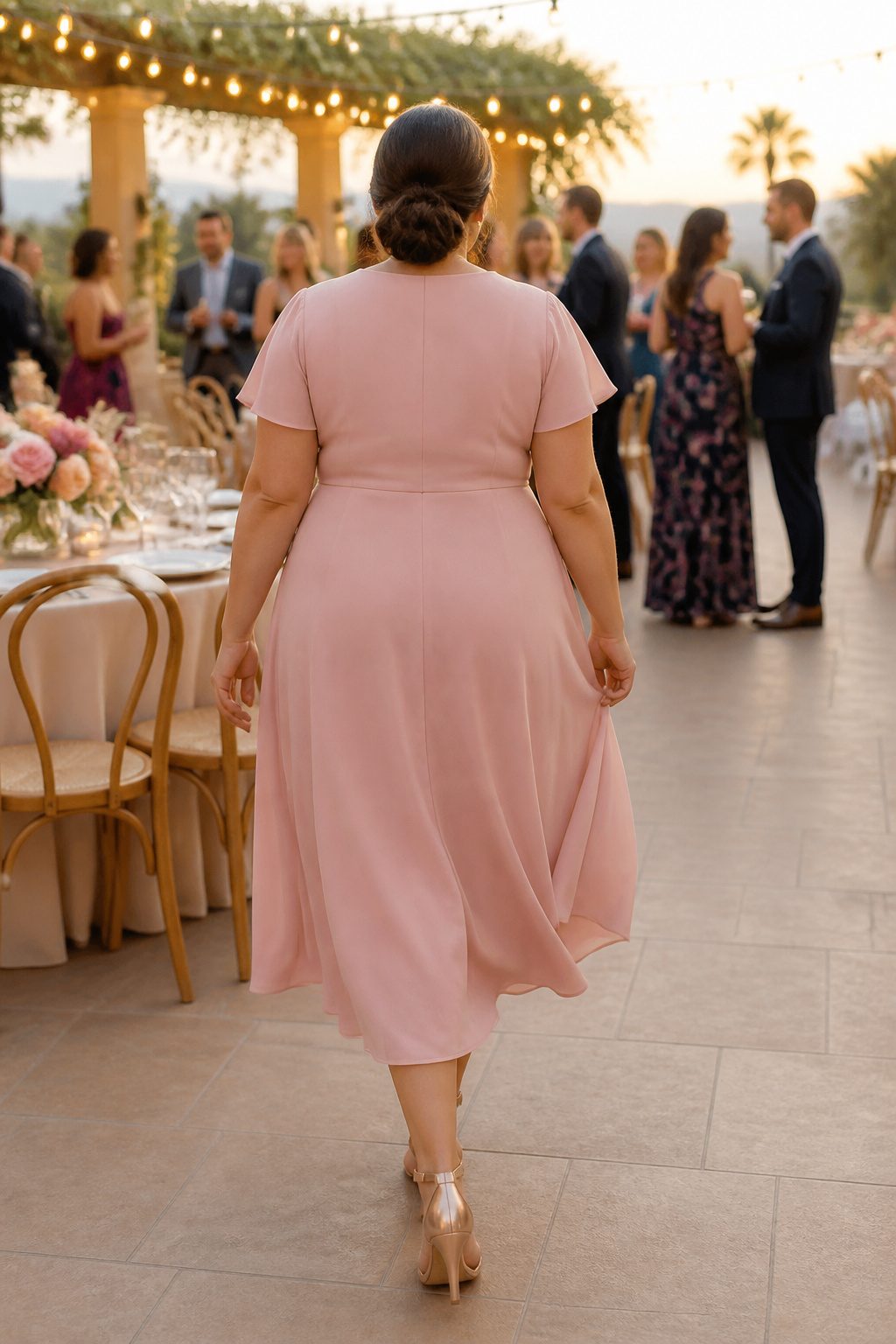
The midi hits somewhere between the bottom of the calf and the top of the ankle, a zone that keeps you warm in a January restaurant and cool enough for a July garden party without changing the dress.
That narrow band of leg is doing more work than most people notice.
It elongates the line from hip to heel without the leg-baring commitment of a mini or the floor-sweeping formality of a gown, which means one midi plus size cocktail dress covers office holiday gatherings, courthouse weddings, and seated dinners where you do not want to be the person fussing with a hemline.
Sleeve length becomes the seasonal dial. Three-quarter sleeves with a heavier fabric carry the same cut through fall, while a sleeveless version in breathable material reads right for spring.
The waist seam placement matters more here than in shorter lengths because there is more fabric below it to balance.
A seam that sits at the natural waist, or just slightly above, keeps the proportions from reading dowdy; anything lower and the dress starts to look like a tent you are standing inside.
I have seen that mistake enough times in fitting rooms to know it is not the body, it is the architecture of the dress.
Plus Size Long Cocktail Dresses
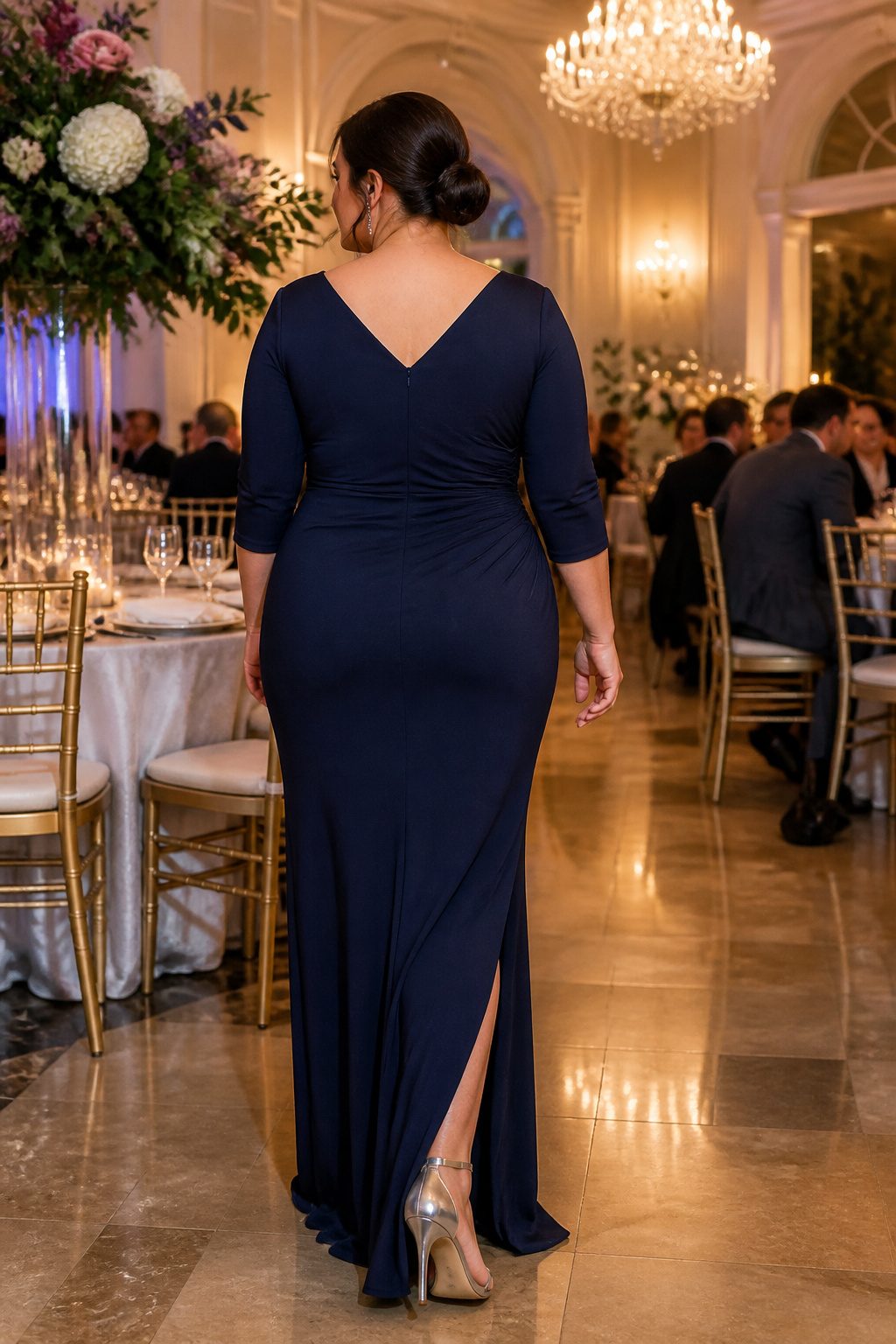
Floor-length plus size cocktail dresses walk a narrow line. The fabric has to do the work of keeping the look event-ready rather than ballroom-bound.
A crepe or lightweight jersey with some body keeps the skirt moving instead of pooling, and a slit, even a modest one, breaks the vertical block so the eye reads "party" instead of "gala."
The heel question matters more here than with shorter lengths. A true floor-sweeper needs at least two and a half inches of height, or the hem drags and the wearer looks shorted rather than elongated.
Three inches is the practical ceiling before the foot starts to dominate the silhouette; block heels or a thick tapered shape give that lift without the instability of a stiletto under a heavier skirt.
If the dress is cut to graze the top of the foot rather than the floor, a lower heel works, but the cleaner line almost always comes from the longer hem and the taller shoe together.
Color and surface help too. Solid midnight or forest reads softer than sequins or high shine, and a matte finish keeps the length from registering as black-tie territory.
What convinced me, reading through how these pieces actually get worn, is that the women who pull this off treat the long cocktail dress as a specific choice, not a safe default.
Plus Size Velvet Cocktail Dresses
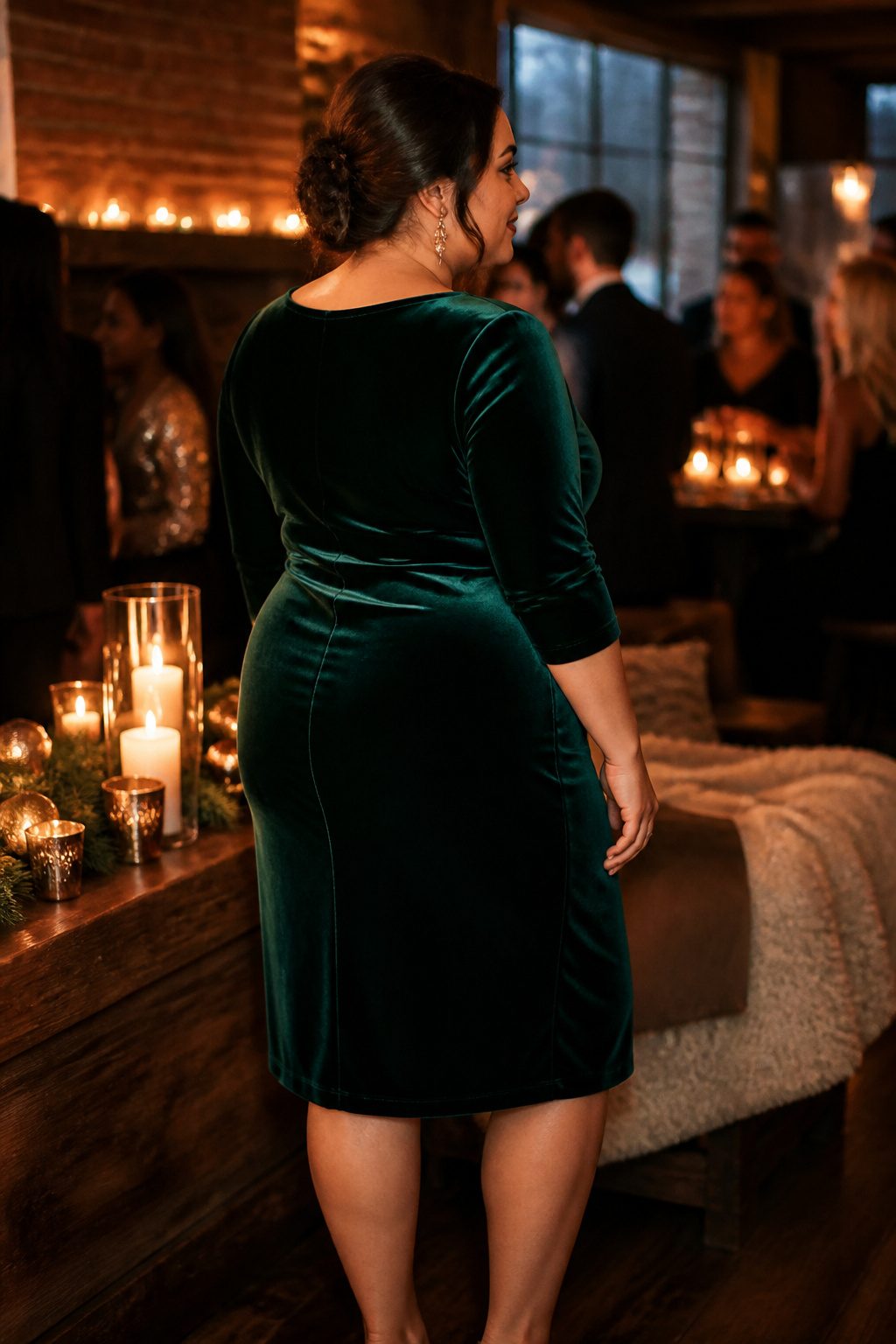
Velvet reads as expensive under dim event lighting, which is half the reason it works so well for cocktail hours in late fall through winter.
The pile catches candlelight differently than flat weaves, and on a fuller figure that sheen can add dimension where matte fabrics fall flat.
Run your hand upward and downward before buying: velvet drapes heavier when the pile lies smooth from shoulder to hem, but reversed it can bulk at the hips and thighs in ways that read as stiff rather than fluid.
Dry-cleaning is non-negotiable for anything with real cotton or silk content; the crush marks from a home washer do not recover. Polyester velvet holds up better to travel and repeated wear, though the hand feels less plush.
I look for a minimum 12 percent stretch in the blend, enough to sit through a seated dinner without the dress riding up at the waistline.
Plus Size Strapless Cocktail Dresses
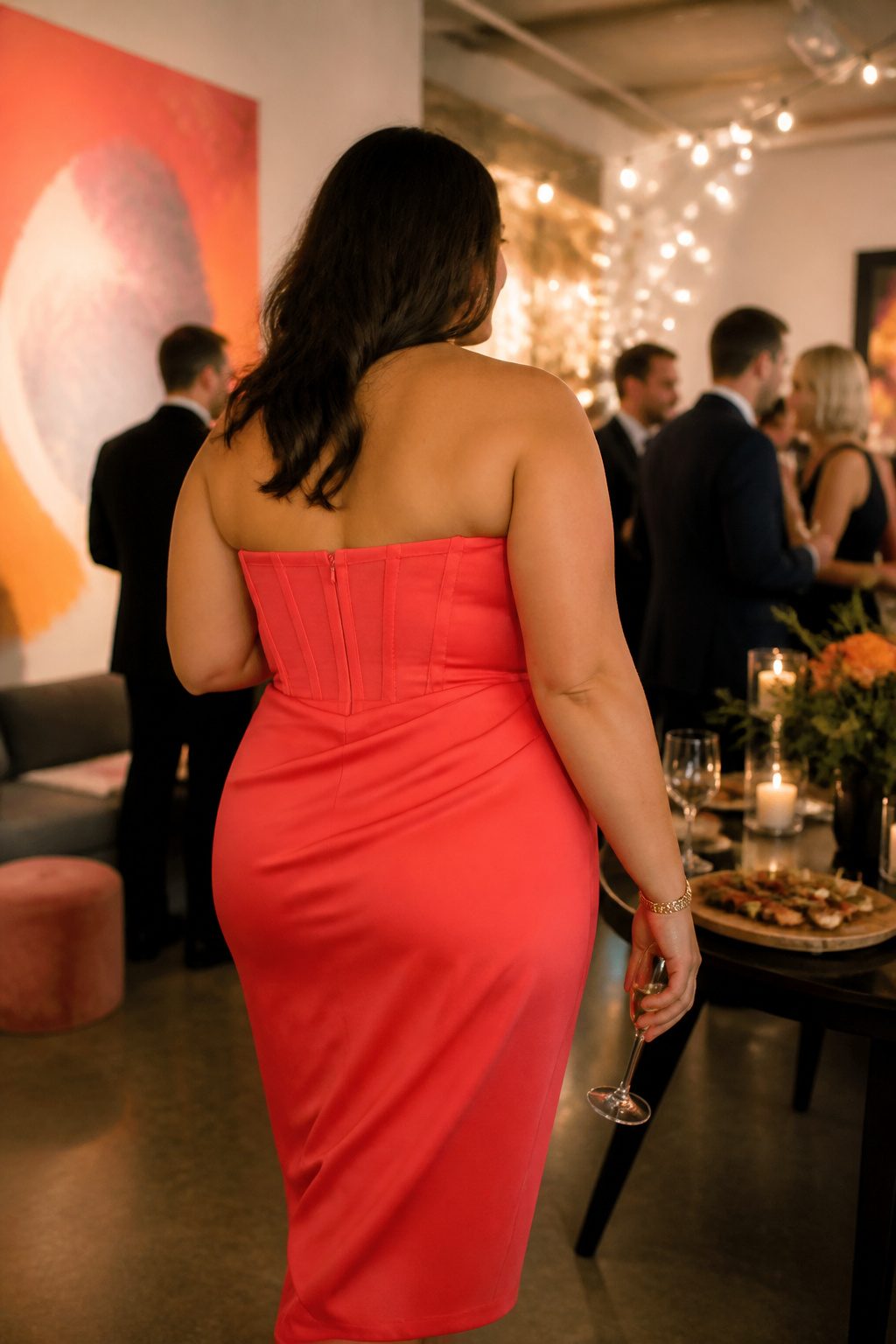
Strapless plus size cocktail dresses live or die by what you cannot see. Internal boning and gripper elastic at the waistband do the actual work of holding the dress up, not the zipper in back.
A bodice with vertical boning channels spaced close together, roughly every two inches, distributes weight so the dress does not sag in front or pinch at the sides.
I have learned to reach inside the neckline and feel for the boning ends; they should be capped in fabric, not poking through, and the bodice lining should be a separate layer stitched firmly to the outer shell.
The sit-down test separates a usable strapless dress from one that will spend the evening in your lap. Before buying, sit in a chair and lean forward slightly.
If the bodice slides even an inch, the dress lacks structure for your frame. A well-built strapless bodice stays level through the ribcage without constant hoisting.
For events longer than two hours, I look for dresses with optional clear straps or convertible ties hidden inside the bodice. They stay invisible in photos and give your shoulders a rest during dinner.
Plus Size Elegant Cocktail Dresses
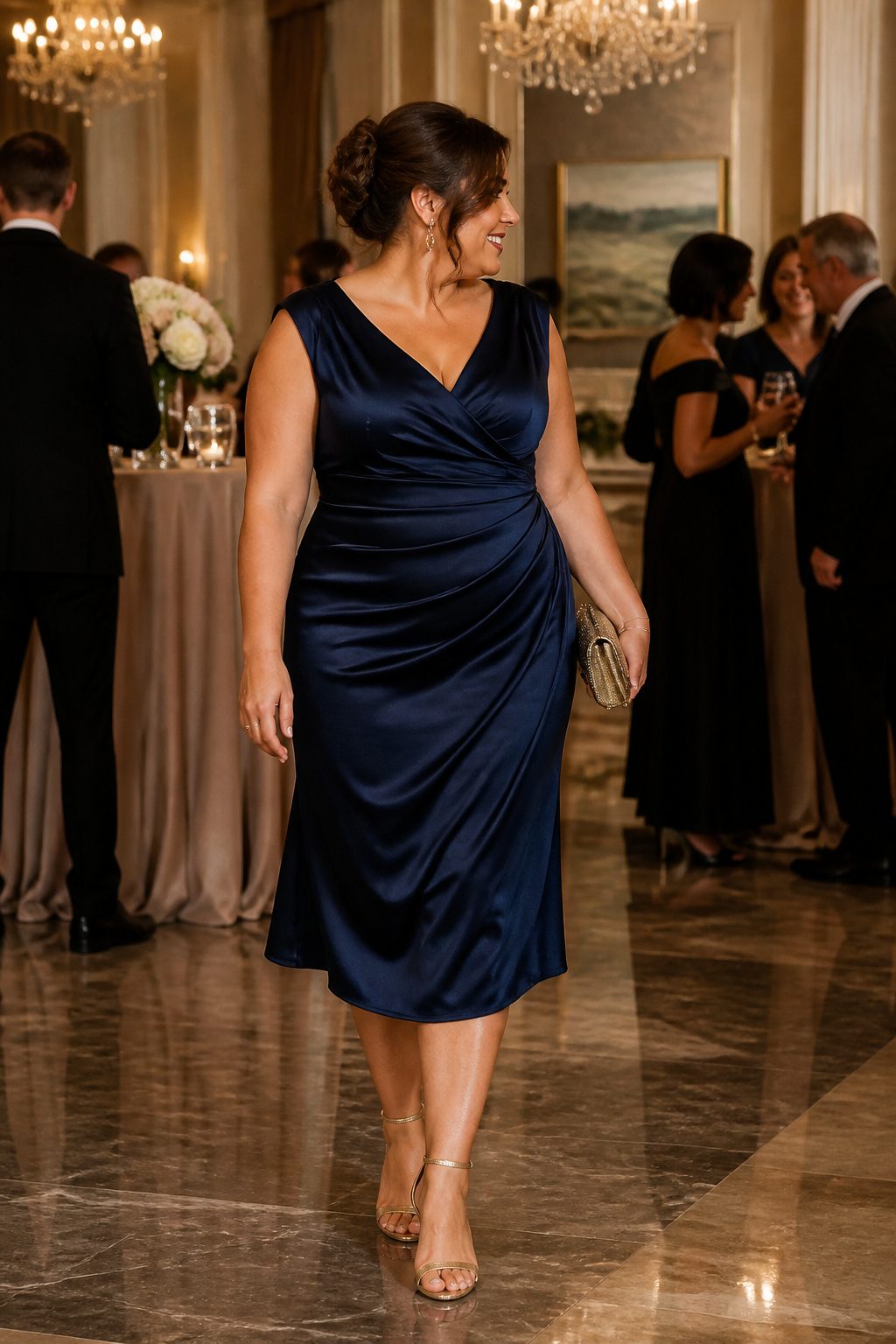
What separates a cocktail dress from an elegant one usually comes down to three things working together: the fabric’s weight and hand, the cut’s restraint, and the finishing you only notice up close.
Polyester jersey with a glitter overlay reads party-ready; a crepe or heavier satin that falls in clean planes reads expensive.
The bodycon and A-line shapes that retailers like Dia & Co list in their cocktail range can both achieve this, but the elegant version keeps ornament minimal, a single sequin accent or a well-placed drape rather than all-over embellishment.
Finishing details matter in plus sizing because construction has more work to do.
A lined bodice, a waist seam that sits at the natural waist rather than empire, and a hem that skims the knee or midi point without clinging, these are the markers.
Sizes 10 through 32 need the same structural integrity: boning or substantial interfacing at the neckline, a zipper that runs smoothly under tension, and sleeves set with enough ease that movement doesn’t strain the seam.
The velvet and fit-and-flare options in current plus collections hit this mark when the velvet has a cotton or silk backing rather than stretch polyester, and when the flare starts at the hip, not the waist, to keep the line vertical.
Color plays its part too. A holiday red or an ivory white cocktail dress carries more formal weight than the same cut in a busy floral.
The black cocktail dress remains the safest pivot to elegance, but only if the fabric has dimension, a matte crepe or a subtle rib, rather than flat, thin jersey that photographs as office wear.
Plus Size Holiday Party Dresses
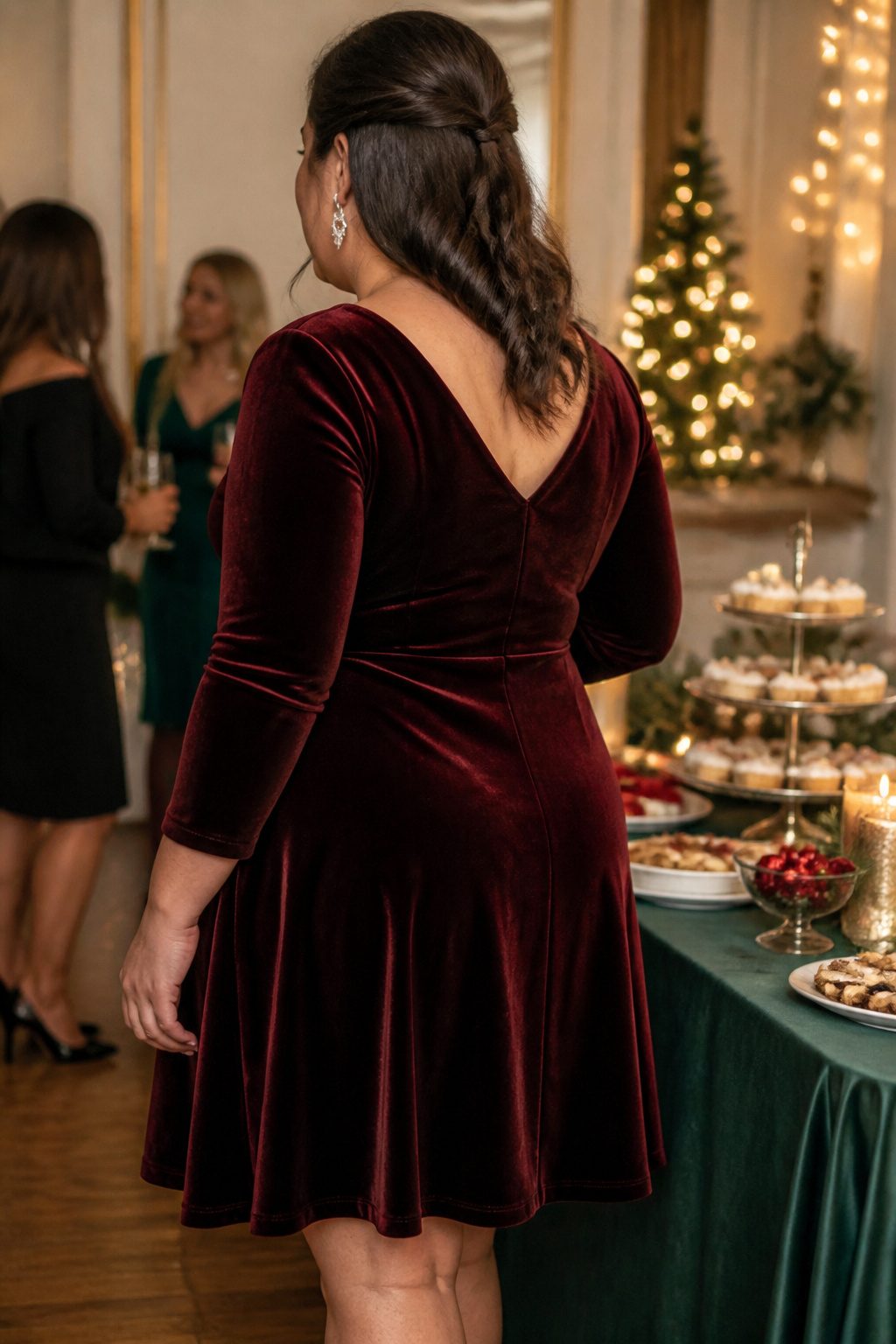
Holiday parties ask for color and texture in ways a standard cocktail dress doesn’t always deliver.
Deep reds, emerald greens, and winter whites read as seasonal without needing a literal motif, while velvet, satin, and sequin finishes catch dim light the way matte fabrics simply don’t.
A velvet special event dress in a midi length gives that plush, light-absorbing depth that photographs well against twinkle lights, and the weight of the fabric drapes rather than clings.
Sequin minis work here too, though the ones that last past one season tend toward denser coverage and slightly longer hemlines than the bare-minimum party staple.
Sleeve length matters more in December than in June; long sleeves in a jersey knit or ponte hold warmth without the bulk of a coat check pile, and 3/4 sleeves split the difference if the venue runs hot.
Fit-and-flare shapes dominate holiday offerings for good reason: they accommodate a structured underlayer if needed and move easily from greeting drinks to dinner seating without adjusting.
The embellishments worth paying for are the ones sewn on, not glued; check the interior lining for scratch points before committing.
Plus Size Semi-Formal Cocktail Dresses
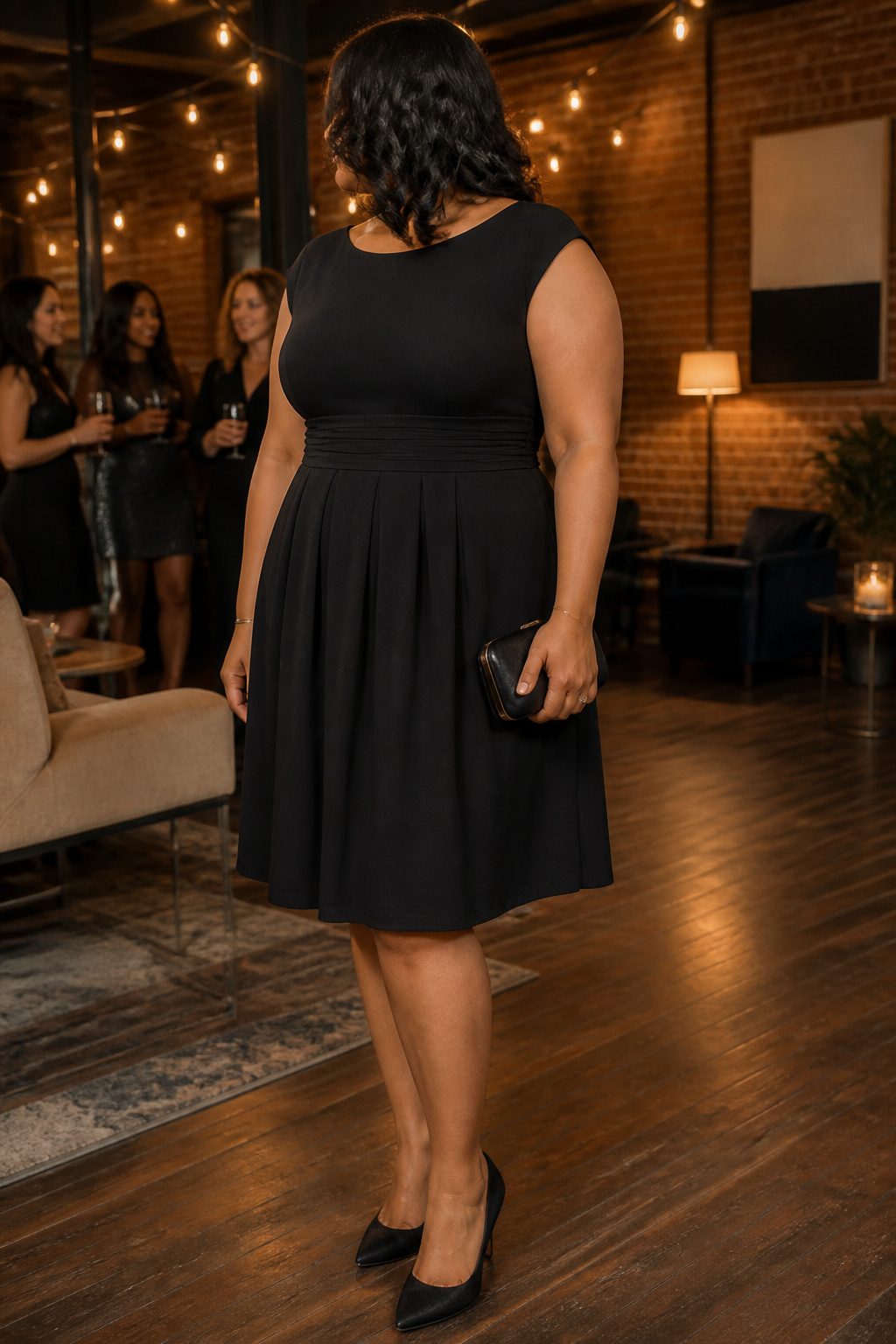
Semi-formal sits in the middle of the dress-code ladder, and cocktail length is exactly where it lives.
A plus size cocktail dress in this category hits somewhere between mid-thigh and just below the knee, though a midi that grazes the calf still reads as semi-formal if the fabric has some structure to it.
The line you do not want to cross is floor length; once a dress sweeps the ground, you have moved into black-tie territory regardless of how the invitation phrased things.
Fit matters more than ornament here. Sequin minis and bodycon styles can work for semi-formal events, but the celebration should feel like a party rather than a ceremony.
An A-line silhouette in a heavier material tends to read correctly across the widest range of semi-formal occasions because it carries enough polish without trying for the red carpet.
Sizes 10–32 are available across these cuts, so the question is less whether the dress exists and whether the specific event skews closer to cocktail or closer to formal.
When the invitation says semi-formal, a knee-length cocktail dress with clean lines is the safest bet.
Plus Size Chic Party Dresses
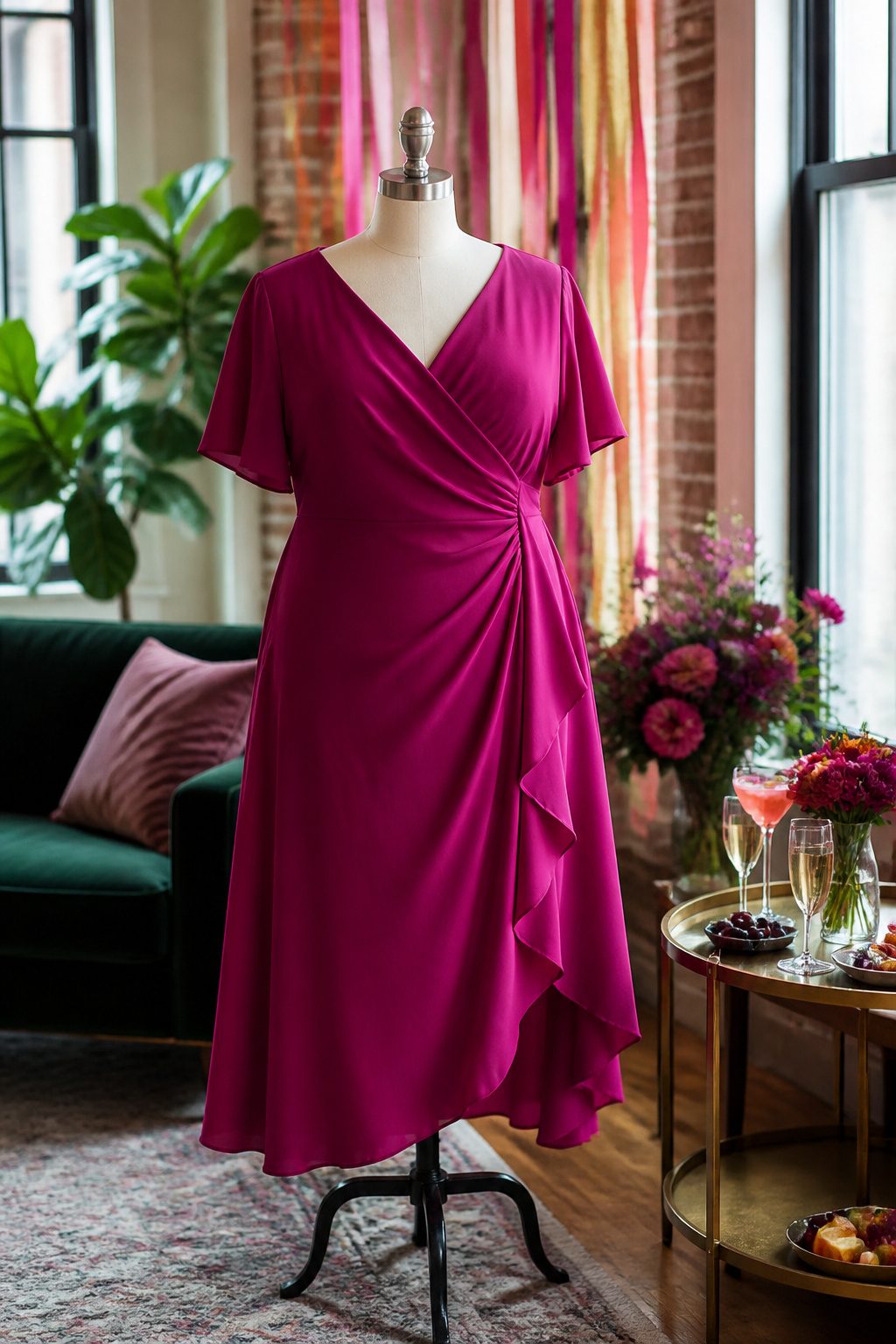
The invitation says cocktail attire, but the host is pouring wine in a kitchen with a playlist running off a phone. That gap between dress code and reality is where chic party dresses earn their keep.
A sequin mini reads try-hard for this room; a sleek bodycon in a softer fabric, maybe a matte jersey or a light crepe, moves with the looseness the night actually has.
A-line silhouettes work here too, though the hem can creep shorter than you’d wear to a seated dinner.
Standing-room gatherings need fabric that forgives leaning against counters or perching on armrests. Sizes 10 through 32 cover most of what you’ll find in this lane, and the cut matters more than the embellishment.
An open back or an asymmetric neckline gives the dress enough interest that you won’t feel underdressed if someone did interpret "cocktail" more formally.
Colorblock patterns and solid deep tones both play well in dimmer rooms. What you want to avoid is anything that demands constant adjustment: strapless bodices that need hiking, or skirts so fitted you can’t sit on a low sofa.
The best piece in this category is the one you stop thinking about once you’re wearing it.
Plus Size Dresses for Evening Parties
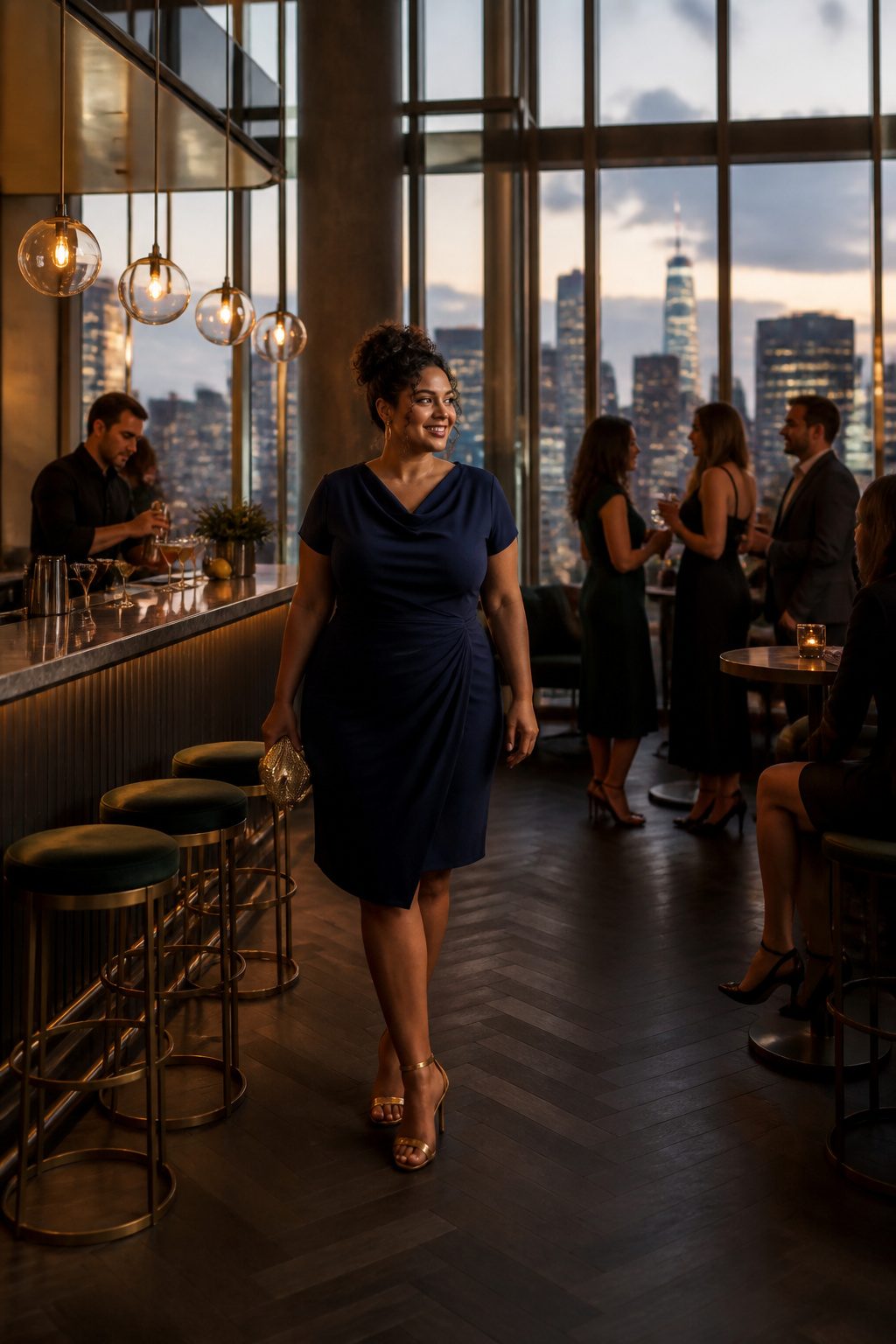
The fabric you pick for an evening party matters more than it does at a daytime wedding.
Under chandeliers or uplighting, lighter materials can read as cheap or sheer in ways sunlight never reveals. A mid-weight crepe or double-knit holds its structure and its color saturation once the room goes dim.
I learned this the hard way at a gallery opening two winters ago, watching a blush chiffon dress turn practically neon under LED spots while the woman beside me in midnight sapphire matte jersey looked consistently expensive from every angle.
Temperature drops are the other evening factor nobody mentions until you’re shivering in the parking garage.
A sleeveless dress that felt perfect at 7 PM becomes a mistake by 10. Three-quarter sleeves, a draped cowl, or even a substantial cap sleeve buys you hours of actual comfort without sacrificing the cocktail dress code.
If you run warm, a lower back or a slit gives the heat somewhere to escape while the rest of you stays covered.
Size Range and Fit
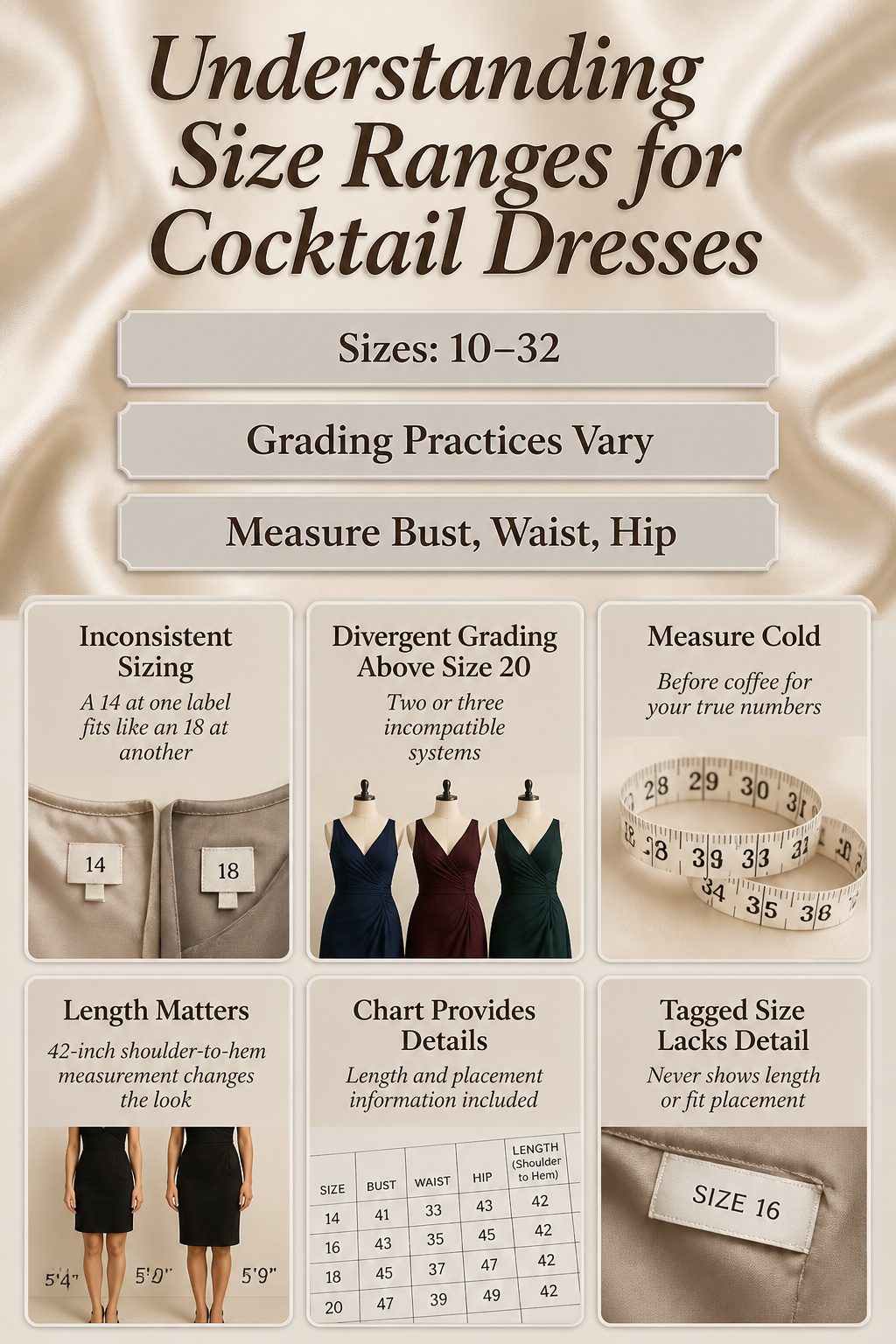
Most plus-size cocktail dresses run sizes 10–32, though the number on the tag is where the trouble starts.
A 14 at one label fits like an 18 at another, and the difference only widens above size 20, where grading practices split into two or three incompatible systems.
What actually works is measuring yourself cold, before coffee, and comparing those numbers to each brand’s chart.
Bust, waist, and hip, in that order. The bust point matters especially in cocktail cuts, where a dart placed an inch too high turns a fitted bodice into a shelf.
I check the waist measurement last because many cocktail styles sit at the natural waist, but bodycon and fit-and-flare versions land lower, and the chart will tell you which if you read far enough.
Size charts also list length, which saves returns.
A 42-inch shoulder-to-hem measurement hits mid-thigh on a 5’4" frame and knee-length on someone 5’9". The tagged size never carries that detail.
Fabric Types and Care
Chiffon floats away from the body, which sounds forgiving until you realize it can also cling where you don’t want it.
Satin has the opposite problem: it shows every line underneath but reflects light in a way that reads expensive from across the room.
Velvet solves both issues by eating light instead of bouncing it, though it photographs darker than it looks in person and runs warm fast.
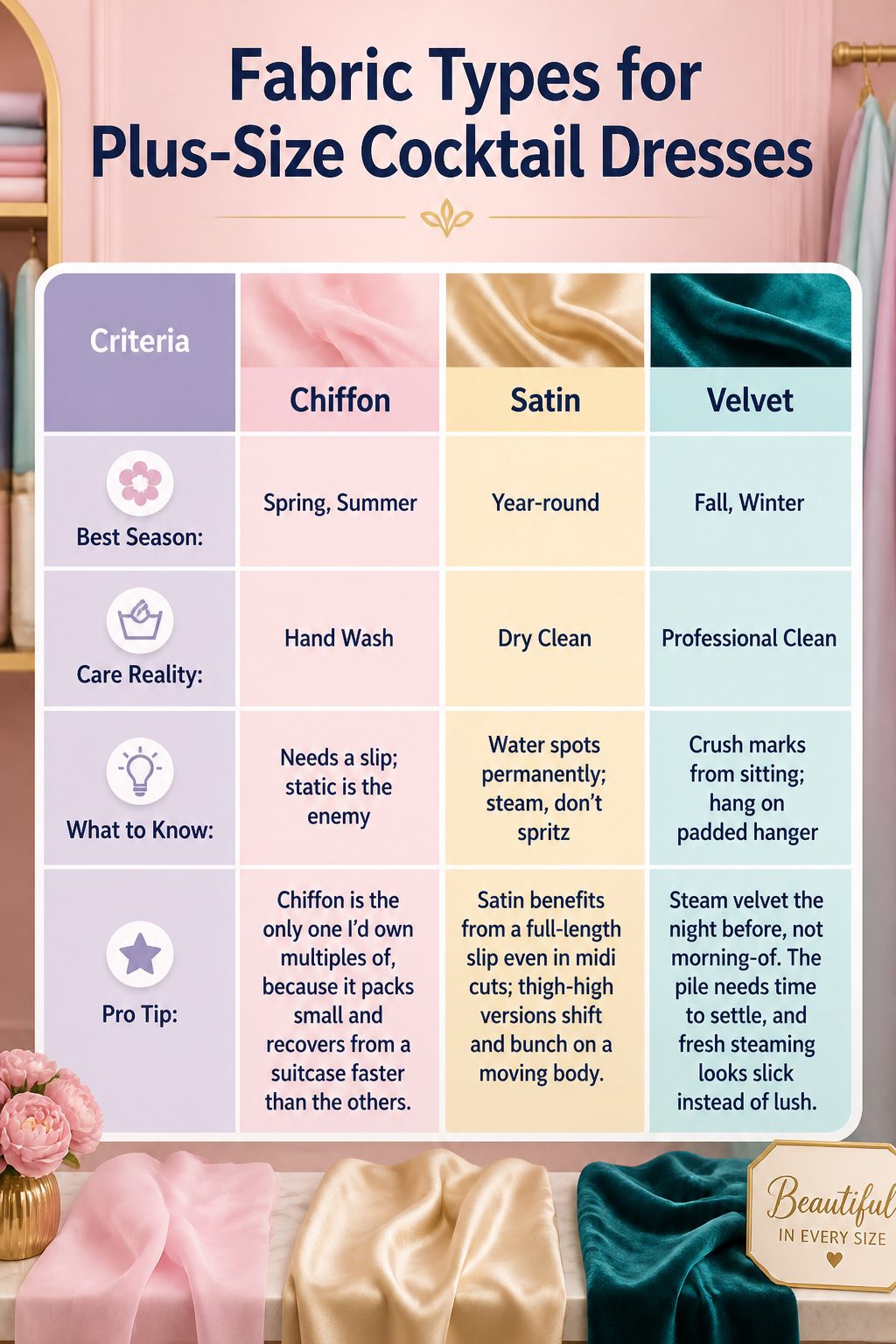
| Fabric | Best season | Care reality | What to know |
|---|---|---|---|
| Chiffon | Spring, summer | Hand wash or delicate cycle | Needs a slip; static is the enemy |
| Satin | Year-round; peaks at holidays | Dry clean usually | Water spots permanently; steam, don’t spritz |
| Velvet | Fall, winter | Professional clean | Crush marks from sitting; hang on padded hanger |
Steam velvet the night before, not morning-of.
The pile needs time to settle, and fresh steaming looks slick instead of lush. Satin benefits from a full-length slip even in midi cuts; thigh-high versions shift and bunch on a moving body.
Chiffon is the only one I’d own multiples of, because it packs small and recovers from a suitcase faster than the others.
Occasion Matching
The same dress reads completely different depending on where you stand. A velvet wrap that owns a December office party can sink a June outdoor wedding in ten minutes of humidity.
What convinced me, reading through dozens of event photos and return reviews, is that length and fabric do more of the signaling than cut does.
A knee-length crepe or structured jersey works for nearly every work function and daytime semi-formal event; it looks intentional without trying for glamour the room didn’t ask for.
Midi lengths in heavier satins or light velvets shift into evening wedding territory, especially with a darker palette.
Holiday gatherings are where you can run shorter or more ornate: metallics, sequins, and shorter hems read festive rather than underdressed when the calendar says December.
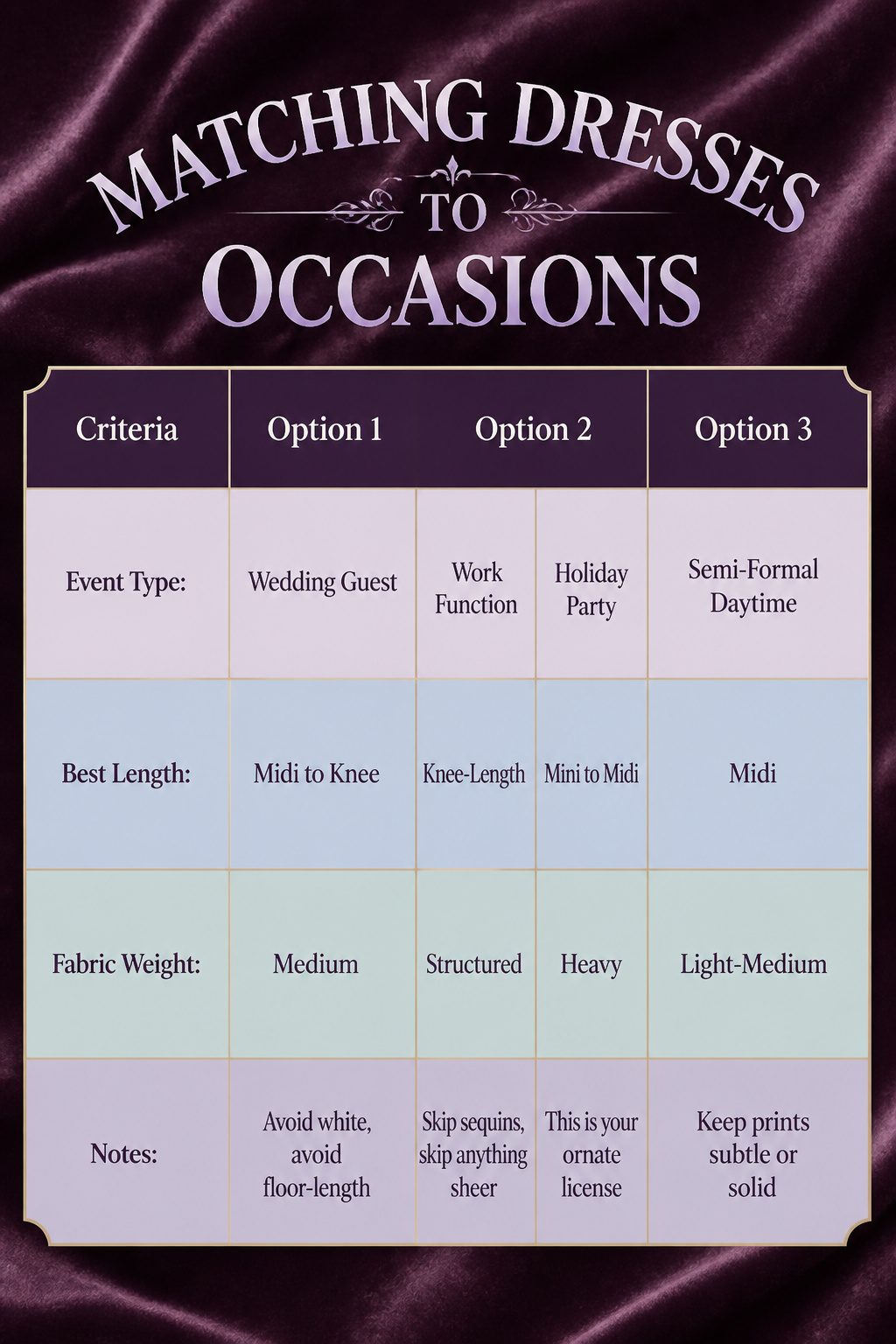
| Event Type | Best Length | Fabric Weight | Notes |
|---|---|---|---|
| Wedding guest | Midi to just-below-knee | Medium: crepe, satin, light velvet | Avoid white, avoid floor-length |
| Work function | Knee-length | Structured: ponte, heavy jersey, crepe | Skip sequins, skip anything sheer |
| Holiday party | Mini to midi | Heavy: velvet, brocade, metallics | This is your ornate license |
| Semi-formal daytime | Midi | Light-medium: cotton blend, linen-look | Keep prints subtle or solid |
Outdoor summer events are the trap. Satin and anything fully lined in polyester trap heat; a lighter-weight crepe or even a substantial cotton sateen keeps the shape but lets you move.
Frequently Asked Questions
What styles of plus-size cocktail dresses are available?
The main styles are bodycon, A-line, fit and flare, mini, midi, long, velvet, strapless, and elegant cuts.
Bodycon uses stretch panels that follow curves without squeezing, A-line widens gradually from shoulder to hem for a clean triangular shape, and fit and flare grips the bodice before kicking out from the hip into a fuller skirt.
What occasions are plus-size cocktail dresses suitable for?
They work for holiday gatherings, engagement celebrations, semi-formal events, evening parties, work functions, and courthouse weddings.
The same dress reads differently depending on the room: knee-length crepe suits nearly every work function, while midi satins or light velvets shift into evening wedding territory, and holiday parties are where shorter hems and metallics read as festive rather than underdressed.
What sizes do plus-size cocktail dresses come in?
Most run sizes 10 through 32, though the number on the tag varies widely by label.
A 14 at one brand can fit like an 18 at another, and the difference only widens above size 20. Measuring yourself cold and comparing to each brand’s specific chart for bust, waist, and hip works better than trusting the tagged size alone.