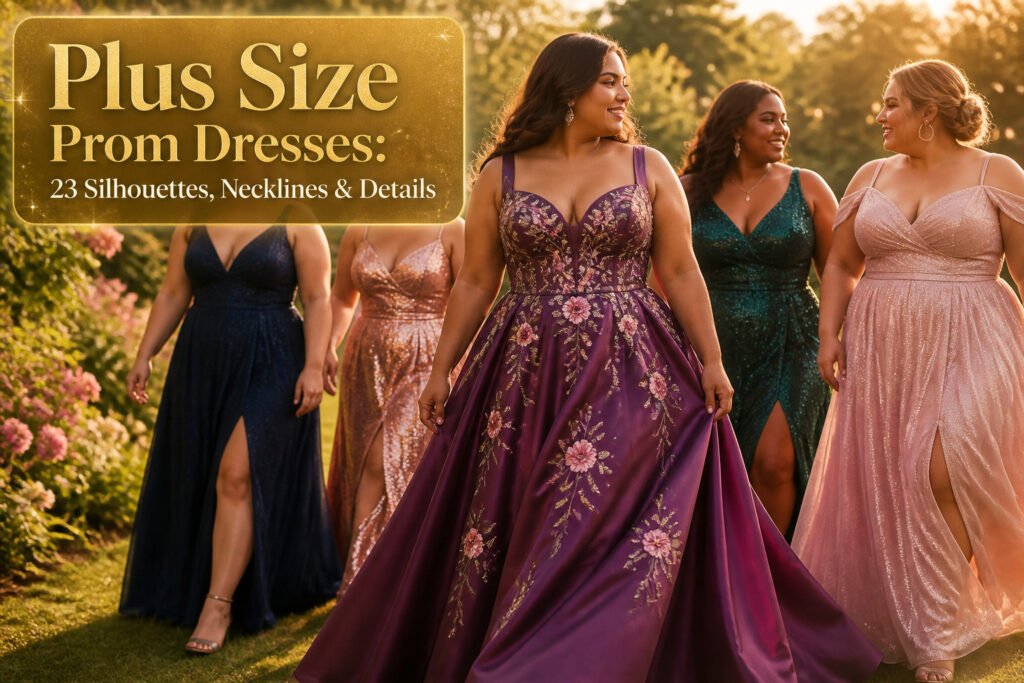
Plus size prom dresses are formal gowns cut in sizes 14 and up, built with the same silhouettes as straight-size formalwear but graded and structured differently at the bust, waist, and hip.
The difference between a dress that photographs well and one you can actually sit in for dinner usually comes down to whether the bodice has functional boning or just decorative lacing that stretches out by hour three.
A JJ’s House satin A-line with corsetry starts at $164; the same price in a stretch bodice will need constant adjustment on the floor.
Ball Gown
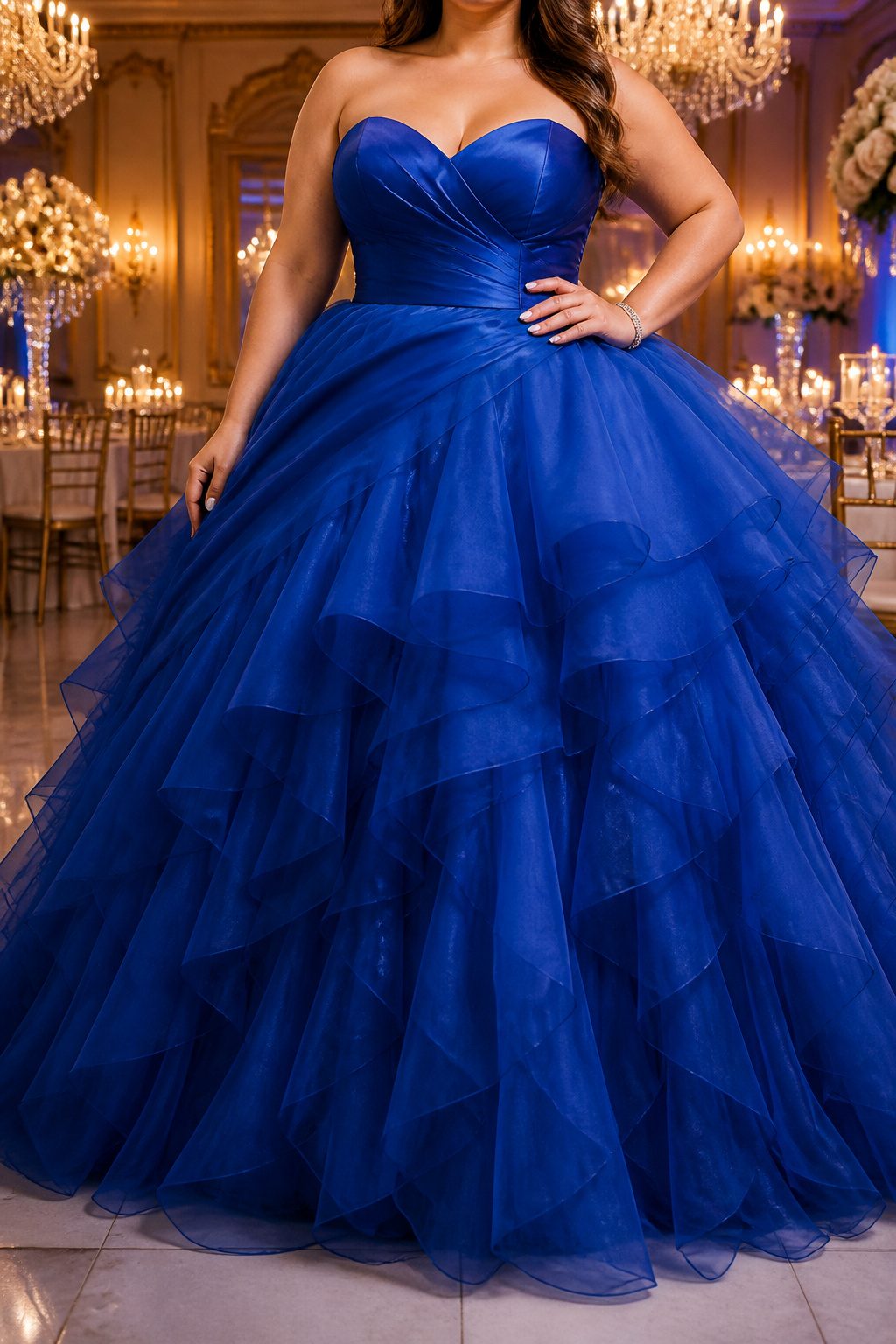
The ball gown is one of the most widely stocked silhouettes among plus size prom dresses, and that availability matters when you are already narrowing a field by size and need options that actually ship.
A fitted bodice seams directly into a full, voluminous skirt, usually built from tulle or layered satin that holds its own shape without clinging.
That structure does a specific job for fuller hips. The skirt starts at the natural waist and falls straight into volume, so the fabric never skims the hip line.
The contrast between the close bodice and the exploded skirt creates waist definition mechanically; you are not depending on stretch or ruching to suggest a shape.
The bodice stays put because it is fitted, not because you are pulling it in.
Prices for this silhouette start around $134 in satin and run closer to $249 for long-sleeve beaded tulle, with most landing between $159 and $209.
The range means you are choosing between fabric weight and ornament, not between "budget" and "luxury" as if those were different silhouettes entirely.
A-line
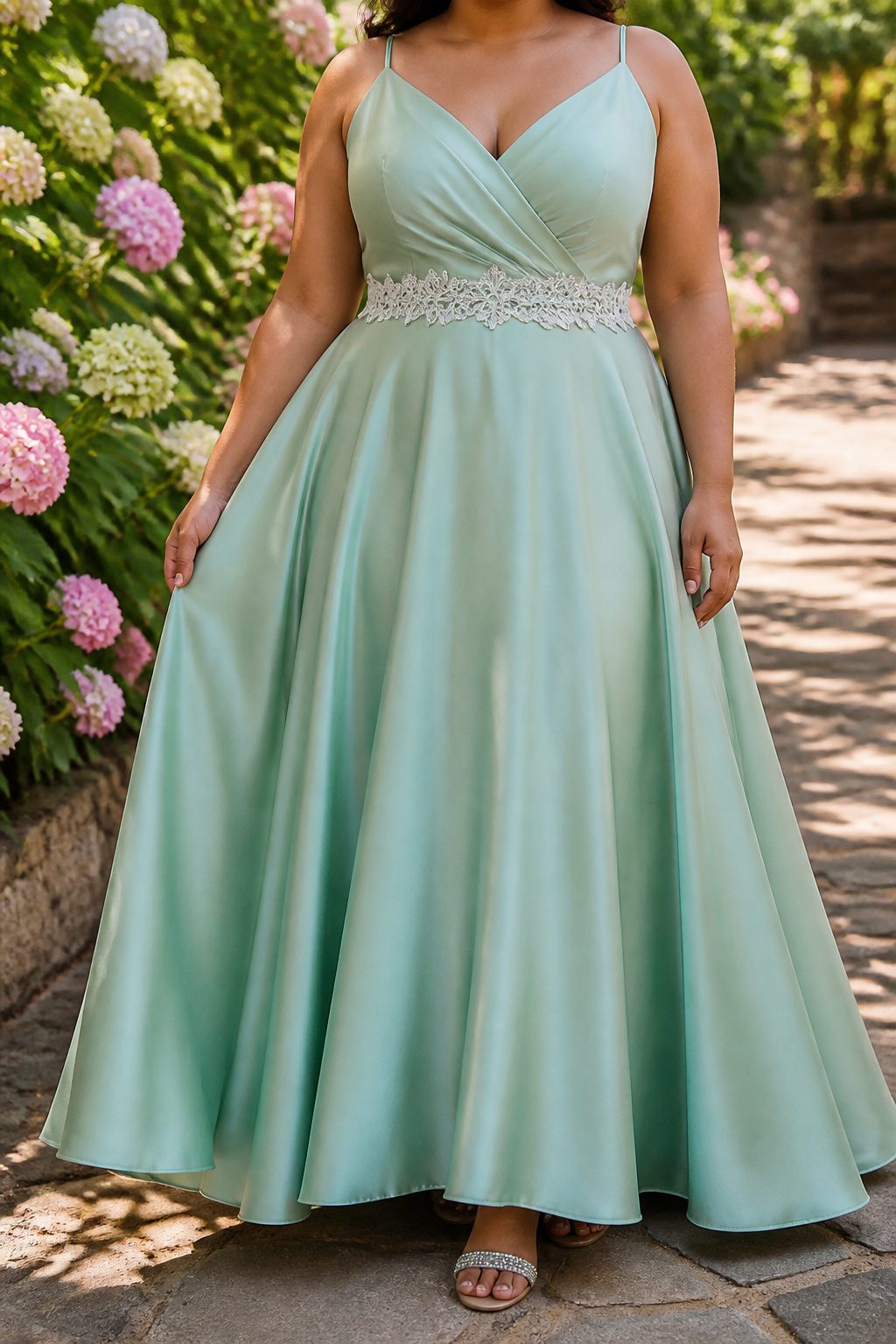
The A-line silhouette widens gradually from the shoulder to the hem, which is why it reads as the most forgiving shape for plus size prom dresses.
Fabric skims rather than clings, and the eye travels in a clean vertical line. A true A-line needs no crinoline to hold its shape; the cut itself does the work.
JJ’s House builds much of its plus-size range around this geometry. The Avonlea Peacock A-line Off the Shoulder Sleeveless Slit Satin Dress sits at $164, with the satin falling in that controlled flare.
At $194, their A-line/Princess Off-the-Shoulder Half Sleeve Long/Floor-Length Satin Prom Dress adds coverage while keeping the same line through the body. Both rely on the shoulder-to-hem progression rather than any waist emphasis.
David’s Bridal is pushing the shape forward this season with newer stock.
The Sculpted Brocade Tiered A-Line Dress arrived as a new arrival, and the brocade gives the skirt tiers enough body that the A-line reads architectural rather than merely safe.
That distinction matters: an A-line can flatten into generic, or it can use the structure as a deliberate choice.
Mermaid
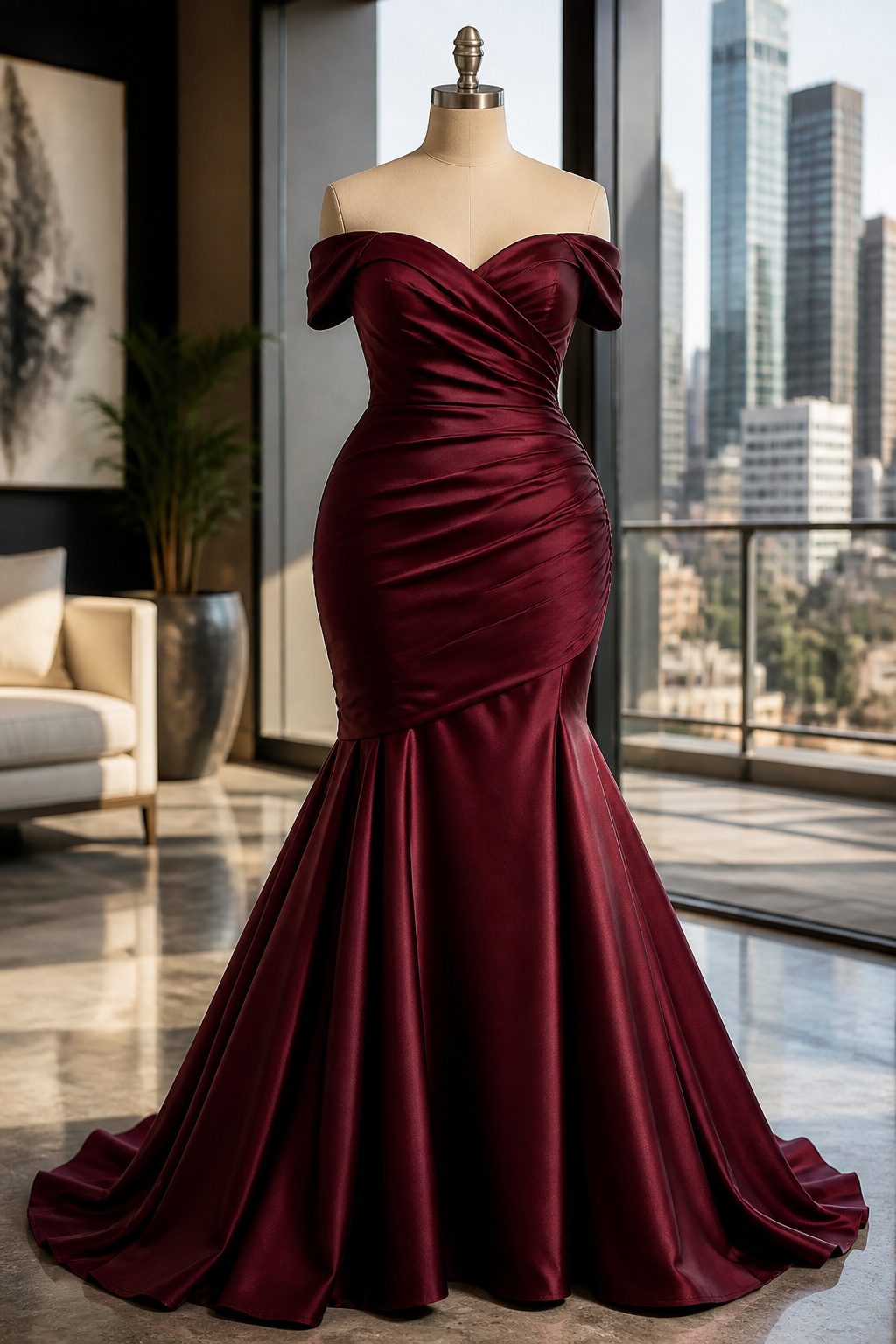
The mermaid silhouette, also called fishtail, stays fitted through the bodice, waist, and hips before flaring dramatically at or below the knee.
That sudden transition is what gives the shape its red-carpet presence, but it is also where most fit problems happen for plus size prom dresses.
The fabric has to release exactly at the right spot on your thigh; too high and the flare starts at the widest point, too low and the skirt drags where it should sweep.
Hourglass and pear shapes tend to carry this cut best because the fitted top half defines the waist while the flare balances fuller hips.
Rectangle shapes can wear it too if the bodice has enough structure to create curves where the silhouette does not.
David’s Bridal lists the Strapless Ruched Metallic Mermaid Dress with Scarf as a new arrival under their DB Studio line, and the ruching through the torso helps smooth the line where the dress begins to widen.
The included scarf is useful here: draped over the shoulders or wrapped at the waist, it draws the eye upward and breaks the long vertical that can otherwise emphasize any unevenness at that crucial hip-to-knee joint.
Sheath and Column
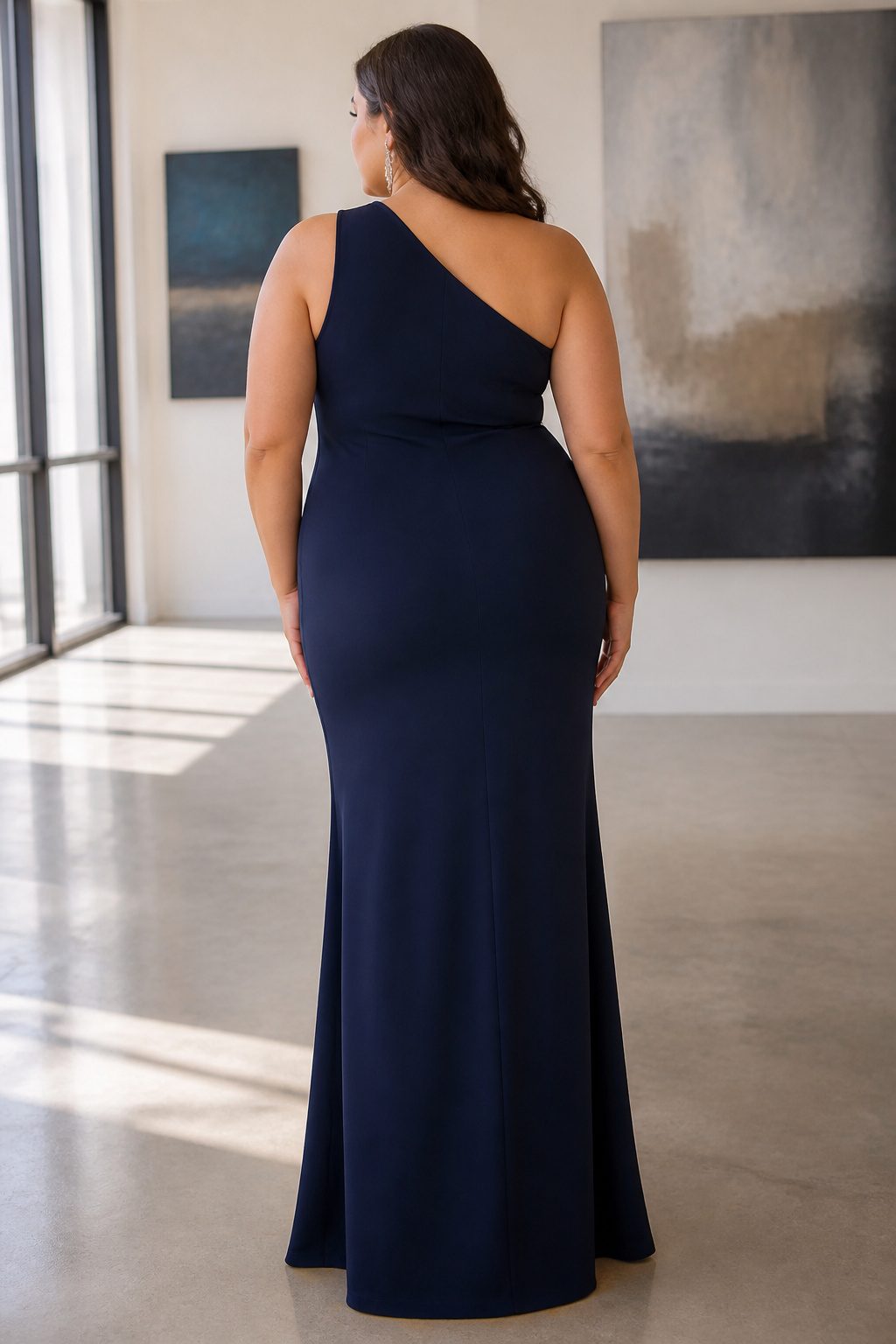
A sheath or column dress falls straight from shoulder to hem with almost no flare, skimming the body rather than circling it with volume.
For plus size prom dresses, this silhouette reads as intentional and modern rather than apologetic, though it asks more of the fabric and what goes underneath than a skirt that bells away from the hip.
The difference between wearable and regrettable here sits in the undergarment layer.
A seamless, high-waisted shaping short or slip keeps lines smooth without adding bulk at the waistband, which a separate panty and camisole almost always do. Fabric matters just as much.
Crepe, matte jersey, and certain lightweight wools drape and move; clingy knits and thin satins follow every contour and tend to ride up as the night progresses. Chiffon overlays can soften the line while keeping the structure underneath.
I would skip anything with a printed horizontal stripe or a shine finish in this cut. Solid color or a subtle texture reads richer and more deliberate on a prom floor where everyone else is competing with volume.
Trumpet
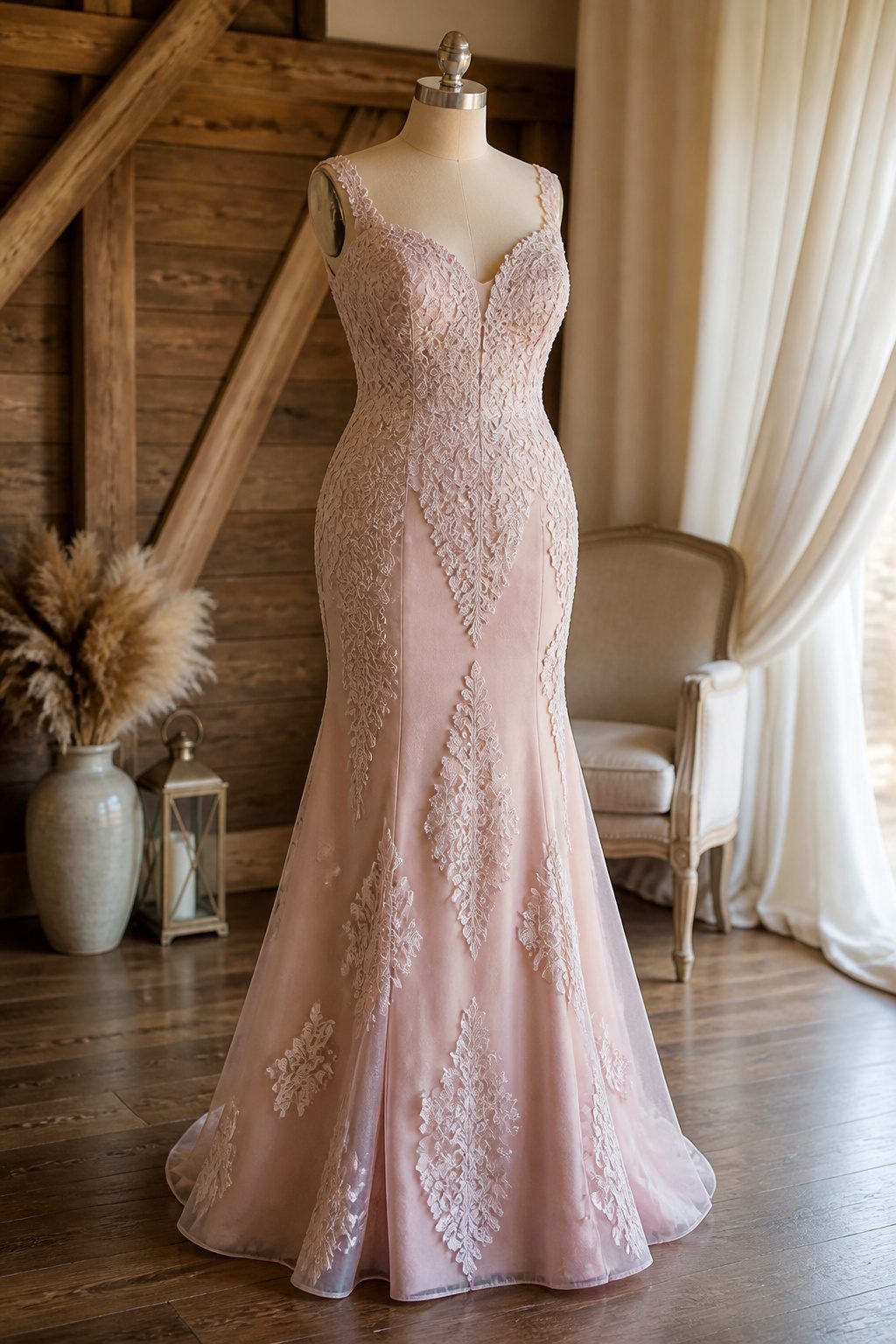
A trumpet gown flares from mid-thigh rather than at the knee, which gives it a softer, more gradual bell shape than a mermaid cut.
That few inches of difference changes how the dress behaves on a plus-size body in ways that matter once you are actually at prom.
The higher flare point leaves more room through the hips and upper thighs, so sitting down does not pull the fabric taut across the seat.
You get a cleaner line standing and less resistance when you lower yourself into a limo seat or a folding chair at the venue.
Dancing follows the same logic: the skirt opens where your legs need space to move, not lower down where a tighter tube would restrict your stride.
Because the silhouette keeps the fitted section shorter, the overall effect reads romantic rather than dramatic.
It still honors curves, but without the body-hugging intensity that can feel exposed under gymnasium lights. For someone who wants the glamour of a shaped gown without the performance of wearing one, the trumpet hits a practical middle.
Short and Mini
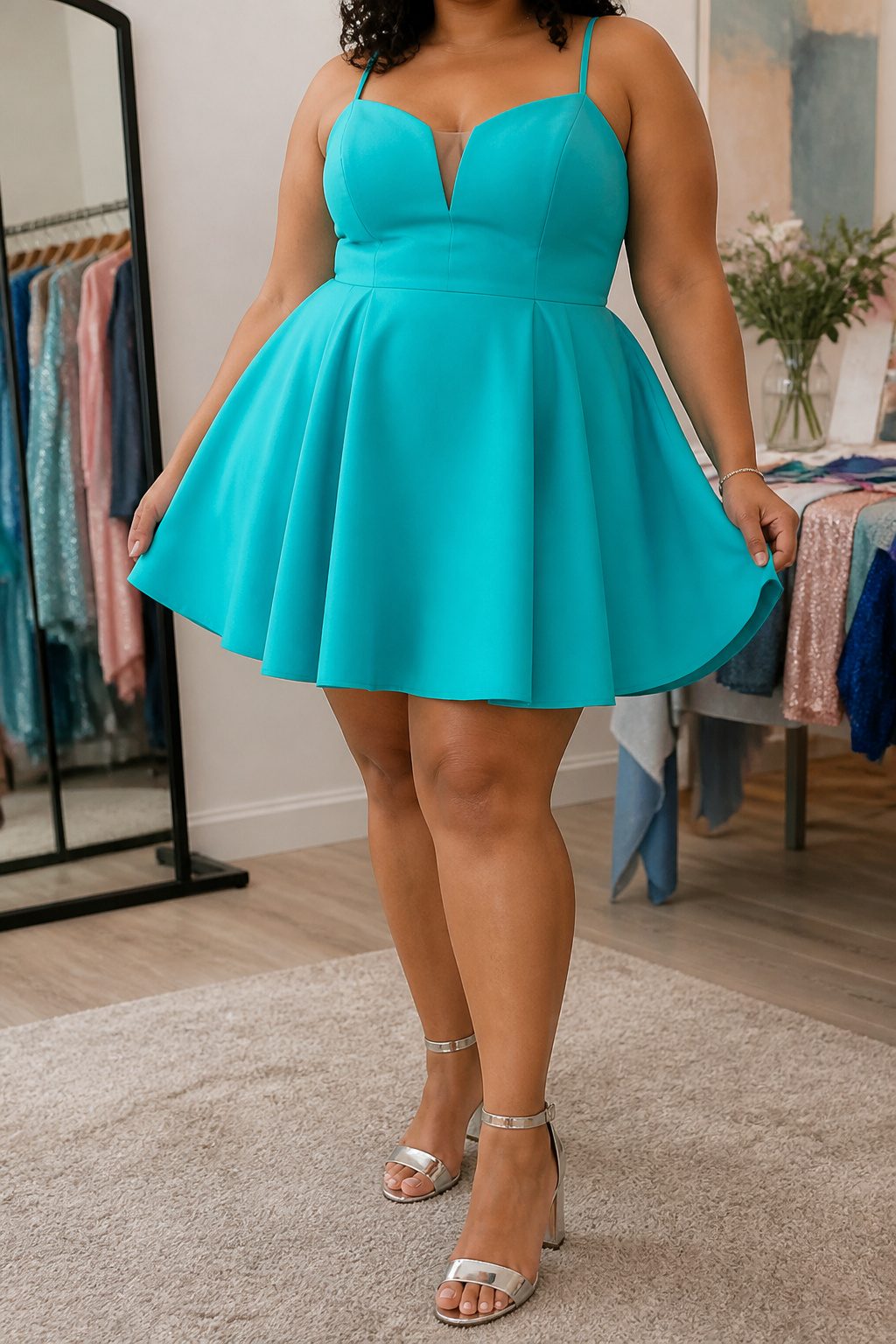
Shorter hemlines on plus-size prom dresses demand more attention to proportion than floor-length gowns ever do.
An above-the-knee cut puts the whole leg on display, which works beautifully when the dress waist sits at your natural waistline rather than dropping to the hips.
That placement elongates the leg line instead of chopping the body into uneven halves.
Mid-thigh lengths reward the most movement, making them the practical choice for anyone planning to dance hard or navigate a crowded venue without tripping.
Petite wearers often find short dresses solve a problem long gowns create: the endless fabric that pools at the ankles and swallows inches of visible height. A shorter hem lets the shoe do some of the visual work instead.
The tradeoff is coverage. A mini in stiff satin or structured crepe holds its shape through the night; jersey or thin chiffon rides up and demands constant adjustment.
For that reason, I reach for a lined bodice and a skirt with some weight to it when I’m recommending shorter lengths for formal occasions.
The confidence comes from the dress staying where it was placed, not from tugging it back into place between every song.
Long and Floor-Length
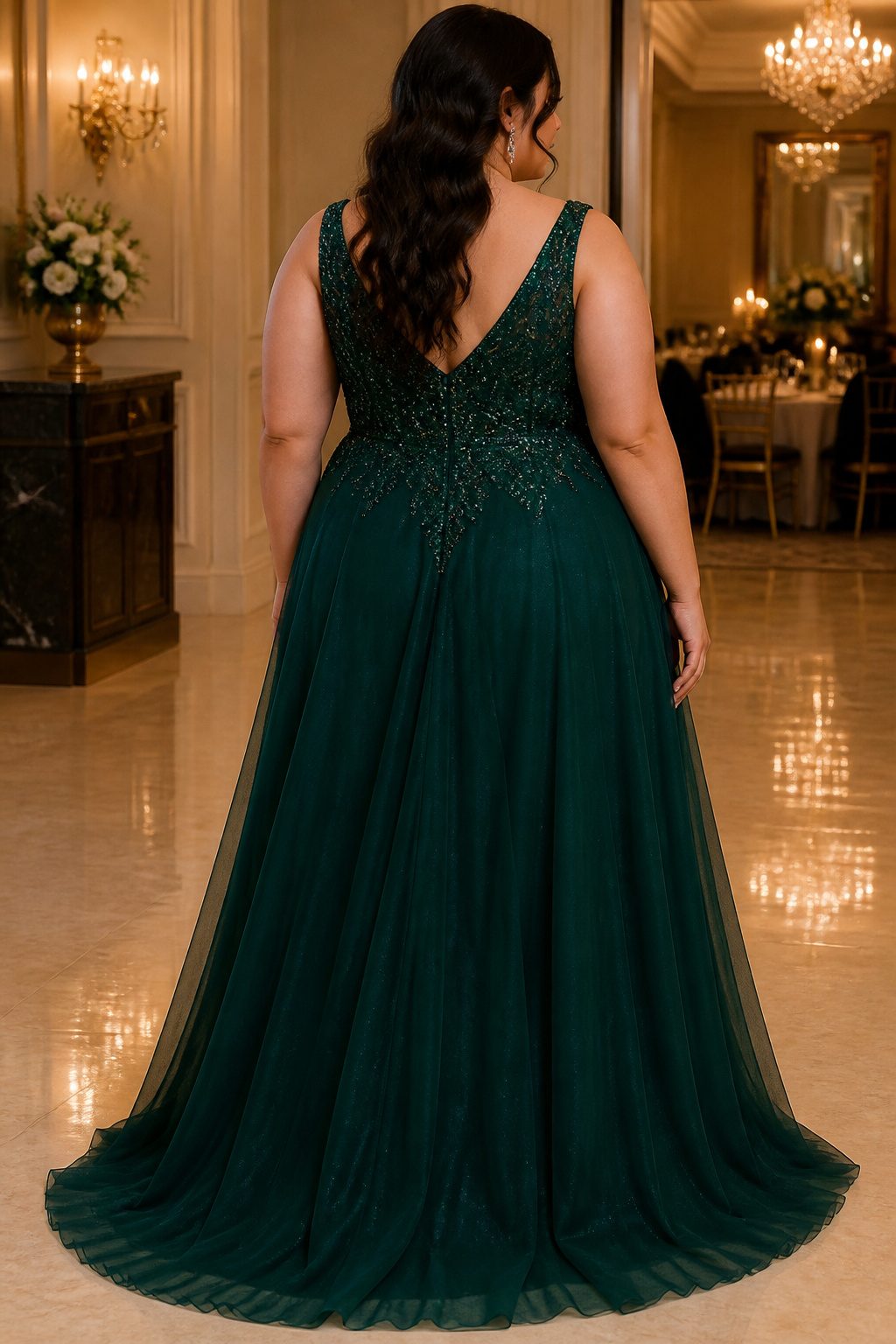
A floor-length hem that skims the shoe is what most people picture when they think of prom, and for plus size prom dresses this silhouette carries a few practical worries that straighter sizes rarely face.
Fuller hips and a curvier seat can pull the back hem higher than the front, so the skirt reads uneven in photos and sometimes in person.
I check this by looking at the side-view product shots on every site, not just the front-facing ones, because the drape over the rear changes everything.
Trains look romantic until you are three hours into a night that already involves stairs, rented ballroom carpet, and a crowded dance floor.
For anyone carrying more weight through the lower body, the tripping risk is real, and a stepped-on train yanks backward at exactly the center of gravity you do not want disturbed.
A sweep train or no train at all is the safer call, and if you love the drama, a bustle hook put in by a tailor costs less than an ER visit.
Ordering floor-length online without trying it on means verifying where the listed measurement was taken: center front, center back, or side seam. These three points can differ by two inches or more on a plus size gown.
I measure my own side seam from the natural waist to the floor in the heel height I plan to wear, then email customer service with that number and ask which listed length matches it.
Most will check the pattern specs if you give them a day.
Off-the-Shoulder
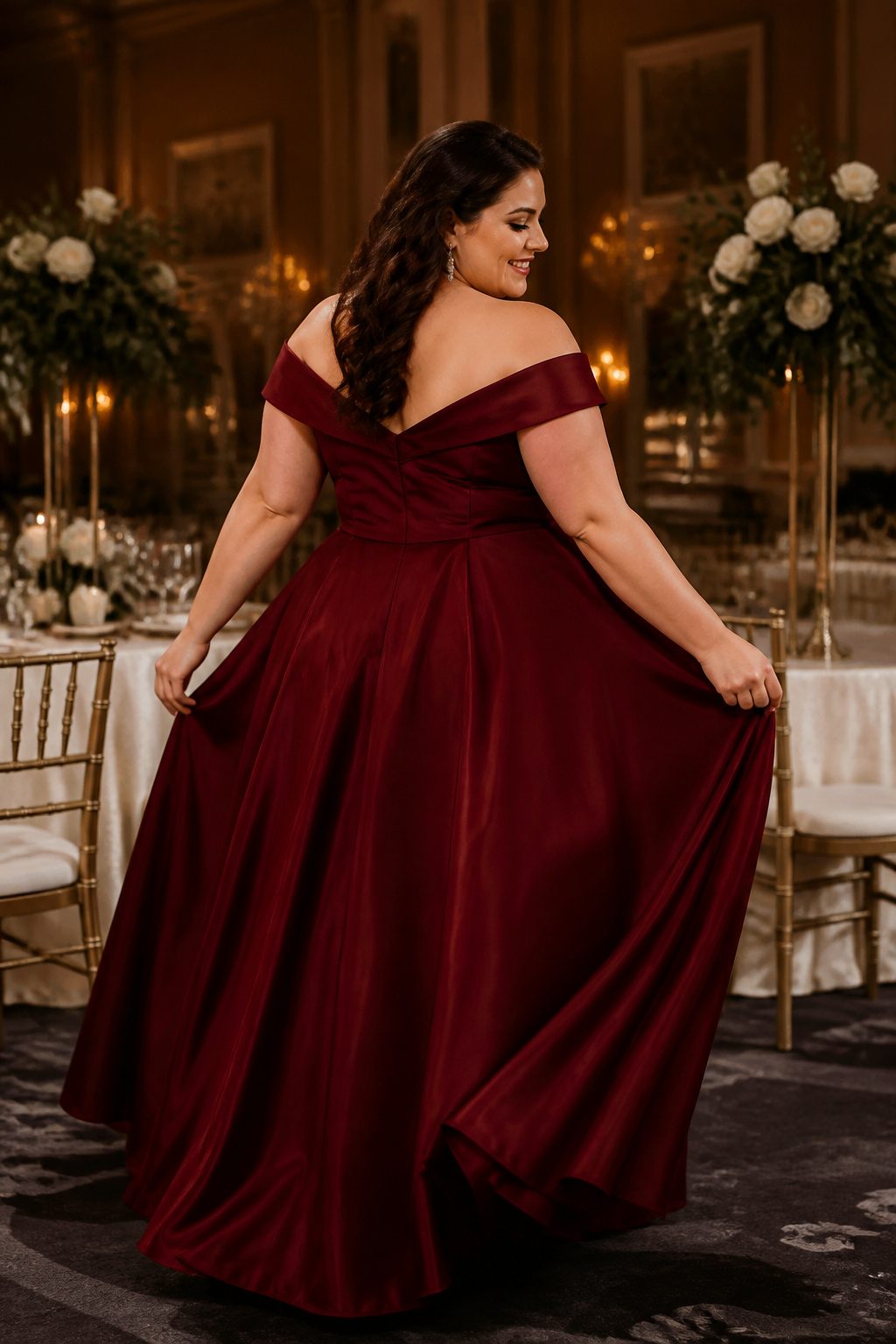
An off-the-shoulder neckline in plus size prom dresses demands more from the bodice than you might expect at first glance.
The horizontal band across the collarbone and shoulders draws the eye outward, which sounds risky until you see how it frames the neck and creates a clean horizontal line that reads as width held deliberately, not accidentally.
What makes it wearable is what sits below: JJ’s House pairs this neckline with corset boning in styles like the Rubyann, a mulberry satin A-line at $174, and the Necole, a red floral ball gown at the same price, because without that structure the bodice would slide south within an hour of dancing.
The strap engineering matters more here than on a true strapless dress.
An off-the-shoulder cut keeps fabric resting on the upper arm, which means the sleeve opening becomes the load-bearing seam. On a fuller bust, that pressure point shifts with every reach for a phone or a handshake.
The dresses that last the night build in gripper tape or a slight cap sleeve extension, though the passages show both sleeveless and long-sleeve variants, so the sleeve length itself is less important than how the armscye is finished.
Ball gowns and A-lines dominate this neckline for a reason. The volume below balances the bare expanse above, and the eye travels from shoulder to waist to skirt without stopping at the hip.
A trumpet or sheath in this cut would need the same corsetry to avoid the bodice looking like it is sliding off, yet the sources show no such pairing, which tells you what manufacturers have learned about where the risk outweighs the reward.
Sleeveless
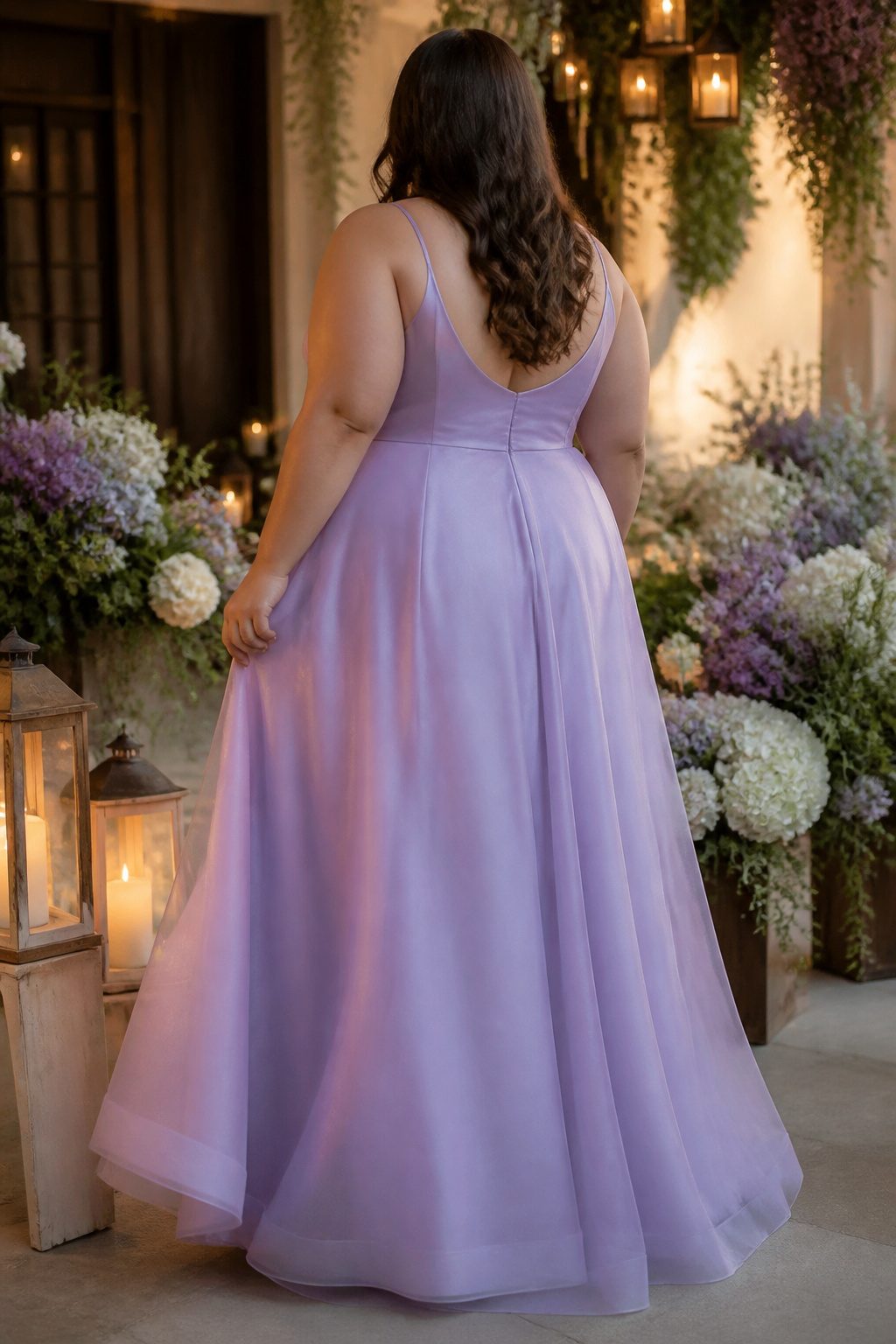
Sleeveless construction is the default for most formal dress patterns because it removes the engineering puzzle of setting in a sleeve while leaving the armhole free for movement.
For plus size prom dresses, the depth of that armhole matters more than most buyers notice until they are sitting in a car or raising a glass for photos.
A higher cut, closer to the armpit, keeps the line clean but can pinch and ride up; a deeper armhole allows reach but risks showing the edge of a strapless bra or, in some poses, more skin than intended.
What convinced me, reading through a dozen of these patterns, is that the armhole should sit about half an inch below your natural crease so you get the reach without the gap.
Without a sleeve to anchor the bodice, bust support has to come from structure built into the dress itself.
Boning along the side seams, a built-in shelf bra, or a reinforced waistband that carries the weight down to the hips: these are the details to look for in the lining description, not the outer fabric.
A sleeveless bodice that relies on stretch alone will settle and shift across an evening of dancing.
This construction pairs with almost every neckline, which is partly why it dominates the category. A sleeveless scoop, a sleeveless V, a sleeveless sweetheart: the combinations are endless, but the fit check stays the same.
Raise both arms straight overhead in the fitting room. If the whole bodice lifts with them, the armhole depth or the waist support is wrong for your frame, and no neckline will fix it.
Corset
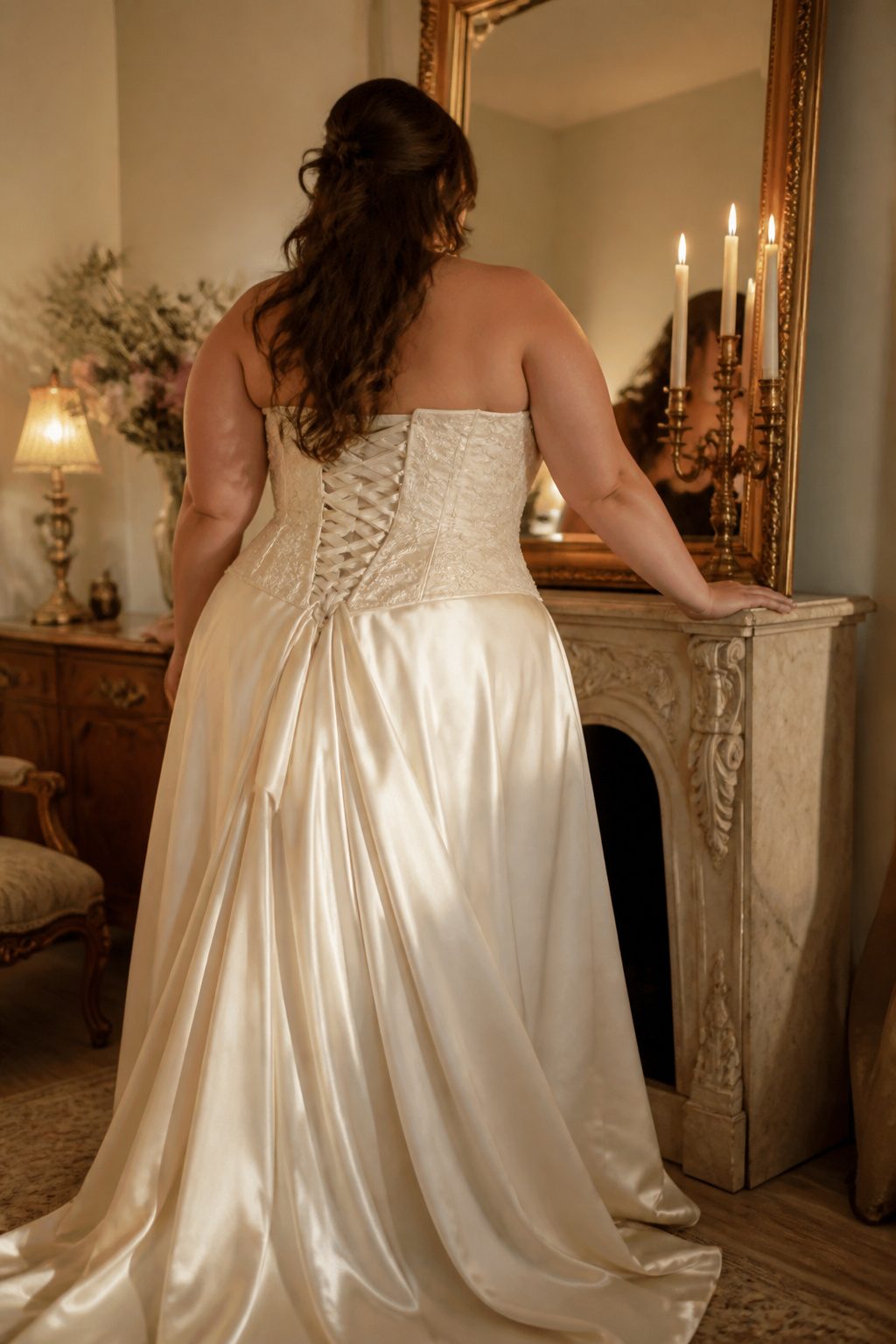
Boning, lacing, and structured paneling in plus-size prom dresses do the actual work of shaping, not just the look of it.
Functional corsetry uses steel or plastic boning sewn into channels to lift and cinch without relying on stretch fabric that gives out by midnight.
Decorative corset detailing, the kind you see as lacing-up backs or lace overlays on satin, borrows the visual but skips the structure.
It photographs the same in a mirror selfie; it does not hold the same through six hours of sitting, standing, and dancing.
Lacing wins for fluctuation. A body changes across a menstrual cycle, and a lace-up back gives an inch or two of play where a zipper locks you to one measurement.
What convinced me, reading through a dozen of these construction breakdowns, was how often breathing came up as the real test.
Boning that stops at the waistband lets the rib cage expand; boning that runs too high or too rigid turns a prom dress into something you count the minutes to escape.
The best corset-backed gowns leave the lacing loose enough for a full inhale, then tighten the waist alone. Skip anything that feels like armor by hour two.
Sequins
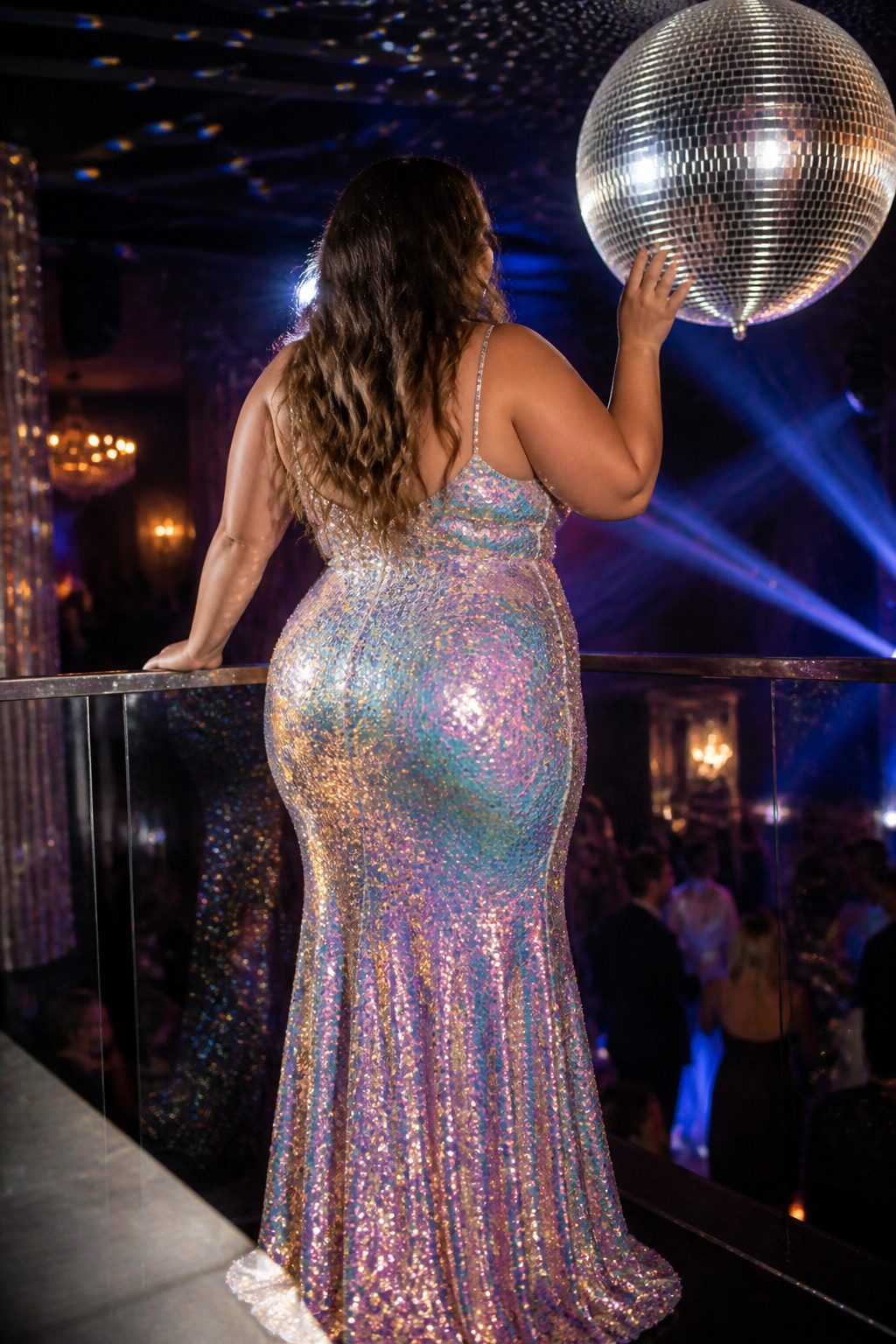
A fully sequined gown reads as texture more than color, which means the eye follows the shine instead of tracing body lines.
That flatters, but placement still matters. Dense sequins across the bodice and hips add visual weight; the same density under bright venue lights can also trap heat against the body for hours on a packed dance floor.
Sequins work best as concentrated accents along a neckline, down a side panel, or scattered through a skirt overlay, where they catch light without overwhelming the silhouette.
The real comfort issue sits at the arm openings. Fully lined sequin fabric eliminates the scratch factor at straps and sleeve holes, but many budget plus size prom dresses skip that lining to cut cost.
You notice it twenty minutes in, when the raw sequin edge starts catching skin with every reach for a drink or a handshake.
If the gown is all-over sequin, check that the armscye is finished with fabric, not just binding. Accent placement sidesteps the problem entirely; a sequin bodice with chiffon or crepe sleeves gives you the effect without the abrasion.
Floral
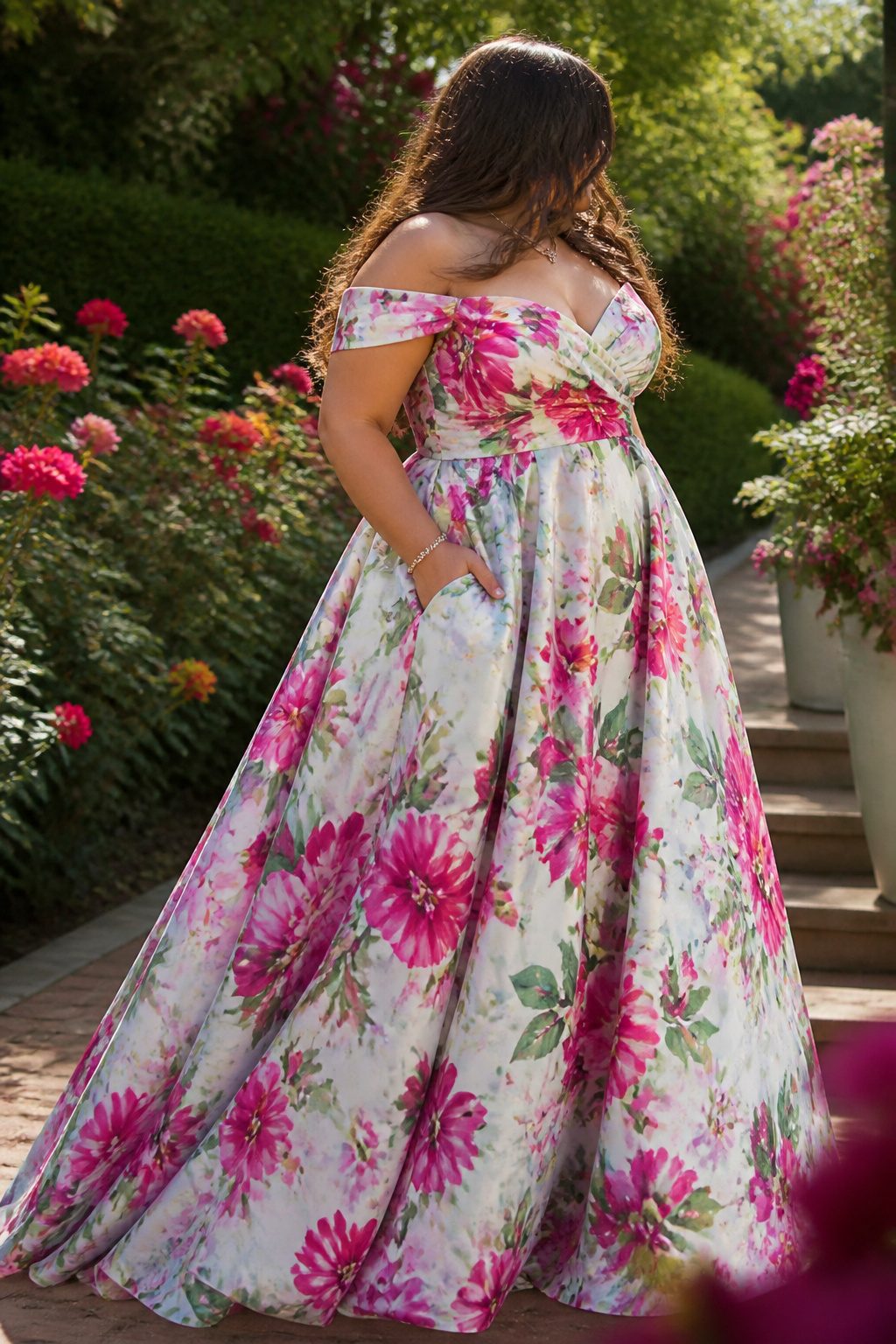
A floral plus size prom dress lives or dies on scale.
Prints smaller than a quarter tend to read as texture from a distance, which flatters without overwhelming. Anything larger needs breathing room, or the eye stops reading the dress and starts cataloging flowers.
Placement matters more than print size. A single oversized bloom anchored at the waist or drifting across one shoulder creates shaping where construction alone falls short.
Two identical dresses, one with blossoms scattered random and one with the same blossoms clustered to draw the waist in, wear like different silhouettes.
Printed fabric and dimensional appliques serve different nights.
Screened chiffon moves easy and photographs flat, which works for outdoor proms where wind is a factor. Appliques, stitched or heat-molded petals that lift off the bodice, catch ballroom light and add structure through the torso.
They also add weight. I’ve seen dresses where the applique placement effectively built in corsetry, the dimensional elements stiffening the fabric so the bodice stood away from the body instead of clinging.
That tradeoff, movement for architecture, is worth deciding before you fall for a texture in a photo.
Appliqued
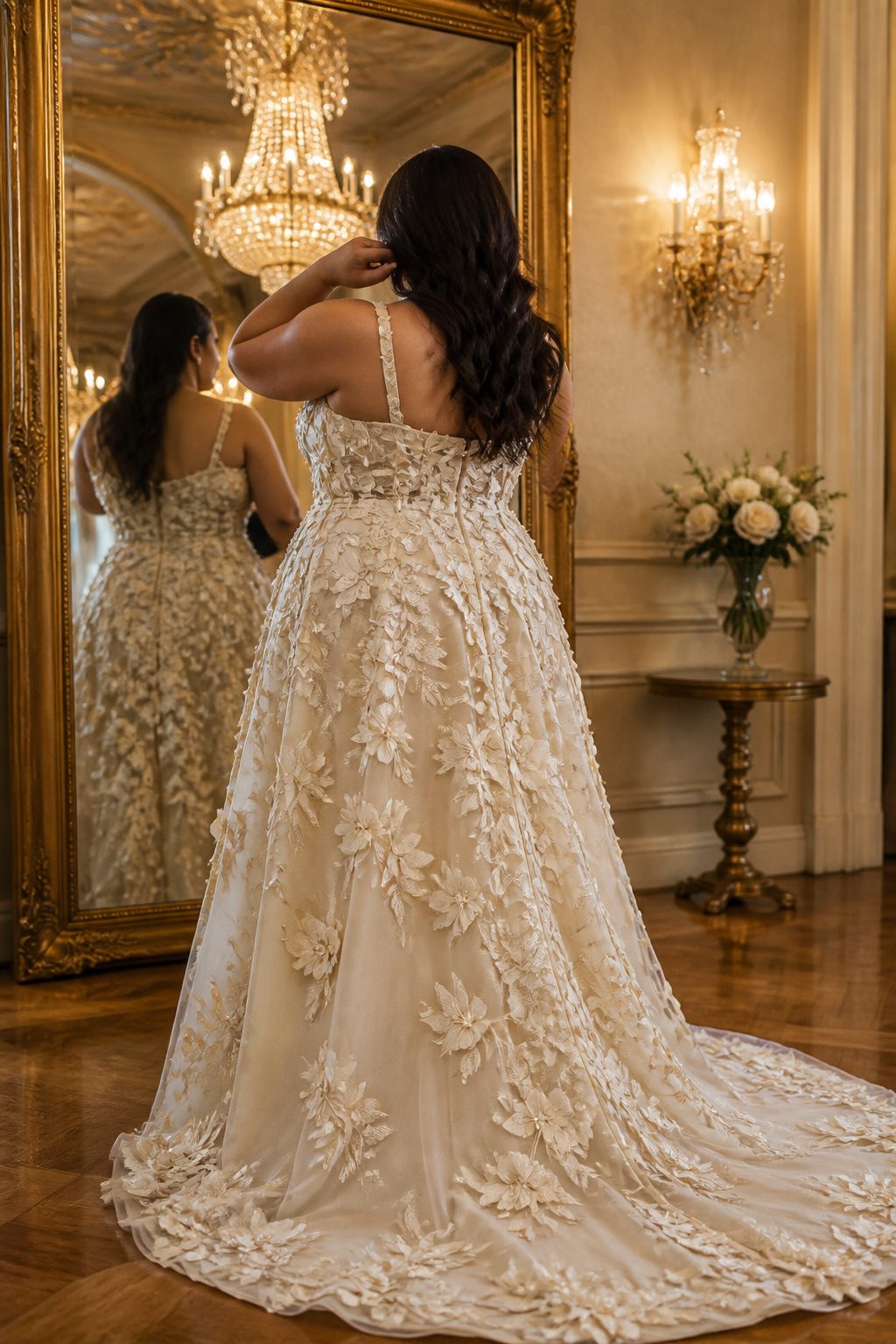
Dimensional appliques give plus size prom dresses a literal lift, raising fabric off the surface in petals, leaves, or abstract shapes that catch light and shadow as you move.
The effect is texture first, ornament second: a bodice covered in layered organza flowers reads sculptural rather than merely decorated, which helps the eye travel across curves instead of stopping at them.
Placement matters more than density. A cluster at the neckline or trailing down one side of the skirt draws a vertical line; wrapping the hem or edging a train frames the silhouette without adding bulk where you carry it.
All-over application can work, but the weight adds up quickly, and a fully appliqued gown can pull forward at the shoulders or sag at the waist by hour three.
I look for dresses that concentrate the heaviest elements, anything with a backing or bead center, from the bust down to the high hip, then lighten toward the hem with simpler, cut-edge shapes.
That distribution keeps the structure where a strapless bodice needs it and lets the skirt float.
Ruffled
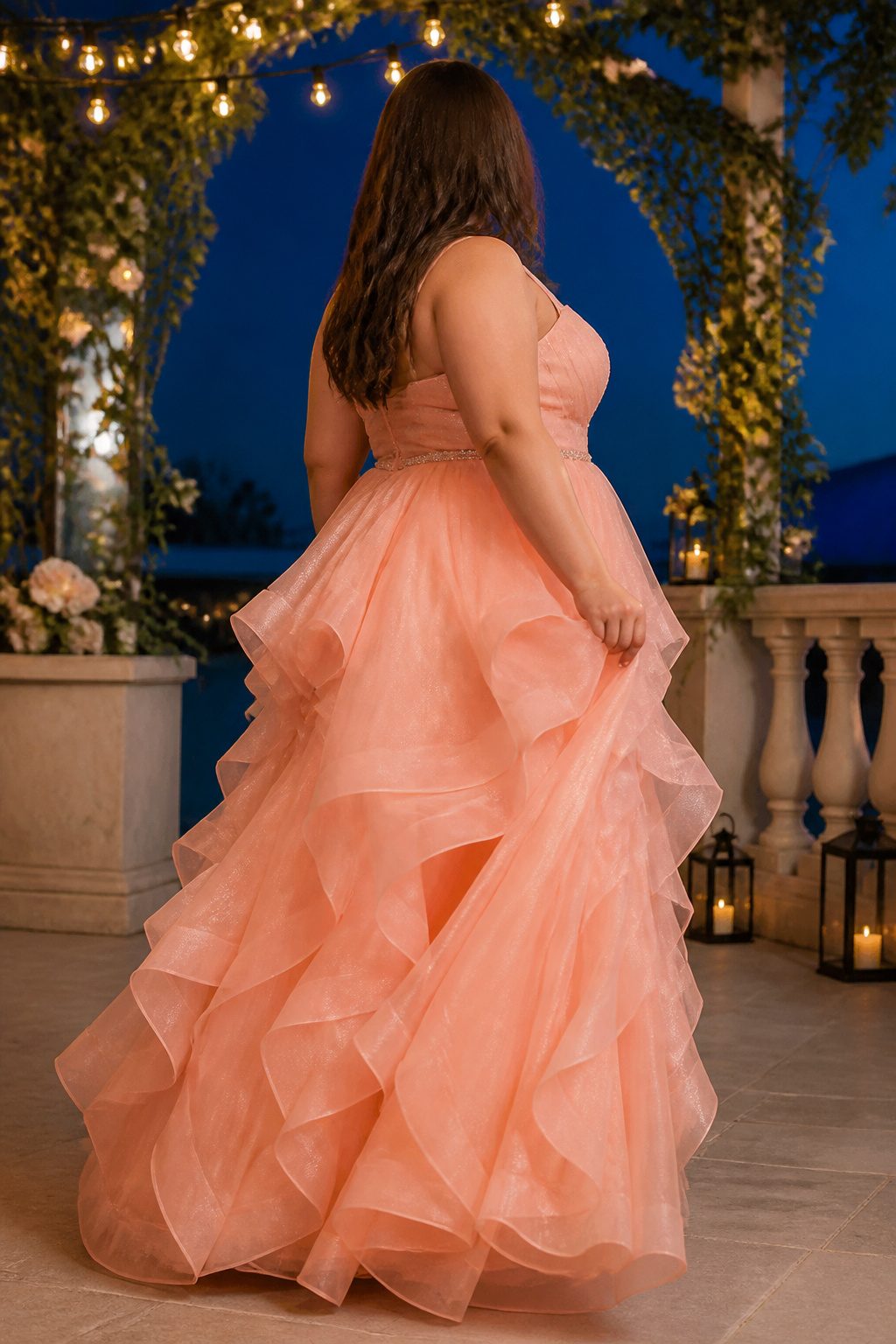
Ruffles on plus size prom dresses come in three distinct styles, and the difference between them matters more than most shoppers expect.
Tiered ruffles stack in horizontal bands, usually from waist to hem, building volume that can either balance a fuller midsection or add unwanted width depending on how many layers sit at the hip.
Cascading ruffles fall in diagonal or vertical streams, often from one shoulder or the bodice seam down the skirt, drawing the eye along a line rather than across it.
Ruffle trim, the narrowest application, edges a neckline or hem with a single flutter of fabric, adding movement without significant bulk.
The placement of ruffle volume determines whether it flatters or fights the wearer. Ruffles that begin at the natural waist and extend downward create an A-line effect that skims the stomach and hips.
Ruffles that wrap horizontally around the widest part of the torso, or cluster densely at the hips and thighs, add visual weight exactly where many plus-size wearers prefer to minimize it.
Through reading how these details perform on different figures, what convinced me was how consistently a diagonal cascade from the left shoulder to right hip lengthened the silhouette, while tiered skirts with more than three layers at hip level tended to read as costume rather than formal wear.
Ruffle trim at a V-neck or open back adds softness without risk; tiered ruffles below the knee, where the leg narrows, fare better than the same construction at mid-thigh.
Beaded
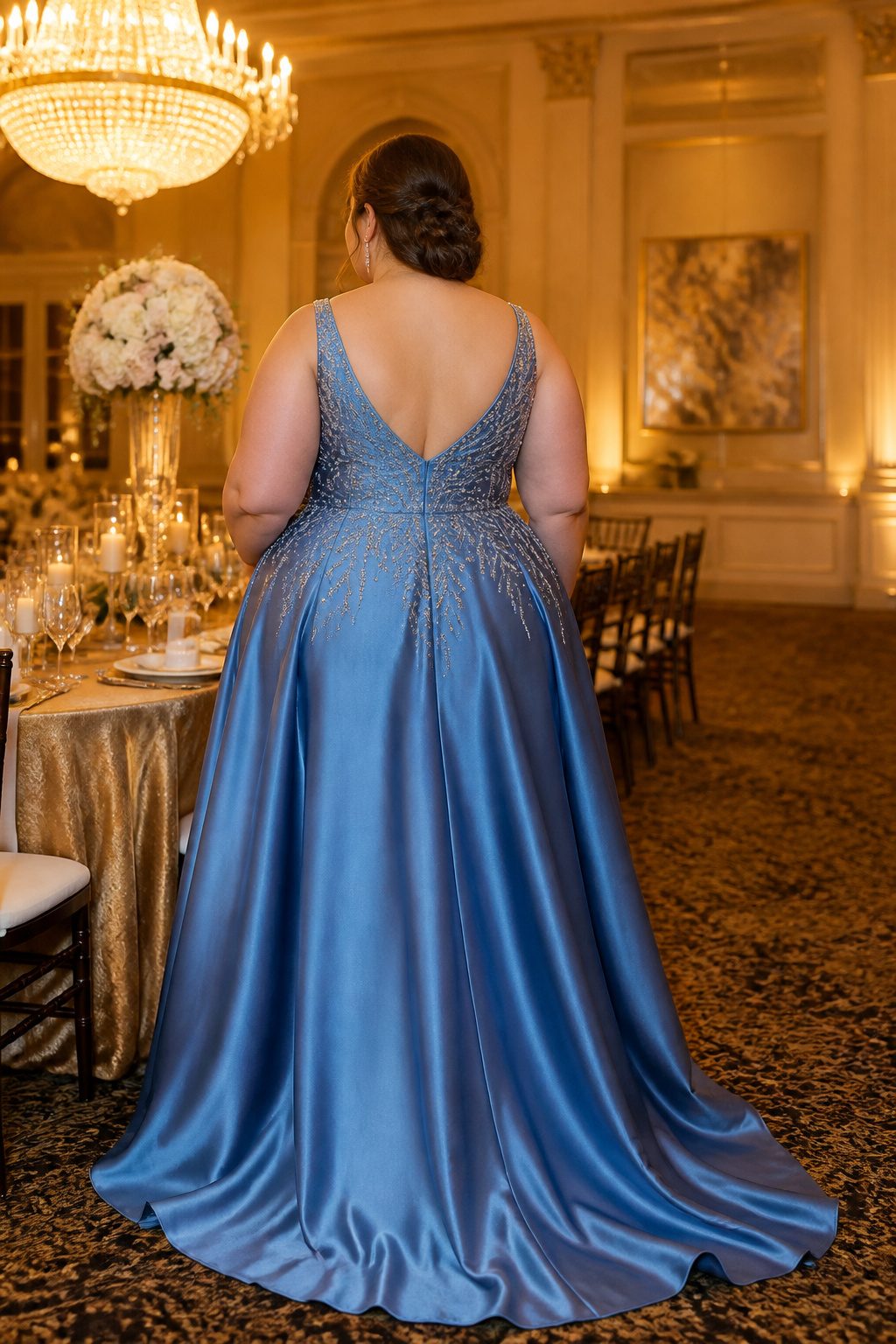
Beading on plus size prom dresses ranges from light scatterings to dense, all-over coverage, and the difference matters for comfort and silhouette.
Hand-sewn beads sit more flexibly against curves and allow for raised, dimensional patterns, while machine application lays flatter and tends to cost less but can stiffen the fabric underneath.
Dense beadwork adds real weight, something worth testing by holding the dress at the hanger before committing to a full evening in it.
Scrollwork patterns tend to follow natural body lines, drawing the eye vertically along the torso or outward across the shoulders depending on placement.
Geometric grids and scattered clusters work differently: a concentrated band at the waist creates a focal point, while beading that starts at the neckline and thins toward the hem pulls attention upward.
I have noticed, reading through dozens of these gowns, that the most flattering pieces use bead placement deliberately to highlight one area and leave another relatively quiet, rather than competing for attention everywhere at once.
Strapless
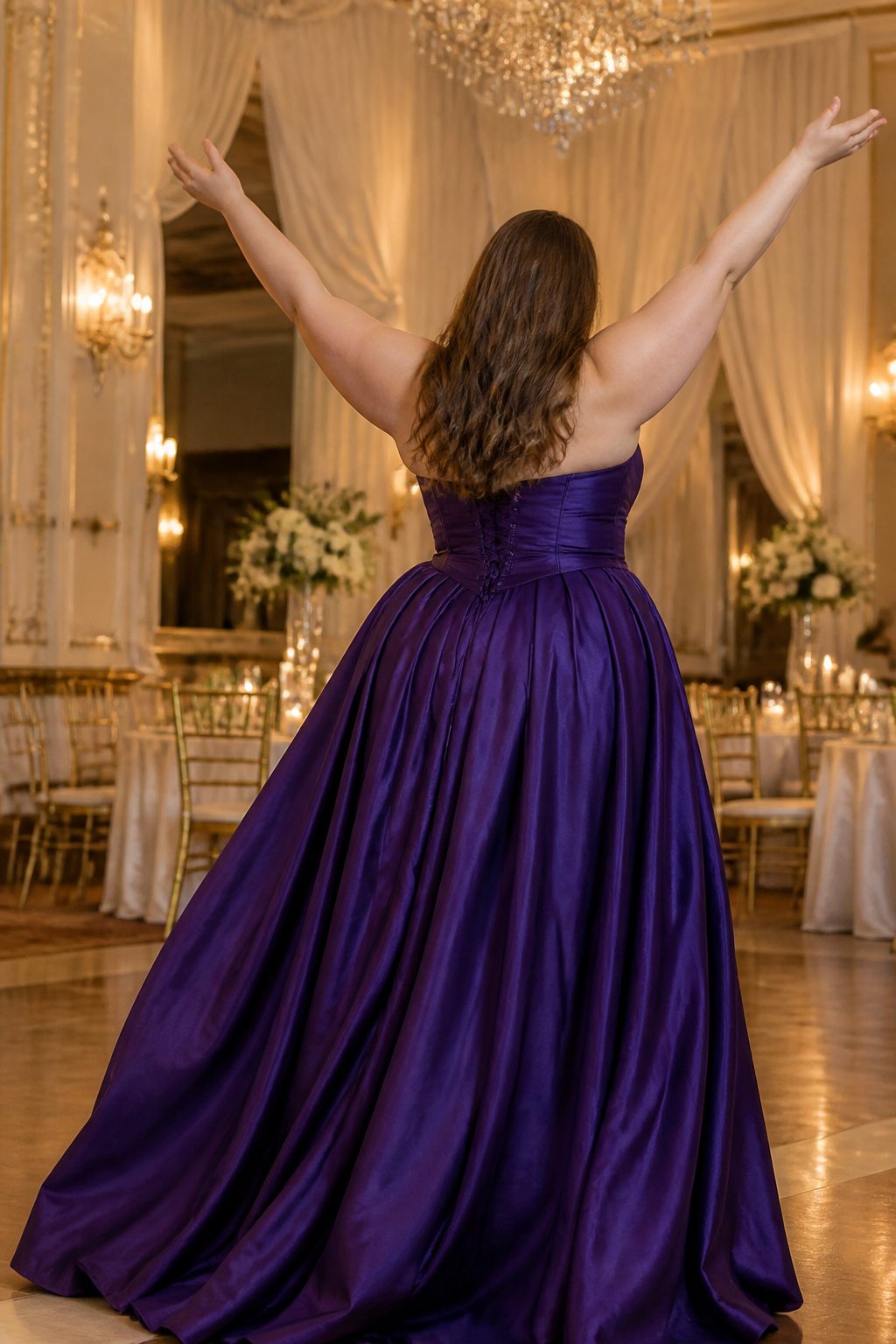
A strapless plus size prom dress lives or dies by what you cannot see.
The visible neckline is just fabric; the real engineering sits inside the bodice, where boning, gripper elastic, and layered structure do the actual work of holding everything in place through hours of dancing.
What convinced me, reading through how these are built, is that security comes from distributed tension, not squeezing harder. Vertical boning channels run from the bust to the waist, giving the bodice a skeleton that refuses to fold or slump.
Gripper elastic lines the upper edge, the kind with tiny silicone ridges that grip skin without relying on overtightened lacing.
The best versions add interior structure: a built-in bra or corset panel that anchors the dress to your torso rather than hanging weight from your ribcage.
Before buying, test this in motion. Lean forward, raise your arms, twist at the waist.
The bodice should stay parallel to the floor without your hands at your neckline. If the dress only feels secure when you stand perfectly straight, it will not survive the first slow song, let alone the after-party.
V-Neck
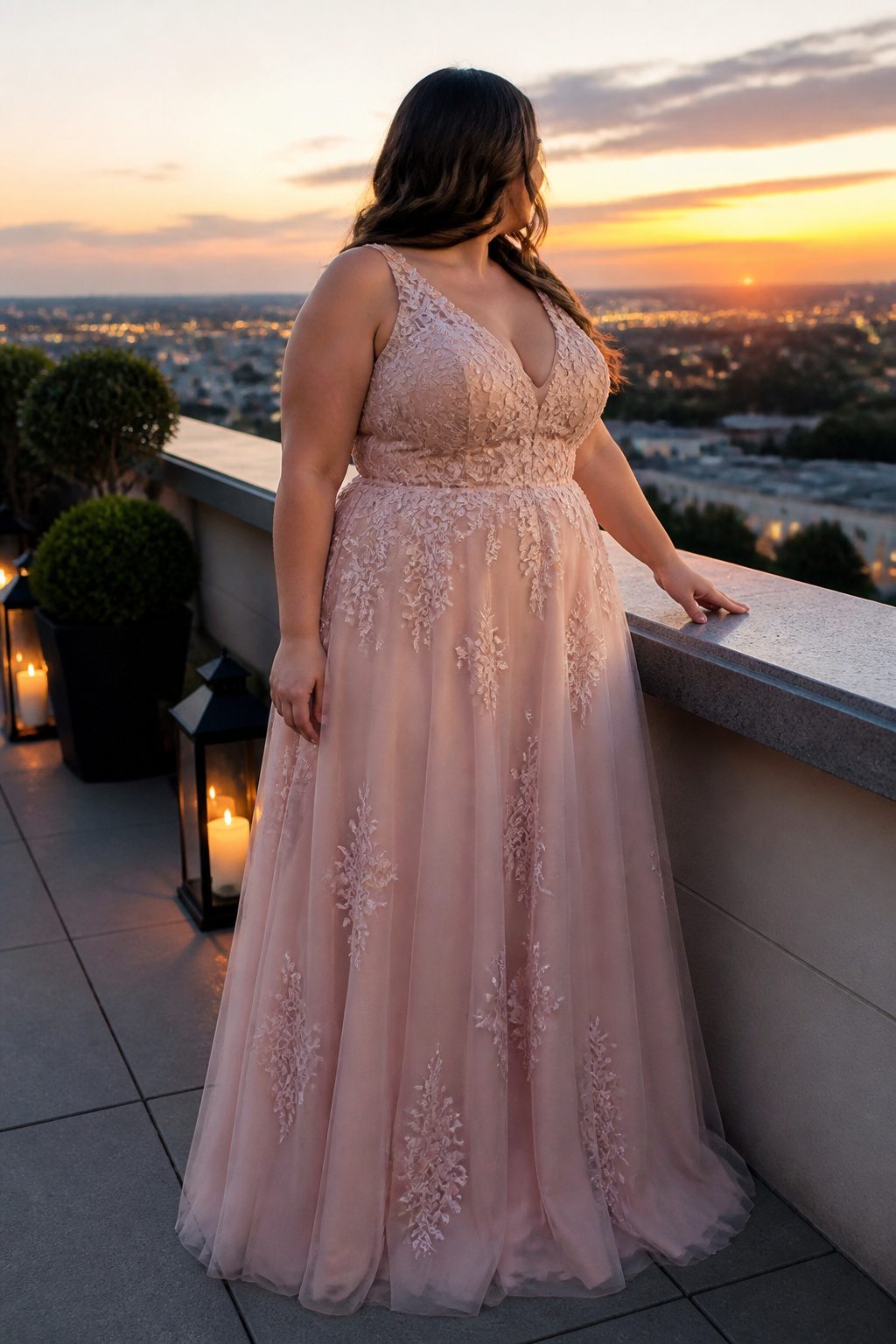
A V-neck on plus size prom dresses draws the eye straight down the centerline, which reads as length where a straight-across cut would read as width.
The depth of that V matters more than most people expect. A point that lands at the sternum or just below elongates the torso without opening up a gap at the bust.
Anything plunging past the under-bust line starts to fight with school dress codes, and the line where administration pushes back is usually higher than students guess.
Most districts call it at roughly four inches below the collarbone, though the exact wording is always worth checking before you buy.
Modesty panels solve this cleanly. A sheer or lace inset at the center keeps the V’s shape while raising the actual fabric line, so you get the lengthening effect without the risk of being sent home.
A-line and sheath silhouettes pair best here because both rely on that vertical emphasis. An A-line with a V-neck balances volume below with openness above; a sheath uses the neckline to keep the column from looking boxy.
I’ve seen deep Vs try to work with fuller skirts, and the effect fractures the eye instead of guiding it. Stick to the cleaner pairings and the neckline does what it promises.
Sweetheart
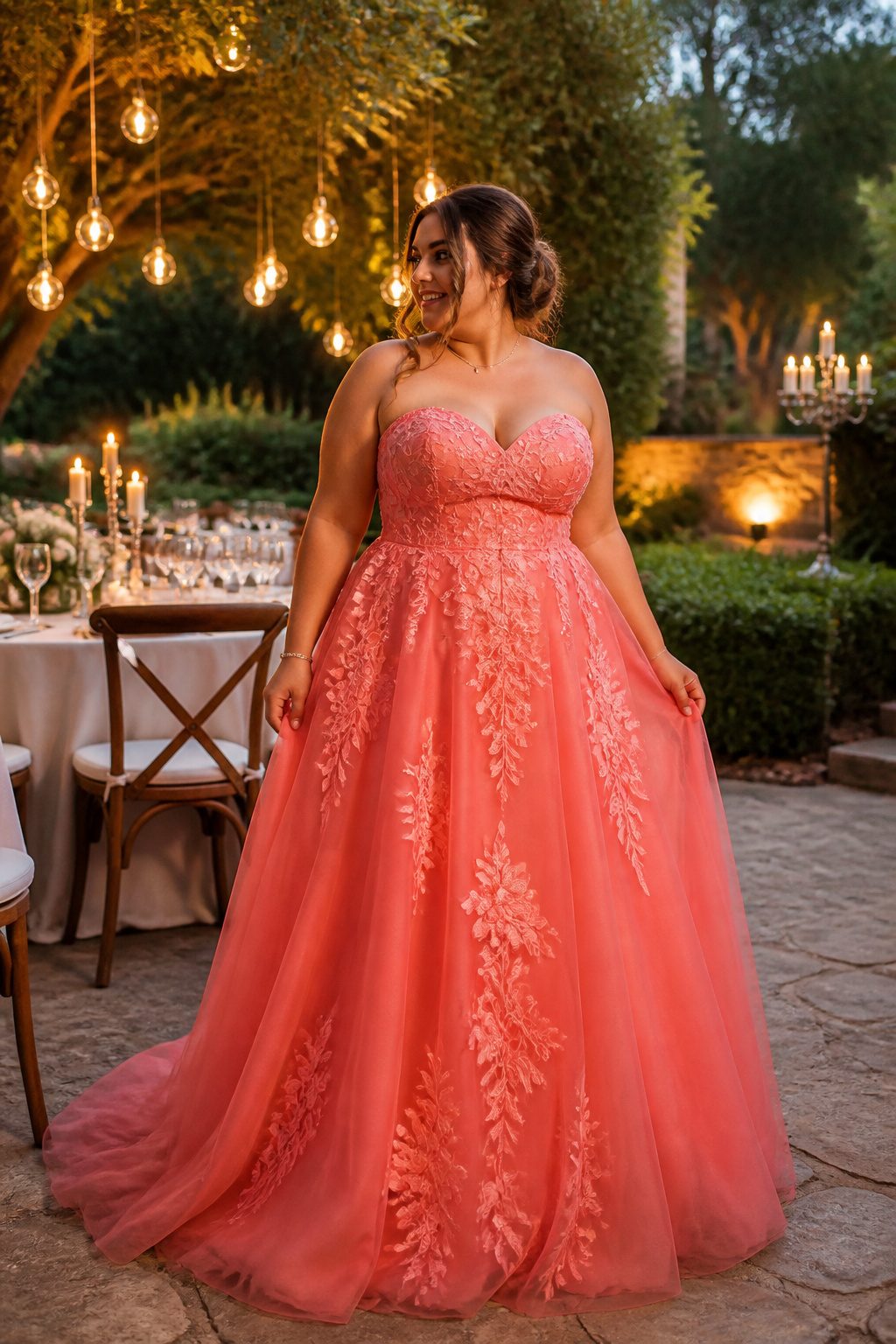
A sweetheart neckline follows the natural curve of the bust in a heart-shaped arc, dipping lower at center than at the sides.
That curve does more than look romantic; it creates a defined frame for fuller chests that a straight-across strapless often flattens into one unbroken line.
The difference between true sweetheart and what some sites call "dipped" styles matters in construction. A true sweetheart maintains that rounded heart silhouette all the way to the side seams, with boning or interfacing shaped to match.
The dipped straight-across version just scoops the center lower while keeping angular corners at each edge. On a fuller bust, those corners can gape or dig; the continuous curve distributes pressure more evenly.
Most plus size prom dresses with this neckline go strapless, which makes the engineering essential.
The bodice needs enough structure to stay up without straps fighting gravity. I’ve noticed the best ones extend the sweetheart shape into the side panel rather than cutting it off abruptly at the bust point.
That longer curve gives the eye a smoother line and the body more support where the weight actually sits.
High-Neck
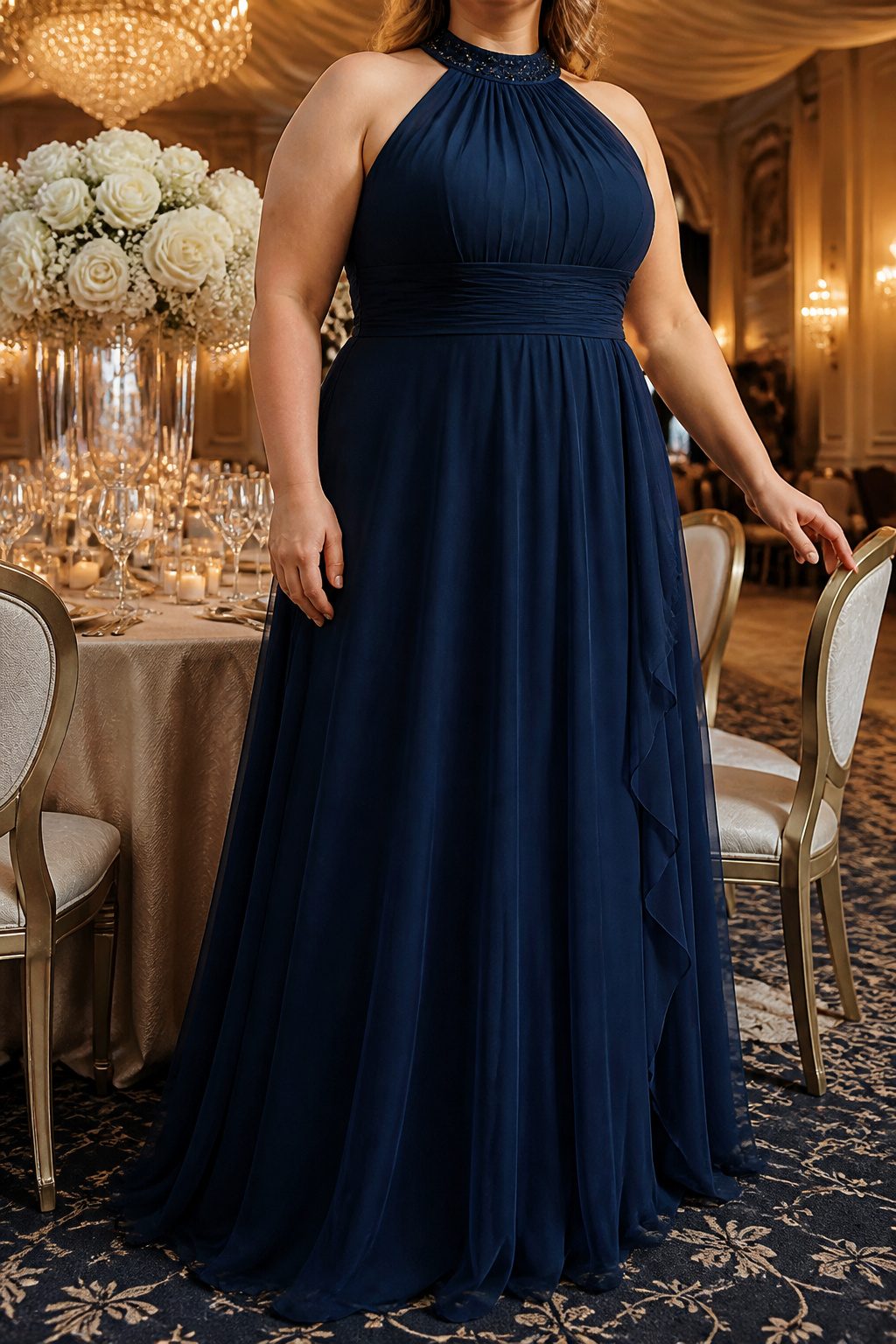
A high-neck or mock-neck bodice brings coverage straight up from the bust to the collarbone, which draws the eye vertically and adds length through the torso.
On plus size prom dresses, this elongating effect matters because it rebalances fuller curves below without relying on exposed skin to break up the silhouette.
The neckline itself sits close, so the fabric does the structural work rather than any jewelry or strap detail.
What convinced me, looking through dozens of these, is how often the style pairs with a sleeveless arm or a keyhole back. The combination keeps the overall effect from reading too covered or too severe.
A bare shoulder or a flash of skin at the spine gives the dress somewhere to breathe, and the proportion shifts from "turtleneck gown" to something more deliberate and evening-appropriate.
The keyhole back especially preserves that vertical line while adding movement you would not get from a fully closed bodice.
The real proportion change happens in how the waist reads.
Because the eye travels up the neck first, the natural waistline of the dress can sit slightly higher or lower without the same visual disruption you would get with a plunging neckline that splits the bodice horizontally.
That flexibility makes high-neck styles forgiving if you are between standard sizes or ordering without alterations.
Cowl Neck
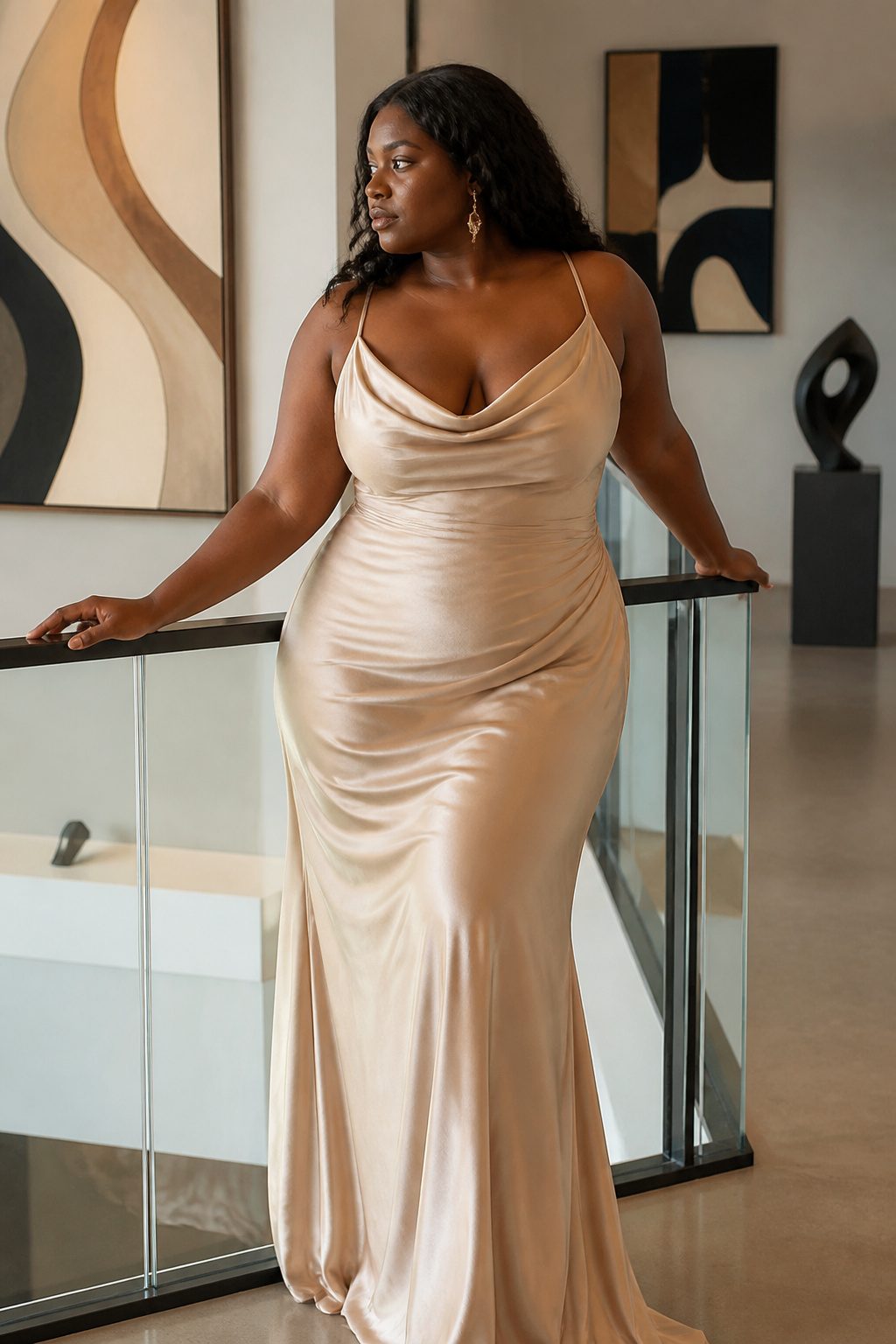
A cowl neckline drapes fabric in soft, folded loops that hang away from the body rather than clinging to it.
In plus size prom dresses, that looseness does practical work: it breaks up the bust line visually and lets the eye travel vertically instead of resting on one horizontal plane.
The effect reads as fluid, not fixed, which matters under dance-floor lighting where stiffer necklines can look boxy or overstructured.
What holds that drape matters.
Silk charmeuse and lightweight satin collapse into deeper, more dramatic folds, while crepe and mid-weight jersey hold a shallower, more controlled ripple. Chiffon layered over a lining tends to blur the line entirely, which some wearers want and others don’t.
I noticed, sorting through enough of these to spot the pattern, that a cowl set too high on a fuller chest loses the relaxed quality entirely and starts looking like a misplaced hood.
Placement is the detail that separates the ones that work from the ones that don’t, and it is rarely visible in a thumbnail.
Scoop Neck
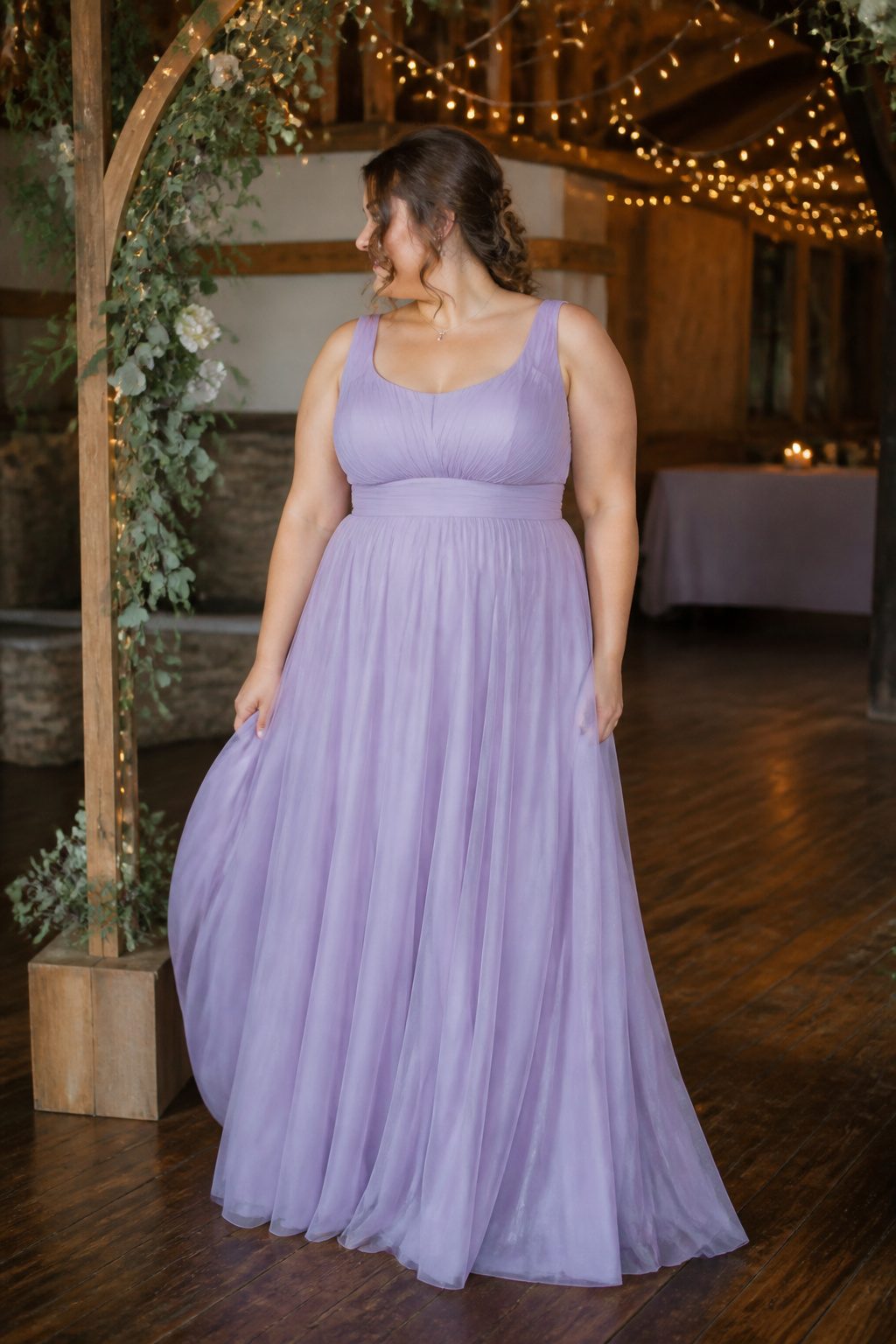
A scoop neckline curves in a smooth, continuous U across the chest, and the depth of that curve changes everything about how the dress reads.
A shallow scoop sits close to the collarbone and reads almost like a softened jewel neck, while a deeper scoop drops toward the bust line and opens up the whole upper chest.
That openness is what makes the shape useful for plus size prom dresses: it draws the eye vertically and creates breathing room between the face and the fabric, which helps when the dress itself is voluminous or heavily detailed.
The difference from a jewel neck is immediate. A jewel neck sits high and flat, wrapping the throat like a band, and on a fuller bust it can compress the silhouette upward until the proportions feel off.
A ballet neck does something similar but wider, stretching toward the shoulders in a straight line that risks making the neck disappear entirely.
The scoop does the opposite. It frames the throat and collarbone without clinging to them, and the curve follows the natural line of the body instead of fighting it.
Cap sleeves pair naturally with this neckline because the scoop leaves the shoulder line clean and the small sleeve fills the space without adding bulk.
Sleeveless construction works the same way, though the openness of the scoop matters more there; too deep without any sleeve at all, and the balance tips toward bare rather than framed.
What convinced me, looking through dozens of these, was how consistently the moderate scoops with some arm coverage looked finished in a way the extreme versions rarely did.
Square Neckline
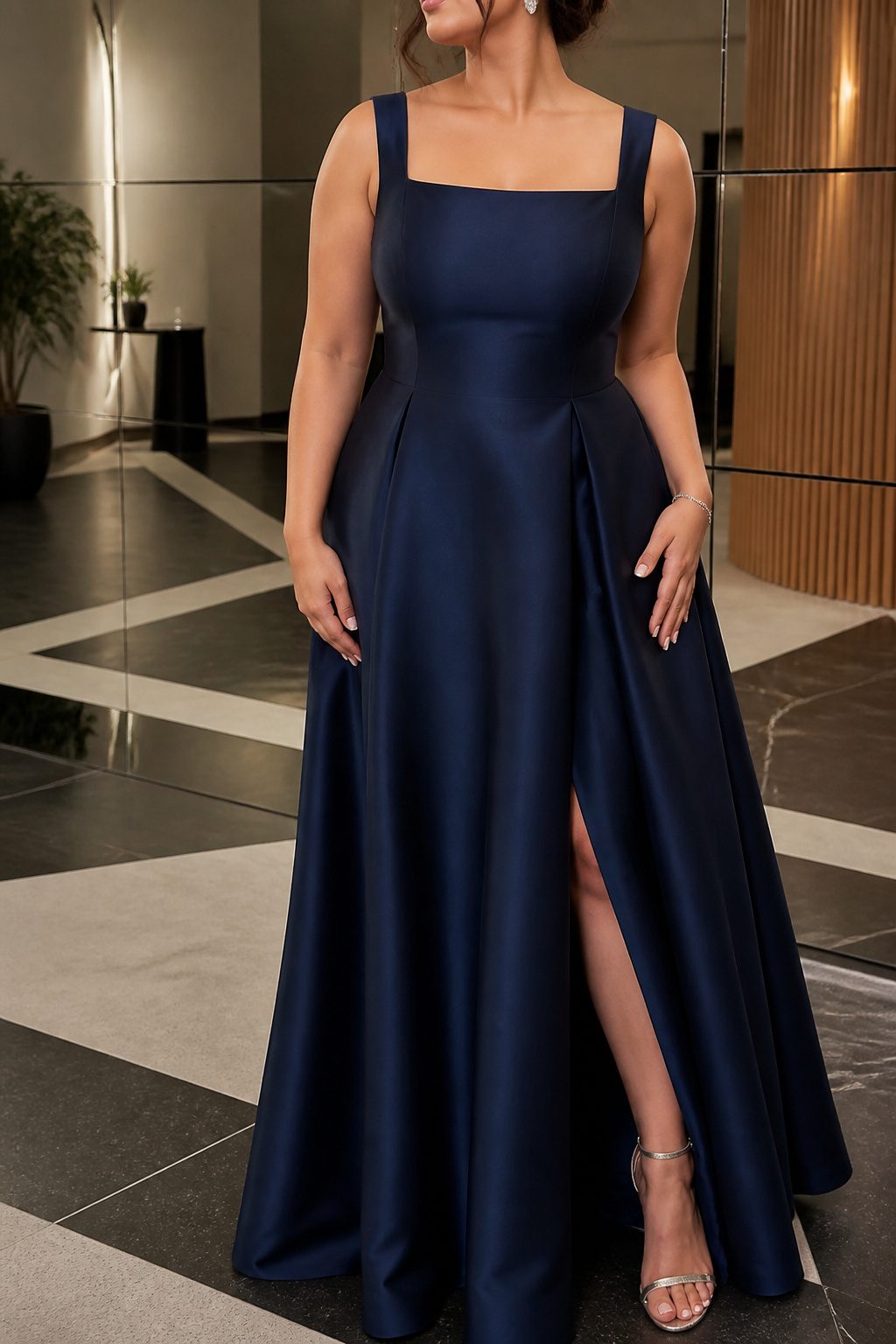
A square neckline draws a straight horizontal line from shoulder point to shoulder point, creating a geometric frame that reads as deliberate architecture against the body.
Where a scoop or sweetheart curves away from the face, the straight edge pulls the eye outward to the collarbones and makes the shoulder line look broader and more level. That horizontal emphasis is the whole point.
The shape borrows from Regency and Renaissance dress construction, where fabric was cut and seamed to sit flat against the upper chest rather than draping in folds.
In a plus size prom dress, this historical structure does practical work: the unbroken edge gives the bust a defined boundary without adding volume, and the corners of the square draw attention to the neck and face instead of the center of the chest.
The fit at those two front corners matters more than anywhere else.
If they gap or pull, the geometric effect collapses into a distraction. Look for a bodice with side boning or interior structure that holds the line rigid when you move your arms.
Straps or sleeves that extend directly from the corners keep the horizontal intact better than strapless versions, which tend to collapse the shape into something closer to a wide scoop after an hour of wear.
Curved necklines soften; this one declares. That declaration works best when the construction backs it up.
Halter
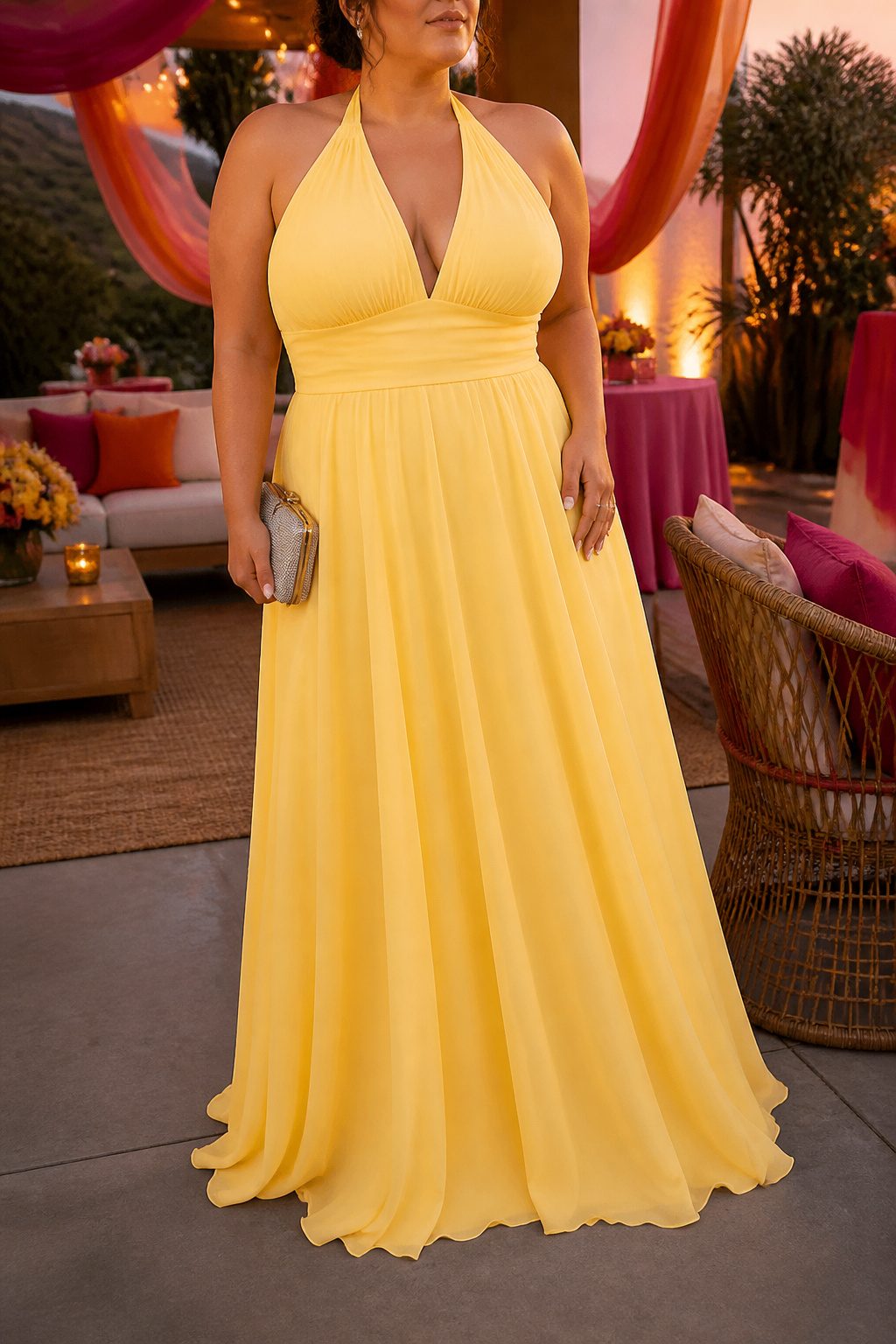
A halter dress sends all its support upward, straps fastening behind the neck while the shoulders and upper back stay completely open.
That openness is the draw, especially for anyone who wants to show off décolletage or balance fuller hips with visual weight up top. But the physics are worth understanding before you commit.
The neck carries the load in a halter, and a heavy skirt adds real strain by evening’s end.
Bust support that would normally rest on straps or a band now transfers to that single neck tie, which means the style works best for small-to-medium bust sizes where the weight stays manageable.
Larger busts can still wear it, though a wide halter band that spreads pressure across the upper back helps more than a skinny string.
For plus-size prom dresses specifically, look for construction that counters the neck pull: a fitted bodice that takes some support through the ribcage, or a halter that crosses in back before fastening rather than meeting at one point.
The bare shoulders photograph beautifully under dance-floor lights, but comfort determines whether you stay out past the first slow song.
Size Range and Fit
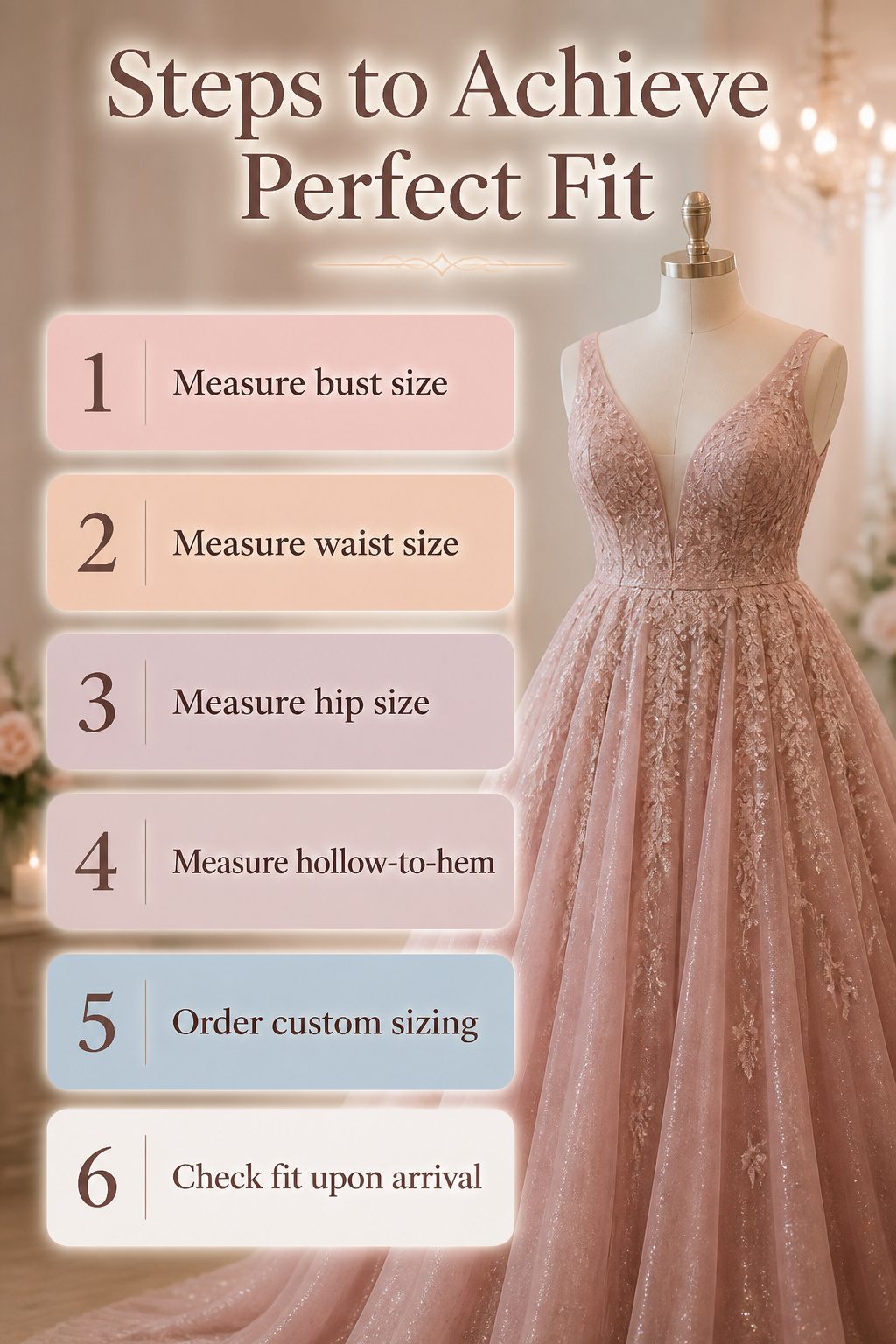
Most plus size prom dresses sold online top out around size 26 or 28, which leaves a real gap for anyone above that. Custom sizing fixes the fit where standard charts fail, and it is worth the extra week of lead time.
The four measurements that actually matter are bust, waist, hip, and hollow-to-hem, which is the vertical from the hollow at the base of your throat to where you want the hem to fall.
A size chart built on a B-cup bodice and standard height will not map onto a body that carries weight differently, and that is why the dress that matches your "size" still gaps at the waist or pulls across the back.
I have watched enough order-and-return cycles to know that a number on a label means less than where the seams land relative to your own proportions.
If the seller offers it, custom sizing adjusts the pattern itself rather than shipping you a larger standard block, and that is the difference between a dress that fits and one that merely zips.
Accessories
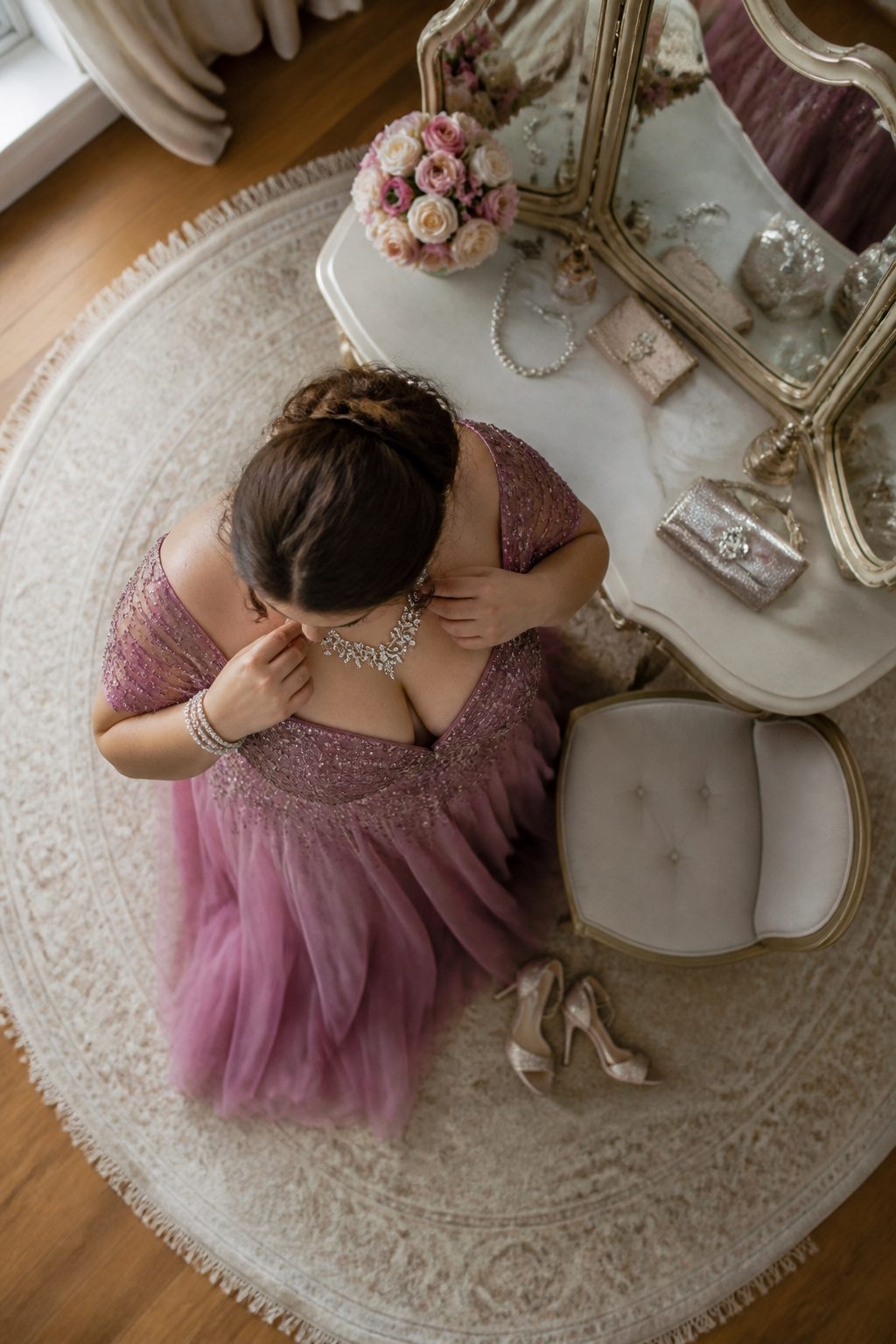
The right accessories for plus size prom dresses come down to scale and stamina, not just sparkle. A delicate pendant gets swallowed by a deep sweetheart neckline, while a collar of crystals can overpower a high-neck bodice.
I tend toward one statement piece and two quiet supports: chandelier earrings with a slim bracelet, or a cuff with stud earrings and nothing at the throat.
Clutches should slide under the arm and stay there. A wristlet strap saves you from setting it down on a drink-sticky table every time someone asks to dance.
For shoes, a three-inch heel with a hidden platform gives the lift of a stiletto without the calf cramp that hits around hour three.
Satin or metallic leather both work, but test the insole padding by pressing your thumb into it, hard. If you feel the board underneath, your feet will too.
Color coordination runs simpler than most people make it. Match metallics to hardware on the dress itself, not to the fabric.
Gold beading wants gold accessories; silver side ruching wants silver. If the dress is unadorned, rose gold warms up jewel tones, while gunmetal cools pastels without the harshness of straight silver.
Customization and Shipping
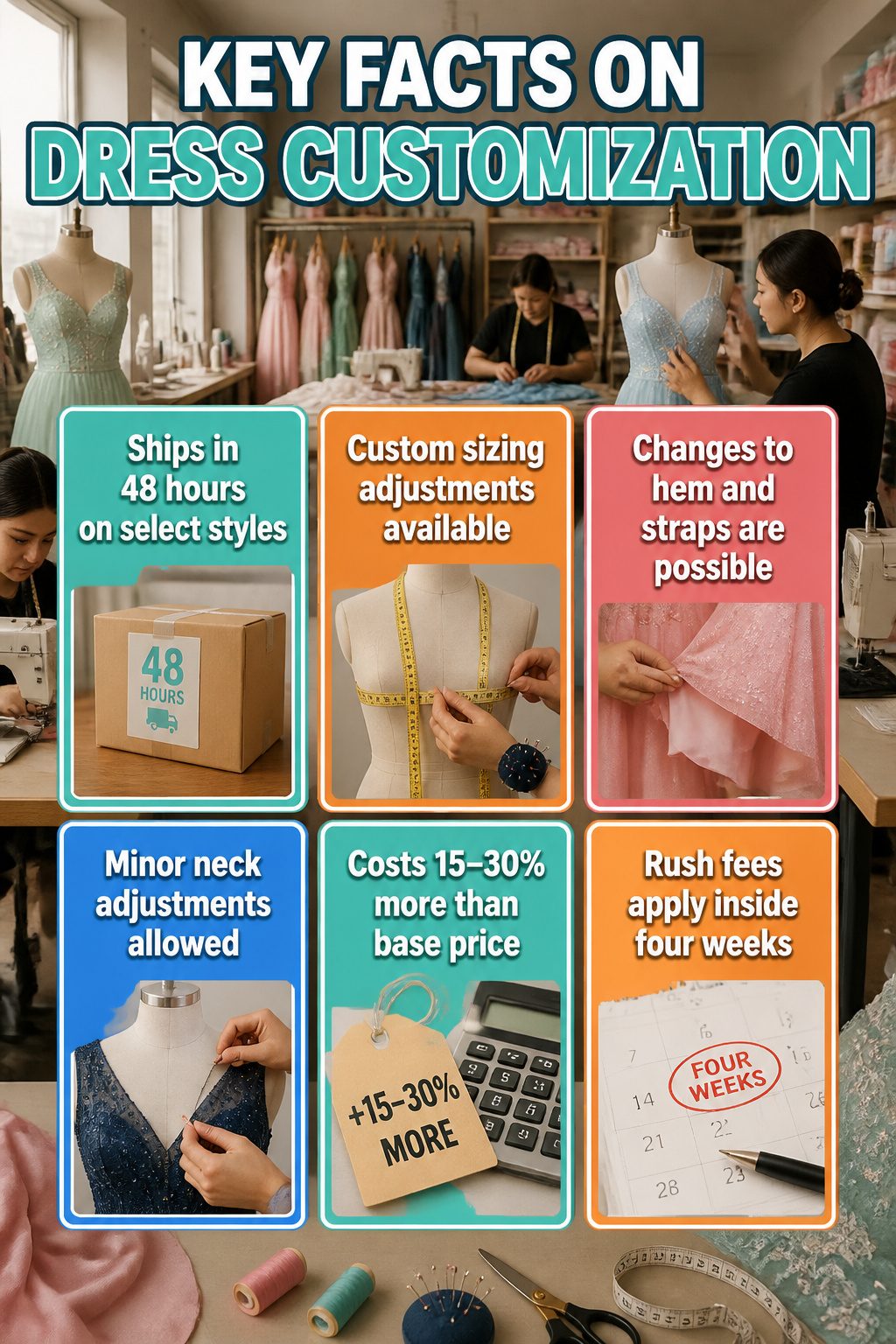
Some prom dress sellers, including Stacees, now list ships in 48 hours on select styles, which is the closest thing to a safety net for last-minute shoppers.
That speed applies to ready-made stock, not custom work, and the window narrows fast in late April when everyone else suddenly remembers prom is three weekends away.
Custom sizing and design adjustments do exist for plus size prom dresses, but the range of what can be altered is smaller than most buyers assume. Hem length, strap placement, and minor neckline tweaks are usually possible.
Built-in corsetry, boning placement, or changing a silhouette from A-line to trumpet generally is not. The cost runs roughly 15–30% above the base price depending on complexity, with rush fees stacked on top if you are inside the four-week mark.
What convinced me, reading through the ordering pages, is how rarely the timeline is the problem and how often it is the fitting.
A dress that ships in two days still needs a week for alterations once it arrives, and local seamstresses book solid in prom season.
The real deadline is not when the box leaves the warehouse. It is whether you have time to fix what does not sit right once you try it on.
Frequently Asked Questions
What styles of plus size prom dresses are available?
The most widely stocked silhouettes are ball gowns, A-line, mermaid, sheath and column, trumpet, short and mini, and long floor-length cuts.
Ball gowns with fitted bodices and voluminous skirts create waist definition mechanically, while A-lines widen gradually from shoulder to hem and read as the most forgiving shape.
Mermaid and trumpet styles stay fitted through the hips before flaring at or below the knee, and sheath or column dresses fall straight from shoulder to hem for a modern, intentional look.
How do I find the right size for a plus size prom dress?
Many retailers offer custom sizing options alongside standard size guides, which matters because plus bodies vary more in proportion than straight sizes account for.
For floor-length gowns ordered online, email customer service with your side-seam measurement from natural waist to floor in your planned heel height and ask which listed length matches, since center front, center back, and side seam can differ by two inches or more on a plus-size gown.
What accessories should I wear with my plus size prom dress?
Sparkling jewelry, chic clutches, and matching shoes complete the look, with the accessory choice depending on your dress’s neckline and how much visual weight it already carries.
A mermaid gown’s included scarf can be draped over shoulders or wrapped at the waist to draw the eye upward, while simpler silhouettes leave more room for statement pieces without competing for attention.