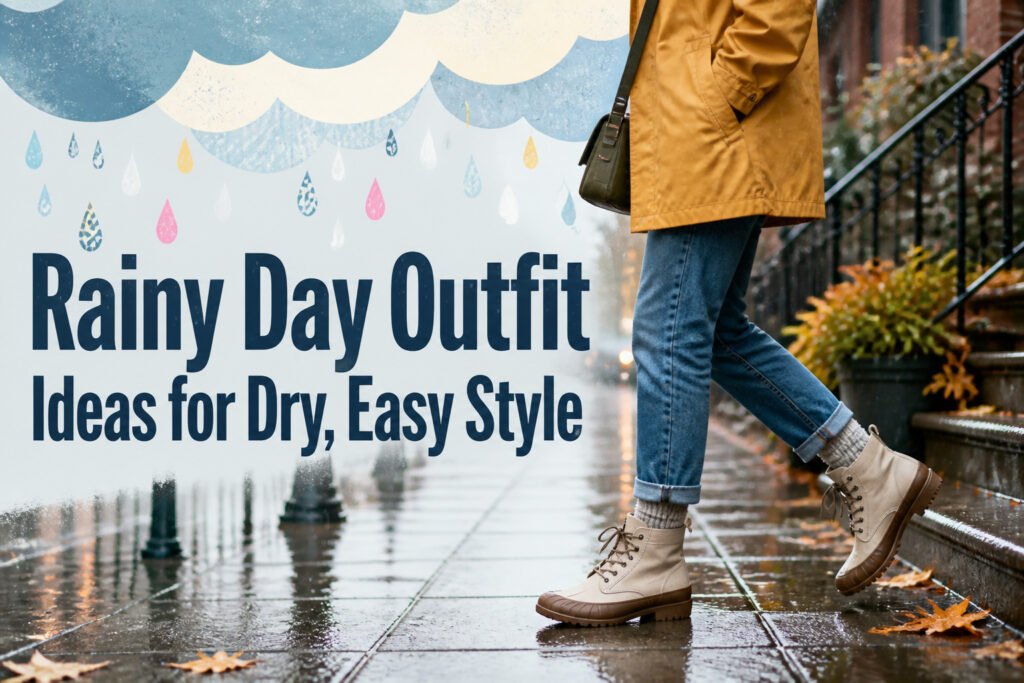
The right rainy day outfit depends on how far you’re walking and how fast the temperature swings. A $220 GORE-TEX sneaker handles a coffee run, but standing water demands the full coverage of a $350 Le Chameau boot. The common mistake is starting from the jacket down. Start with the shoes instead, and the rest of the outfit builds itself.
1. Waterproof Footwear
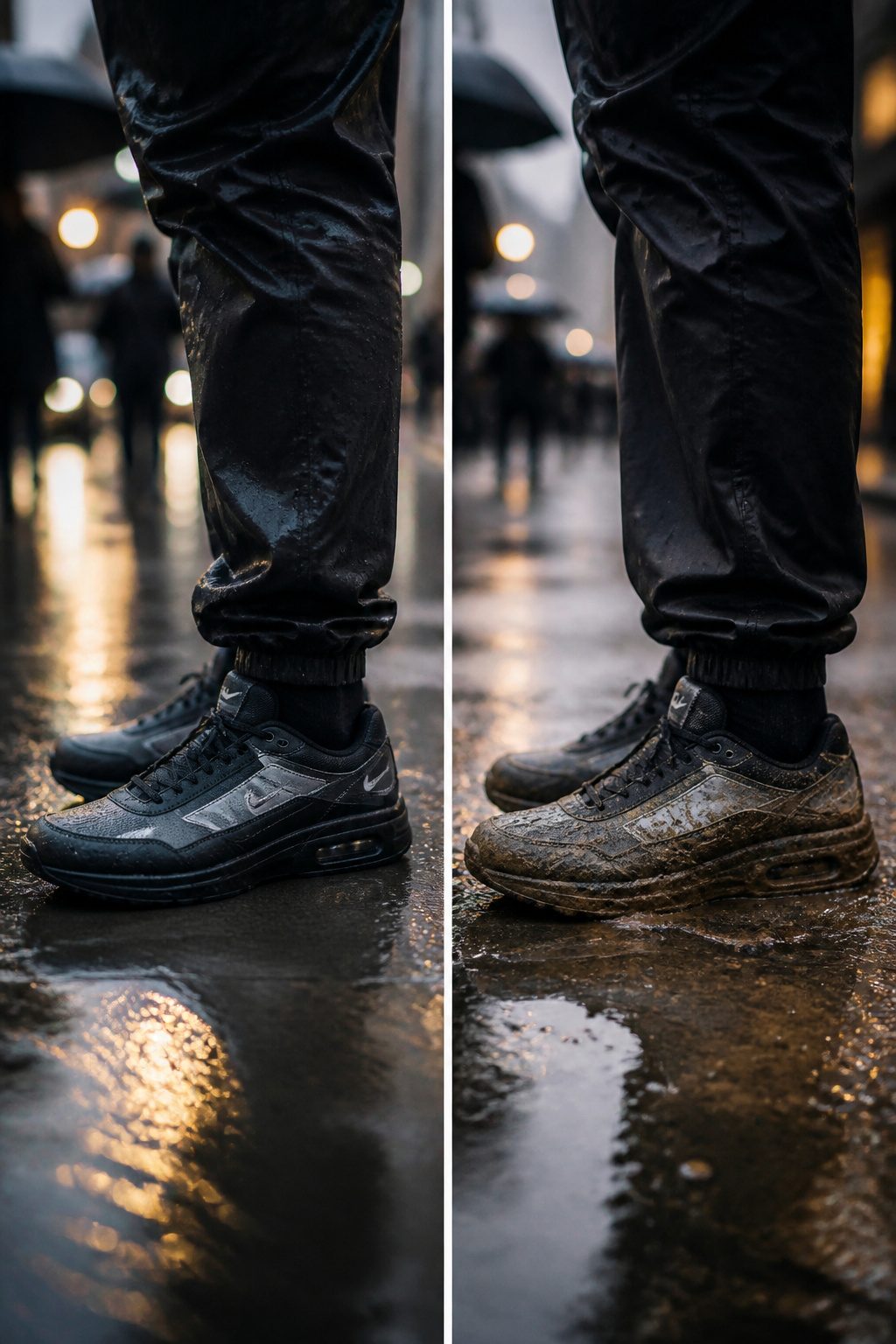
Waterproof sneakers built around GORE-TEX have become my first move on wet pavement. The Nike Air Max SNDR at $220 keeps the lines of a normal trainer while sealing out water; nobody clocks them as rain gear until they need to borrow your dry socks.
Tall boots still earn their space when the forecast turns serious. Le Chameau’s The Imperfect Vierzonord boots run $350 and carry the height to handle actual puddles without the industrial rubber look of basic galoshes. The slight scuffs and variation in the "imperfect" finish read as worn-in rather than construction site.
For days that stay above sixty and the rain is more mist than downpour, the Bottega Veneta Gondola clogs at $890 sound absurd until you wear them. PVC reads as deliberate texture rather than practical concession, and the open back solves the sweat problem that traps inside sealed shoes.
The real mistake is treating waterproof footwear as an afterthought. Suede or standard canvas ruins the outfit from the ground up the second you step into a gutter pool. Start with the shoes, let the rest of the outfit build around whatever height and coverage the day demands, and you stop looking like you’re dressing for the rain and start looking like you dressed well on a day that happened to have some.
2. Rain Jackets
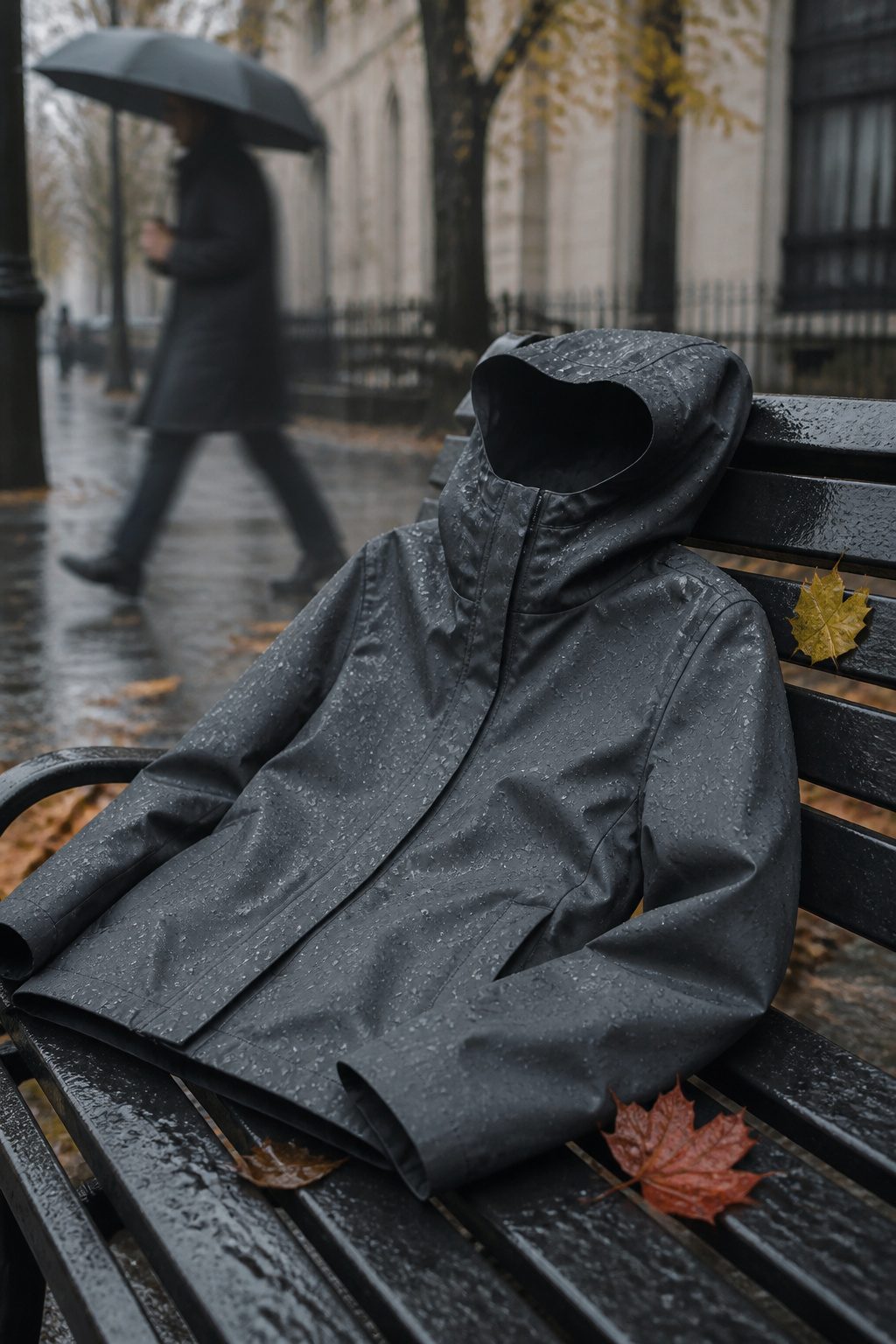
A lightweight rain jacket sits at the center of most rainy day outfits I actually wear, because the coat choice sets the tone for everything underneath. The COS technical hooded parka jacket at $199 gives you a sporty, modern line with a hood that actually stays up in wind, which means you can skip the umbrella on shorter walks. The Burberry mid-length Camden Heritage coat at $2,295 is the classic trench shape in a mid-length cut, polished enough that you won’t look underdressed walking into a meeting soaking wet.
Choose the parka for active days and the trench for anything involving an office or dinner reservation. Anoraks sit between the two, less structured than a trench but more put-together than full outdoor gear. If your closet runs toward tailored trousers and blazers, the Burberry’s shape extends that vocabulary. If you live in leggings and sneakers, the COS parka keeps the silhouette honest without trying to dress it up.
The real mistake is buying a rain jacket that fights the rest of your wardrobe. A bright technical shell over a wool skirt looks like you grabbed the wrong coat. Match the jacket’s formality to what you already own, and the rainy day outfit builds itself.
3. Layering Pieces
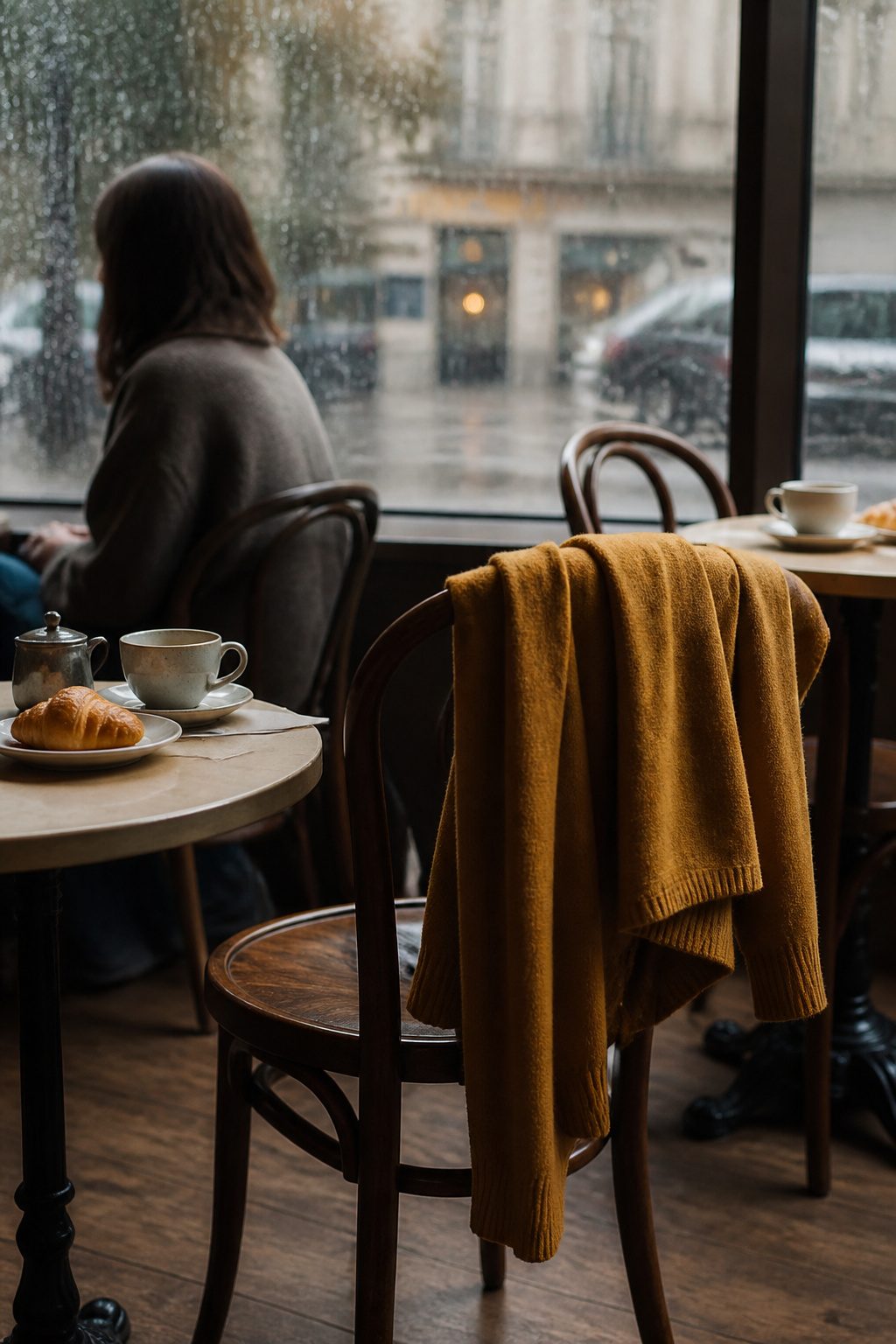
A wet morning can turn warm by noon, then drop again when the clouds break. That swing is exactly why a lightweight merino or cashmere layer beats one heavy coat you cannot peel off. I reach for a fine-gauge sweater or a long cardigan I can button and unbutton as the day shifts. Hoodies work too, though I prefer them in a smoother knit that does not balloon under a raincoat.
Humidity is the hidden problem. Thick cotton holds damp air against your skin, so wool and treated cotton handle the moisture better. A silk blend underneath wicks without the clammy feel. Chunky knits look tempting, and I own a few, but on truly soggy days they take hours to dry if the drizzle gets past your shell. Save those for the coffee run, not the commute.
4. Accessories
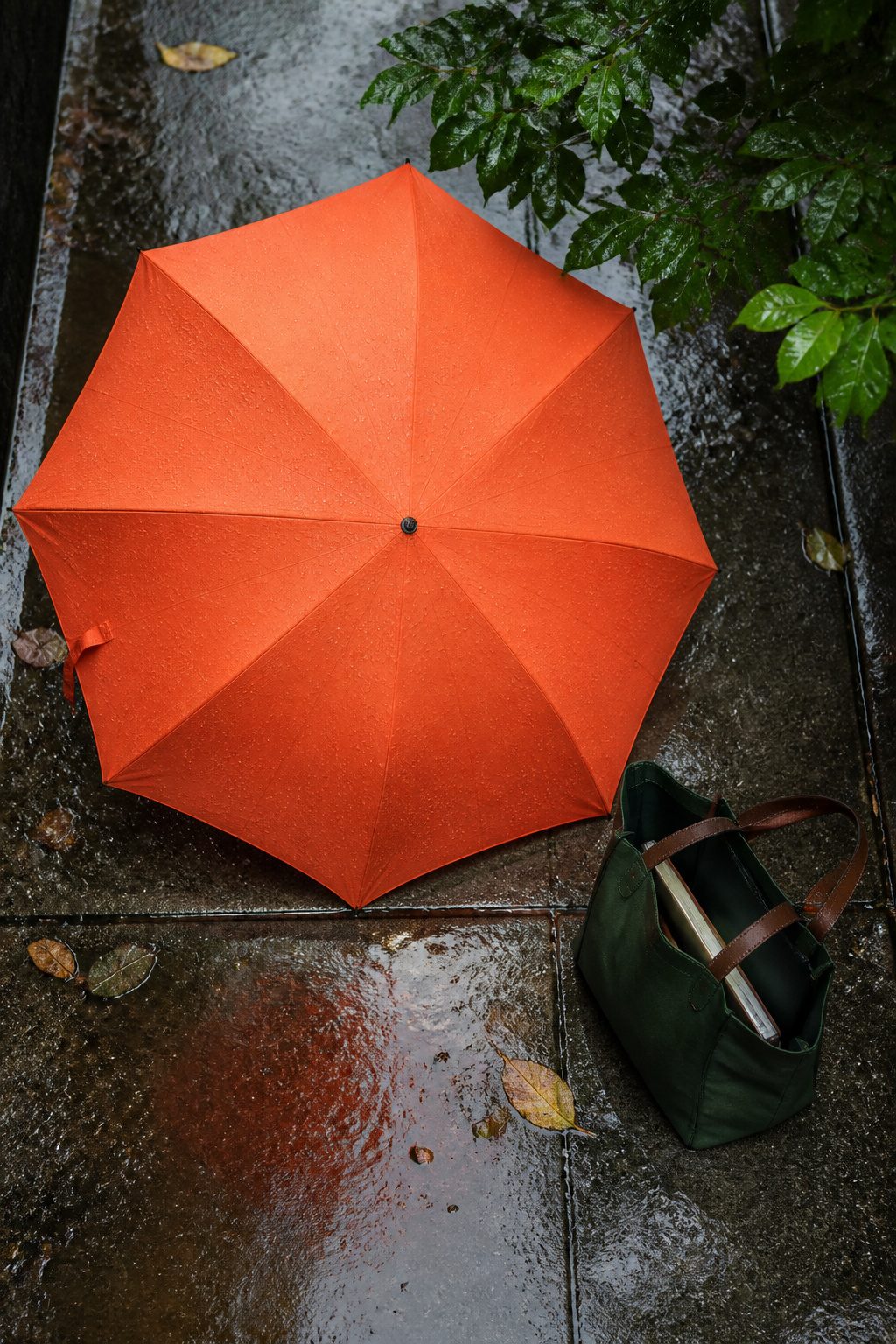
A Davek Elite umbrella in a bold color does more than keep water off; it turns the gray sidewalk into something you actually want to step onto. I keep mine in the deep pocket of a water-resistant canvas tote, which means my laptop and the paperback I’m halfway through stay dry even when I’m juggling coffee and a train card. The tote’s utilitarian shape takes a bright stripe or a saturated solid surprisingly well, and that small hit of pattern against a black raincoat is the difference between looking prepared and looking like you gave up. A wide-brimmed hat in a waterproof weave handles the drizzle that sneaks under the umbrella rim, and a soft wool scarf looped at the neck adds warmth without the fuss of an extra layer. The whole trick is choosing accessories that would feel too cheerful on a sunny Tuesday but are exactly right when the sky has flattened to one color.
5. Bottoms
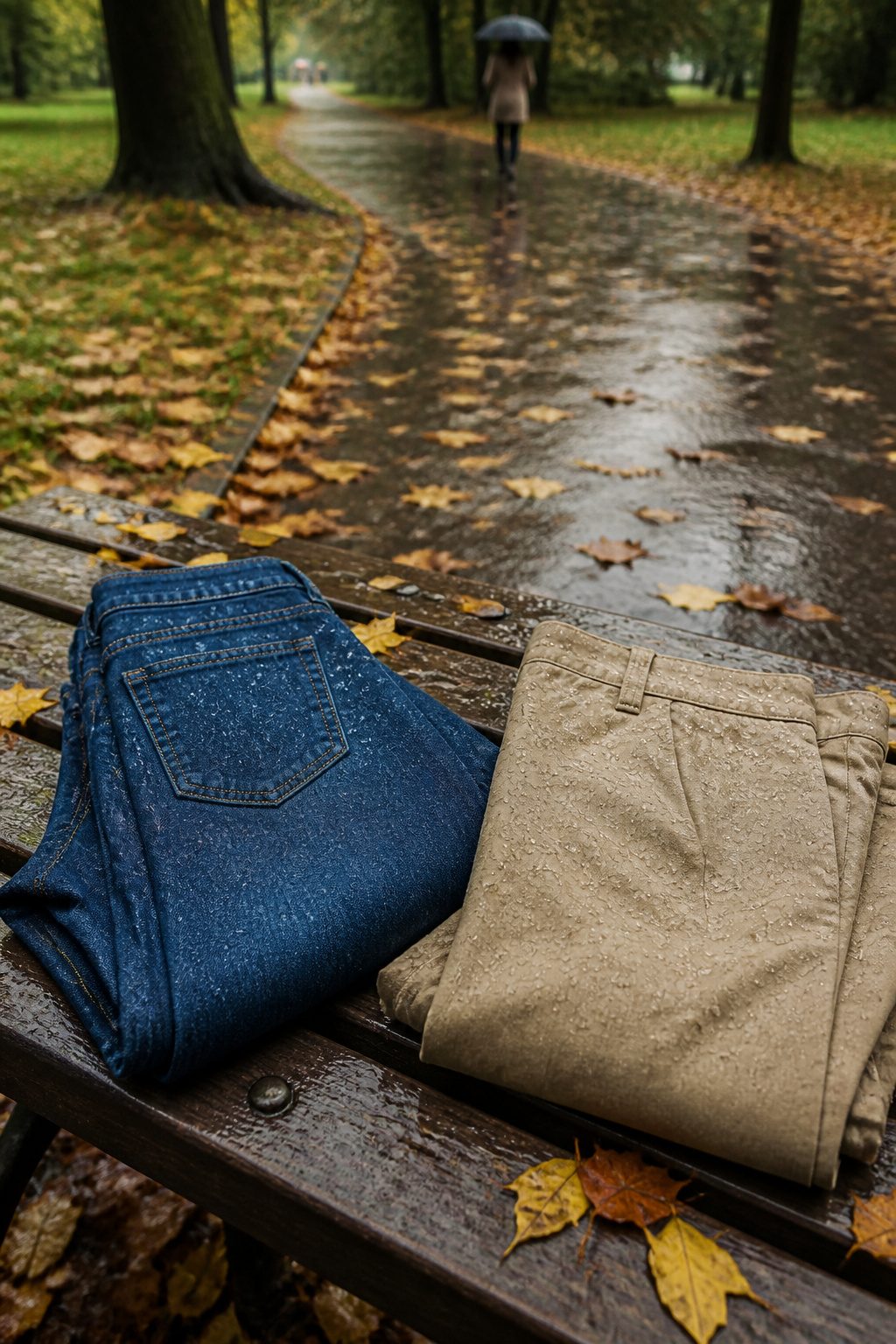
Skinny jeans earn their place on wet days because the narrow cut stays clear of puddle splash, though the fabric itself holds water longer than you’d want. Cropped trousers solve the hem problem directly: ending at or above the ankle, they simply have less material to soak through. Tailored shorts carry that logic further for summer storms, though the bare-leg question is personal. Wide leg linen pants are the option that surprised me. The lightweight fabric dries faster than denim, and the cut is thin enough to tuck into tall rain boots without the lump and awkwardness of thicker pants. The sources split on whether to wear them cropped or full length: cropped or ankle-length keeps the hem out of puddles, while full length can flow over the boot top. Linen handles either without catching or clumping. The pants I tracked sold out at Anthropologie and Backcountry fast; the pistachio color was on pre-order at Revolve at the time.
6. Dresses
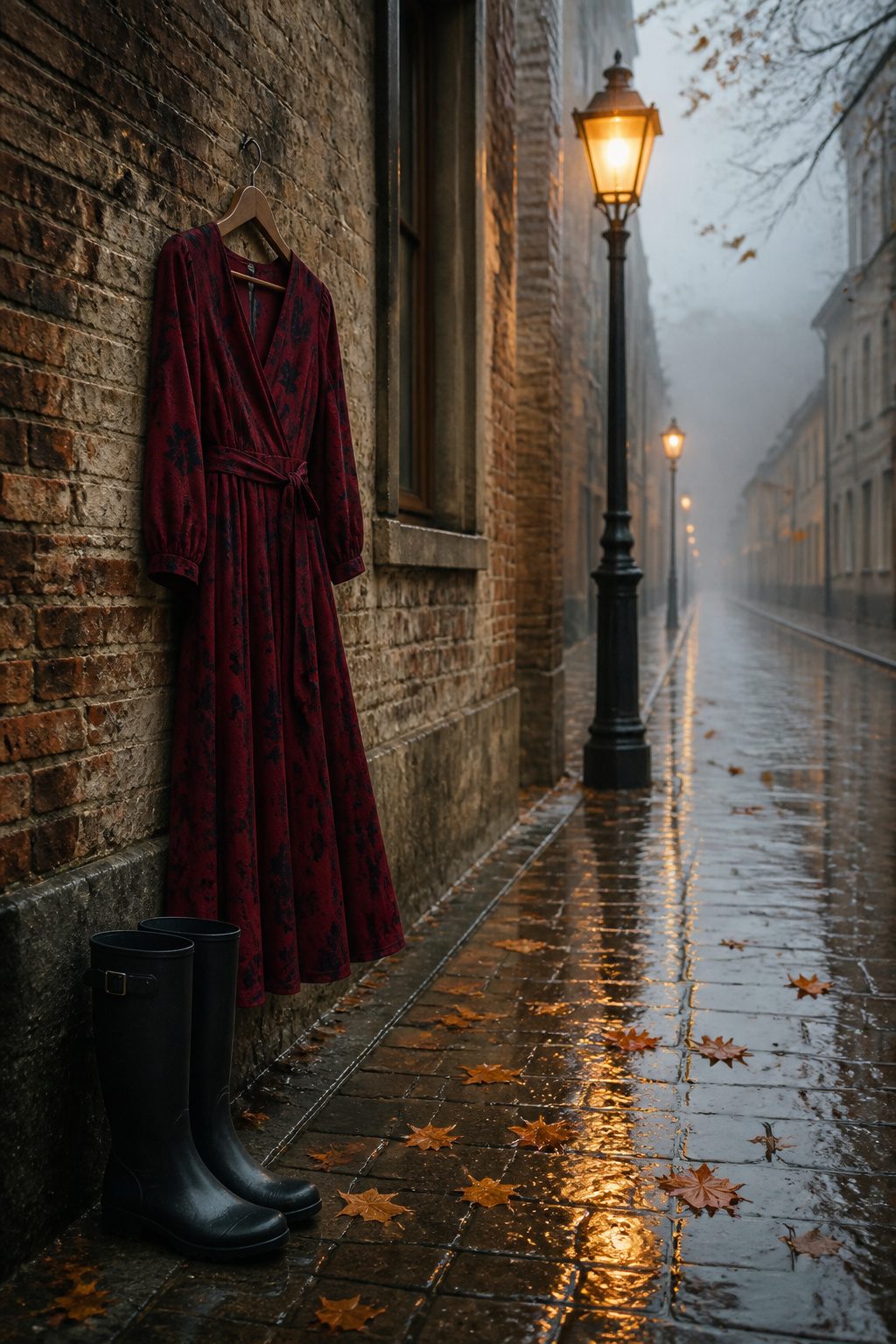
A midi dress paired with knee-high waterproof boots gives you a hemline that clears most puddles without the fuss of wet trousers. Maxi dresses work too, but only with boots tall enough that the fabric isn’t dragging. The sources split here: one frames this as a relaxed, feminine look, another pushes it for brunch with a tailored raincoat on top. Both are right, depending on your morning.
Fabric matters more than cut once you’re inside. Dresses dry faster than pants because the air reaches more surface area, and a single layer of linen or chambray wicks better than soaked denim ever will. That said, light colors are a mistake I wouldn’t repeat; mud splatter on a pale hem is the first thing you’ll notice when the rain stops. Darker tones hide the commute.
Layering is where this connects back to the rest of your outfit. A bodysuit underneath adds warmth without bulk, and the rain jacket from earlier sections sits cleaner over a dress’s shoulders than over a blazer. The umbrella and coat finish it, but the boots do the real work: without them, you’re just holding your hem all day.
Footwear Options Compared
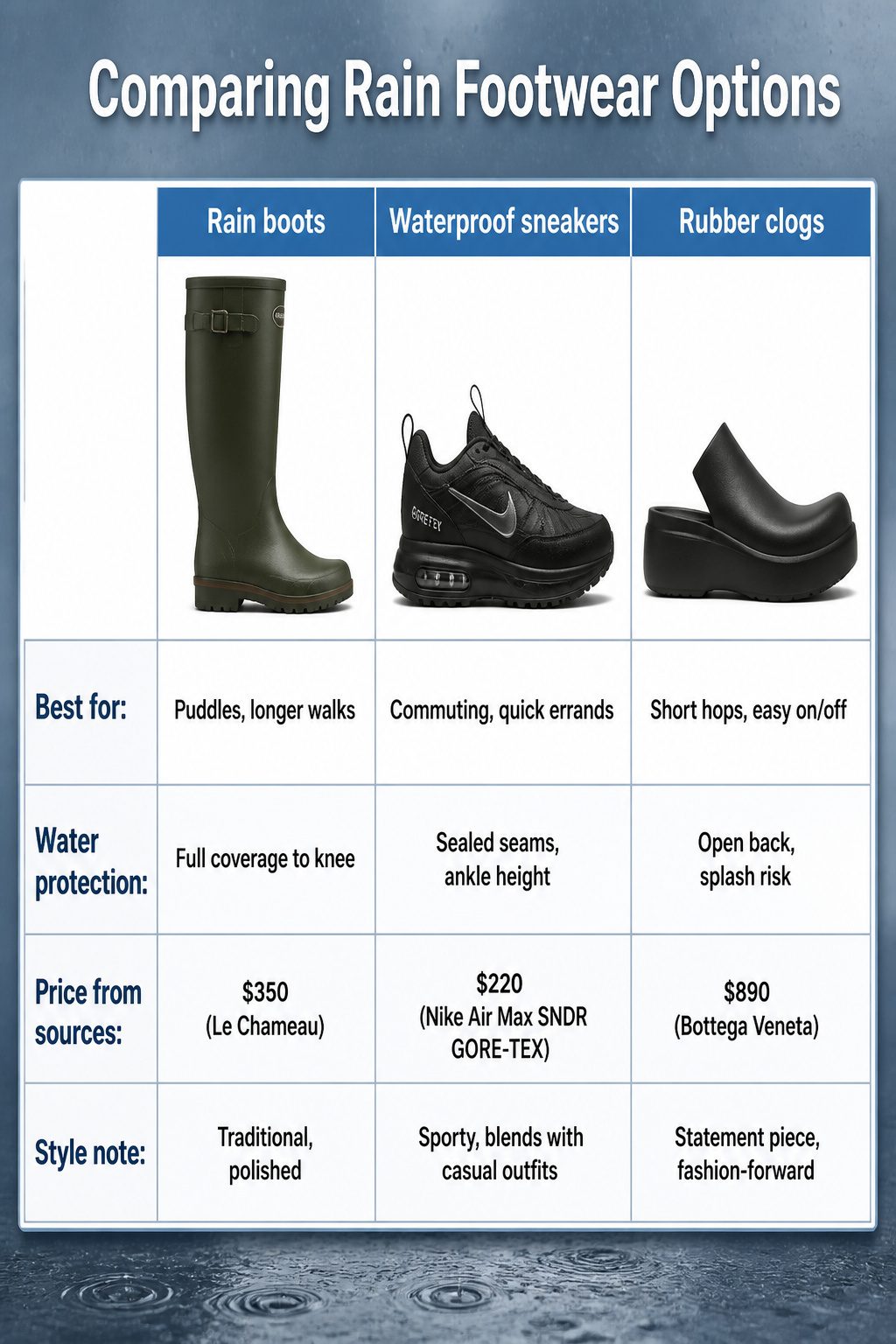
The choice in rainy day outfits usually comes down to how far you are walking and how fast you need to move. Rain boots, waterproof sneakers, and rubber clogs each handle water well enough to build an outfit around, but they split on comfort and context.
| Rain boots | Waterproof sneakers | Rubber clogs | |
|---|---|---|---|
| Best for | Puddles, longer walks | Commuting, quick errands | Short hops, easy on/off |
| Water protection | Full coverage to knee | Sealed seams, ankle height | Open back, splash risk |
| Price from sources | $350 (Le Chameau) | $220 (Nike Air Max SNDR GORE-TEX) | $890 (Bottega Veneta) |
| Style note | Traditional, polished | Sporty, blends with casual outfits | Statement piece, fashion-forward |
Tall boots like the Le Chameau Imperfect Vierzonord make sense for a day with real walking and standing water. The Nike Air Max SNDR GORE-TEX sneakers trade some coverage for mobility; they work better if your rainy day involves transit stairs or a coffee run where boots feel like overkill. The Bottega Veneta Gondola clog is the outlier: expensive, not practical for deep puddles, but useful if your routine is car to door and you want something that reads deliberate rather than prepared for a storm.
My own leaning is toward the sneaker for anything under a mile, the boot for anything over. The clog I would skip unless the outfit itself is the point.
Outerwear Choices by Temperature
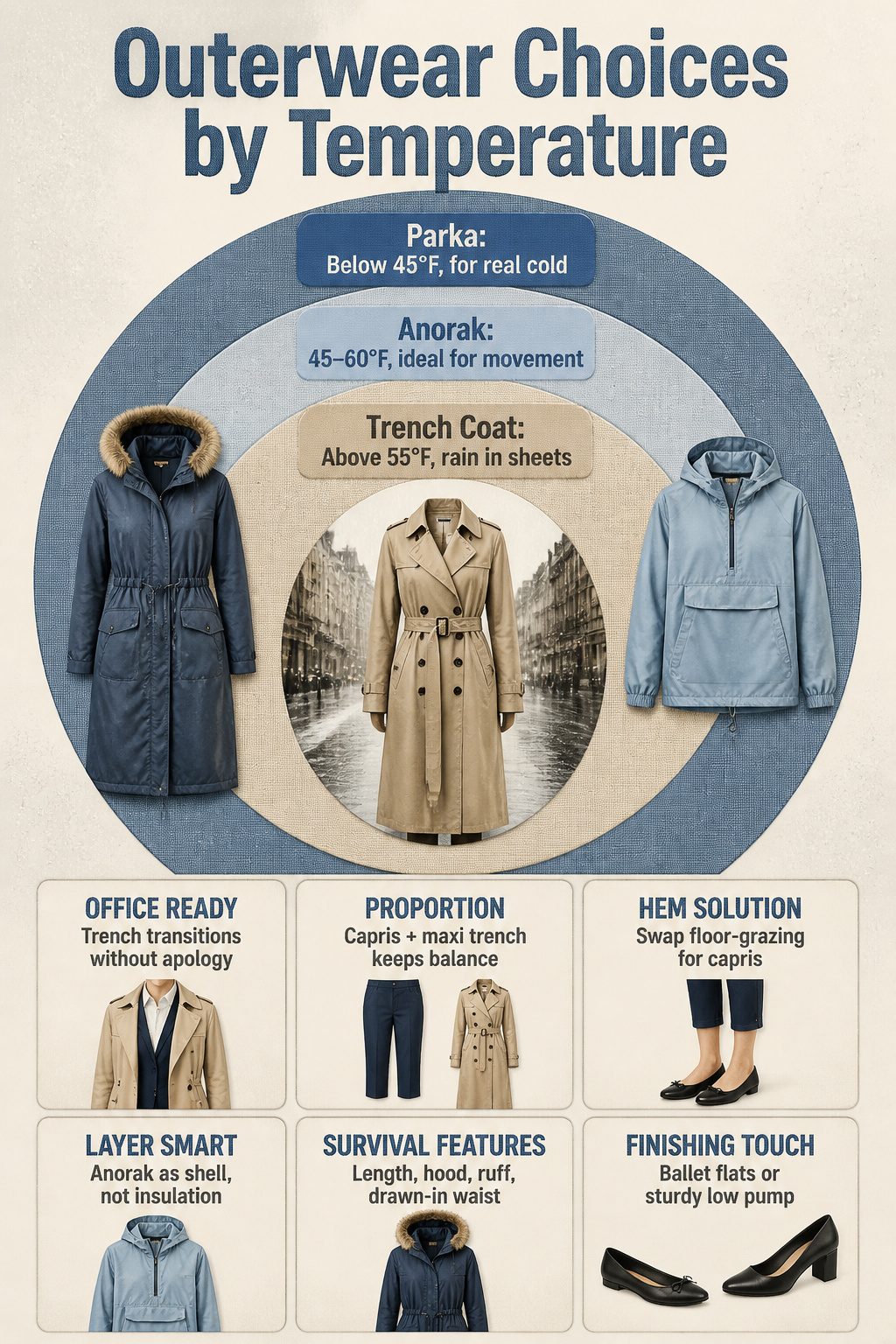
A trench coat works when the mercury sits above 55°F and the rain comes in sheets rather than storms. The cut matters more than the label: a maxi length like Burberry’s Castleford saves your trousers from backsplash, and a belted waist keeps the silhouette from reading as borrowed gear. Below that temperature threshold, the same coat turns into a wind tunnel.
Anoraks step in for the 45–60°F band where you need to move. The pullover shape seals out horizontal rain better than any button front, and the shorter hem plays well with the capris Vogue suggests for keeping hems dry. I treat mine as a shell layer, not insulation; the mistake is wearing one thick enough to sweat through.
Parkas own the real cold, the days when rain threatens to turn and you are standing at a bus stop rather than dashing car-to-door. The length, the hood with real fur or a good synthetic ruff, the drawn-in waist: these are survival features that happen to photograph well. Between the three, the trench is the only piece that transitions to the office without apology, which is why it dominates my own closet from March through early November. The others earn their hangers on merit, but they earn them for different months.
Swap floor-grazing trousers for capris to avoid soaked hems. Add a blazer and Burberry’s Castleford maxi trench, and complete with ballet flats or a sturdy low pump.
— Vogue
The capri-trench pairing reads as intentional rather than reactive, which is the whole game in rainy-day officewear. The maxi trench gives back the leg coverage the capris took away, so the proportions stay balanced and the wool or treated cotton keeps the look out of emergency-poncho territory.
Layering Techniques That Actually Work
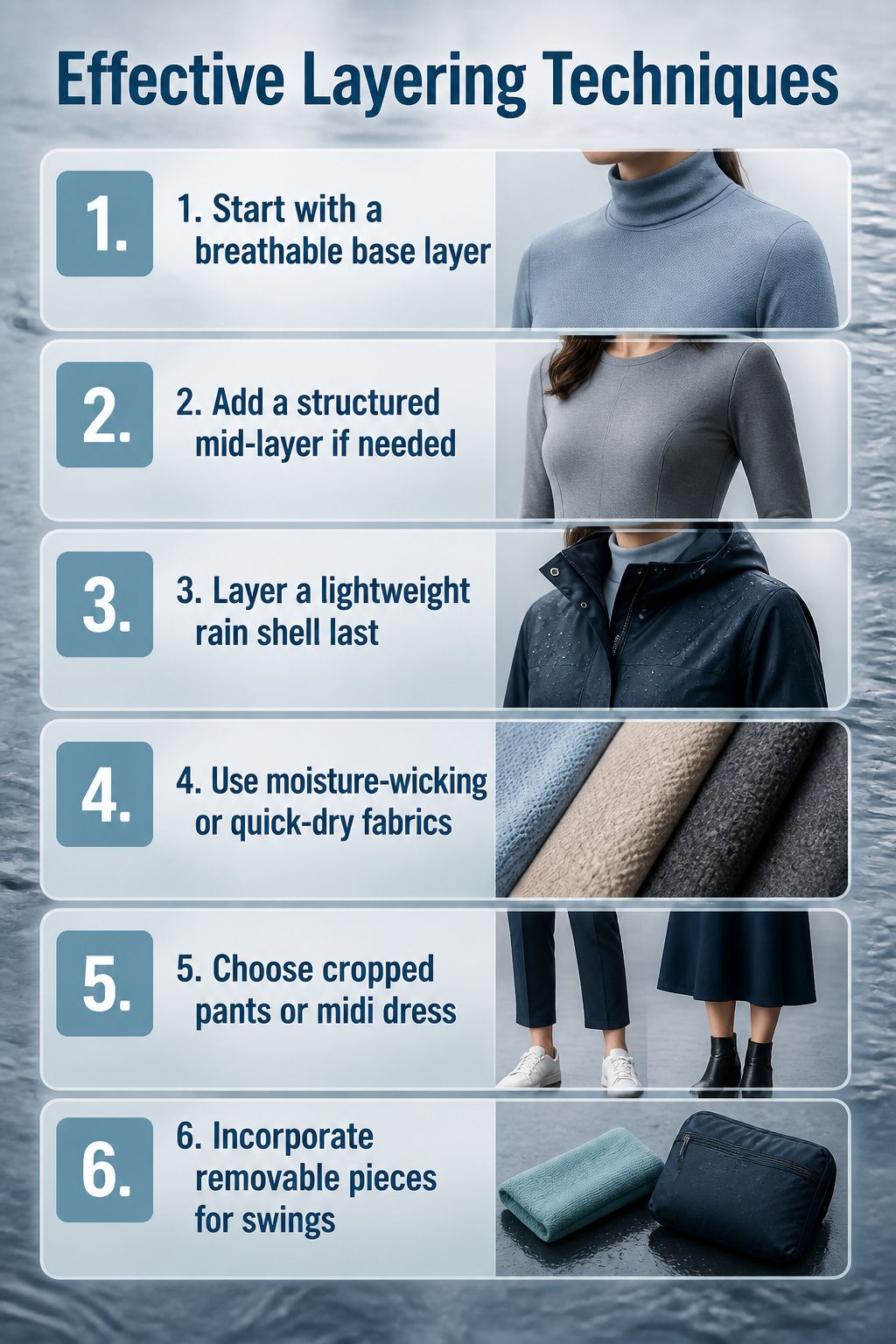
- Start with a base layer that handles sweat before it handles rain. A turtleneck in a breathable weave sits against skin and moves moisture outward, so you are not damp from your own heat by noon.
- Add a mid-layer for warmth only if the day calls for it. This is where bulk creeps in and ruins the line of your coat. Choose something thin with structure, a sculpted dress or a fitted long-sleeve, so the silhouette stays clean when the shell goes on top.
- The shell is your actual rain defense: a lightweight rain jacket, a treated cotton trench, or a wool coat that has seen some weatherproofing. Put this layer on last and take it off first when you are indoors, so trapped humidity does not undo the work.
- Fabrics closest to skin should be quick-dry or moisture-wicking; fabrics facing the storm get the water-repellent treatment. Silk blends, treated cotton, and high-quality wool each work for one of these two jobs but rarely both. Check the label before you assign a piece its layer.
- Keep the bottom half simple. Cropped pants or a midi dress hem stay clear of puddle splash better than full-length cuts, and dark colors hide the water spots you will collect anyway.
- If temperatures swing, build in a removable piece rather than one heavy layer. A zip-off pant or a packable sweater you can strip off keeps the outfit adaptable without adding bulk you cannot shed.
Color and Pattern on Gray Days
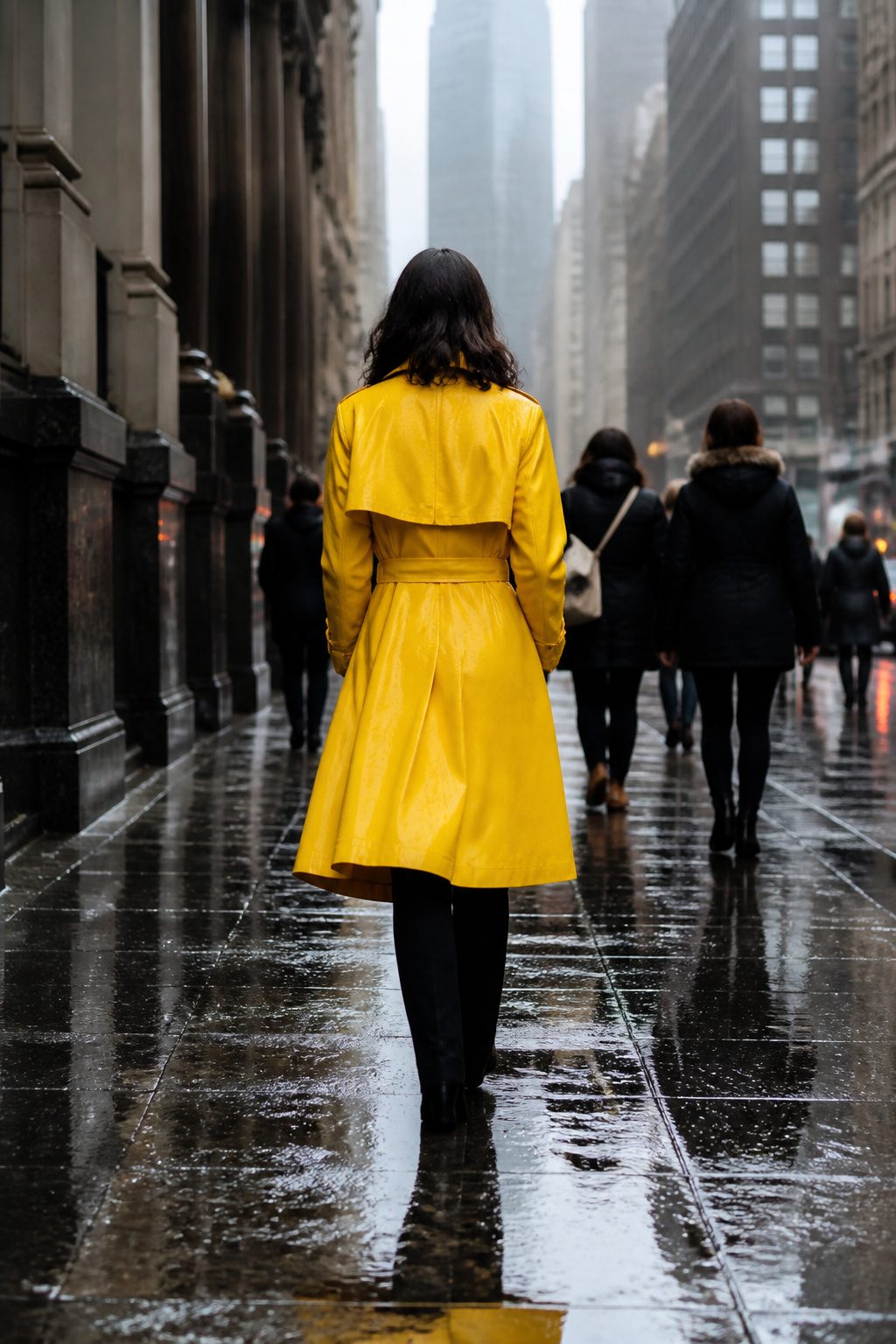
Gray skies make a good case for a single piece in a color that refuses to mute itself. A yellow jacket over black trousers, a cobalt turtleneck under something neutral, or one red trench worn with a simple tank and gray sweater underneath: the move is the same. Let the bright item carry the energy while everything else stays calm.
I tend toward pink on the days when pulling anything together feels like effort. One violet or pastel piece against the usual rain gear does enough; it reads as intentional without the work of a full color story. Pastels in particular sit oddly right in downpour weather, maybe because they borrow from the spring the rain is supposed to bring.
The risk is looking like you are trying to out-cheer the weather itself. Sources that push this advice usually pair that one vivid piece with tailored slacks, a lug-sole loafer, a plain tank. Structure grounds the brightness. Without it, the color floats and the outfit becomes costume.
Patterns work on the same principle. A garden floral or a colorblock print on one item, solid everywhere else. I have learned to keep the print to the layer that stays dry, or to something that dries fast. A wet floral that bleeds or clings loses its charm quickly.
What I actually reach for is usually the pink, sometimes the pastel, rarely the full primary. The red trench is the version I admire on others and never quite commit to myself. The rule I follow instead: one cheerful thing, nothing else competing.
Practicality Versus Style
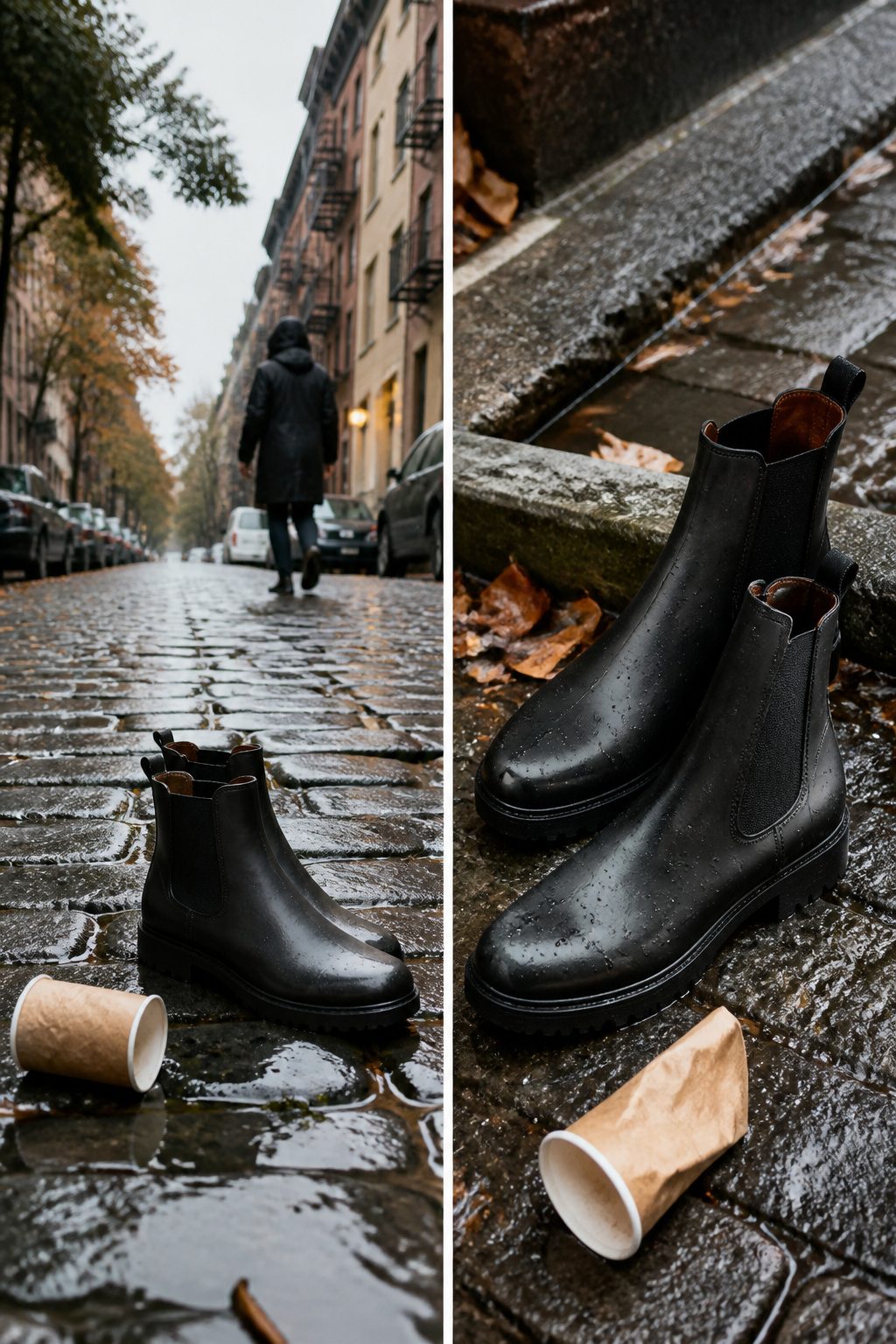
The tension between looking polished and staying dry is where most rainy day outfits fall apart by mid-morning. A lightweight rain jacket keeps the look fresh and modern, but breathable fabrics lose their point the second the liner soaks through at the seams. I have learned to skip anything that claims to do both and does neither: that cropped trench that looked great at 8 AM but rode up in the wind, leaving a soaked band across my hips by the time I reached the office.
Waterproof footwear is the one place I no longer compromise. Stylish boots with a chic umbrella can make rain feel like an accessory, not a hindrance, but boots that leak transform the whole day into an obstacle course. A rubber-soled Chelsea boot with a sealed seam beats a "water-resistant" suede every time, even when the suede pairs better with the rest of the outfit.
Quick-dry dresses work only if the cut keeps fabric from clinging. I wore one in a summer downpour that dried fast enough but left me tugging at the skirt for two hours. Now I check the lining first, and I pack a spare pair of socks even when the forecast looks clear.
Frequently Asked Questions
What should I wear on a rainy day?
Start with waterproof footwear like GORE-TEX sneakers or tall boots, then add a lightweight rain jacket and layers you can peel off as temperatures shift. A base layer in silk or merino wicks sweat, while a water-repellent shell handles the actual rain. Darker colors hide water spots, and one bright accessory lifts the whole look.
Can I wear white on a rainy day?
Light colors are a mistake you will regret once mud splatter hits your hem. The article specifically warns against pale tones because they show every drop and stain the second the rain stops. Stick to darker shades that hide the commute and save the pastels for accessories if you want a cheerful note.
What are the best fabrics for rainy day outfits?
Wool, treated cotton, and silk blends each serve a purpose in a wet-weather outfit. Fabrics closest to your skin should be quick-dry or moisture-wicking, like silk blends and fine-gauge merino. The outer layer gets the water-repellent treatment, so treated cotton or a technical shell handles the actual rain. Thick cotton holds damp air against you, so skip it in favor of wool that moves moisture outward.