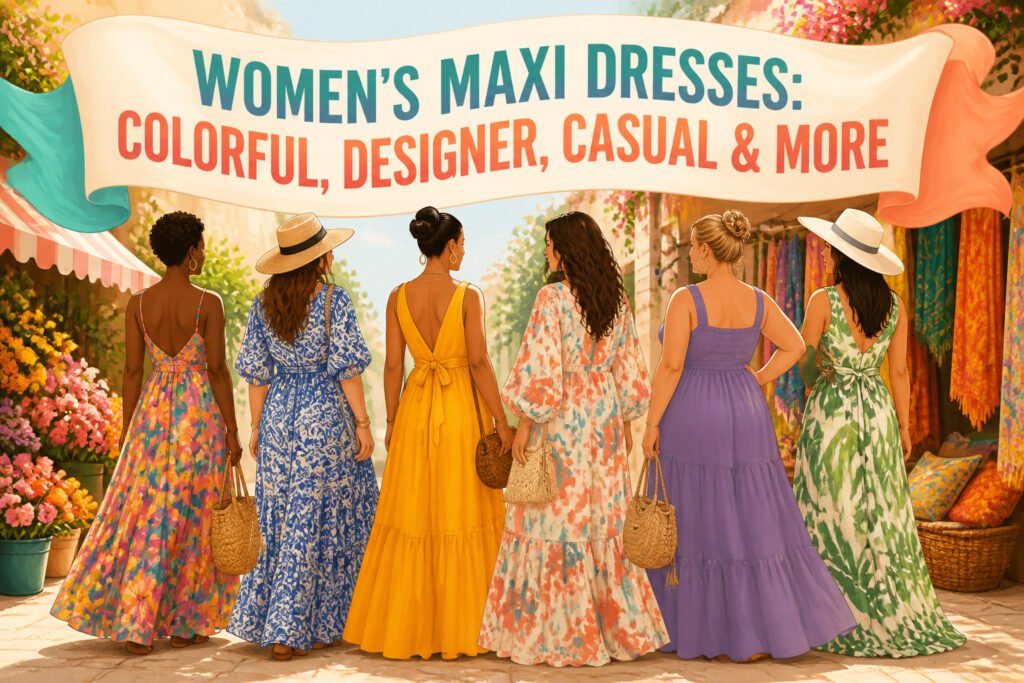
A maxi dress is any dress that hits at or near the ankle, though the hemline alone does not tell you where it belongs. Cotton gauze reads vacation; structured crepe reads intention, and the wrong fabric at the wrong venue turns effortless into underdressed. The ME+EM line currently runs 34 styles from $198 to $945, proof that "designer" here starts lower than most shoppers expect.
Colorful Maxi Dresses
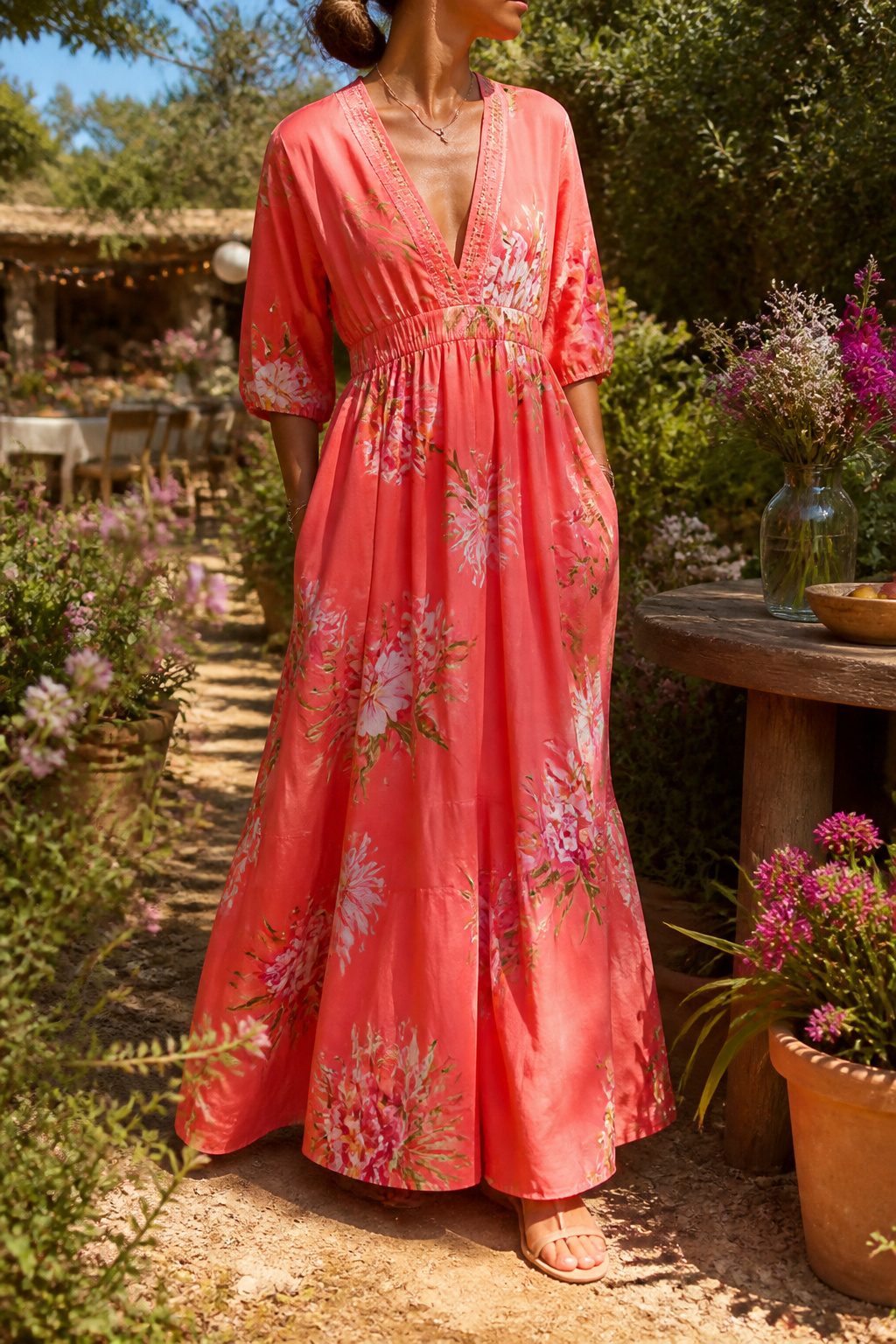
A bold coral or sunflower maxi dress in cotton reads as vacation energy the second you step outside, which is exactly why I reach for prints when I’m packing for a destination wedding. The hand-painted florals Lilly Pulitzer built its name on work here: the busier pattern forgives wrinkles after a flight, and the color does the heavy lifting so your jewelry stays minimal. Solids in silk or satin ask for more intention. A crepe wrap in midnight blue can sit through a courthouse ceremony with heels, then lose the belt and sandals for a Tuesday farmers market. Jersey skews too casual for most weddings, and polyester-rayon blends hold their shape through humidity but trap heat on asphalt. My rule is prints for events, solids for everything else, and cotton or crepe for any day I might end up on grass.
Designer Maxi Dresses
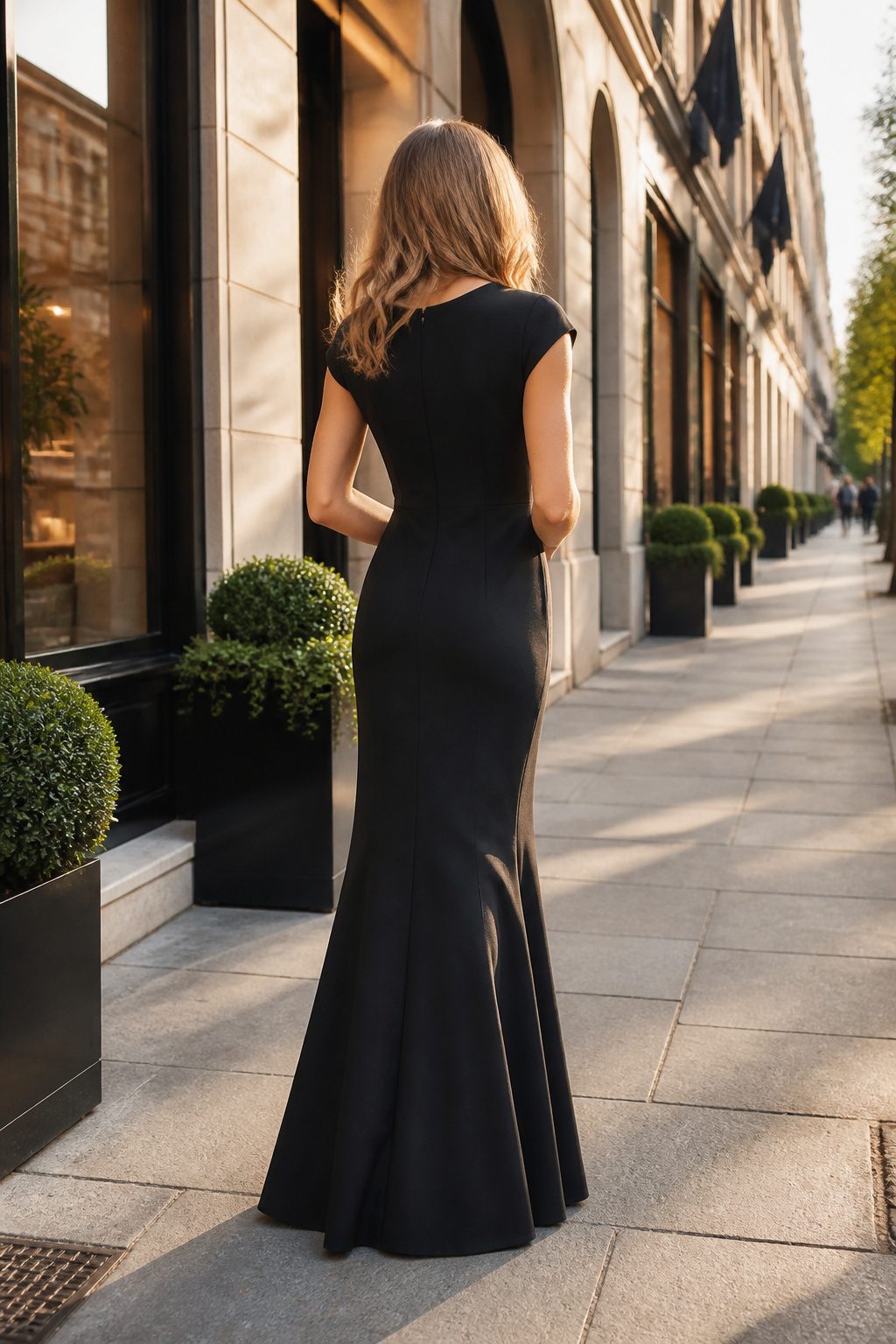
Designer maxi dresses land at the point where fabric weight and seam placement start to matter. A label like ME+EM builds its pieces around that idea: modern cuts in materials that hold their shape through a morning commute and still look intentional at dinner. Their current line runs $198 to $945, which puts the entry point below what most people picture when they hear "designer," and the top near occasion-dress territory. Sizes span XXS to 16, a range that still narrows at the upper end compared to where the broader market has moved. What you get for the step up is partly construction, partly the cut, partly the fact that these are pitched as year-round pieces rather than single-event buys. The AM-to-PM framing is accurate in my experience with the brand: a sleeve adjustment or shoe change does the work, not a full swap. The 34 styles currently listed include slim cuts alongside the standard maxi volume, so the category is not one silhouette repeated in different prints. For someone shifting toward fewer, better purchases, the math works if the dress replaces two cheaper ones that would have worn out or dated faster.
Casual Maxi Dresses
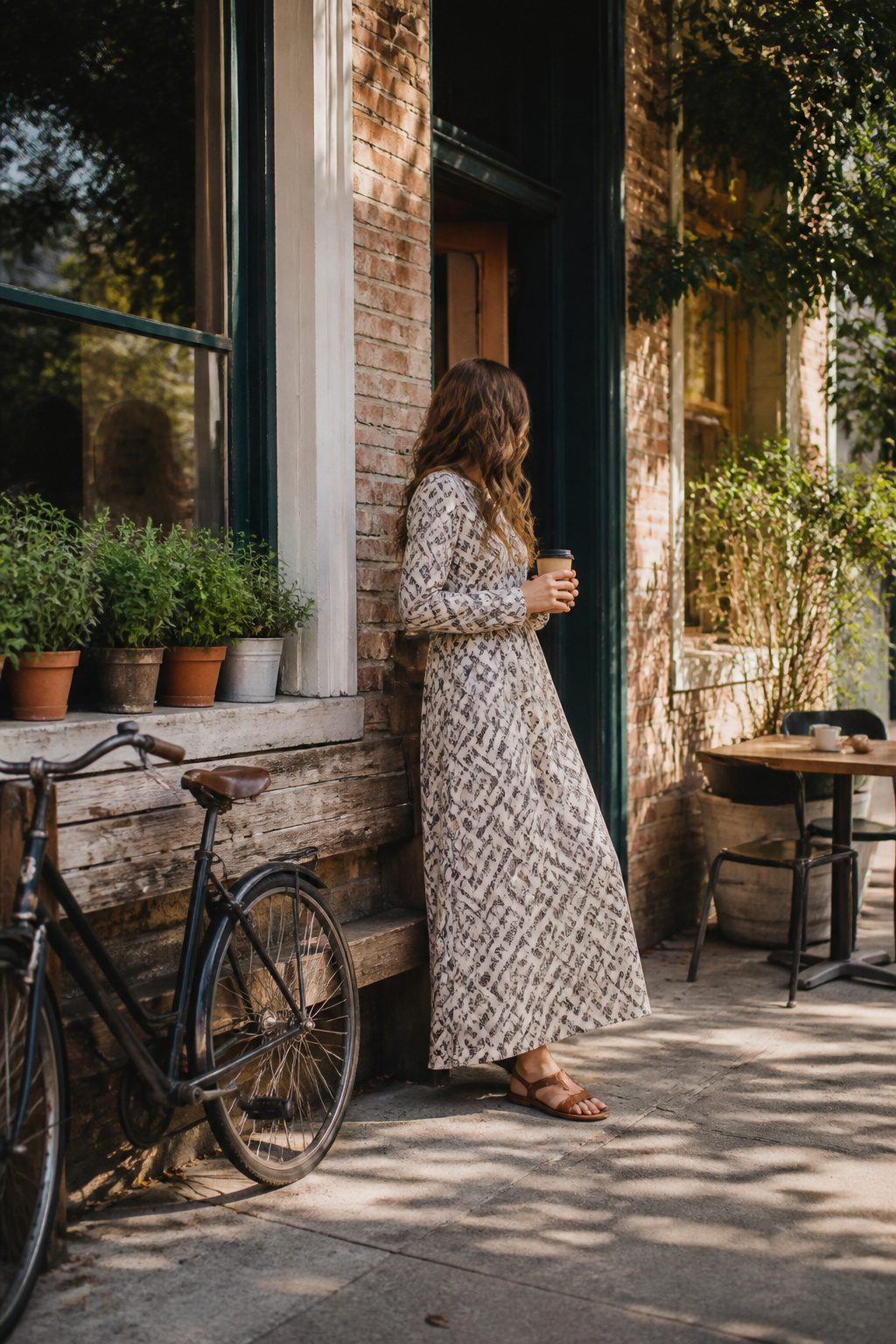
The casual maxi dress is where most wardrobes either win or quietly fail. A good one lets you grab coffee, sit through a Zoom call, and pick up groceries without anyone guessing you dressed in the dark. A bad one reads like you gave up somewhere around Tuesday and never recovered.
What separates the two usually comes down to fabric weight and sleeve intention. A jersey that clings to hip and thigh after two hours of sitting will make you feel underdressed even at your own kitchen table. Something with a little structure through the bodice and a skirt that moves rather than grips solves this. I look for cotton blends with 3–5% elastane, enough to keep shape without turning the whole thing into a tube.
Prints help here more than people admit. A small geometric or a washed stripe reads as effort in a way solid black sometimes does not, especially if the cut is simple. A V-neck or a subtle collar detail lifts the whole piece out of loungewear territory without asking much of you in return.
Shoe choice finishes the job. Clean white leather sneakers or a low-profile sandal keep the look current; anything too heavy underneath drags the hem and the mood down with it.
Formal Maxi Dresses
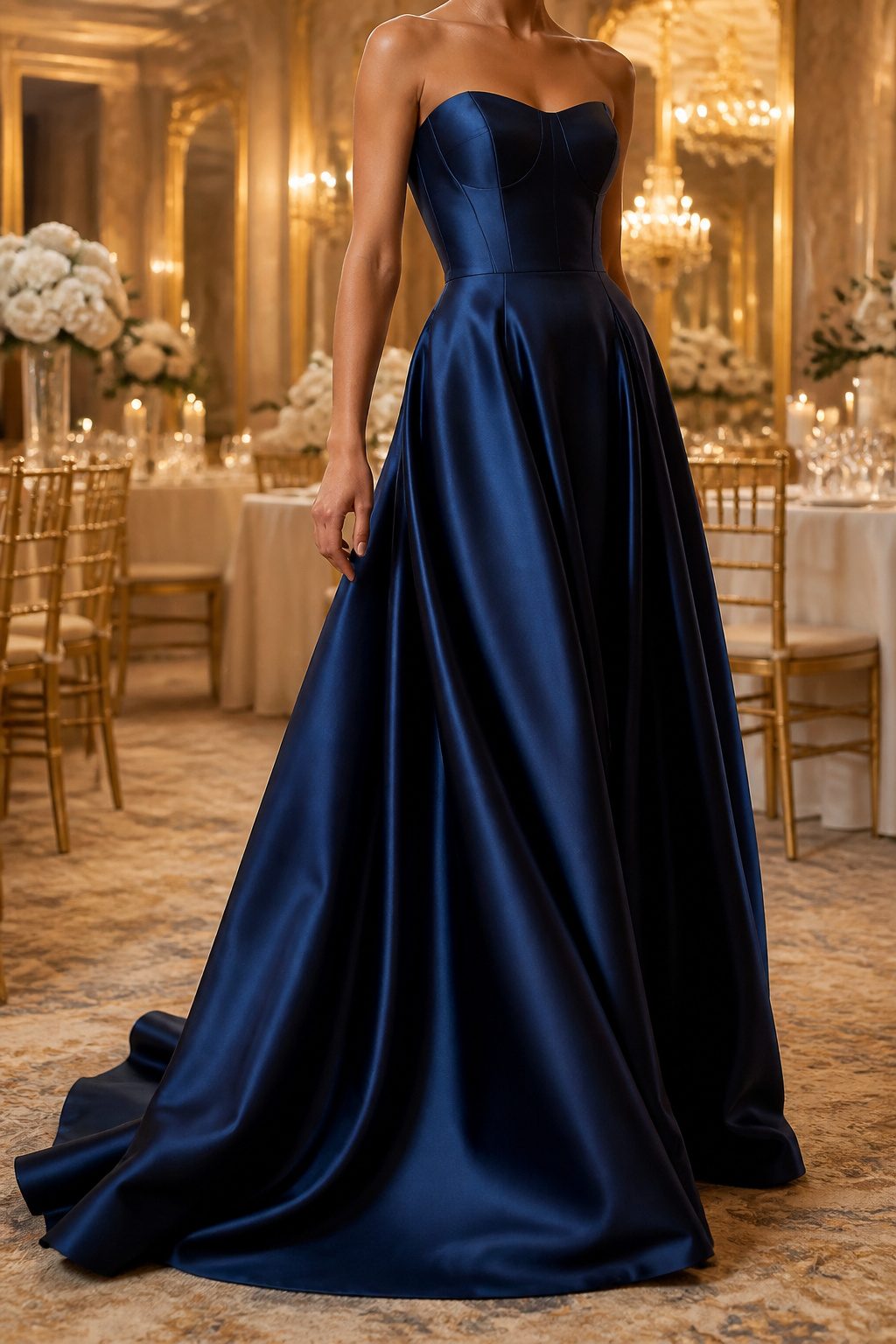
A formal maxi dress lives or dies by whether it looks like you belong at the event or like you’re performing at one. Prints read as dressed-up when the scale is small and the colorway stays in a tight family; a dusty rose floral on cream feels right for a garden wedding, while the same print blown up to palm-size on a black ground can tip into costume. Solids are the safer bet for evening ceremonies and any venue with gilt chairs, but the fabric has to do the work. Matte jersey that pools around the ankles looks like a beach cover-up that got lost, while a heavier silk or structured crepe holds the line.
The mistake that reads as trying too hard is mixing too many signals. Ruffles, a thigh-high slit, and a plunging neckline all in the same dress ask the room to notice the outfit instead of the occasion. One dramatic element is enough: a bare back on an otherwise covered silhouette, or a single statement sleeve with a simple column skirt. I look for a hem that just skims the top of my foot with the shoes I’ll actually wear; anything longer and I’m holding it up all night, anything shorter loses the elongating reason I reached for a maxi in the first place.
Seasonal Maxi Dresses
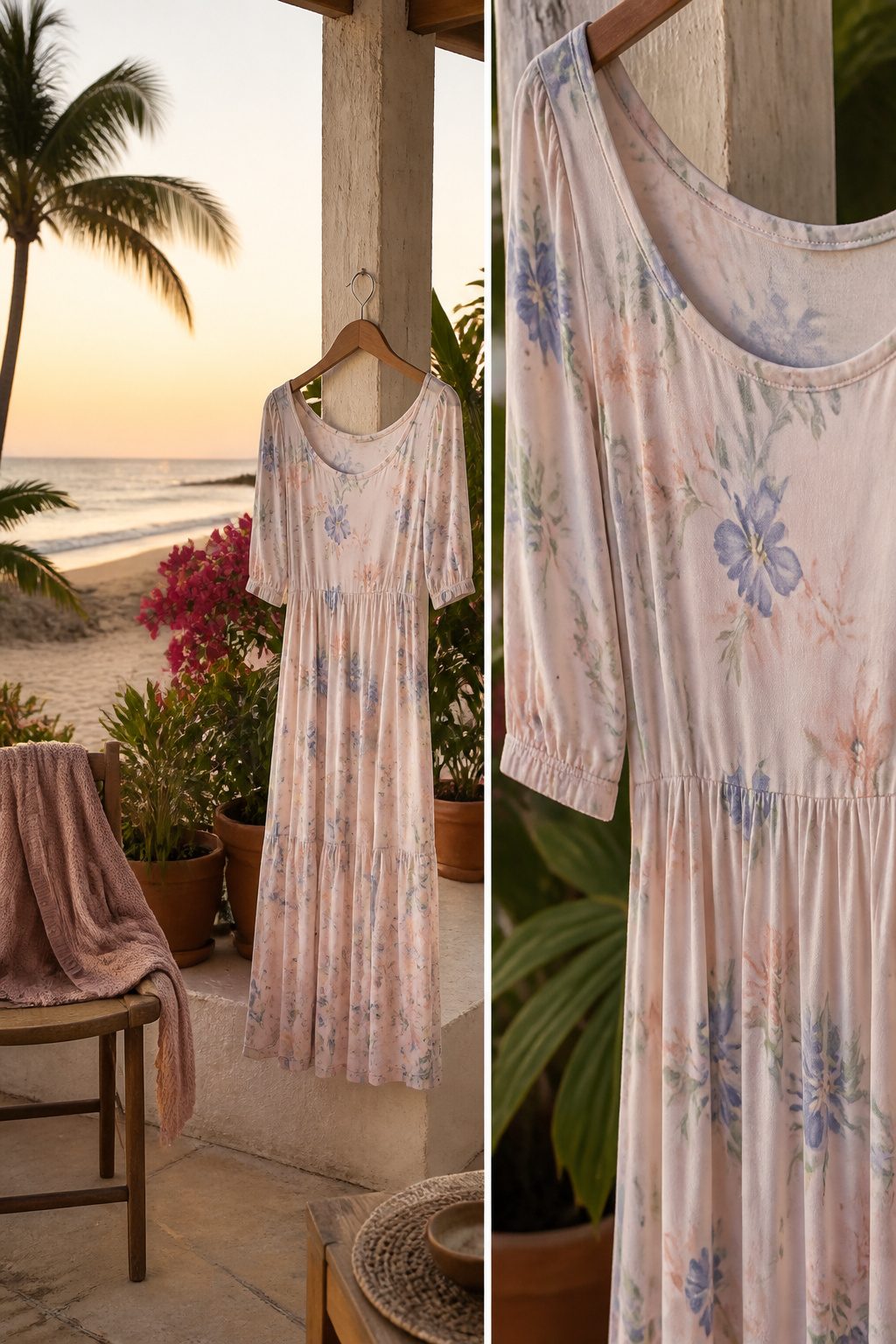
A maxi dress that actually earns its hanger space needs to survive more than one season. The ones that do are usually in mid-weight jersey, cotton poplin, or a fluid crepe that can stand alone in May and take a layer in October without looking like you are fighting the weather.
Petite frames need the ankle-length cut, not the floor drag. Empire waists and wrap styles keep the line clean, and a heeled sandal underneath helps when the fabric is lightweight enough to move. Come cooler weather, the same dress takes a denim jacket or a slim blazer; bulky layers on top throw the proportion off and shorten the leg line you just spent the hemline earning.
Fabrics that sit in the closet half the year are the tell. A heavy wool maxi or a fully lined special-occasion piece gets pulled out for weddings and then waits. Prints and color matter less than weight when you are deciding what to buy; a solid in a seasonless fabric sees daylight in March and again in September with only the shoes changing. That is the test I use now: can I wear this with sandals, and can I wear it with boots? If the answer is not both, it is a costume, not a wardrobe.
Flattering Styles for Shorter Frames
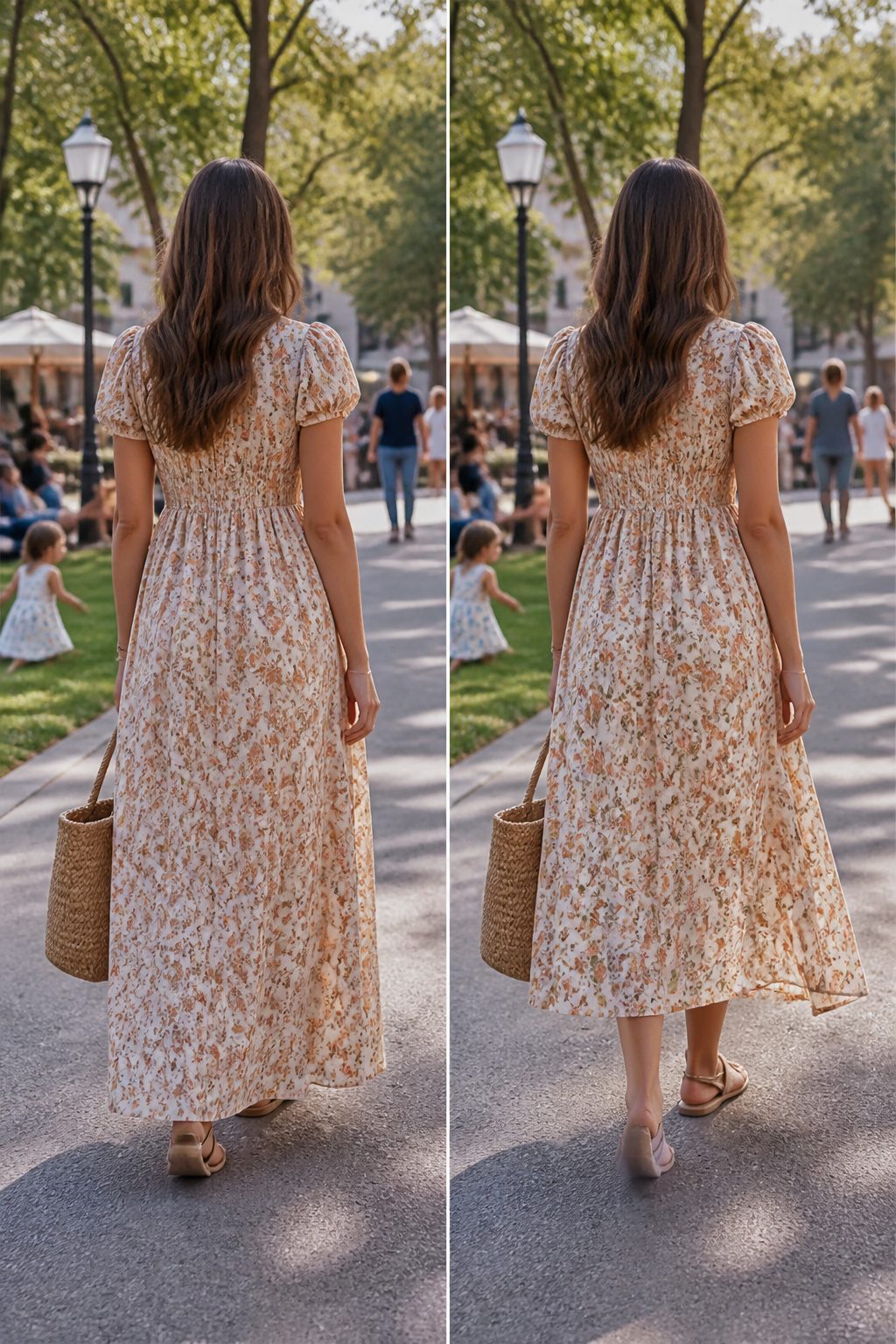
Petite frames do not need to avoid maxi dresses, but the proportions matter more than magazines usually admit. A defined waistline, whether empire or true waist, keeps the eye traveling vertically instead of pooling fabric at the midpoint. The real measurement that separates a flattering maxi from a dragging one is 55" to 59" from the top of the shoulder to the hem in a size small/4. Anything longer swallows the ankle and breaks the line the dress is supposed to create.
A higher hemline that hits right at the ankle, not the floor, does more for leg length than the vertical stripes and pointed-toe tricks editors recycle every spring. Heeled sandals add the literal inches, but skipping bulky layers on top is what keeps the proportions from compressing the whole silhouette. The wrap style and empire waist both work because they place that definition high, where the torso reads as longer and the legs start earlier than they actually do. What magazines claim works, like "just add heels," ignores that the dress itself has to cooperate first.
What Counts as a Maxi Dress
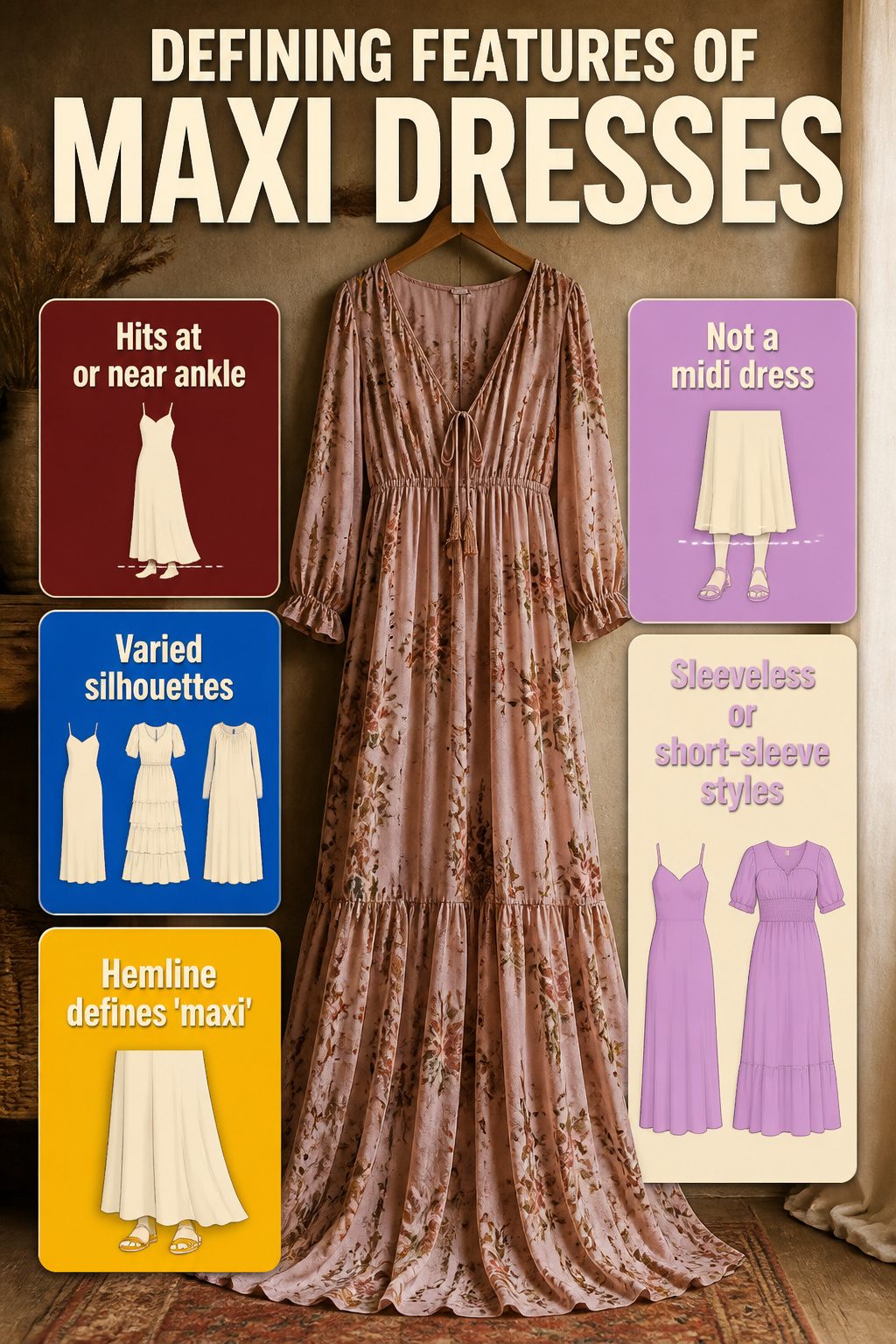
A maxi dress hits at or near the ankle, which makes it the longest everyday dress style most of us will wear. That extra length puts it a full tier below a midi and well past anything you’d call short, so the coverage is substantial from shoulder to hem.
The silhouette varies more than people expect. I’ve seen versions that skim the body like a column, others that gather into tiered skirts with ruffles and puff sleeves, and relaxed shifts that hang straight from a boatneck or smocked bodice. The hemline is what earns the name, not the cut. A sleeveless slip dress and a short-sleeve maxi with smocking at the chest both count, provided they reach that ankle-grazing length.
The confusion I notice most is calling anything long "maxi" when it stops at mid-calf. That is a midi. Maxi means the fabric keeps going until it nearly meets your shoe.
Where Maxi Dresses Actually Go
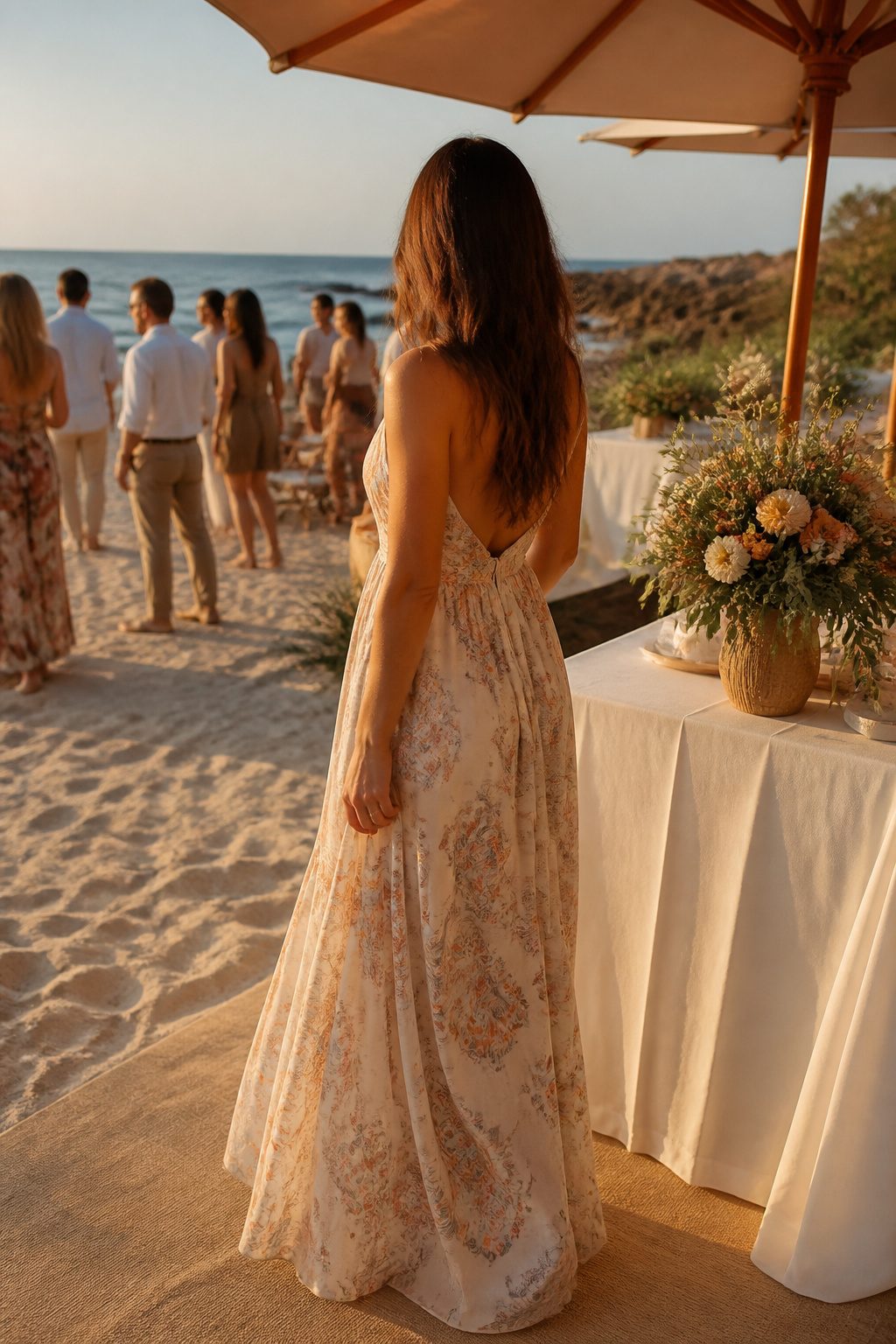
A maxi dress at a beach wedding reads effortless; the same dress at a courthouse ceremony can look like you forgot to check the invitation. The difference is almost always fabric weight and neckline. Cotton gauze or crinkled linen belongs on sand, while a heavier silk or structured jersey signals you understood the assignment.
Garden parties and warm-weather showers are where the length earns its keep. You get coverage for sitting on folding chairs without the stiffness of cocktail attire. But office holiday parties, anything after 8 p.m. in winter, or events where you will climb stairs in front of people, these are the places where the hem becomes a liability. I have watched someone gather a floral skirt in both hands for three flights of stairs; the dress was lovely, the choice of it was not.
If the invitation says "festive" or "creative black tie," a maxi can work, but it needs to read intentional, not resort-wear. Look at the shoes you would have to wear. Strappy flat sandals mean the dress stays in the vacation suitcase; a block heel or sleek boot makes the same silhouette arrive somewhere else entirely.
Styling Maxi Dresses Year-Round
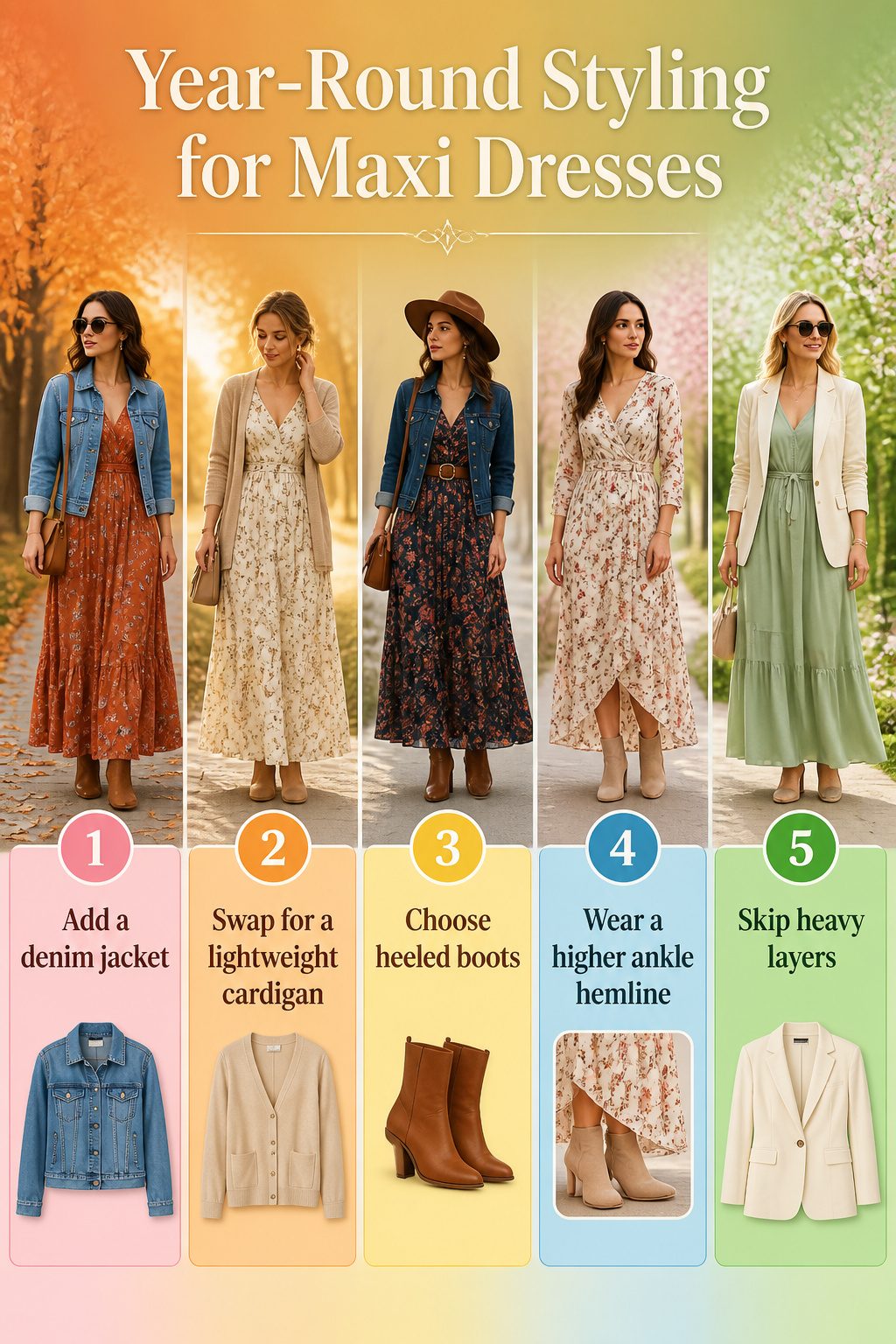
A maxi dress in October does not have to look like a mistake from August. The move that saves it is a denim jacket or lightweight cardigan swapped in for the sun hat, which gives the same dress an entirely different register without adding bulk where it shows. I have seen empire-waist and wrap styles carry this best; the defined waistline keeps the silhouette from disappearing under layers, and the hem hitting right at the ankle rather than pooling on the floor still reads intentional with boots instead of sandals.
For petite frames, the proportion game matters more. A heeled boot and a higher ankle hemline elongate the leg line in a way that flat sandals and dragging fabric simply do not. Skip heavy layers on top; the eye needs that vertical line to travel uninterrupted. Blazers work here too, though they read more formal than denim. The same dress, three months later, three different occasions: the jacket choice is what signals whether you meant to be there.
Features That Change the Fit
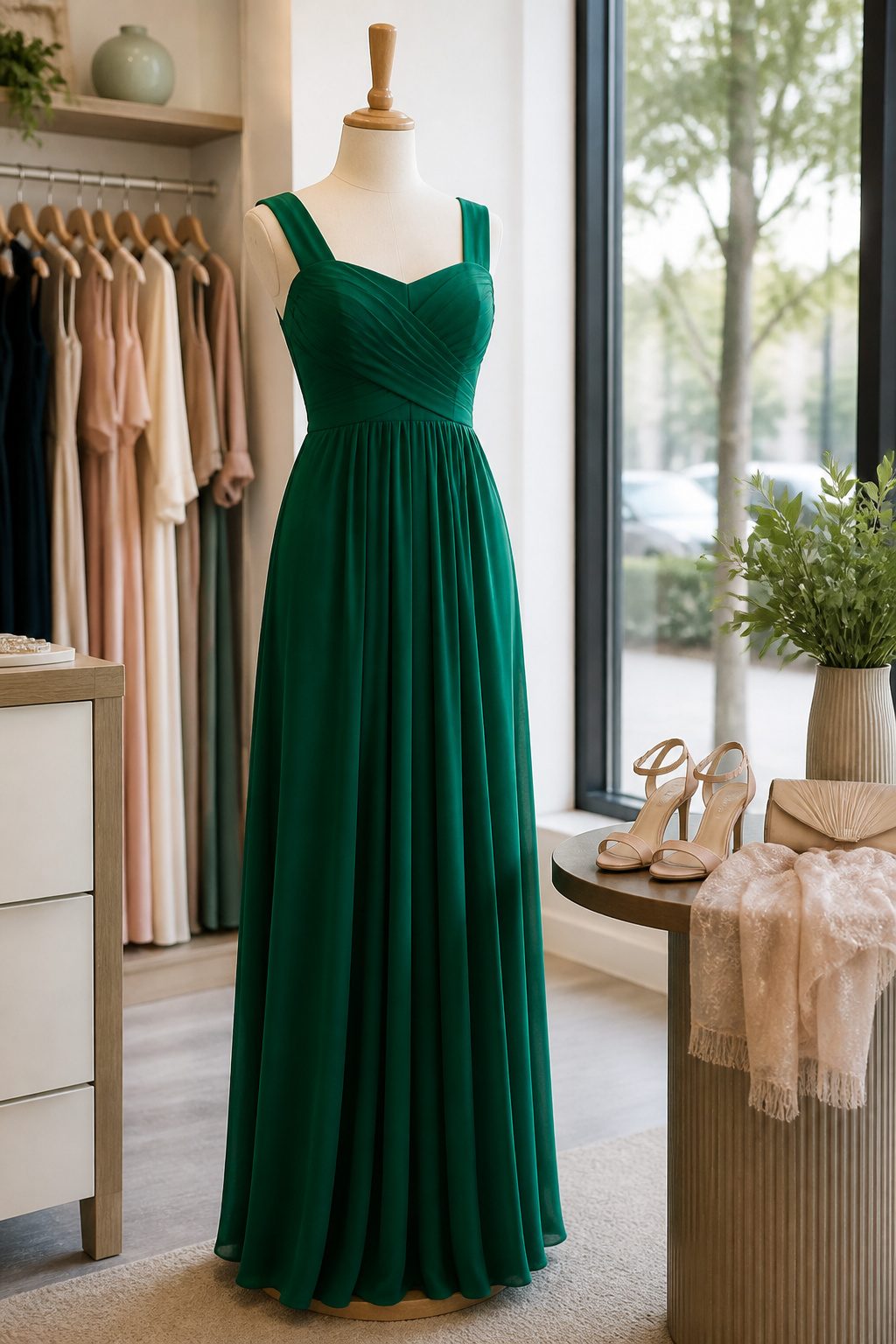
A fitted bodice on a maxi dress does the structural work that a loose cut dumps onto your undergarments. The waist seam or smocked panel creates a line the eye reads as intentional, not accidental, and that matters most on bodies where the torso is the narrowest point. On a straight or rectangular frame, though, the same fitted bodice can look like a costume if the skirt does not widen below it.
Flowing skirts balance volume against whatever sits above them. The more fabric below, the more the bodice can grip without looking severe. Side slits change the math entirely: they break the vertical line so the dress moves, but they also raise the effective hemline when you walk. A slit that opens at mid-calf flatters a shorter leg because the exposed skin becomes the reference point, not the floor. On a taller frame, the same slit can read as an afterthought unless it is high enough to matter.
Adjustable straps sound like a universal win, yet on a full bust they shift weight to the shoulders in a way that a fixed strap with built-in structure handles better. Two features chosen for your body type beat four that fight each other. A fitted bodice and flowing skirt, no slit, no adjustment hardware, is often the cleaner solution than a dress trying to solve every problem at once.
Frequently Asked Questions
What is considered a maxi dress?
A maxi dress hits at or near the ankle, making it the longest everyday dress style most people wear. The hemline earns the name, not the cut, so the silhouette can vary from column to tiered to relaxed shift. Anything stopping at mid-calf is a midi, not a maxi.
What occasions are maxi dresses best for?
Maxi dresses work for beach weddings, garden parties, warm-weather showers, and destination events where you want coverage without cocktail stiffness. Cotton gauze and linen belong on sand, while heavier silk or structured jersey suits more formal venues. Skip them for winter evening events, office holiday parties, or anywhere involving multiple flights of stairs.
How can I style maxi dresses throughout the year?
Swap a sun hat for a denim jacket or lightweight cardigan when temperatures drop, which gives the same dress a different register without adding bulk. Empire-waist and wrap styles layer best because the defined waistline keeps the silhouette from disappearing. For petite frames, pair with heeled boots and a higher ankle hemline rather than dragging fabric and flat sandals.
Can a maxi dress look flattering for someone with a shorter frame?
Yes, with a defined waistline such as empire or wrap styles, and a higher hemline that hits right at the ankle rather than pooling on the floor. The ideal measurement is 55 to 59 inches from shoulder to hem in a size small/4. Add heeled sandals and skip bulky layers on top to keep proportions balanced and the vertical line uninterrupted.