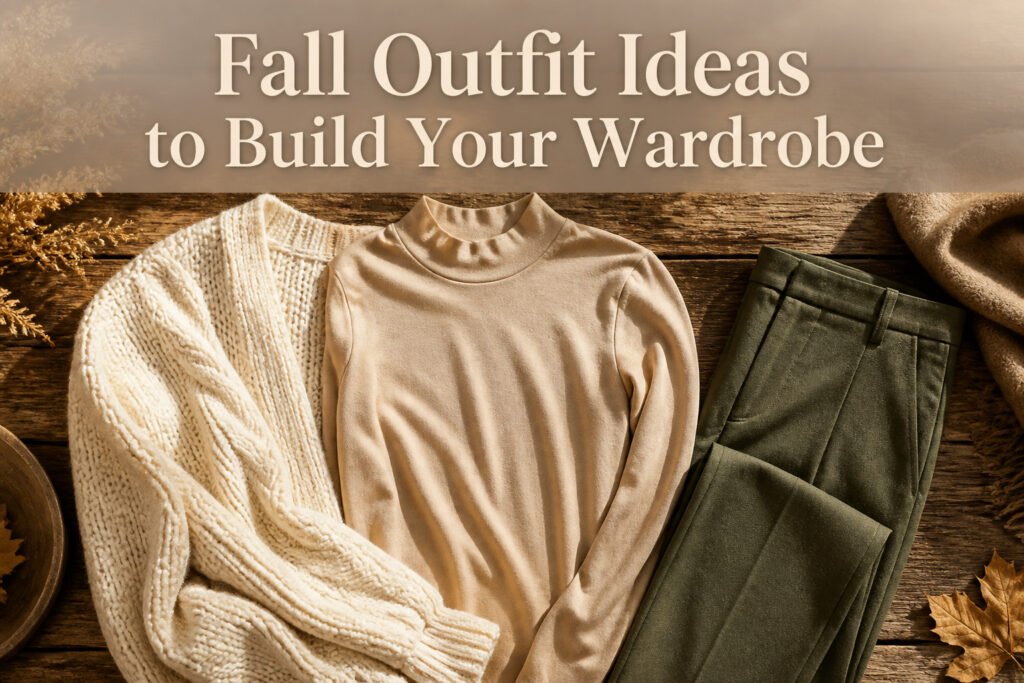
A fall outfit works when the layer closest to your skin is built for disappearing. The right long-sleeve tee, a 5–6 oz cotton jersey, bridges a September afternoon and a January morning without twisting at the elbows or bagging by lunch.
What trips most of us up is the neckline that pools fabric where a sweater meets your throat; the fix is a slim mock neck that ends flat against the collarbone and stays there.
1. Basic Long-Sleeves and Tees
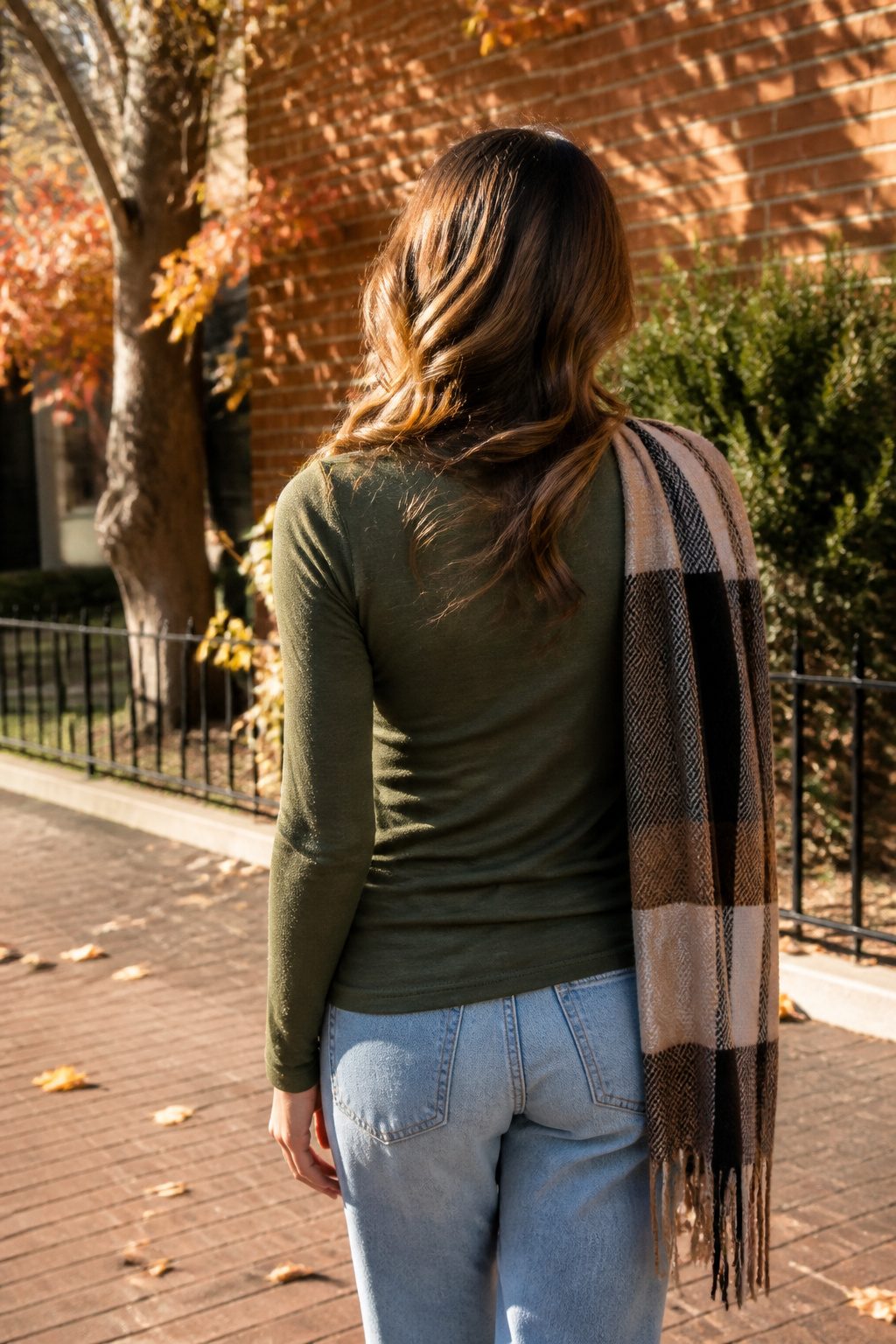
The right long-sleeve tee sits at the center of almost every fall outfit worth wearing twice.
Weight matters more than color here: a 5–6 oz cotton jersey bridges September afternoons and January mornings without the bulk that turns a cardigan into a straitjacket.
Anything lighter and the wind cuts through; anything heavier and the sleeves twist at your elbows by noon.
Crewnecks layer almost invisibly under a cardigan or a summer dress you’ve pushed into October. A slim mock neck gives you the same coverage but stays put where a turtleneck would bunch and fold at the throat.
I learned that distinction the hard way after buying three ribbed turtlenecks that sat in my drawer until March.
A neckline that ends flat against your collarbone will always lie cleaner than one that pools fabric where a sweater’s V-neck meets your throat.
Fabric content shifts the math. A cotton-modal blend with about 5% elastane keeps its shape through a day of reaching and driving; 100% cotton without that stretch starts bagging at the elbows by lunch and stays there.
For the tees you wear under blazers to the office, skip the slub knits and heathers that read casual even in navy or charcoal.
A smooth, compact jersey in white, warm gray, or a muted olive looks intentional when it peeks from beneath a sleeve or at the hem.
2. Button-Down Shirts and Blouses
Silk under a sweater sounds elegant until you spend ten minutes smoothing out creases in a bathroom mirror.
A cotton poplin or lightweight Oxford weave forgives the layering in a way silk never will; the fibers have enough body to spring back rather than set into folds.
Polyester blends marketed as "easy care" usually land in the same camp, though they tend to build static by mid-afternoon.
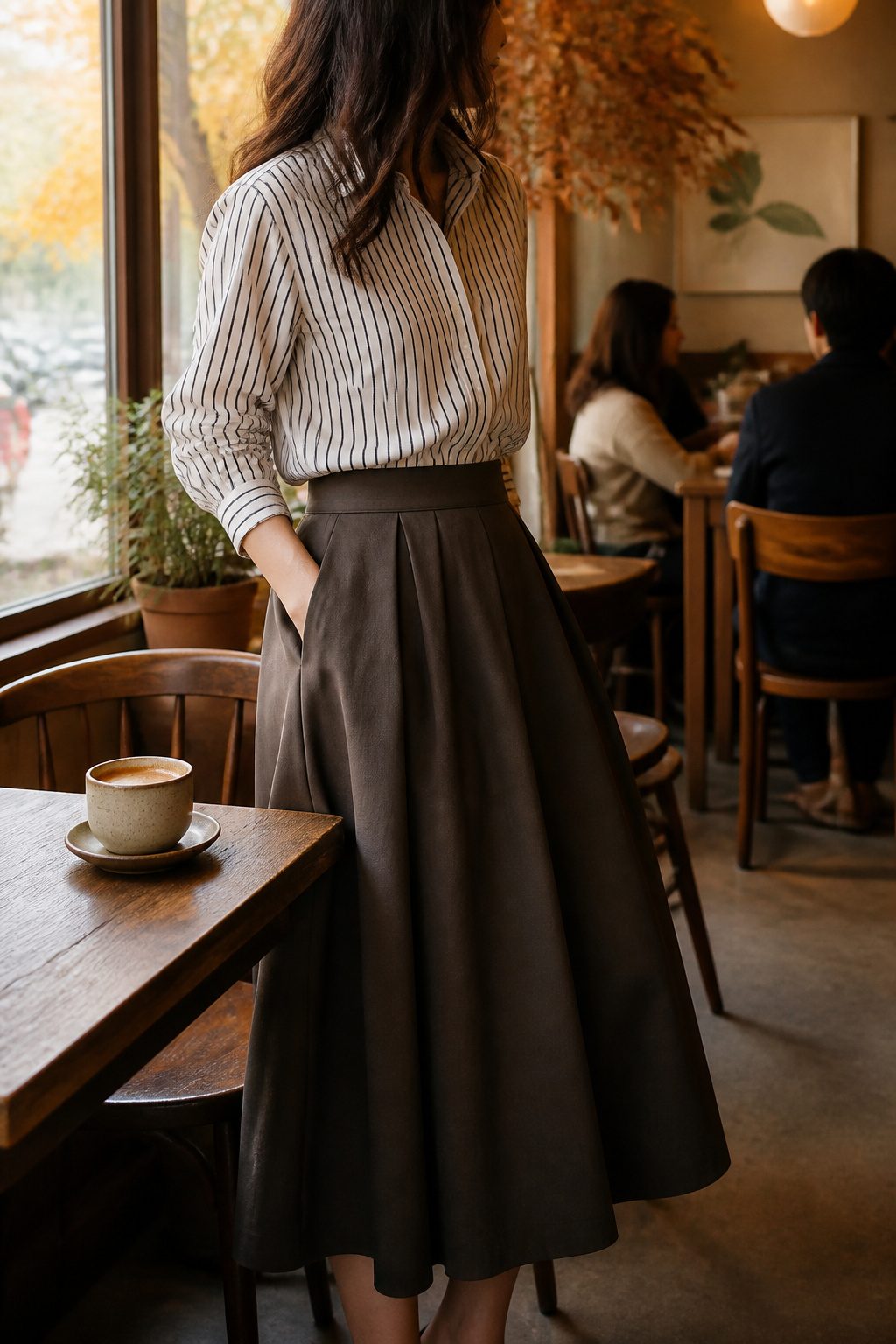
The striped button-down and tailored midi skirt combination works now with wedge sandals and a white shoulder bag, then later with knee-high boots and a roomy suede tote.
That adaptability is what makes the shirt worth space in a fall closet: one piece handling office hours and Saturday errands without looking like it is trying to be two different garments.
A striped button-down shirt and tailored midi skirt are office-approved essentials that can be worn now with wedge sandals and a white shoulder bag or later with knee-high boots and a roomy suede tote.
The point is timing the swap of accessories rather than the full outfit. Keep the shirt untucked with denim on Sunday, half-tucked into the skirt on Monday, and the same blouse earns its keep twice over.
3. Sweater Vests
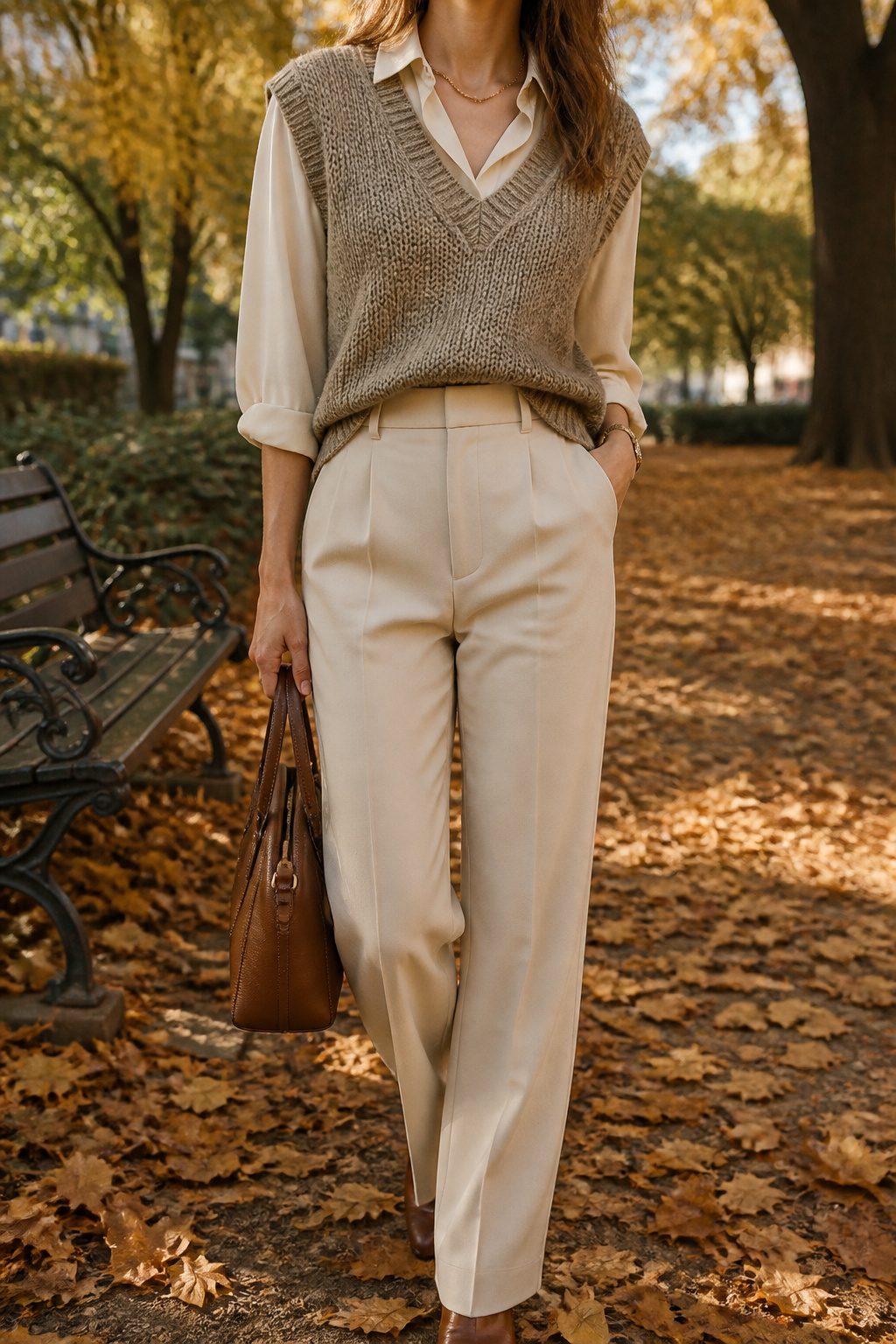
Sweater vests came back as a layering tool, not a costume piece, and that distinction matters for how you wear them.
The shape works best over a short or three-quarter sleeve, where the hem of the vest skims the elbow without bunching fabric underneath.
A long sleeve underneath defeats the point; you end up with wadded wool at the wrist and no clean line at the shoulder.
For bottoms, a mid-rise trouser or an A-line skirt sitting at the natural waist keeps the vest from looking like a school uniform. Tucking is non-negotiable; anything untucked underneath reads as sloppy because the vest crops the torso so deliberately.
The vest alone stops working around 55 degrees, when your arms need real coverage and the gap at the sides lets in too much wind.
Below that, it becomes a mid-layer under a blazer or coat, where the neckline and texture still show but the sleeveless cut stops being the problem.
I reach for mine most in that 55–65 degree window, running between a coffee meeting and a late afternoon that still has sun.
4. Fall Sweaters and Cardigans
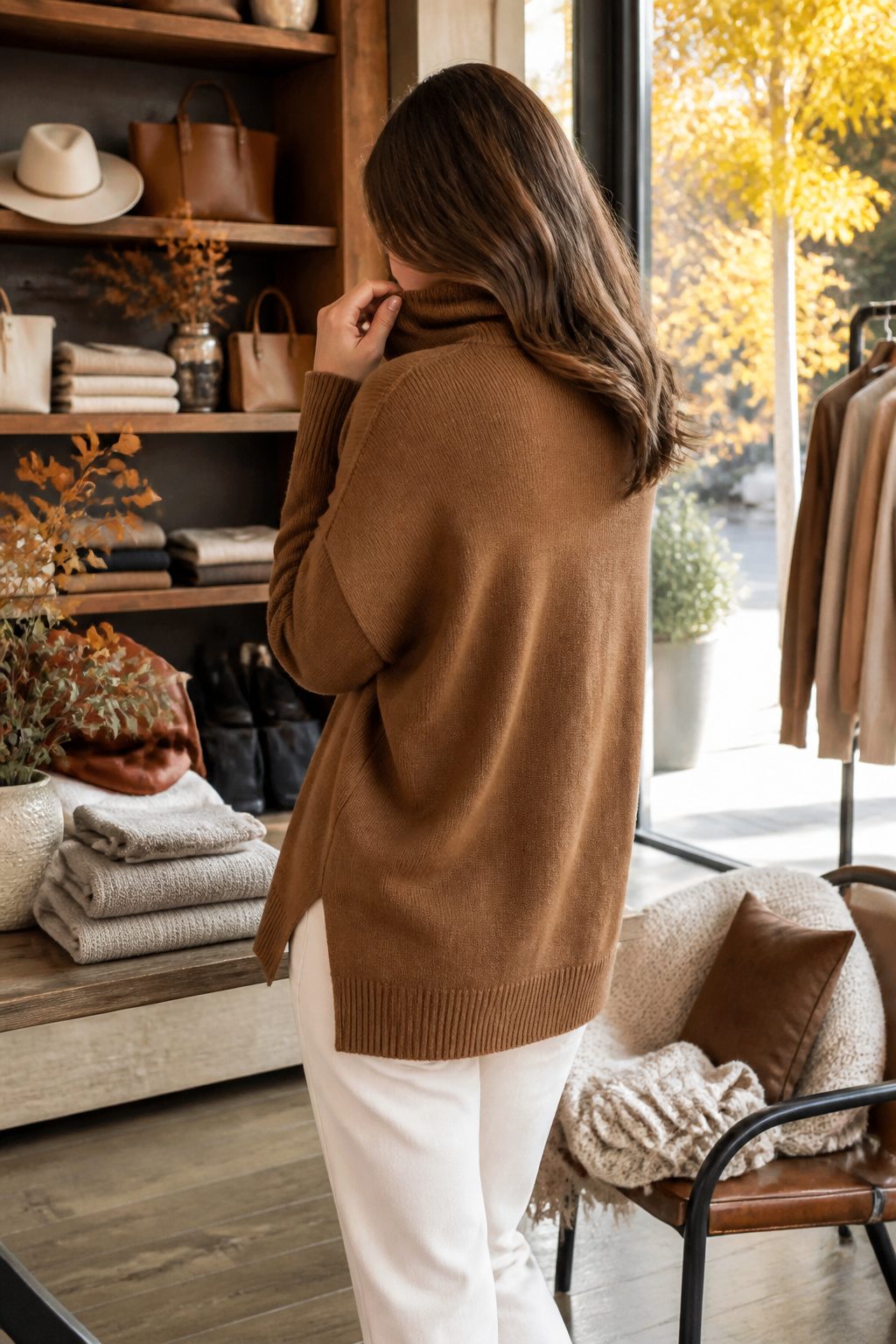
Lightweight cashmere or fine merino knits sit close enough to layer cleanly under a blazer or trench without fighting the lining.
Chunky cable knits and oversized shags read as the whole outfit; they need a coat with dropped shoulders or enough room that the sleeves do not torque your arms forward.
A chunky turtleneck I bought last autumn looked sculptural and expensive on its own, but under my regular wool coat the doubled fabric at the neck created a shelf that pushed the collar up toward my ears.
The proportions collapsed entirely.
Now I check the shoulder seam drop and the total chest measurement before committing: a chunky knit needs at least two inches of ease beyond my usual coat size, or it stays a piece for mild days when outerwear stays home.
5. Long Cardigans with Pockets
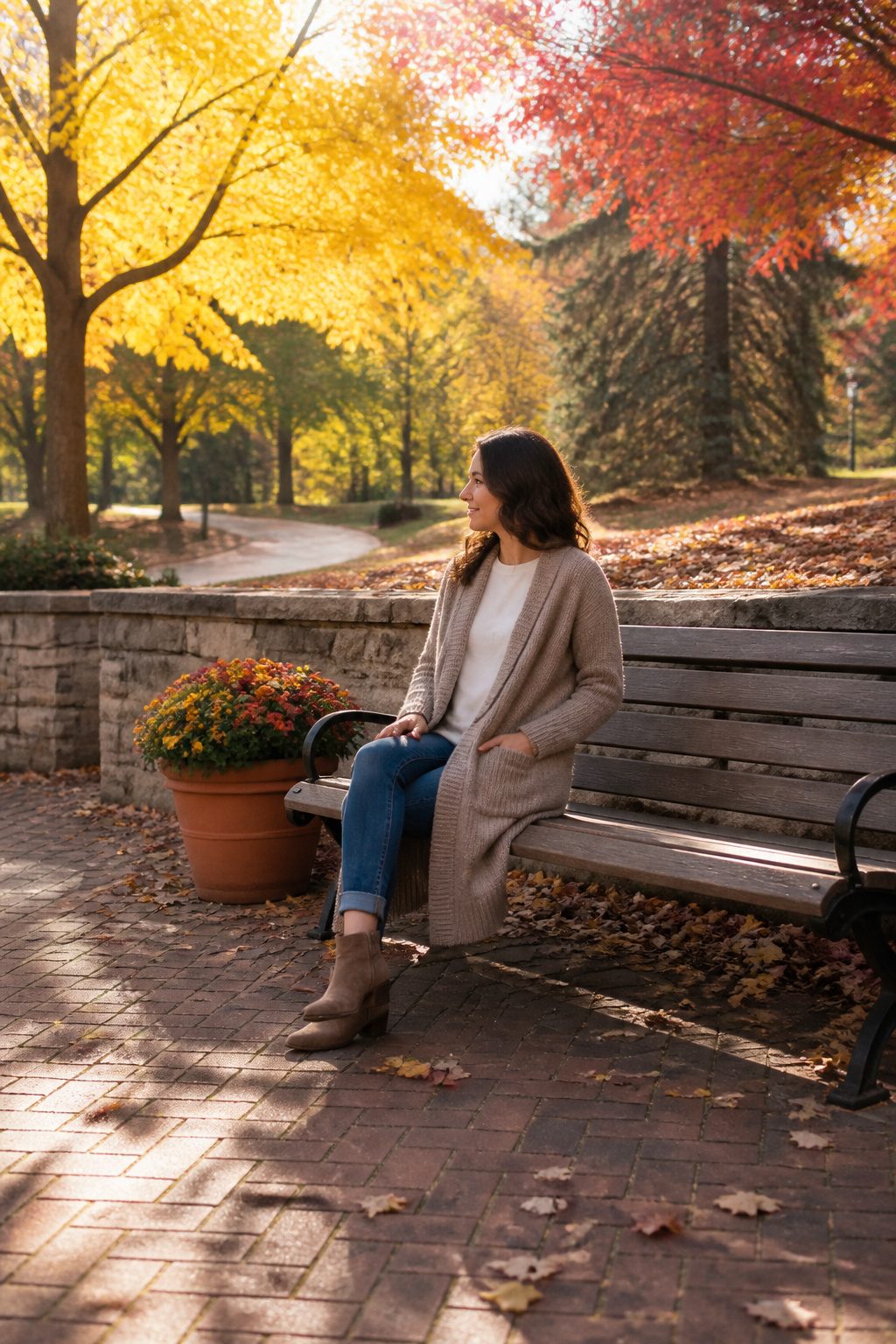
A long cardigan hits somewhere around mid-thigh or knee, and that length changes everything the shorter versions do.
The vertical line elongates the torso rather than cutting it in half, which matters if you are pairing it with wide-leg trousers or a midi skirt that already has volume below the waist.
I learned this the hard way after buying a cropped cardigan that made a pair of high-waisted culottes feel like a costume; the long line keeps proportions grounded.
Pockets are not an afterthought on these. They need to sit flat enough that they do not bulk at the hips, but deep enough to actually hold a phone without the weight distorting the front panel.
The best one I have handled held its shape with a pocket depth of about six inches, lined in the same knit so nothing snagged.
Uniqlo’s wool-blend long cardigans run around $50 and get this right; the pockets are tacked at the corners so they do not gape after washing. Cheaper knits often skip that internal reinforcement, and within a season the pockets flare like wings.
The utility is straightforward. You wear it instead of a coat on mild days, and the pockets mean you can leave a bag behind for errands.
The silhouette works belted, too, though a self-tie fabric belt looks better than leather here; leather fights the softness of the knit and usually rides up to the narrowest point of the waist, which is not always where you want emphasis.
6. Jeans in Various Colors
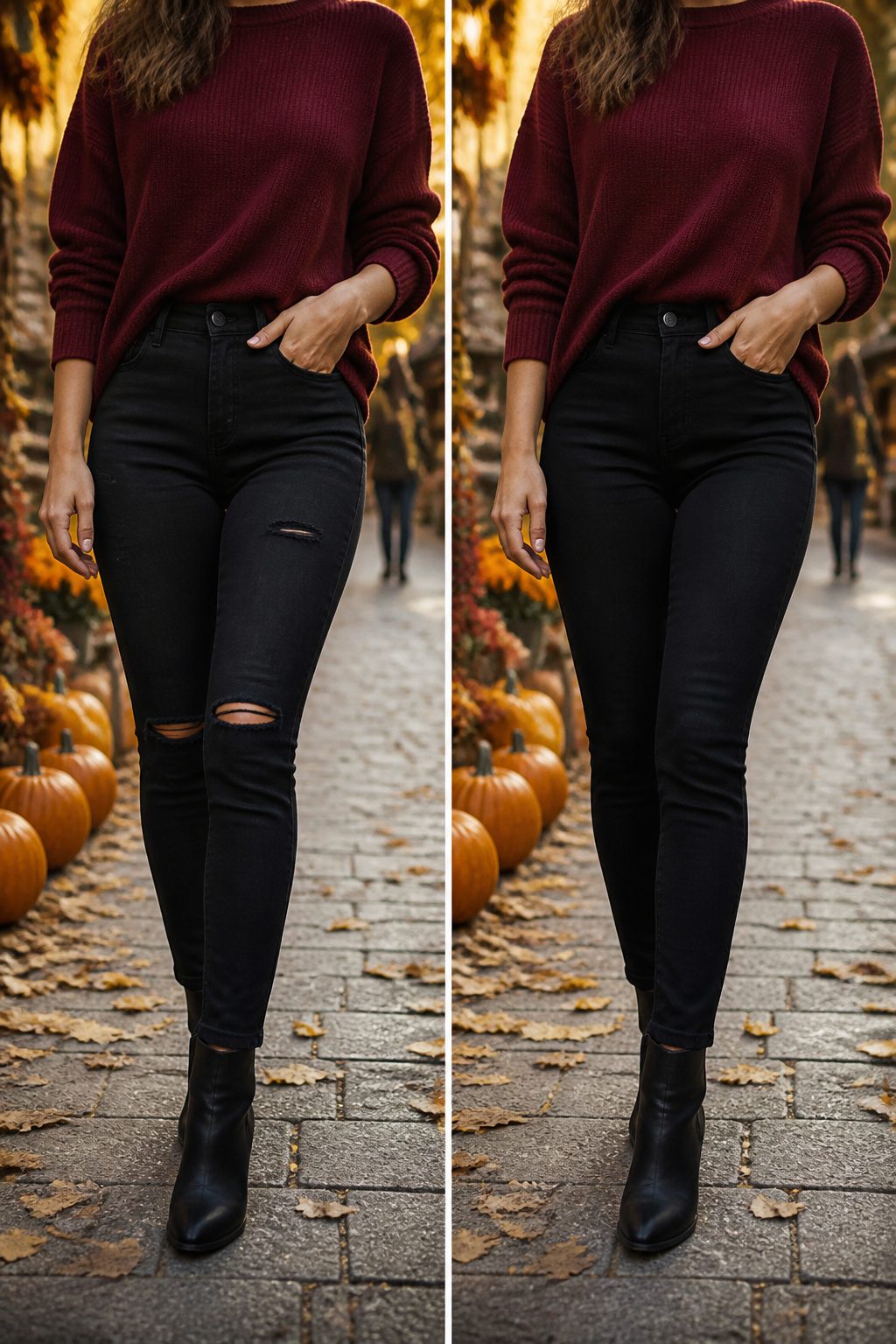
Blue denim owns about eleven months of the year, but October is when the other washes earn their keep.
Black jeans read sharper than navy for evening plans, and they let a camel or rust top sit right where the eye wants it.
Gray in a deeper charcoal works the same way, though lighter grays with faded knees still whisper July to me; I skip those until spring. Burgundy jeans turned out to be the pair I reached for most last fall.
They need restraint up top: cream, ivory, or a muted olive keeps the look grounded, while a bright red sweater pushes into costume territory. Cream denim surprised me.
The trick is choosing a weight that reads winter, not resort: rigid cotton with a matte finish, no stretch sheen, paired with chocolate brown or forest green rather than anything pastel.
Washes with heavy sanding or whiskering feel out of place once the leaves turn; save those for May.
7. Trousers
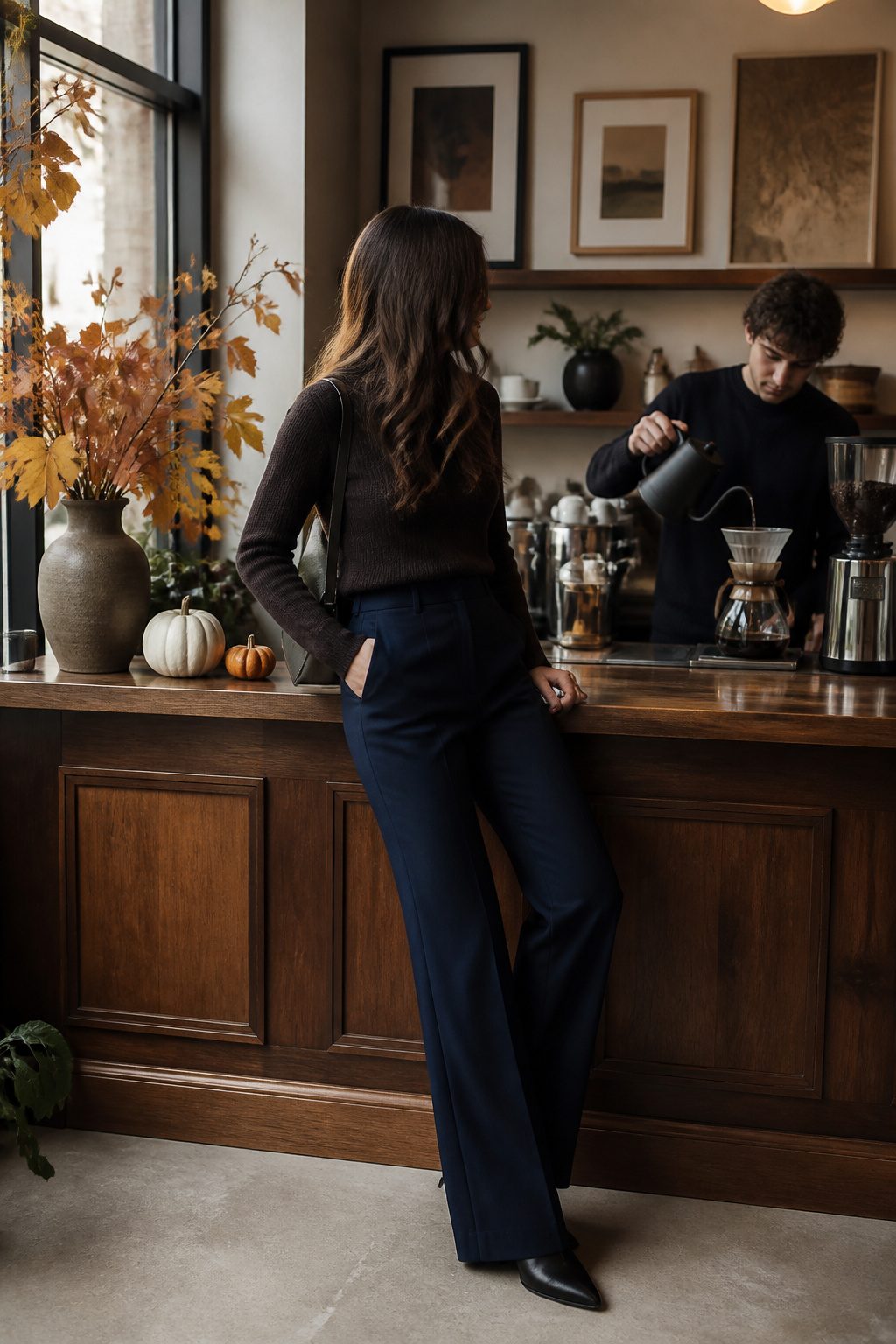
Tailored pants earn their keep in a fall outfit once denim starts feeling like the easy way out. The fabric weight matters more than most people expect when temperatures slide.
A mid-weight wool crepe around 10 oz holds structure without turning into a sauna the moment you step indoors, while anything lighter than 8 oz lets October wind cut straight through.
I learned the hard line on this with a pair of slim navy trousers I bought for a September wedding.
They looked sharp at 65 degrees, but the first morning below 50 left me shivering through a coffee run, the fabric too thin to block anything.
Wool flannel starting at 12 oz fixes that gap between crisp and practical, giving the same clean leg line with actual insulation.
Pair them with a thin knit turtleneck and loafers, and the whole thing reads intentional in a way dark jeans rarely manage.
The crepe pair still works October through early November, but only layered under a long coat I would rather leave open.
8. Skirts
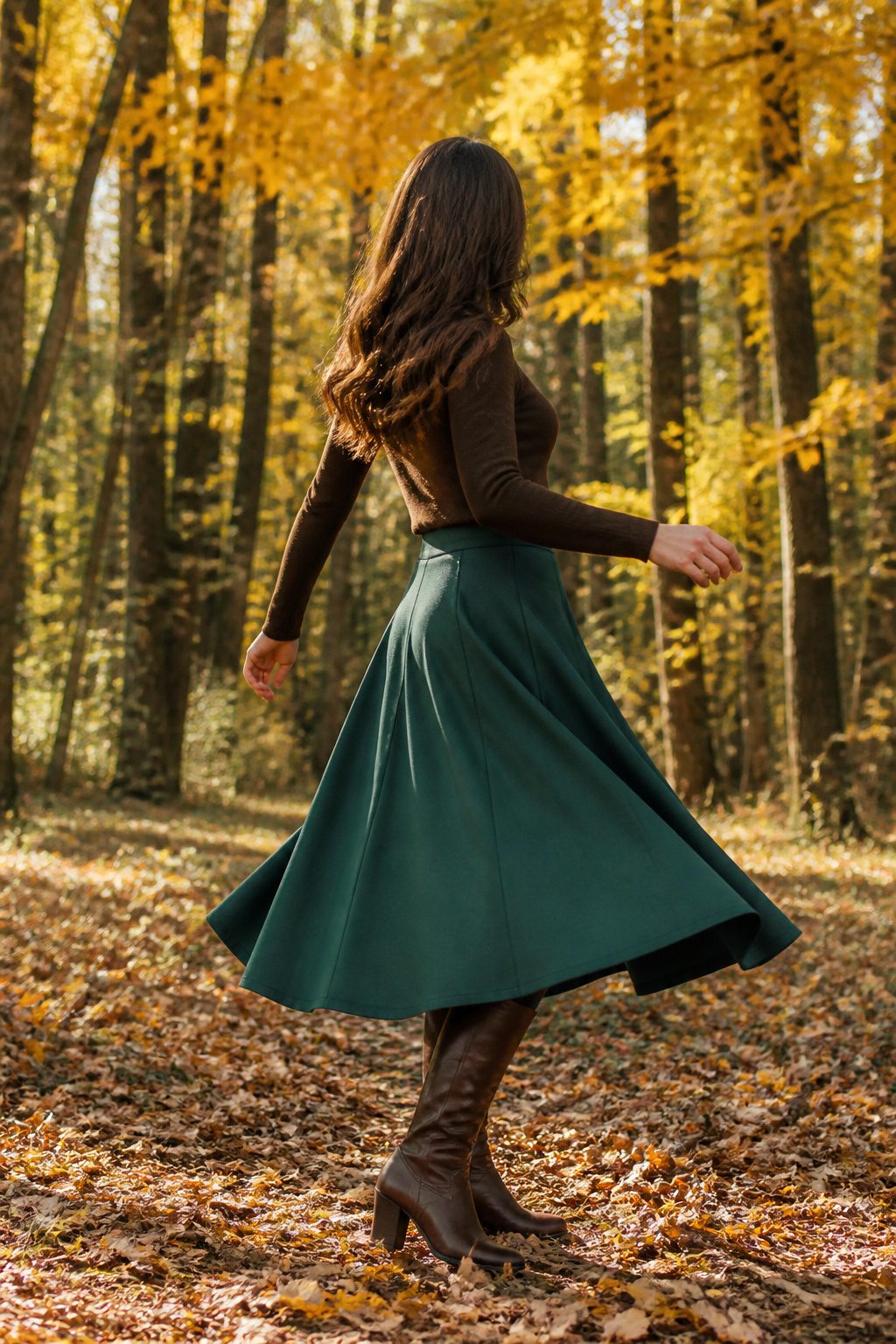
A midi-length wool or tweed skirt hits the sweet spot for fall, covering enough leg to stay warm while still moving well with boots. The fabric weight matters more than most people think.
A heavy tweed needs 80–100 denier tights or the whole silhouette goes bulky; lighter crepe or brushed cotton works better with 40–60 denier so the line stays clean from hip to ankle.
I misread this once with a rust-colored A-line skirt in a mid-weight cotton twill. Bare legs in late September, it looked intentional and crisp.
Same skirt, same loafers, 60 denier tights in November, and the fabric bunched at the waistband and pooled at the knees like I had grabbed the wrong size. The tights added friction the twill couldn’t handle.
I ended up needing a slip underneath or a switch to a smoother skirt with less structure.
Silk and satin skirts layer more gracefully than you’d expect, but they need opaque tights, never sheer. The shine against sheer reads evening; matte 80 denier grounds it for daylight.
Pencil skirts in ponte knit stretch over thicker tights without distortion, which makes them the easiest daily choice once temperatures drop.
9. Leggings and Joggers
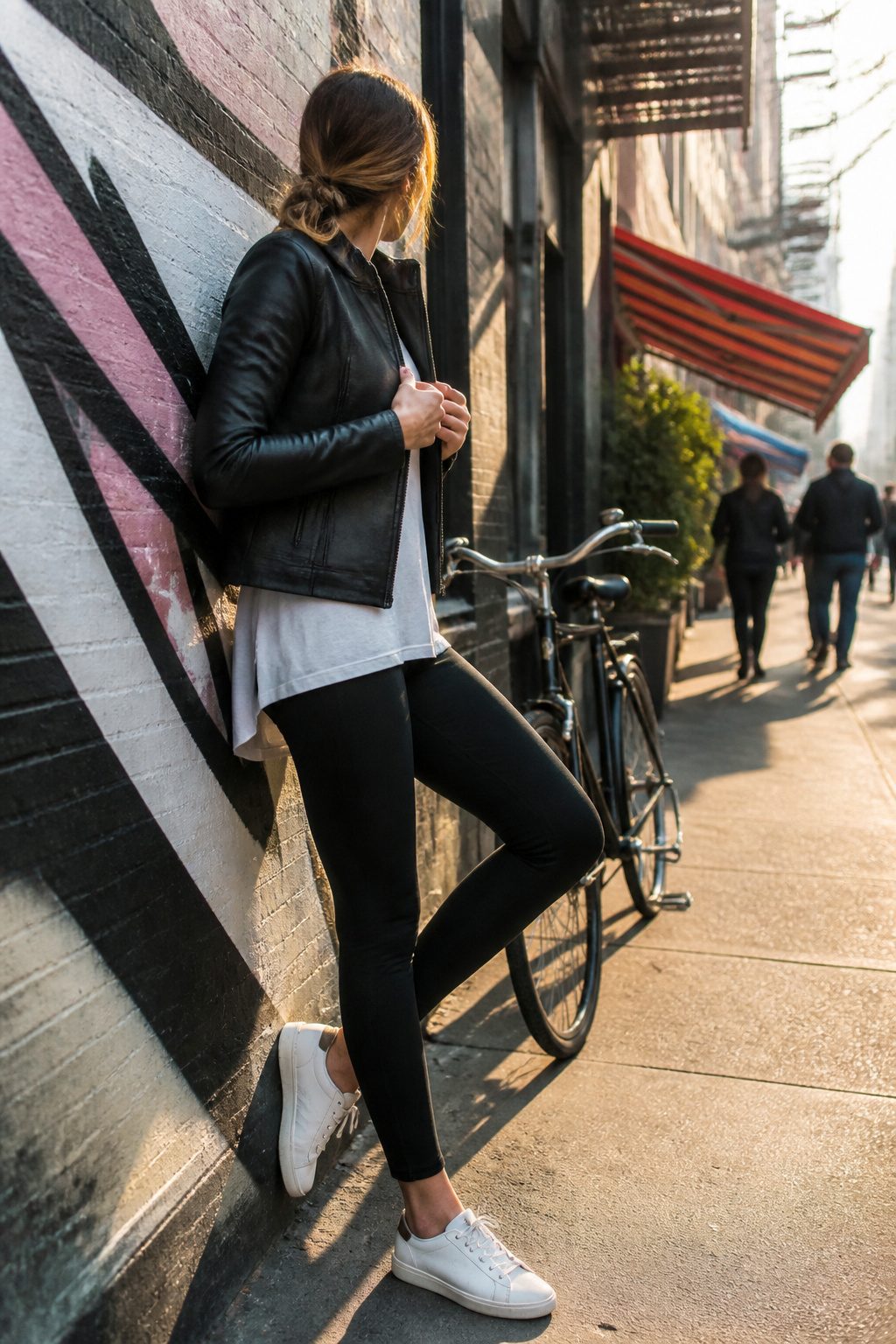
The difference between leggings that look like you gave up and leggings that look intentional usually comes down to fabric weight.
A 220–260 gsm cotton blend holds its shape through a grocery run and a coffee meeting; anything lighter starts sagging at the knees by noon and reads as gym clothes you forgot to change out of.
Proportion is where most of us trip up. A cropped boxy sweater hits at the hip bone and leaves the whole silhouette shapeless; a tunic-length thermal or a structured shacket that ends mid-thigh gives the eye a clear top-to-bottom line.
I learned this the hard way after three separate mornings of catching my reflection and looking like I’d rolled out of bed, until I swapped to a slim-fitting longline tee with a front tuck and a denim jacket cropped at the waist.
That outfit made it through a Saturday of errands, a last-minute video call, and dinner at a friend’s without anyone asking if I was "just relaxing today."
Joggers work the same way but need even more structure up top. A fitted turtleneck or a button-down left untucked with the sleeves rolled balances the volume at the ankle.
Tread carefully with oversized hoodies here; the combination can swallow a frame whole unless you’re deliberately going for that proportion and have the height to carry it.
10. Jumpsuits and Overalls
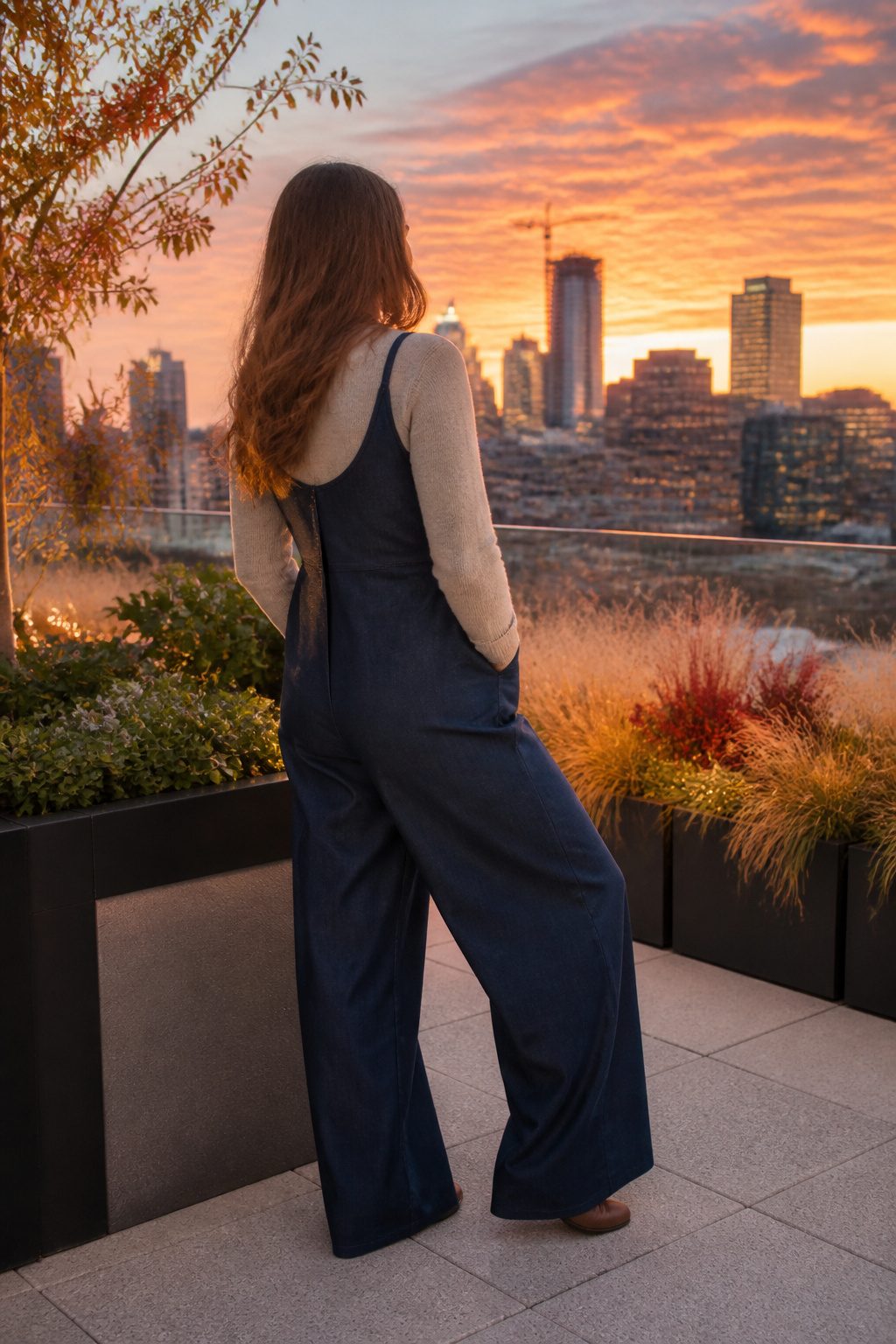
One-piece dressing in fall lives or dies on what fits underneath.
A wide-leg jumpsuit with a relaxed torso will swallow a thin crew-neck sweater without binding at the shoulders, turning a summer staple into something you can wear down to about 55 degrees.
The mistake is buying a fitted jumpsuit in that same fabric; the moment you add a layer, the waist pulls and the whole silhouette turns bulky.
Overalls are more forgiving here because the bib hides whatever bulk accumulates at the midsection, though the side openings still limit you to sweaters that stop at the hip.
Denim overalls trap heat once you are indoors. The fabric has no give for ventilation, so a 70-degree office becomes uncomfortable fast.
This is where a sleeveless jumpsuit in a heavier twill wins: you lose the sweater going into a warm space, and the single layer underneath stays presentable.
Below 50 degrees, neither option holds heat on its own; you are adding a coat and still feeling the gap at the back waist.
The practical range for an uncoated jumpsuit or overall outfit is roughly 50 to 65 degrees, with the caveat that overalls run colder because of the bib gap and denim weight.
11. Fall Dresses
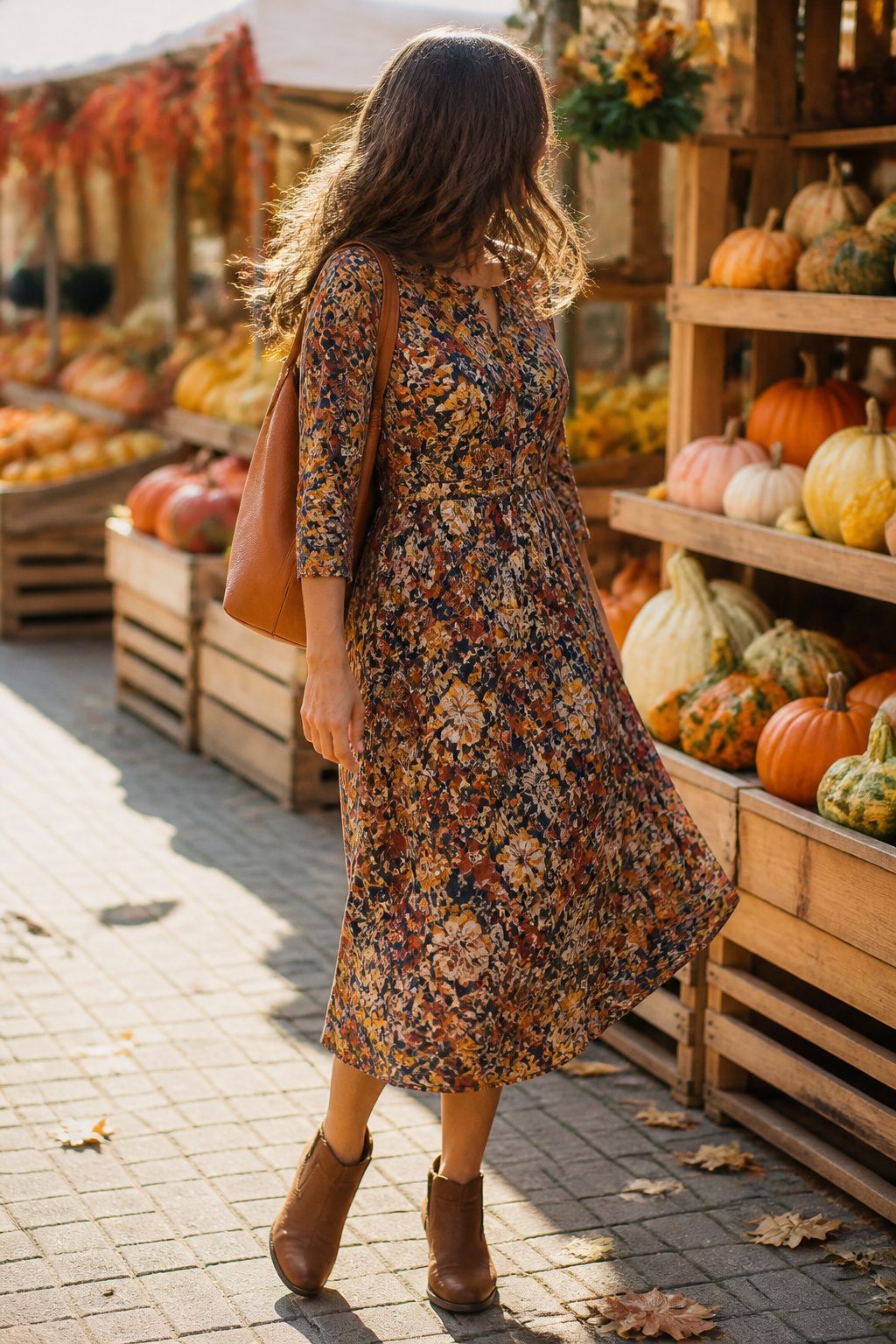
A dress that actually belongs to fall carries more weight than its summer cousin.
Three-quarter sleeves in a mid-weight cotton knit bridge the gap between bare-armed August and coat-required November, and a neckline that sits high enough for a thin turtleneck underneath turns one piece into two months of outfits.
The black fit-and-flare from a few seasons back still works because the high neckline covers a base layer without bunching, and the sleeveless cut lets a cropped trench sit right at the waist instead of fighting for room.
With knee-high boots, the shape reads intentional; the same dress with sneakers and a crewneck layered under it reads like you meant to look that casual.
The difference is the boot shaft finishing where the skirt flare begins, so the eye moves in one continuous line rather than stopping at an awkward ankle gap.
Moody florals in black-and-white ground the pattern enough for repeat wear, and the color range lets you swap accessories without the dress announcing itself as the same item again.
A long sleeve matters less than a sleeve that layers cleanly; too tight and the jacket over it strangles, too full and you add bulk you did not plan for.
12. Outerwear
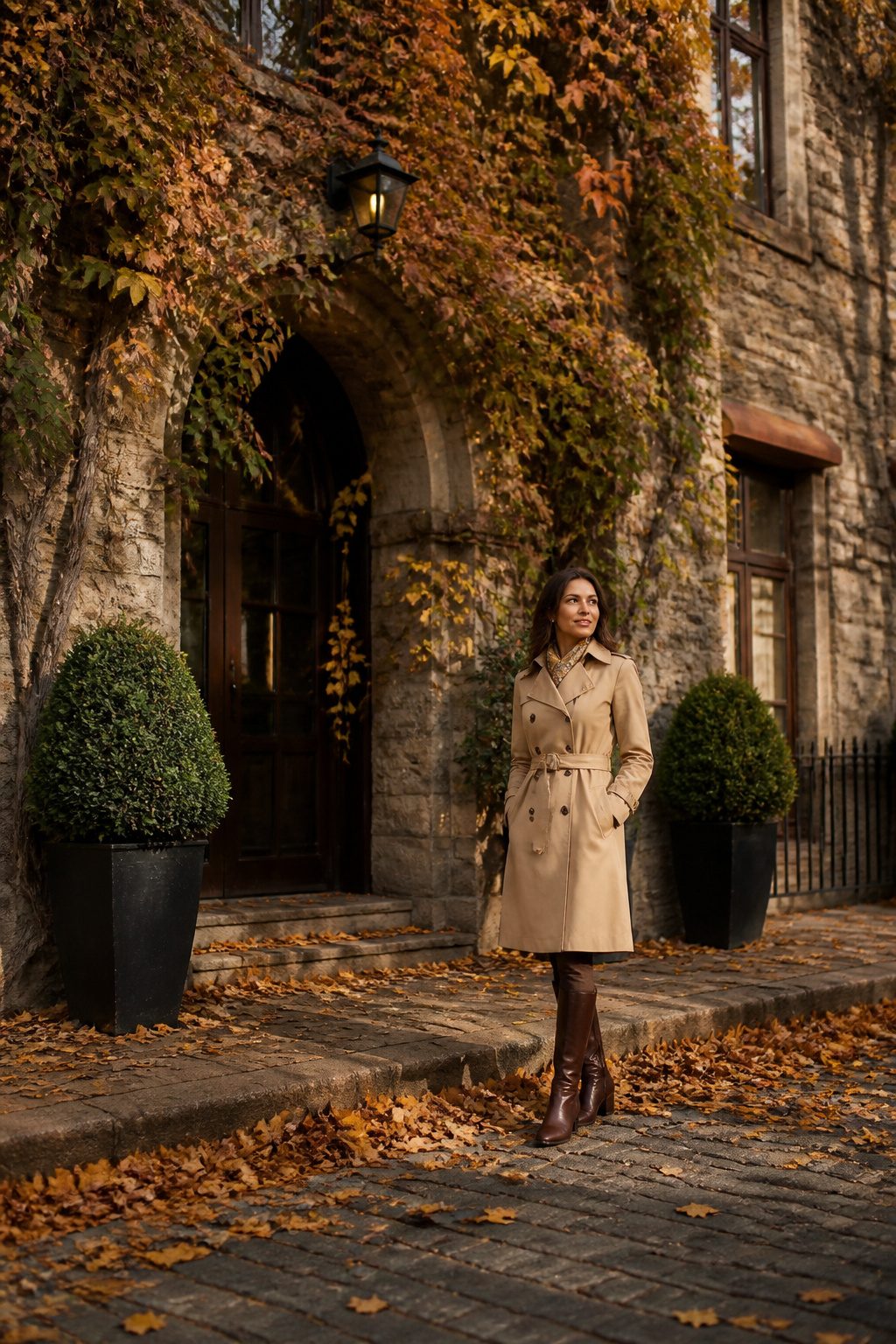
A trench coat is the piece most of us picture first when we think of a fall outfit, and the sources back that up: it is the most-cited category across the board.
What separates a functional trench from a decorative one is the fabric weight and the seam sealing.
A cotton gabardine shell without taped seams will darken in a drizzle and soak through in twenty minutes; the coat that actually keeps you dry has a denser weave and a storm flap that channels water away from the closure rather than letting it pool.
I have learned to check the label for a waterproof rating or at minimum a water-resistant finish before counting on one through an actual commute.
The temperature at which a jacket becomes necessary depends on wind and humidity more than the number on the app, but below 55°F with any breeze, a light jacket stops being optional and starts being the difference between a comfortable day and a shivery one.
I once bought a cropped wool jacket that looked sharp in the store mirror but had no closure at the throat; the first gusty October morning proved it was built for photographs, not for wearing.
It hangs in the back of my closet now as a reminder that a fall outfit only works if the outer layer works first.
13. Blazers
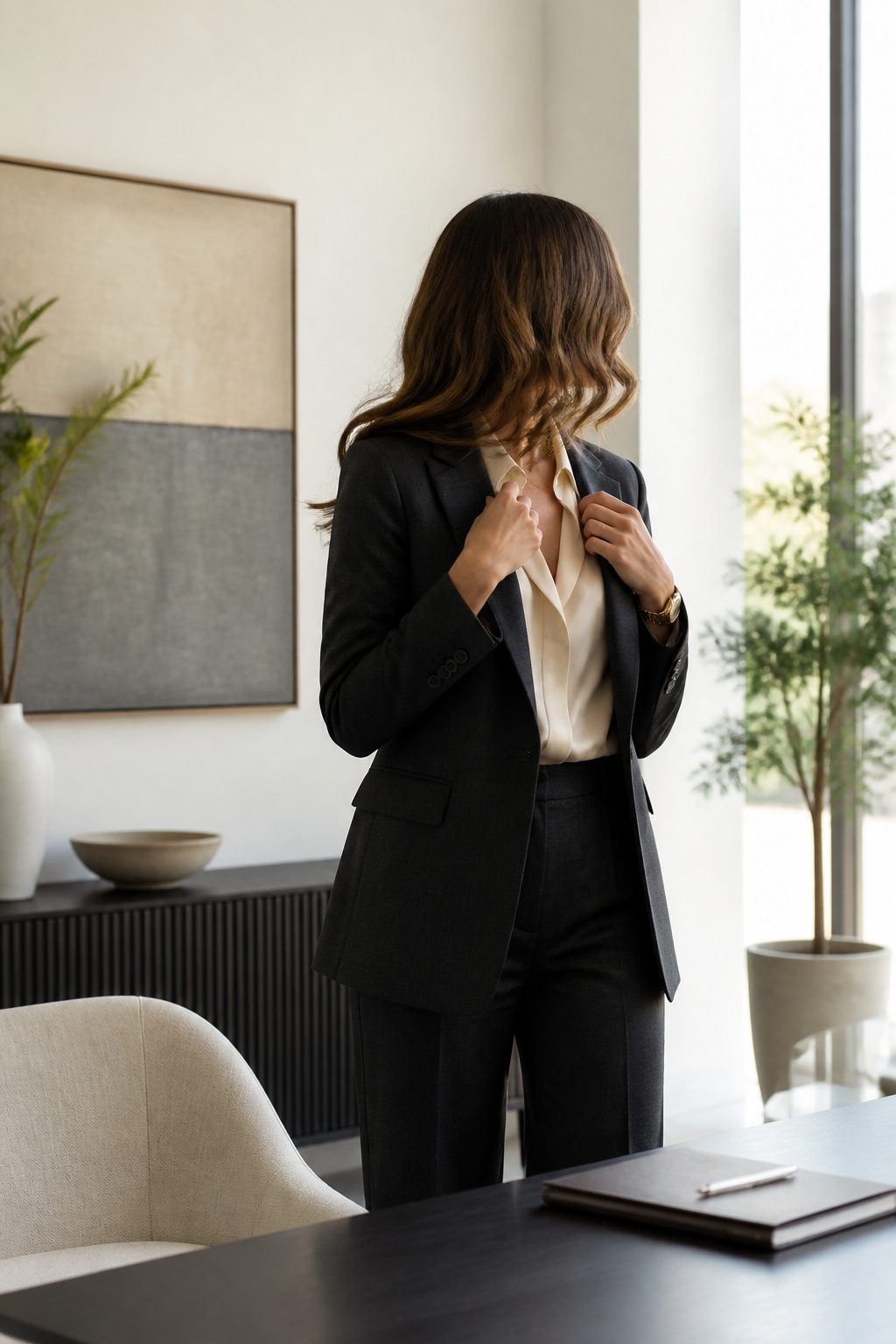
A tailored blazer fills the gap between a cardigan and a true coat, which is exactly where fall dressing gets tricky.
The fabric weight matters more than the color: a 10–12 ounce wool or wool-blend hangs cleanly over a thin silk blouse without crushing it, but try that same blazer over a chunky cashmere crewneck and the shoulders bunch like you’ve borrowed your dad’s suit.
Shoulder construction is the detail that makes layering work; an unlined or partially lined blazer with a natural shoulder line collapses gracefully over sweater bulk, while a heavily padded structured shoulder rides up and stays there.
I learned this the hard way at a client dinner last November.
Wore a fully lined, sharply padded blazer over a fine-gauge turtleneck for a 9 AM presentation; looked crisp until 6 PM, when I kept the blazer on over nothing but the turtleneck for drinks.
The shoulders sat half an inch too high, the whole thing read costume-y, and I spent the evening aware of my own silhouette. The fix was a softer, half-lined blazer in a similar navy, same trousers, same boots.
The shoulders had minimal padding, the fabric was lighter, and it skimmed the sweater underneath instead of fighting it. That version worked from desk to dinner without the costume change.
14. Hoodies
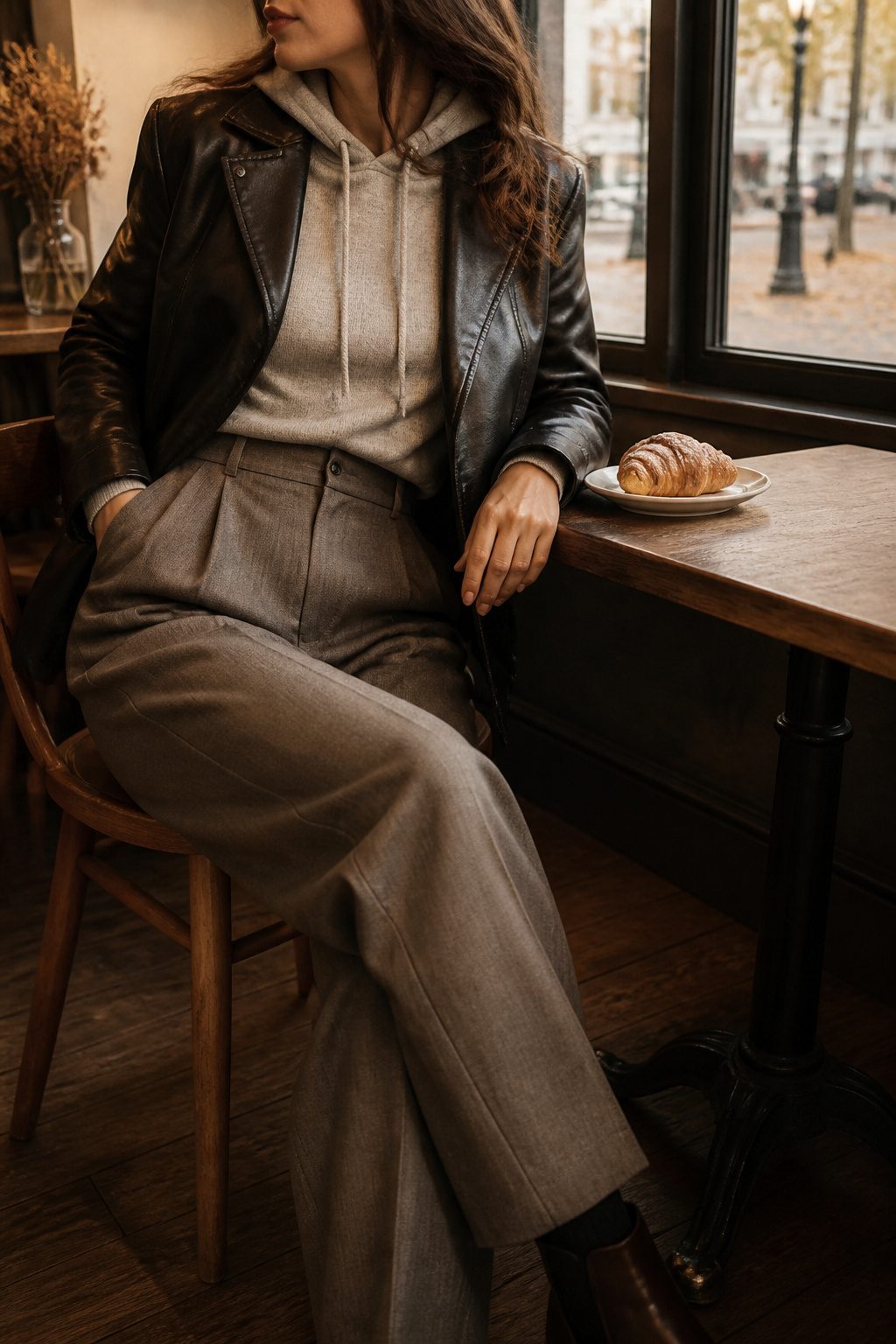
A hoodie only earns its place in a fall outfit if the cut cooperates with the rest of your layers.
The ones that work under a wool coat sit closer to the body through the shoulders and torso, with a hem that lands at mid-hip rather than pooling below the seat.
Anything oversized reads as gym wear the moment you try to top it with structure.
Color does the heavy lifting for polish. Heathered oatmeal, washed olive, and charcoal settle naturally against camel, burgundy, and navy, which means the hoodie functions as a neutral rather than a weekend placeholder.
Bright white or high-contrast logos fight the muted palette that makes fall dressing coherent.
Worn alone, a slim hoodie tucks cleanly into high-waisted trousers with a belt to define the line. The hood itself becomes a detail, not bulk, if the neckline opens wide enough to lie flat against a jacket collar.
Cotton fleece at 12–14 oz hits the right weight: warm for October, not so thick that sleeves bunch at the wrist.
15. Accessories
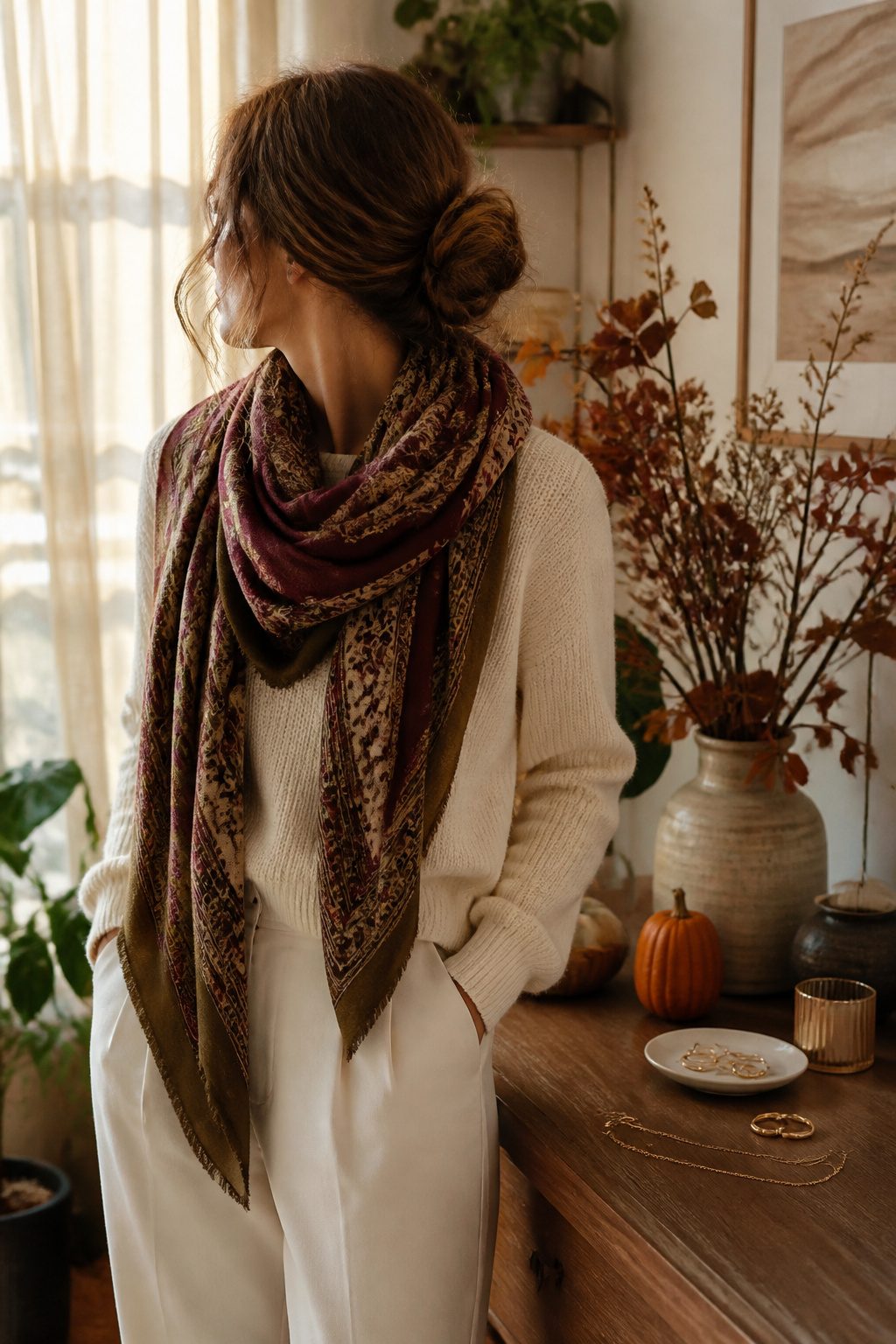
A 36-by-72-inch rectangle actually wraps twice and tucks, which is what turns a scarf from decoration into a layer you can skip the jacket for.
Anything under 60 inches is basically a necklace with ambition; it sits at the throat and looks intentional, but it will not warm you.
Jewelry changes against fall necklines more than people account for. A pendant on a 20-inch chain sits right at the collar of a crew neck, framed and visible.
That same chain drops into the fabric valley of a turtleneck and disappears, so you either size up to 24 or 30 inches so it lands on the knit, or you switch to something that spreads horizontally, like a collar necklace that rides above the fold.
I learned that the hard way one October, standing in a parking lot, fishing a silver disc out of black wool while the wind did its thing.
16. Fall Shoes
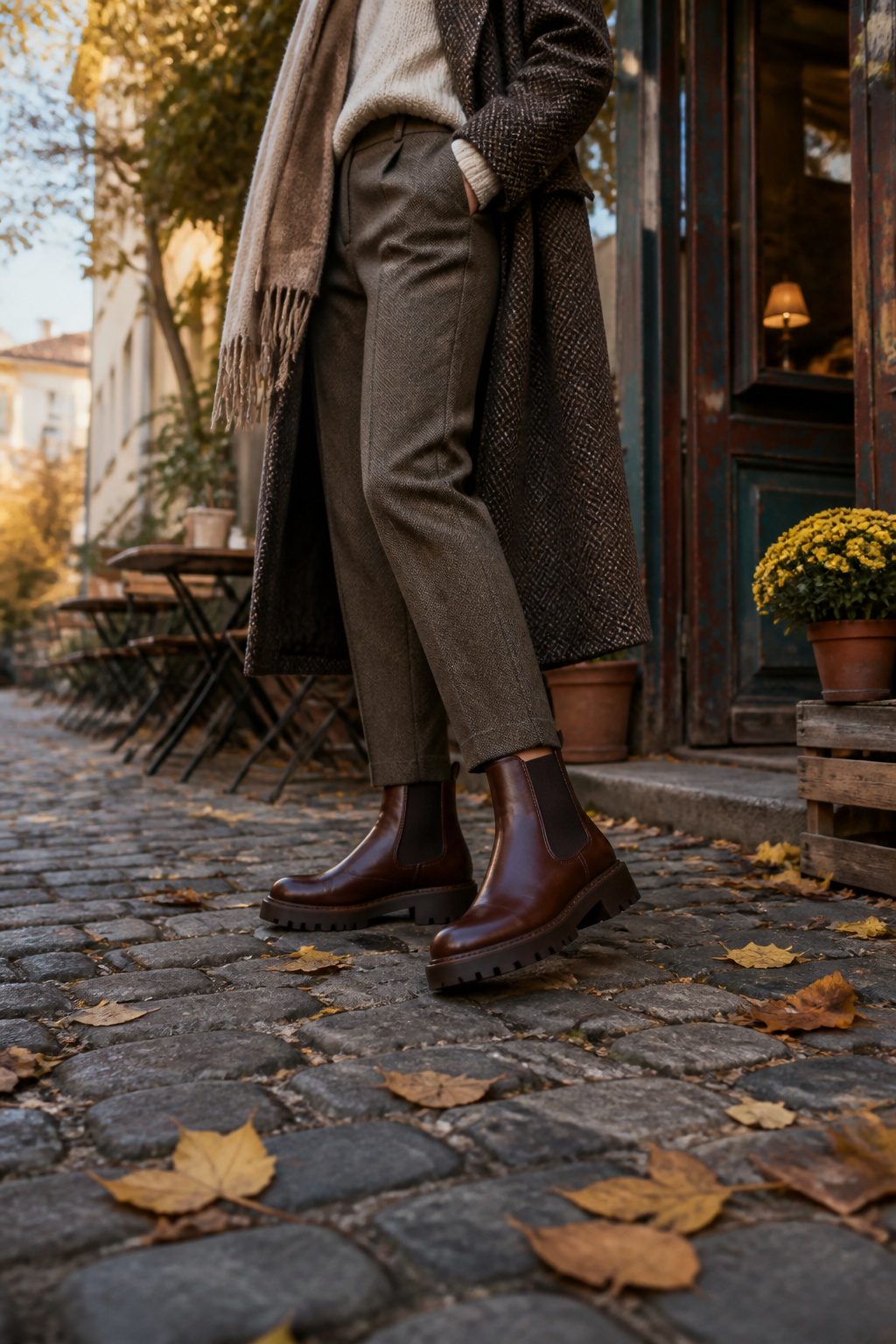
Closed-toe shoes and boots replace sandals the moment morning sidewalks start holding dew past nine.
I learned heel height the wet way: a two-inch block heel keeps the hemline right and the ankle steady on slick subway stairs, while anything under an inch lets puddles seep straight through the sole seam.
Sole thickness matters more than waterproofing spray; a half-inch rubber platform buys you the fifteen-block walk to the train without the soaked-sock surrender.
One October I bought a pair of sleek leather ankle boots with a paper-thin sole because they looked sharp with cropped trousers. They looked sharp for exactly six days.
By the third week I was changing socks at my desk, and by December they had cracked across the ball of the foot from salt exposure.
That same season a pair of chunky-soled Chelsea boots with a one-and-three-quarter-inch heel went from dry October leaves to slushy December mornings without a complaint.
The elastic gussets loosened slightly, which made them easier to pull on over thick socks, and the tread never packed with street grime the way smoother soles do.
Layering Techniques
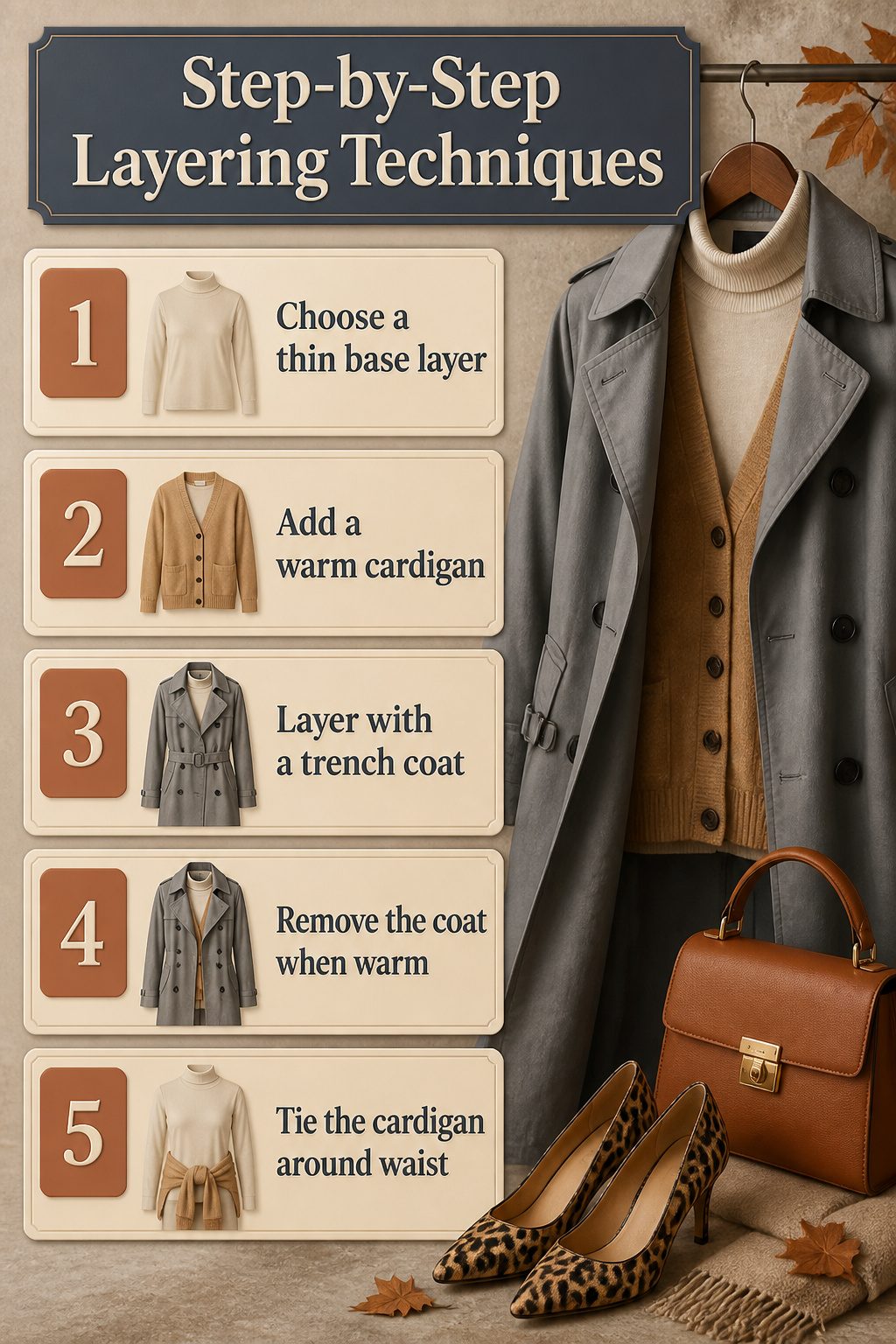
A October morning two years ago started at 45°F and hit 65°F by lunch.
I had a meeting at 9 a.m. and a walk scheduled for 1 p.m., so I built the outfit around what could come off without ruining the look.
Base layer was a thin cotton turtleneck, the kind that weighs almost nothing in a tote bag. Over it went a wool-blend cardigan, and over that a trench coat in gray.
The coat came off first, around 11 a.m. when the office radiator kicked in. The cardigan stayed through the walk.
By 2 p.m. it was tied around my waist, and the turtleneck alone was enough.
The order matters more than the pieces. A windbreaker over a blazer looks wrong when the shell comes off; a cardigan over a button-down keeps its structure either way.
I learned that the hard way with a leather jacket over a sleeveless dress, arms bare and goosebumped by noon.
For fall 2026, leopard-print pumps and a top-handle bag finish the look without adding bulk. The pumps stay on; the layers do the work.
Color Palette
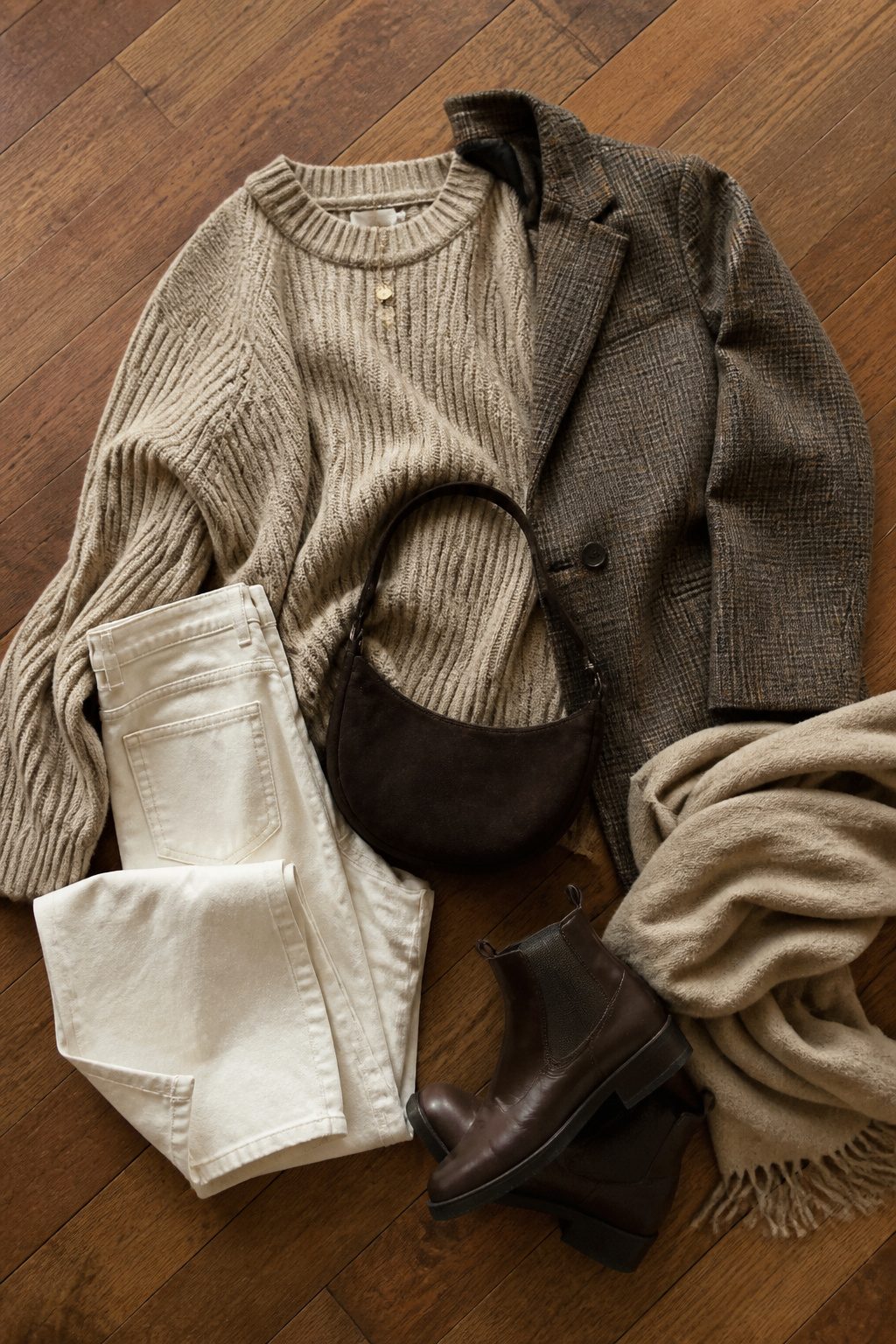
Burgundy and gray are the backbone of most fall outfits I put together, but the proportion matters more than the colors themselves.
A warm gray oxford shirt under a burgundy sweater vest reads intentional, especially when the socks and bag match that same wine tone. The mini skirt and loafers keep it from looking like a costume.
Earthier colors are where I have gotten myself into trouble. Olive trousers with a rust turtleneck and a camel cardigan, all in similar depth, turned into a single muddy shape in photographs.
Nothing stood out because everything competed at the same volume. One piece needs to step back.
Long neutral cardigans with pockets solve part of this by giving you a quiet base to build against. Cream, heather gray, or warm taupe worn repeatedly means the brighter or darker layer underneath actually gets seen.
Without that neutral anchor, even a good burgundy can disappear into the noise.
Versatility of Pieces
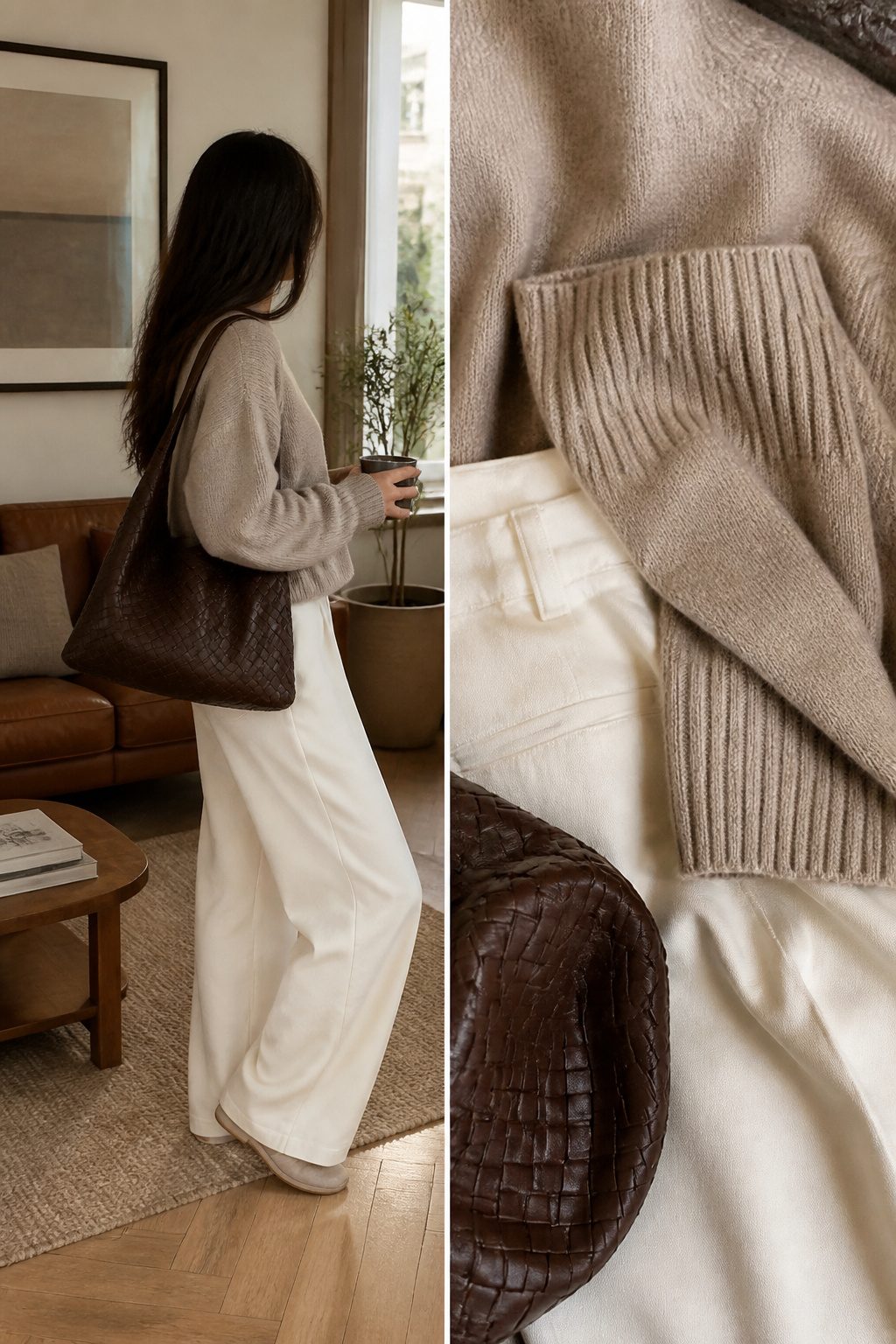
A striped button-down shirt and tailored midi skirt read office-ready with wedge sandals and a white shoulder bag, then shift straight into fall with knee-high boots and a roomy suede tote.
That single swap is the kind of move that makes a piece earn its hanger space.
I ran a silk button-down through three settings last October, or tried to.
Monday it carried a sweater layered over it for warmth that still looked deliberate; Wednesday the same shirt alone with trousers for a dinner that ran long; Friday I attempted it under a trench with the collar out and the proportions collapsed, the silk too slippery against the lining, the collar fighting the lapel.
The shirt held up until outerwear got involved.
Cardigans handle this range more quietly. A thin knit layers under a trench without bulk, works on its own over a camisole, or sits open as a soft rectangle of color.
Neutrals stretch the furthest. Burgundy socks and a matching bag can finish the look when you want one note of season without committing to a full palette.
The preppy pairing of an Oxford with a sweater vest nails autumn academia, tights and loafers completing it.
That formula has limits: the mini skirt version reads young fast, and the vest alone does not carry you into a room where anyone is wearing a blazer.
Know which side of that line your day lands on before you walk out.
Seasonal Trends
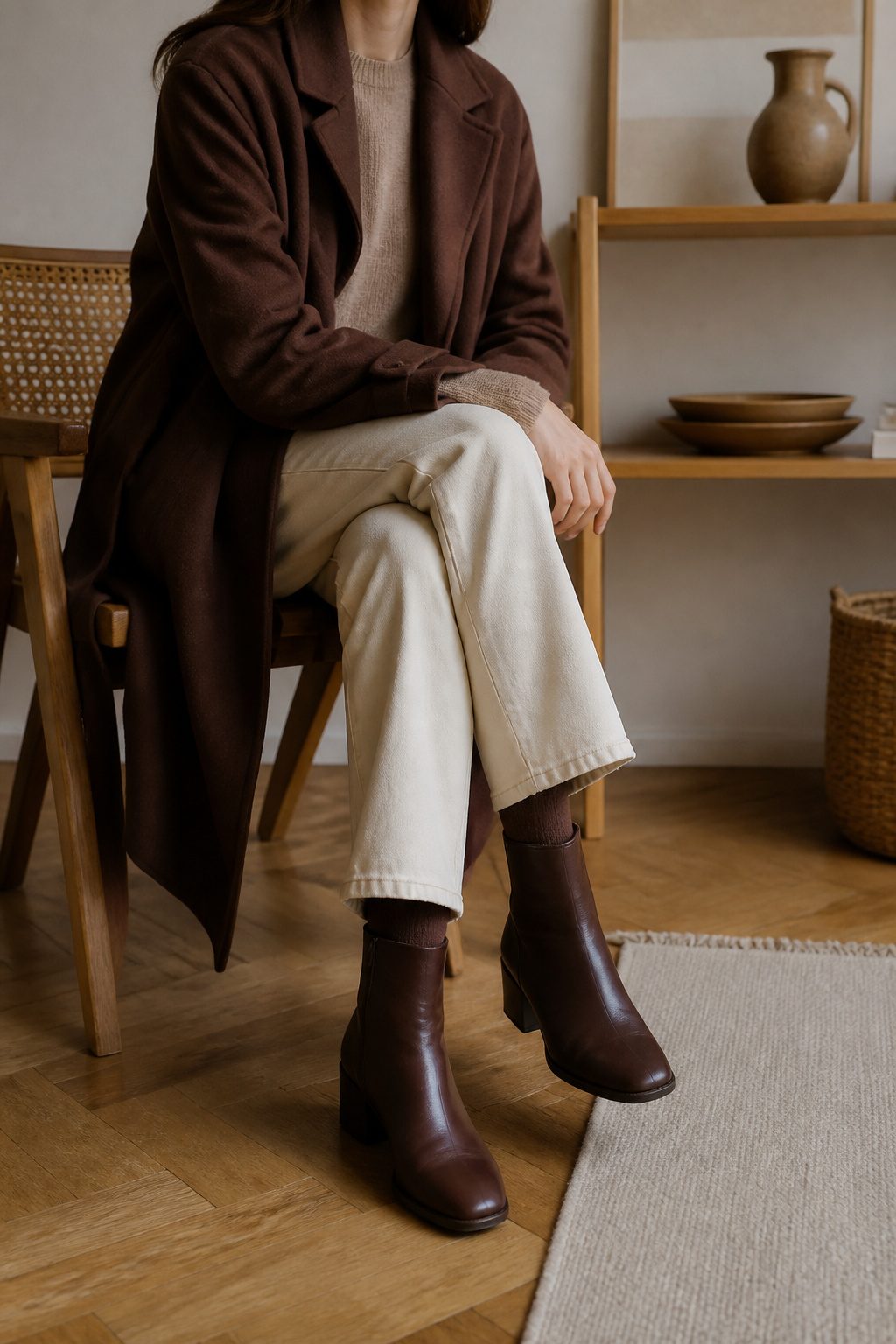
Oversized sweaters are having another moment this fall, and the cut matters more than the trend itself.
A dropped shoulder that lands two inches past your natural shoulder line creates structure rather than drowning the frame; anything wider and the sweater becomes a blanket you wear in public.
I learned that distinction the hard way with a cream crewneck from two seasons back that now sits folded in my donate pile.
The sleeves were long enough to cover my hands entirely, which felt cozy for exactly one coffee run before the inconvenience won out.
Tailored blazers have outlasted that experiment by years.
Mine is a double-breasted wool in charcoal that I bought in 2019 and still reach for weekly; the shoulders are padded but not aggressive, and the nipped waist keeps it from reading as office-only.
A blazer that fits in the shoulders but skims the waist is the piece that moves from work to dinner without a change.
Trench coats and knee-high boots are back in the rotation, though they never really left for women who build around classics.
The trench I wear most is mid-calf length with a removable wool liner; the boots are leather, hitting just below the knee, and they need to be snug through the calf or the silhouette collapses.
Both pair with the blazer, both stand alone. That versatility is why they survive when trendier pieces don’t.
Investment Pieces
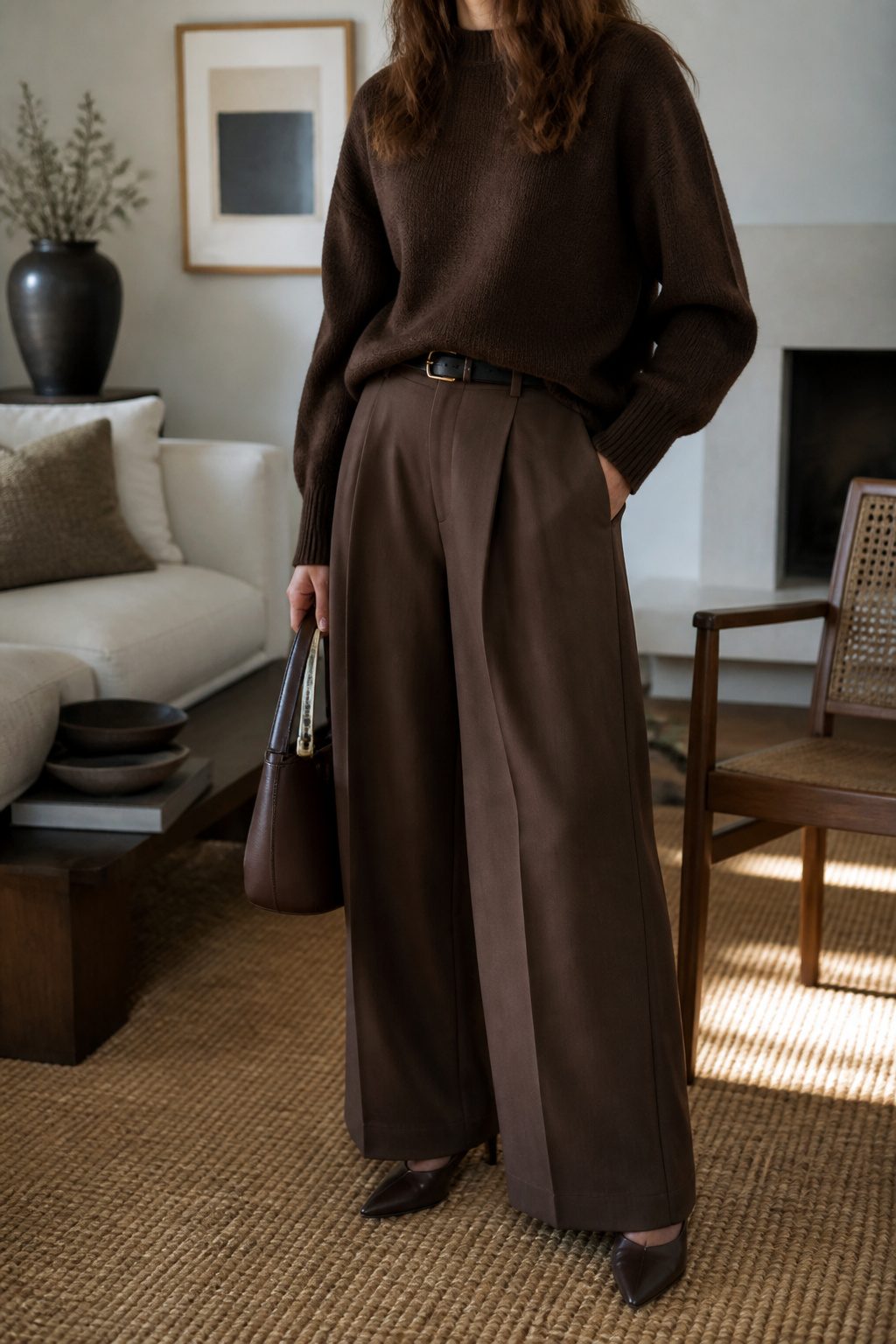
A cost-per-wear target of under $5 is the only math that matters for pieces you reach for twice a week from October through March. Leather blazers hit this easily.
The one I bought four years ago was $340, which sounded steep until I passed 200 wears and watched it settle in like a second skin rather than crack at the seams the way the $90 polyurethane version did after one season.
The cheap one went stiff in cold weather and peeled at the collar by February. That failure cost me $90 for 14 wears, or $6.43 each, plus the afternoon I spent hunting a replacement.
Tailored wool trousers follow the same curve. Mine were $280, altered for another $45, and they have outlasted three trend cycles of wide-leg and back to slim.
The lining held, the seat never shined, and the crease still presses clean. Synthetic blends at half the price bag at the knees within a year and resist pressing flat.
The difference shows up in how many mornings you reach for them without thinking.
Casual Versus Formal Styling
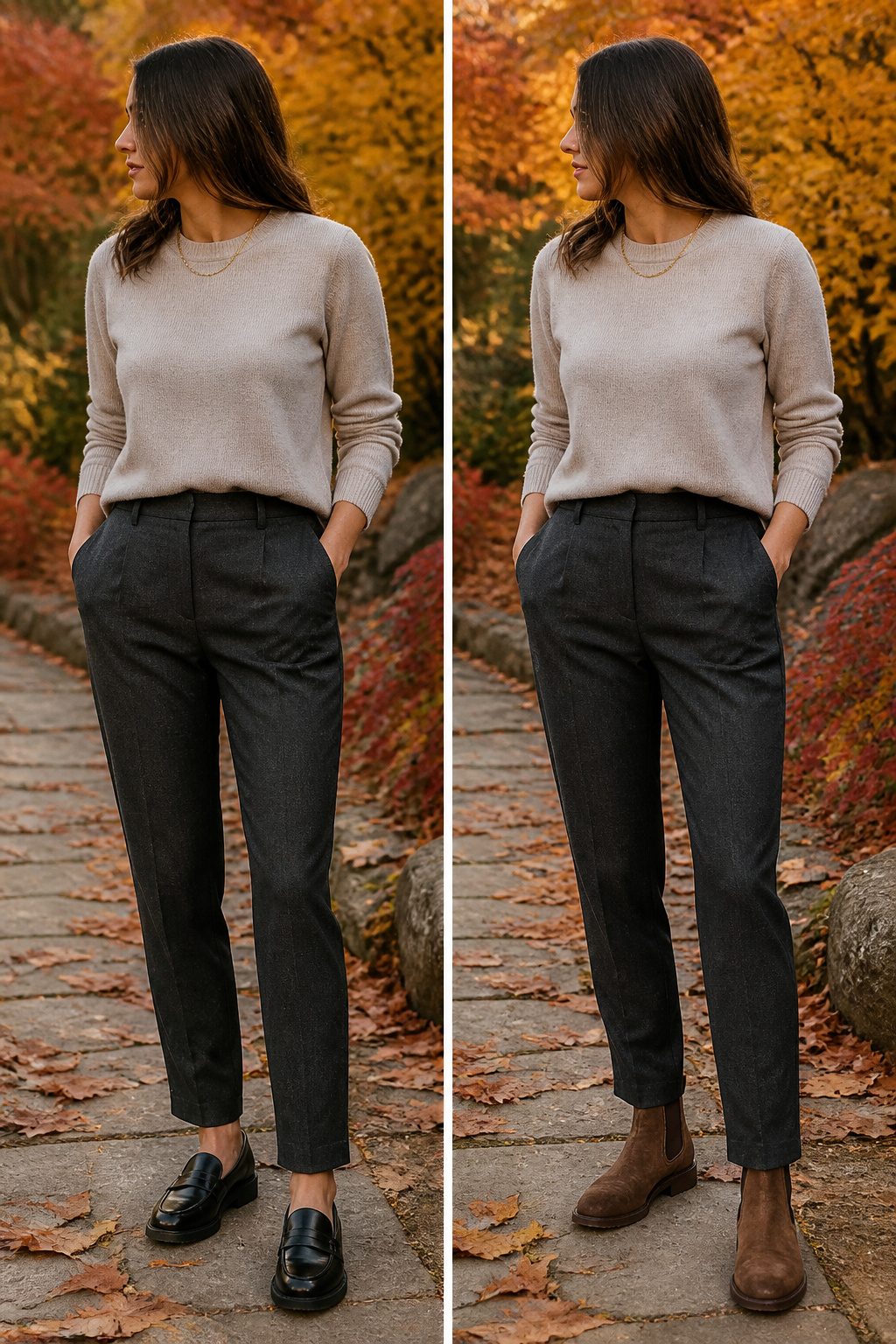
A merino crewneck and charcoal trousers read as office-appropriate because the fabric holds its shape, but the same pairing loosens into after-hours territory once the belt and shoes change.
Swap leather loafers for suede chelsea boots and add a single gold chain, and the outfit shifts without a full change of clothes.
I tested this logic on a Thursday that began at a desk and ended at a small-plates restaurant near my apartment.
What moved: the belt went from structured leather to none at all, the earrings changed from small studs to thin gold hoops, and the lip color shifted from a matte nude to something with a little more red in it.
What stayed: the sweater, the trousers, the watch. The trousers had enough structure to survive the day, and the merino did not bag out by evening.
The difference between casual and formal in fall dressing is usually two details, not ten.
A blazer over that same sweater and trousers would have pushed it too far for the restaurant, which was candlelit and loud and full of people in denim. Reading the room matters as much as reading the dress code.
Frequently Asked Questions
What are the best fall outfit ideas?
The strongest fall outfits build around long-sleeve tees in 5–6 oz cotton jersey, lightweight cashmere or fine merino knits, and midi-length wool skirts with boots.
Layering is the through-line: a thin turtleneck under a cardigan under a trench handles a 45°F morning that hits 65°F by lunch.
The article also highlights sweater vests in the 55–65 degree window, burgundy jeans with cream or olive up top, and tailored trousers in 10–12 oz wool crepe for crisper alternatives to denim.
How do I style a fall outfit?
Start with fabric weight and proportion, not just color.
A slim mock neck layers cleaner than a turtleneck that bunches at the throat; a long cardigan that hits mid-thigh elongates the torso over wide-leg trousers, while a cropped cut cuts you in half.
For accessories, a 36-by-72-inch scarf actually wraps twice and functions as a layer you can skip the jacket for. The article also notes that leopard-print pumps and a top-handle bag finish a layered look without adding bulk.
What are the must-have pieces for a fall wardrobe?
The essentials are a 5–6 oz cotton long-sleeve tee, a lightweight cashmere or fine merino knit, a trench coat with taped seams or water-resistant finish, a half-lined blazer with minimal shoulder padding, and a pair of mid-thigh to knee-length cardigans with reinforced six-inch pockets.
For footwear, a two-inch block heel with a half-inch rubber platform handles wet sidewalks better than waterproofing spray on thin soles. The article also flags a thin cotton turtleneck as the critical base layer for variable October days.