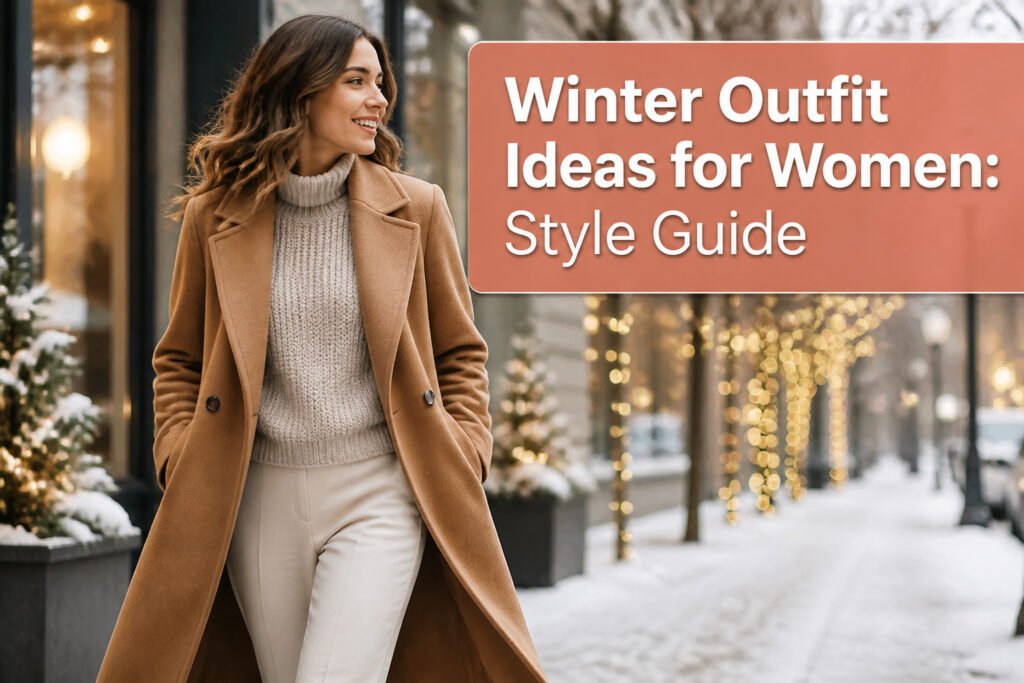
Winter outfits for women in 2026 run from airport joggers to velvet evening pieces, and the deciding factor is not the occasion but the fabric weight.
A camel coat exposes weak pairings in a way black never does, and an 8-wale corduroy traps warmth without turning into a tent by noon.
The real question is which combination solves your actual cold-weather problem: coverage, bulk, or the gap between boot top and hem.
1. Striped Sweater, Wide-Leg Denim and Kitten-Heeled Boots
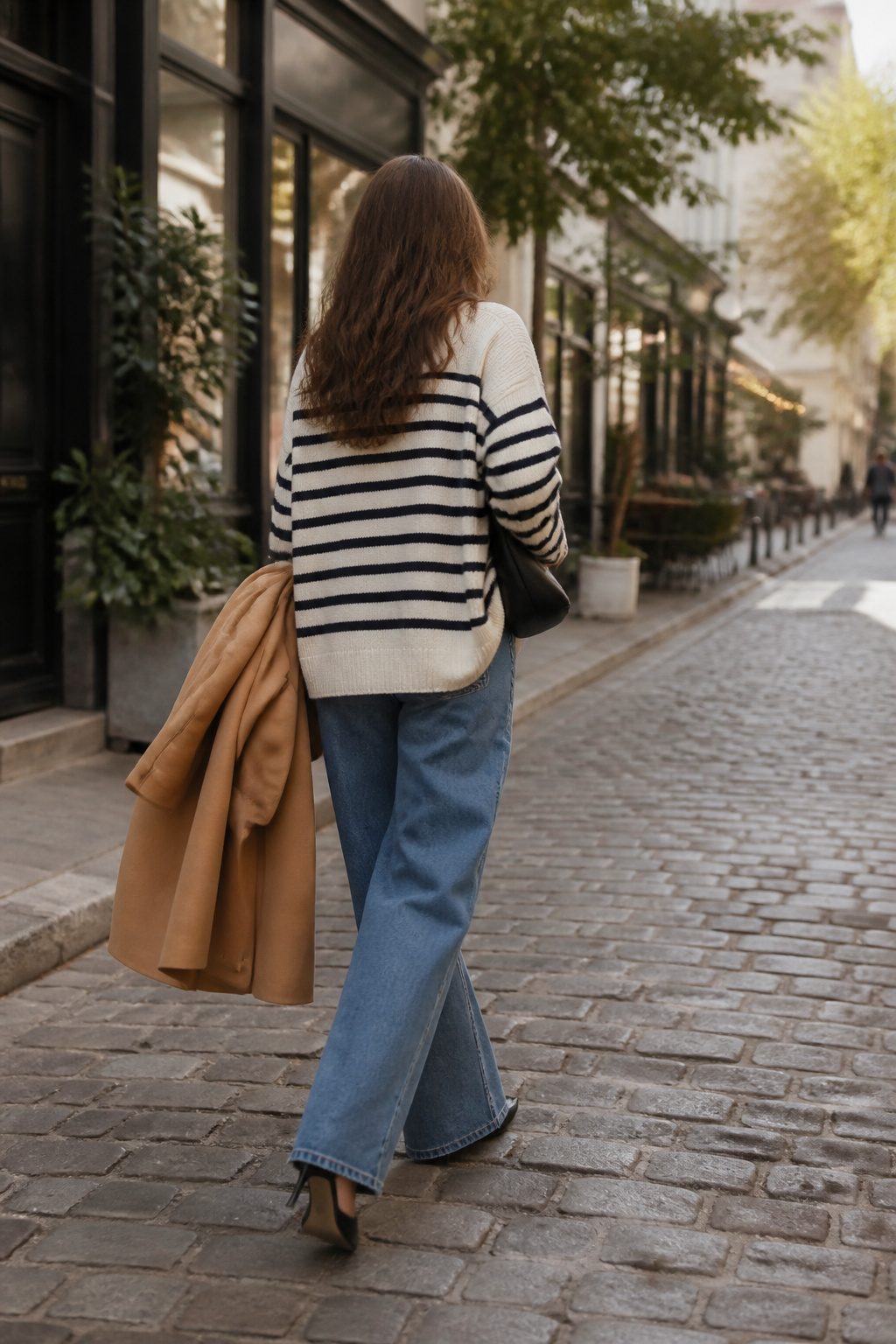
Stripes on a sweater read busy by default, so the rest of the outfit has to dial down.
Wide-leg denim does that job by mirroring the horizontal line in its own volume; the eye travels up and down instead of getting stuck at one loud point.
Kitten-heeled boots finish it with enough lift to keep the hem from dragging without turning the look into an occasion.
Sizing up on the sweater gives the stripe room to sit flat across the shoulders rather than pulling, which is where this formula starts to look thrown-together instead of intentional.
A statement coat in a solid color bridges the two if you need outerwear; Nour Hammour cuts the strongest ones I’ve tracked, though Revolve carries the broader price range.
The whole thing works for grocery runs and dinner because nothing in it demands a specific setting.
2. Faux Leather Maxi Skirt and Trench
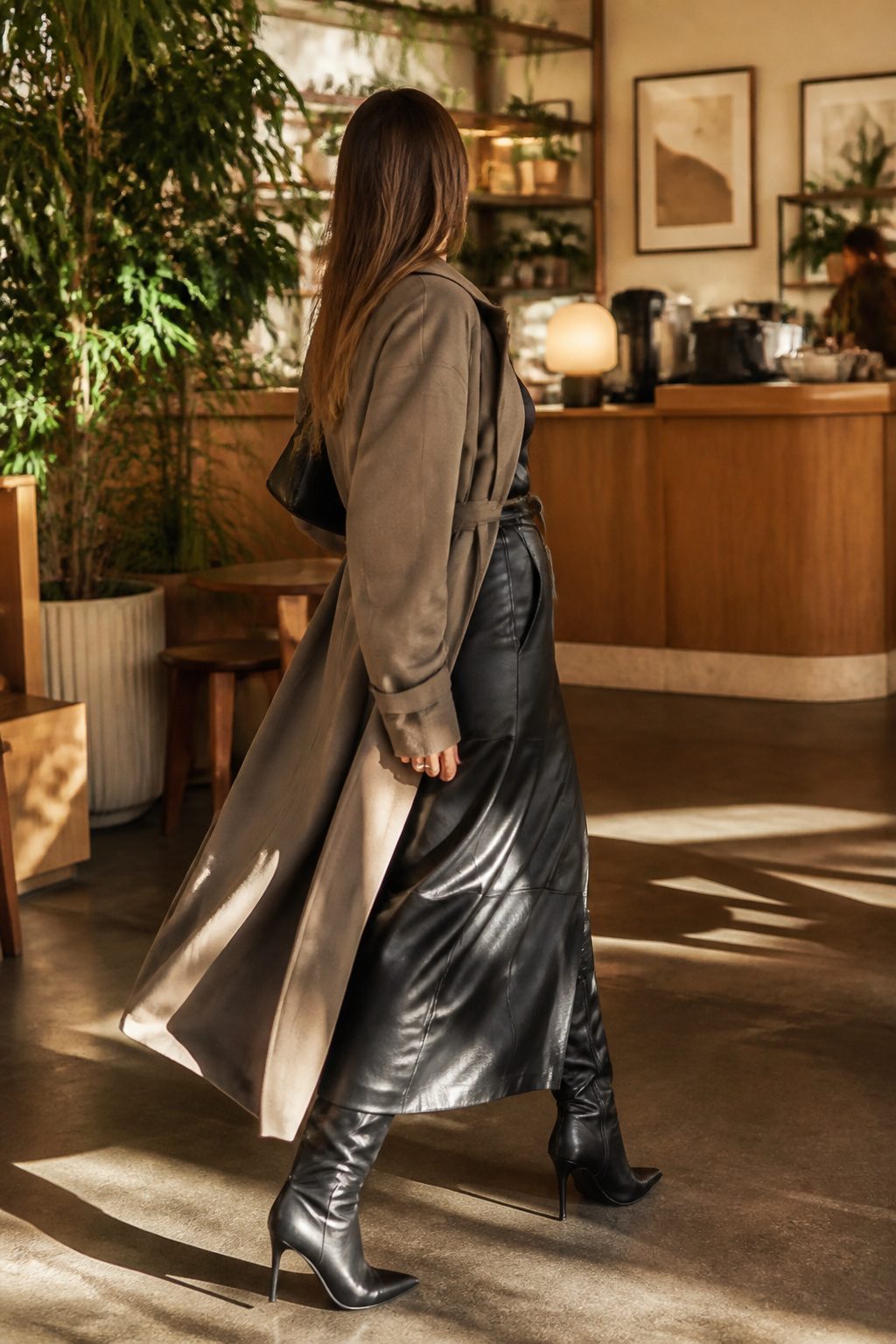
A faux leather maxi skirt with knee-high boots and an oversized trench is one of the stronger dressed-up combinations for cold weather, mostly because the long skirt blocks wind while the boots add actual warmth.
The trench should be deliberately big; size down if the cut runs generous so the proportions stay intentional rather than accidental.
Draping the coat over the shoulders works too, though that move sacrifices the belted silhouette and some of the practicality.
Knee-high boots matter here: anything shorter and the gap between boot top and hem becomes a cold channel, anything taller changes the line entirely.
The faux leather reads evening without the maintenance anxiety of the real thing, and the maxi length keeps tights optional rather than mandatory.
I have seen this pairing pitched as borrowed-from-the-boys, which mostly means the trench shoulders are wide and the skirt sits at the natural waist rather than empire.
The effect is polished without looking like you are trying to outdress the room.
3. Cashmere Sweater and Satin Trousers
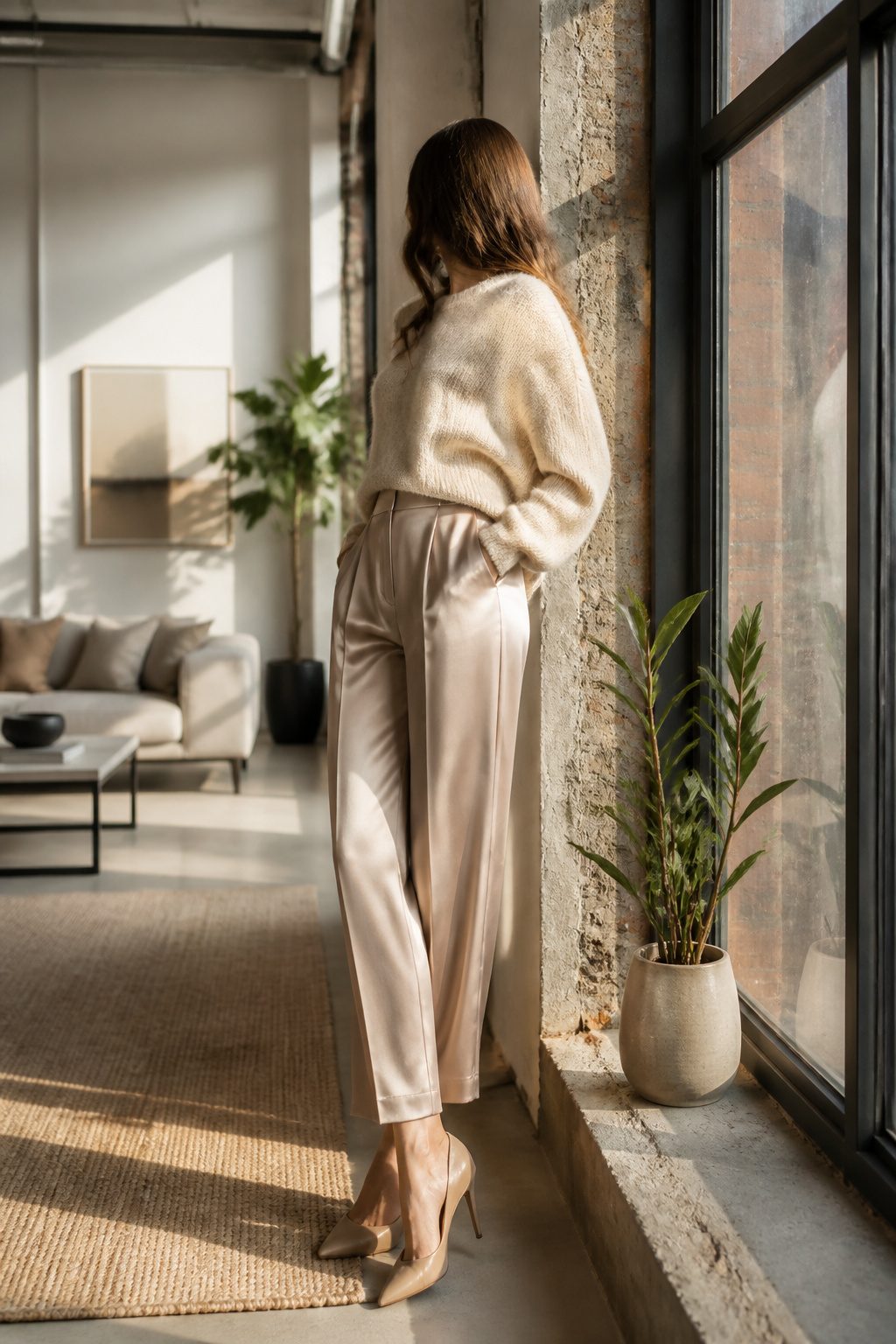
Cashmere against satin sounds like a contradiction until you try it. The matte, fuzzy surface of a good sweater absorbs light while the trousers throw it back, so the outfit reads as intentional rather than accidental.
I love affordable Quince cashmere for neutral styles, and the pairing only works if the cashmere is substantial enough to hold its shape through the hips.
Thin knits collapse against the slip of satin and start looking like you grabbed a blanket.
La Ligne’s Colby pants and Vince’s version both have enough weight in the drape to sit cleanly at the waist without bunching, which saves the whole proposition from loungewear territory.
A heel sharpens the line further; a sneaker works only if the trouser breaks exactly at the ankle and no lower.
4. Sweater Dress and Over-the-Knee Boots
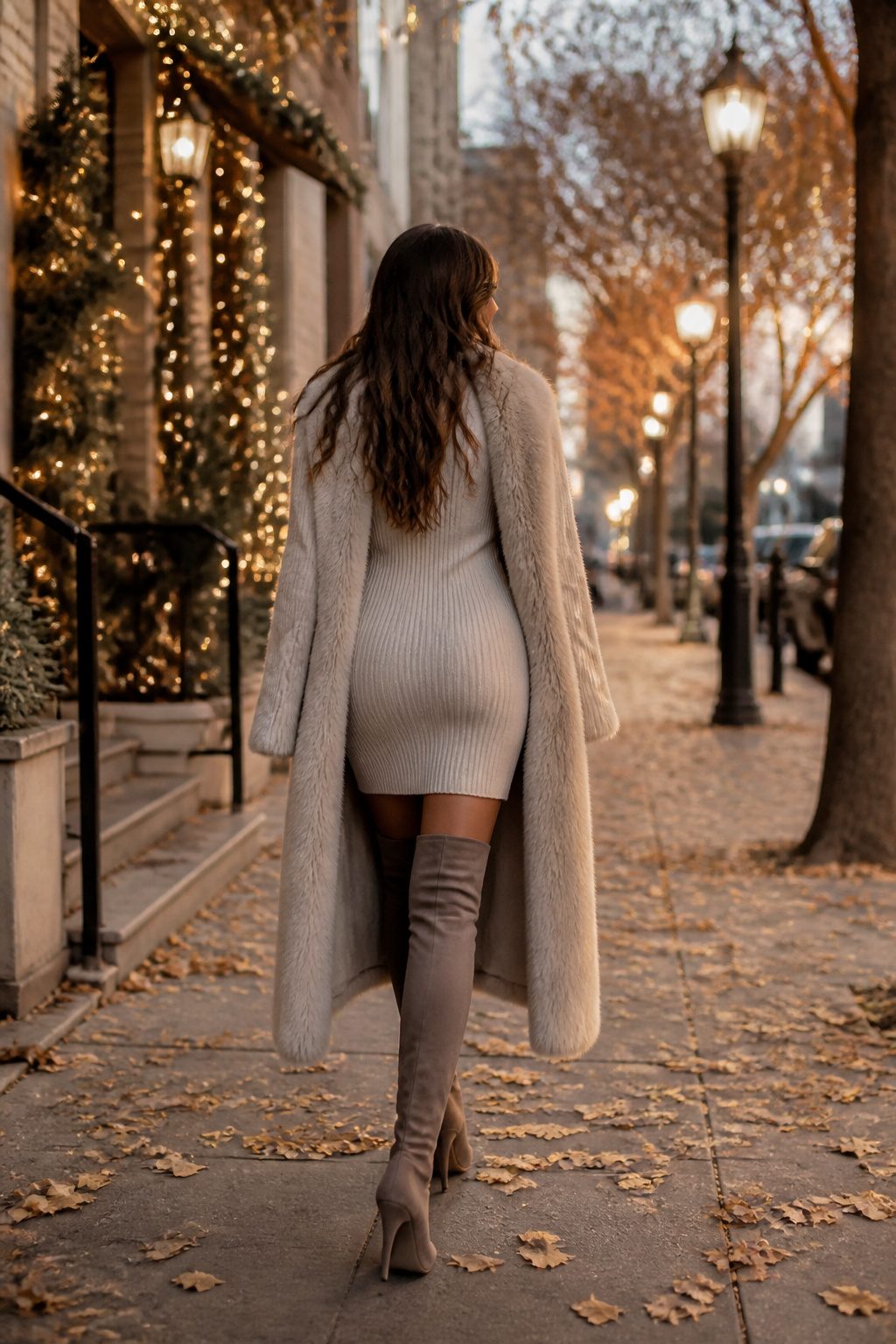
A sweater dress with over-the-knee boots solves the bare-leg problem without adding another layer to manage. Boot height replaces tights; the top of the boot meets the hem of the dress and the coverage question disappears.
Even if the length of the dress is short, like this cute Tuckernuck Vivianne dress, the boot shaft fills the gap so the look stays winter-appropriate.
Coat length over this pairing takes some thought. A cropped or hip-length jacket breaks the line at the wrong point and turns the outfit into competing blocks.
A long faux fur coat that hits at least mid-thigh keeps the silhouette continuous and adds the warmth the dress itself may lack.
The cutout sweater dress versions that are circulating this year work the same way; the opening is small enough that wind does not pour through, and the boots still carry the coverage below.
5. Quilted Jacket
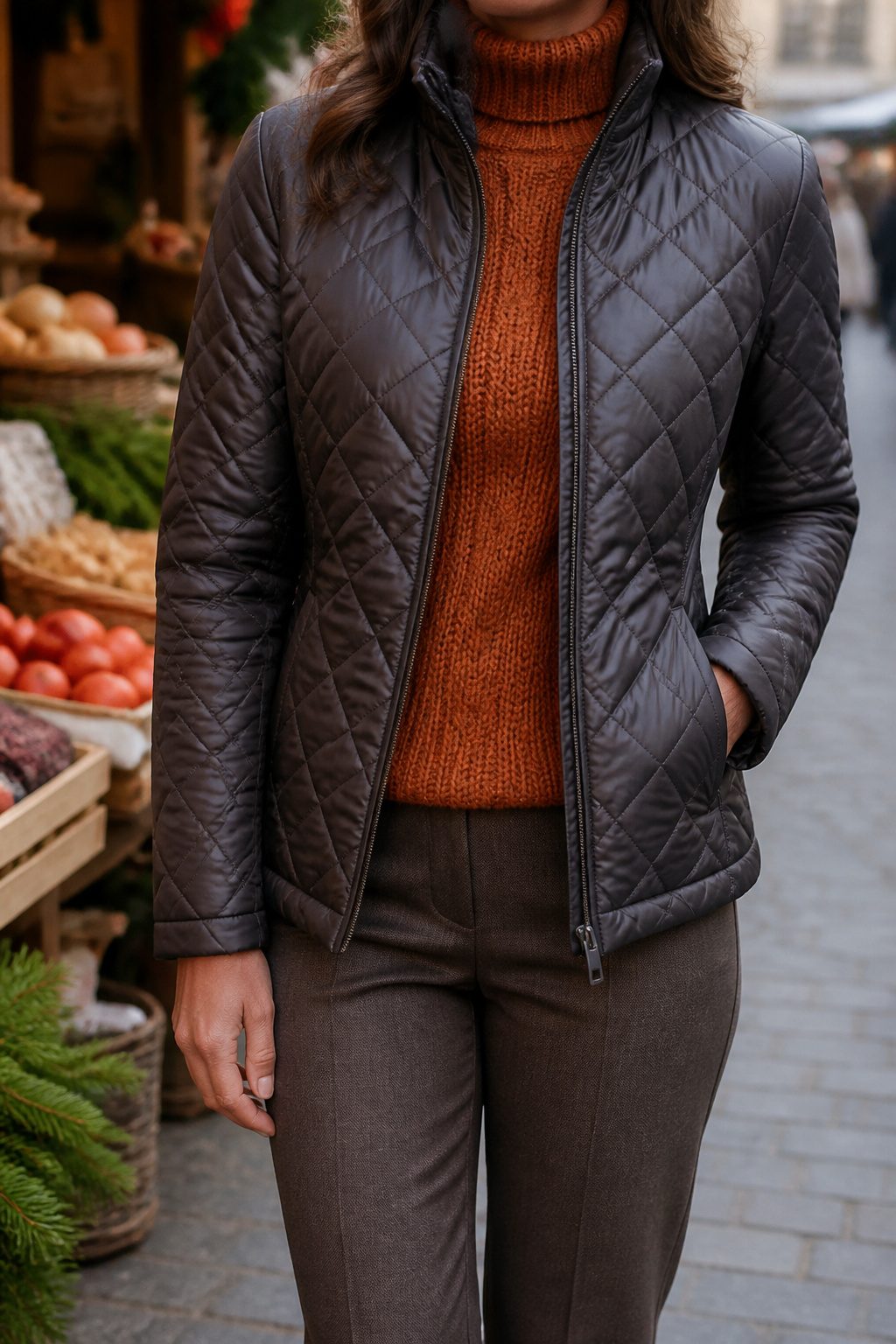
A quilted jacket sits lighter and closer to the body than any puffer, which is the difference that matters when you are already wearing a sweater underneath.
The stitching creates flat channels instead of blown-up baffles, so the silhouette stays neat enough for a casual office or a dinner where a puffer would look like you came from the ski lift.
I size down in most quilted styles to keep that trim line from going boxy. The collarless versions layer cleanly over a turtleneck or a thin crewneck without the collar fight you get when two garments both claim neck territory.
If you prefer a collar, a shaped mandarin or short stand collar gives structure without the bulk of a full coat lapel.
For evenings out, a cropped quilted jacket works over a thinner knit with faux leather pants, then slips under a heavier wrap coat when the temperature drops. The quilted piece does the insulating; the wrap coat blocks wind.
Neither layer has to work alone, and neither layer reads as padding stacked on padding. That is the combination I reach for when I want warmth without the marshmallow effect.
6. Statement Coat, Jeans and Booties
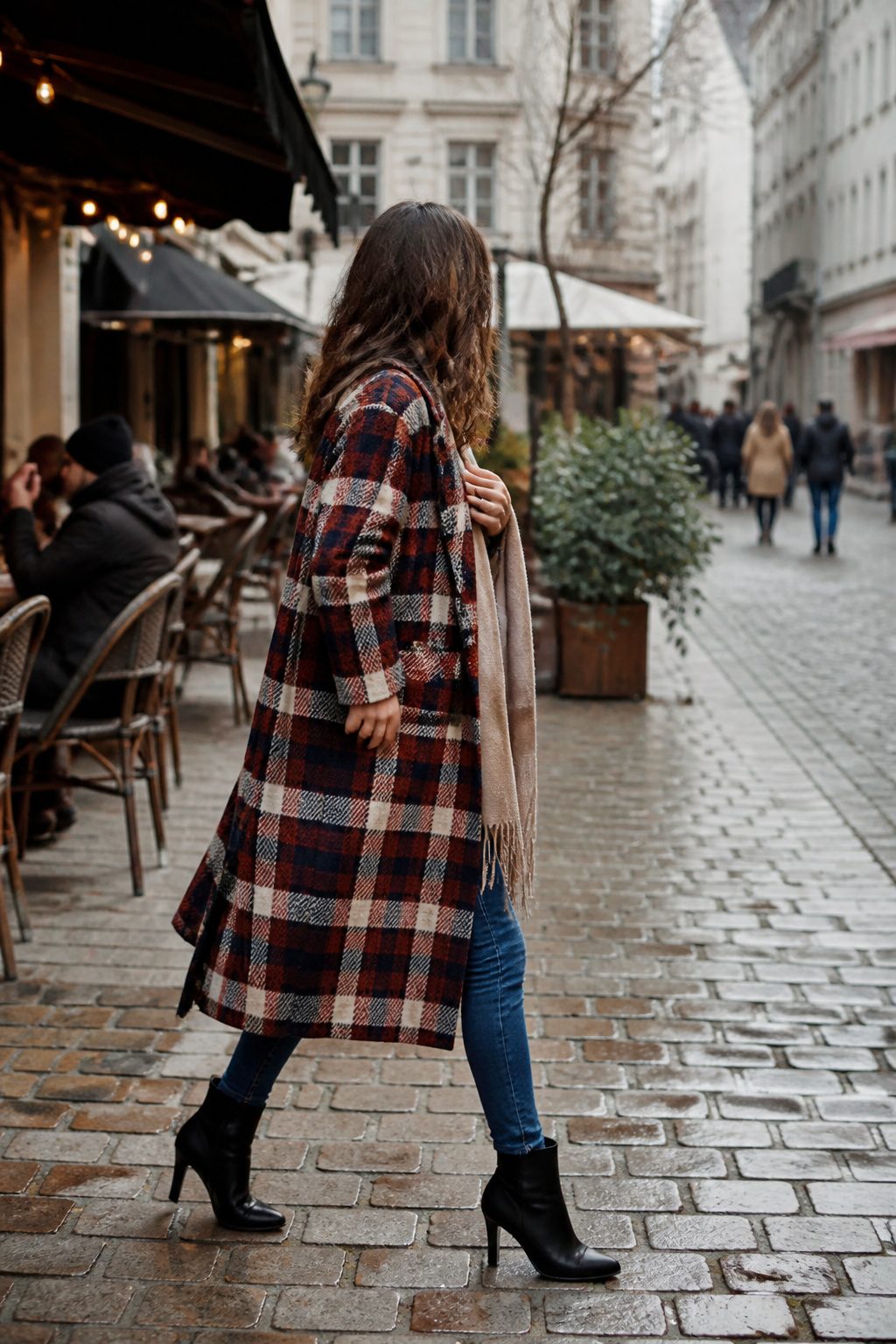
A coat earns the word "statement" when it does the styling work so the rest of your outfit does not have to.
Color is the simplest route: a neutral base of jeans and a thin knit lets a plaid or saturated coat become the single focal point. Fit matters too.
Mid-length or long coats in clean silhouettes read intentional rather than like outerwear grabbed on the way out.
This formula handles temperature drops without falling apart. A scarf layered underneath the collar, or a finer-gauge sweater swapped for something heavier, adds warmth without burying the coat’s shape.
Jeans and ankle boots stay constant; the coat carries the look.
Nour Hammour makes the strongest case for investment-level statement coats right now. For more price breadth, Revolve’s selection covers similar territory.
Sézane’s Rafael Coat in camel or black will outlast multiple winters and pair with virtually any wash of denim.
Their Scarf Coat, also worth considering, builds the accessory directly into the cut so you skip the extra layer decision entirely. Margaux booties finish the look; they pair with every coat mentioned above and most jeans already in your closet.
7. Matching Knit Set

A knit set of separates is great for re-mixing and re-matching once you’ve arrived in your destination, which makes it the backbone of a smart winter travel wardrobe.
The top and bottom read as intentional when worn together, but split them apart and each piece earns its suitcase space twice over: the sweater layers under a coat with different pants, the matching trousers pair with a turtleneck you already own.
The set from Kilte reads way more luxe in person than the photos suggest, and the comfort level still manages to look put together. I would size true; the wearer I followed took her usual 2 and the fit sat right.
For shoes, she laced into Adidas Gazelle sneakers and the casualness worked without tipping into sloppy.
Two directions to play this. Kilte leans polished-lounge, the kind of set that boards the plane and still looks right at the hotel bar.
If your travel skews more errand-running and coffee-shop working, AirEssentials by SPANX builds the same mix-and-match logic into athleisure fabric. Either way, the win is in the re-match: one set, three outfits minimum, and nothing you haul sits idle.
8. Puffer Coat and Joggers
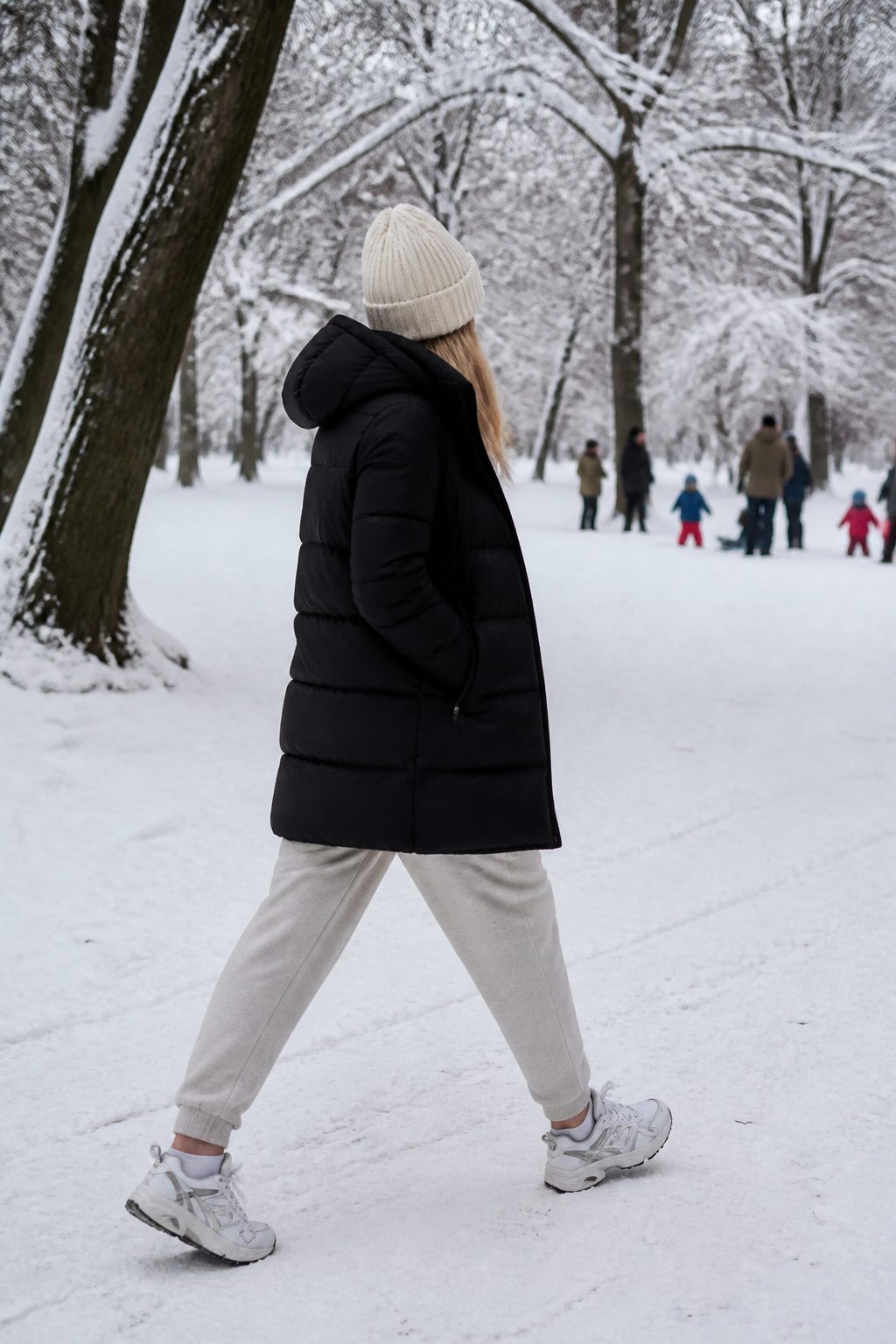
The puffer coat and joggers pairing works best when the coat itself has enough structure to anchor the slouch.
I’m wearing the Lands End Down Puffer Coat with mine, and the black color keeps the look intentional rather than like I grabbed the nearest warm layer.
The coat runs affordable and Lands’ End puts it on sale often enough that paying full price feels unnecessary.
This outfit goes to the coffee shop, the dog park, the Target run, the flight where you want to sleep sitting up. It does not go to dinner, to the office, to anywhere you need to look like you tried.
The line is sharp: athleisure reads as lazy the moment the setting calls for effort.
The Abercrombie puffer gets mentioned in the same breath for this kind of look, though I land on the Lands’ End version for the price and the fact that the quality holds up past one season.
An oversized puffer in a neutral shade is the workhorse here; color or pattern fights the joggers for attention and neither piece wins.
9. Velvet Dress
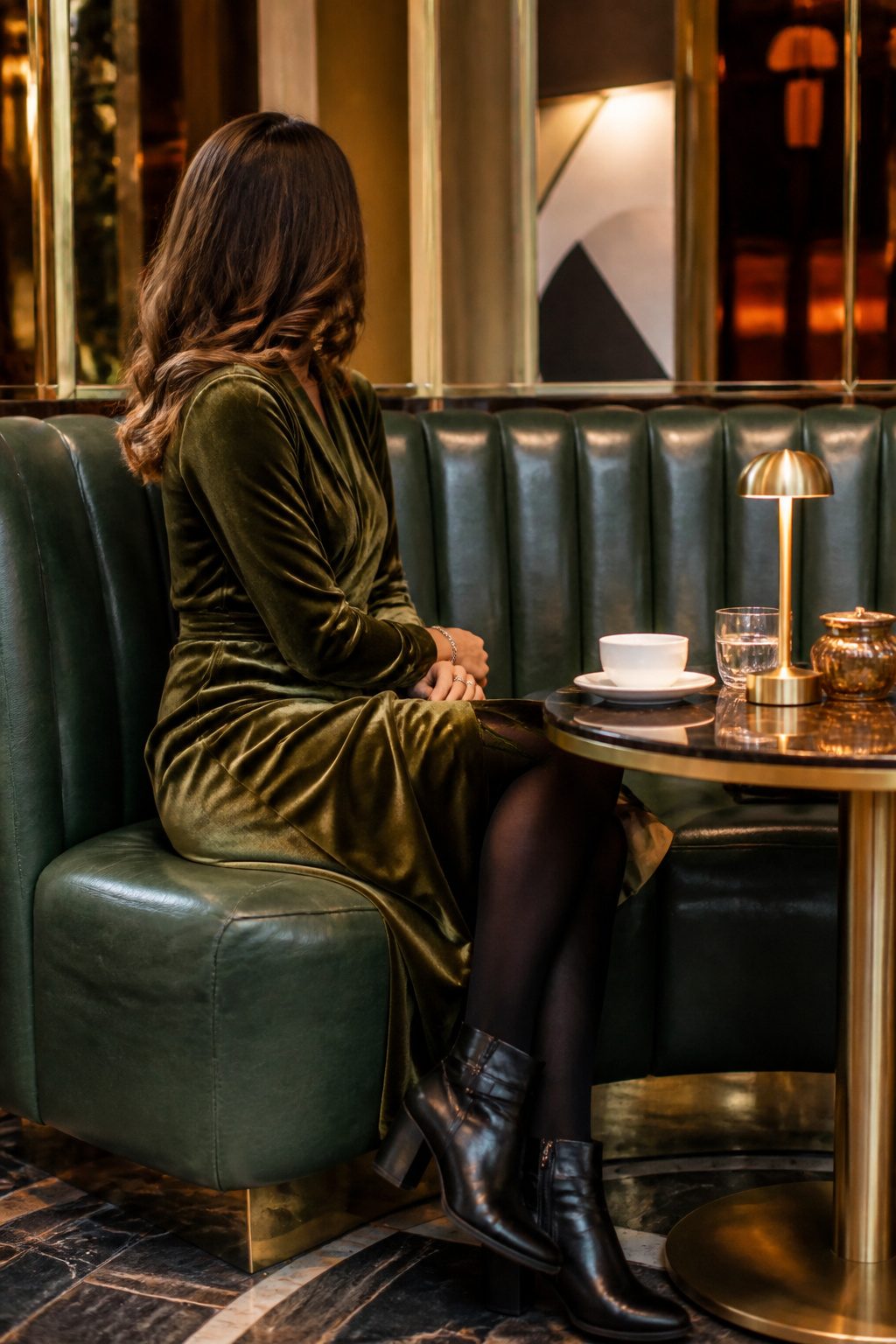
A velvet dress in lighter weights, around 200–300 gsm, reads as daywear without trying too hard. Heavier crushed or panne velvets, especially in jewel tones, shift straight to evening whether you planned it or not.
For morning coffee or the office, I keep the color muted: olive, rust, a washed navy. Those deep emeralds and burgundies look expensive at 7 p.m. and like a Christmas decoration at 10 a.m.
Tights matter more than the dress itself for keeping the look grounded. Opaque black at 80 denier or above works, but charcoal or even a dark merlot pair can break up the formality without tipping into costume.
Shoes should have some weight to them: a block-heel ankle boot or a loafers-and-socks combination steers clear of the "theater kid" territory that strappy heels invite.
The line between dressed-up and dressing-up sits at the neckline and the accessories. A turtleneck layered underneath, or a simple belted cardigan over top, pulls velvet back into real life.
Without that counterweight, the fabric does all the talking, and it mostly talks about itself.
10. Casual Layers
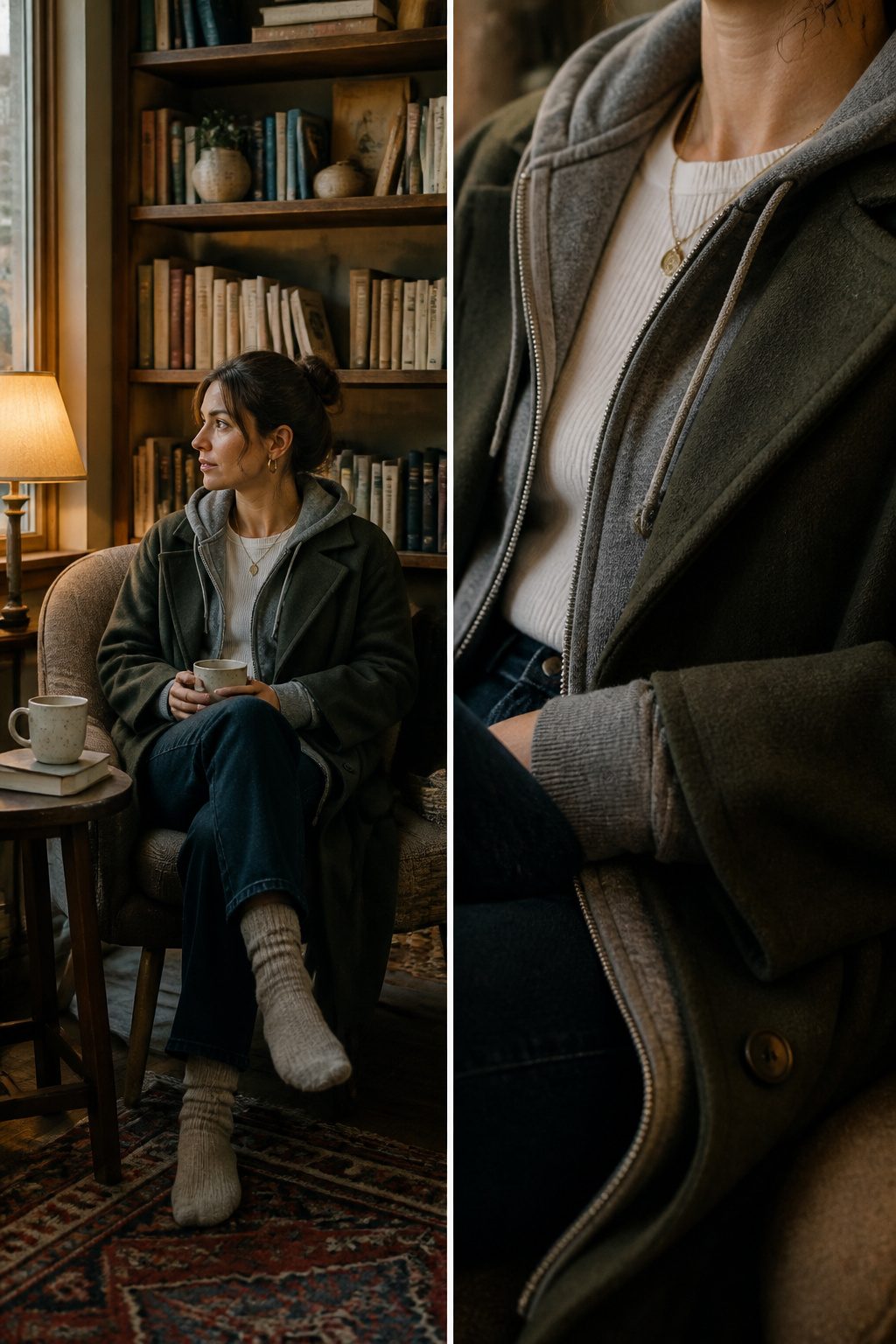
A top under hoodie under coat traps heat in the right order because each layer does a different job.
The base top sits against skin to wick moisture, the hoodie holds warm air in its fleece, and the coat blocks wind from stripping it away.
Reverse that order and the hoodie becomes a drafty outer shell with nothing sealing it.
The silhouette risk is real. Three stacked layers can read as a soft column if the lengths match too closely.
What saves the shape is a gap between hems, about two to four inches, so each layer registers as its own line.
A cropped hoodie over a longer tee, or a mid-thigh coat over a hip-length hoodie, keeps the eye moving vertically instead of flattening everything into one mass. Hood volume matters too.
A flat drawstring hood layers cleanly; a thick sherpa-lined one balloons at the neck and forces the coat to sit wrong.
I skip the hood up when the coat has its own, or I pull the hood out and let it frame the collar like a liner.
11. Maxi Skirt and Sweater
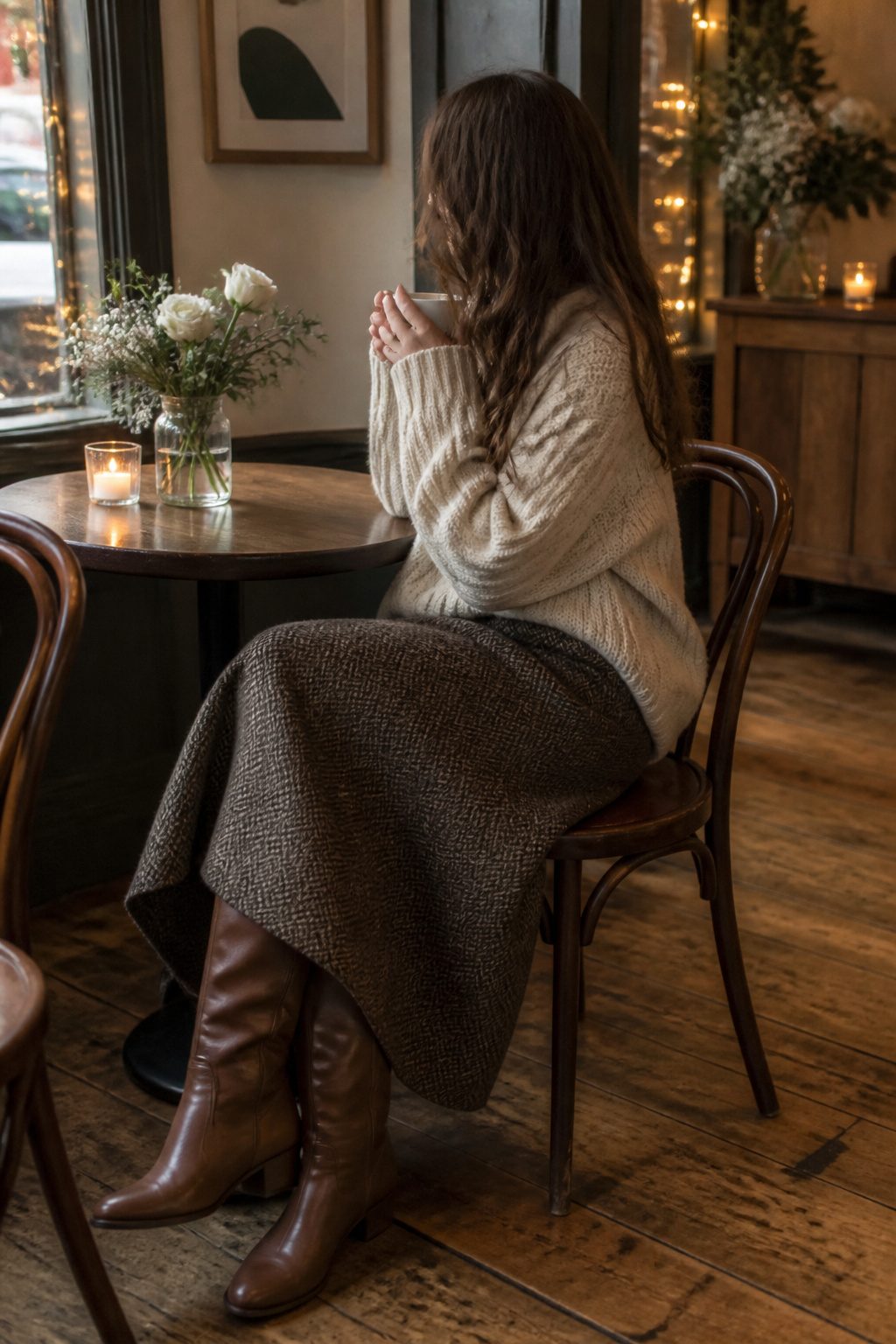
A maxi skirt in winter only works if the fabric has enough weight to keep its shape against wind.
Lightweight satins and rayons collapse into your legs the moment you step outside; wool blends, heavy knits, and lined crepe hold the line and keep the silhouette clean.
The sweater you choose sets the tuck-or-untuck question. An oversized cable knit looks best left out, the hem floating just above the waistband to create a column of volume.
A fitted knit, especially one with some rib or structure, can tuck cleanly into a high-waisted skirt without the bulk that turns your middle into a cylinder.
The partial front tuck, with the sides and back left loose, splits the difference if the skirt sits at your natural waist.
Boots matter because a maxi hem will find every buckle, strap, and loose shaft.
Knee-high boots with a smooth finish slide under the skirt cleanly; ankle booties with hardware or a slouched shaft catch and bunch the fabric with every step. A narrow, fitted boot shaft keeps the line uninterrupted from hem to toe.
12. Sweater Vest and Jeans
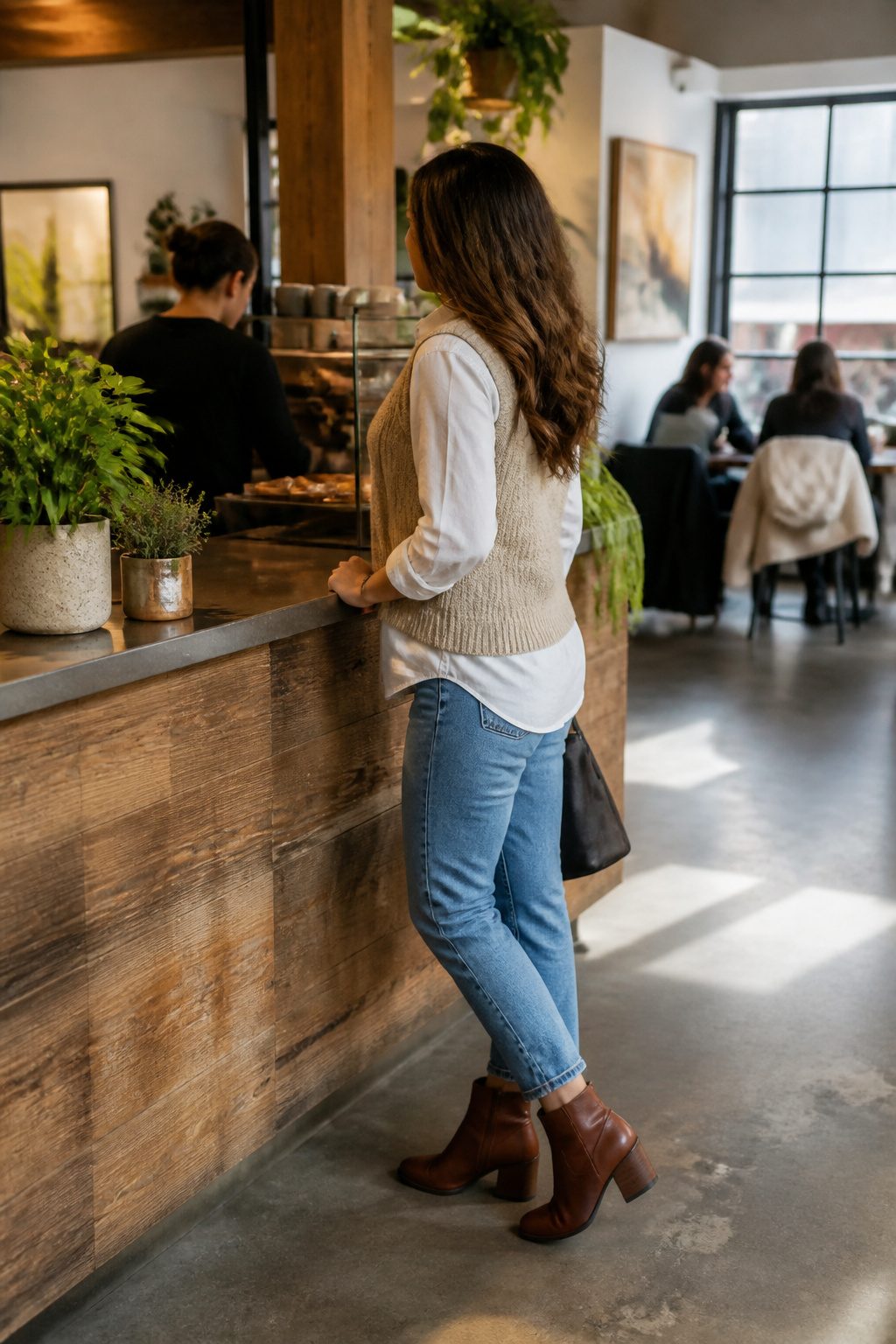
A sweater vest over jeans only works in winter if you solve the sleeveless problem with intention rather than afterthought. A thin white button-down underneath reads layered; bare arms read like you forgot the rest of your outfit at home.
The sources both point toward bulk management, just from different angles. The button-down keeps lines clean and adds actual coverage, while the chunky turtleneck route swaps the vest entirely for an oversized knit that does its own layering.
For the vest specifically, a fitted turtleneck beneath works if the neck is slim enough to disappear; anything with volume fights the armholes. Jeans ground the look, and ankle boots finish it without competing.
Cold days demand the shirt, or the vest stays in the drawer.
13. Teddy Coat
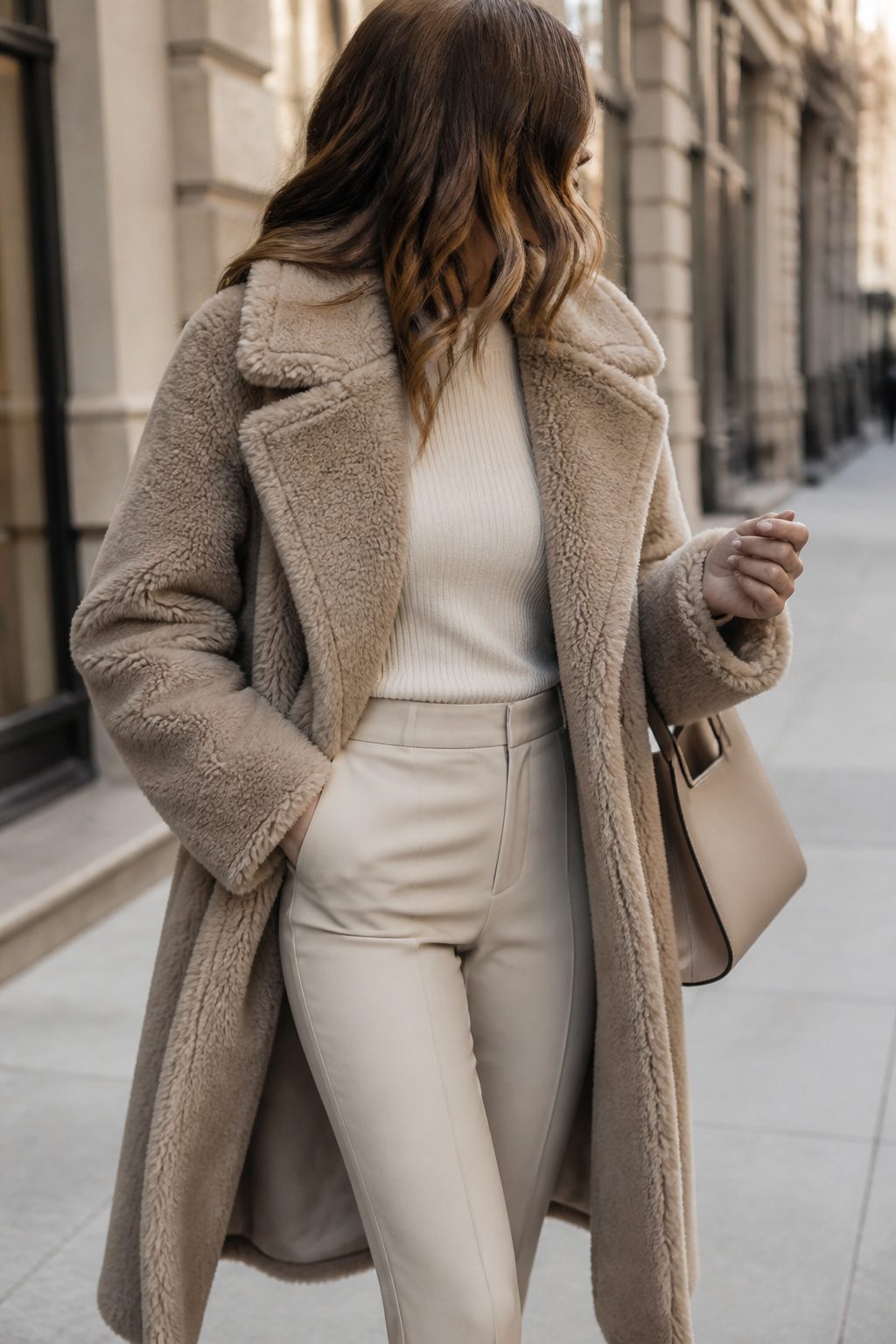
A teddy coat earns its name from dense, low-pile faux fur that mimics shearling without the weight of actual sheepskin.
The texture reads plush from across a parking lot, which is exactly why the wrong color tips straight into bathrobe territory.
Cream and camel demand careful styling; oatmeal and dusty rose are safer bets if you want the cozy effect without looking like you wandered out of a hotel spa. The bulk is real and it is not forgiving.
A chunky knit underneath fights the sleeves and bunches at the armpits; a thin merino base layer or even a long-sleeve tee keeps the silhouette clean.
I learned this the hard way after one morning of stuffed-sausage dressing that ended with the coat on the hanger and me shivering in the car. The cut matters too.
A cropped teddy jacket sits differently than a full-length version, but neither forgives much underneath. Think of it as outerwear that does the warming so your interior layers can stay sleek.
14. Off-the-Shoulder Sweater

An off-the-shoulder sweater in winter sounds like a contradiction, and most days it is. The exposed neckline that makes the piece feel flirty and fun also lets heat escape exactly where you want it trapped.
This only works in specific conditions: heated indoor events, quick transitions between car and venue, or milder winter climates where the temperature hovers above forty degrees. Otherwise the look costs more in comfort than it returns in style.
The source material offers one solution without spelling it out: layering under a long faux fur coat for extra warmth. That outer shell does the heavy lifting while the sweater provides the visual interest.
For actual insulation at the shoulder, a thin silk or thermal base layer in a matching tone sits invisible beneath the fold-over neckline and blocks the worst of the draft.
Some women also rotate the sweater slightly off-center so one shoulder stays covered at a time, trading symmetry for practicality.
Whether the tradeoff is worth it depends on how long you will spend outside versus in. **A thirty-second walk from rideshare to restaurant door?
The silhouette wins. A twenty-minute wait for the train?
Reach for a turtleneck instead.**
15. Blanket Scarf

A blanket scarf only earns its place in winter outfits for women when it reads as intentional structure rather than borrowed bedding. The fold matters most.
A simple triangle drape, point forward and ends crossed behind the neck, gives the volume without the slump.
The fabric should end at or above hip level once settled; anything longer fights the coat hem and turns into a trailing rectangle that reads as a comforter escaping.
Proportions need the same discipline. The scarf can be wide, but the coat needs to be wider.
A slim cocoon or fitted wool coat under a 55-inch square of heavy knit looks like the scarf is wearing the woman, not the other way around.
Better to let the coat’s shoulders extend past the scarf’s bulk so the silhouette still has a line.
The test is the exit: if you need to rearrange the drape after putting on or removing your coat, the fold was too loose to begin with.
A proper blanket scarf stays put through a commute because the initial tuck was tight enough to anchor against the coat’s collar, not because you keep adjusting it on the train.
16. Cute Beanie

A beanie reads as cute when the proportion is slightly off in the right direction: too small and it looks like a swim cap, too slouchy and it swallows the face.
The sweet spot sits about an inch of fabric pooling above the crown, enough to soften the jawline without needing constant adjustment. Ribbed knits hold that shape better than smooth jersey, which collapses into a tube after two wears.
Hair texture determines whether cute is even achievable. Fine, straight hair compressed under wool for more than twenty minutes loses volume at the root and does not bounce back with a shake.
A silk or satin-lined beanie solves this, though the lining adds bulk that can slide around.
Coarser or curlier textures have more tolerance, though the friction of dry winter wool still matters for anyone trying to preserve a style past the commute.
The real test is the removal. A beanie that leaves you smoothing and re-pinning in a lobby has failed its job.
Prepping hair with dry shampoo at the crown before putting it on buys you a few minutes of grace; the starch absorbs oil and adds grip so the flattening is less severe.
For anyone whose hair falls flat regardless, the beanie works better as the intentional finish to an outfit, not a layer to peel off indoors.
17. Corduroy Skirt
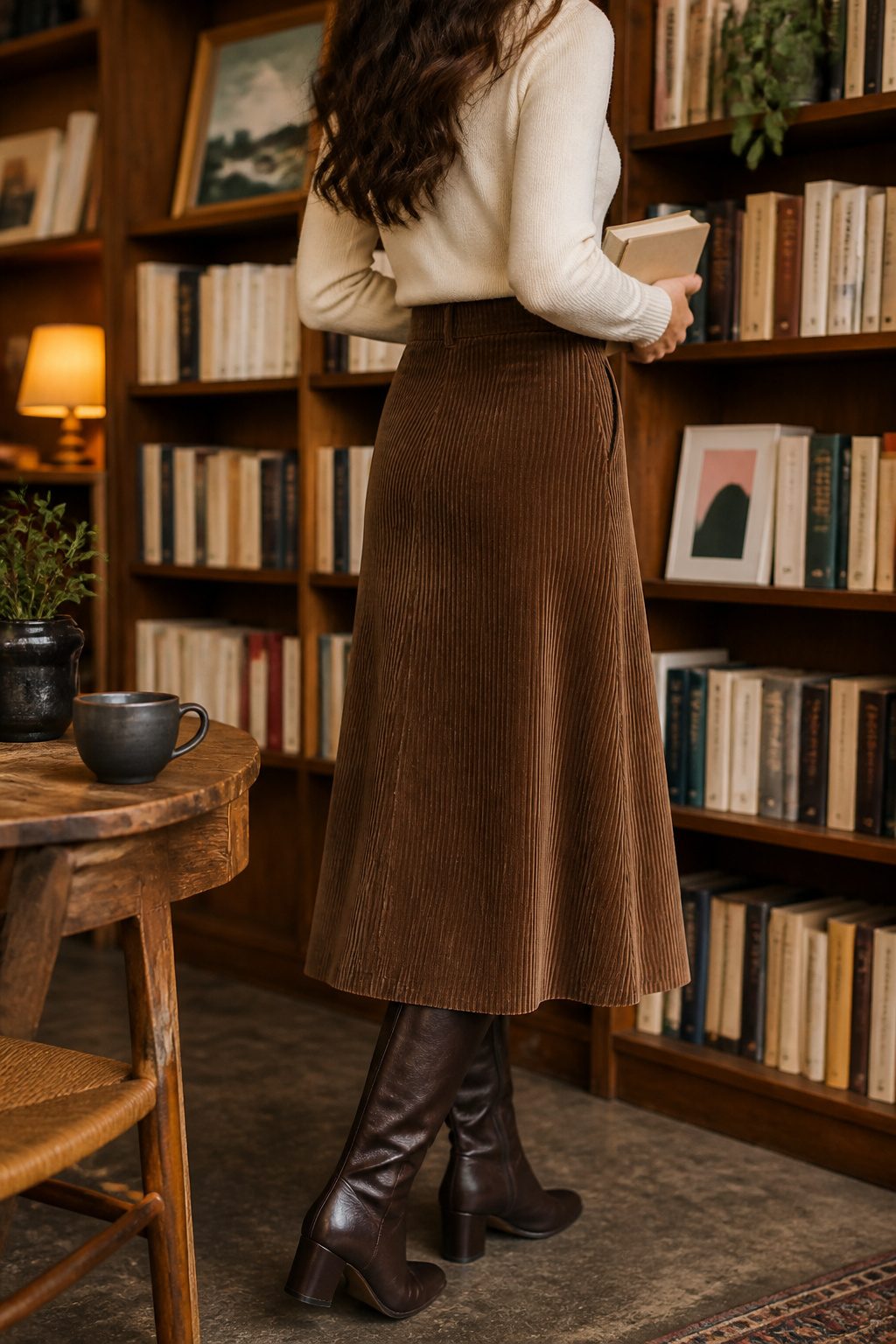
A corduroy skirt earns its place in winter outfits for women through the fabric’s ribs, called wales.
An 8-wale corduroy strikes the practical balance: the ridges are wide enough to trap air and add warmth, but the cloth still drapes without the stiffness of heavier 4- or 5-wale versions meant for jackets.
I reach for the mid-weight stuff, around 8 to 10 ounces, which holds shape above tights without turning into a tent by noon.
Static cling ruins the whole look once you add a nylon-lined slip or cheap hosiery. Wool tights solve it, or a silk-blend pair if the day stays above freezing.
The natural fiber against the cotton corduroy cuts the charge that sends the skirt riding up your legs by 10 a.m.
Boot height depends on where the hem hits. A mini works with knee-high boots that meet the skirt line, no gap of cold thigh showing.
Mid-calf boots cut the leg awkwardly with a knee-length skirt; there, an ankle boot with a slim shaft keeps the line clean. I learned that pairing the hard way after one morning of mirror checks in an office lobby.
18. Classic Tweed Skirt
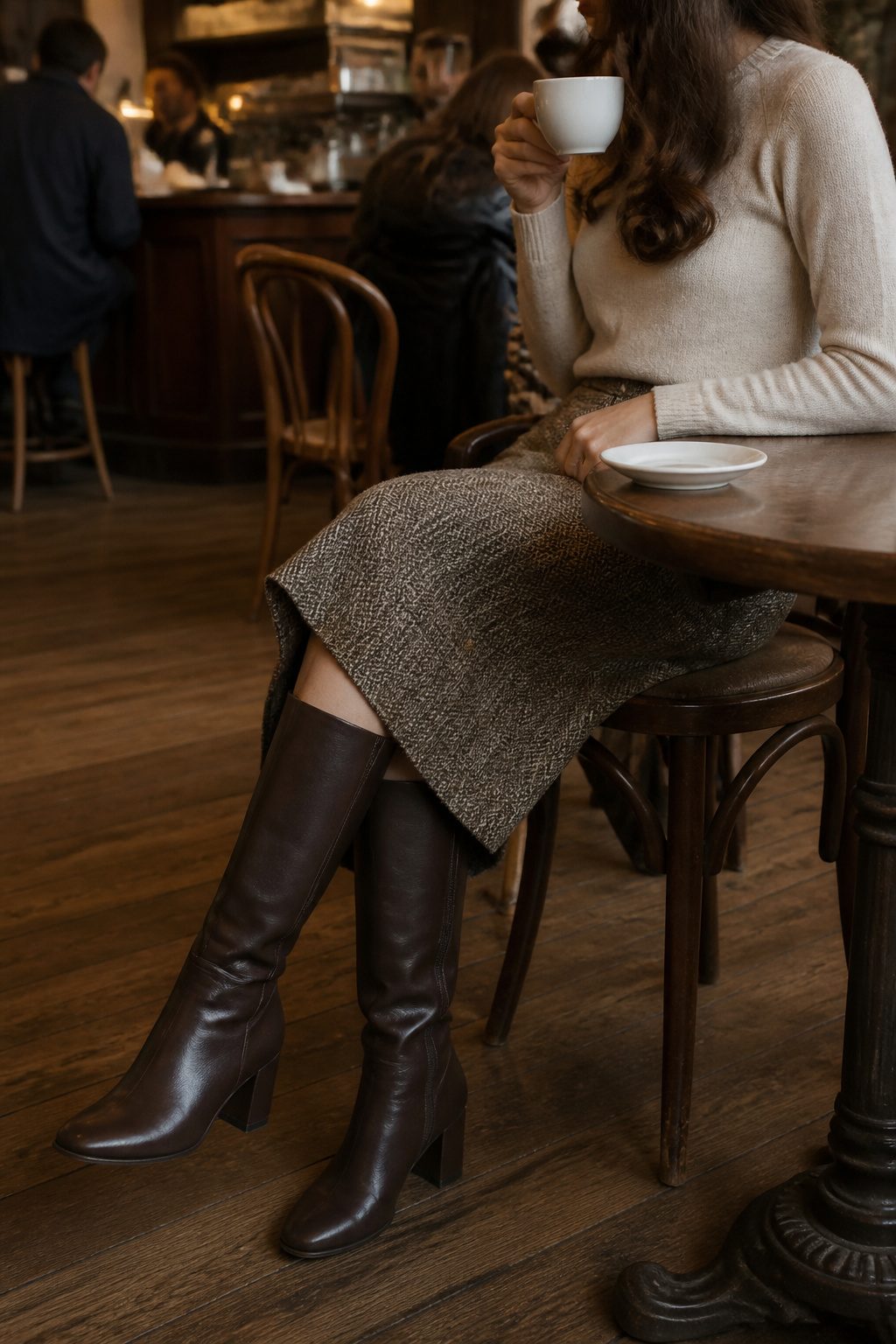
Classic tweed carries a heritage weight that novelty versions only pretend to. The real thing has a dry, irregular hand and muted color mixing that comes from wool fibers spun and woven before dyeing, not printed patterns laid on top.
Novelty tweed tries for the same mood with polyester and oversized flecks, but under winter light it sits flat, almost laminated.
The distinction matters because a classic tweed skirt reads as texture, not costume, and that is what lets it move between decades without looking like you are performing someone else’s decade.
I pair mine with pieces that share its substance but not its reference points. A solid cashmere or fine-gauge merino sweater in a color pulled from the skirt’s own mix keeps the eye on the weave without competing.
Clean, unfussy lines on top balance the skirt’s structure; I avoid anything with its own vintage details, like a peter pan collar or excessive gold buttons, because two heritage notes start a theme party.
For shoes, knee-high boots in leather or suede keep the look current rather than archival. Ankle boots can work but need some height in the shaft or the proportion turns school-uniform fast.
Nude or tonal boots lengthen the line; black against a lighter tweed chops the leg at the wrong place.
The boots I reach for most often are a pair I have worn through three winters now, soft enough that they do not fight the skirt’s stiffness but structured enough to hold their shape against it.
19. The Camel Coat
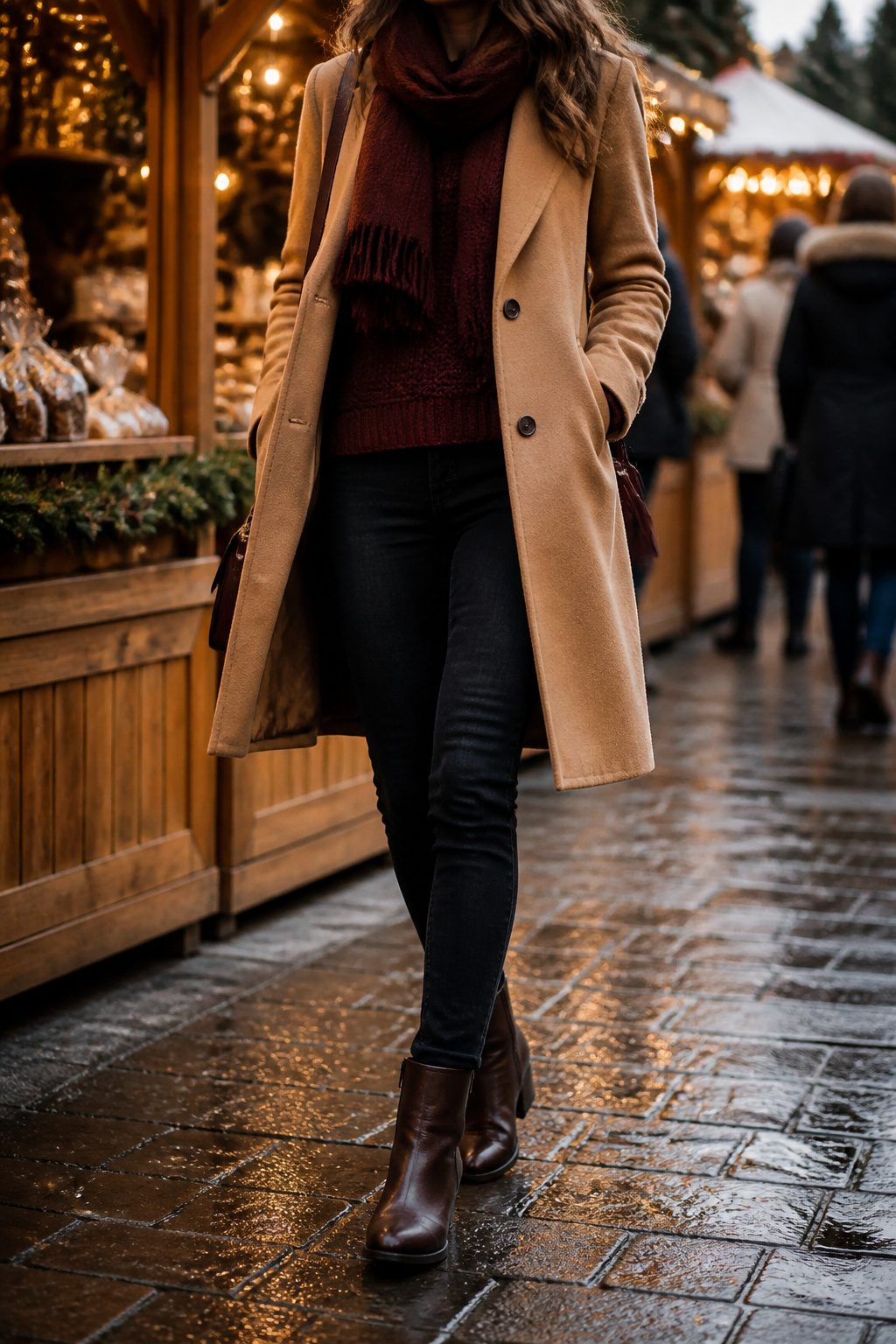
A camel coat reads as more deliberate than black or navy because it cannot hide. Black and navy absorb whatever you throw at them, but camel reflects light back onto the rest of the outfit and exposes weak pairings.
The color demands some contrast: cream, chocolate brown, or a deep burgundy underneath will earn their place, while grayed-out tones look muddy against it. That rigor is what makes the choice feel considered rather than default.
The quiet luxury pull toward camel is real, though the coat itself outlasts the label. Where trend colors age into datedness inside two or three winters, camel functions more like a neutral skin on the wardrobe.
The Sézane Rafael Coat, cut long in that tone, is built around that exact premise: buy once and let the clothes underneath rotate.
A J.Crew Scarf Coat in the same family works the same way, just with more texture at the collar.
The investment case holds only if the shade is warm enough; too yellow and it turns costume, too ashen and it drains the face. The mid-tone camel, neither tan nor caramel, is the one that stays current.
20. Shacket and Leggings
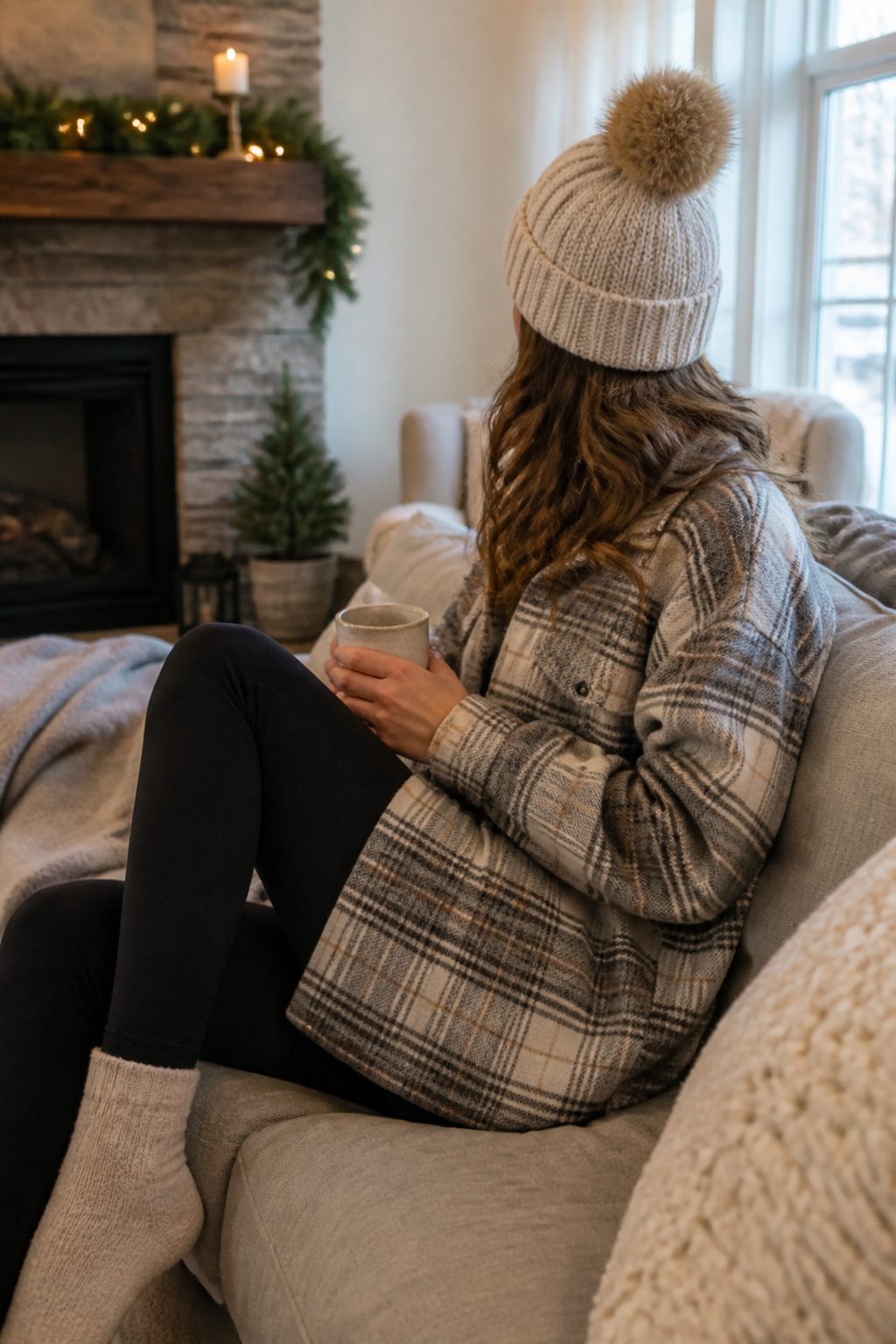
A shacket over leggings only works through real winter if the shirt-jacket has enough weight to it.
The source material that pushed this look used the word "luxe" for the leggings, which is the giveaway: thin jersey leggings under a flannel-weight shacket read as pajamas the second you leave the house.
Below 40 degrees, you need either a lined shacket or a puffer layered on top, and the footwear is what seals the distinction.
Sneakers that are clearly for walking, not lounging, pull the outfit back into public territory; the beanie-and-coat topper from the same sources helps only if the coat is doing the actual warming.
I have seen this formula fail when the shacket is treated as the outermost layer in January. It is not.
It is the middle piece that lets you strip down indoors without looking like you gave up.
21. Cutout Sweater Dress and Boots
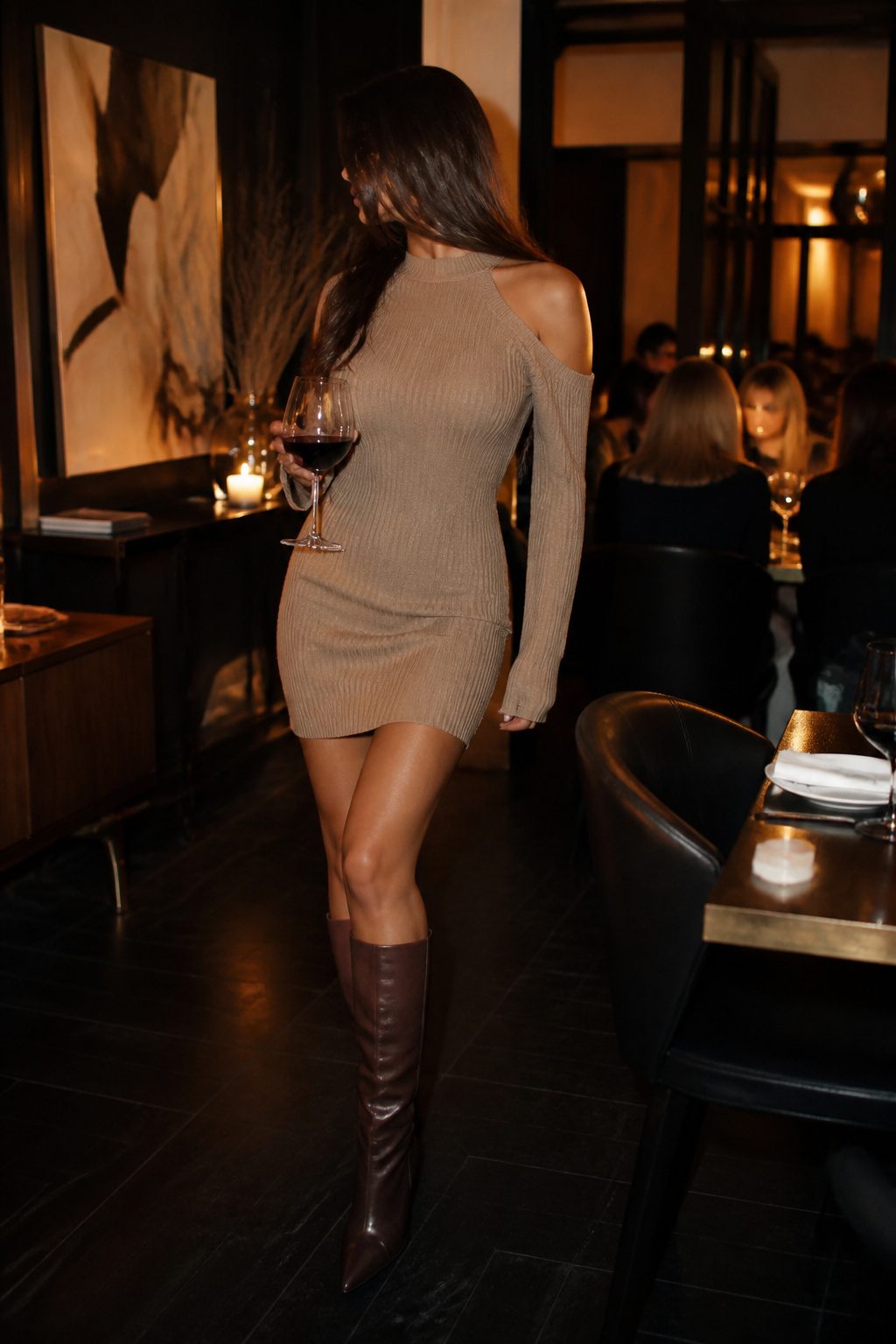
A cutout sweater dress lands in an awkward middle ground between covered and bare, and the exact spot of that opening changes what you wear underneath.
A shoulder cutout, like the one-shoulder or cold-shoulder shapes that keep circulating, leaves the torso intact so a seamless bra stays hidden.
A midriff cutout demands more engineering: a high-waisted bottom layer in a matching tone, or a bodysuit with a panel that reads as intentional rather than apologetic.
The sources stick to "just a tad showing," which tells you the placement matters more than the size. Too low and you are managing flash when you sit; too high and the cutout loses its point.
Boot height is the balancing act. Over-the-knee boots cover enough leg that a shorter dress with a small cutout still feels winter-appropriate; the skin exposure becomes a narrow band rather than a whole statement.
Knee-high or tall suede boots work for evening, but they leave more gap, so the cutout itself needs to stay minimal. This is not a commuting outfit.
It is a winter date night look, or a transition piece for those September-through-November weeks when the temperature drops after sunset and you need one last wear before the coat becomes non-negotiable.
A long faux fur coat on top buys you the warmth to stay in it past dinner.
22. Winter Suit
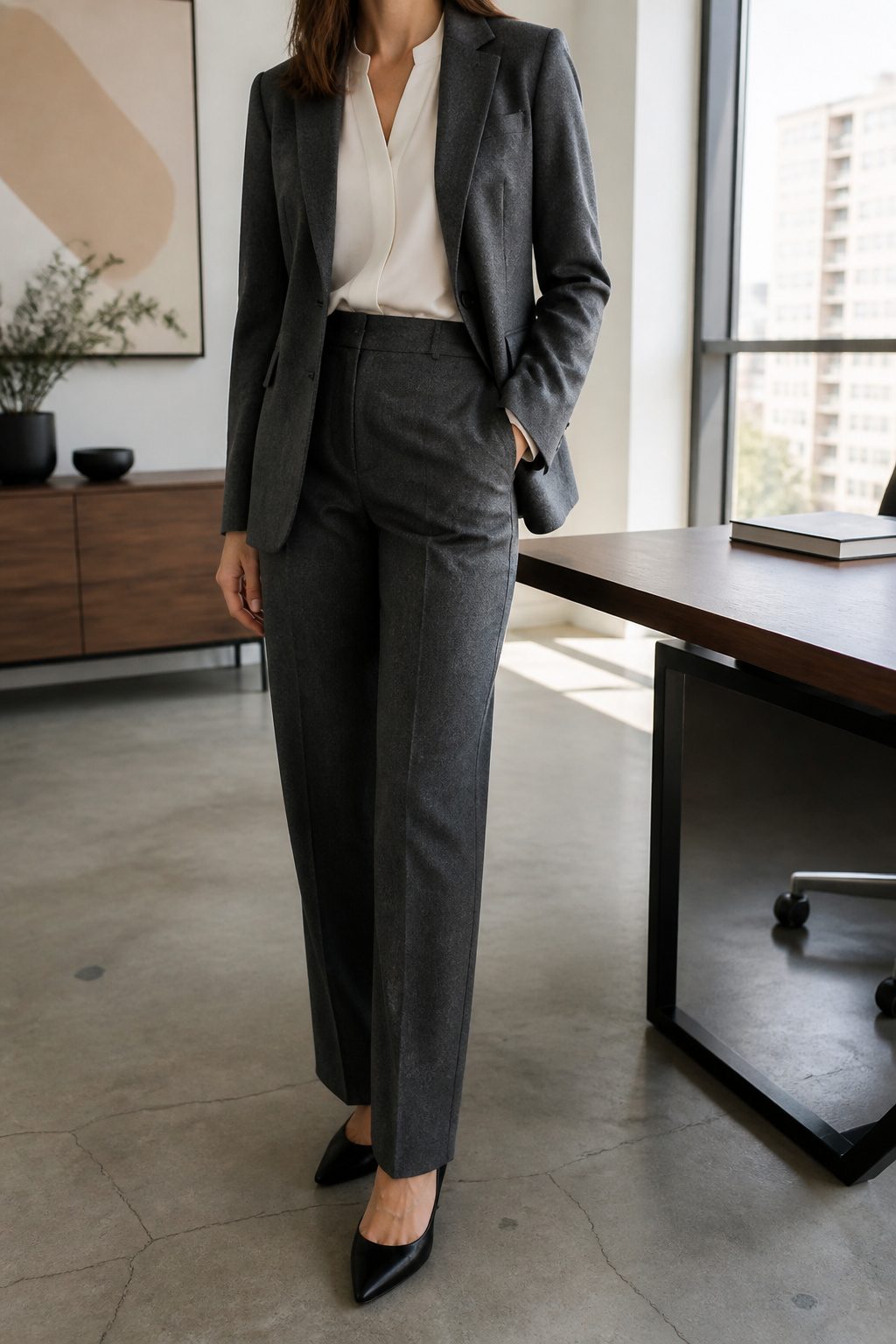
A winter suit needs heavier cloth than the lightweight wool or tropical blends sold for year-round wear. Look for flannel starting at 12 ounces or a dense tweed that holds its shape against wind without a coat layered on top.
The hand changes noticeably: winter suiting feels almost brushed, with a slight nap that catches light differently and traps air the way smoother weaves cannot.
Wearing the pieces as a set is the obvious move for a client meeting or an event where you need to look immediate and pulled together. Breaking them up is where the real mileage lives.
The jacket over a thin turtleneck and dark jeans reads intentional rather than like you grabbed what was clean.
The trousers with a chunky cardigan and loafers turns one formal piece into something you can wear to a dinner that does not require a reservation three weeks out.
The risk is overdressing the separates. A heavy suit pant with a silk blouse and heels can feel like you forgot the jacket rather than chose the look.
Grounding it with texture, like a knit or suede shoe, keeps the balance from tipping toward the boardroom.
23. Flare Pants and Chunky Knit
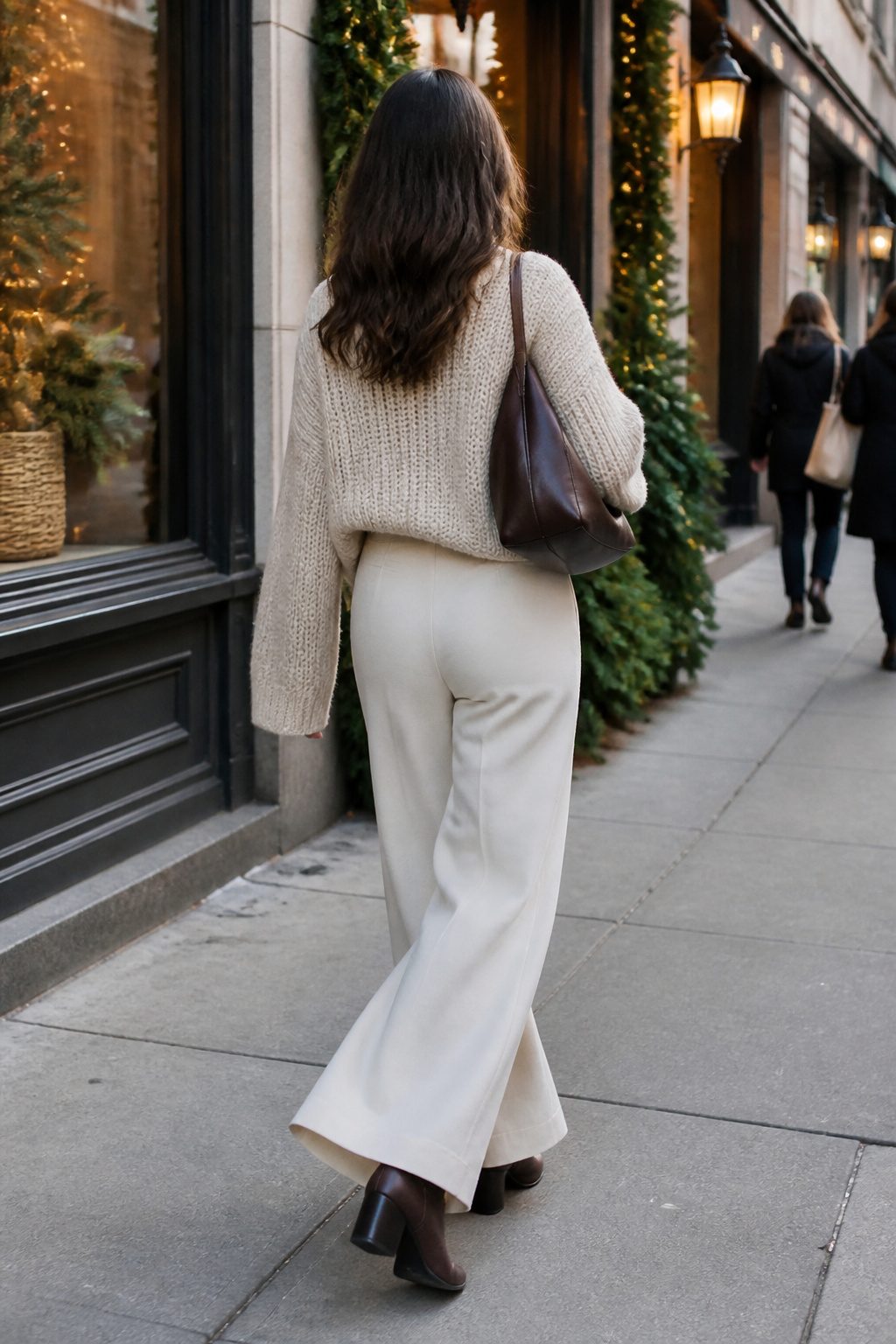
Flare pants with a chunky knit sounds like a 1970s album cover, which is exactly why the pairing still works.
The drama is in the proportion: the hem bells out, the sweater sits heavy on top, and the eye reads a clean hourglass even through layers.
The trouble starts when winter actually arrives.
A one-inch gap between hem and shoe turns into a gutter in sleet, so the pant length needs to land exactly at the sole with the heel height you will wear, or you are carrying spare socks.
I have watched this silhouette fail in crosswalk slush too many times to pretend an ankle-grazing cut is practical without boots that seal the opening.
"Chunky" in knit terms means a gauge thick enough to hold its own shape, not a blanket with sleeves.
The ribbing or cable should narrow at the waistband so the volume stays in the sleeve and torso, not where you tuck.
A cropped hem that hits at the high hip keeps the flare’s waistline visible; anything longer and the sweater fabric pools, adding width you did not plan.
From behind, the flare does the work. The leg widens from the knee down, balancing shoulder width and making the walk read as movement rather than trudge.
The knit’s texture matters here: a flat stockinette disappears, while a moss stitch or fisherman’s rib catches light and gives the eye something to follow down the spine.
24. Puff-Sleeve Sweater
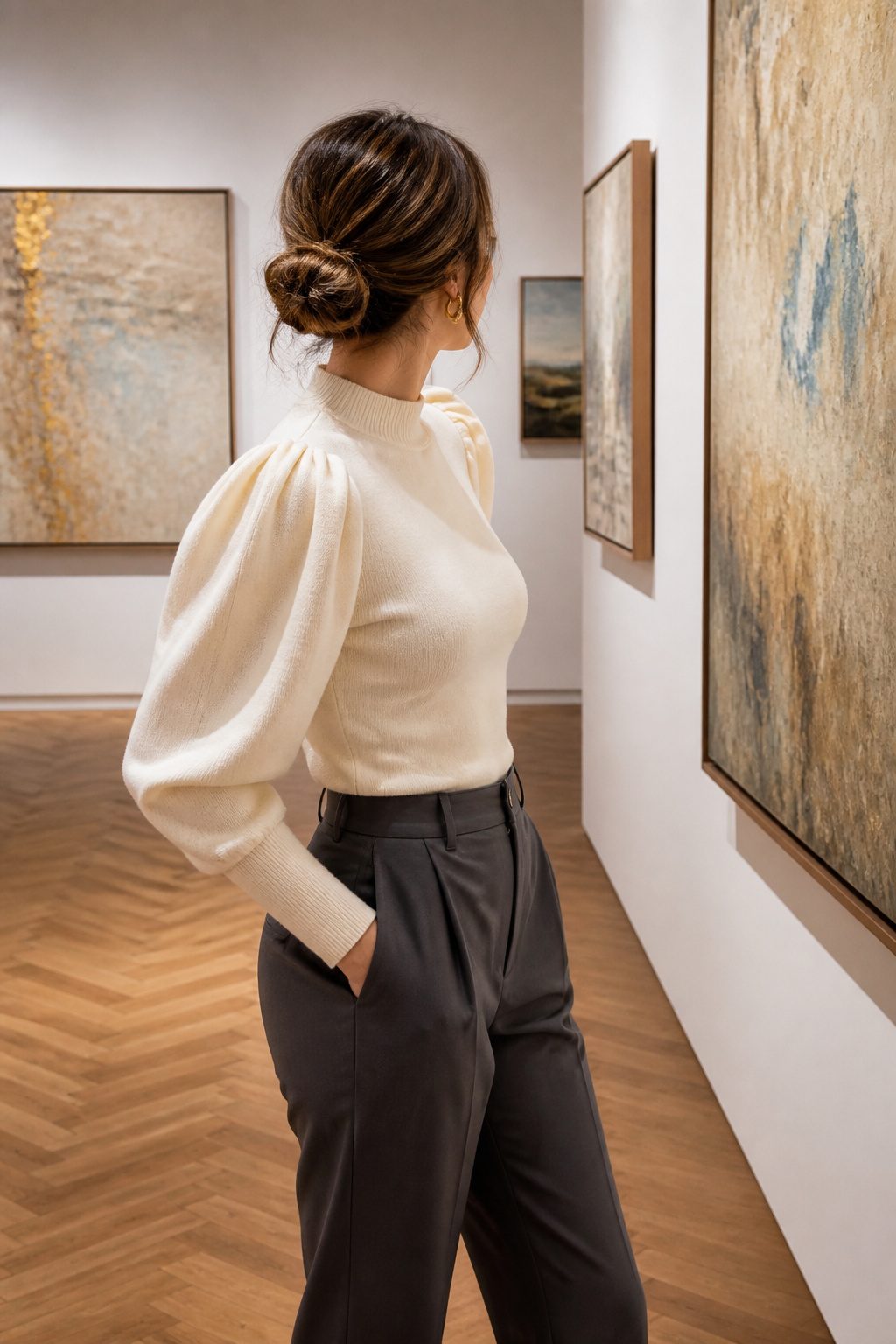
A puff-sleeve sweater under a winter coat is a geometry problem. The sleeve gathers at the shoulder, then balloons outward before tapering at the wrist.
A fitted sleeve cap compresses more cleanly than a full, rounded puff that starts lower on the arm.
A structured wool coat with adequate shoulder room will smooth the silhouette without crushing the volume entirely; a tight blazer or puffer will mash the shape into lumps.
The puff itself survives compression better in wool or a dense cotton knit than in airy mohair or loose gauge, which flatten and stay flat. What matters more is what happens below the waist.
The upper body already reads wide, so a slim or straight leg keeps the proportions anchored. Wide-leg trousers with a puff sleeve risk a costume effect unless the waist is clearly defined and the fabric hangs with weight.
A mid-rise or high-rise skinny jean, a narrow corduroy, or a pencil skirt to the knee all draw the eye vertically and let the sleeve be the single statement.
The mistake is treating the puff as an afterthought thrown under any coat. It needs a coat chosen for it, or it needs to be the outermost layer on days mild enough to allow that.
25. The Coatigan
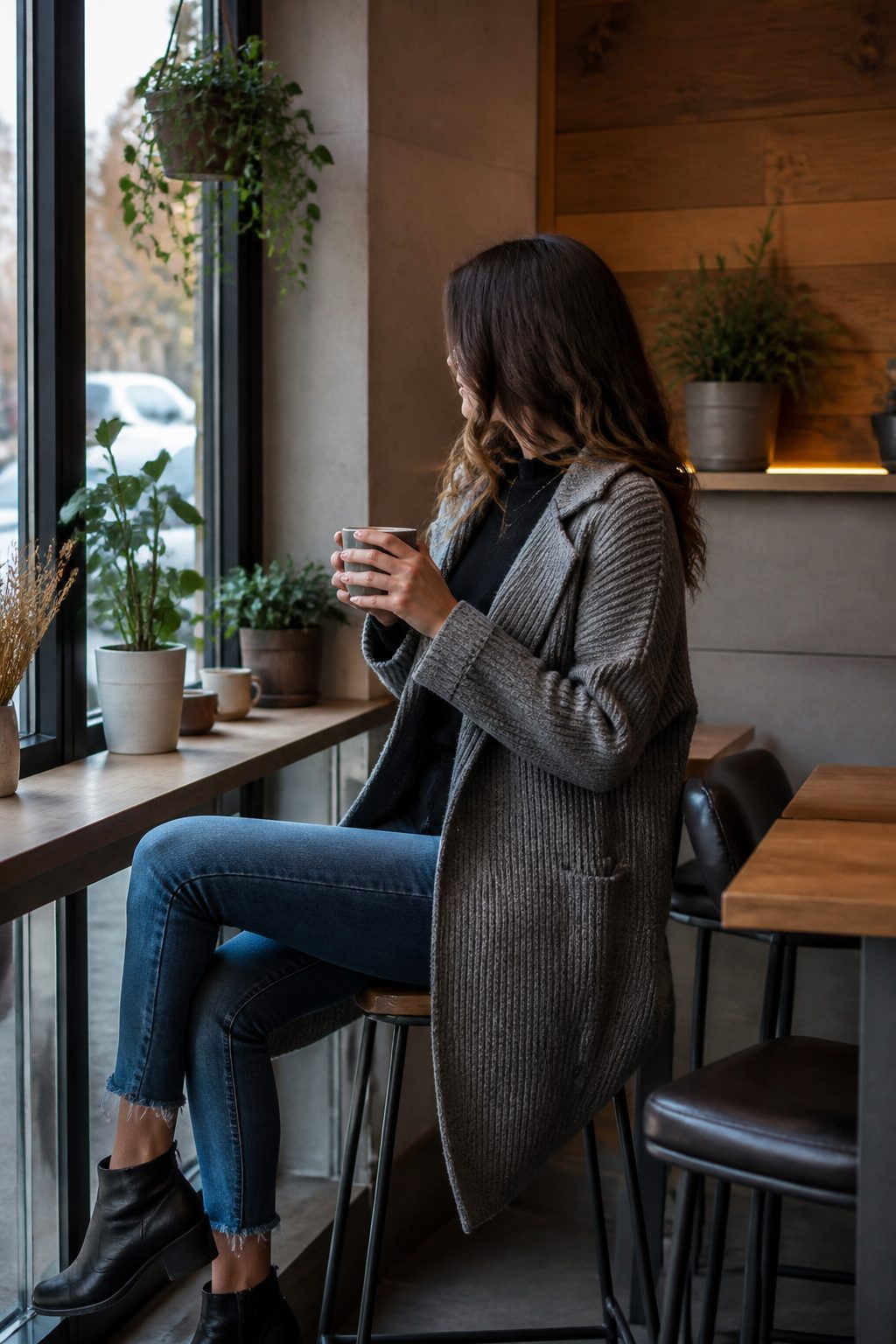
A coatigan sits closer to the cardigan end of the coat-to-cardigan spectrum than its name suggests.
It is built like a long, open-front sweater, usually in a dense knit rather than woven wool, and that difference in material matters more than the length.
The hybrid works in the tail-end of winter, when temperatures hover in the forties and fifties and a structured coat feels like overkill, but a standard cardigan leaves you underdressed.
Whether it functions as outerwear or a middle layer depends on the day. Worn over a thin tee with nothing else, it reads as a light jacket for dry, calm afternoons.
Add a base layer underneath and it becomes the middle piece in a three-layer system, useful for offices that run hot or for moving between heated interiors and brisk parking lots.
The camel colorway in particular carries the quiet luxury associations of a full coat without the tailoring or the weight, which is why it shows up as a budget alternative when sources mention getting the look for less.
26. Turtleneck Sweater Dress
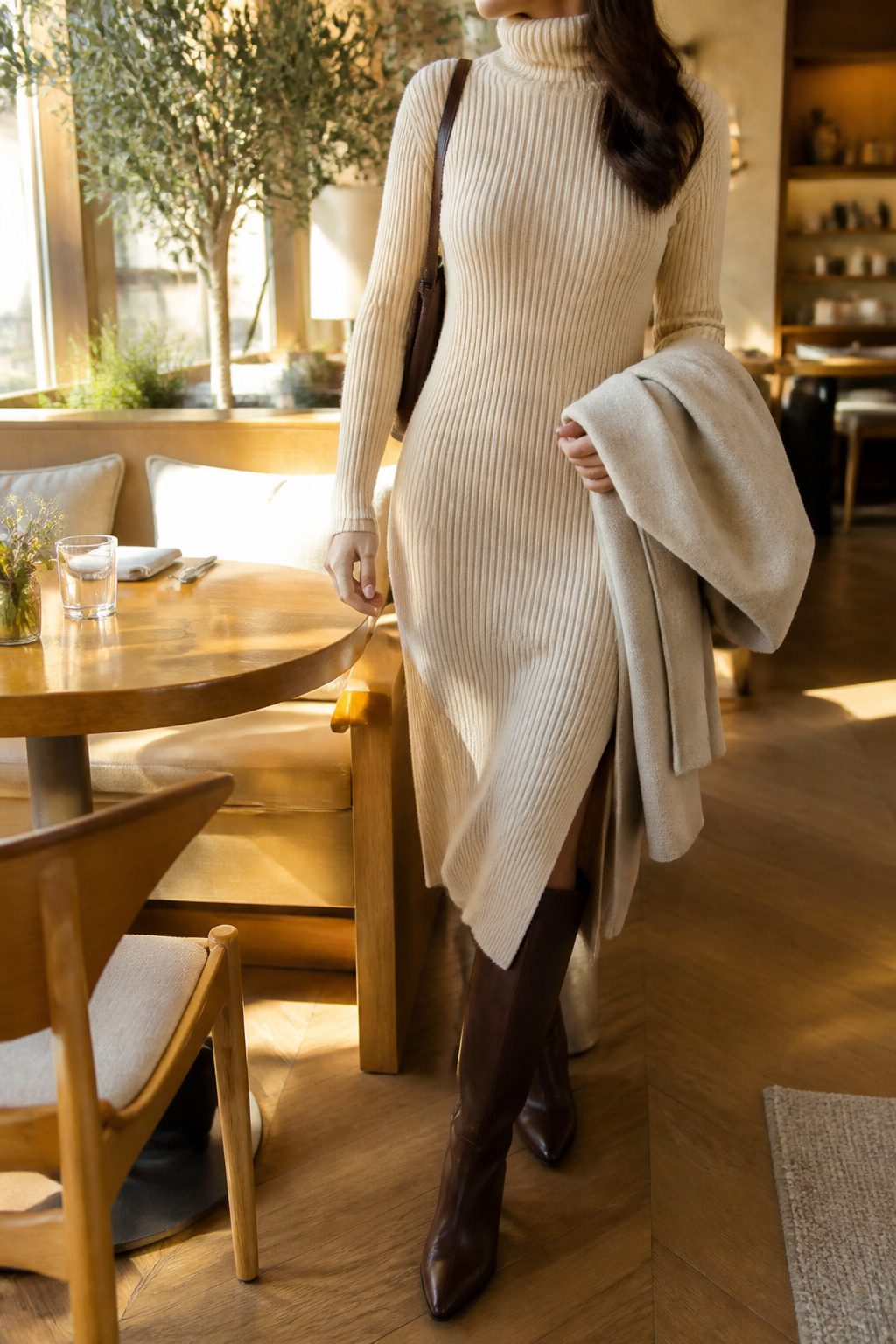
A solid turtleneck sweater dress changes the layering math because the neck already does the work of a scarf. You can skip the bulky wrap and still look finished walking into a meeting or a restaurant.
The tradeoff is jewelry: a pendant gets lost against the knit, so small hoops or slim drop earrings read better than anything that competes for that space. Boots need the same discipline.
Tall suede boots keep the line clean from hem to floor, while ankle booties can chop the leg unless the dress hits well above the knee.
I lean toward boots with a slim shaft rather than anything that flares, since a sweater dress already carries volume on its own.
A cropped jacket on top adds structure without hiding the shape entirely, which matters more than most people think until they see the alternative in a mirror.
27. Chunky Turtleneck and Jeans
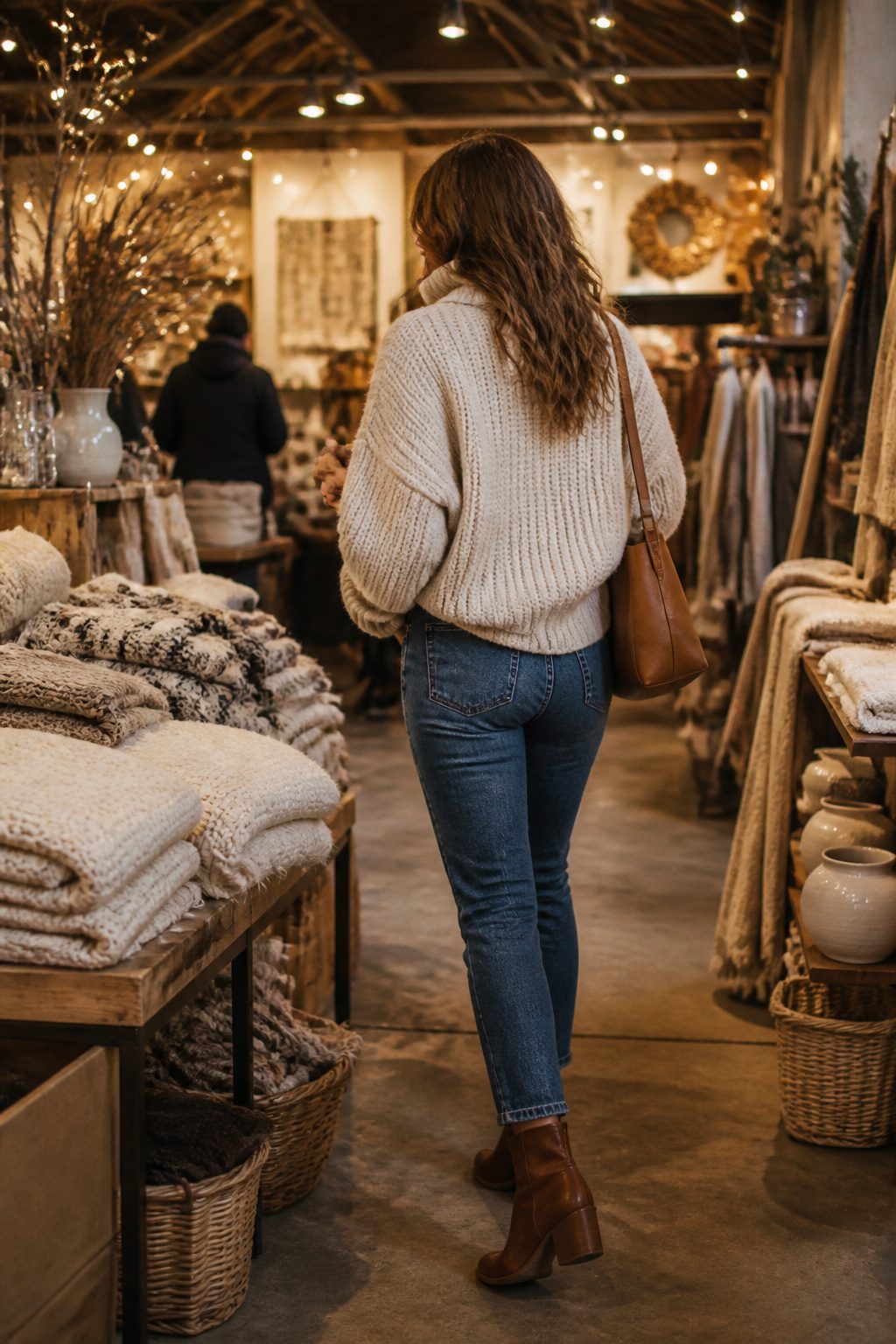
Oversized knitted sweaters are perfect for winter, but the word means something specific in practice. A sweater that hits mid-thigh or below will swallow your frame whole unless you keep the waist visible with a front tuck or half-tuck.
The full tuck works against you here; the bulk of the knit creates a muffin effect even on flat stomachs. A half-tuck, just the front center hem eased into the waistband, gives shape without fighting the fabric.
The jean rise matters more than most people account for. High-rise denim holds a half-tuck in place and keeps the silhouette elongated; mid-rise pairs can work but tend to let the sweater creep out with every reach.
Skinny jeans balance the volume on top, though the tuck itself does most of the legwork in defining the waist.
Ankle boots finish the look, the slim line at the ankle keeping the whole thing from reading as a shapeless block.
Layering underneath is where these sweaters earn their keep. A thin base layer adds warmth without adding visible bulk, and the oversized cut accommodates it easily.
The mistake is treating the sweater as a blanket with sleeves; the half-tuck is the difference between intentional and accidental.
How I Layer Without Adding Bulk
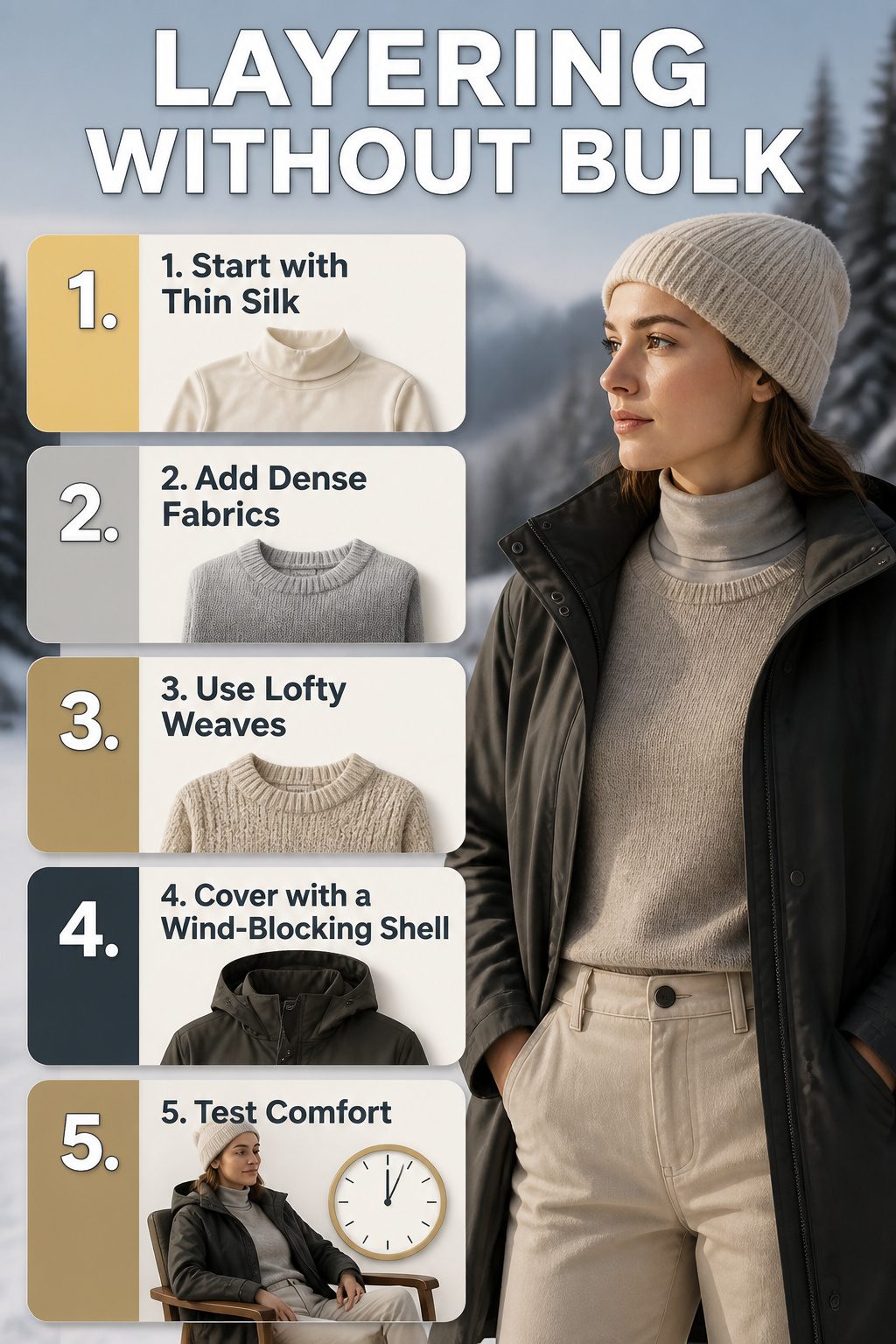
Thin silk against the skin outperforms a chunky knit worn alone.
The air trapped between two close layers holds more heat than the same fabric weight bunched into one, which is why a tissue turtleneck under a fine-gauge crewneck keeps me warmer than either sweater doubled in yarn.
The order matters: smooth, dense fabrics sit nearest, then loftier weaves, then a shell that blocks wind without compressing what’s underneath. I test any stack before committing to it by sitting in a chair for five minutes.
If the waistband buckles or the shoulders ride up toward my ears, the pieces are fighting each other and the heat will leak out through the gaps.
Compression kills the loft that traps air, so a belted coat over three layers usually leaves me colder than an unbelted one over two. The mirror check is misleading; movement is what exposes the mistakes.
The Staples I Replace Every Few Years
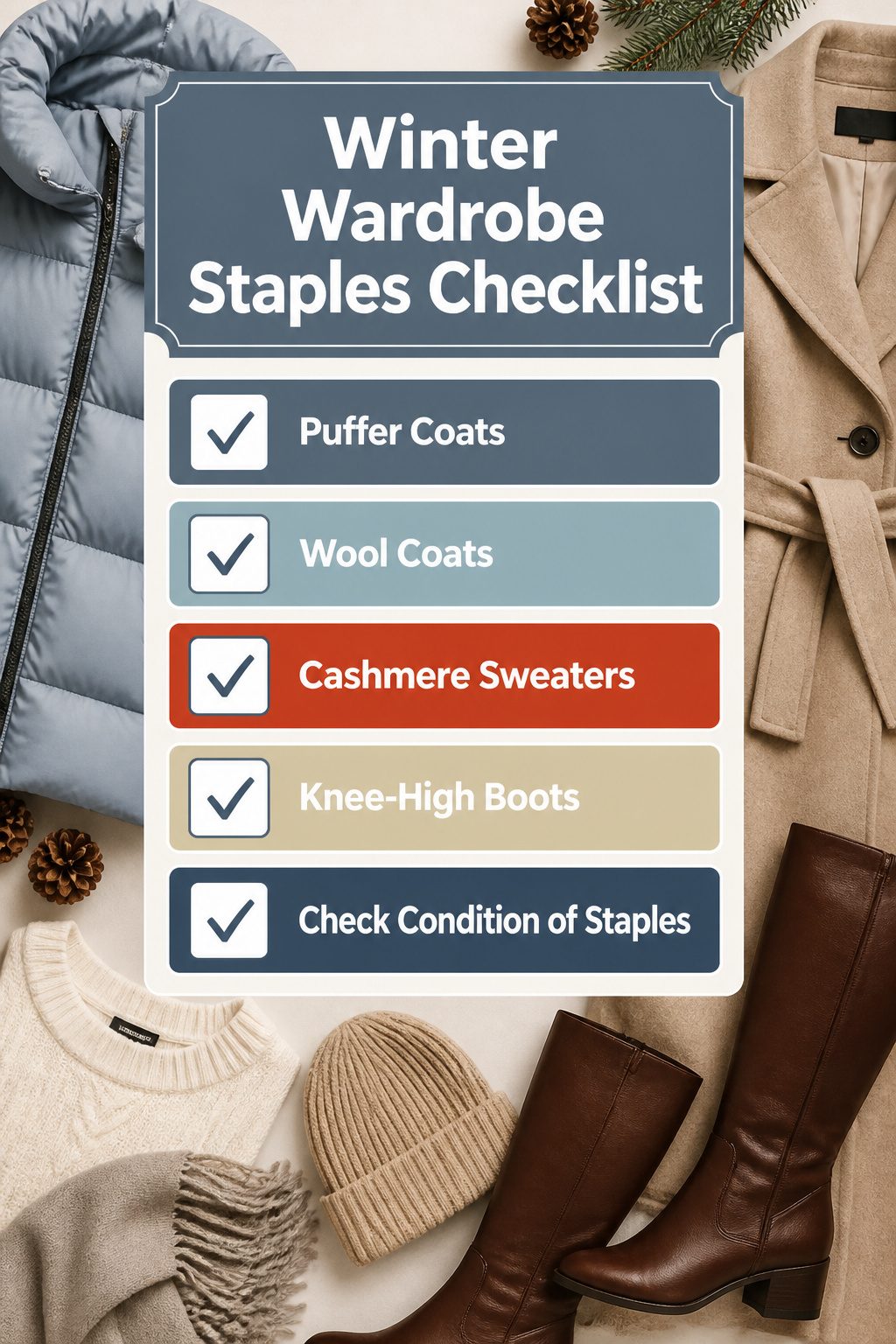
Puffer coats, wool coats, cashmere sweaters, and knee-high boots show up on every winter list for a reason. I have worn through enough of them to know which ones earn their repeat purchase.
A Quince cashmere sweater and matching skirt has become my benchmark for knitwear. The cashmere pills, eventually, but the density of the knit determines whether that starts in year two or year four.
I replace cashmere when the cuffs go slack and the hem loses its grip, not when the color fades.
Wool coats last longer than puffers if the seams are sewn, not fused. My threshold is simple: when the lining tears at the armscye and a tailor quotes more than half the replacement cost, the coat is done.
Knee-high boots pair beautifully with skirts and tights, which is why they stay in rotation even when ankle boots feel easier. I judge boots by the shaft crease.
Once the leather cracks there, water seeps in and the repair is temporary.
Puffer coats are the spend. Down shifts, seams fray at the pockets, and zipper tape frays faster than the shell.
I buy the warmest one I can carry, then replace it every four to five winters when the fill clumps beyond rescue.
Accessories That Earn Their Drawer Space
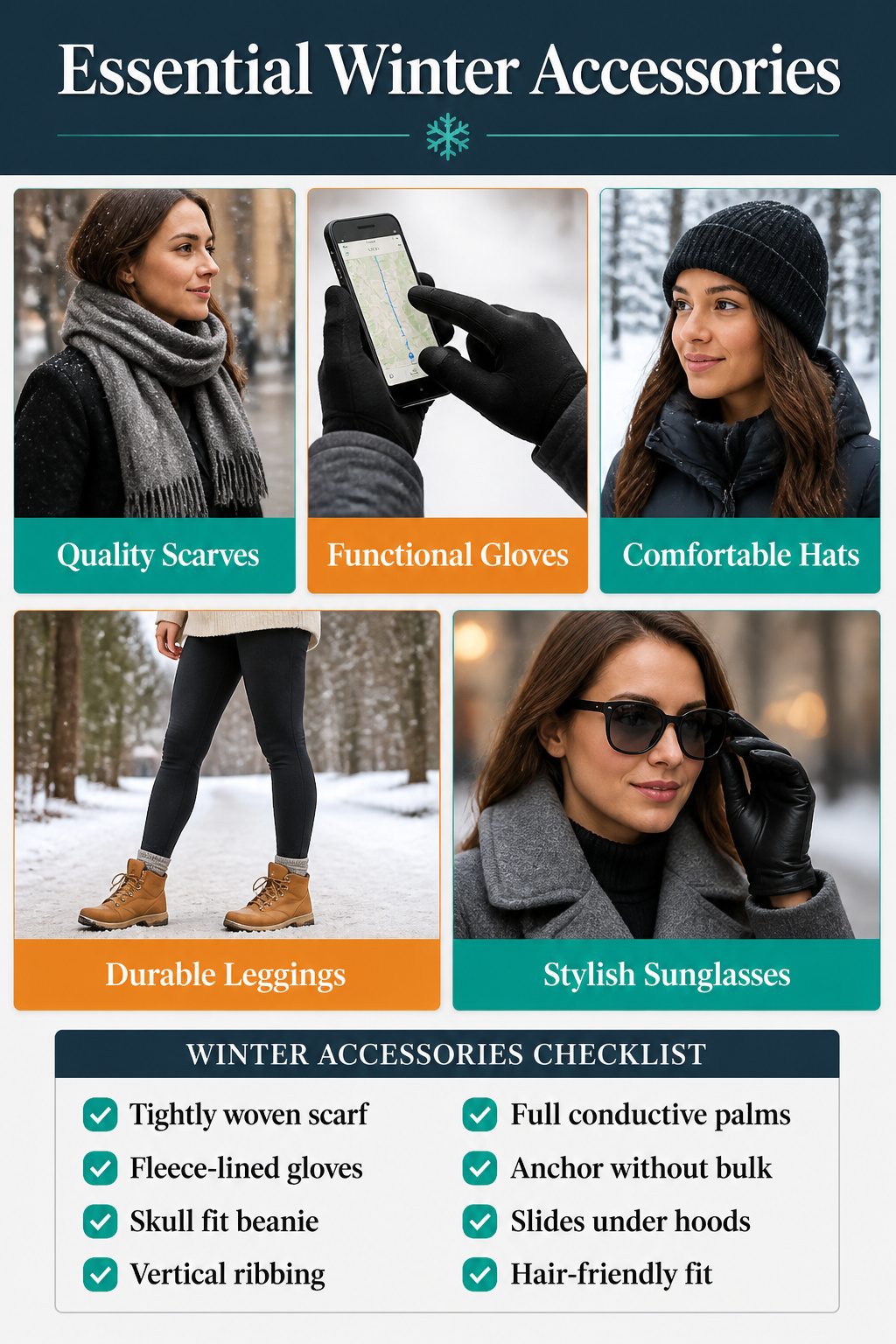
Scarves get all the winter press, but the material matters more than the drape.
A loosely woven cashmere scarf looks rich yet lets wind through like mesh; tightly woven merino or a wool-silk blend actually blocks gusts without the bulk of pure lambswool.
I learned this standing on a platform in Chicago, watching my "investment" scarf billow open while a commuter beside me stayed warm in something thinner but denser.
Gloves are where function splits from fantasy. Leather lined with cashmere feels luxurious until you need to answer a text in the cold.
The conductive thread sewn into fingertips works on paper, but in practice the seam placement determines whether you hit send or delete.
Fleece-lined softshell gloves with full conductive palms, not just the pads, let you scroll maps and swipe cards without exposing skin.
Hats are the make-or-break piece for anyone with hair past the shoulders.
Beanies with a shallow crown and no cuff, what some brands call a "skull fit," sit low enough to anchor without the gathered bulk that turns long hair into a static halo.
The ribbing should run vertical, not horizontal; it lies flatter against the head and slides under hoods without bunching.
What I Wear to Work, Dinner, and the Grocery Store
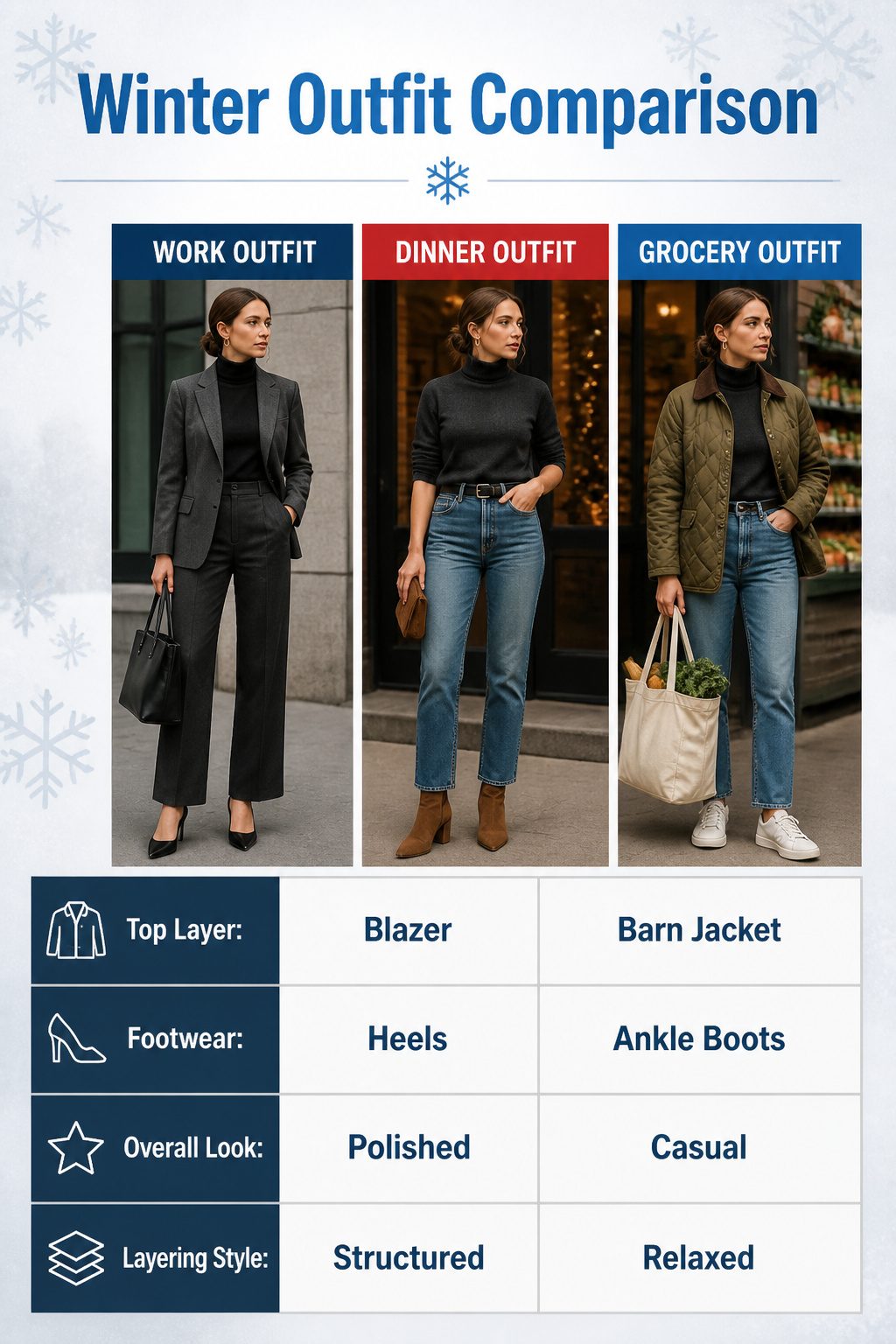
Most style guides sort winter outfits for women by occasion without explaining why one works for dinner and another for errands. The gap matters when you own fewer pieces and need each one to travel farther.
My own closet shrank to about forty core items last year, and the pieces that stayed share one trait: they read differently depending on what you put next to them.
A ribbed merino turtleneck in charcoal looks office-appropriate under a structured wool blazer with tailored trousers. The same turtleneck, pushed up at the sleeves and half-tucked into vintage-wash jeans with suede ankle boots, passes for a low-key dinner.
For the grocery store, it goes under a quilted barn jacket with the same jeans and sneakers. The single swap is always footwear and the top layer.
Nothing else changes.
The turtleneck’s neckline height and sleeve length do the heavy lifting. Too low and it skews casual regardless of pairing; too cropped and it refuses to tuck cleanly.
I learned this after buying three that failed, one with a neck that slouched open after two washes, another that hit at the awkward high-hip line.
The one that stayed hits mid-hip, skims without clinging, and has held its shape through two winters.
Color discipline helps. Charcoal, camel, and a deep burgundy carry across all three settings without looking like you forgot to change.
Bright colors or large patterns trap an outfit in one context; you cannot un-casual a neon stripe.
Frequently Asked Questions
How do you dress elegantly in cold weather?
Choose classic pieces and layer thoughtfully, starting with high-quality fabrics like cashmere or wool. A wool coat over a cashmere sweater, polished gloves, a scarf, and sleek black boots create a refined finish without sacrificing warmth.
What are the best winter outfit ideas for women?
The strongest formulas mix structure with practicality: a faux leather maxi skirt with knee-high boots and an oversized trench blocks wind while reading evening-appropriate; a cashmere sweater against satin trousers uses light absorption and reflection to look intentional; and a sweater dress with over-the-knee boots replaces tights entirely by letting boot height meet hem length for full coverage.
What should I wear for winter travel?
A matching knit set of separates works best because each piece earns its suitcase space twice over.
The top layers under a coat with different pants, and the trousers pair with a turtleneck you already own, giving you three outfits minimum from one set.