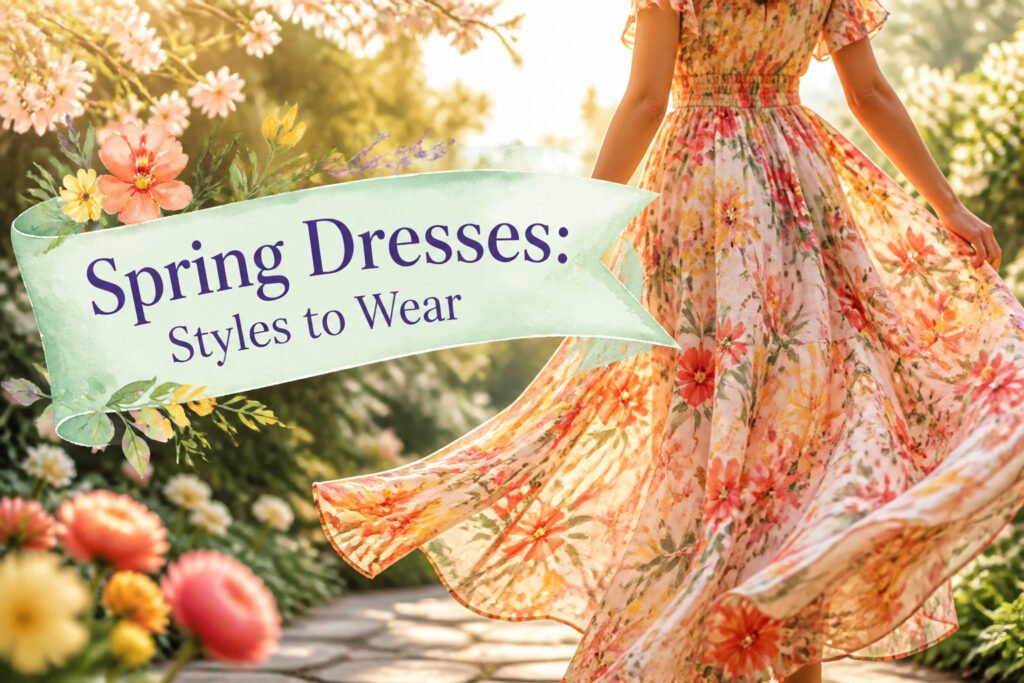
Spring dresses are the first wardrobe shift that actually matters in a year, and the ones that work are the ones that account for a morning still cold enough to need a cardigan over a sleeveless maxi.
I learned in April that cotton jersey turns clingy by noon when a warm front hits; linen and rayon do not.
Ann Taylor alone stocks 197 of them right now, which tells you how much choice there is and how little guidance.
1. Maxi Dresses
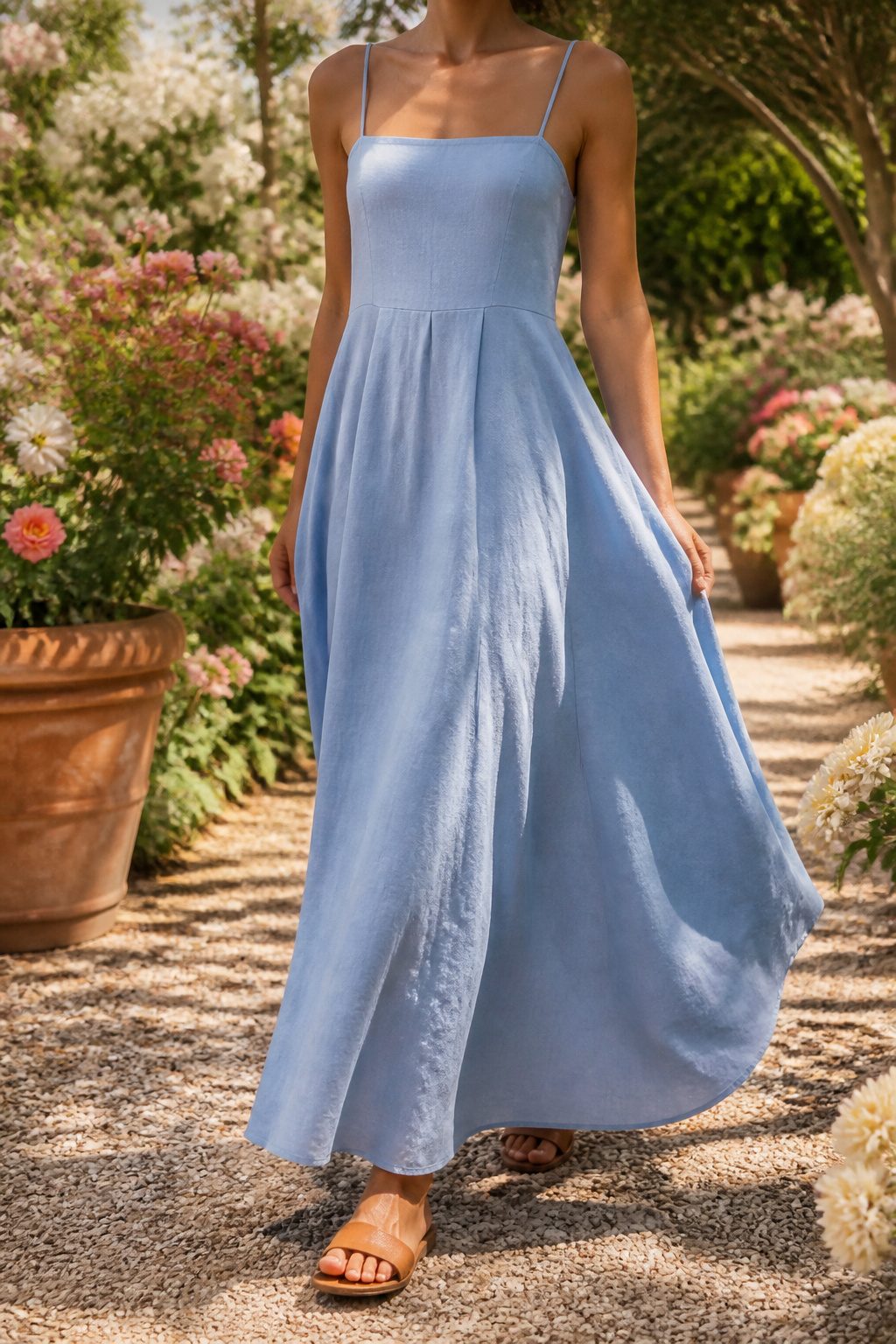
A maxi dress hits at the ankle or the top of the foot, which sounds like summer territory, but the length works in spring because it blocks wind that still cuts through on a 62-degree morning.
The fabric matters more than the cut.
Linen and rayon keep the skirt from turning into a tent in humidity; cotton jersey does not, and I learned that in April when a sudden warm front turned my cotton maxi into a clingy tube by noon.
Ann Taylor currently stocks 197 spring and summer dresses, and Loft carries 110, which tells you how mainstream this silhouette has become.
I wear mine to outdoor dinners where the temperature drops after sunset, and to one particular museum with aggressive air conditioning that has ruined lesser outfits.
The sleeveless versions outnumber the long-sleeve options by roughly five to one at both retailers, so plan on a cardigan or accept that your arms are the thermostat now.
2. Sundresses

A sundress earns its name from more than missing sleeves. The cut matters: a looser bodice, a skirt that moves without clinging, straps wide enough to hide a bra.
Fabric weight separates the useful ones from the July-only mistakes. Lawn cotton and lightweight linen work from April through September; anything sheer enough to need a swimsuit underneath stays in the beach bag.
I bought a printed voile dress two springs ago that looked perfect in the dressing room. The armholes gaped when I reached for a coffee cup, and the skirt required constant smoothing on breezy days.
The test is whether you would wear it to a garden center on a 65-degree morning. If the answer is no, it is a beach cover-up with delusions.
Mid-weight cotton poplin holds structure without lining.
Linen blends with a touch of rayon wrinkle less dramatically than pure linen, which matters if you are sitting at an outdoor lunch. Skip anything labeled "resort" unless you actually live near a resort.
3. Shirt Dresses

A shirt dress carries the structure of a button-down without the stiffness of suiting, which is exactly why it moves so easily between Saturday errands and a Monday meeting.
The collar frames the face the way a blouse does, but the hem keeps it from reading as office-only.
Sleeve length shifts the register: roll the cuffs to the elbow and the dress leans casual, leave them long with a neat button and it holds its own in a conference room.
The buttons down the front solve a fit problem that plagues a lot of spring dresses.
Bust gaps or pulls at the chest are fixable here because you can adjust the closure point, leave one open above the waist, or add a snap where the fabric strains.
A drawstring or belt at the waist helps too, but the real advantage is that vertical row of buttons letting the fabric fall in a straight line rather than pulling across the body.
Cotton poplin holds the shape crisply; a softer rayon or Tencel drapes more but wrinkles faster on a commute.
4. Fit and Flare Dresses
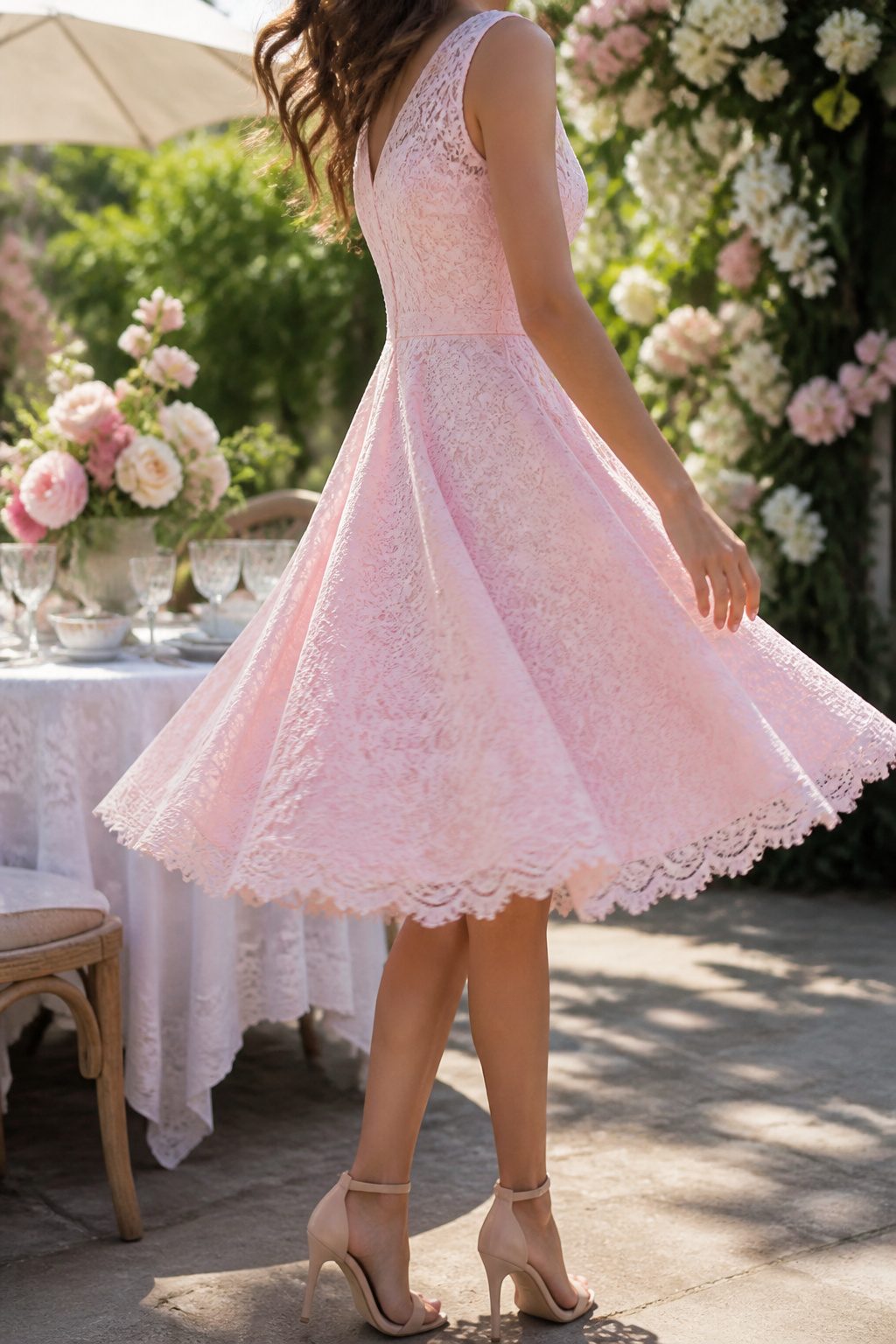
A fit and flare dress lives or dies at the waist seam. The seam should hit at your natural waist, not an inch below, because that lower placement widens the hip visually and turns the silhouette into a tent.
I learned this the hard way trying on a cotton version that sat closer to my navel; the skirt flared from the wrong point entirely and I looked shorter than I am.
The style works best on pear and hourglass shapes since it mirrors what those bodies already do, but anyone with a defined waist gets the same effect if the seam sits right.
Skirt length matters more than most people think. At or just above the knee keeps the proportions adult; much shorter and the full skirt reads cheerleader, much longer and the flare starts weighing the whole thing down.
A midi fit and flare can work, but the hem has to clear the widest part of the calf or it chops the leg at exactly the wrong spot.
5. Sheath Dresses
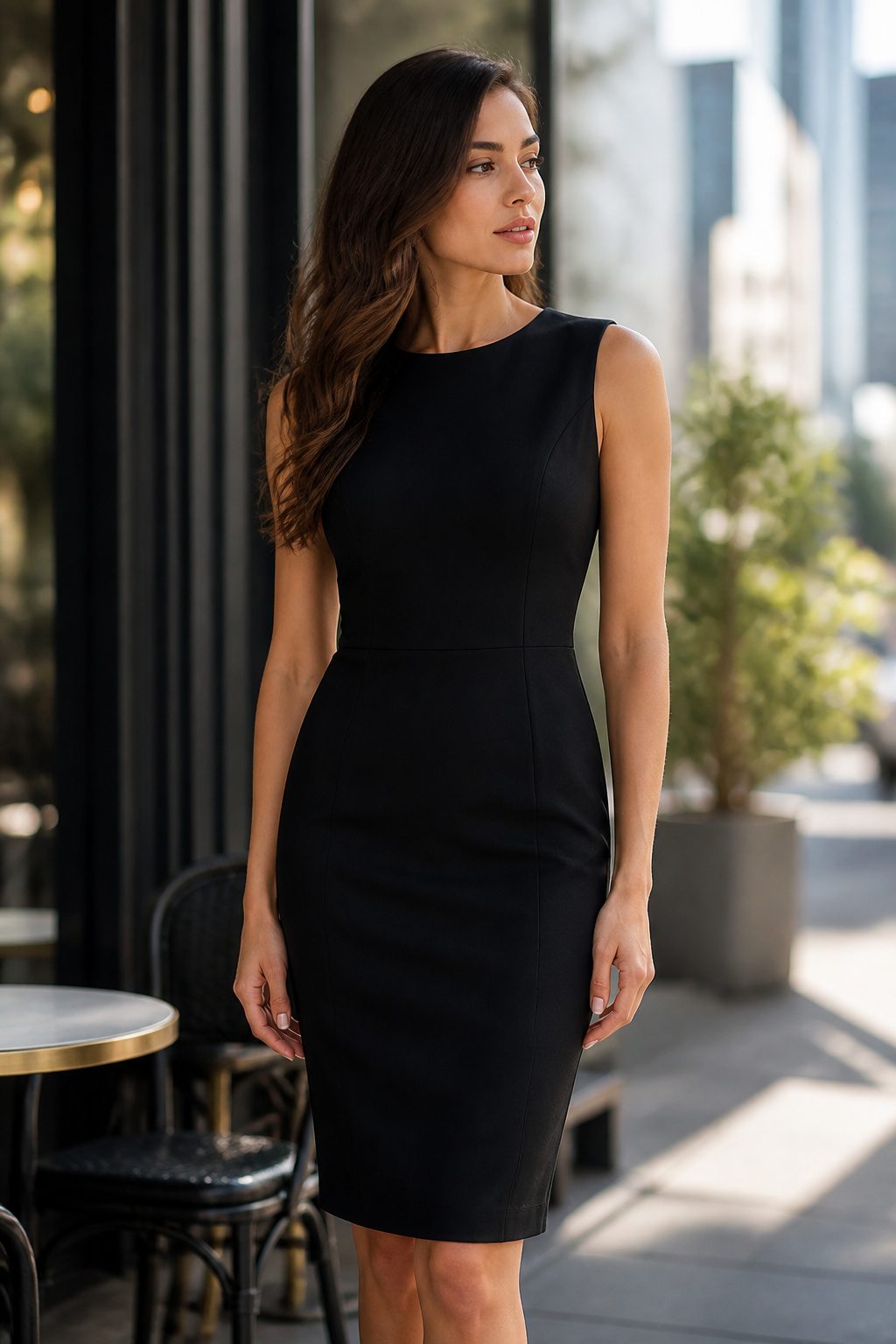
A sheath dress lives or dies on its seams.
Without darts at the bust and waist, the thing reads as a tube, not a silhouette, so look for princess seams or back darts that trace the body rather than squeeze it.
The length matters too: at or just above the knee, it stays office-appropriate without trying for cocktail territory.
Fabric choice separates the polished from the painted-on. Mid-weight ponte or a structured cotton blend holds the line through the hips; thin jersey clings to every lunch you have had since Tuesday.
I reach for a lined crepe when I need the dress to carry me from a 9 a.m. review straight to dinner without looking like I changed my mind halfway through the day.
For me, this is the default when the invitation says "business casual" and I do not trust what the host means by that.
It works under a blazer, stands alone with a pendant necklace, and never asks me to think about whether I am showing too much leg or too little authority.
6. Wrap Dresses
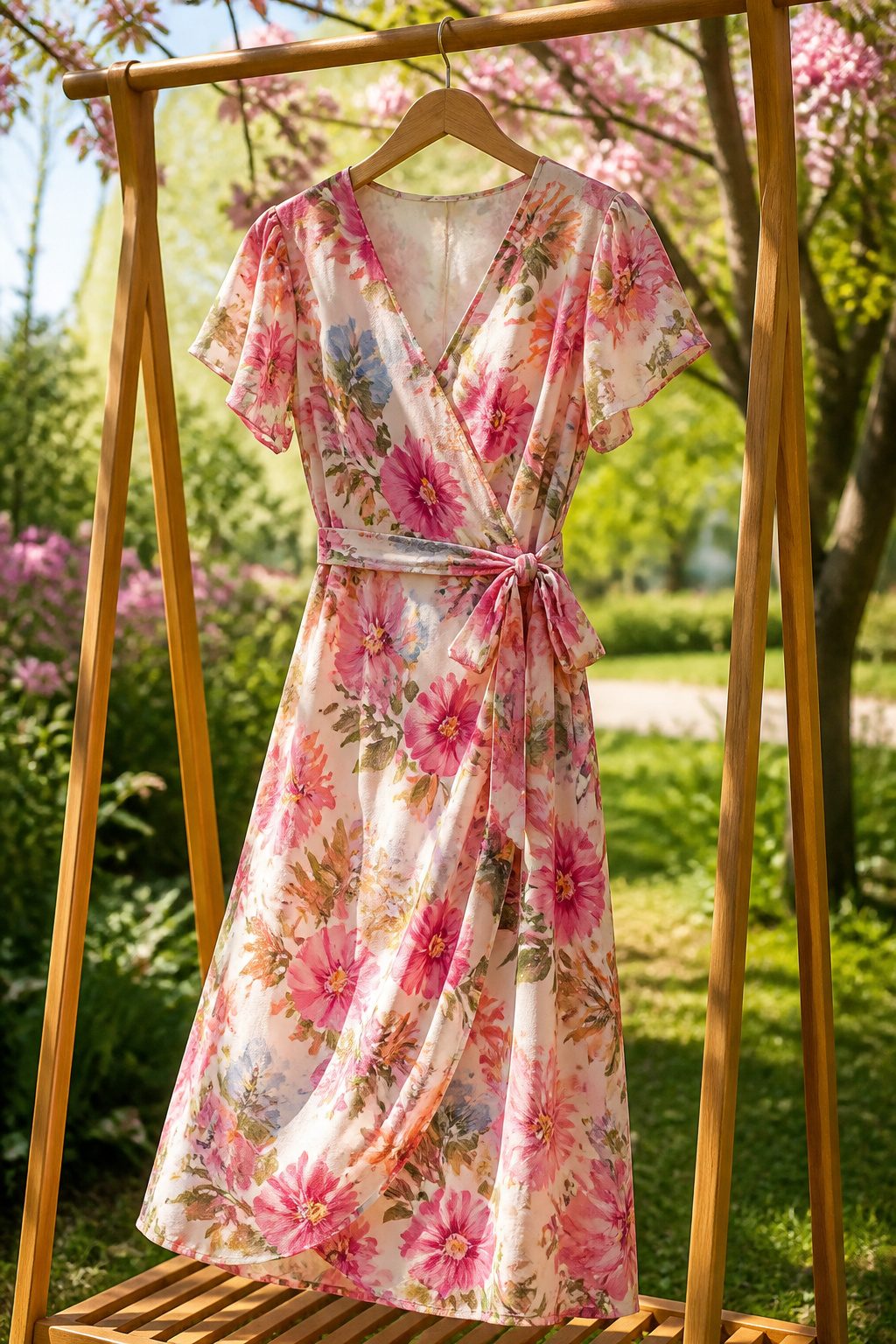
A wrap dress ties at the waist with a long fabric belt threaded through the side seam or an interior channel, which means the fit adjusts without any tailoring.
The waistline moves an inch or two in either direction and the dress still closes cleanly, something I noticed matters more after a winter of inconsistent gym attendance.
What separates the useful ones from the frustrating is how deep the wrap panel sits beneath the tie.
A shallow wrap, maybe four or five inches of overlap, gapes at the chest when you sit or bend. Ten to twelve inches of overlap stays put through a full day.
The shape works most reliably for hourglass figures because the tied waist defines the narrowest point while the skirt and bodice drape outward from there.
The V-neckline that usually comes with the cut follows the same line rather than fighting it.
I have seen women with straighter torsos make it work by cinching aggressively and letting the skirt volume create the curve, but the dress does the least work for them.
For anyone carrying weight through the midsection, the adjustability keeps the waistband from digging in after lunch, which is not nothing.
7. Shift Dresses
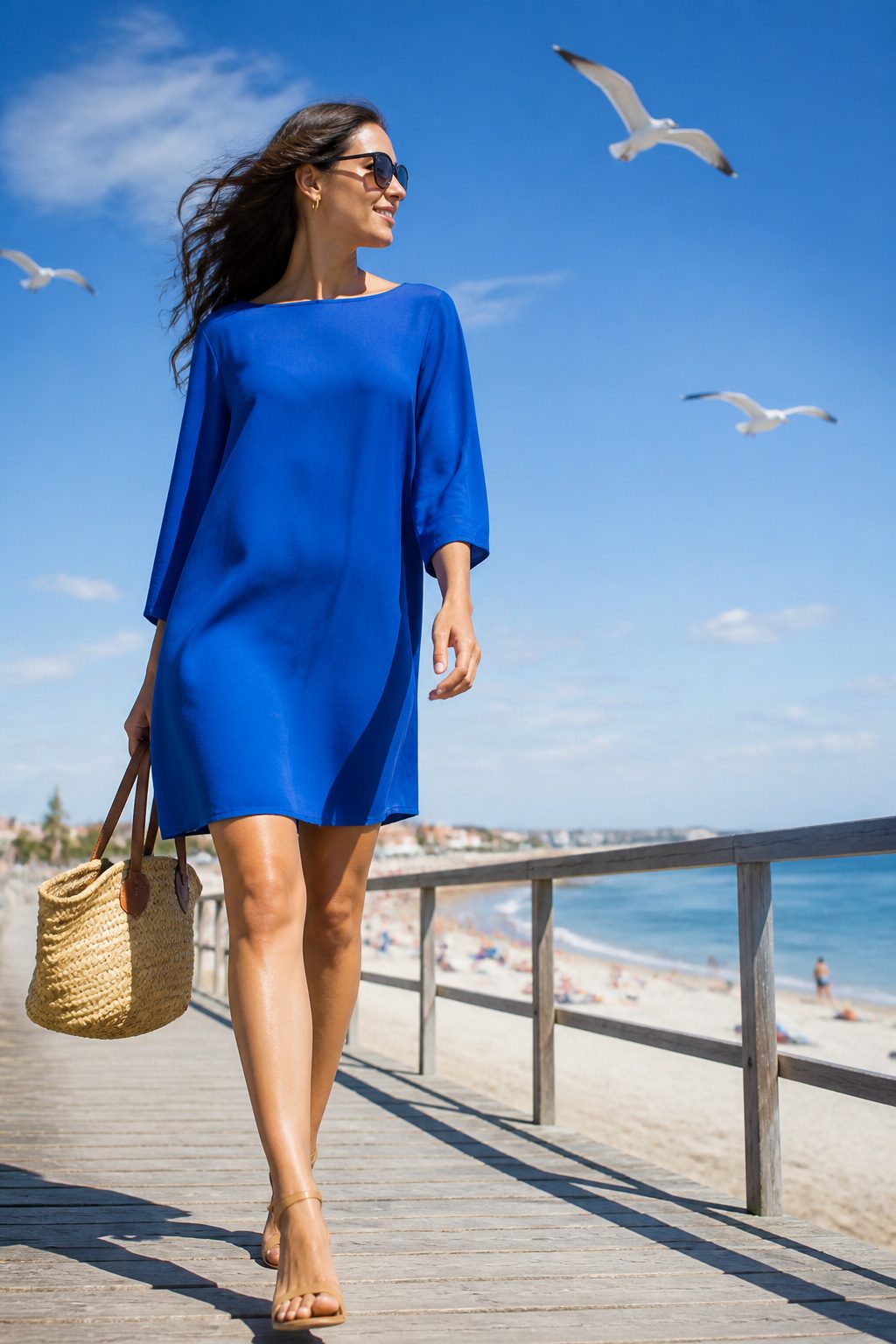
A shift dress hangs straight from the shoulder with no waist seam, which means the fabric does the work instead of your shape.
That freedom is exactly why I reach for one on days when a fitted bodice feels like too much negotiation.
The cut works when the length hits at or just above the knee; anything longer and the column effect starts to read as a hospital gown.
A shallow boat neck or a crisp V keeps the neckline open, which is what prevents the whole thing from looking like you forgot to add structure.
Proportion is where this style lives or dies. I add a belt only when the dress has belt loops sewn in; otherwise the fabric bunches and the clean line is gone.
A cropped jacket worn open, or a cardigan that ends right at the hip, does the same job of defining where the torso ends without fighting the dress.
I choose this over something fitted when the occasion calls for looking put-together without looking like I tried.
A client lunch, a Saturday gallery opening, the kind of spring day that starts cool and ends in sun. The shift moves through all of that without requiring the constant adjustment that a sheath or wrap demands.
8. Midi Dresses

The midi hem sits between the knee and the ankle, but the difference of three inches either way turns elegant into awkward.
Too high above the ankle and the dress reads as a maxi that shrank in the wash. Too low on the calf, and the widest part of your leg becomes the visual anchor.
The hem should hit at the narrowest point of your shin, roughly two to three fingers above the ankle bone. That placement keeps the line long without requiring the heel height a true maxi demands.
Shoes make or break this proportion. A midi with flats shortens the leg unless the dress is cut with a higher waist and a slit that lets the ankle move.
The pairing that finally sold me on midis was a block-heel sandal in a color close to my skin tone; it adds two inches without the formality of a stiletto and keeps the hem from dragging.
Boots, even ankle ones, chop the line at the wrong point in spring.
Sneakers can work, but only with a sporty midi in a stiffer fabric that holds its own shape; a flowy midi with trainers looks like you forgot to change after the gym.
This length took me longest to get right because the safe choice always felt like a maxi. The midi asks you to commit to a specific proportion and trust that showing some leg, but not much, is the point.
9. Mini Dresses
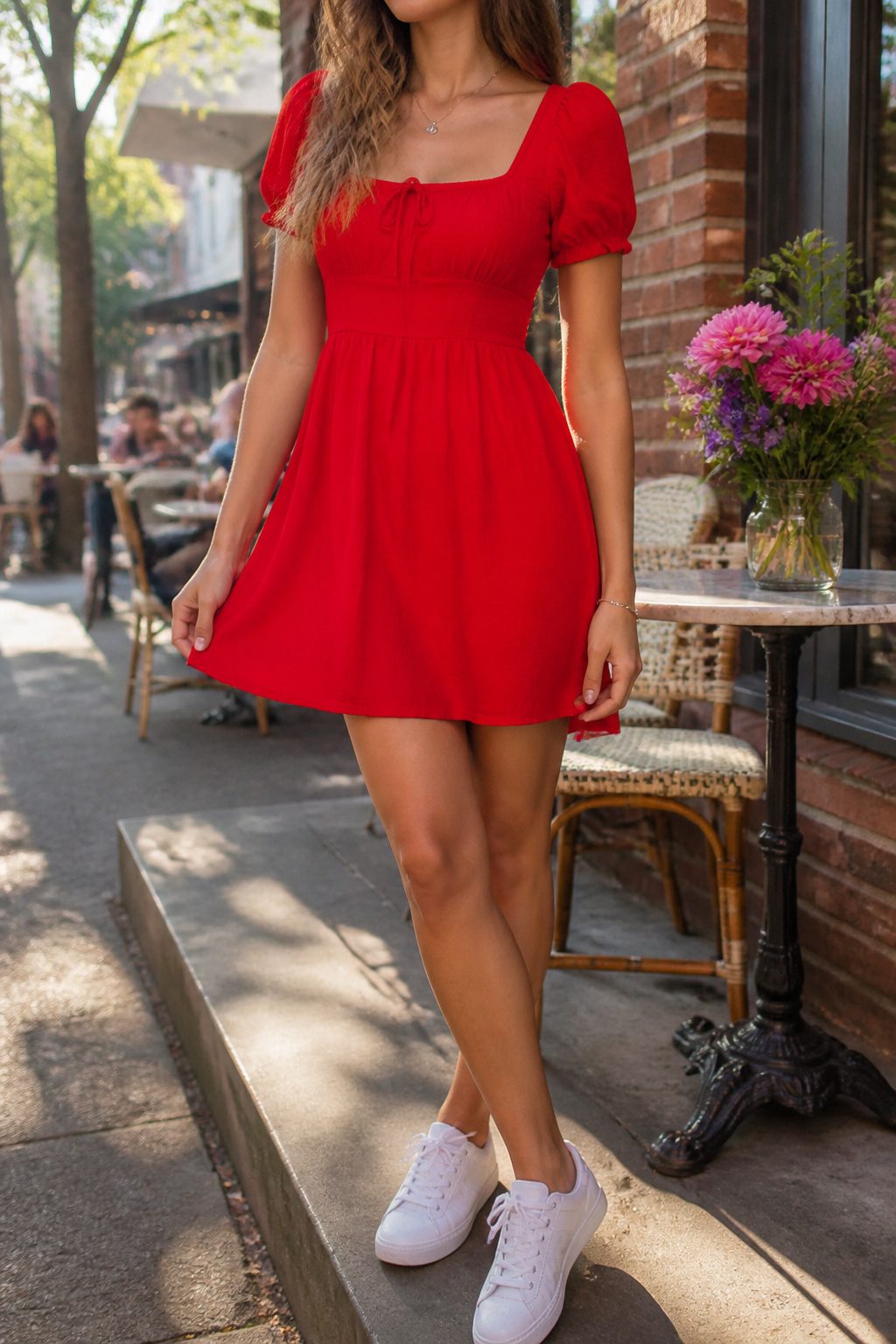
The two-inch gap between a dress that grazes mid-thigh and one that stops just above the knee is where office-appropriate ends and weekend begins.
At 34, I still reach for the shorter end of mini when I know I’ll be sitting on a low patio chair or walking somewhere that heels would sink into grass.
The length forces a shoe choice: a low block heel or clean white sneaker keeps it from looking like I borrowed something meant for someone twenty years younger.
Tights extend the season more than people give them credit for. A sheer 20-denier black tight under a dark floral mini reads April, not January, and the transition happens without buying a single new dress.
The mistake is going opaque too late into the season. By mid-April where I live, anything heavier than sheer looks like you dressed for the wrong calendar page.
The occasions have narrowed, not disappeared. Dinner with friends where the reservation is at 8 p.m., a Saturday gallery opening, a birthday brunch where you know the group photo is coming.
I skip it for work events now, and for anything where I’d be the only one in the room showing leg. The confidence has to come from the fit, not from talking yourself into it.
10. Puff Sleeve Dresses

Puff sleeve dresses photograph like a dream, which is exactly why the first one I ordered went straight back. The volume that reads romantic on camera can swallow a smaller frame whole once the flash is off.
What separates the wearable from the costume is shoulder width under two inches past your natural shoulder line; anything wider and the sleeve starts wearing you.
My body needs the puff concentrated at the bicep, not the crown of the shoulder. A gathered cap that releases below the shoulder point keeps the drama without the linebacker effect.
The returned dress had the opposite construction: enormous clouds sitting right at the joint, which made my arms look pinned in place every time I reached for a coffee cup.
For daily spring wear, a single layer of cotton poplin holds enough structure to keep the shape crisp through humidity. Double-layered organza or anything with internal wire stays gorgeous for exactly forty minutes, then collapses into creased deflation.
Spring Dress Fabrics
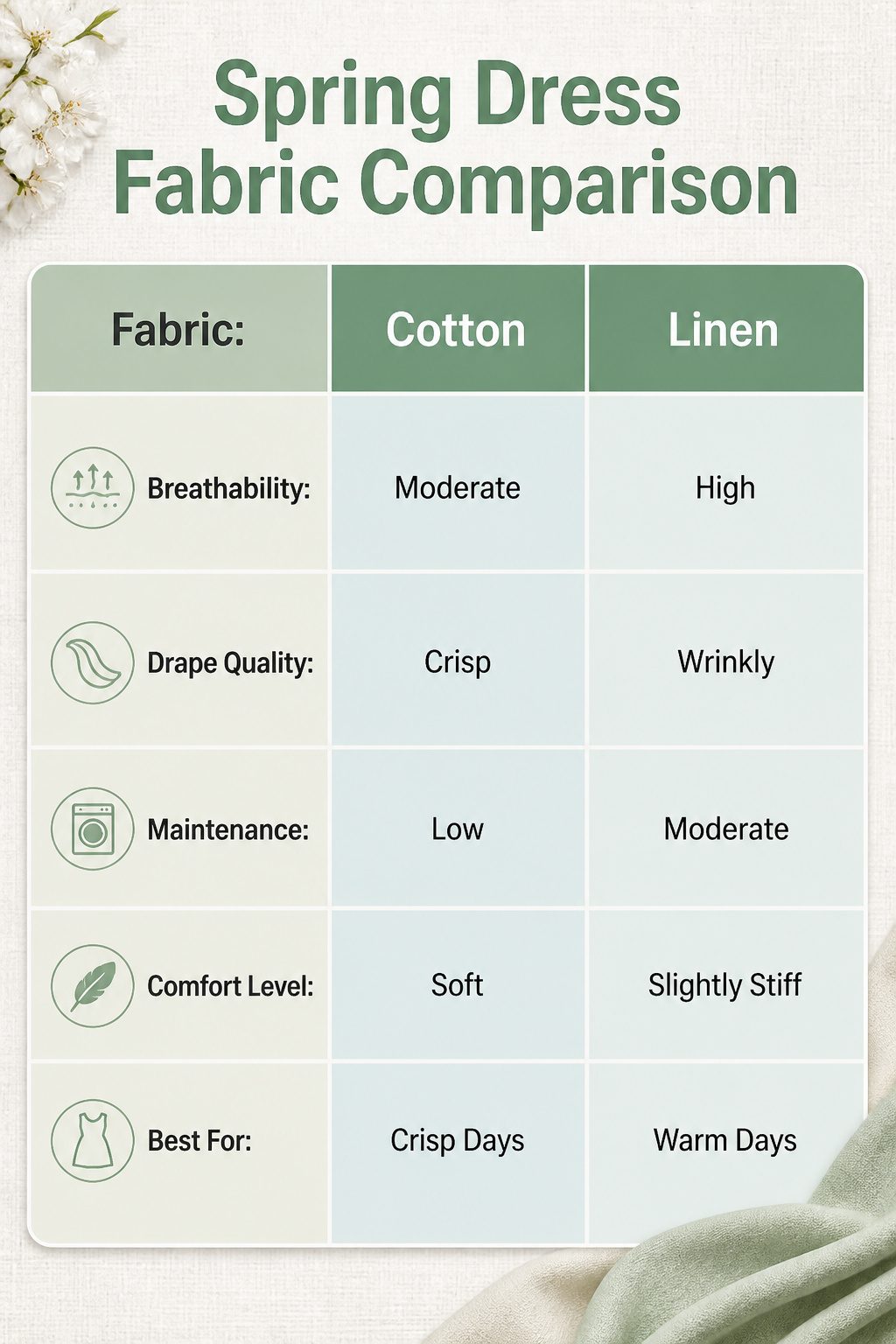
Cotton lands differently at 65 degrees than it does at 80.
The same dress that felt crisp and put-together on a March morning turns limp and clingy by May, catching sweat in a way that makes you wish you’d grabbed the linen instead.
Linen, for its part, starts out starchy and wrinkles within twenty minutes of sitting down; by the time you stand up from a car ride, the seat of your dress looks like a roadmap.
A linen-cotton blend fixes this: you get the breathability and the soft drape, but the cotton keeps enough body that you don’t look like you slept in it.
Rayon feels closest to silk at its best and closest to wet tissue at its worst.
It breathes well in real humidity, which is why so many spring dresses use it, but the cheap kind goes sheer under direct light and almost always needs a slip.
The better move is a rayon-linen weave, or a cotton-modal blend that holds color longer and doesn’t pill after three washes.
Pure linen and pure cotton both work for spring, but neither works perfectly alone.
The blends cost a little more per dress and save you the cost of the slip, the iron, and the replacement you buy when the first one fails.
Body Type and Dress Shape
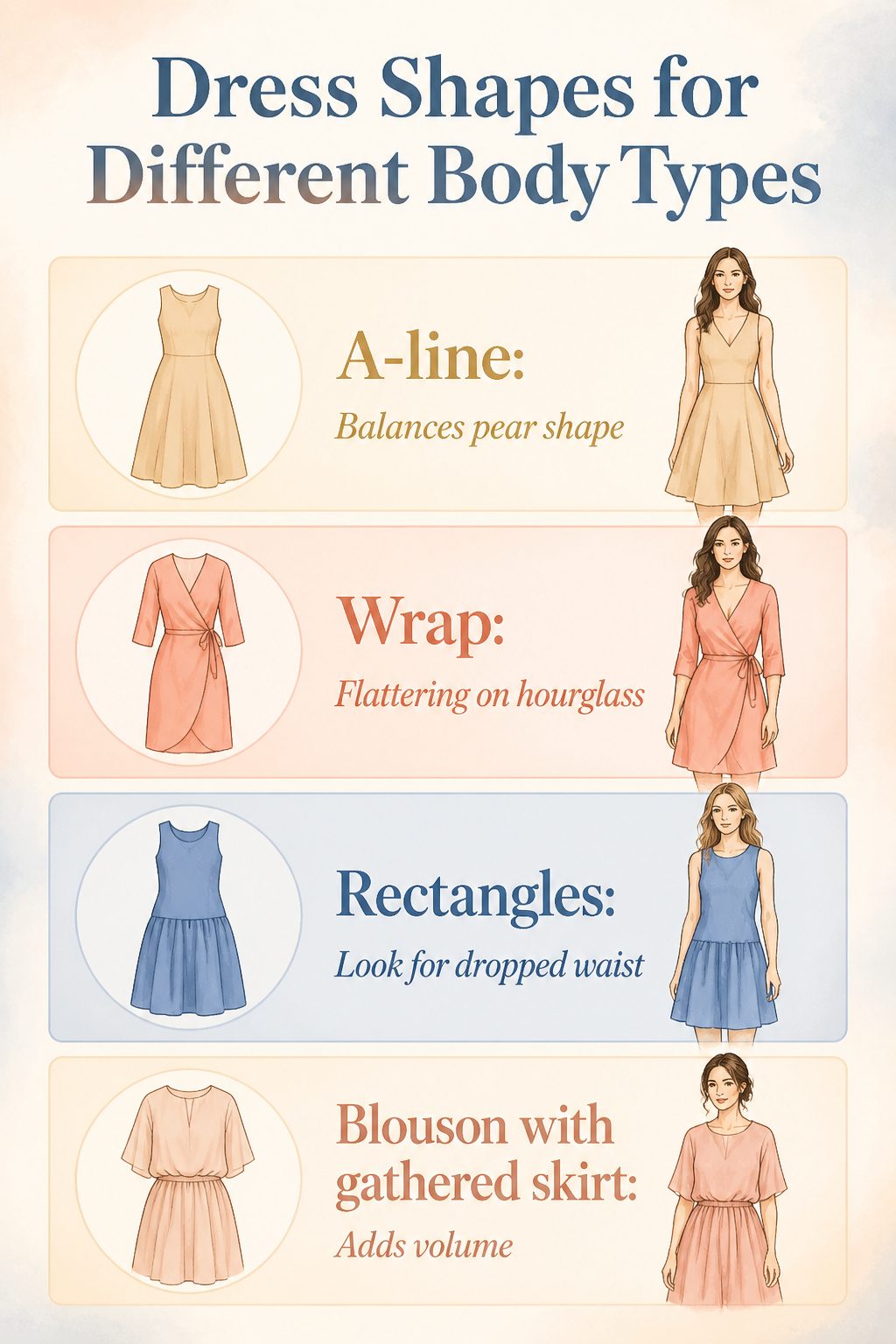
A-line skirts widen from the waist, which balances a pear-shaped lower body without clinging at the hips.
Wrap dresses work on hourglass figures because the tied closure follows a narrow waist and lets the bust and hips fall where they naturally sit.
Neither of those shapes matches my own; I am a rectangle, straight from shoulder to hip, and the dresses that read as flattering on me all share one cut detail rather than a whole category name.
A dropped waist or a blouson top paired with a gathered skirt creates the illusion of a waist I do not have by adding volume where the curve should pinch in.
The measurement that matters more than any shape label is shoulder width against hip width. A dress cut for shoulders narrower than yours will strain across the back no matter how perfectly it skims your hips.
I stopped buying by the "rectangle" or "apple" tag on retailer sites and started checking the garment’s shoulder seam measurement against my own. That number predicts fit more reliably than any body-type quiz.
Wearing Spring Dresses to Work
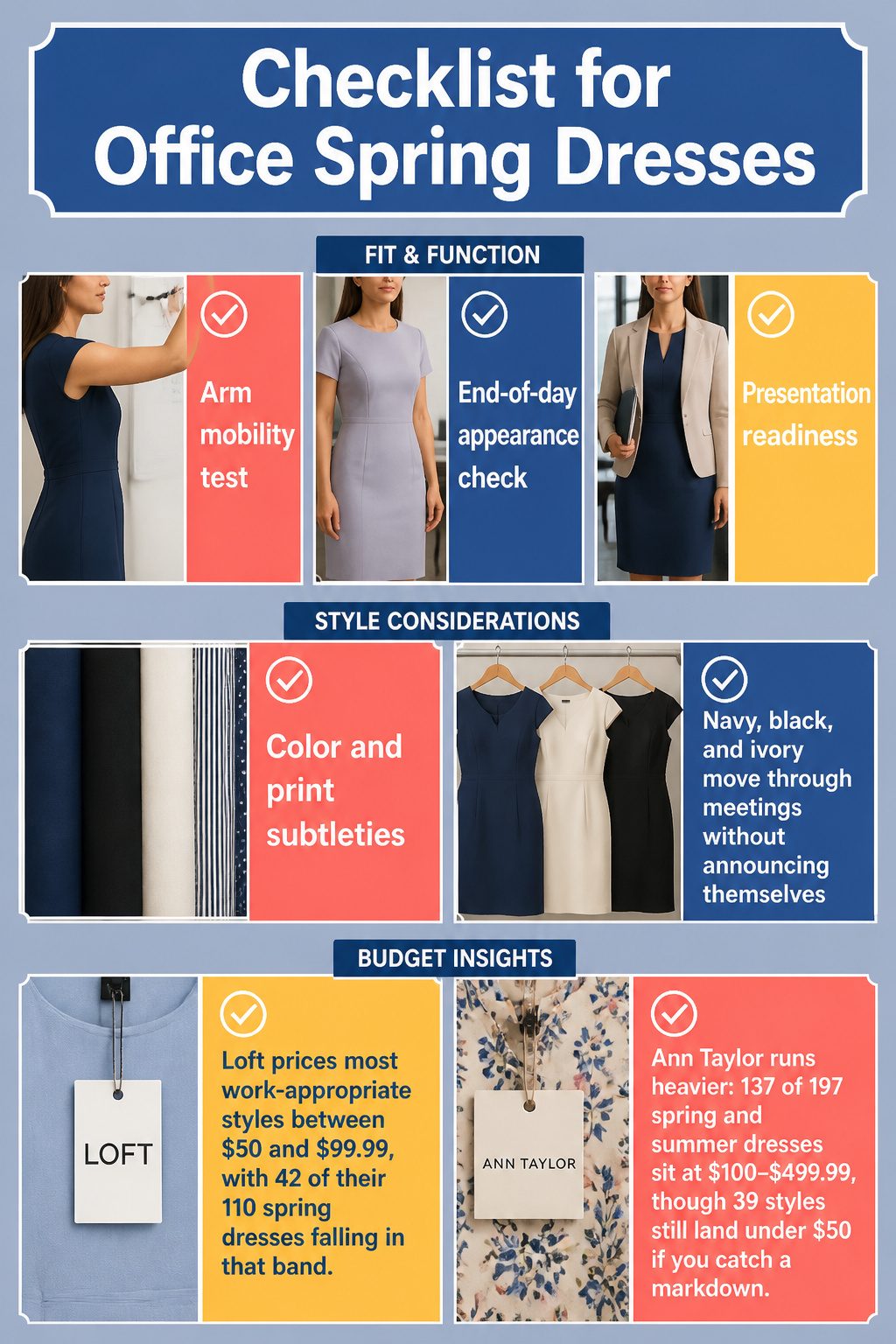
Structured spring dresses for the office live or die on three tests I run before a hanger ever leaves the store.
The first is mechanical: can I raise my arm to write on a whiteboard without the bodice pulling or the sleeve riding?
A cap sleeve from Loft’s work line usually passes; a sleeveless shift with a cut-in armhole almost never does.
The second is the mirror at 6 PM, when fluorescent fatigue has set in and the dress either still holds its shape or has wilted into something that looks like you borrowed it.
The third is the two-level-up test: would I wear this to present to someone who could promote me, or would I reach for the backup blazer instead?
Colors and prints matter here more than they do for weekend spring dresses. Navy, black, and ivory move through meetings without announcing themselves; a subtle stripe or small-scale dot reads as texture, not personality.
Loft prices most work-appropriate styles between $50 and $99.99, with 42 of their 110 spring dresses falling in that band. Ann Taylor runs heavier: 137 of 197 spring and summer dresses sit at $100–$499.99, though 39 styles still land under $50 if you catch a markdown.
That gap is real budget information for anyone building a five-day wardrobe from scratch rather than adding one statement piece.
Accessories for Spring Dresses
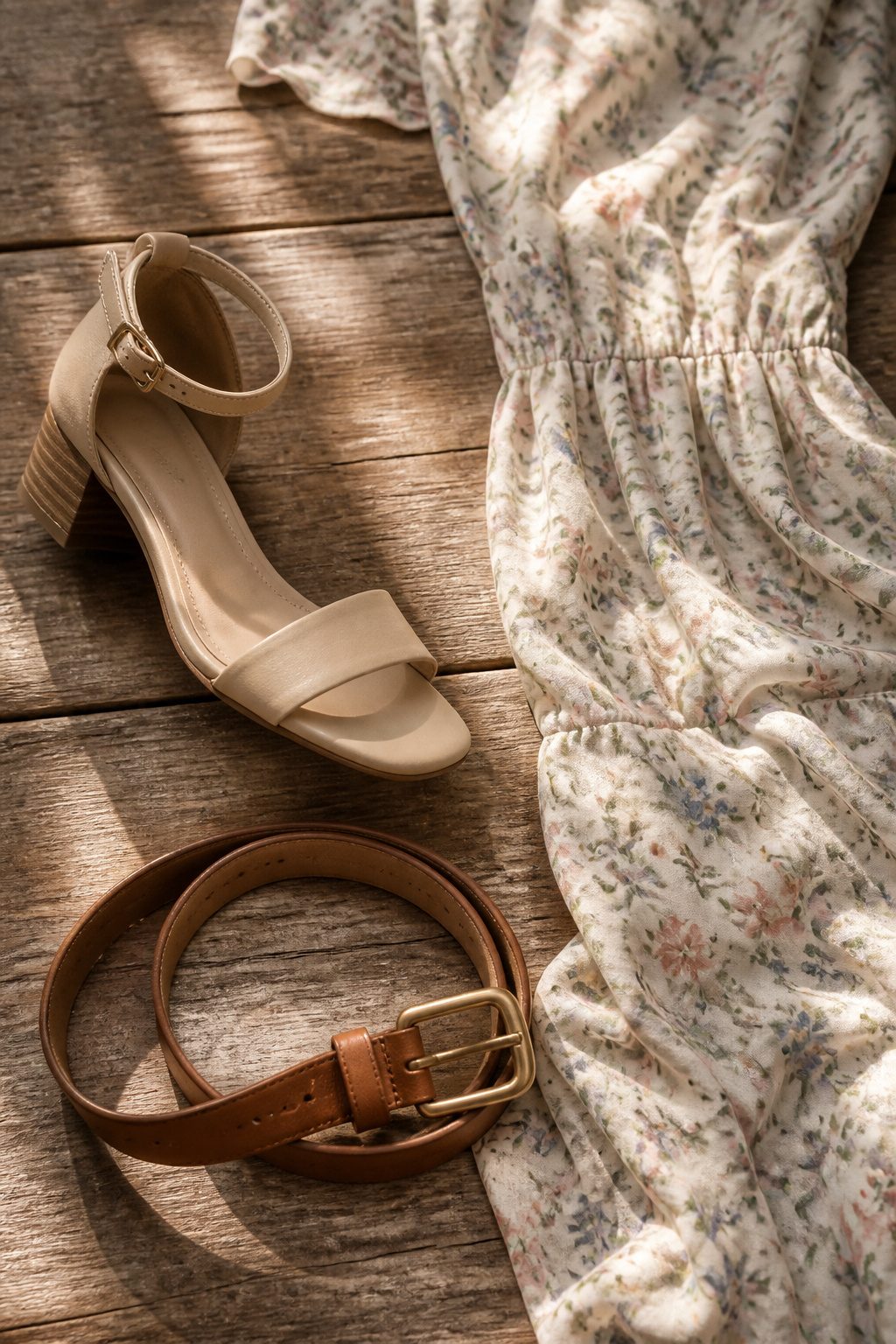
A wide-brimmed hat looks romantic in flat-lay photos and collapses into a nuisance the second a gust hits 10 mph.
The one I bought three springs ago now lives in the back of a closet, useful only for garden parties with zero wind and a chair to leave it on.
Sandals with a real sole, not a flimsy base, buy you hours of walking without the foot fatigue that ruins a dress’s whole effect.
Statement jewelry gets suggested constantly, yet my most-worn pieces are small hoops and a thin chain that never compete with a neckline.
The sources all push bold earrings; my experience says a dress with interesting shoulders or a print needs nothing competing for attention.
The belt that actually changed things was a simple 1.5-inch tan leather piece, nothing oversized or trendy. Three dresses that gapped at the waist or hung shapeless suddenly had structure without looking cinched.
Two were casual cotton, one was a work-appropriate crepe, and the belt worked across all three because the color was neutral and the hardware minimal.
Wedges get recommended for height with stability, but the pair I reach for most often is a low block-heel sandal in a color close to my skin tone.
The leg-lengthening effect is the same, and they weigh half as much in a tote bag.
What I Skip and Why
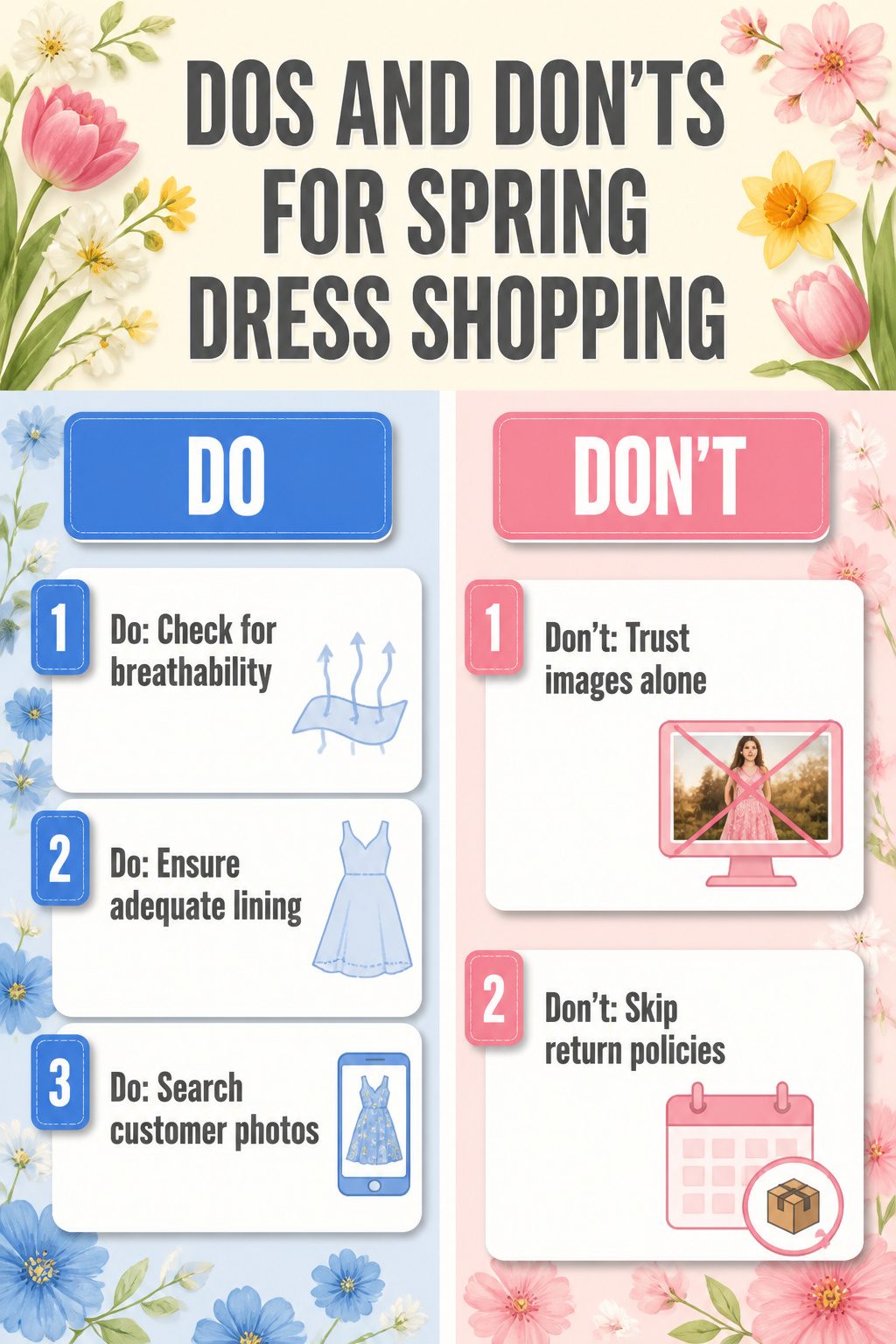
Polyester that passes for silk in a dim dressing room turns clammy by 11 a.m. on a May sidewalk.
I learned this in 2019 with a $34 wrap dress from a flash sale, the kind of purchase where the checkout page shows a model in golden hour light and the fabric weight reads "lightweight" instead of grams per square meter.
The armpits darkened before I reached the subway, and the static held onto every pollen particle in the park.
White dresses need a lining check in direct sun, not just under store fluorescents. A cotton-poplin sheath I ordered in March 2022 read as office-appropriate on my bedroom floor.
Outside, the backlighting turned it into a silhouette show. The returns window had closed two days earlier.
Print scale shifts between screen and fabric more than you’d expect.
A "delicate floral" I bought in April 2023 arrived with blooms the size of saucers, the kind of distortion that happens when a supplier uploads a thumbnail and manufactures from the same compressed file.
Now I search the hashtag for customer photos before I add to cart.
Frequently Asked Questions
What fabrics are best for spring dresses?
Cotton, linen, and rayon are the most breathable choices, but blends outperform pure fabrics.
A linen-cotton mix gives you airflow without the full wrinkling, and a cotton-modal blend holds color longer than straight rayon. Pure cotton goes limp in humidity; pure linen wrinkles within twenty minutes of sitting.
How do I choose the right spring dress for my body type?
Match the silhouette to where your body narrows and widens. A-line skirts balance pear shapes; wrap dresses follow hourglass curves; a dropped waist or blouson top creates curves on straighter frames.
The shoulder seam measurement predicts fit more reliably than any body-type label, so check that number against your own before buying.
Can I wear a spring dress to work?
Yes, if it passes three tests: you can raise your arm to write on a whiteboard without pulling, it still holds shape at 6 p.m., and you would wear it to present to someone two levels above you.
Structured sheaths, shirt dresses, and fit-and-flare styles in navy, black, or ivory move through meetings without announcing themselves.
What accessories should I wear with a spring dress?
A simple 1.5-inch tan leather belt adds structure across casual and work dresses without competing for attention.
Small hoops and a thin chain work harder than statement jewelry; they never fight a neckline. For shoes, a block-heel sandal close to your skin tone lengthens the leg and weighs less in a tote than wedges.