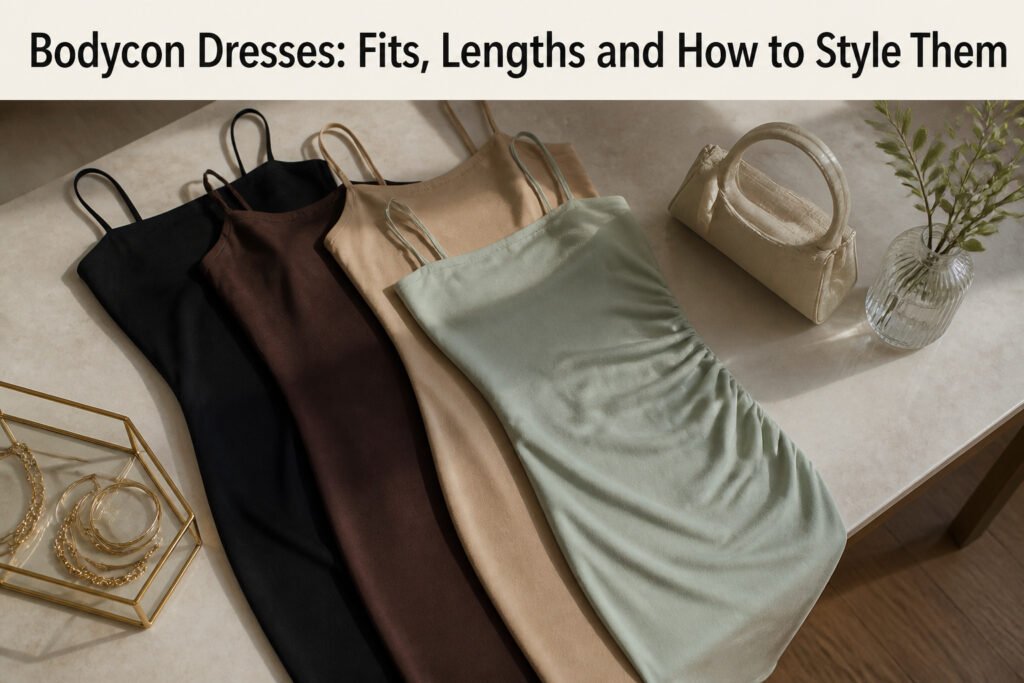
Bodycon dresses are stretch-knit garments engineered to follow the figure closely from shoulder to hem. The catch is that the same stretch that creates the silhouette also determines how long the dress survives in rotation, with polyester-spandex slinky blends holding shape through a few washes before pilling. The 311 styles currently available include a strapless bandeau mini at $19.20 after discount, proof that the category now spans from bare-bones foundations to corseted halter gowns with functional boning.
Short Sleeve Wrap Front Mini
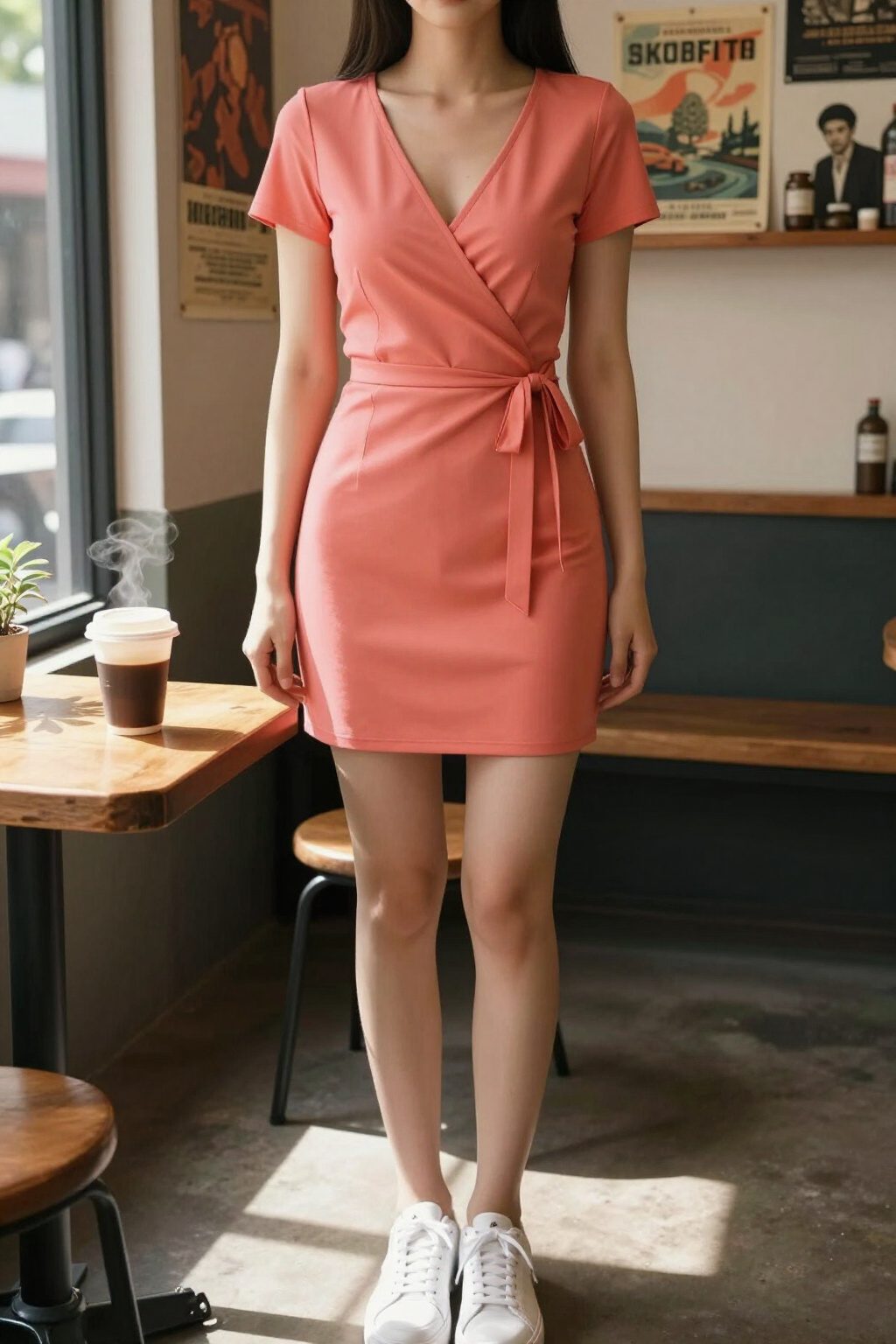
A short sleeve wrap front mini at $19.20 is where I stopped scrolling. That price sits well below what most bodycon dresses open at, and the wrap closure does actual work: you set the waist yourself instead of hoping the factory seam hits your narrowest point.
The short sleeves keep this from reading as strictly eveningwear. I have worn this cut to a Saturday coffee run with white sneakers, then swapped to strappy heels and small hoops for a birthday dinner the same night. The wrap front creates a V-neckline that flatters without requiring the tape and anxiety of a true plunge.
Mini length on a bodycon silhouette means the skirt hits mid-thigh. That works on my 5’4" frame; anyone taller may find it rides up when seated. The fabric in this range tends to be a polyester-spandex slinky, which holds its shape through a few washes but pills eventually. At $19.20, that lifespan feels fair rather than disappointing.
For sizing, the wrap means you have forgiveness if between sizes. I size down; the tie lets me cinch without gaping at the bust.
Keyhole Cut Out Lace Trim Mini
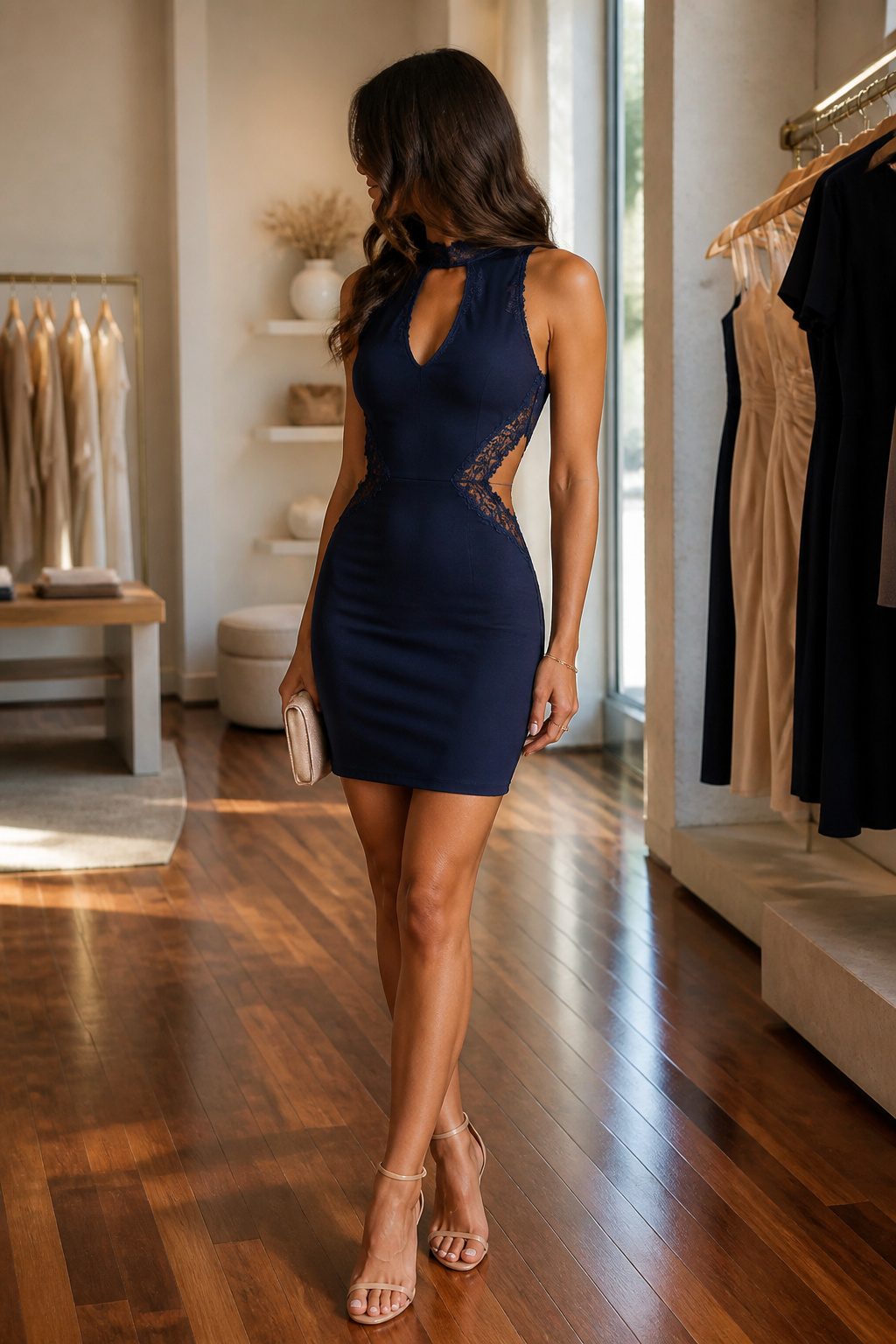
The keyhole cutouts in this style do more than add decoration. They break the solid line of a bodycon silhouette into segments, which changes how the eye travels across the figure. A single cutout at the neckline draws attention upward; multiple smaller ones scattered along the torso create a rhythm that interrupts the cling of the fabric. Lace trim at those edges softens the contrast, so the breaks read as detail rather than as gaps.
Where the lace sits matters for proportion. Trim running along a keyhole at the upper chest keeps the focus high and works well if you want to emphasize shoulders or de-emphasize hips. Trim at side cutouts, though, can widen the visual line at exactly the point a bodycon dress already pulls tight. I would skip lace-trimmed side panels unless the dress fabric has enough structure to hold the trim flat against the body.
The best versions keep the lace narrow and the keyholes small, no more than a few inches of open space, so the dress still reads as a single garment rather than as panels held together by threads. Pair it with shoes that match the lace color, not the dress color; it extends the visual break downward and keeps the look intentional rather than accidental.
Bandeau Sequin Panel Ruched Mini
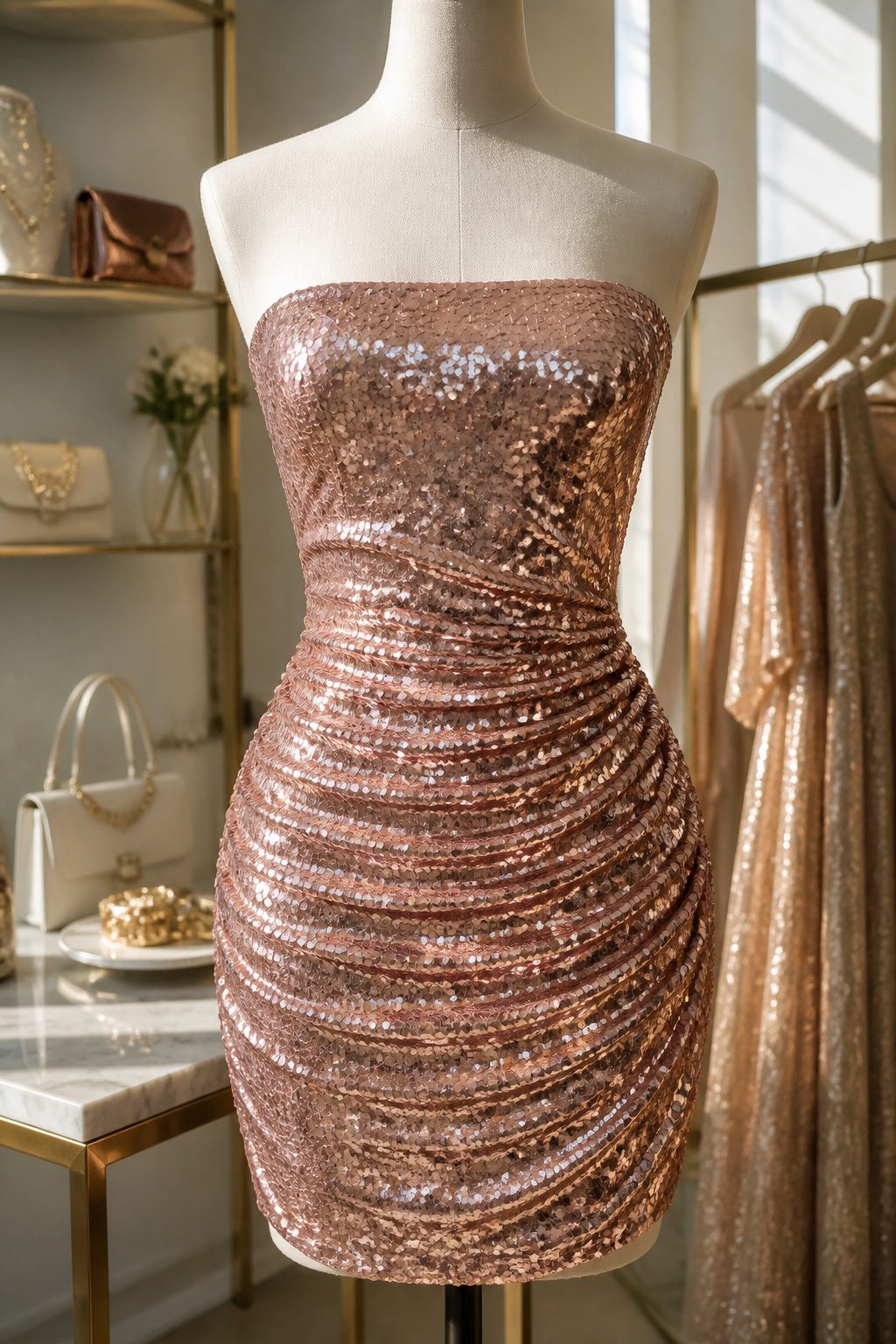
A strapless bandeau bodycon dress lives or dies on how the fabric behaves across your torso, and this particular build solves that problem with two textures working against each other. Sequin panels catch light and hold structure, while ruched sections between them collapse slightly and move with you. The contrast means the dress reads as fitted without needing to be vacuum-sealed; the ruching forgives where the sequins would otherwise announce every line.
The bandeau cut demands either a good strapless foundation or the confidence to go without, and the ruching helps here too. It sits across the bust in gathers that add visual volume, so the silhouette stays proportional without padding or underwire. I’ve seen this construction fall apart when the sequin panels are too wide; they turn rigid and tent outward at the sides. The workable versions keep each panel narrow, two to three inches, with ruching carrying the rest of the fit.
For styling, the sequin already performs as jewelry. A bare neckline and a clutch in matte leather keep the dress from tipping into costume territory. Heels work, but the mini length plus shine can read club-only; I prefer a pointed flat or slim ankle boot to ground it.
Cape Sleeve High Neck Drape Mini

Cape sleeves do something standard sleeves cannot: they redraw the shoulder line without adding real structure underneath. The fabric falls from a high neck and drapes past the edge of the shoulder, so the eye reads a wider, more dramatic silhouette up top while the body of the dress stays fitted below. This matters on a bodycon dress because the whole point of the shape is contrast, tight against the body everywhere else, and the cape creates that tension by floating where the dress grips.
The drape also adds movement that a typical bodycon lacks. In stillness the fabric pools; in motion it lifts and resets, which keeps the eye traveling rather than locking onto any one line. A standard cap or long sleeve would read as part of the dress’s architecture, but the cape reads as an event, something that happens when you turn or reach.
For styling, the high neck already covers collarbone and throat, so earrings compete instead of complement. A slim earring or bare lobe keeps the vertical line clean. Hair works better up or pulled back; the cape needs room to fall, and loose waves at shoulder length get caught in the motion. The shoulder line the cape creates is softer than a padded or structured sleeve, so it suits narrower frames that need visual width without the bulk of actual volume. Shoes can go sharp, a pointed pump or ankle strap, because the dress itself has enough softness to balance.
High Neck Keyhole Button Mini
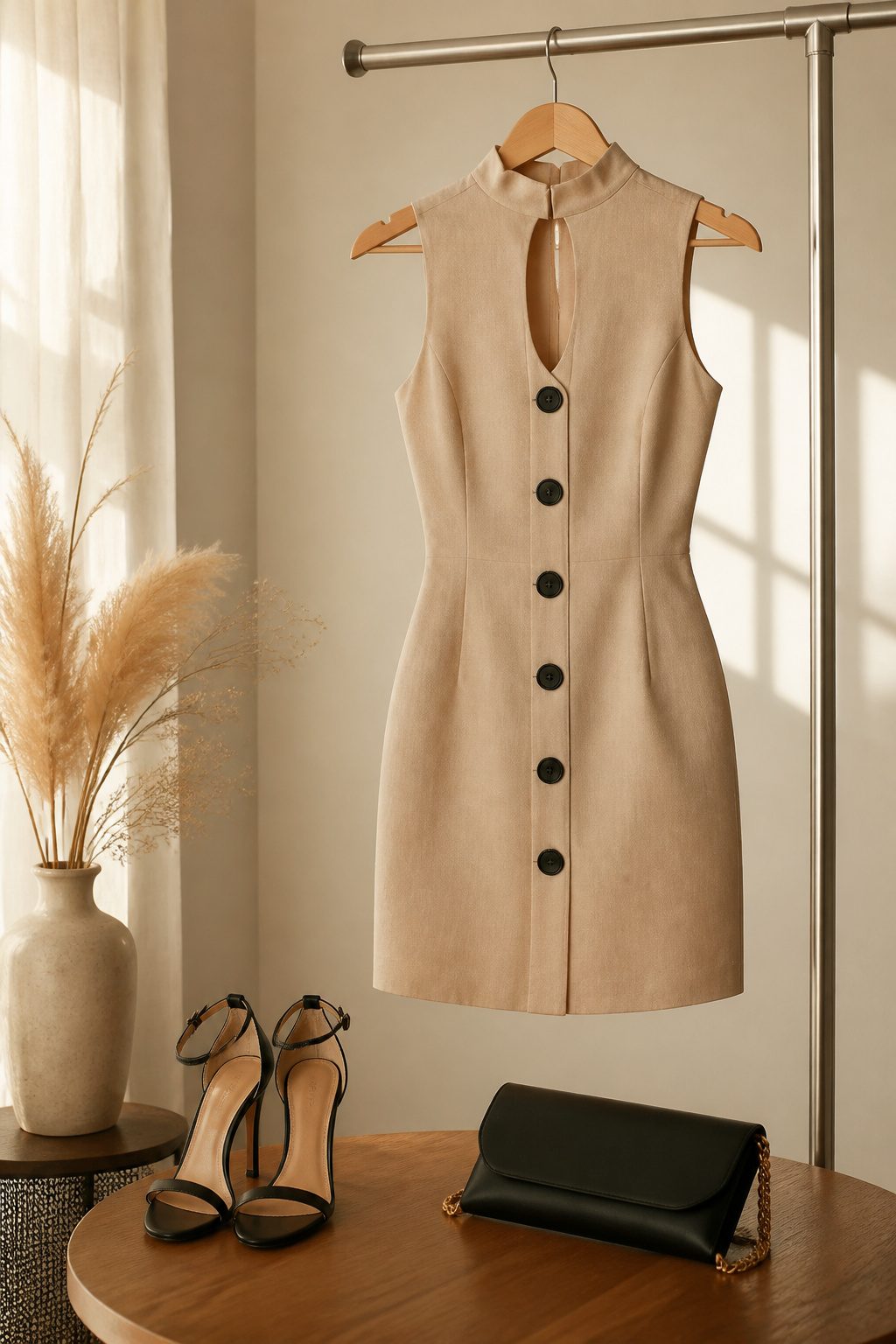
The buttons running down the front or back of a high-neck bodycon dress do more than fasten. They create a vertical line that draws the eye straight through the keyhole cutout, which sits at the collarbone or upper chest depending on placement. That pairing matters because the keyhole softens the severity of a high neck, while the buttons give your eye something to follow so the cutout reads as intentional design rather than random exposure.
A mini length keeps this from feeling too covered up. The high neck already conceals; the short hem balances it. In practice, this means you can wear it to a dinner where a plunging neckline would feel wrong but a turtleneck would feel frumpy. The buttons, if functional, let you adjust how much skin shows through the keyhole. I would leave the top one or two open for movement and keep the rest fastened so the dress keeps its column shape.
The keyhole works best when it sits at your natural collarbone, not lower, where it starts to fight the mini hem for attention. If the buttons are at the back, the keyhole becomes the main event from behind, which is useful at events where you will be seated or photographed from that angle. Either way, the combination reads as considered rather than revealing.
Shoulder Detail Cut Out Open Back
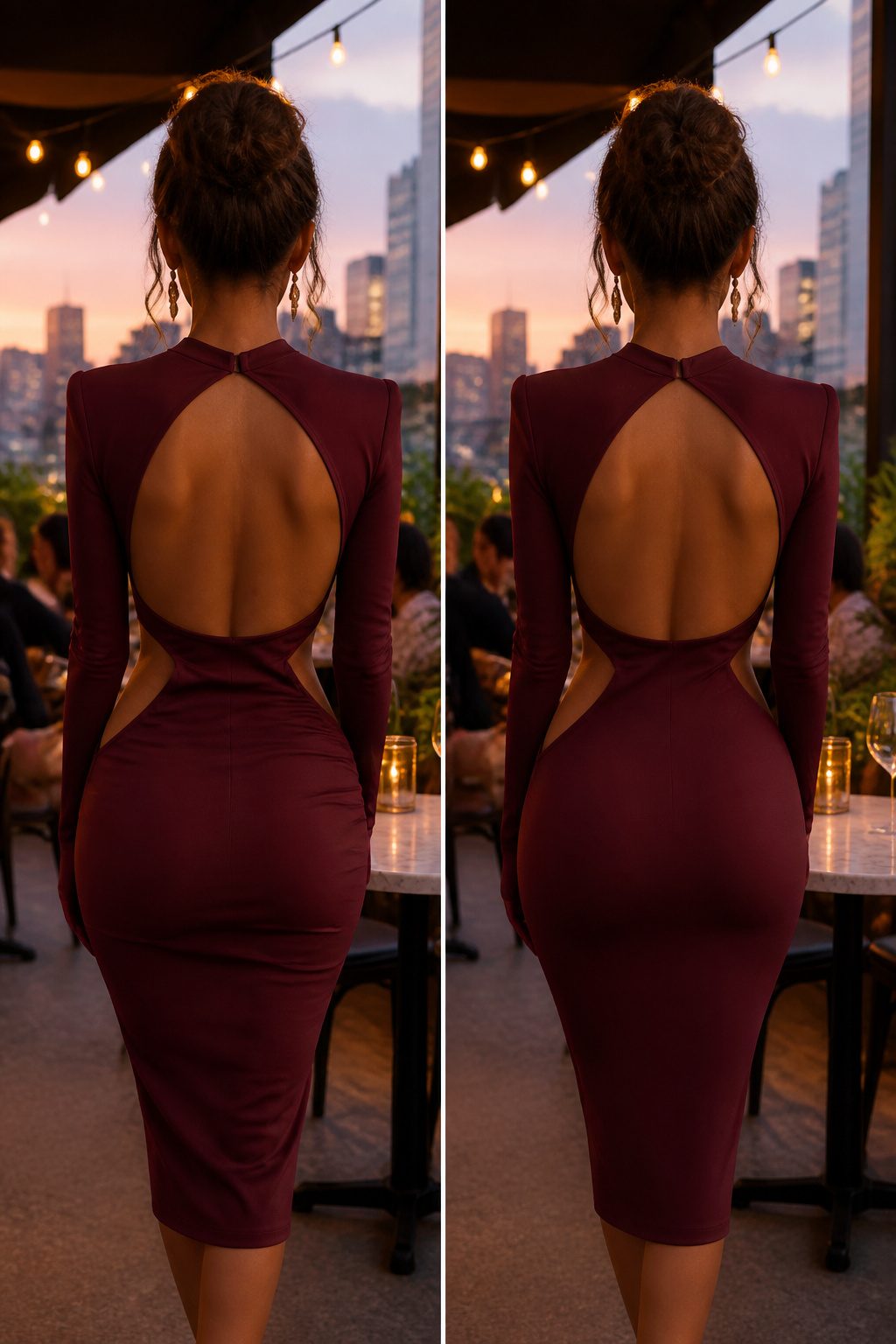
Structured shoulders on a mini bodycon dress do more than add shape; they give the eye something solid to land on while the back disappears. I first noticed this balance watching a friend turn to flag down a server at a rooftop bar. From the front, the padded or gathered shoulders read almost architectural, almost corporate. From behind, the open back and side cutouts offered the opposite: skin, negative space, a complete reversal of expectation. The shoulders framed the exposure rather than competing with it.
The cutouts at the ribs matter here too. Without them, the open back can feel like the single dramatic note, a reveal that loses impact halfway through the evening. With side cutouts, the exposure travels: shoulder, waist, spine. The structured top half keeps all of it from reading as accidental or overly casual. You get three angles of intention rather than one gimmick.
For styling, hair up is almost obligatory; a low ponytail drags across the open back and breaks the line. Stick-on cups or a backless bodysuit underneath solve the bra question without the visible strap compromise that ruins the side view. Jewelry stays minimal at the neck and ear, since the shoulder detail already supplies its own ornament. The dress is doing the work. Let it.
Cross Front Backless Mini
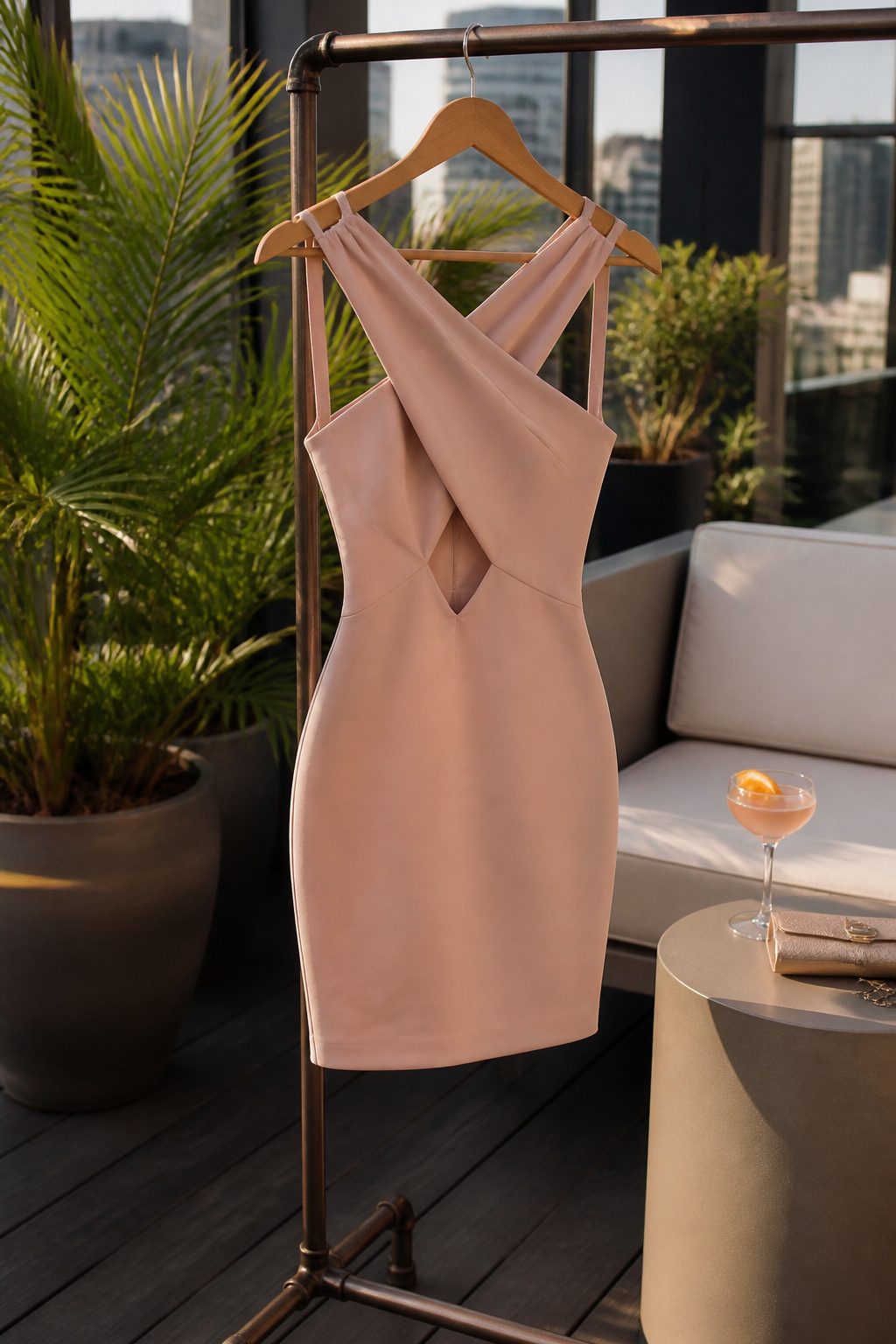
Crossed front straps on a backless mini bodycon dress do most of the structural work that a zipper or hook-and-eye usually handles. The fabric wraps and secures at the side or front, which means the tension has to sit right against your ribcage or the whole silhouette drifts downward through an evening. I have watched this style pool at the hips on friends who sized up for comfort, only to spend the night yanking it back into place.
The engineering is fairly specific. Internal grip strips help, but only if the dress is fitted enough that they press against skin rather than floating on top of it. A lined bodice with some stretch recovery matters more here than in a standard backless style because there is no second closure to pick up slack if the fabric relaxes. Straps that cross rather than run straight over the shoulders also change how weight distributes; they pull diagonally, which can create gaping at the underarm if the neckline is cut too wide.
Length on a mini this fitted already reads intentional, so I tend to keep accessories minimal and let the neckline and back do the talking. A sticky bra or adhesive cups are basically required, since any traditional strap would fight the cross-front lines.
Long Flared Sleeve Drape Mini

Long flared sleeves on a mini bodycon do something the standard tight version never quite manages. The volume at the arm changes the whole silhouette, widening the upper body so the narrow cut at the hips reads as intentional rather than relentless. Draped fabric at the shoulder or bodice adds the same kind of relief. Where a bare-armed bodycon can feel like one continuous squeeze, the flared sleeve breaks the line and gives the eye somewhere to rest.
The proportion shift matters most in motion. Arms raised or in profile, the sleeves create a shape that photographs wider than you are, which flatters the waist by contrast. For anyone hesitant about the cling of a bodycon, this is the forgiving entry point. The sleeves do the work of balancing the outfit, so you need less layering to feel covered.
Fit runs tighter at the wrist than the elbow to keep the flare from swallowing your hands. Check that the drape lies flat against the chest; excess fabric there pools and adds weight you do not want. A flared sleeve mini reads evening even in a solid color, so this is the one to reach for when the dress code says "nice" and you do not want to change afterward.
Bardot Long Flared Sleeve Mini
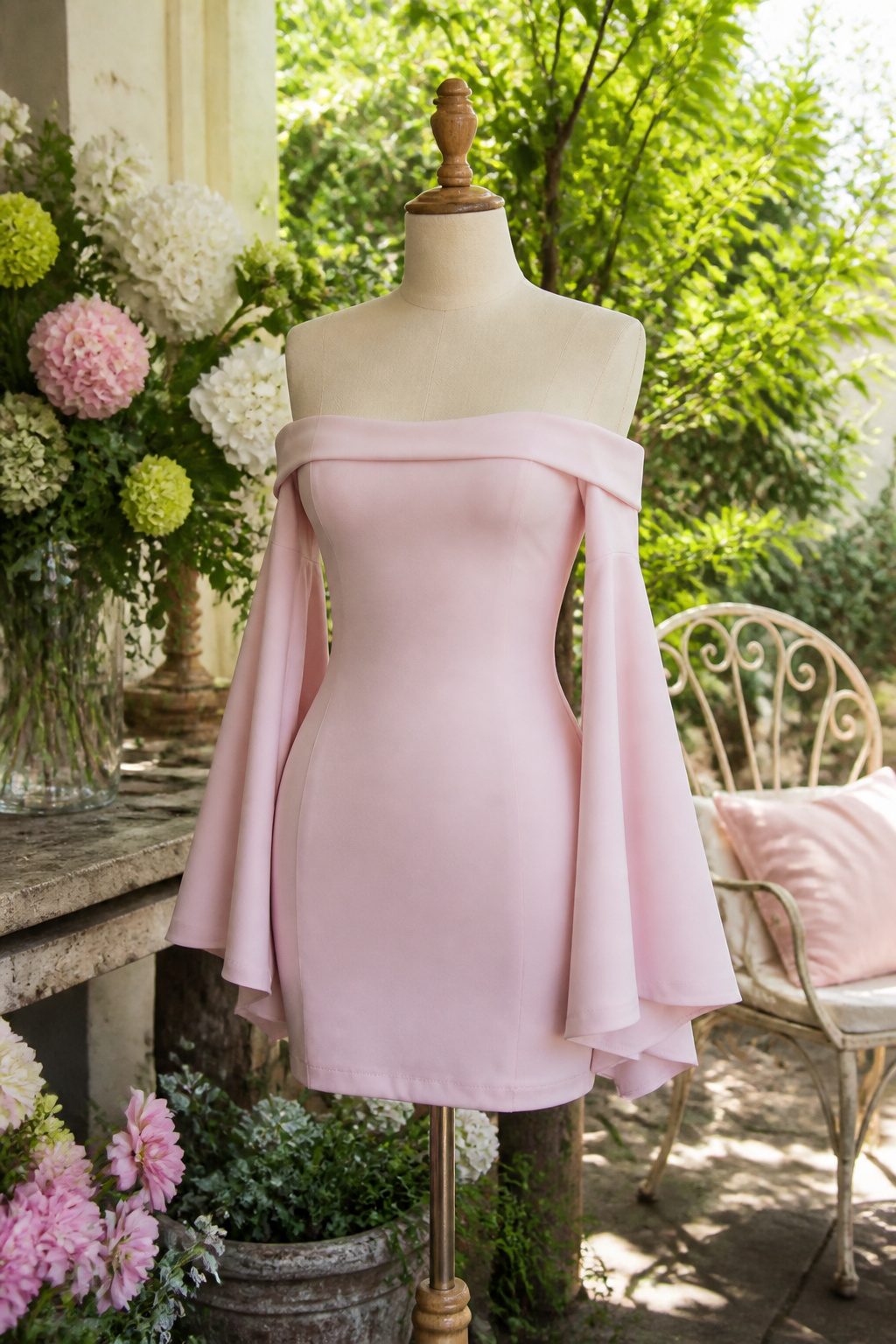
The Bardot neckline sits lower than a standard off-the-shoulder cut, which changes what you need from the sleeve. That extra exposure across the collarbones and upper chest means the long flared sleeves carry the visual balance of the whole piece. Without them, the dress would read as bare; with them, the volume creates a kind of informal drama that keeps the mini length from feeling too exposed.
In practice, the flare starts narrow at the wrist and widens toward the elbow or just above it. The fabric weight matters here. A heavier jersey or double-knit lets the sleeve hold its shape when you move, so the silhouette stays intentional rather than floppy. A lightweight rayon or thin jersey will collapse against your arm and lose the effect entirely, making the neckline feel unsupported and the whole dress look accidental.
The pairing works because the covered arm balances the open shoulder and chest. You get shape at the top, volume in the middle, and the fitted bodycon line from hip to hem. For someone building an outfit from this piece, the sleeve does enough heavy lifting that jewelry stays minimal. Small hoops or a thin chain sit right; anything larger fights the flare for attention.
High Neck Bead Detail Open Back Maxi
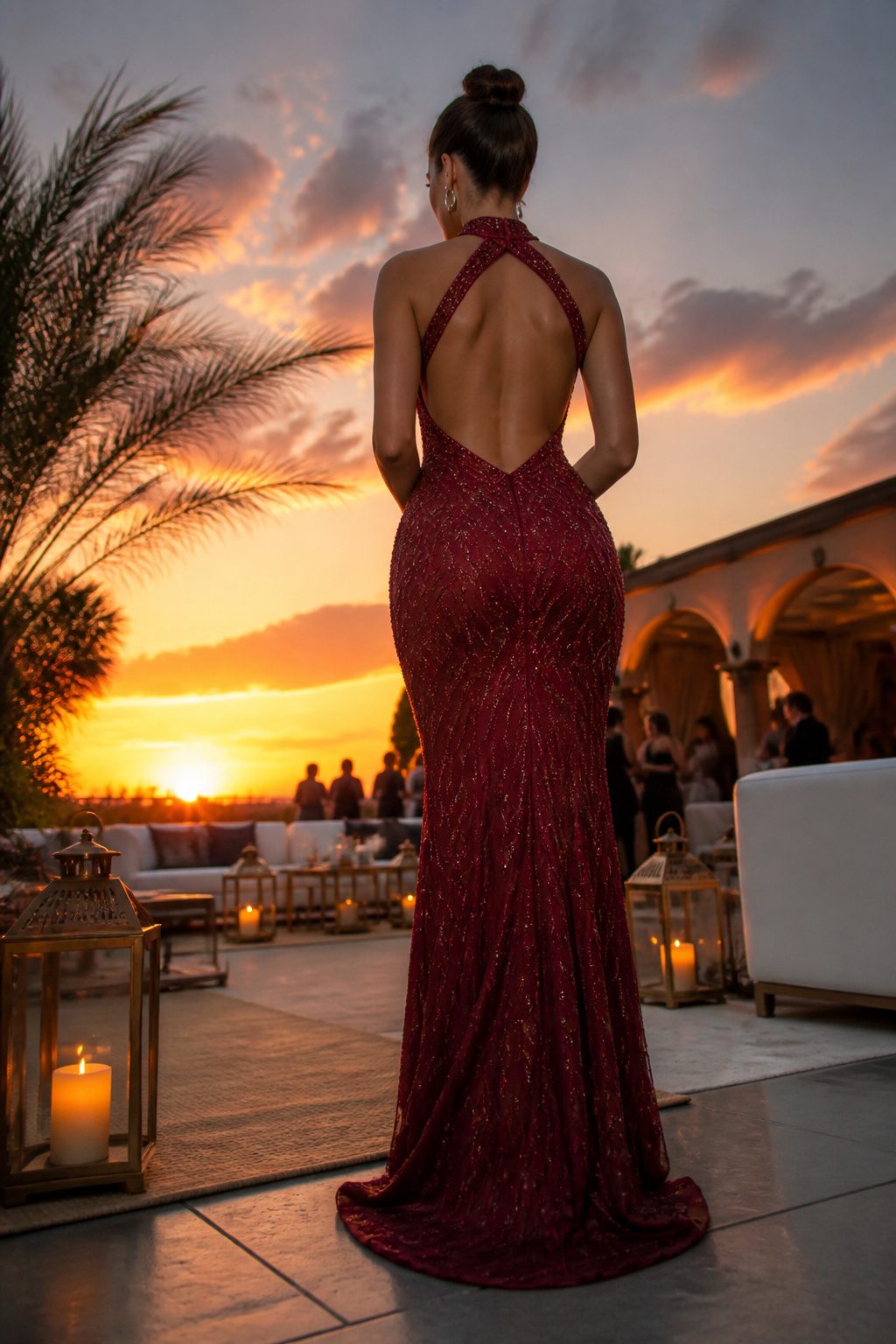
A floor-length bodycon dress with a high neck and beaded detail solves the problem most maxis have: they read as tent-like rather than structured. The full-length stretch keeps the silhouette close from shoulder to hem, and the open back prevents the coverage from feeling heavy. Beading at the neckline or shoulders gives enough ornament that you skip the statement necklace, which matters because a high neck already compresses the space for jewelry.
The catch is construction. Scattered beads on thin jersey will sag and pull after a few wears. What convinced me, reading through a dozen of these, is that the embellishment needs to sit on a reinforced panel or mesh overlay to hold its shape through an evening. Styles built this way run higher, but the usable ones still land under $56.80, which is the ceiling for detailed work before you are paying for a label rather than the beading itself.
For styling, hair up is non-negotiable. The open back is the point, and a ponytail or pinned twist keeps the line clean without competing with the neck detail. Heels help, though the length alone does most of the lengthening; the dress just needs to not break at the ankle, so aim for a hem that skims the floor with shoes on. Skip a necklace, add small earrings, and you are done.
Long Sleeve Contrast Lace Underwired Mini
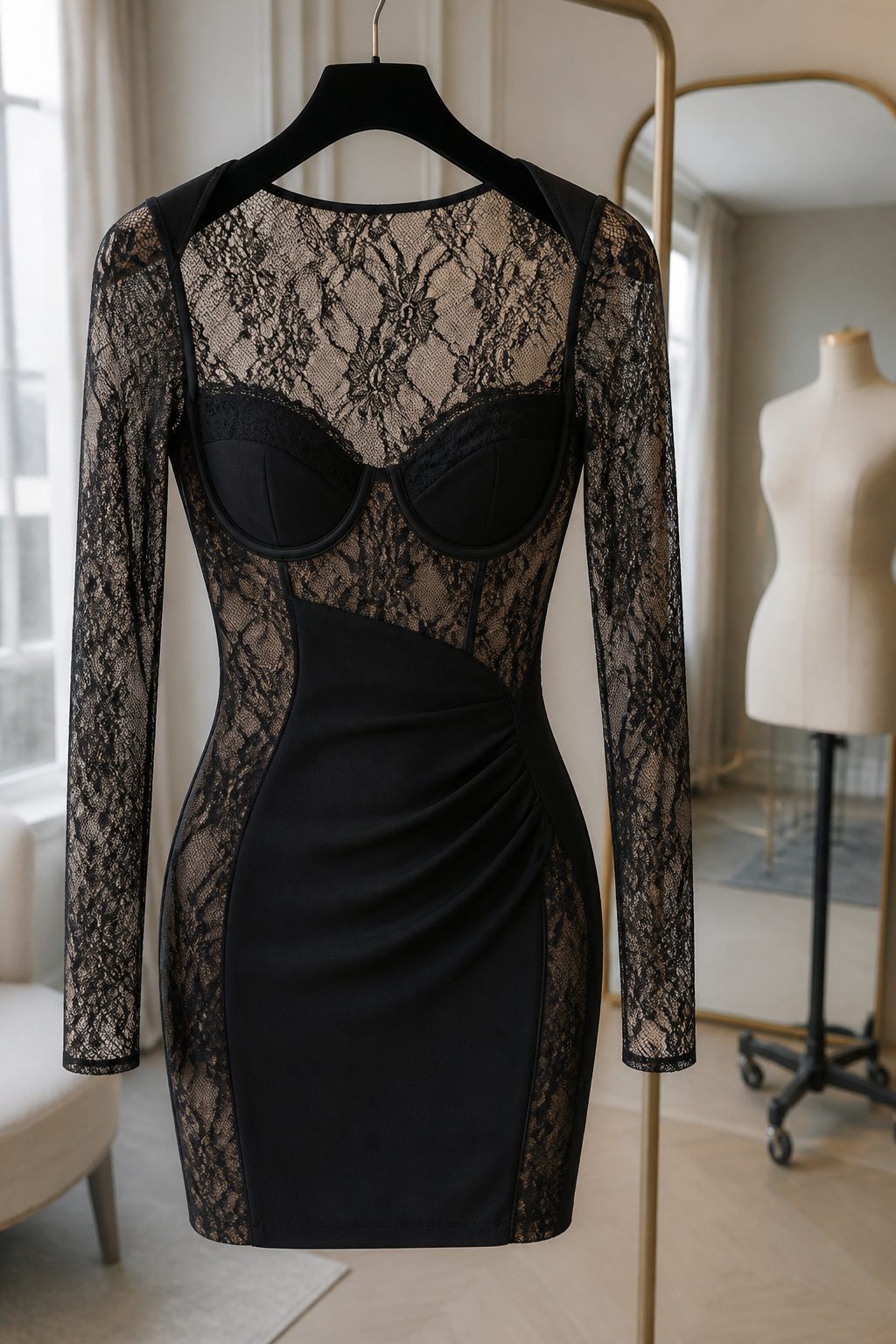
Long sleeves on a mini bodycon read as eveningwear rather than clubwear, and the lace panels do the visual work of jewelry so you can skip the necklace. What changes the wearing experience is the underwired bust built into the dress structure itself. Standard bodycon relies on stretch fabric to hold you in, which means your own bra has to do the lifting and the dress just skims over it. An integrated underwire shifts the architecture: the dress becomes the support system, so the torso stays locked in place even when the fabric is thin or the lace is sheer.
The tradeoff is fit specificity. A standard bodycon forgives a half-size mismatch because the knit gives everywhere. Here, the underwire needs to sit exactly where your breast tissue ends, same as a bra, or the whole dress shifts upward or gapes at the armhole. I have seen this style work best on women whose bust size already matches standard bra grading, since the dress cannot be adjusted the way a separate bra can. If you are between sizes, the lace panels offer a little camouflage at the seams, but they do not add structure. The long sleeves add warmth enough for a winter party, yet the mini length keeps the proportion from feeling borrowed from a cocktail gown.
Halterneck Contrast Sequin Cut Out Maxi
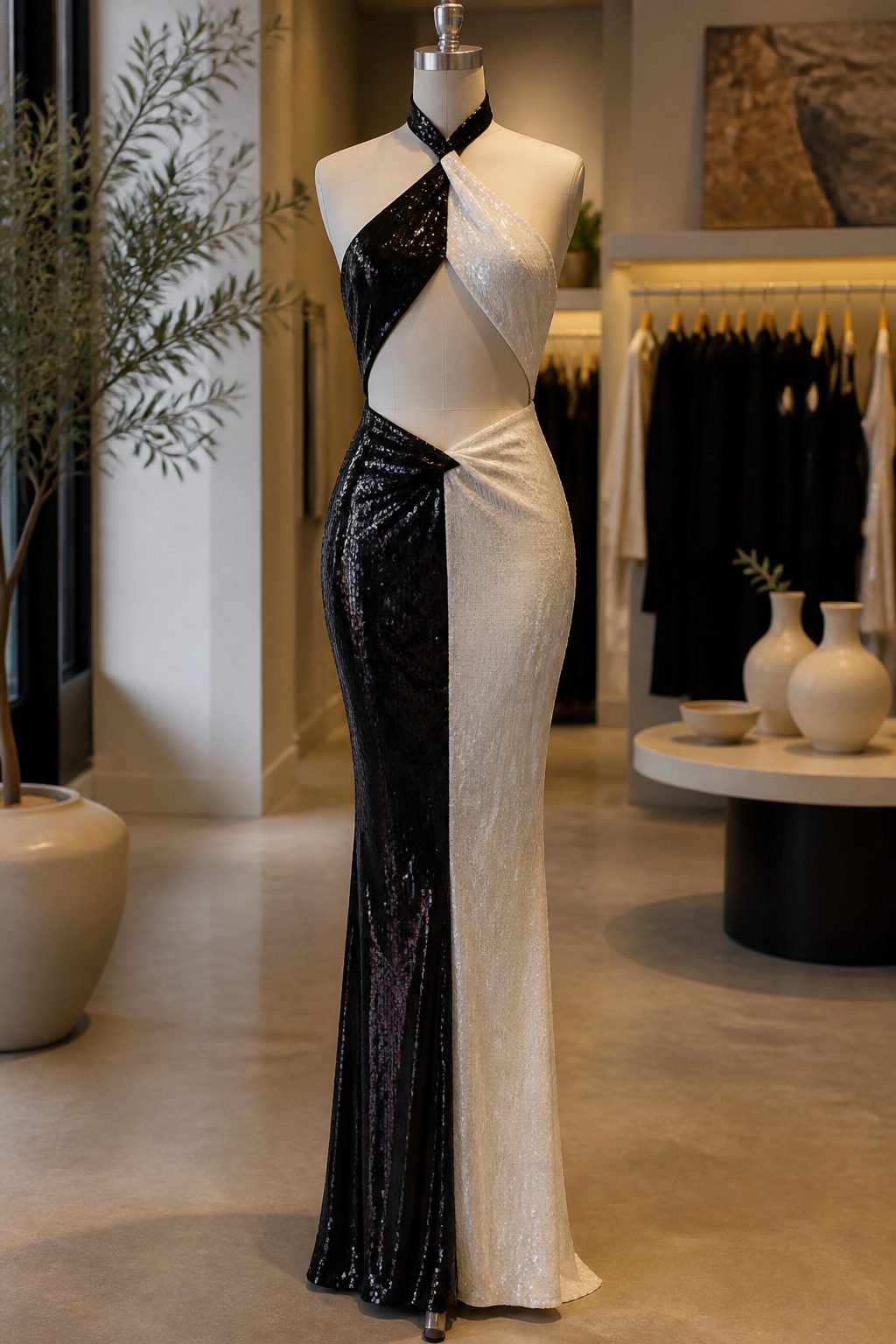
A halterneck maxi with sequin contrast panels and strategic cutouts reads formal without the stiffness of a ballgown. The neckline does the heavy lifting here: instead of straps pulling from the shoulders, the weight distributes across the back of the neck and upper spine. For anyone who gets red marks or aching trapezius muscles from standard shoulder straps by the end of a wedding reception, this is the detail that lets you last until the last song.
The cutouts need placement that hits at your natural waist or just below the ribs, never at the widest point of the hip. Sequin panels placed vertically along the sides or in a V from neckline to waist create the same narrowing effect that colorblocking does in day dresses, but with the texture and light reflection that works under chandeliers.
The halter tie or clasp sits high and tight, so hair worn up is practically required; a low bun or chignon keeps the line clean and shows off the back, which is the whole point of this silhouette. Skip a necklace entirely. Earrings can go slightly bigger than you might otherwise risk, since there is no competing detail at the collarbone.
Bandeau Mini Bodycon
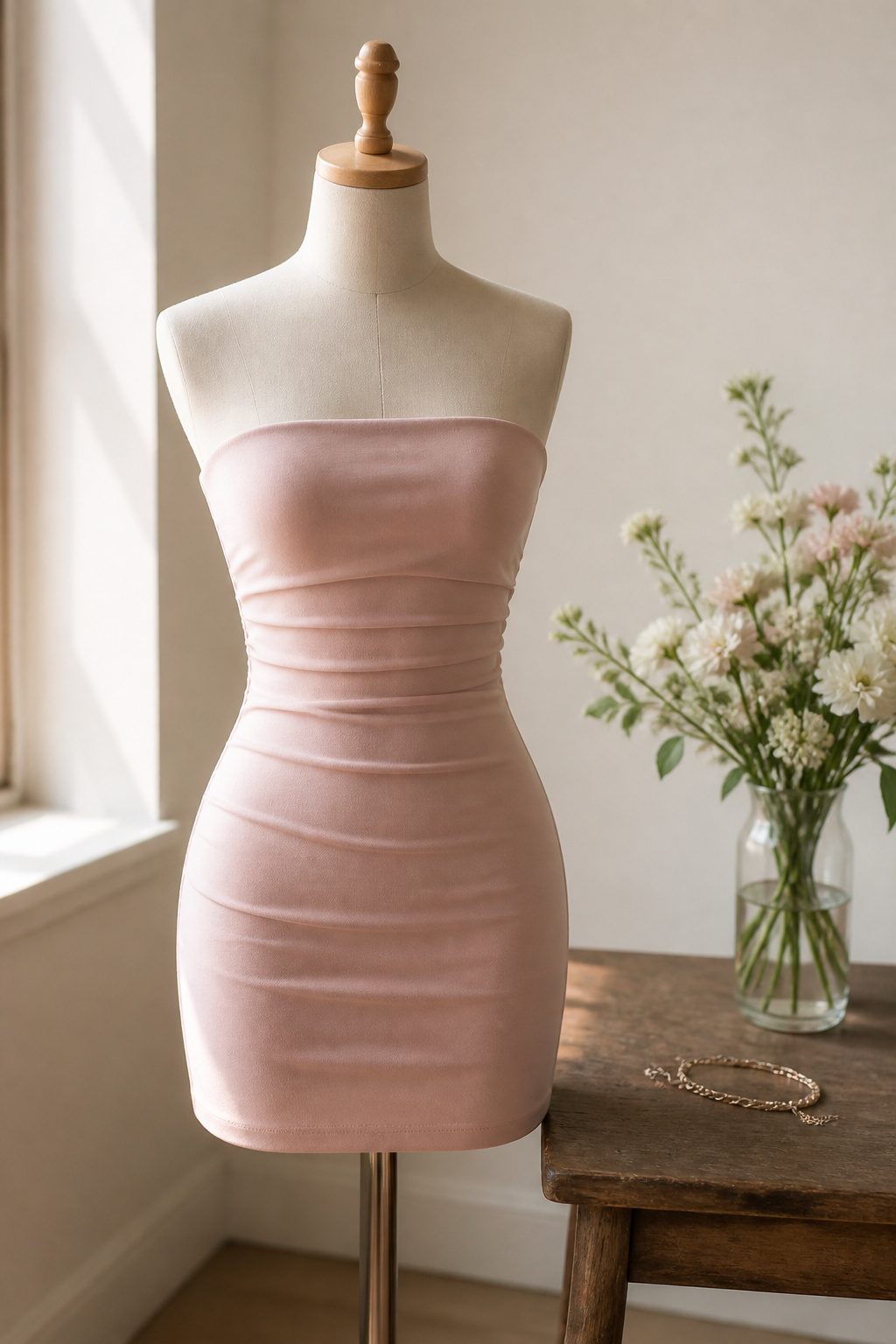
The bandeau mini bodycon sits at the cleanest end of the spectrum: no straps, no panels, no texture interrupting the line. A light pink version runs $24.00 before the TAKE20 code drops it to $19.20, which puts it among the lowest price points across the 311 bodycon styles available. That simplicity is what makes it work as a foundation piece. Without ruching or lace or cutouts competing for attention, the dress becomes a blank slate for whatever you layer over it or pile onto it. I have seen this shape survive trends that killed its more decorated cousins precisely because there is nothing to date it. The risk is obvious: a strapless bandeau cut on a body-hugging silhouette leaves nowhere to hide. Fit has to be exact, or the whole thing reads as a sizing mistake rather than a choice. The bandeau mini demands either a flawless fit or the confidence to wear one that is slightly off anyway, and most of us land somewhere between those two poles.
One Sleeve Trim Detail Mini
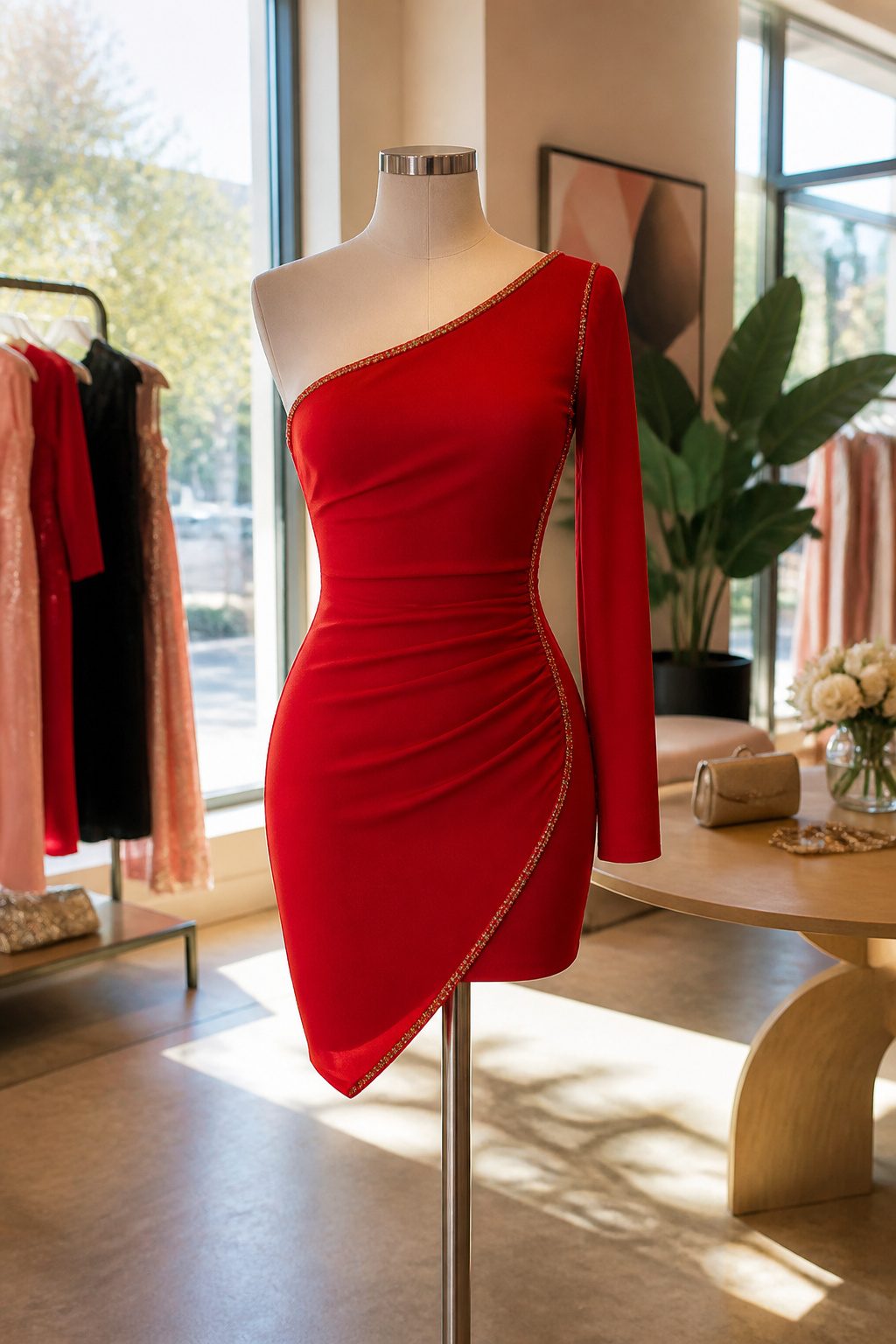
Asymmetric sleeves only work when the rest of the look commits to the imbalance rather than fighting it. A single-sleeve mini with trim detailing already has a strong diagonal line running from the covered shoulder across the body, so the styling needs to reinforce that direction.
Keep the arm bare and the neckline clean on the open side. A bracelet or stacked cuff there draws the eye to the intentional emptiness and makes the single sleeve look designed rather than accidental. Earrings should stay on the sleeved side only; symmetry in jewelry undercuts the whole point.
The hem of a mini this short already breaks the horizontal plane, which helps. Shoes should continue the vertical push: a pointed toe or slim heel line keeps the silhouette elongated, while anything chunky or strappy across the ankle chops the leg and turns the dress into a costume.
For coverage, a cropped jacket works if it ends right at the waist and stays open; anything buttoned or longer fights the sleeve and creates a visual traffic jam at the midsection. The trim detail on the dress is doing enough work. Let it.
Halterneck Lace Corset Detail Mini
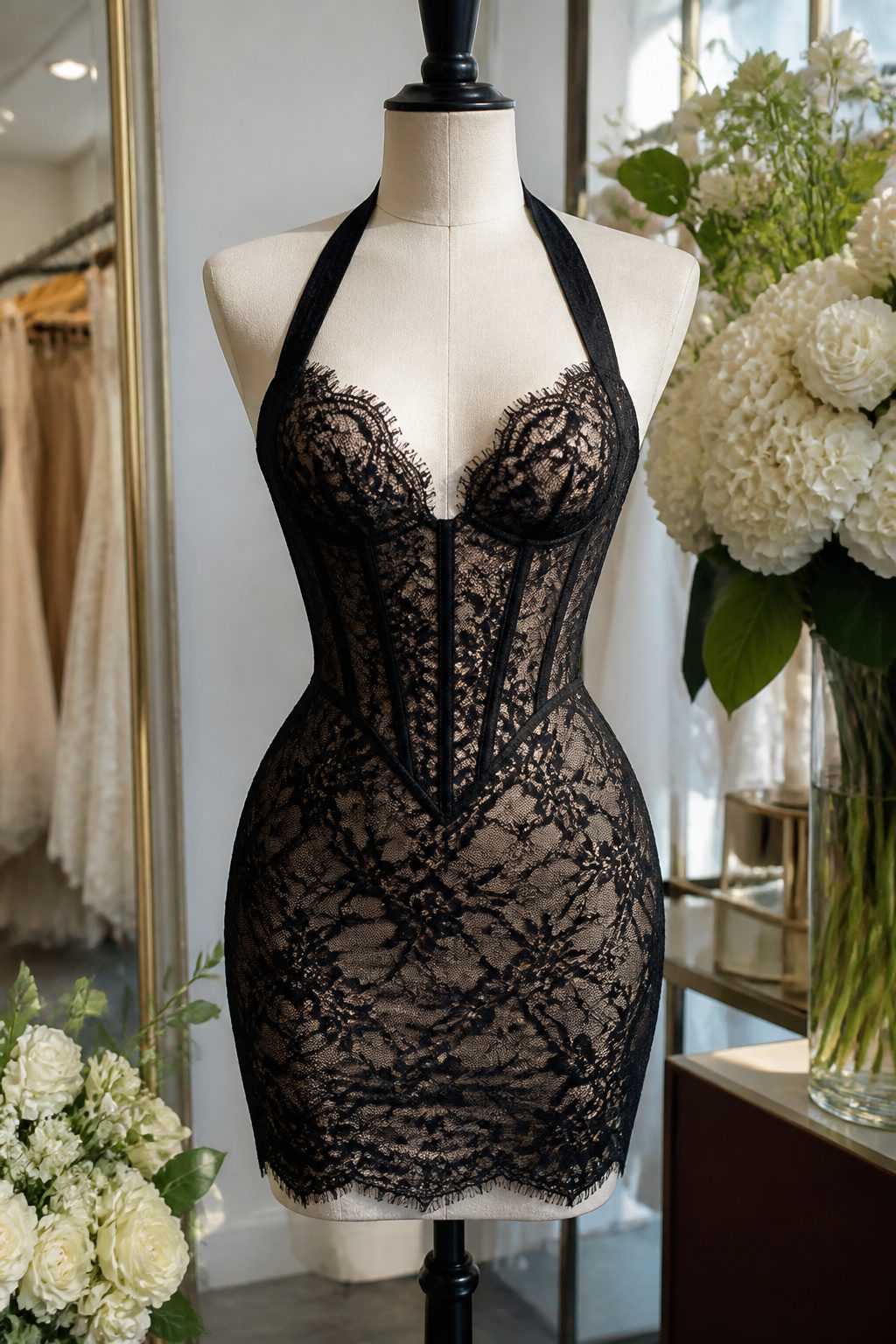
Lace overlay on a halterneck mini reads romantic until the boning starts digging in. Functional corsetry, with steel or plastic stays and lacing that actually cinches, changes your silhouette and your breathing. Decorative lacing stitched flat onto mesh or lace gives the same visual line without the squeeze. The difference matters most when you sit down to dinner.
The halter cut keeps shoulders bare, so the neckline does the visual lifting. Corset boning here runs vertically through the bodice, usually stopping at the waist seam where the skirt takes over. That structure can gap at the ribcage if the proportions are wrong for your torso length, halter or not.
A mini length with this much detail on top already reads as statement dressing. Sheer lace panels at the waist or neckline add texture but risk cheapening the whole piece if the underlay is the wrong shade, too opaque, or cut without enough seam allowance to lie flat. I would skip the nude-for-everyone lining and look for a tone that actually disappears against your skin.
For styling, the halter leaves no room for a standard bra. Strapless works if the bodice is structured enough to hold it in place; otherwise the dress needs built-in support or you’re adjusting all night. Hair up shows off the neck, but a low knot or pony keeps the line clean without competing with the back detail.
Scoop Neck Trim Detail Maxi
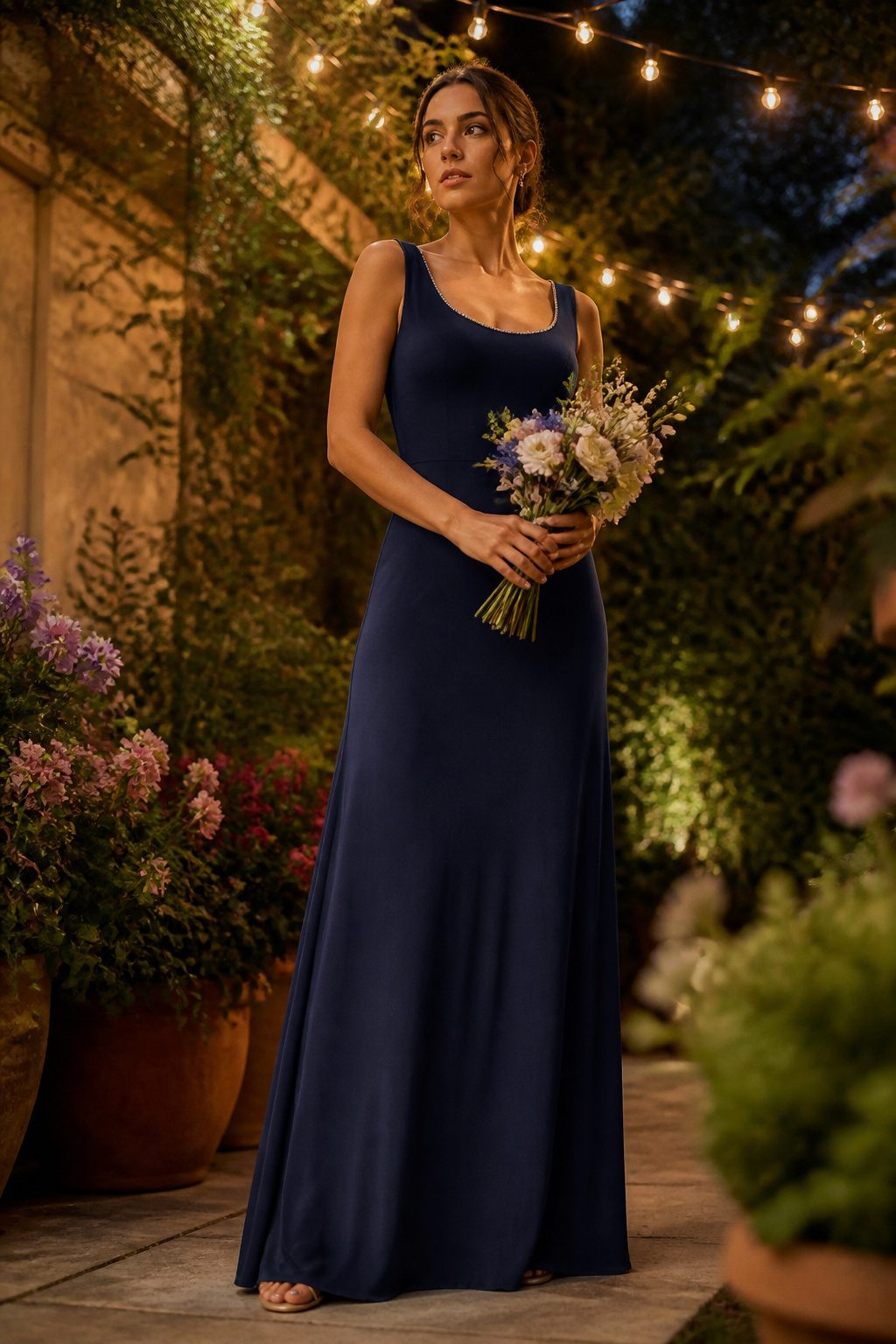
A floor-length maxi in bodycon fabric reads evening immediately, but the scoop neck and trim detailing on this style pull it back from overtly formal territory. The neckline sits lower than high-neck alternatives, which matters if you are wearing your hair up or carrying a statement earring. That open curve at the throat breaks up the long vertical line of the maxi length so the whole piece does not flatten into a single column.
The trim detail runs as a narrow visual border, usually at the neckline and arm openings, and it gives the eye something to follow. Chocolate brown is the color that keeps showing up with this construction, and it works because the trim creates enough contrast within the dress that you do not need to add a belt or a necklace to define the shape.
The scoop sits low enough to need a specific strap plan, so test your undergarment before the event, not the morning of. A high-neck maxi lets you ignore that question entirely; this one does not. The trade is worth it if you have a shorter neck or a fuller bust, since the open line adds length where a closed neckline would crowd.
High Neck Open Back Bodycon Mini
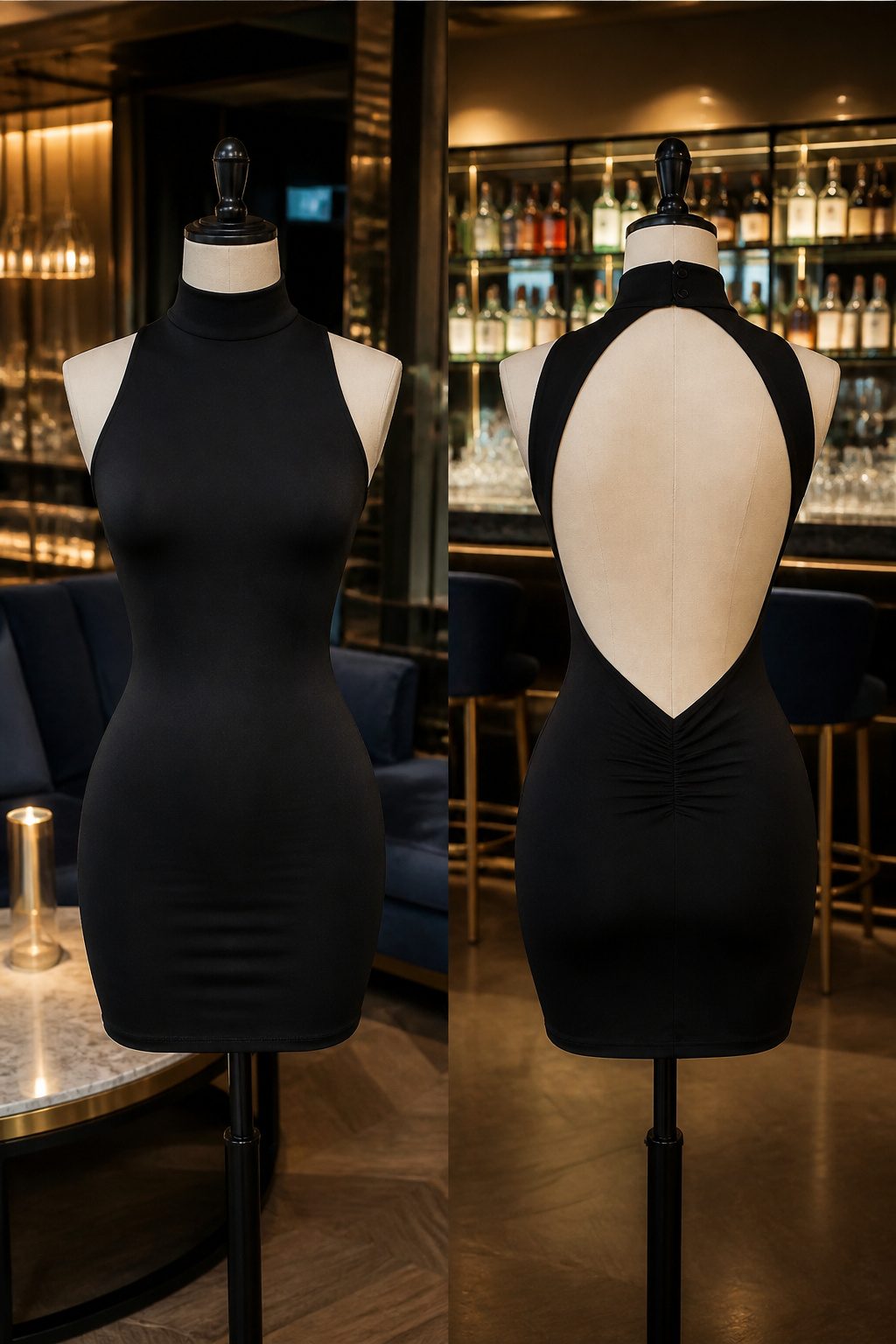
A high-neck mini with an open back gives you coverage where people first look and exposure where they don’t. The neckline sits close to the throat, so the dress reads almost conservative from the front, then you turn around and the fabric drops away entirely. That contrast is the whole point of the cut, but it also creates a problem nothing else in your closet has.
The bra you need is one with a low-back converter or a built-in longline band that wraps around your waist instead of riding up to your shoulder blades. Standard straps show, and even a racerback sits too high. Stick-on cups work only if the dress fabric is thick enough to hide the edges; thin bodycon knit will trace every outline. In that case, a backless bodysuit with a built-in underwire is the more reliable fix, though it adds a layer that can shift under tight fabric.
The mini length keeps the back from feeling too formal or too bridal. You are showing a lot of skin, but the high neck and short hem balance each other so the exposure reads as deliberate rather than accidental. I think this is the bodycon style that works best on women who are self-conscious about arms or collarbones but still want something event-appropriate. The coverage you keep matters as much as the skin you show.
High Neck Scoop Back Mini

The high neck keeps bodycon dresses office-appropriate from the front while the scooped back adds enough evening detail to skip an outfit change. How deep that scoop goes changes everything. A shallow curve, landing just below the shoulder blades, reads as a design detail rather than skin; pair it with a blazer and it works for a client dinner where you’d still need to turn around for introductions. Deeper scoops that dip toward the waistband shift the whole piece into after-hours territory, the kind of thing you reach for when the event has a cocktail code but you do not want to compete with the actual gowns.
The mini length here is doing specific work. A longer hem with this much back exposure can feel uncertain, like the dress cannot decide which element to commit to. Short and covered above, open below: the contrast is the point. Tights change the calculation entirely. Sheer black keeps the line leg-lengthening; opaque or patterned ones drag the eye down and fight the clean back detail. In cooler months, a cropped cashmere crew worn backward over the dress gives the scoop something to frame, though that only holds if the neck sits high enough to hide the collar. Most do not, so a turtleneck layer underneath tends to bunch. Skip the necklace entirely. The high neck is already doing the work, and anything that draws the eye upward just highlights where the fabric stops.
Long Flared Sleeve Cut Out Mini
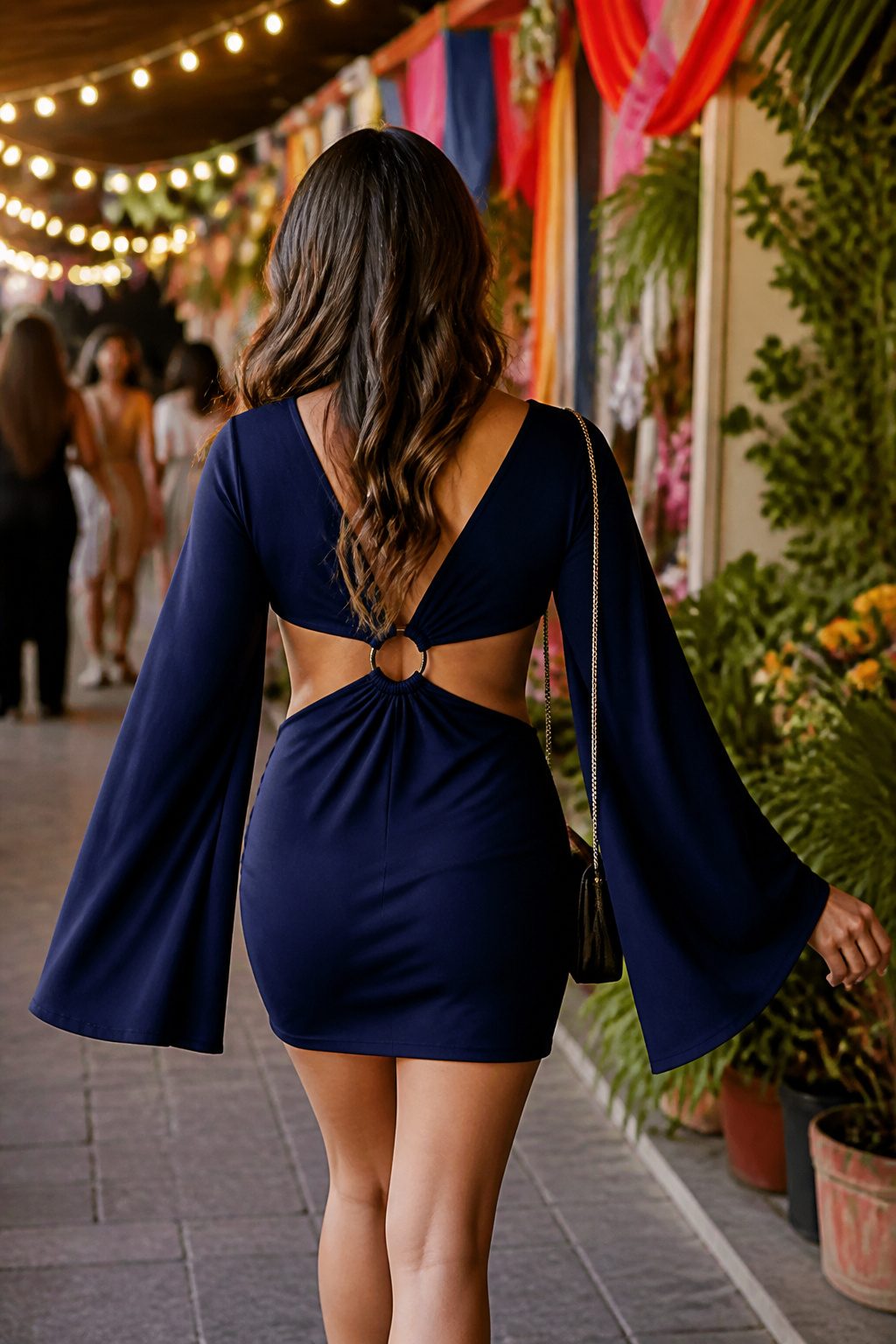
Long flared sleeves on a bodycon mini already pull the eye upward, but adding torso cutouts turns that vertical line into a deliberate frame. The fabric gaps land at the waist or just below, which breaks the solid stretch of a typical bodycon and gives the silhouette somewhere to breathe. In practice, the sleeves do the actual work of drawing attention to those openings: their volume moves when you do, so the cutouts catch light differently with every gesture.
The combination reads as two separate ideas merged into one piece, which means the dress is doing the styling for you. Jewelry becomes optional; a bracelet or ring gets lost against the sleeve flare, while a necklace competes with the neckline where the cutouts begin. What convinced me, looking at how these read in photos versus real movement, is that the cutouts need to sit at your actual narrowest point to keep the proportions from tipping into costume. Too high and the effect is cropped; too low and the visual break shortens the leg line. The sleeve length also matters more than you’d expect: anything past the wrist and the drama starts to wear you instead of the other way around.
Strappy Lace Cup Mini
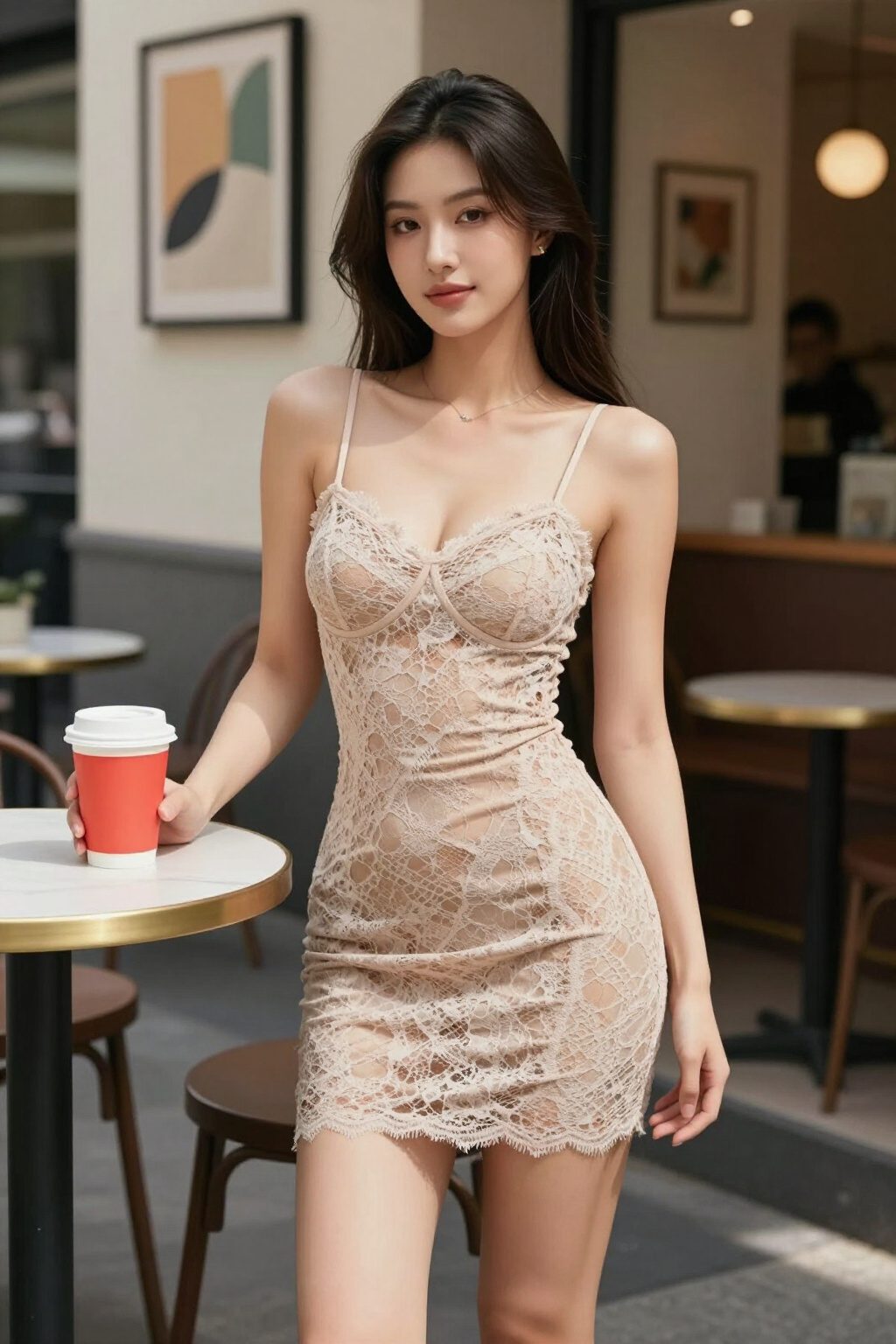
Multiple thin straps across the back and shoulders do more than look delicate on a bodycon dress with lace cups. They spread the load in a way that a single strap never manages, which matters when the lace itself is doing structural work and not just sitting there as trim. The cups need to stay put to read as support rather than decoration sliding out of place, and the strap configuration is what makes that possible.
What convinced me, reading through the options on this, is that three to five straps per side seems to be the point where the engineering actually works. Fewer than that and the weight concentrates; more and the straps start twisting or catching on hair and bag straps in a way that ruins the clean line. The lace cups sit slightly proud of the body, which means the straps have to pull from an angle rather than straight down. That angle is where shoulder comfort lives or dies. A wider-set outer strap paired with narrower inner ones lets the dress hang without the cups digging in at the underarm edge, which is the failure mode I kept seeing described.
The tradeoff is mobility. That many straps, especially if they are adjustable, create a lattice that does not stretch much. Reaching up or forward shifts the tension to the outermost strap, and after a few hours that spot can feel it. For an event where you are mostly standing or seated upright, the configuration holds. For anything involving a lot of arm movement, the look wins but the shoulders do not.
Asymmetric One Shoulder Ruched Maxi
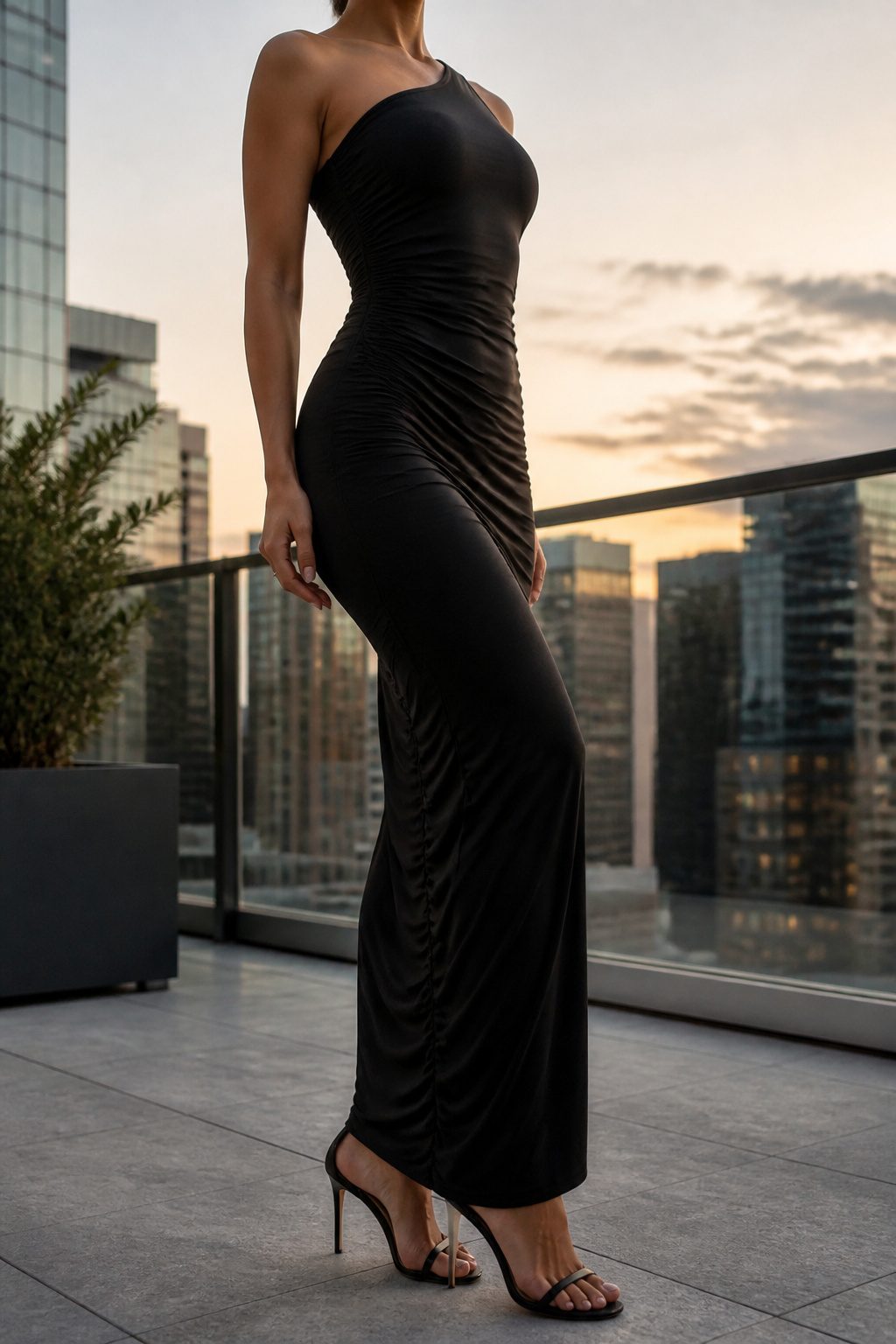
The one-shoulder maxi with ruched detailing extends the asymmetric trend to full length in a way that solves problems rather than creating them. That single bare shoulder draws the eye upward, but the real work happens in the fabric gathered along the side and torso. The ruching disguises the fit issues common in one-shoulder designs, particularly the gaping or pulling that can appear at the neckline when the single strap carries all the tension. With ruching, the fabric has built-in forgiveness; it skims over the point where the strap meets the bodice instead of pulling flat against it.
The slinky jersey used in the black version drapes well enough that the ruching does not read as added bulk, even at maxi length where more fabric could easily overwhelm a smaller frame. The asymmetric line continues through the hem, which hits at an angle rather than a straight floor-grazing edge. That slight variation matters more in motion than in stillness, and it keeps the silhouette from feeling like a standard column dress with one strap removed. For anyone hesitant about the one-shoulder trend in shorter lengths, the maxi version offers more coverage to balance the exposed shoulder, and the ruching provides the structure that a plain one-shoulder bodice often lacks.
Scoop Neck Mini Dress
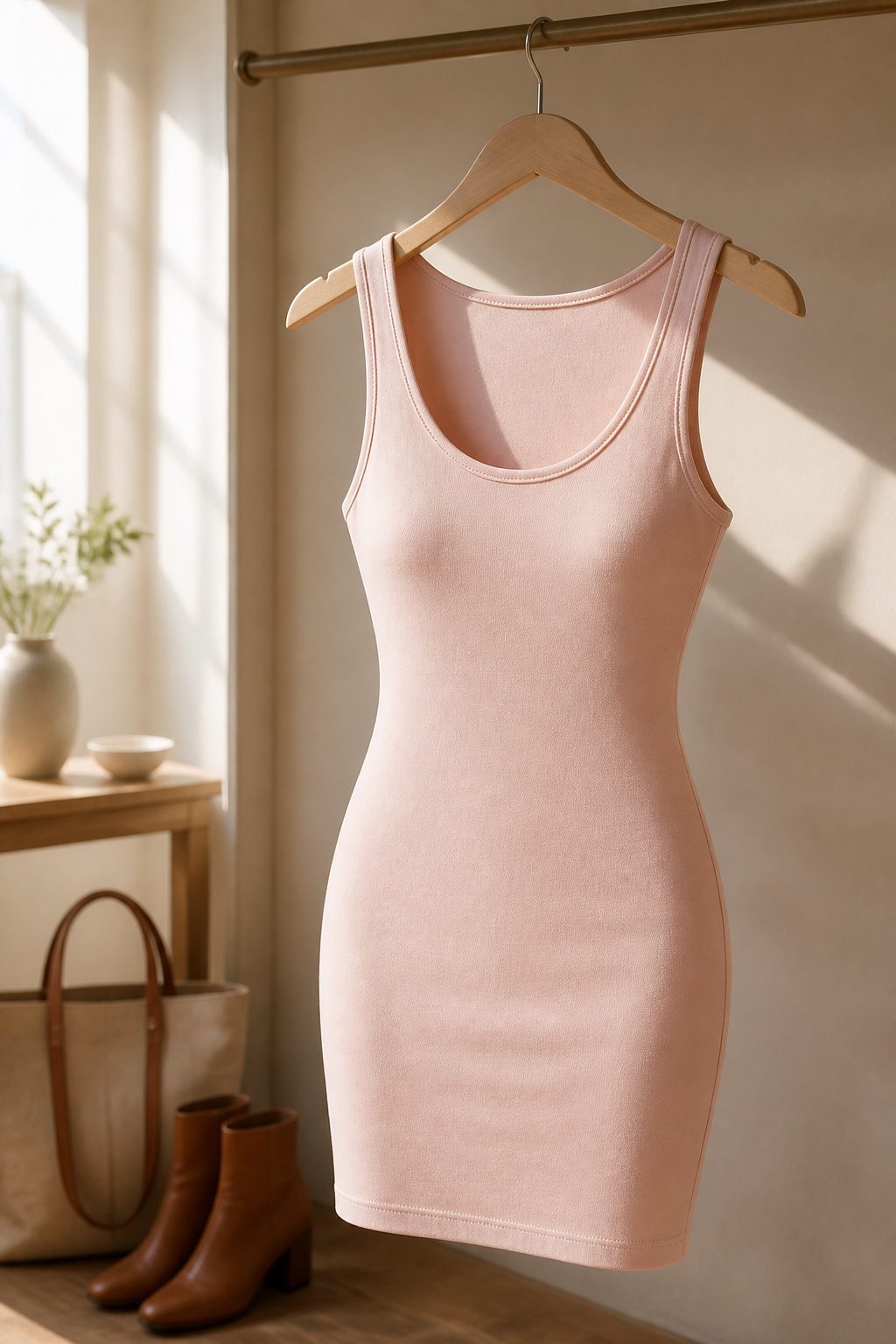
A plain scoop neck mini in a solid jersey reads quieter than its decorated cousins, and that restraint is exactly what makes it useful. The neckline sits low enough to break up a solid column of fabric without demanding a specific necklace, and the absence of trim, cutouts, or hardware means the shape does the work. In my own closet, this is the dress that gets pulled when the event is unclear: dinner where I might run into a colleague, a birthday drinks situation where someone else will be wearing sequins.
The real advantage is how it takes accessories. A wide leather belt and boots shifts it toward evening; flat sandals and a canvas tote make it a running-errands uniform. The simpler the base, the wider the range of jewelry that reads intentional rather than apologetic. A heavy chain or oversized earrings that would fight with a lace-up neckline or ruched detail sit cleanly here. Fabric weight matters more than the label: a mid-weight knit skims without clinging, while anything too thin betrays every line underneath. For that reason, I keep a seamless thong and a lightweight shaping slip in the same drawer; the dress is only as polished as what sits beneath it.
Strappy Square Neck Lace Trim Mini
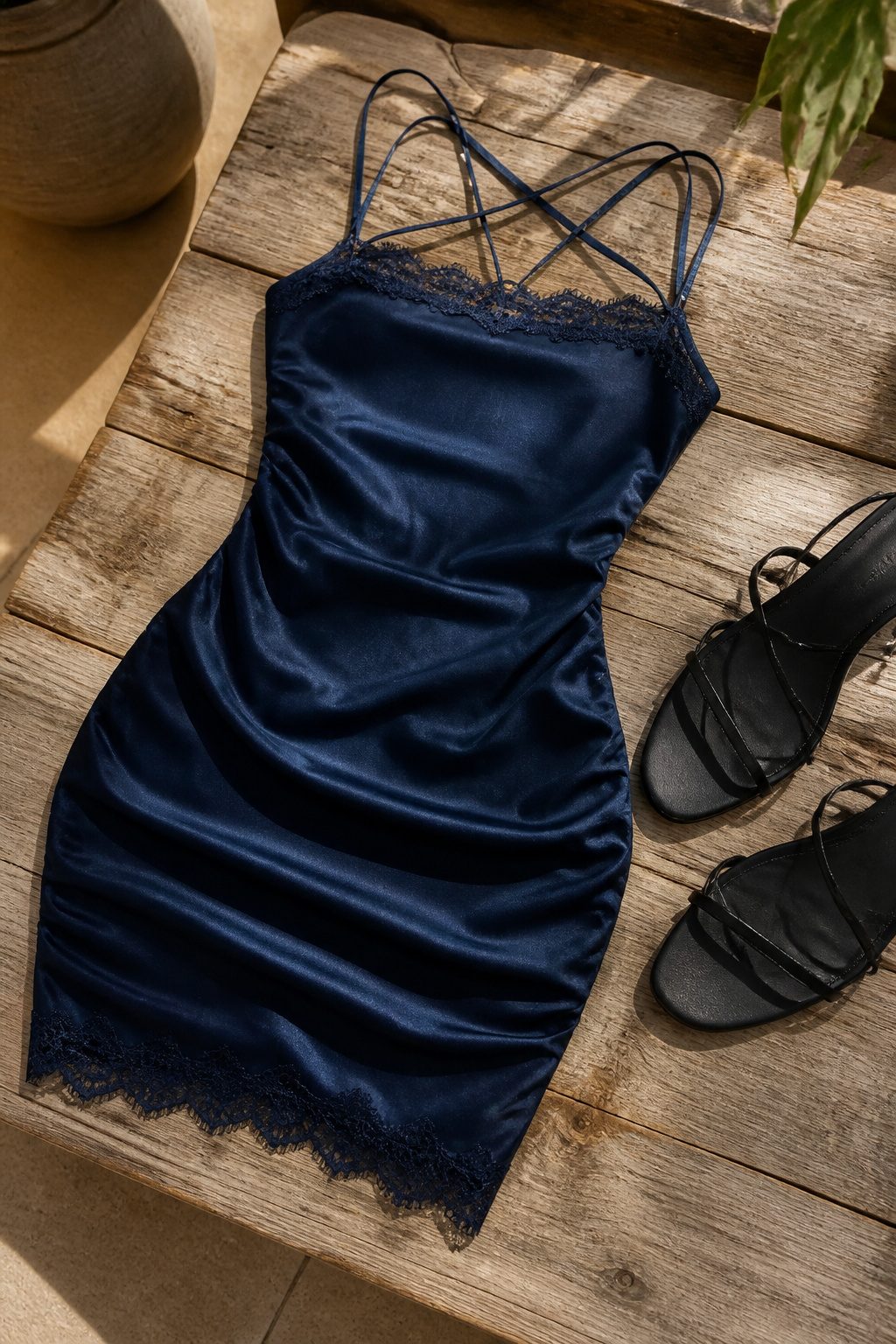
A square neckline draws a straight horizontal line across the collarbone, which sits differently than the curve of a scoop or the full circle of a round neck. That flat edge gives the strappy construction something to anchor against: multiple thin straps can fan from each corner without the visual clutter they’d create against a softer shape. The lace trim along that same edge adds the expected bodycon contrast, softening the geometry with something that reads as detail rather than structure.
On a mini length, the combination matters more than it would with more fabric below. The open collarbone and shorter hem compete for attention unless the straps do some of the work of connecting them. Lace trim helps here by carrying the eye downward without adding bulk where the dress needs to stay fitted.
What convinced me, reading through how these pieces get styled, is that the square neck works hardest on shoulders that need definition. Round necks soften; square ones frame. The lace keeps that framing from looking too severe, which is the balance this particular bodycon is built to strike.
Capped Sleeve Plunge Neck Bandage
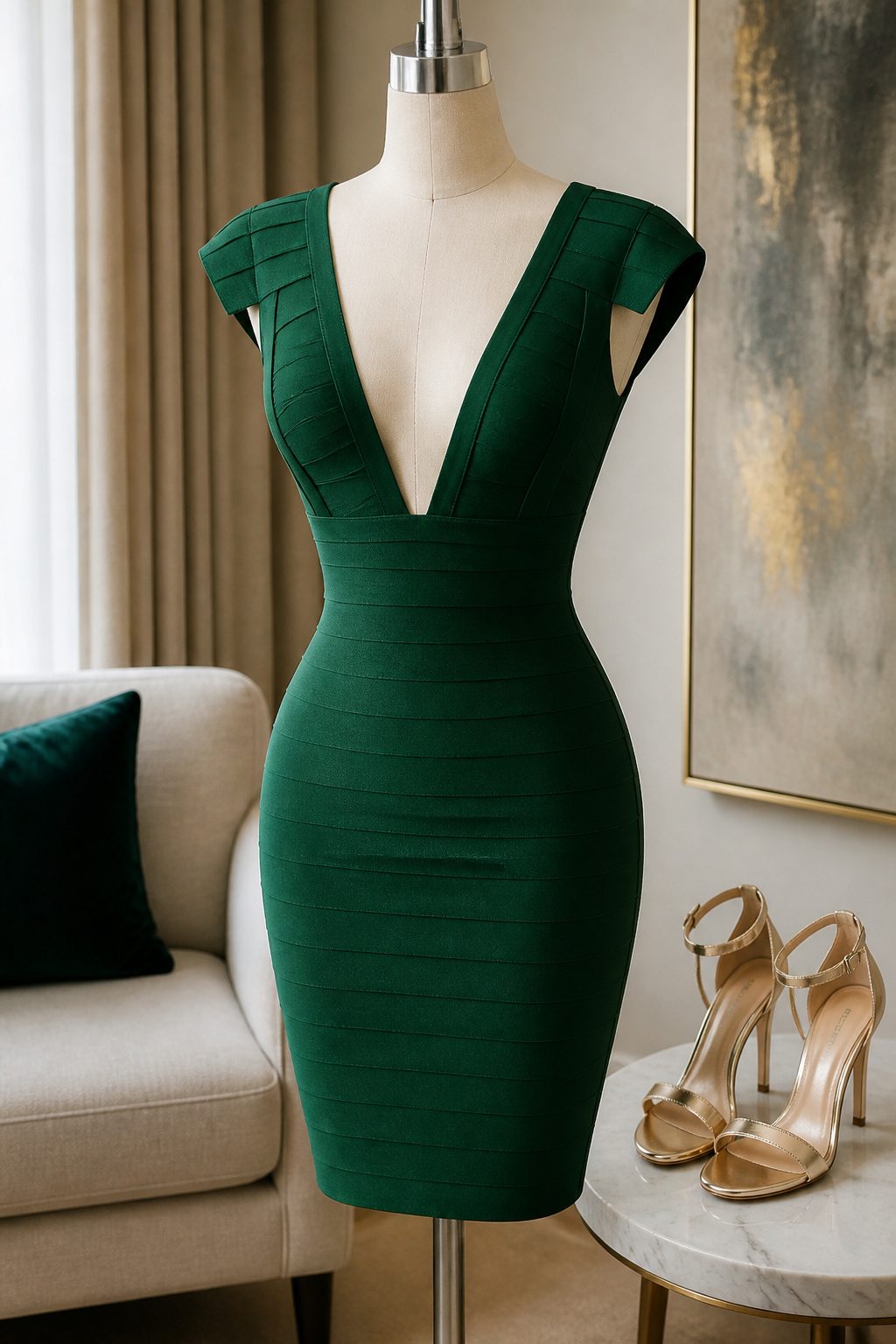
Bandage fabric works like a structured sheath rather than a second skin. Where standard bodycon jersey drapes and follows every contour, the heavier rayon-nylon-spandex weave of a true bandage dress compresses the torso into a smoother line and holds its shape through an evening of sitting, standing, and reaching for a drink. The capped sleeves on this particular cut add just enough coverage at the shoulder to balance the depth of the plunge, which otherwise can read as costume rather than confidence if the fabric beneath it lacks that architectural weight.
The mini length here is doing deliberate work. Bandage fabric at knee length starts to feel like upholstery; shortened, the proportions stay leggy and the compression reads as intentional support rather than restriction. I have seen the same neckline in lighter jersey collapse against the body by hour two, the V widening into a gap. The bandage version keeps its geometry.
Sizing runs snug by design. Most women will take their usual size or one up if the bust is fuller than the hips, since the neckline offers no structural give and the sleeves cap tightly enough to pinch if the shoulder is broad. The dress rewards a strapless bra with a low center gore, or none at all if the bandage paneling across the bust is substantial enough.
High Neck Cut Out Drape Front Maxi
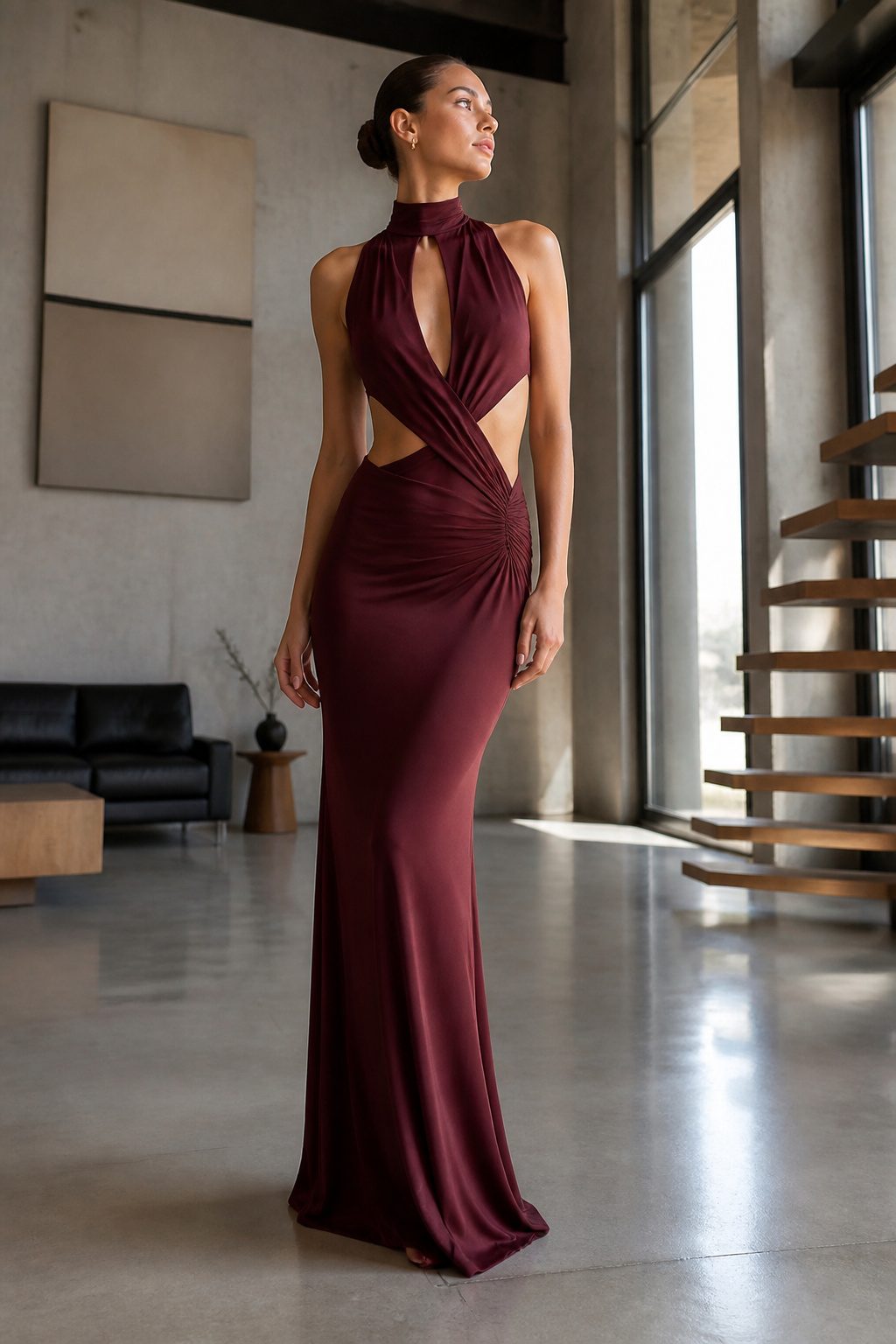
The high neck keeps the line clean up top, but the real engineering sits at the front: two cutouts framed by fabric that drapes in loose panels from the collarbone to the waist. Standing still, the drape reads almost like a built-in scarf, softening the bodycon tension without hiding the shape underneath. Start moving and the panels shift, catching air and falling back into place in a way that feels intentional rather than accidental. The drape needs enough weight to do this, or it flattens against the body and the cutouts just read as holes.
For a maxi this covered, the cutouts do the work of showing skin without demanding bare shoulders or an open back. The length keeps it occasion-appropriate, though the full coverage plus high neck can tilt severe if the fabric has no give. I’d look for something with two-way stretch at minimum, enough that the drape can fall properly and the body underneath can still breathe. A shoe with some height helps the hemline, but the dress has to be the right length to start with; pooling fabric at the ankle kills the architecture that makes this style worth wearing.
Long Bolero Sleeve Corseted Mini
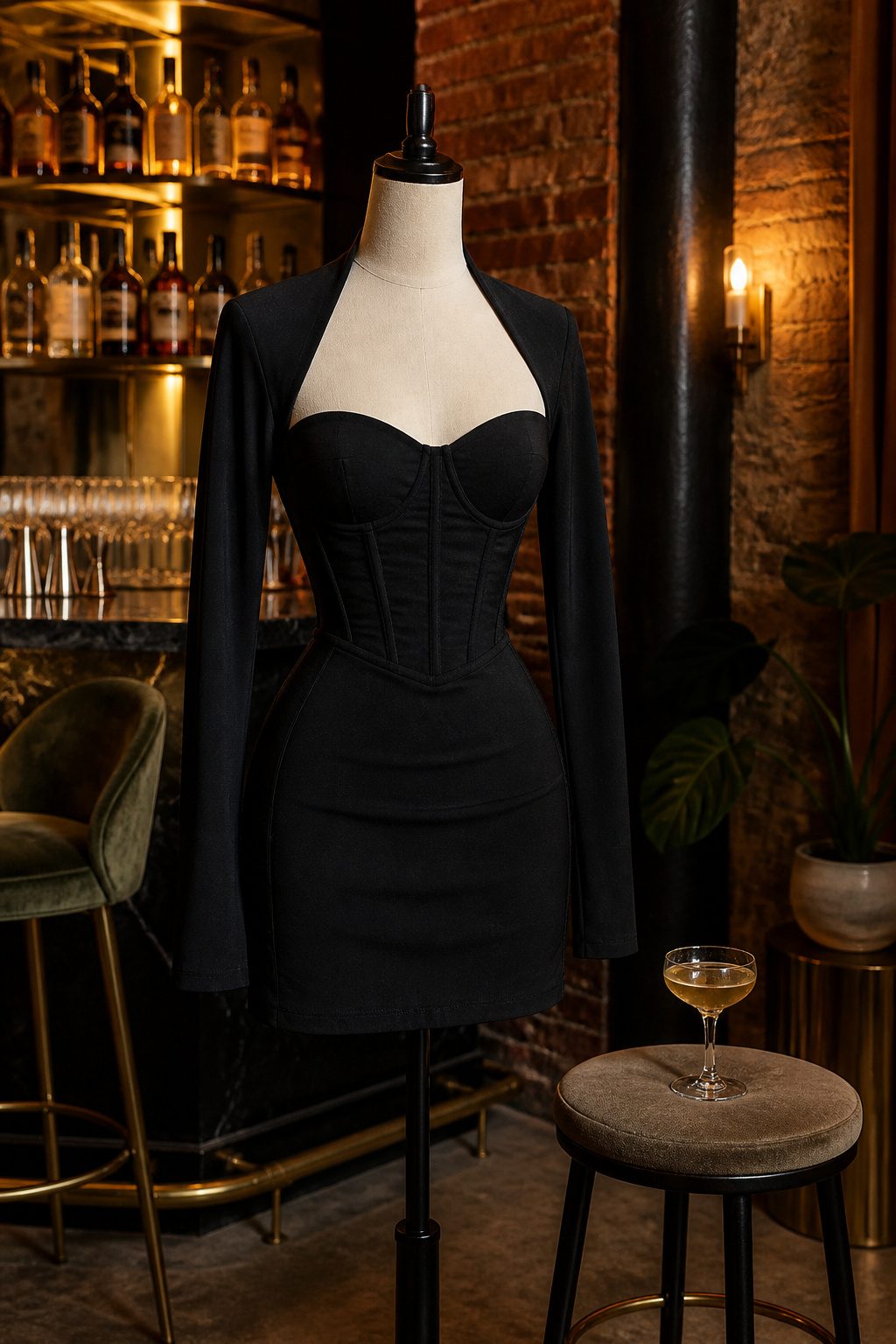
The bolero sleeve on a bodycon mini hits at a dramatic length: the sleeve ends just past the elbow, leaving the forearm bare, while the shoulder stays covered and fitted. That gap between sleeve hem and wrist is what separates it from a standard long sleeve, which runs to the knuckle or beyond. A standard long sleeve keeps the arm as one continuous line; the bolero breaks it, so the eye keeps moving between the covered upper arm and the exposed lower arm.
Corset lacing or boning at the waist works with this sleeve shape because both elements create hard structure against the stretch of the bodycon knit. The lacing draws the fabric in at its narrowest point, and the abbreviated sleeve throws more visual weight toward that center. Without the bolero cut, a full long sleeve would compete with the corset detail instead of framing it.
In practice, this combination reads evening rather than office. The sleeve length is too specific to layer under a standard jacket, and the corset detail resists being hidden. For someone building from pieces already owned, this dress wants minimal jewelry, a shoe that stays below the ankle, and no competing neckline.
Sleeveless Racer Neck Double Layer Ruched Mini

A sleeveless racer neck keeps the line clean across the shoulders, which matters more than it sounds when the rest of the dress is doing this much work. The double layer is the real engineering here: two thin sheets of fabric read as one substantial piece, so you get coverage without the bulk of a lined dress, and the inner layer stays put even when the outer one shifts. Ruching at the sides is gathered on a hidden channel, which means you can tug the hem up or let it down an inch or two depending on what you’re covering that day. The racer neckline sits high enough that a standard bra strap shows, so a strapless or adhesive cup works better; the armholes are cut deep but not wide, so gaping at the side is minimal if the ruching is adjusted to sit flat against your hip. I’ve seen this construction go wrong when the double layer is two identical fabrics, both opaque, which reads heavy and warm; the better versions pair a slightly lighter inner layer with a more structured outer one, so the dress holds its shape without turning into shapewear. For length, the ruched mini lands at mid-thigh when relaxed and upper thigh when drawn up, which is a real range, not a marketing claim; test it sitting down before you decide where to set it.
Halterneck Trim Detail Mini
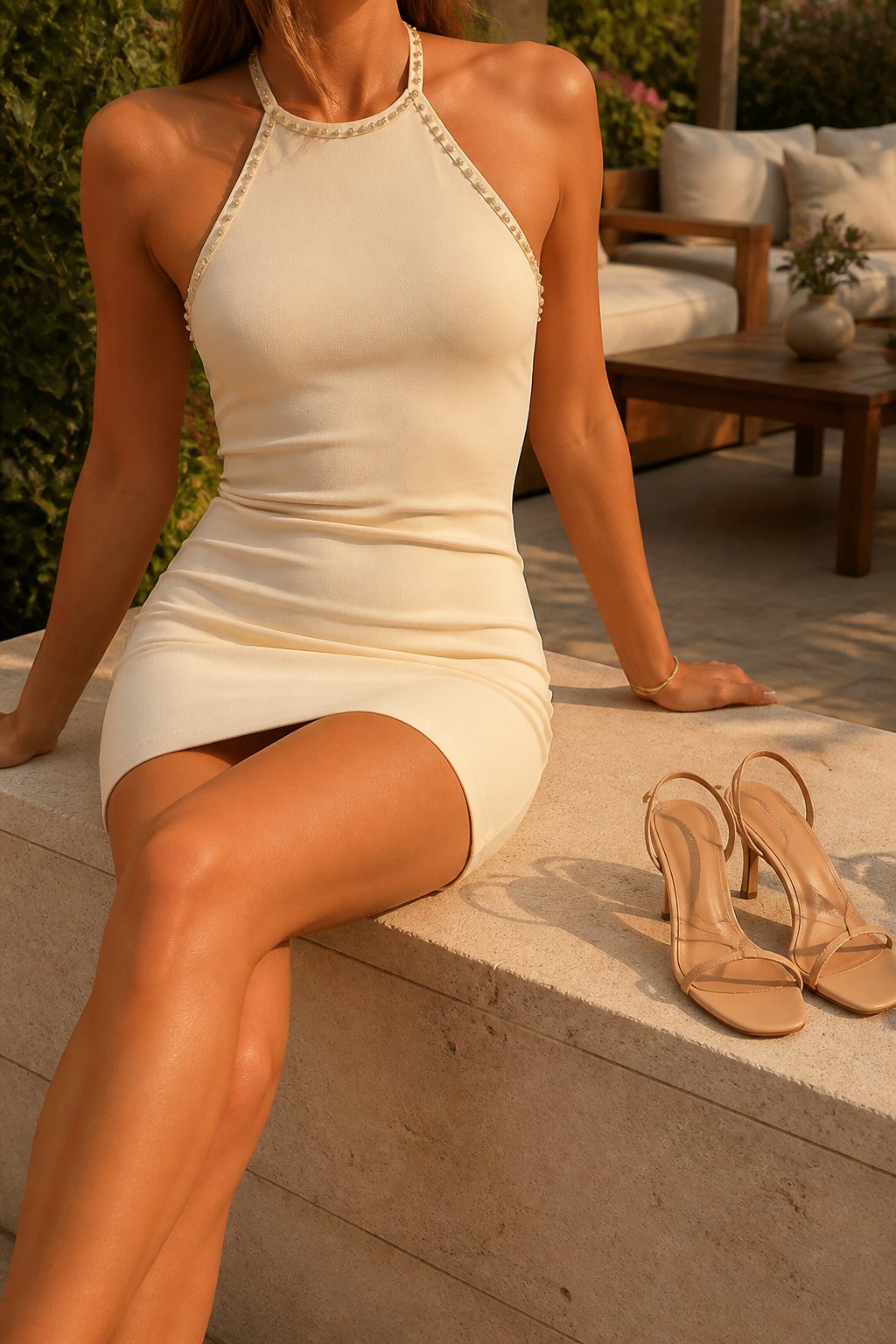
A halterneck mini with just a trim line at the neckline or hem sits right where most people actually need it: dressy enough for a dinner reservation, plain enough that you are not competing with the bride at a shower. The trim does the work of jewelry, so you can skip a necklace and let the cut speak.
Keep the trim narrow, under an inch, or the dress starts reading costume instead of clean. I have seen wider bands turn a sleek halter into something that feels like resort wear, which is fine for a beach club but less so for a city birthday. The narrow border also draws the eye up toward the shoulders, which is the whole reason you picked a halterneck to begin with.
For shoes, this detail level calls for something equally restrained. A simple strappy sandal or a low slingback works; anything heavy or overly embellished fights the line. The same restraint applies to a bag. A small structured clutch in a color pulled from the trim, not matched exactly, finishes without trying too hard.
Halterneck Plunge Front Ruched Mini
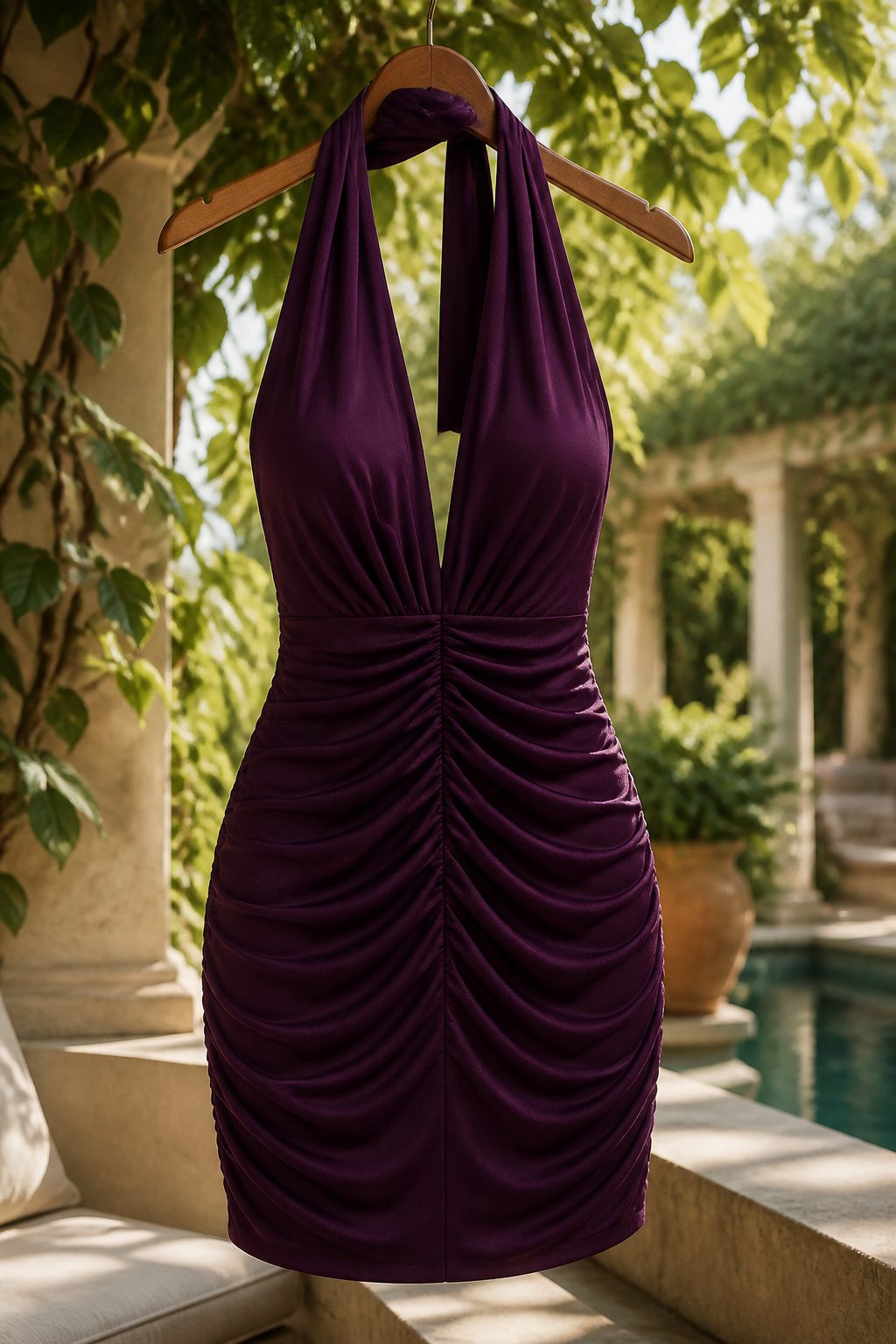
A halter strap changes the math on how low a front plunge can actually go. With no shoulder fabric to hold the neckline up, the tie sits at the base of the skull and pulls the whole bodice upward, which means a deep V here stays closer to the body than it would on a strapless cut. The ruching across the torso helps too; it gives the fabric enough grip that the plunge doesn’t gape when you move. At $36.00 in black, this is the kind of piece that works for a dinner where you want coverage from the back and openness in front without constantly checking that everything stayed put. The ruching runs from bust to hip, which forgives a lot of fit issues that would show in a flat knit. I’d wear it with something structured on top, a cropped blazer or a heavy pendant that draws the eye down the line of the neckline, rather than letting the halter sit alone where it can read a little bare.
Long Contrast Lace Sleeve Cut Out Mini
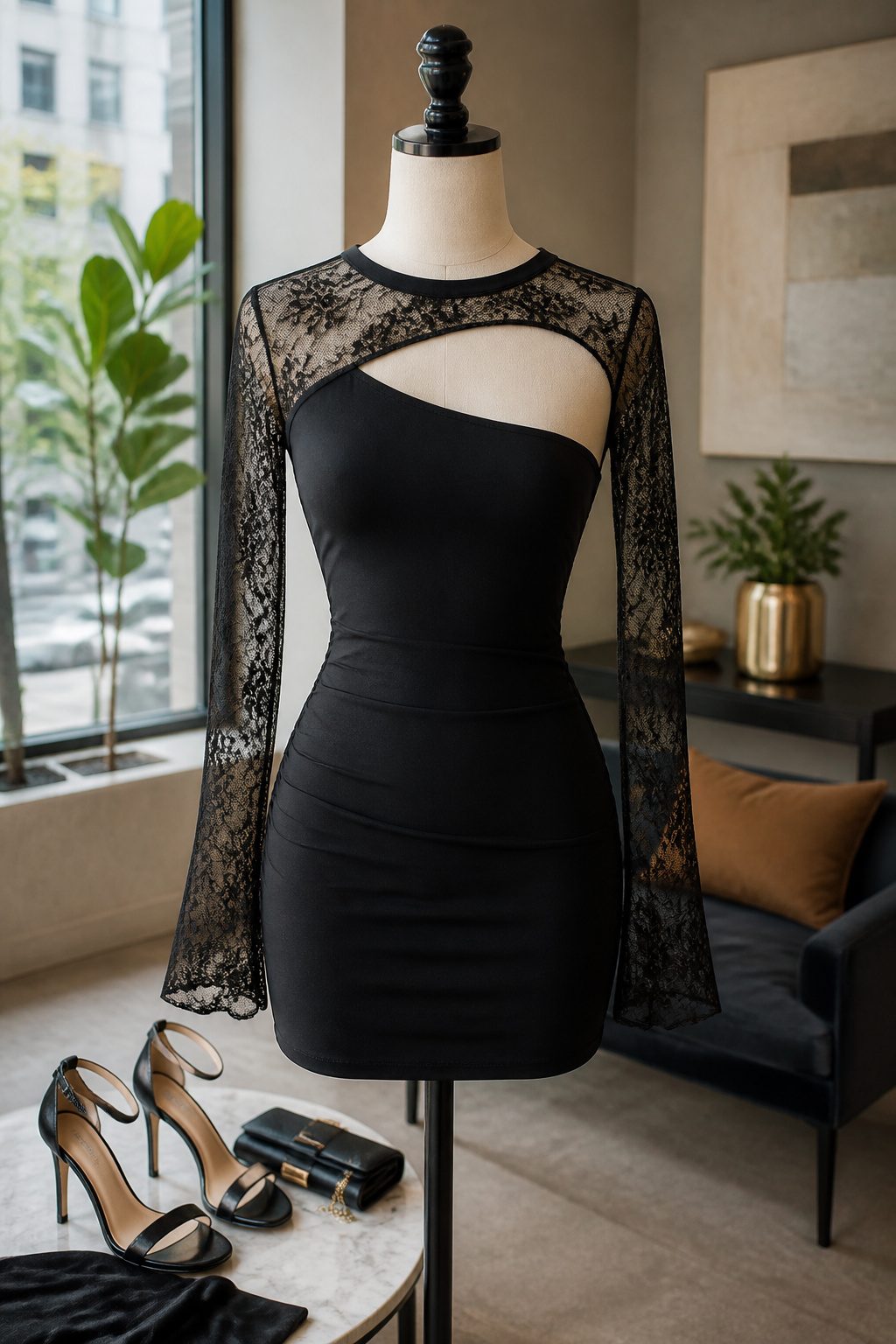
Lace sleeves on a bodycon dress behave nothing like solid fabric, and that difference is what makes or breaks the look. The open weave stretches differently under your arm, so the sleeve rides higher and settles in a slightly different place than a lined sleeve would. The cutouts at the torso add another variable: every time you raise your arm, the lace pulls the surrounding fabric, which means the dress shifts more as you move.
The contrast in texture is doing visual work that a single fabric cannot. Where the bodycon knit grips, the lace floats, so the eye reads the covered arm as longer and leaner against the bare shoulder or cutout beside it. That only holds if the lace is actually sheer; opaque lace defeats the purpose and reads as a colorblock mistake.
Fit-wise, the sleeve needs to be cut closer than you would expect. Lace has no recovery, so a sleeve that feels snug in the fitting room will loosen to the right drape after an hour of wear. If it hangs even slightly off arrival, the cuff will gap and the whole arm looks like an afterthought.
High Neck Trim Detail Cut Out Maxi
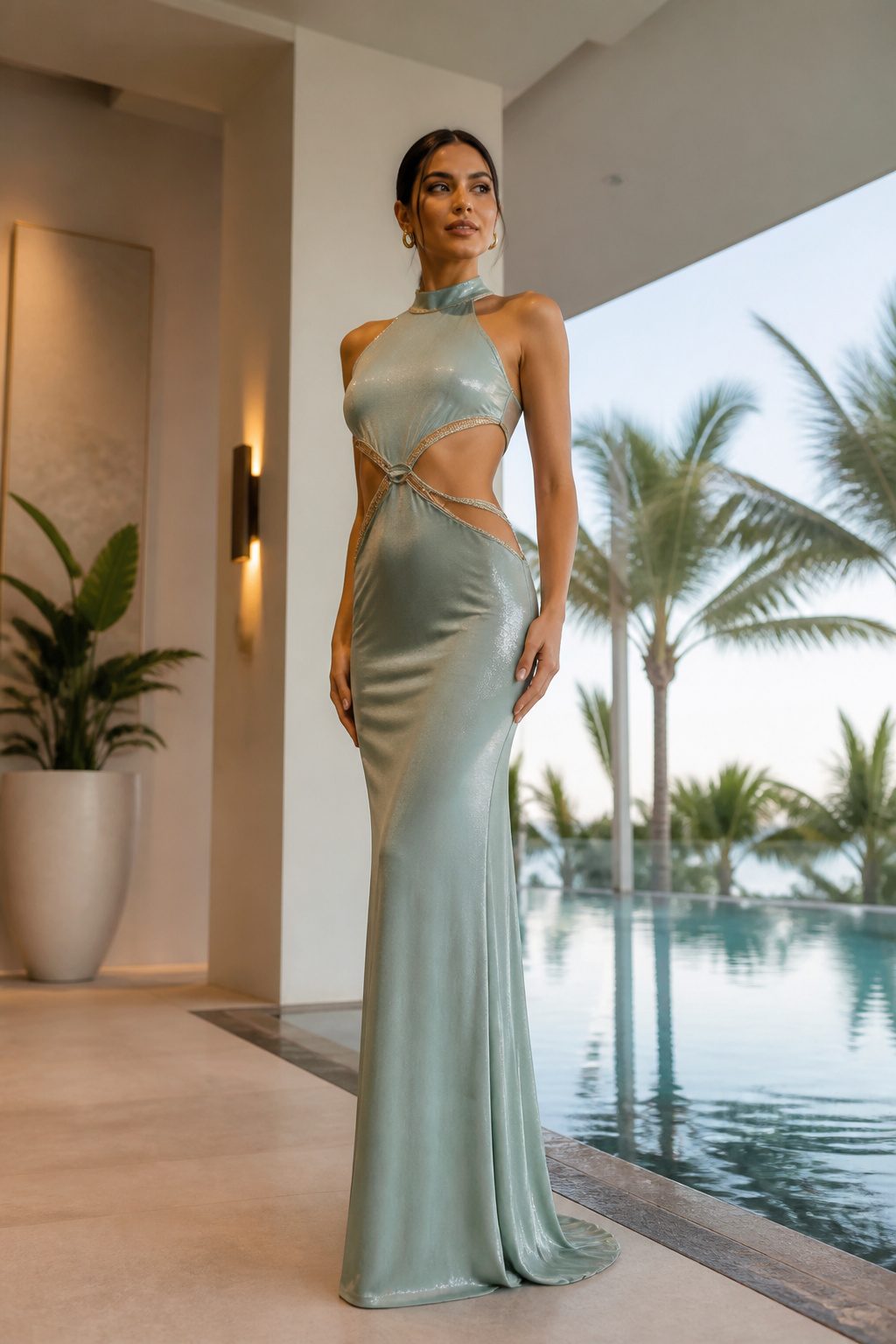
A high-neck maxi with trim embellishment and cutouts spreads its detail across the full length of the dress rather than concentrating it at one point. The trim acts as a visual guide, drawing the eye to each cutout placement in sequence so the body is framed section by section. This distribution matters because bodycon fabric follows every contour; without strategic interruption, the silhouette can read as one uninterrupted block.
The cutouts themselves land at points where the trim creates natural resting places for the gaze, typically at the neckline, waist, or lower back depending on the specific design. The trim line tells you where the eye will travel before you even put the dress on, which makes this style easier to style with intention than a plain bodycon. A simple sandal keeps the vertical line clean; a necklace competes with the high neck and usually loses.
Sleeveless High Neck Ruched Mini

A sleeveless high neck ruched mini shifts the whole balance of a bodycon dress. The high neck still draws the eye upward and frames the face, but losing the sleeves opens the shoulder line completely. That extra skin changes the proportion from covered-up to something closer to a balance between structure and exposure.
The ruching matters more here because there is no sleeve to break the silhouette. Gathered fabric along the sides or across the bodice does the shaping work that a seam alone cannot, especially in a slinky or beige-toned jersey where every line shows. I have seen versions in beige slinky at $32.00 and a racer-neck double-layer ruched side style at $49.00; the extra layering in that second one sits differently against the body, less cling and more drape.
The high neck without sleeves reads formal above, casual below — the mini length keeps it from going too office. For someone who finds a long-sleeve high neck restrictive or too warm, this is the compromise. The cut works on broader shoulders because the bare arm creates a vertical that the eye follows down, and the ruching at the waist keeps the torso from looking like a single block.
Styling it is simple. A shoe with some height helps the leg line, since the high neck shortens the neck visually and you want the counterbalance. A cropped jacket works if you need coverage; anything past the hip fights the ruching and adds bulk where the dress is trying to create shape.
Strappy Sheer Panel Draped Front Ruched Maxi
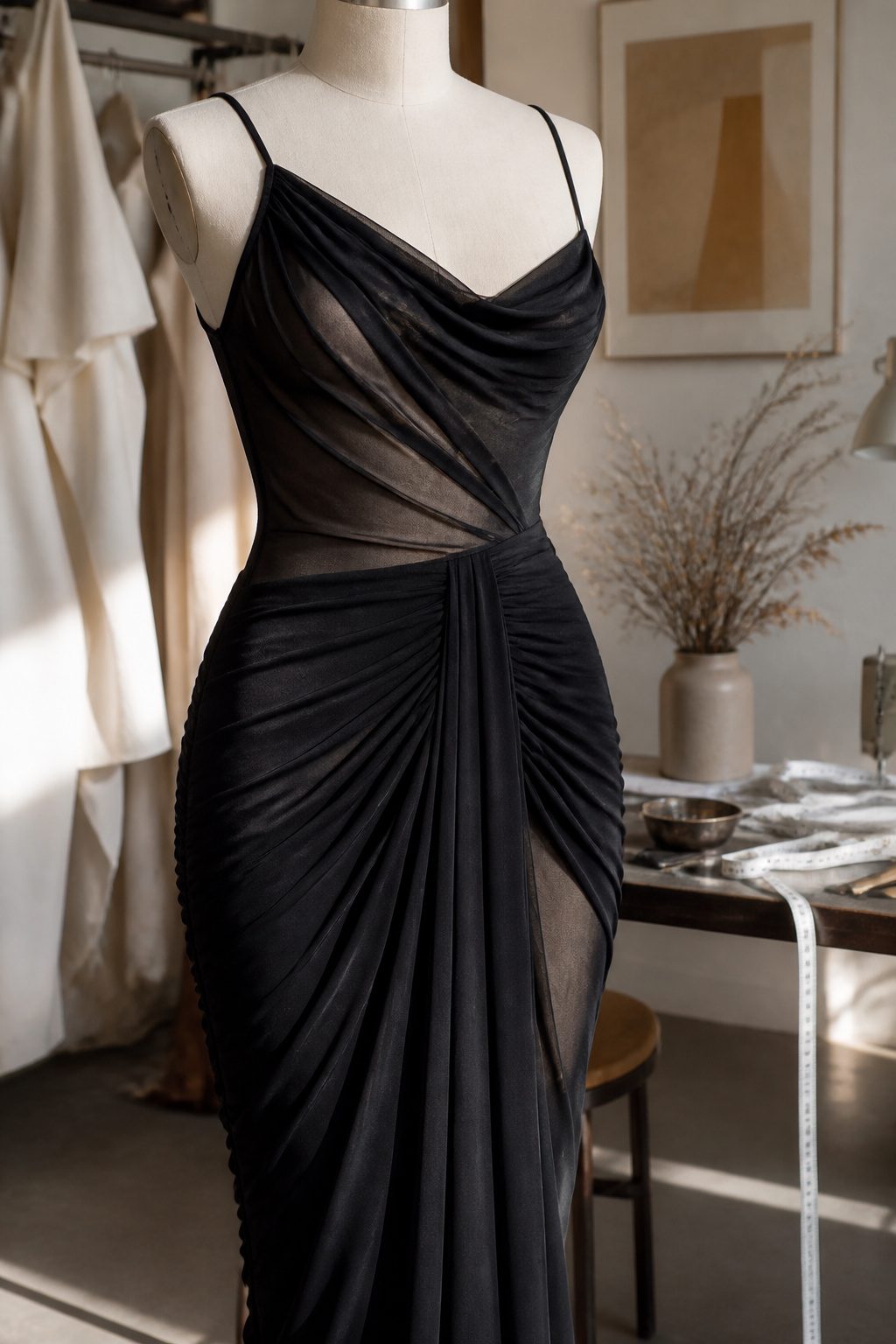
Sheer panels on a maxi bodycon dress read dramatic on a hanger and risky in practice. The lining underneath is what decides whether you wear it or shelve it. A built-in nude-tone slip from neckline to hem lets the mesh or chiffon overlay do its job without putting skin on display. Some versions attach the lining only at key points so the outer layer floats, which looks expensive until you realize the sheer gaps shift when you walk.
Multiple straps add another variable. They look architectural, but they also create edges that can dig or slip depending on shoulder slope. The draped front fabric helps here, adding weight to the bodice so the straps stay put rather than migrating toward your neck. Ruching through the torso does the actual fit work, forgiving the spots where a true bodycon would grip too tight and letting the dress skim instead of squeeze.
Coverage is the piece you control. A fully lined sheer panel works for a seated dinner. A partially lined one, or a lining in a shade that does not match your skin tone, turns into a maintenance problem under event lighting. Test it in a mirror with the backlighting you will actually face, not just the flattering glow of a bedroom lamp.
One Shoulder Asymmetric Ruched Maxi

Asymmetric ruching that pulls from one shoulder down the opposite hip does something unexpected to a maxi hemline: the gathering shortens one side while the other falls to full length, so the silhouette reads as a diagonal sweep rather than a straight cut. That diagonal is what makes this style walkable. The shorter side frees your stride where a floor-grazing band might trip you, while the longer side keeps the drama. I have watched this cut work on women who normally avoid maxis because the hem feels like a hazard, and the difference is immediate. The one-shoulder line also draws the eye upward, which helps balance the volume below. For styling, a shoe with some height helps the longer side clear the ground, but the asymmetry means you can get away with less than you would under a straight hem. A mid-height block heel or wedge keeps the proportion without turning the dress into an occasion-only piece. The ruching itself is forgiving across the midsection because the gathers break up the silhouette, though the single shoulder does put more visual weight on one side of your frame. If your shoulders are narrow, the bare side can feel exposed; a slicked-back hairstyle or single earring on the covered side evens the balance without adding bulk.
Plunge Halterneck Drape Front Ruched Maxi
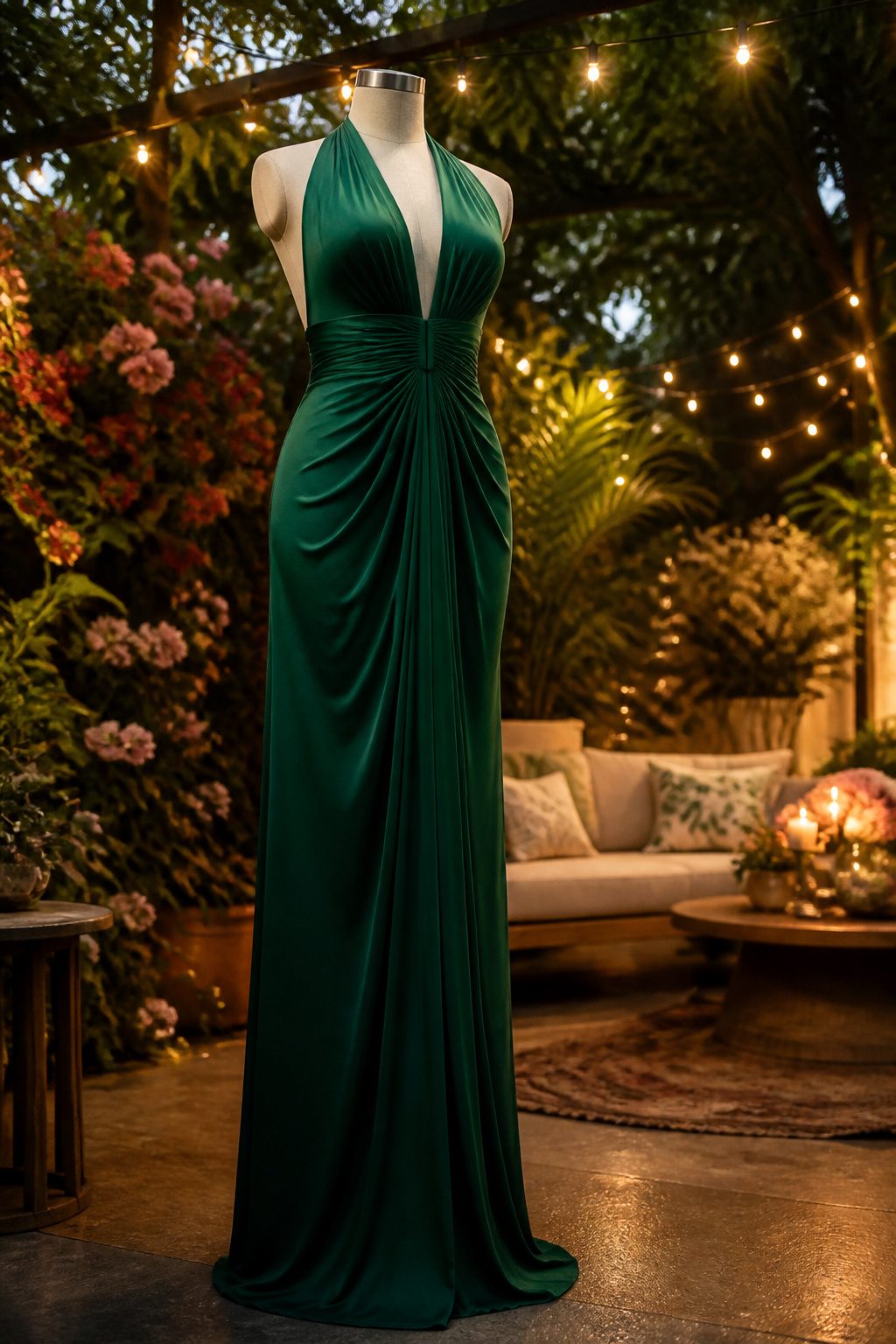
A halterneck maxi with a deep front plunge, draped fabric, and ruched detailing sounds like a lot of dress competing for attention, yet the three elements settle into a coherent whole when the proportions are right. The halter draws the eye upward and creates a clean shoulder line, which keeps the plunge from reading as accidental. The draped front softens the depth of that neckline without adding bulk, and the ruching at strategic points gives structure where the drape alone would sag.
The version I keep seeing priced at $39.00 in burgundy gets the balance better than most. The ruching sits at the waist and hip rather than climbing toward the bust, so the draped fabric has room to fall naturally. In a formal setting, this matters because the dress photographs from the front as a continuous line but still lets you move without adjusting every few minutes.
What goes wrong is when the plunge extends below the point where the halter strap meets the neck, which turns the bodice into two separate flaps. The better construction keeps the plunge contained within the draped panel, so the ruching holds the shape and the drape provides the coverage. For a wedding guest or formal dinner, this is the detail that lets you skip the wrap or the jacket.
Halterneck Plunge Front Mini
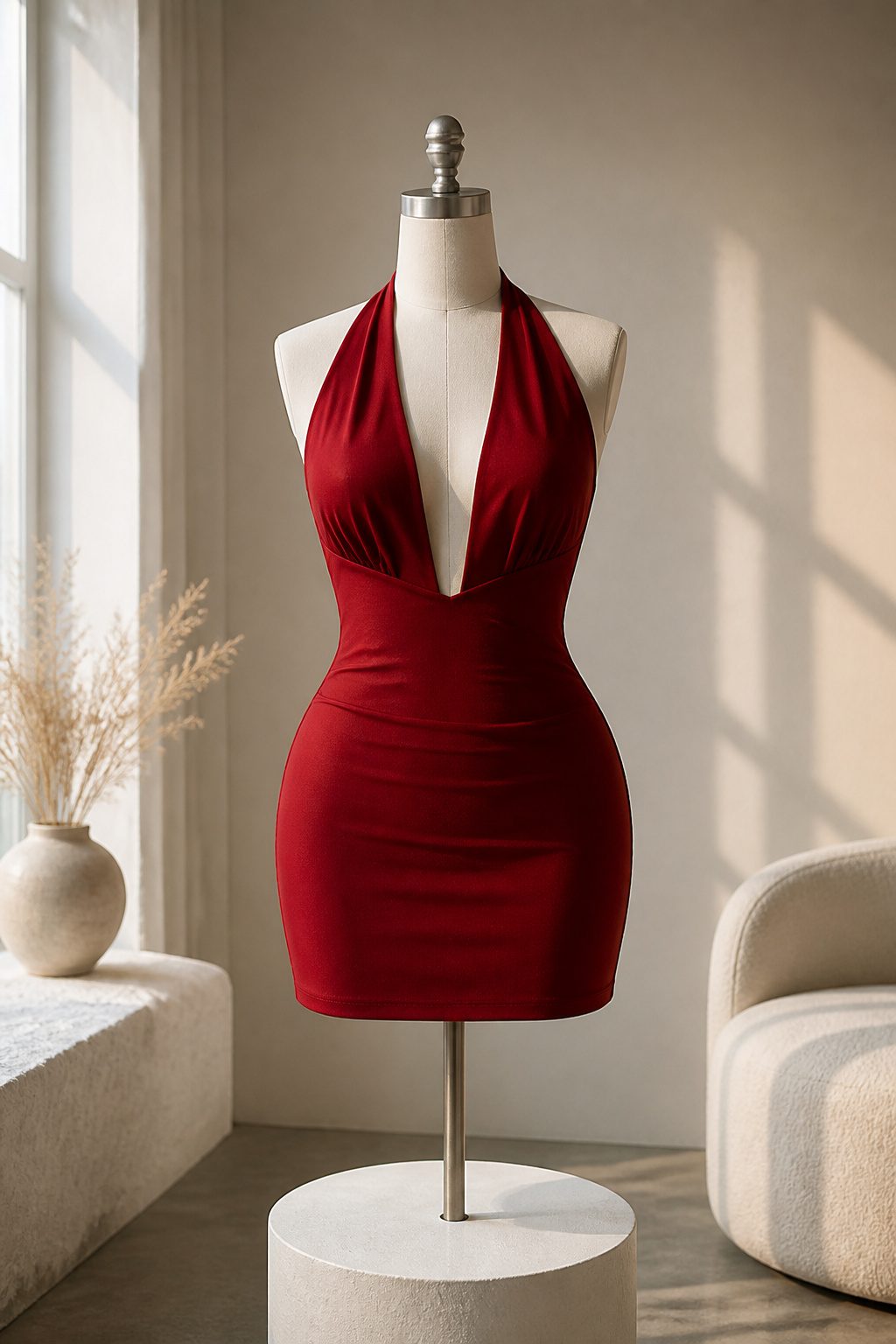
A halterneck plunge front mini without ruching is the cleaner, more direct counterpart to its gathered sister. Where the ruched version softens the silhouette and forgives a lunch that sits heavy, this one asks the fabric to do the work through cut alone. The neckline draws the eye vertical, which matters on a shorter length where horizontal breaks can flatten the figure.
I reach for the un-ruched version when the event reads sharp rather than playful. The absence of extra fabric makes it easier to ground with substantial shoes or a structured bag, and the neckline carries enough drama that jewelry becomes optional. A simple pendant can fight the plunge; bare skin or a tiny stud earring usually wins.
The tradeoff is real. This dress shows exactly what your body is doing underneath it. Good undergarments are not optional here, and shapewear that stops at the ribcage will announce itself at the open back. Choose this one when your evening involves standing cocktails and confident posture, not when you are rushing from a long day at a desk.
Mini, Midi and Maxi Lengths
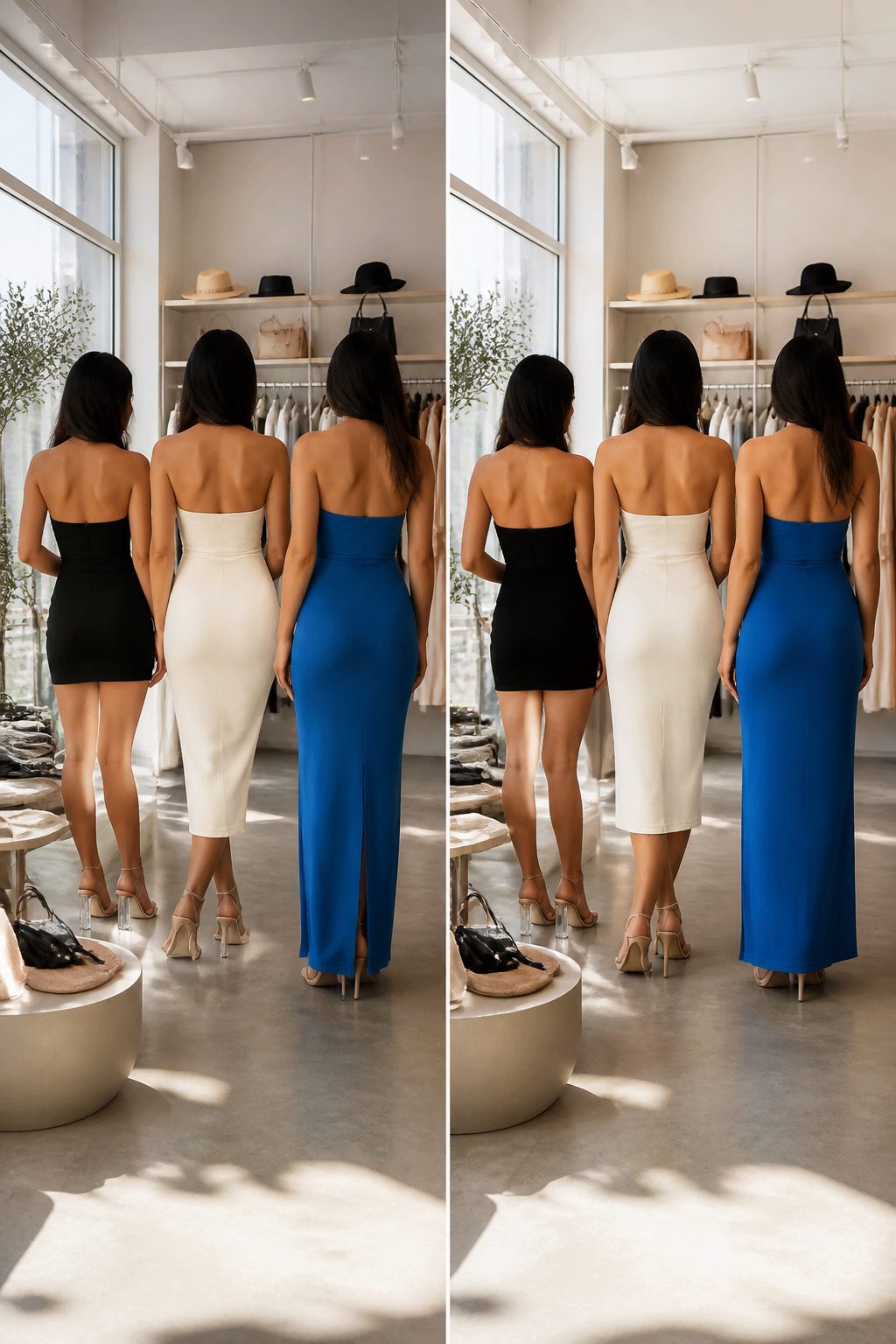
A mini bodycon dress sits at mid-thigh or higher and shifts the whole silhouette toward legs and shoulders. The shorter hem balances the tightness through the torso, so the shape reads as deliberate rather than overwhelming. This length works for nights out, dates, and events where you want movement and air, though the same exposure makes it tricky for conservative offices or winter weddings without substantial layering.
The midi bodycon dress, hitting anywhere from just below the knee to mid-calf, is the most versatile length in the category. It keeps the close fit through the hips and waist but adds a vertical line that elongates the body, and the extra fabric weight lets the dress hold its structure better through the day. I reach for this length for work when the dress has a higher neckline and thicker fabric, or for daytime events where I need to look pulled together without changing before evening.
A maxi bodycon dress runs floor-length or nearly so, and the silhouette changes completely. The tight fit from neckline to ankle creates one unbroken vertical line that can read as dramatic or severe depending on the fabric and color. This length demands attention and works best for formal occasions, galas, or evening events where the setting justifies the statement. The tradeoff is mobility; steps shorten, stairs become a project, and the dress collects at the ankles on anyone under average height.
Necklines and Sleeves
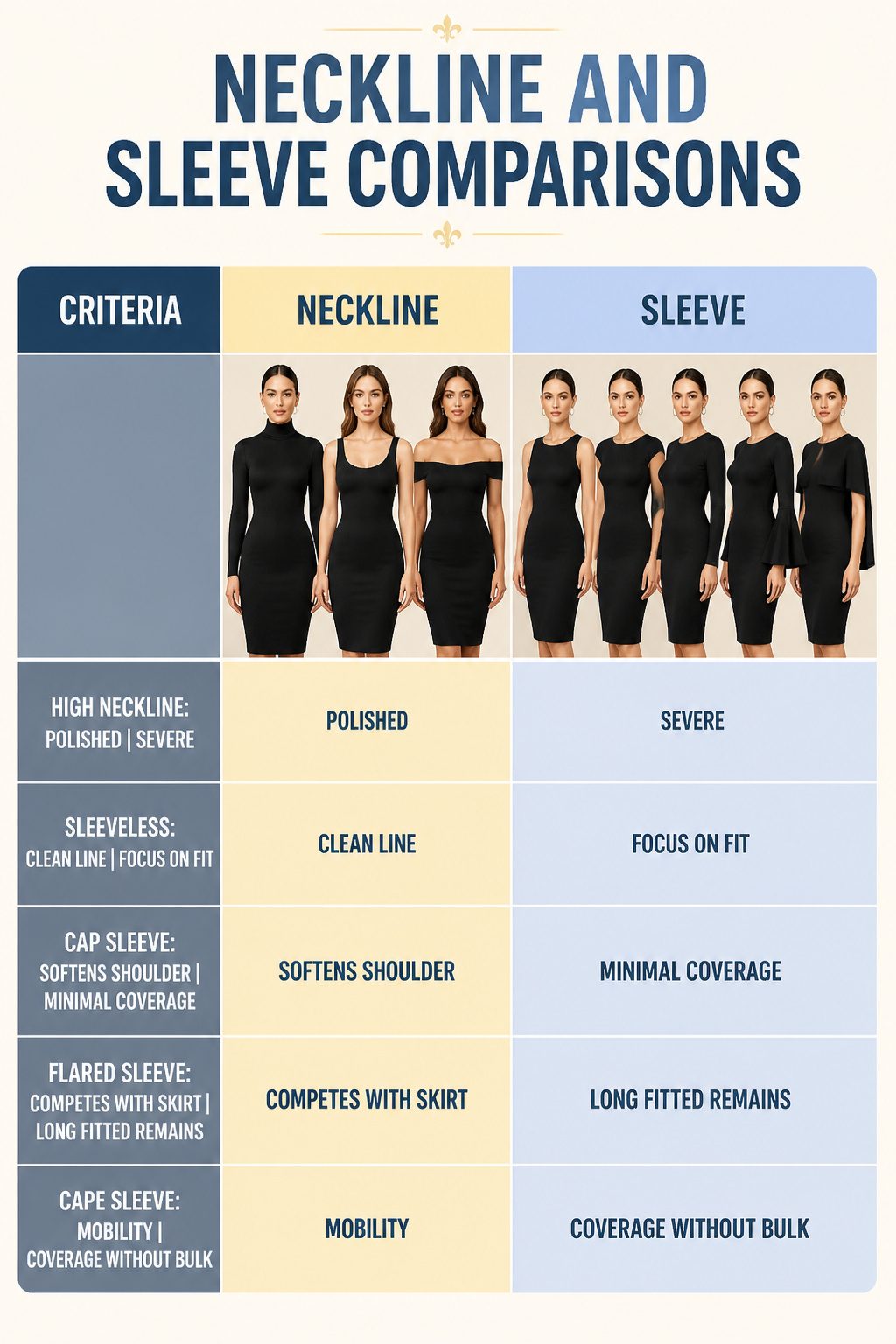
A high neckline on a bodycon dress reads as polished and slightly severe; drop it to a scoop or a plunge and the same silhouette becomes something you wear after dark. The Bardot, sitting off both shoulders, splits the difference with exposed collarbones but no cleavage, which is why it works for occasions where you want skin without the full plunge. Sleeves do the same kind of translation. Sleeveless keeps the line clean and puts all the attention on the dress’s fit through the torso, while a cap sleeve adds barely-there coverage that softens the shoulder just enough for most offices. Long fitted sleeves turn the dress into a colder-weather piece, but a flared sleeve, especially in a midi or maxi length, starts to compete with the bodycon skirt. The eye cannot hold both movements at once, so the flared sleeve usually wins and the fitted shape below it flattens. Cape sleeves function as a kind of illusion: they cover the upper arm and shoulder without adding actual fabric to the armhole, which means you get the coverage of a long sleeve with the mobility of sleeveless. I have seen this go wrong when the cape is too short; it flutters upward with every gesture and you spend the evening pushing it back down. For shoulder and arm coverage that actually stays put, a three-quarter fitted sleeve or a true long sleeve beats anything that hangs loose.
Black, White and Bold Colors

Black bodycon dresses still feel like the default for a reason. The color does some of the smoothing work for you, compressing the silhouette visually so a seam or panel matters less. White does the opposite; it reads louder and shows every fold of fabric, which means the fit itself has to be precise. I learned that the hard way with a white ribbed midi that looked sculpted in photos and slightly surgical in person.
Burgundy splits the difference. It carries the depth of black but adds warmth, and on a bodycon cut it reads expensive without trying for nightlife. Lemon and other saturated brights are where things get interesting. A bold color doesn’t hide the compression the way black does; it announces the shape. That can be the point, but the brighter the hue, the more exacting the construction needs to be. A cheap lemon bodycon will show its seams like a highlighter.
Jackets, Boots and Statement Jewelry
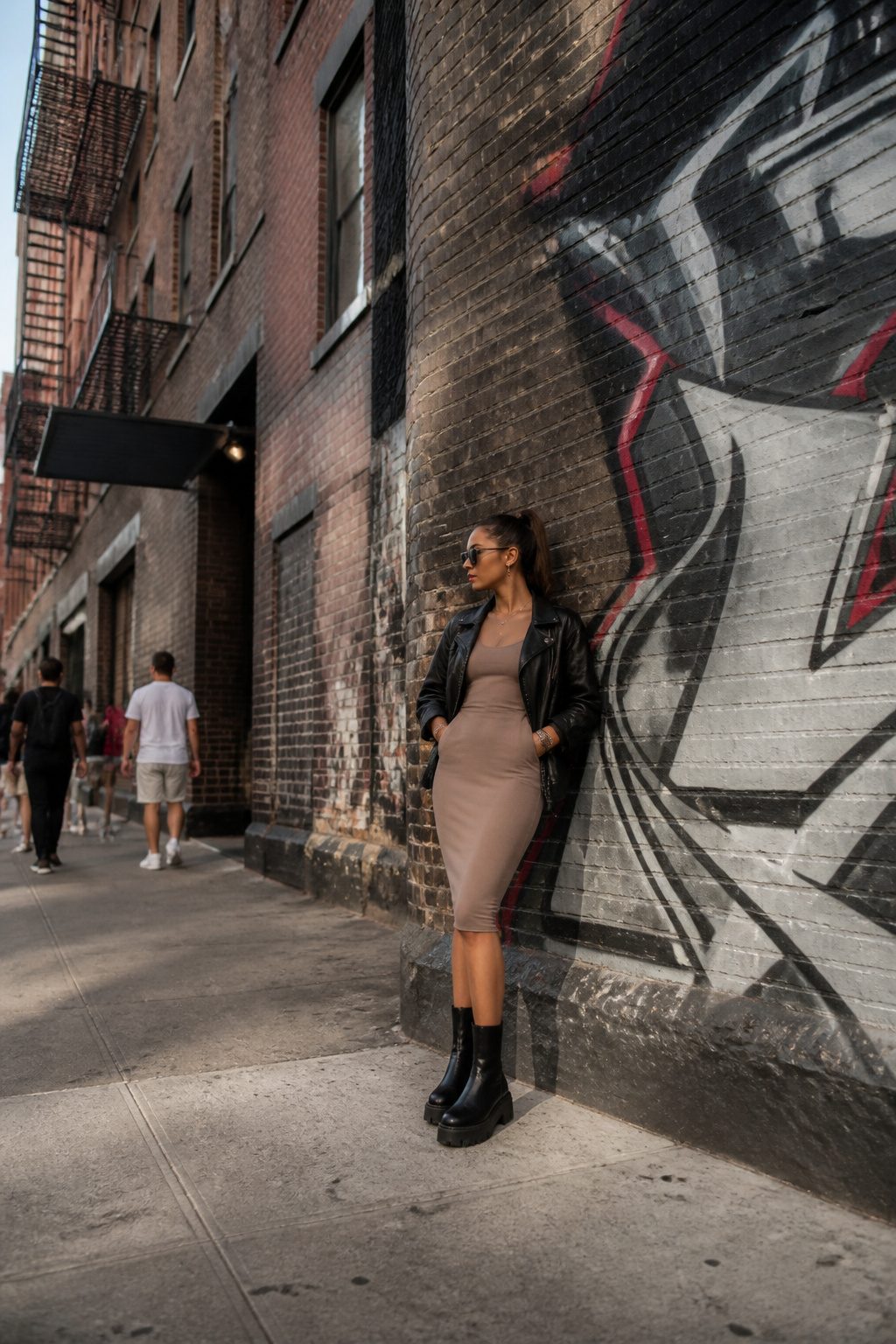
A faux leather jacket over a bodycon dress gives the kind of structure that turns a curve-hugging silhouette into something you can wear to a bar or a casual Friday. The contrast works because the jacket’s rigidity does the editing; the dress underneath stays the statement. For footwear, chunky boots add attitude without trying to compete with the fit, which is useful when the dress itself is already doing a lot of visual work. Heels shift the same combination toward evening: the line lengthens, the walk changes, and the dress reads as celebration rather than casual.
Jewelry has to solve the problems the neckline creates. A high neck leaves no room for a pendant, so earrings carry the load: something sculptural or oversized keeps the eye moving upward. An open back is the opposite problem; the skin is the feature, and a necklace would break the line. In that case, a cuff or a ring stack fills the gap without cluttering the view. The sources mention a bold lip alongside the heel option, which tracks: when the dress and shoes are doing this much, makeup becomes the accessory that costs nothing and travels well.
Frequently Asked Questions
What styles of bodycon dresses are available?
Bodycon dresses come in mini, midi, and maxi lengths with options including strapless bandeau, halterneck, one-sleeve, cape sleeve, long sleeve, wrap front, and open-back cuts. Sleeve types range from bare shoulders to flared or draped long sleeves, while necklines cover everything from scoop and high neck to Bardot off-the-shoulder and keyhole variations. The article reviews 311 available styles, with specific detail on 16 distinct constructions.
How do I accessorize a bodycon dress?
Let the dress’s strongest feature guide you. Sequin panels already function as jewelry, so keep necklaces bare and pair with matte leather clutches. Cape sleeves and shoulder details demand slim earrings or bare lobes, since the dress supplies its own ornament. For flared sleeve styles, minimal jewelry works best because the sleeve does the visual heavy lifting. With open-back cuts, wear hair up and skip necklaces entirely; small earrings suffice. Match shoe color to lace trim when it appears, not to the dress color, to extend the visual break intentionally.
What colors do bodycon dresses come in?
The article highlights light pink bandeau minis and chocolate brown scoop-neck maxis as recurring shades that work with specific constructions. A light pink bandeau mini runs $24.00 before discount, while chocolate brown pairs with trim-detailed maxis where the trim itself creates enough contrast that no belt or necklace is needed to define shape. Classic options like black and white are implied as standard, though the reviewed styles emphasize how color interacts with fabric texture and cut rather than standing alone.