
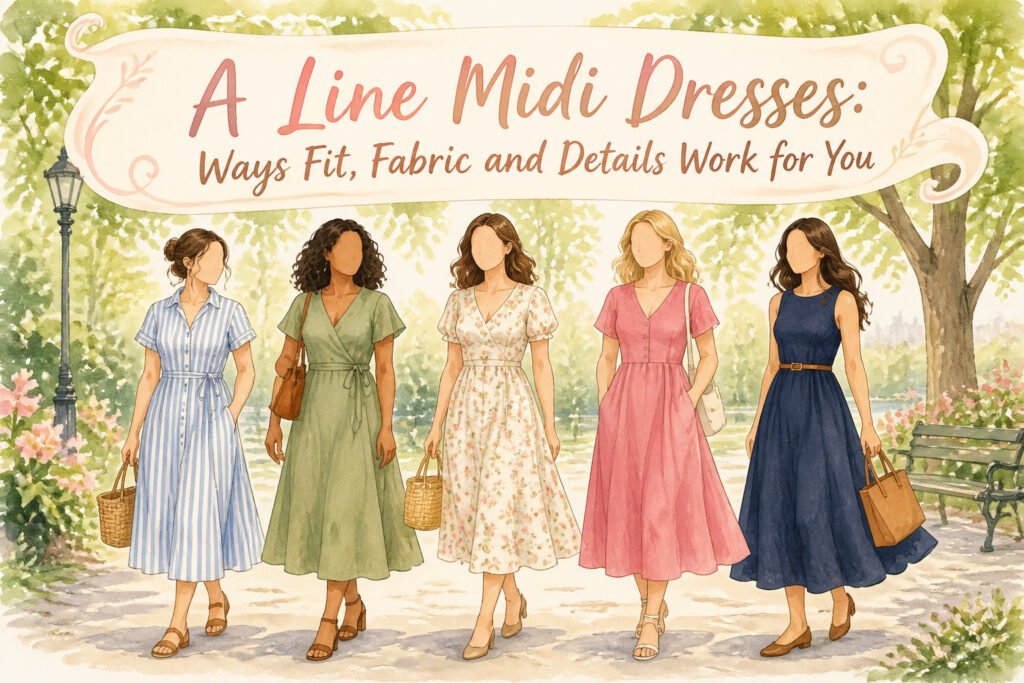
An A-line midi dress is a dress fitted at the natural waist with a gradual flare to a hem that hits mid-calf. The catch is that not every version works for every body or occasion; the difference sits in fabric weight, neckline depth, and whether the pockets are real. A cotton-poly blend keeps its shape through hour three of a commute, while pure cotton crumples at the hips.
1. The A-Line Silhouette and Why It Works on Every Body
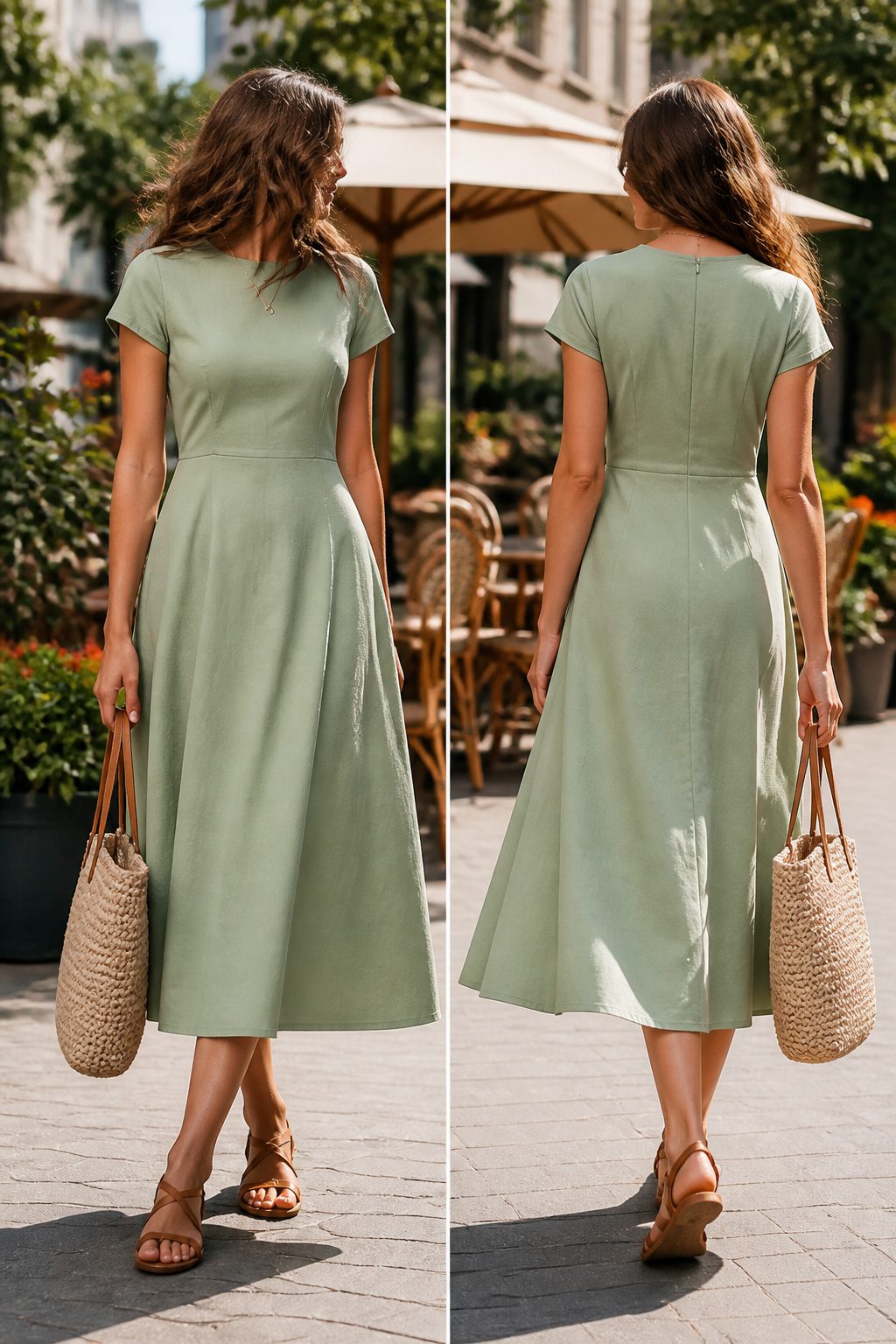
The geometry of an A-line dress is simple enough to draw from memory: fitted at the natural waist, then a gradual flare toward the hem that never hugs the hips. That slope creates balance without clinging, which is why the shape works on pear shapes (volume below the waist offsets narrower shoulders), apple shapes (the flare skims the midsection), and rectangles (the defined waist adds the curve the body doesn’t). The $50–$499.99 range means this isn’t a single-tier purchase; it covers everything from a cotton poplin workhorse to a silk faille piece you’d wear to a wedding.
The A-line shape gently flares from the waist, creating a beautiful balance that enhances your natural curves.
What that balance means in practice: you can eat lunch, sit through a meeting, and walk to the train without the dress riding up or pulling across the middle. The flare gives you room to move without looking like you’re hiding anything.
2. Midi Length and the Sophistication It Adds
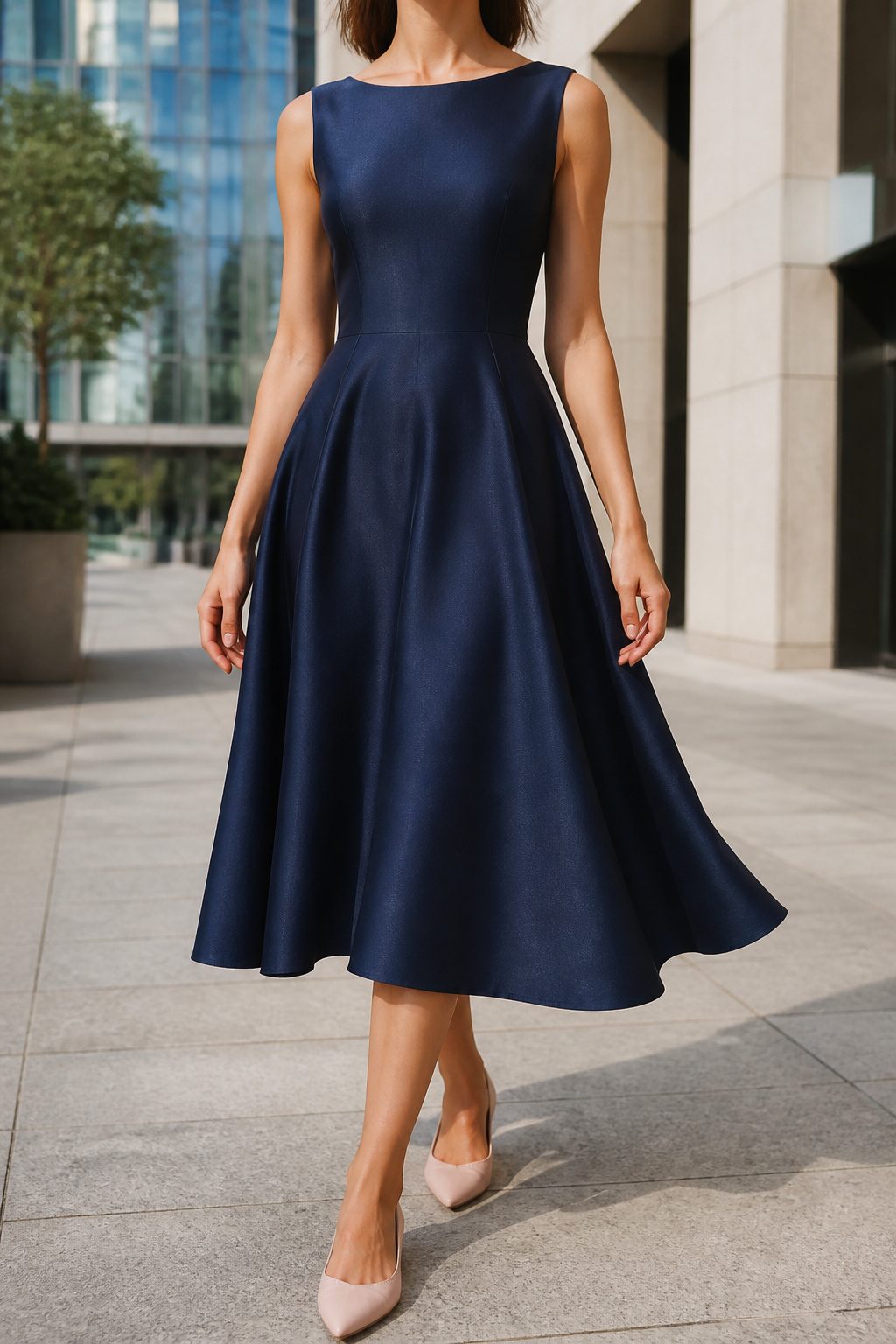
The midi length sits right where it needs to, mid-calf, and that placement is what keeps it from reading as costume or afterthought. A mini demands choreography, and a maxi can swallow the moment, but the midi just shows up polished. The hem clears the ground enough for actual walking, stays clear of the knee so it never registers as casual, and lets shoes matter without making them the whole point.
That middle ground is why the same dress works at brunch and carries straight through to evening. Sources describe the length as appropriate across occasions where a shorter or longer hem would feel off, and that tracks with what the cut delivers: enough coverage for a restaurant patio at 10 a.m., enough formality for a gallery opening at 7 p.m. The A-line shape keeps the skirt from feeling restrictive, so the midi length gains movement rather than stiffness.
3. Fabrics That Hold Their Shape All Day
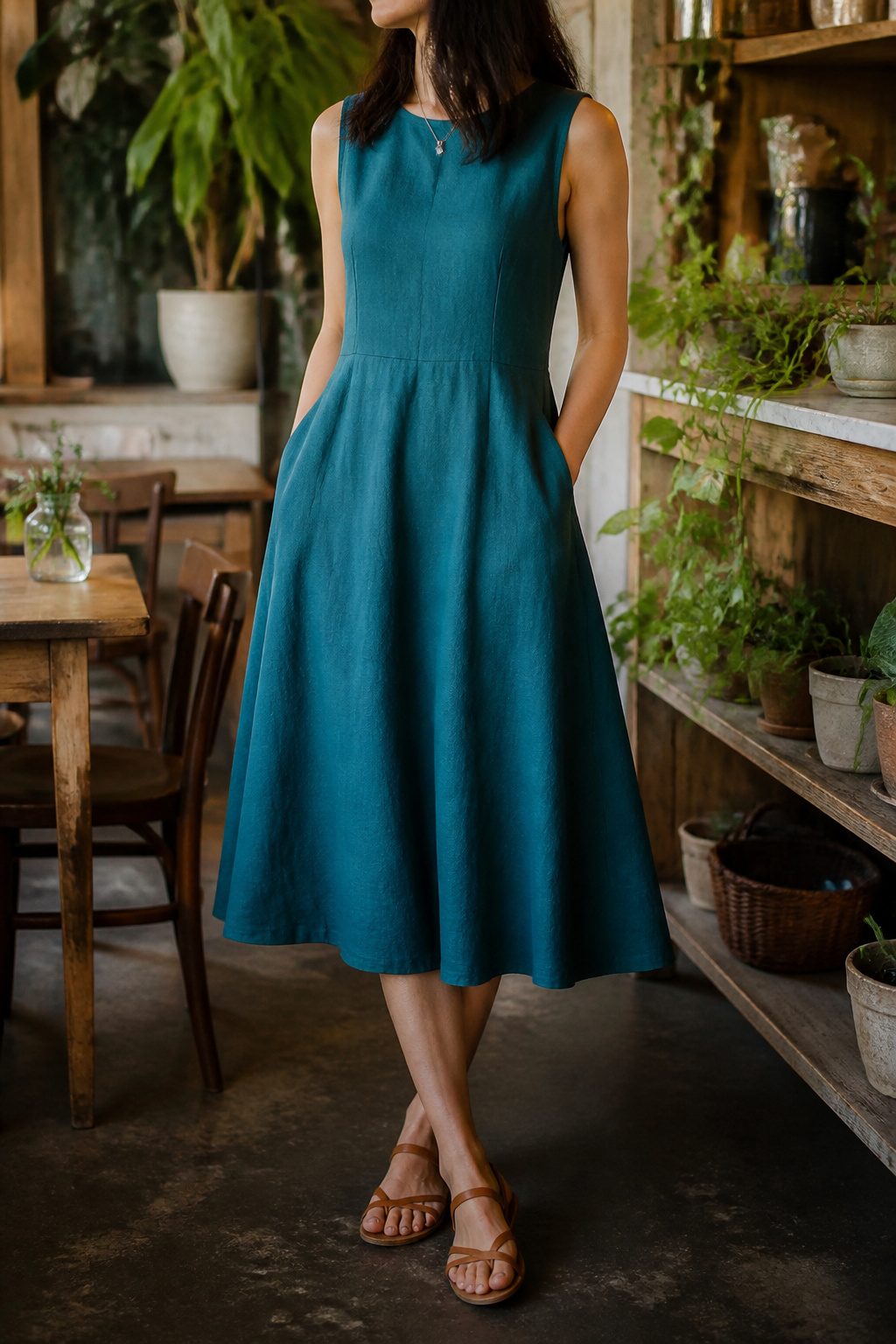
Cotton blends and linen blends handle the daily wear of a line midi dresses better than their pure versions, and the difference shows up around hour three of a long day. A cotton-poly mix keeps the skirt’s flare without turning into a crumpled triangle at your hips; the small synthetic percentage adds just enough recovery that the shape holds after sitting. Linen blended with rayon or a touch of spandex does the same warmer-weather job, letting air move through while resisting the creased catastrophe that sends you to the bathroom to smooth your thighs.
I used to assume structure required lining, but these blends carry the A-line on their own. The weight is distributed through the fabric itself, so the skirt falls clean without that sandwiched stiffness that traps heat against your legs. The result is a dress that looks pressed at 5 PM because the material was chosen to work through a commute, not just the first hour after ironing.
4. Sleeve and Neckline Options Worth Knowing

The short sleeve on an A-line midi dress carries you through spring mornings and office air conditioning without asking you to layer. Sleeves read as coverage, which means the same cotton poplin that works for a July picnic can pass at a client meeting in September if the arm is finished rather than bare.
Sleeveless shifts the whole proposition. That extra shoulder line turns the dress into a base you build on: a fitted turtleneck underneath in January, or nothing but a pendant necklace when the humidity hits. The shape underneath stays identical, but the door it walks through changes completely.
Neckline does the same silent work. A crew neck sits high and neat, almost school-uniform in its restraint, which makes it the default for days when you need to look intentional without looking like you tried. Scoop neck drops lower by an inch or two, opens the collarbone, and suddenly the same dress reads evening rather than desk. The V neck splits the difference with intention: it draws the eye vertical, which the A-line already does from the waist down, so the two shapes amplify each other rather than compete.
None of these details alter the skirt flare or the hem landing below the knee. That is the point. You are not buying a different dress each time; you are calibrating one shape to the calendar in front of you.
5. Color Range and What Each Does for You
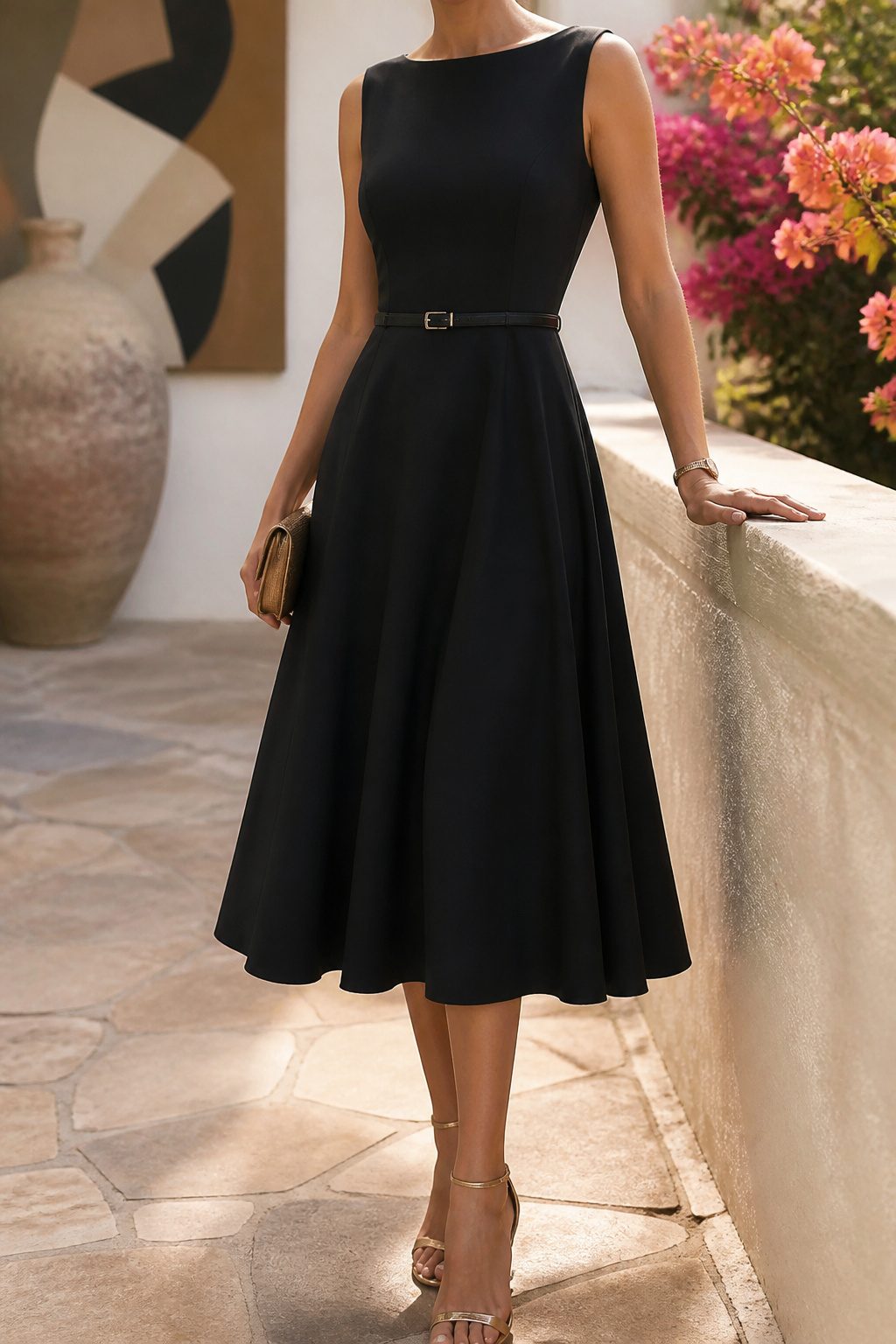
Black, navy, and blue cover the practical ground for a line midi dresses, and each earns its place differently. Navy reads softer than black under office fluorescents, less severe for a 9 AM meeting where you need authority without the undertaker effect. Blue, especially a mid-tone like cobalt or slate, moves most easily through daytime: errands, lunch, a sudden client call, all without the color doing the heavy lifting. Black still owns the evening transition, the dress you left in with flats and return to with earrings and a different shoe.
Prints deserve a quick mention, though they fight the line. The A-shape already gives the eye plenty to track; a busy floral or geo can overwhelm the architecture. Solid color lets the cut work. If you want pattern, a small-scale dot or narrow stripe keeps the silhouette intact.
6. Details That Make One Dress Different From Another
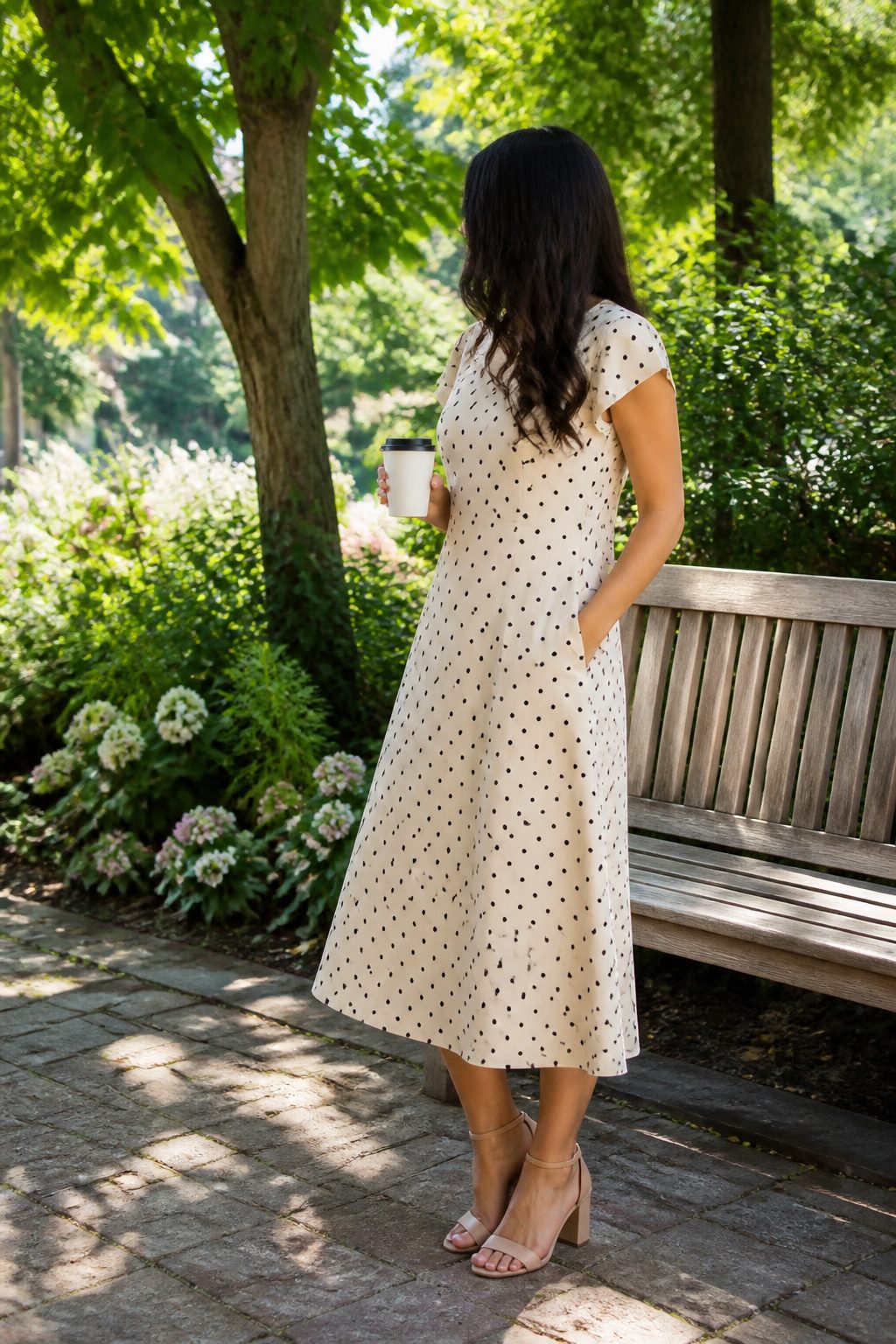
Pockets change an a line midi dress from something you photograph to something you live in. A dress without them leaves you hunting for a place to stash your phone during a coffee run; one with side-seam pockets set deep enough to hold a phone upright keeps your hands free and the silhouette clean. Watch for fake pockets, the flap-and-no-opening kind that signal tailoring but offer nothing.
Buttons run the same split. Functional buttons down the bodice let you adjust how high the neckline sits and how much break shows underneath; purely decorative ones stitched flat just draw the eye vertically without the bother of gaping. Placement matters too. Buttons that stop at the natural waist keep the A-line sweep uninterrupted below, while ones that continue to the hem can segment the figure in ways that work for some bodies and not others.
Prints operate differently entirely. A small-scale geometric or a scattered floral adds visual interest without demanding attention; the dress stays a backdrop you can repeat weekly. Larger, bolder prints turn the dress into the statement, which limits how often you reach for it. Neither approach is wrong. The question is which job you need the dress to do.
7. Layering and Season-to-Season Wear

A black cotton a-line midi dress I bought in March still hangs in rotation nine months later, which is the first time a single dress has survived every season in my closet without feeling stale. The trick is the same dress reads as a different piece depending on what sits on top of it. In April and May I wore it with bare legs and flat leather sandals, the hem hitting just below the knee where the silhouette does its own shaping without anything added. Once October arrived, the same dress went over wool tights with ankle boots and a cropped denim jacket; the skirt had enough volume that the tights never looked bulky underneath. By January I was layering a long cardigan beneath a structured coat, the midi length keeping the hemline visible and intentional rather than looking like a skirt trapped between layers. The a-line cut accommodates bulk without distortion, which means you are not buying one dress for spring and another for fall. You are buying one cut that accepts the season you hand it.
8. Accessories That Finish the Look Without Overworking It
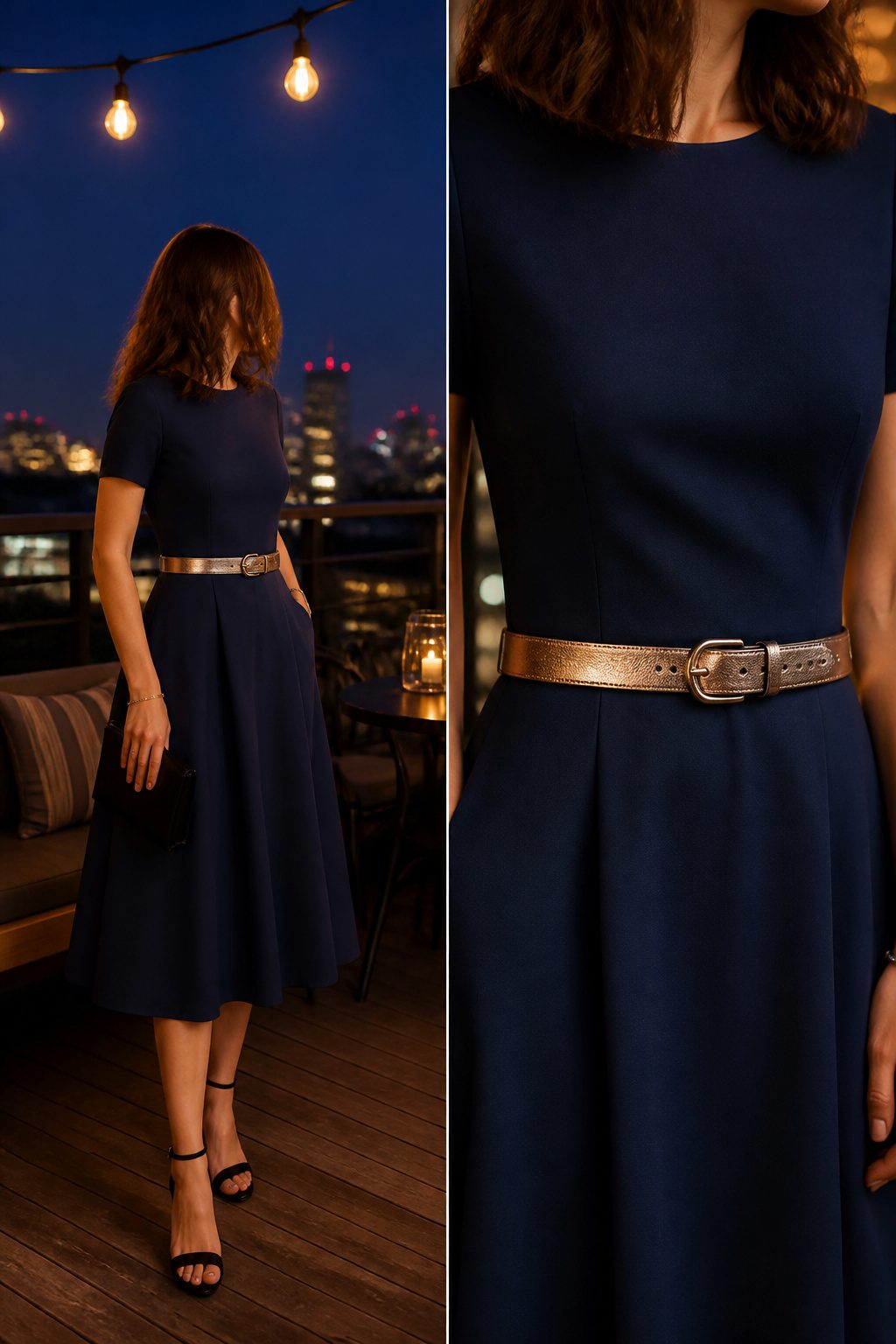
A belt turns the same A-line midi dress from office-appropriate to after-hours in about thirty seconds. At work, a slim leather belt in a color close to the dress fabric keeps the silhouette clean and defines the waist without shouting for attention. Swap that for a chain-link or textured metal belt at 6 PM, and the dress reads entirely different, more deliberate, like you planned the evening separately from the day.
Statement jewelry works the same way, but the mistake most people make is treating a detailed dress like a blank canvas. Buttons down the front, a busy print, or contrast piping already do the visual work. Adding a chunky necklace or oversized earrings on top fights the dress instead of finishing it. The eye bounces between competing focal points and lands nowhere.
Shoes seal the shift. A pointed flat or low block heel keeps the midi length from feeling costume-y in daylight. For dinner, a strappy sandal or slingback with a slightly higher heel lifts the hemline visually and changes your posture just enough.
The through-line is restraint. One strong accessory moves the dress between worlds. Two starts to overwork it. Three, and you have redecorated the room.
9. Why This Shape Stays in Style Year After Year
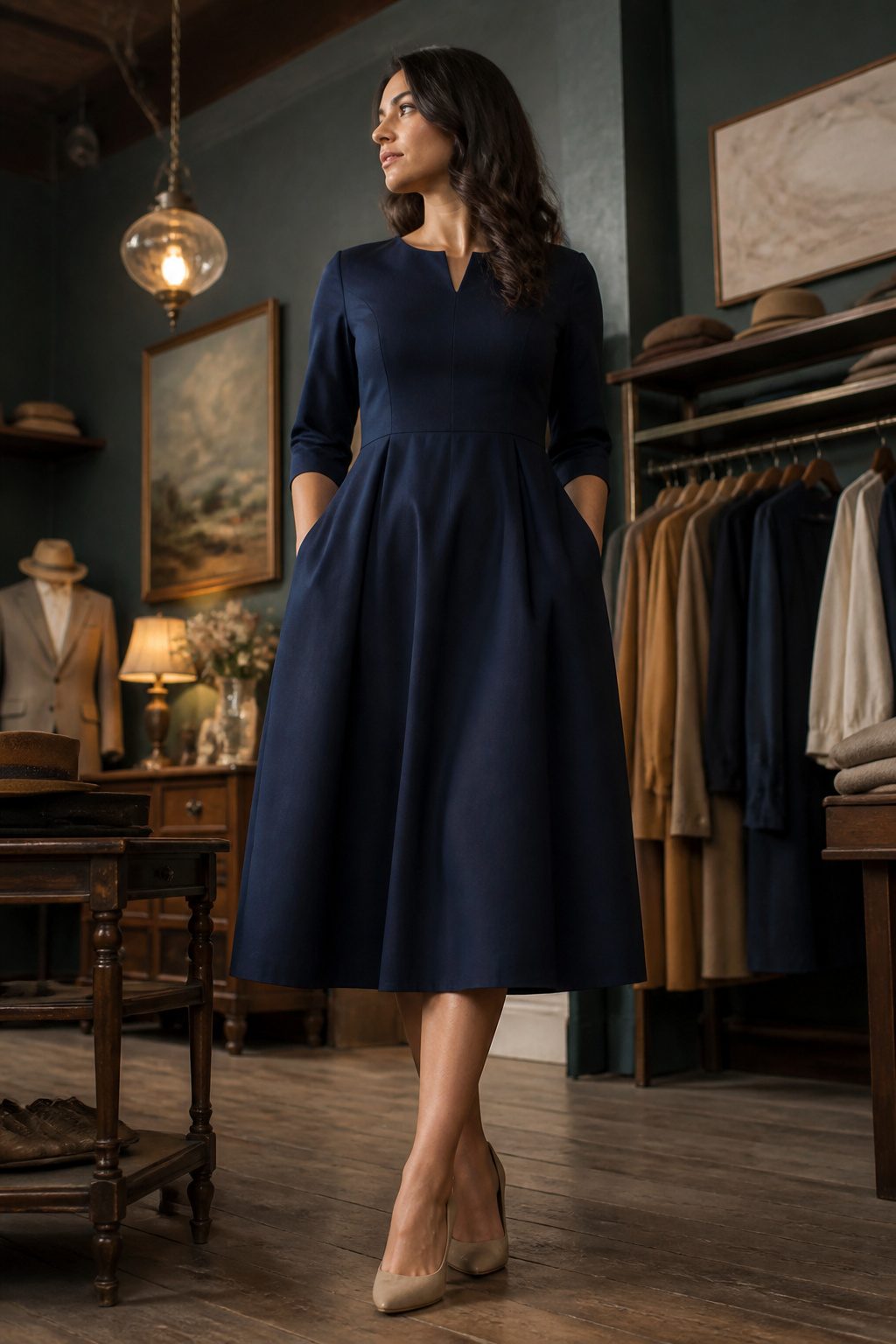
The A-line midi has been the reliable choice in every decade my mother and I have shopped together, and that consistency matters when you are trying to buy less. A shape that flares gently from the waist never reads as the silhouette of a single season, which means the dress you buy this year does not look like a miscalculation by next spring. Trend-driven cuts, the bodycon wave or the exaggerated puff sleeve, date themselves quickly because they broadcast when they arrived. The A-line midi does the opposite; it moves through calendar years the way a well-cut blazer does, belonging to no particular moment and therefore to all of them.
Quality fabrics and thoughtful details like pockets or buttons add character without pinning the dress to a trend cycle, so the investment holds up. For women shifting toward fewer, better pieces, that resistance to obsolescence is the point of the shape.
How to Judge Fit Before You Buy Online
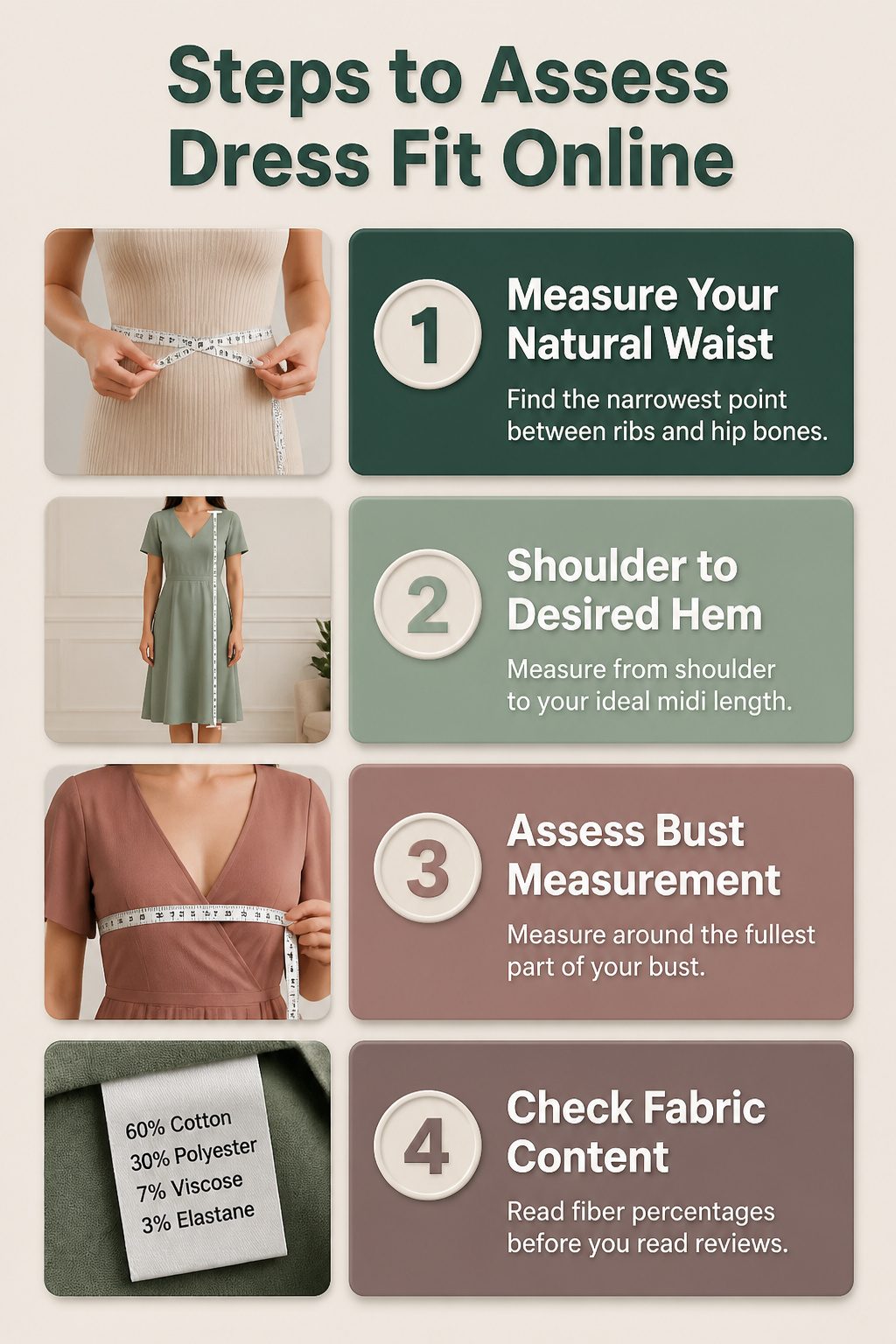
Online shopping for a line midi dresses means guessing at fit from a photo and a few inches of listed length. The tape measure on your desk matters more than the size label.
Start with your natural waist, the narrowest point between ribs and hip bones. An A-line skirt flares from there, so that single number decides whether the dress hangs or grips. Next, shoulder to desired hem: midi hits somewhere below the knee, but "somewhere" covers four or five inches of difference. Measure on your own body, not against the model, since proportions shift the whole silhouette.
Bust measurement matters less for overall fit than for neckline choice. A higher, narrower bust means a wide or plunging neckline may gape; fuller coverage up top needs more structure to sit flat.
Fabric content tells the rest. A dress with elastane or spandex forgives a half-inch miscalculation and moves with you through the day. Cotton, linen, or structured polyester without stretch demands closer precision, especially across the shoulders and waist, because the seam will sit exactly where it lands. I read fiber percentages before I read reviews now; the numbers predict comfort better than anyone’s starred rating.
What the Care Label Tells You About Longevity
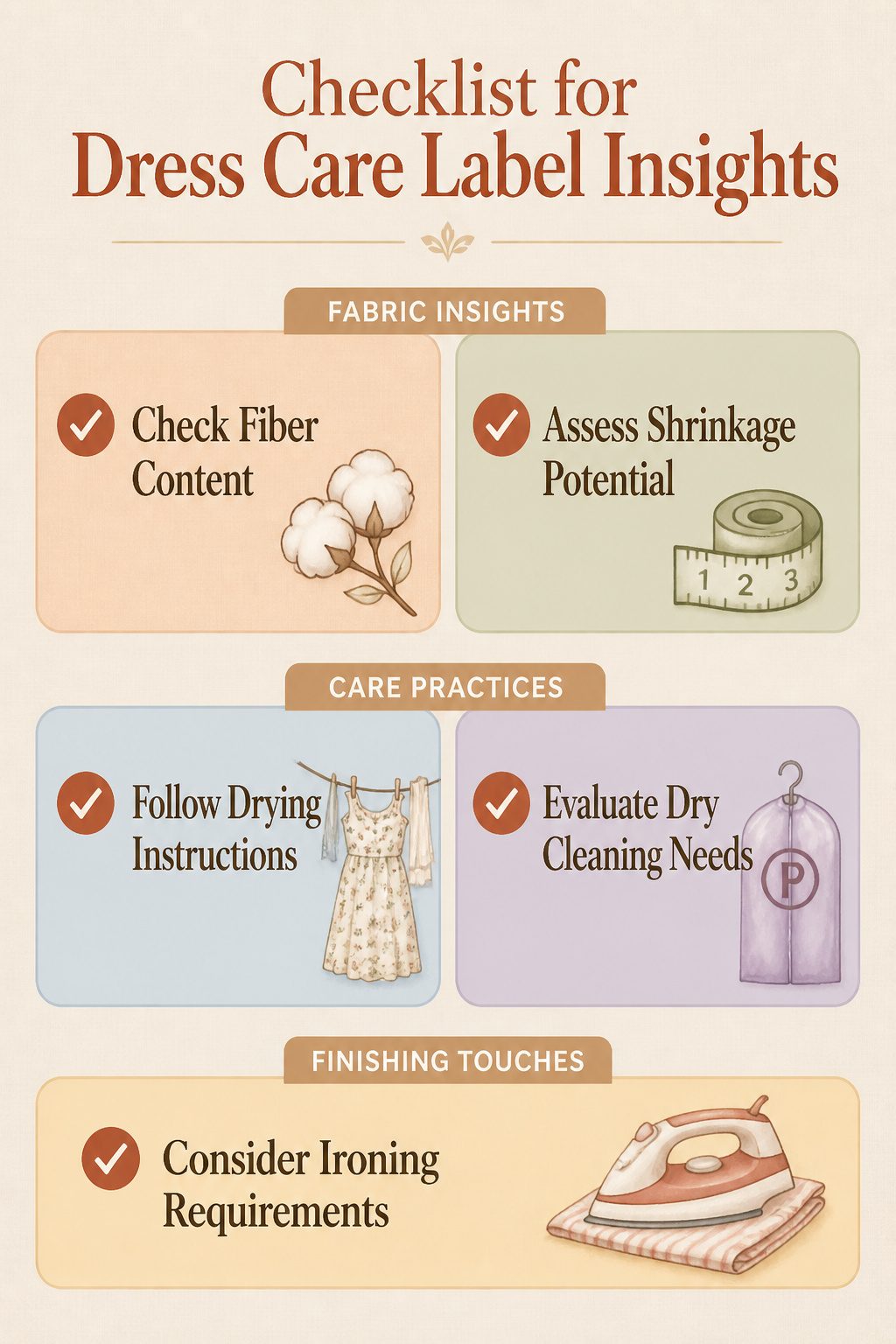
Cotton blends and linen blends in a line midi dresses behave differently in water than their pure-fiber cousins, and the care label usually tells you which camp yours falls into. A cotton blend with synthetic content, typically 5 to 10 percent, shrinks far less than all-cotton and springs back from a warm wash without the stiff boardiness. Linen blends relax faster and wrinkle less aggressively, though they still crease more than cotton; the blend ratio determines whether you are dealing with a quick shake-and-hang fabric or something that demands ironing before work.
Line drying preserves the skirt’s flare better than a tumble cycle. The weight of wet fabric pulls the hem straight while gravity works against the twist and torque that a dryer drum inflicts. I hang mine by the shoulders, never the waistband, so the bodice does not stretch.
Dry cleaning protects investment pieces with silk content, structured linings, or beading. For an unlined cotton or linen blend dress, it is unnecessary expense. The solvent strips surface fibers over repeated visits and the chemical cost adds up fast against a garment you could wash at home in twenty minutes. Save that budget for the one dress with the fused interfacing or the delicate trim.
Day to Night in One Dress
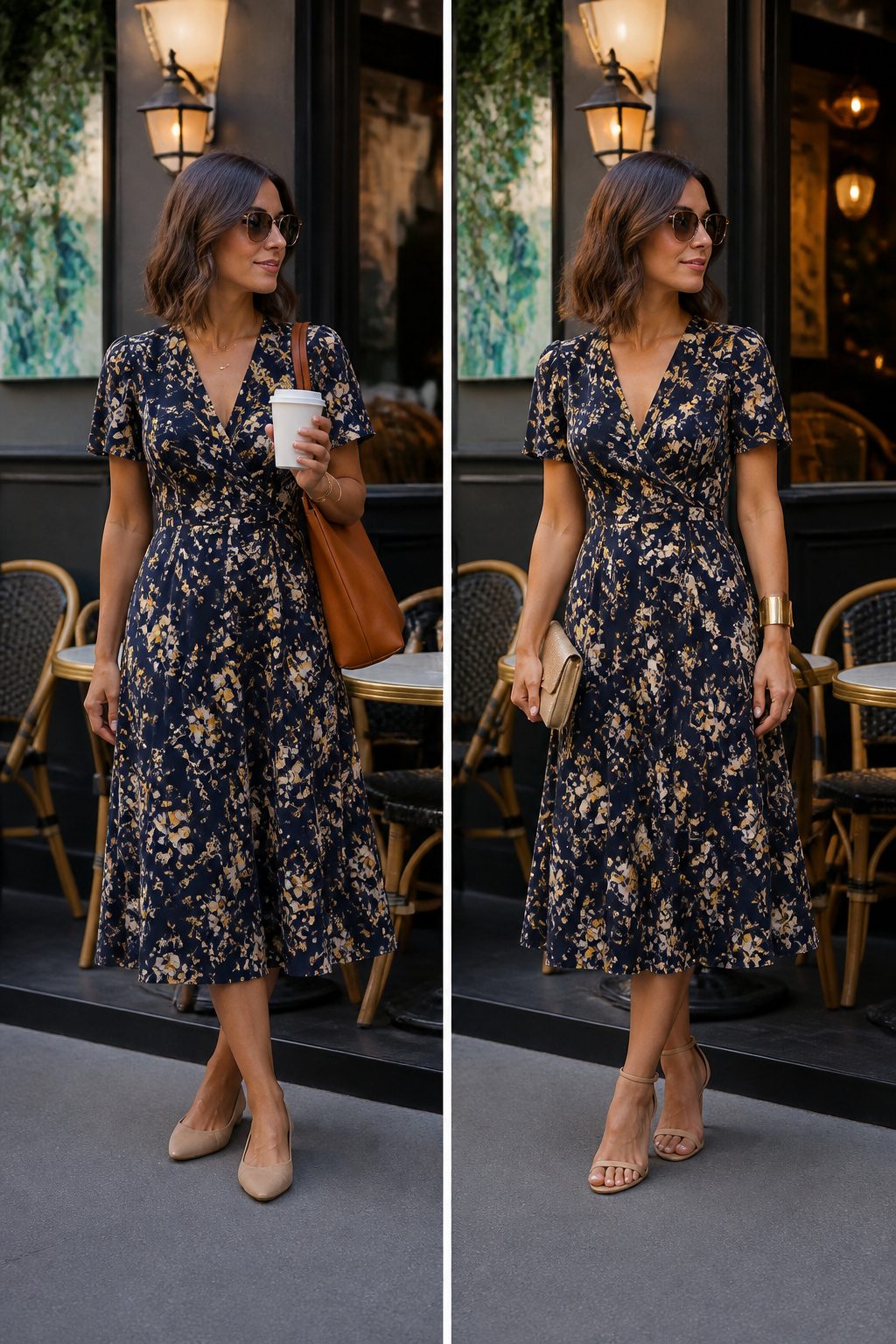
An 8 AM office start in an A-line midi dress means the hem clears your morning commute without tangling in bike spokes or pooling on subway seats. I keep a block heel on for the nine hours at my desk; the same shoe at 7 PM would make dinner feel like a continuation of the workday. The swap takes sixty seconds in a restroom stall: flats or low boots into a tote, a slim sandal or small heel out. Jewelry moves the same way. Stud earrings and a thin chain read professional under office fluorescents; by evening I add a single heavier piece, a cuff or a pendant on a longer chain, and the dress reads deliberate rather than leftover. Lip color does more work than you’d expect. A tinted balm at morning arrival, something with real pigment after the commute home, and the face catches up to the outfit. The jacket question depends on the cut. A structured blazer worn all day looks like armor at dinner; better to carry it out and let the dress stand alone, or swap in a softer cardigan or cropped jacket that reads intentional rather than corporate. The real test is whether someone at the restaurant asks where you’re coming from, or assumes this was the plan all along.
Frequently Asked Questions
What are A-line midi dresses?
A-line midi dresses fit at the natural waist and flare gradually toward a hem that hits mid-calf, creating a silhouette that balances the body without clinging to the hips. The shape works across body types because the flare offsets narrow shoulders on pear shapes, skims the midsection on apple shapes, and adds curve on rectangular frames. Prices typically run from $50 to $499.99 depending on fabric and construction.
What occasions are A-line midi dresses suitable for?
The same A-line midi dress carries from brunch to evening events without a change, because the midi length sits above casual but below costume territory. The hem clears the ground for walking, stays below the knee for polish, and lets shoes matter without dominating. Add a belt swap, shoe change, or lip color at 6 PM and the dress reads intentional rather than leftover from the office.
What materials are A-line midi dresses made from?
Cotton blends and linen blends outperform their pure versions for daily wear, holding the skirt’s flare through hour three without crumpling at the hips. A small synthetic percentage, around 5 to 10 percent, adds recovery so the shape survives sitting. These blends also carry the A-line structure without lining, which keeps the fabric breathable and the skirt falling clean rather than stiff.