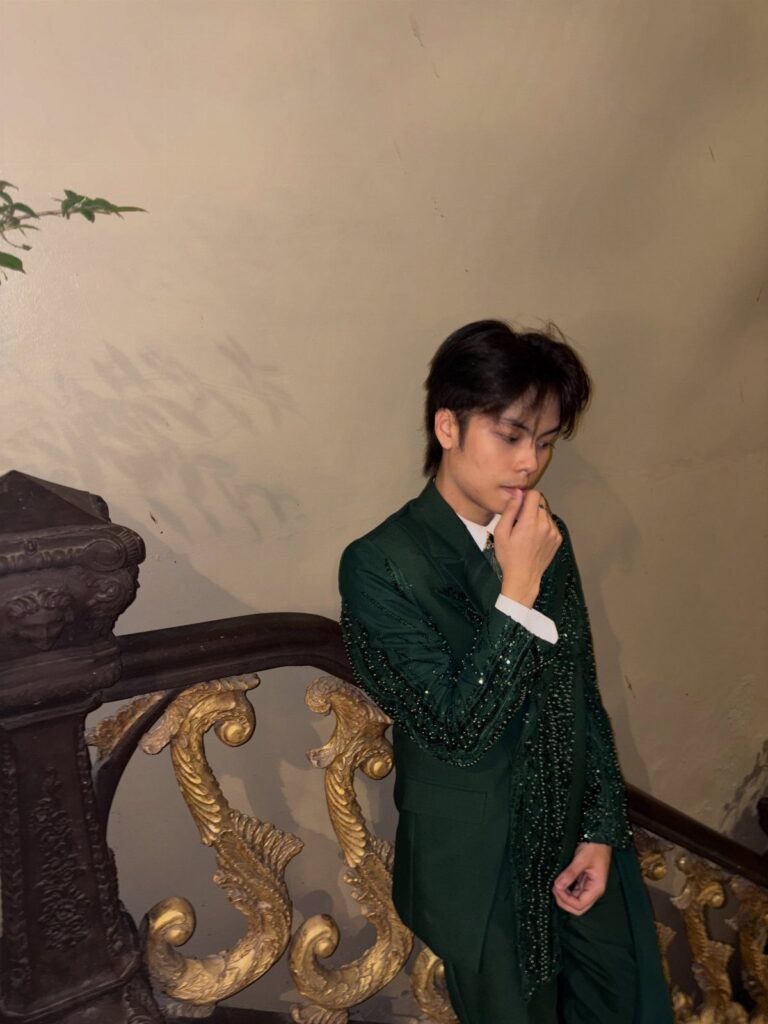
The 19 looks below cover a lot of ground: a plain black suit that still works at graduation and your first job interview, sequined emerald, purple velvet cut like a dinner jacket, and a silver metallic piece that reads best under a camera flash.
Count the formal events ahead of you.
Two or more in the next couple of years makes buying the better deal, while a single night, or a growing teen who may need a bigger size within 6 months, makes renting the smarter call.
1. Emerald Suit
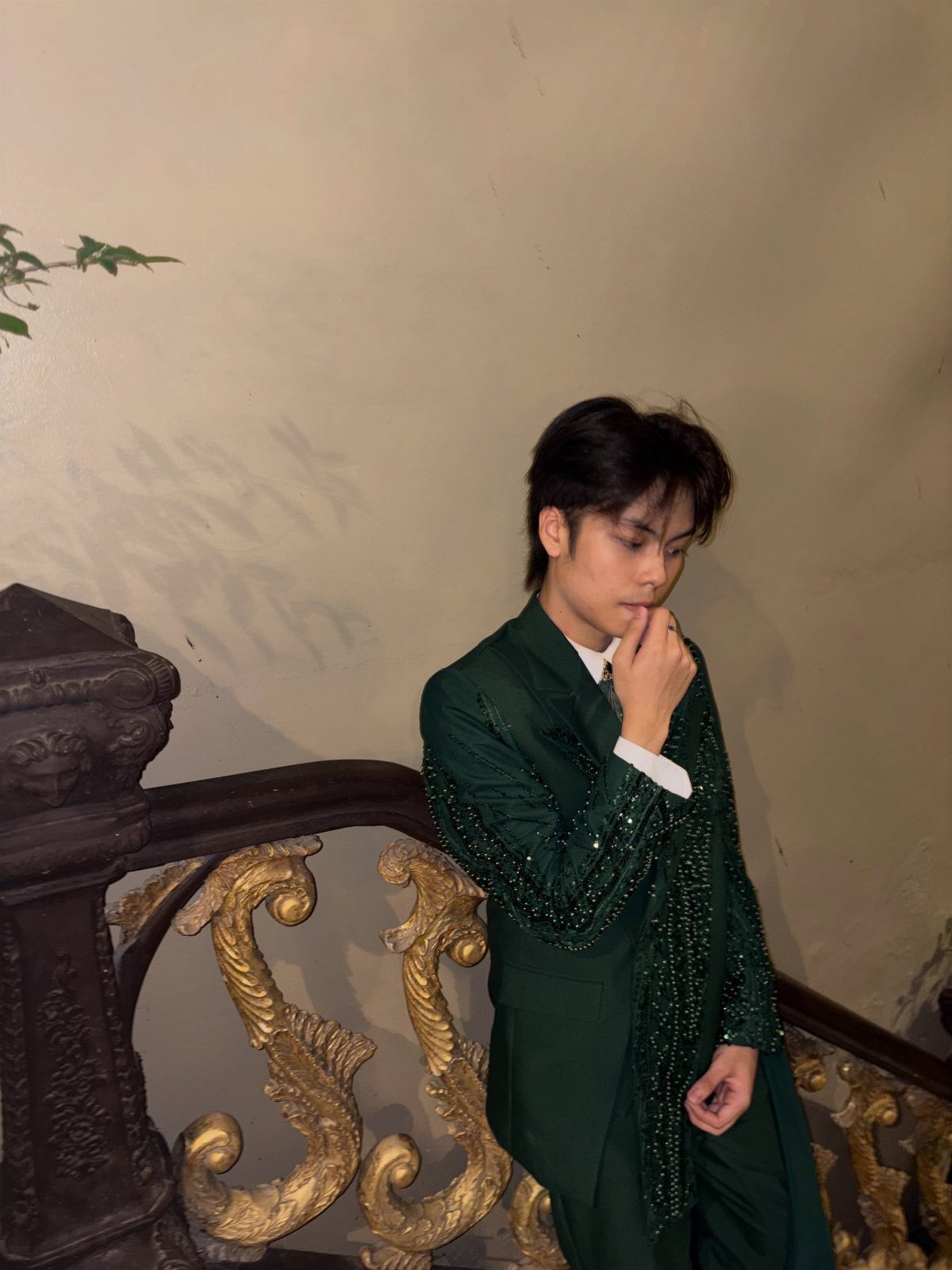
Jewel tones photograph well under warm ballroom lighting, and emerald is the one I’d pick if you want to stand out without looking costume-y.
A sequined jacket like this one is a lot of shine, so keep everything else quiet: a plain black or white shirt, simple black shoes, no loud tie.
If sparkle feels like too much, a solid emerald in matte fabric gives the same color with less attention.
2. Burgundy Suit
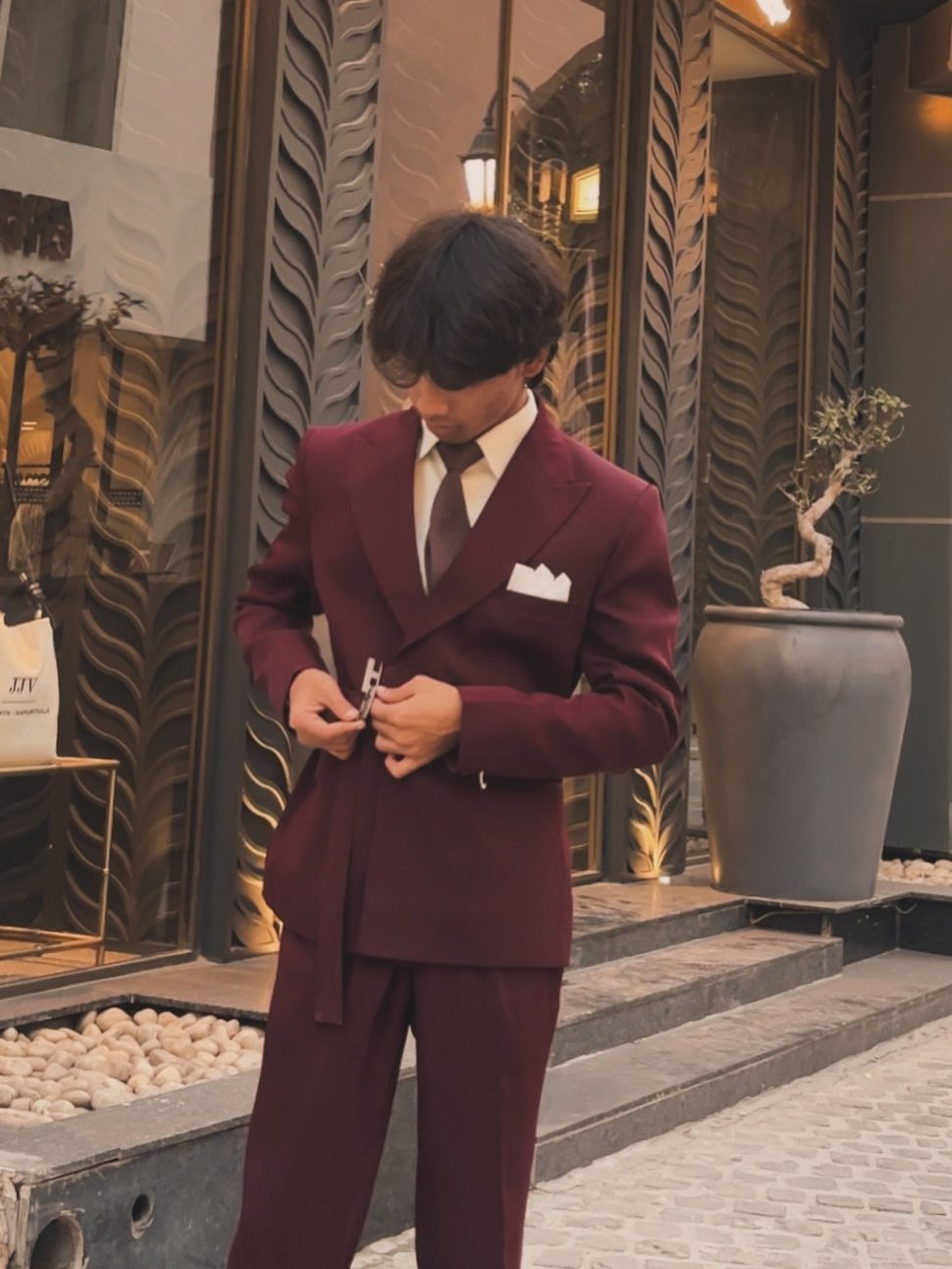
Burgundy reads richer than red and calmer than it sounds, which makes it an easy first step away from black.
A tie and pocket square in the same burgundy as the suit keep the look clean, and they take one decision off your list.
Go a shade darker or lighter if you want a little depth, but keep it in the same color family.
Pair it with a white or soft grey shirt and dark brown or black shoes. If your date’s dress is a bold color, check it against burgundy before you commit.
3. Royal Blue Suit
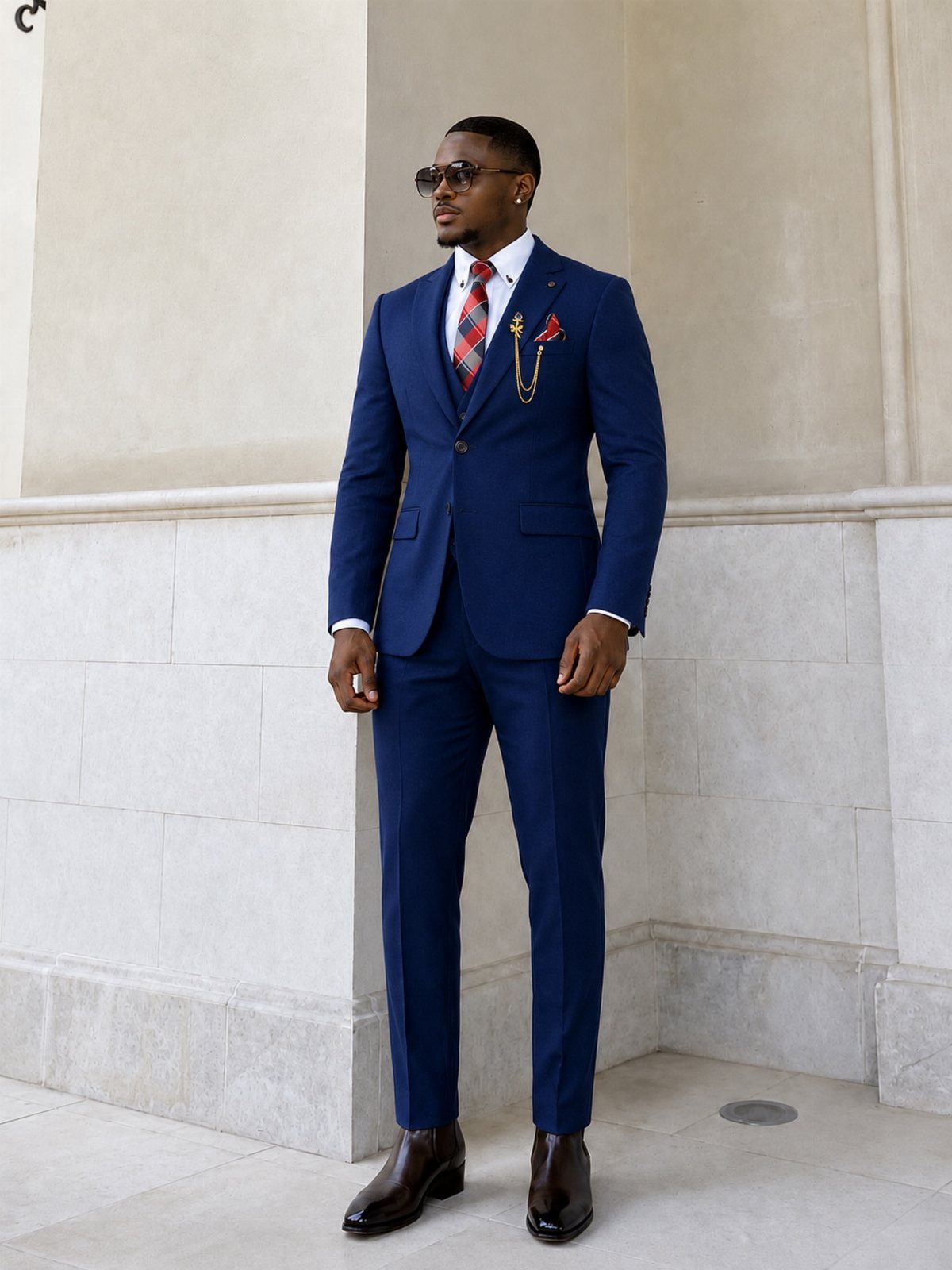
Royal blue is loud on purpose, so let the suit do the talking and keep the rest simple.
A red tie with brown shoes, as in this look, works because the 3 colors sit far apart; a white shirt keeps the contrast crisp.
Brown shoes suit the lighter, daytime feel of this shade. For an evening prom, I’d lean toward black shoes and a darker tie to settle the brightness down.
4. Black Suit
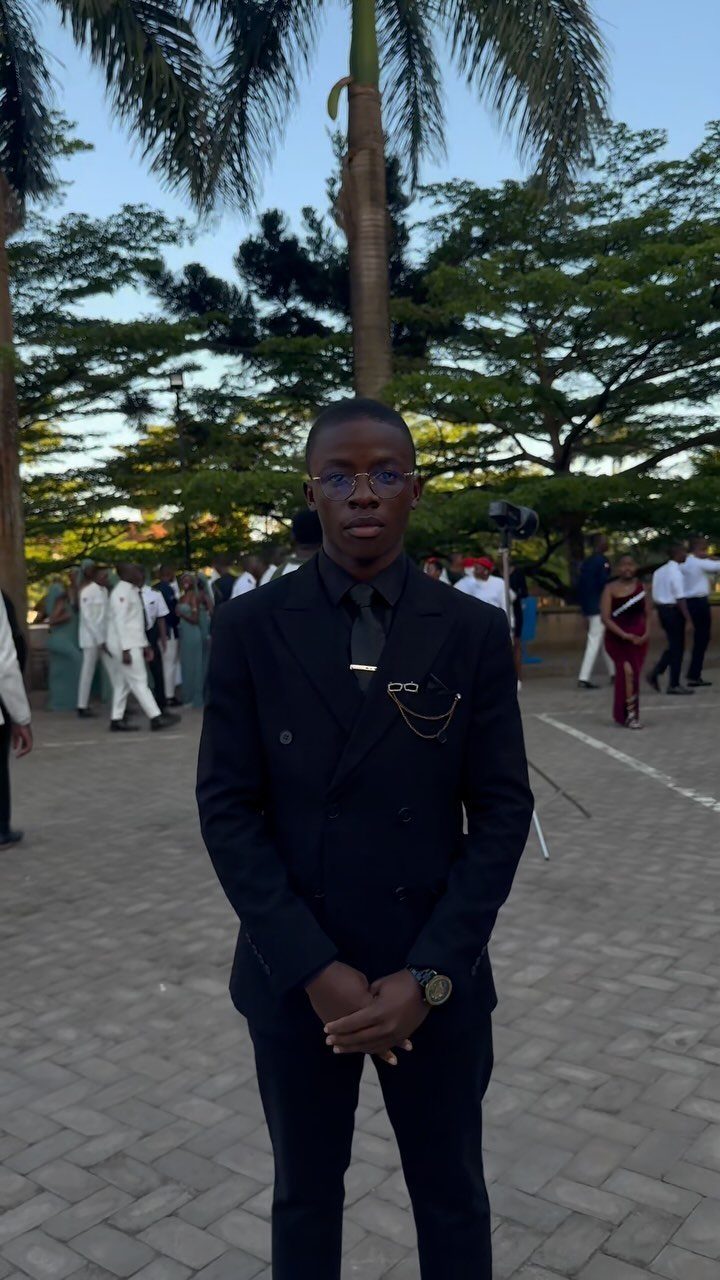
Black is the lowest-risk choice here: it matches nearly any date’s dress color, hides small fit flaws better than lighter shades, and you can wear it again to graduation or a job interview.
That reuse is why I’d buy a black suit rather than rent one.
An all-black shirt and tie, like this double-breasted version, looks sharp but flat in photos. A white shirt or a tie in a bold color keeps you from disappearing into the background.
5. Olive Green Suit
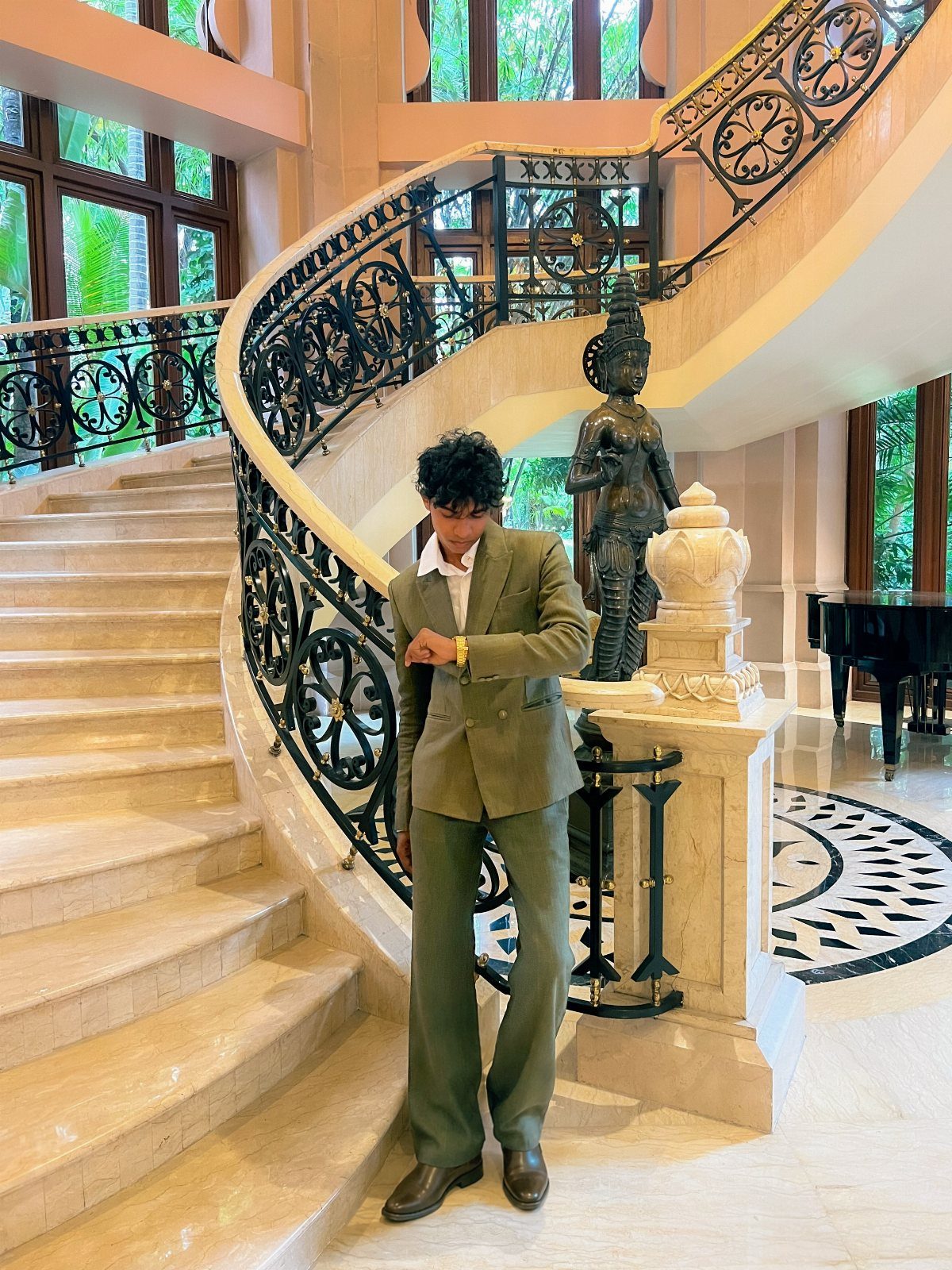
Olive sits between a neutral and a color, so it looks current without shouting. Brown shoes are the natural partner, and a cream or white shirt lets the green read as deliberate rather than military.
It’s a smart pick if black feels too safe and a jewel tone feels too bold. Check it in daylight before buying; olive can look either warm or drab depending on the light.
6. Black Tuxedo
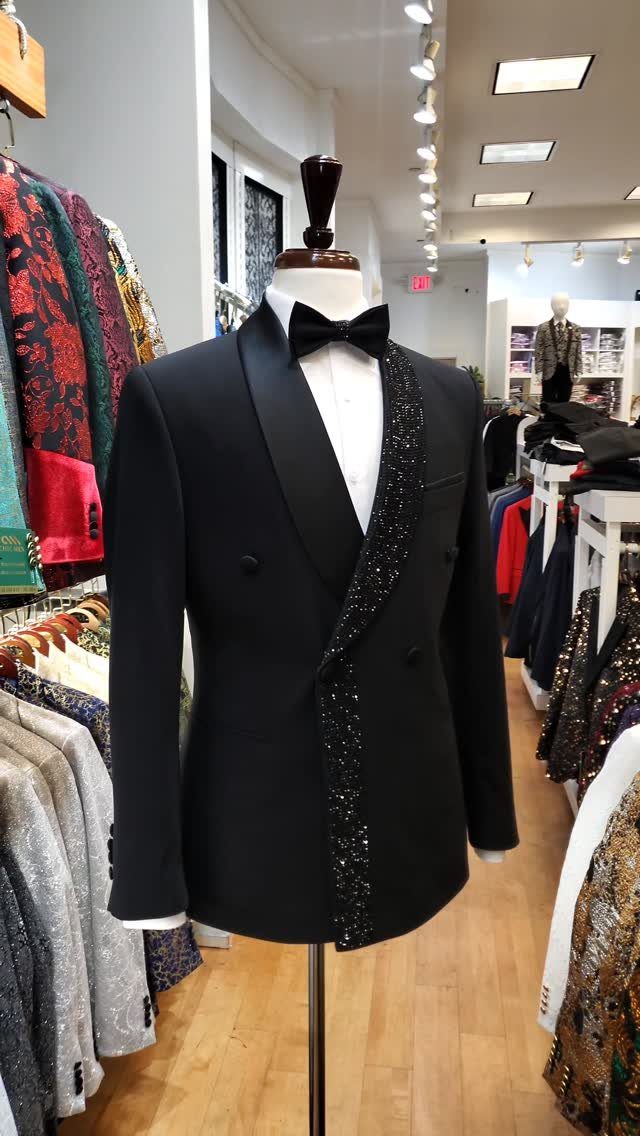
A tuxedo gets its identity from satin facing on the lapels, and usually on the bow tie too; a black suit has none of it.
That sheen is the detail that reads as formal under evening light. This one adds a sequined lapel for extra shine, which is a bigger statement than the standard satin facing.
If you rent, tuxedos are the easiest thing to find in stock, and shops usually bundle the shirt and bow tie. Go with a plain satin lapel if you want the classic version and want to avoid looking overdressed.
7. Three-Piece Suit
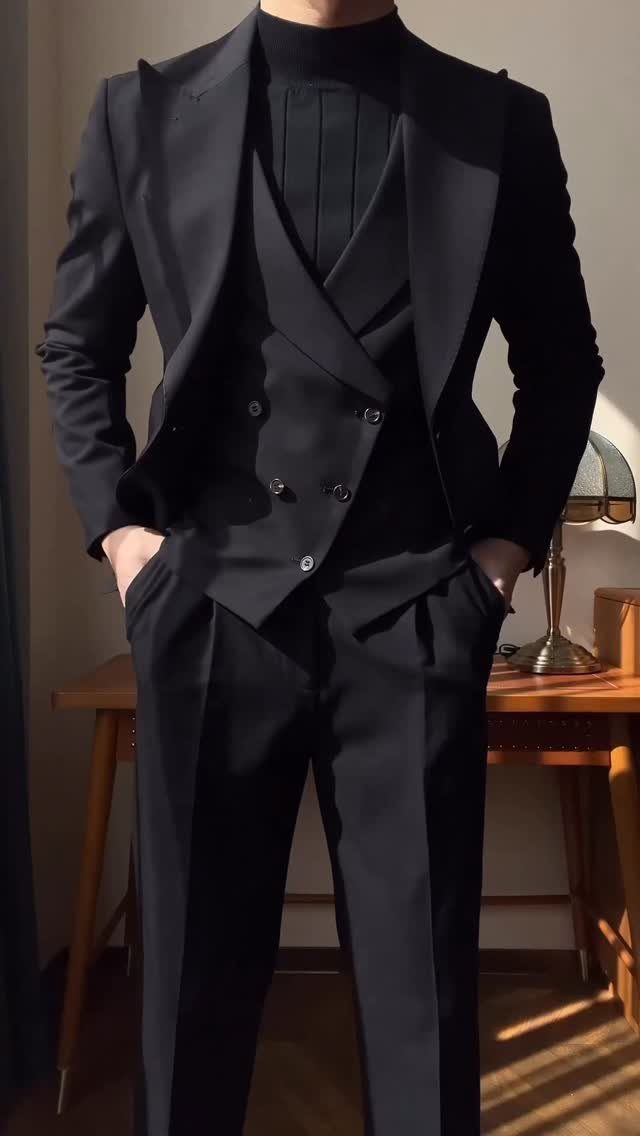
A waistcoat gives a black suit a second layer to work with, and that is why this version looks finished even without a tie.
Worn over a turtleneck, as here, it reads modern; a white dress shirt and slim tie push it toward classic prom.
Check one thing before buying: the waistcoat should cover your trouser waistband when you stand and sit. If it rides up, you get a flash of shirt that spoils the line.
You can also drop the jacket for dinner and keep the vest on, which makes this a flexible pick if prom runs long.
8. Slim-Fit Suit
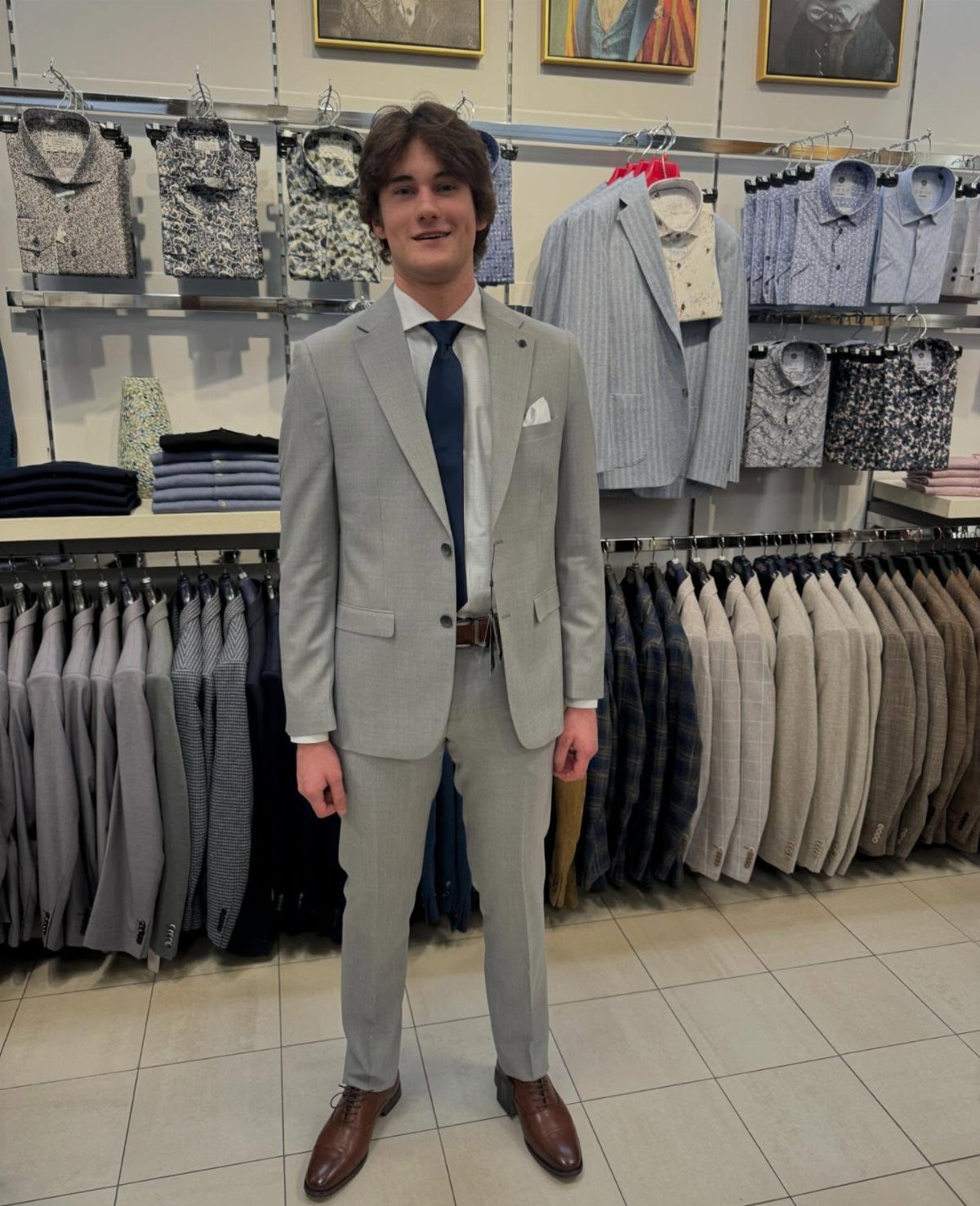
Slim fit is a cut, not a color, so it works in any shade of suit. The fabric follows your shoulders, torso and legs closely, with trousers that taper toward the ankle.
On a lean build it looks sharp.
If you’re broader through the chest or thighs, try on a regular fit alongside it; a slim cut that pulls at the button or wrinkles across the back looks worse than a roomier one that lies flat.
Shoulder seams should end where your shoulders do, and sleeves should show about half an inch of shirt cuff. A tailor can adjust the rest cheaply.
9. Double-Breasted Suit
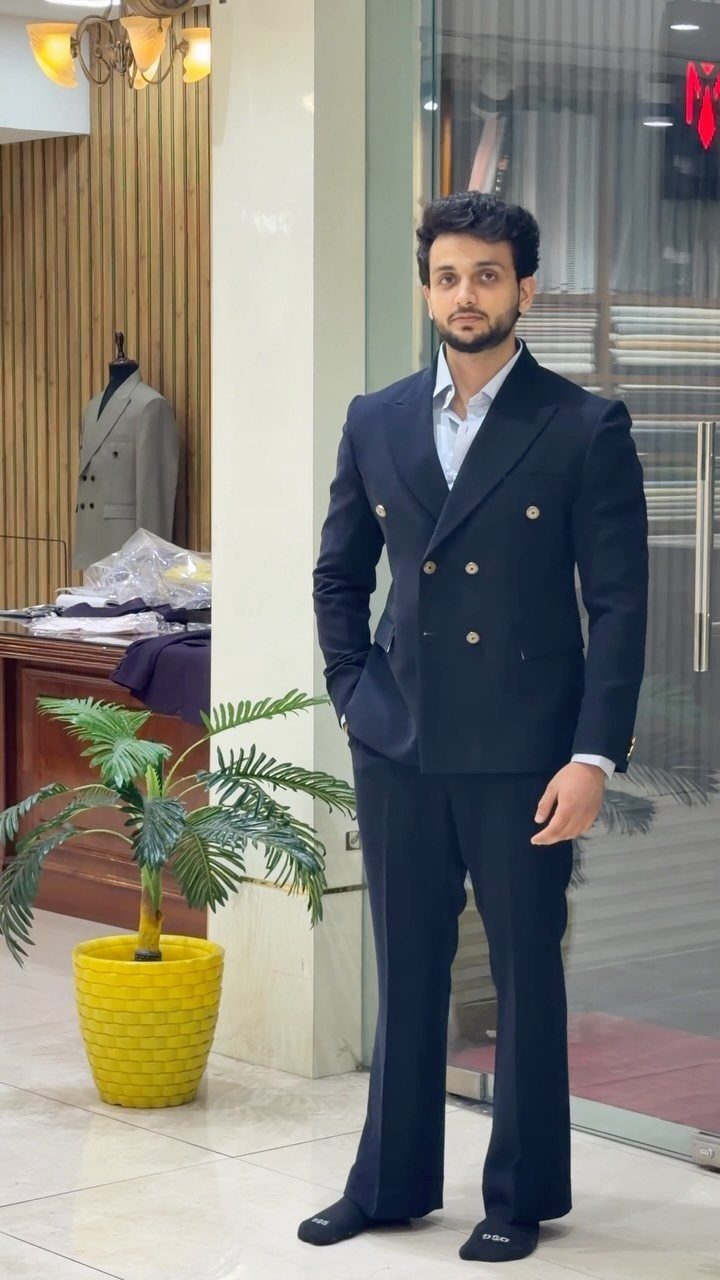
Overlapping front panels and a row of buttons make a double-breasted jacket look more built than a standard single-breasted one. On a navy suit it’s formal without being stiff, and it photographs well straight on.
Keep the jacket buttoned when standing; unbuttoned, the flaps swing open and the shape falls apart.
Fit matters more here because extra fabric across the chest shows. If you’re on the shorter side, pick a jacket that ends at the base of your seat, so the legs don’t look cut off.
10. Off-White Suit
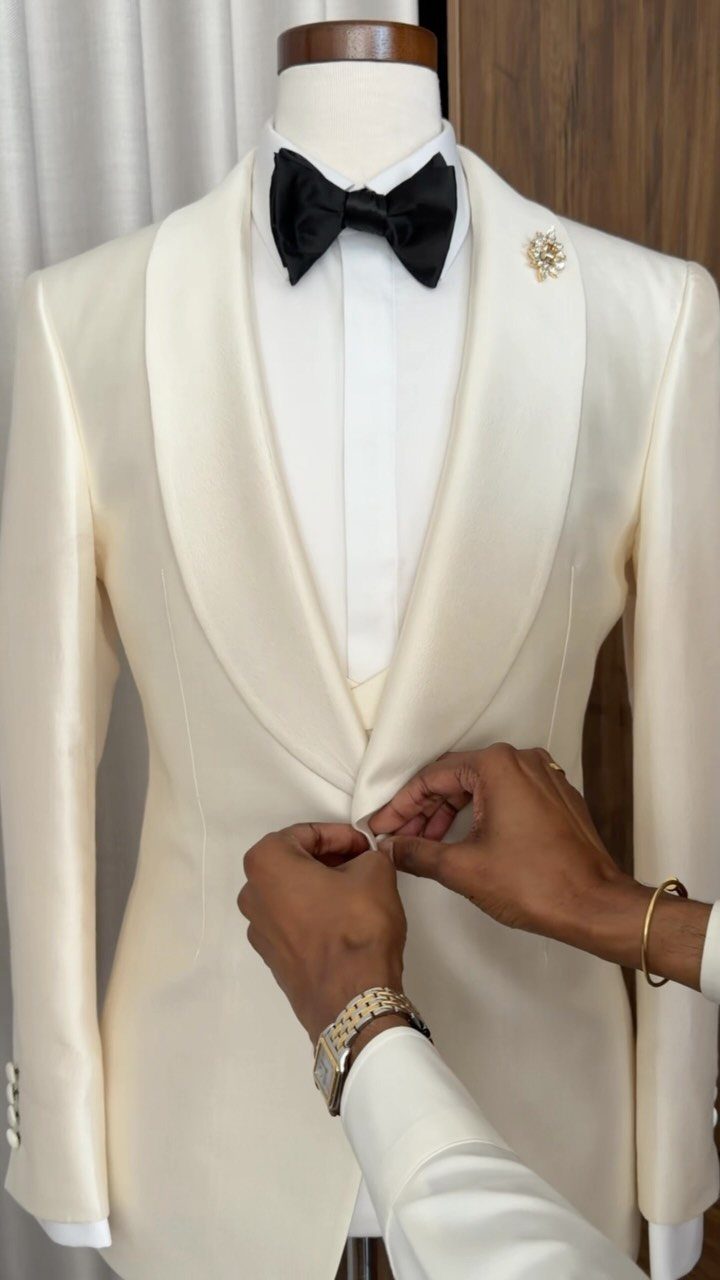
Off-white is cream, not stark white, and that warmth keeps it from looking like a costume.
Off-white is the boldest neutral in this group, and a black bow tie gives it crisp contrast. A small gold lapel pin adds detail without crowding the jacket.
Care is the cost: off-white shows every spill and scuff, so plan on dry cleaning right after the event.
Light fabric shows every stain, so skip eating in it before photos and keep a stain pen handy. If you rent, ask how it’s cleaned between wearers.
Black shoes and a white shirt keep the look sharp; brown shoes pull it casual.
11. Velvet Dinner Jacket
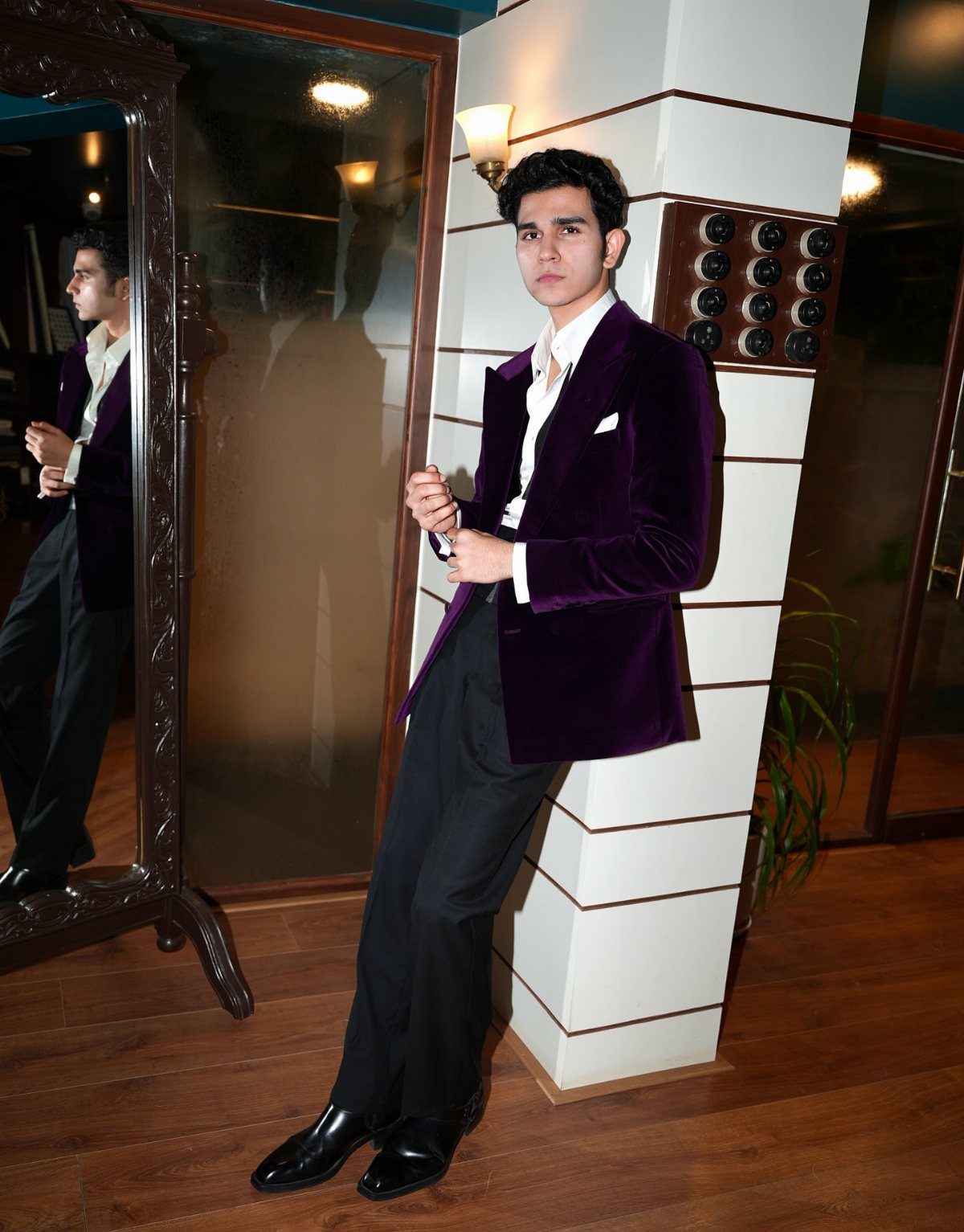
Velvet is the fabric that makes a dinner jacket feel like a statement. A purple one over black trousers and a white shirt reads richer than any suit, because the pile catches light and deepens the color.
Keep the trousers plain and dark so the jacket stays the focus.
A black bow tie or a slim black tie works; skip anything shiny that competes. Velvet runs warm, so it suits a cooler evening or an air-conditioned ballroom better than a crowded gym.
Buy it if you’ll wear it to future formal events; as a one-night rental it’s an easy way to try bold color.
12. Embroidered Suit
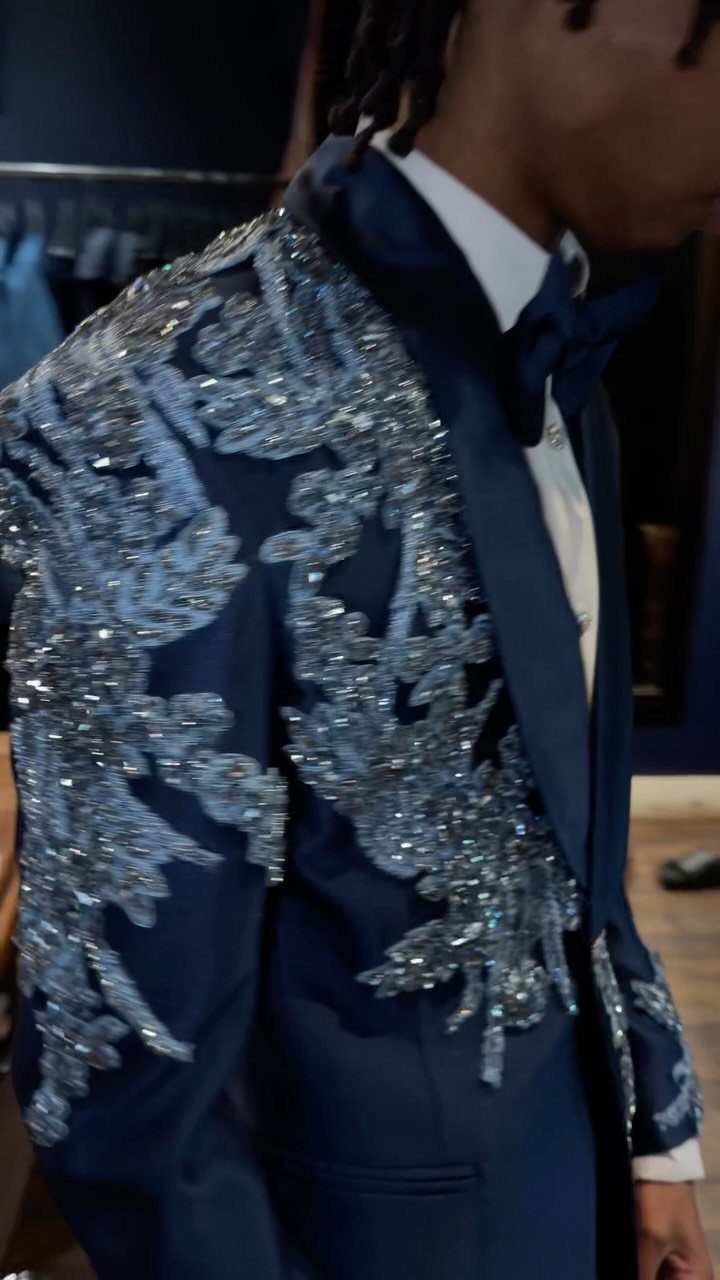
Embroidery moves the detail from the color to the stitching. On a navy jacket, silver floral work reads as pattern up close and as texture from a distance, which makes it easier to wear than a loud print.
With this much going on, keep the rest quiet: white shirt, black trousers, black shoes.
Look closely at the stitching before you buy. Loose threads or puckered fabric around the design are common on cheaper pieces and show up fast in photos.
13. Pastel Suit
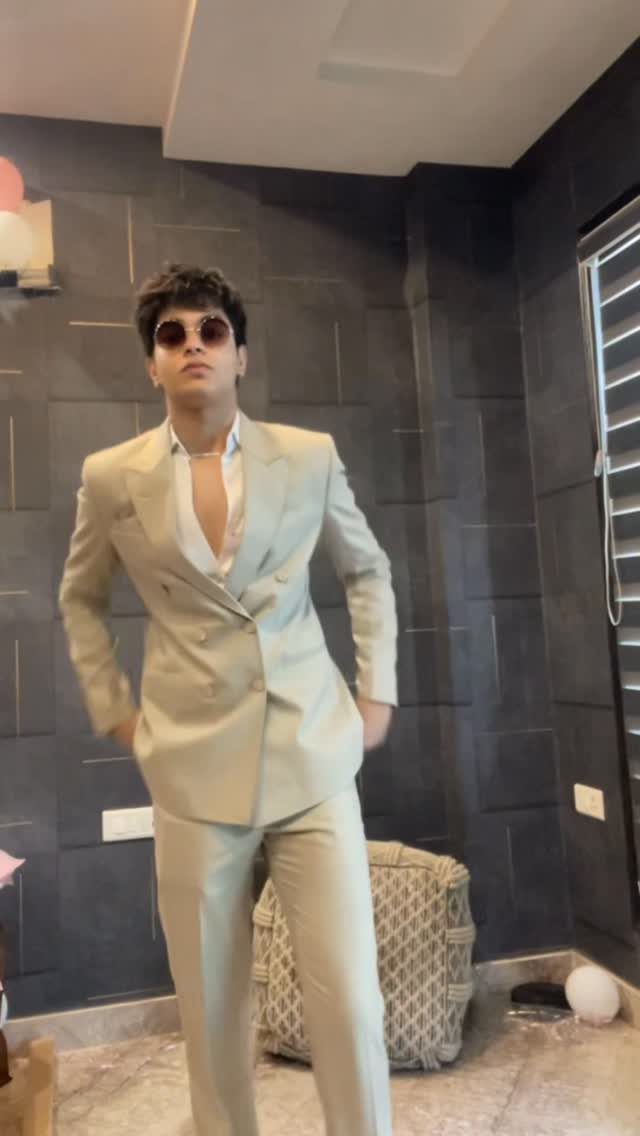
Light beige and soft pastels fit a spring prom, when daylight photos and garden venues call for something airier than black.
A double-breasted cut in a pale shade, like this one, keeps the look structured so it doesn’t tip into beach-wedding territory.
A pastel suit looks best with a crisp white or cream shirt underneath and shoes in a pale tan or light brown, so nothing competes with the color of the jacket.
Pastel shows wrinkles and stains fast, so keep it on a hanger until you leave and skip the buffet line before photos.
14. Metallic Suit
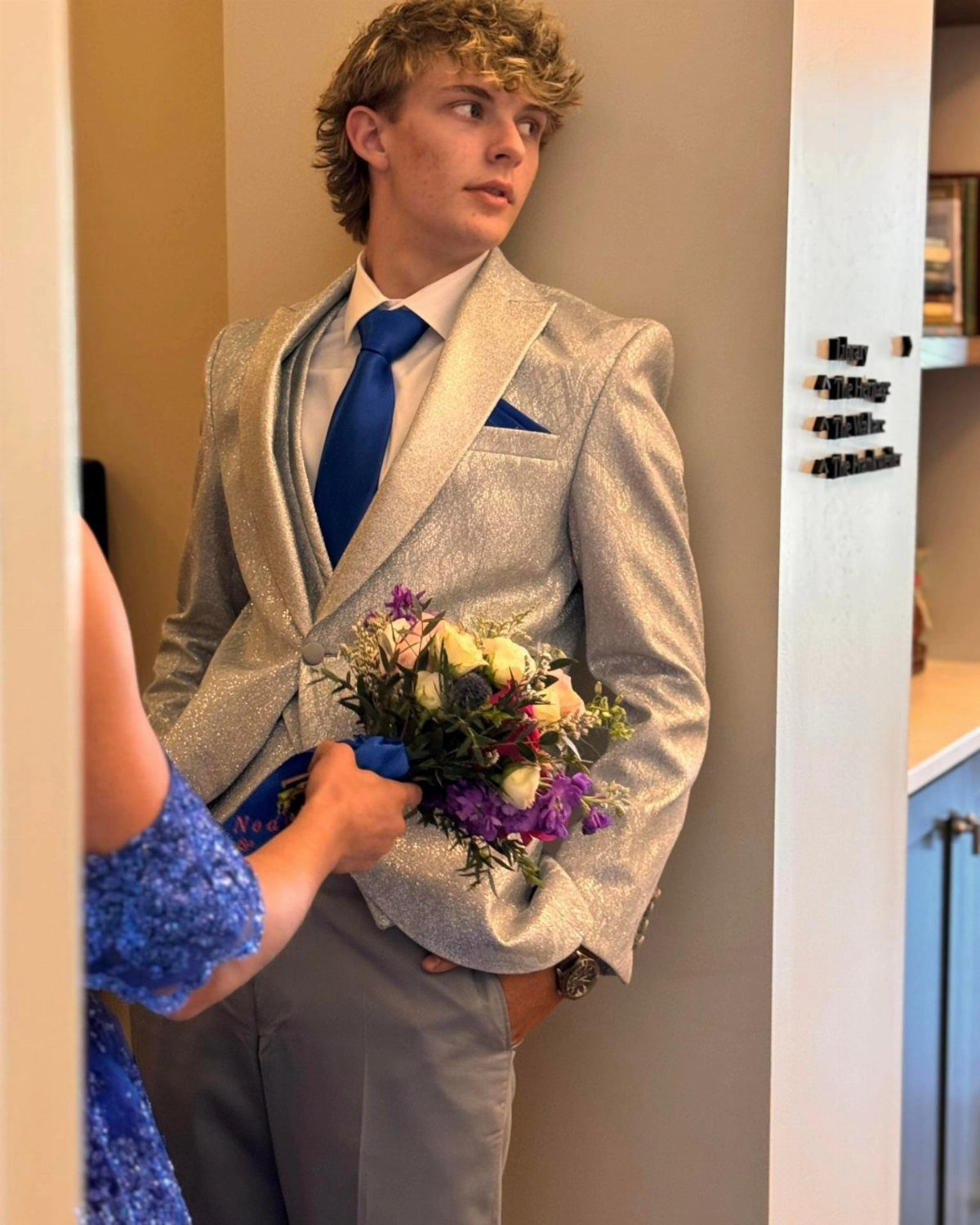
Metallic fabric is built for flash photography, and silver with a blue tie and grey trousers, as here, keeps the shine in one place instead of everywhere.
Let the jacket be the only loud piece: matte trousers, plain shoes, a tie in a color your date’s dress can echo.
I’d choose this for someone who wants to be seen across the room. Try it on under bright light first, since some metallics look cheap up close.
15. Floral Suit
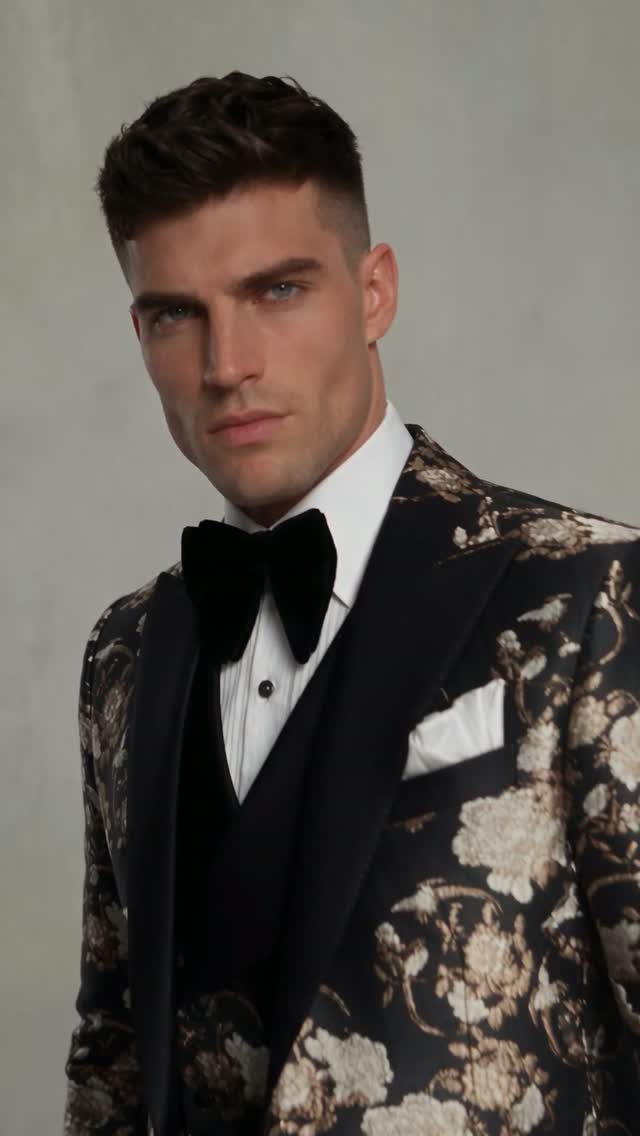
A printed jacket like this black-and-gold floral one pairs well with a solid-color dress, because the two don’t compete. Black lapels and a black bow tie give the pattern an edge, so it reads as formal rather than playful.
If your date wears a patterned dress, change plans: one print per couple is plenty.
16. Light Blue Suit
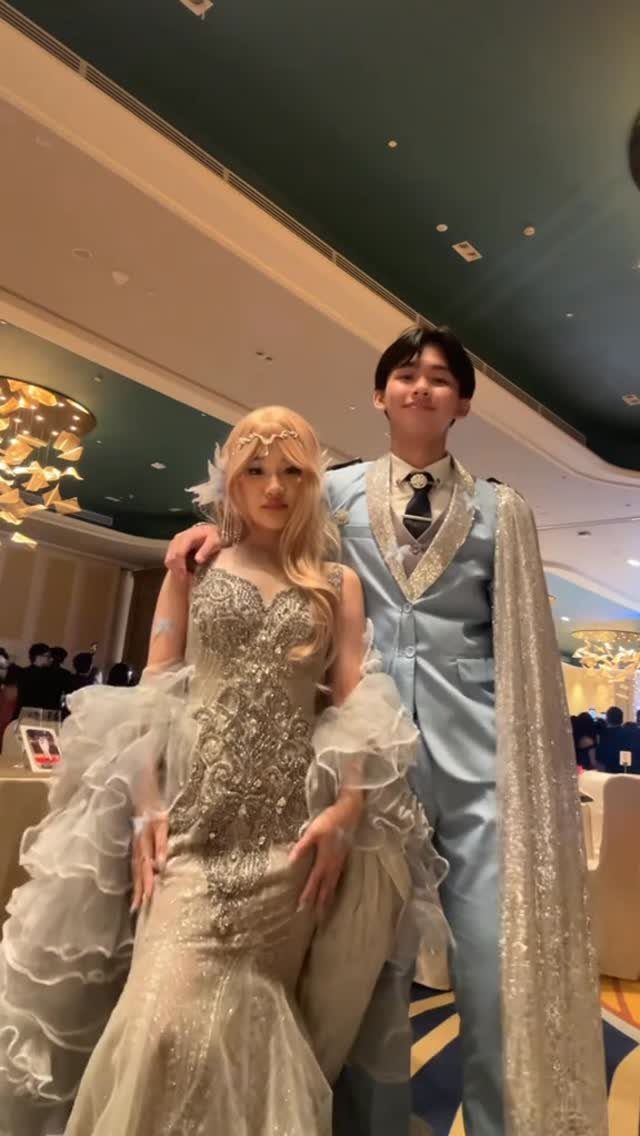
Light blue is a gentle pick that looks friendly in photos, and it sits well beside a silver or grey gown, as in this pairing.
A tie a shade or two darker than the suit adds depth without adding another color.
Choose white or pale shoes only if the venue is bright; for an evening ballroom, I’d go with black. Light blue wrinkles easily, so steam it the day of.
17. Navy Tuxedo
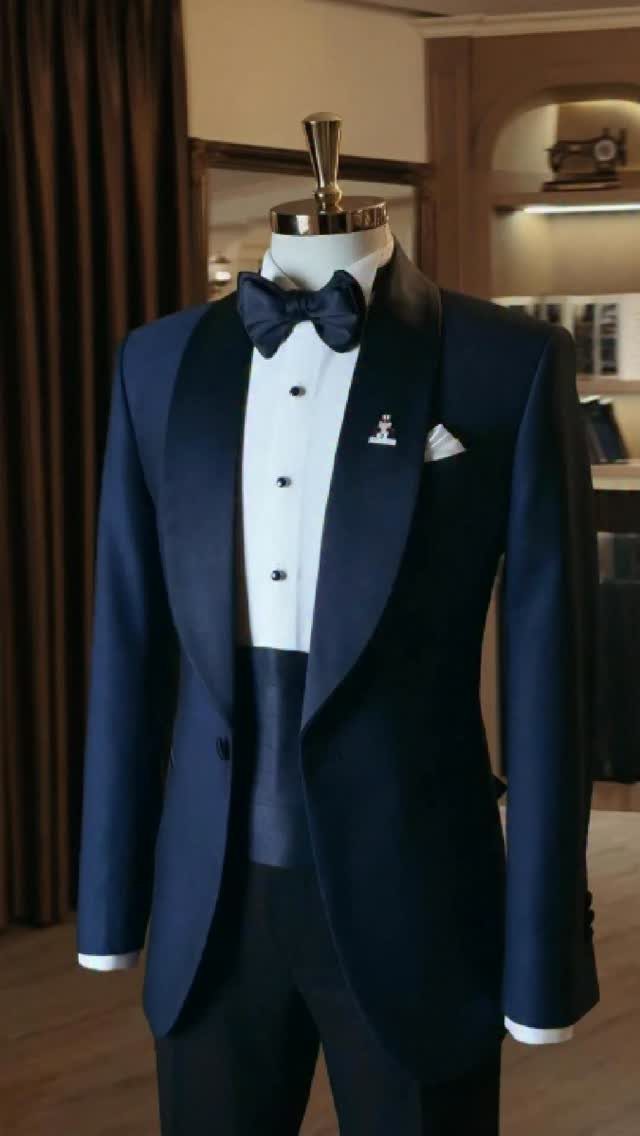
Navy tuxedos read almost black indoors but show a richer blue under flash and daylight, which makes them a polished alternative to the usual black.
Satin lapels, a black bow tie and a white pocket square keep it formal and clean.
Stick with black shoes. If you rent, ask for the navy in person, since shades vary between shops and photos online can mislead.
18. Grey Suit
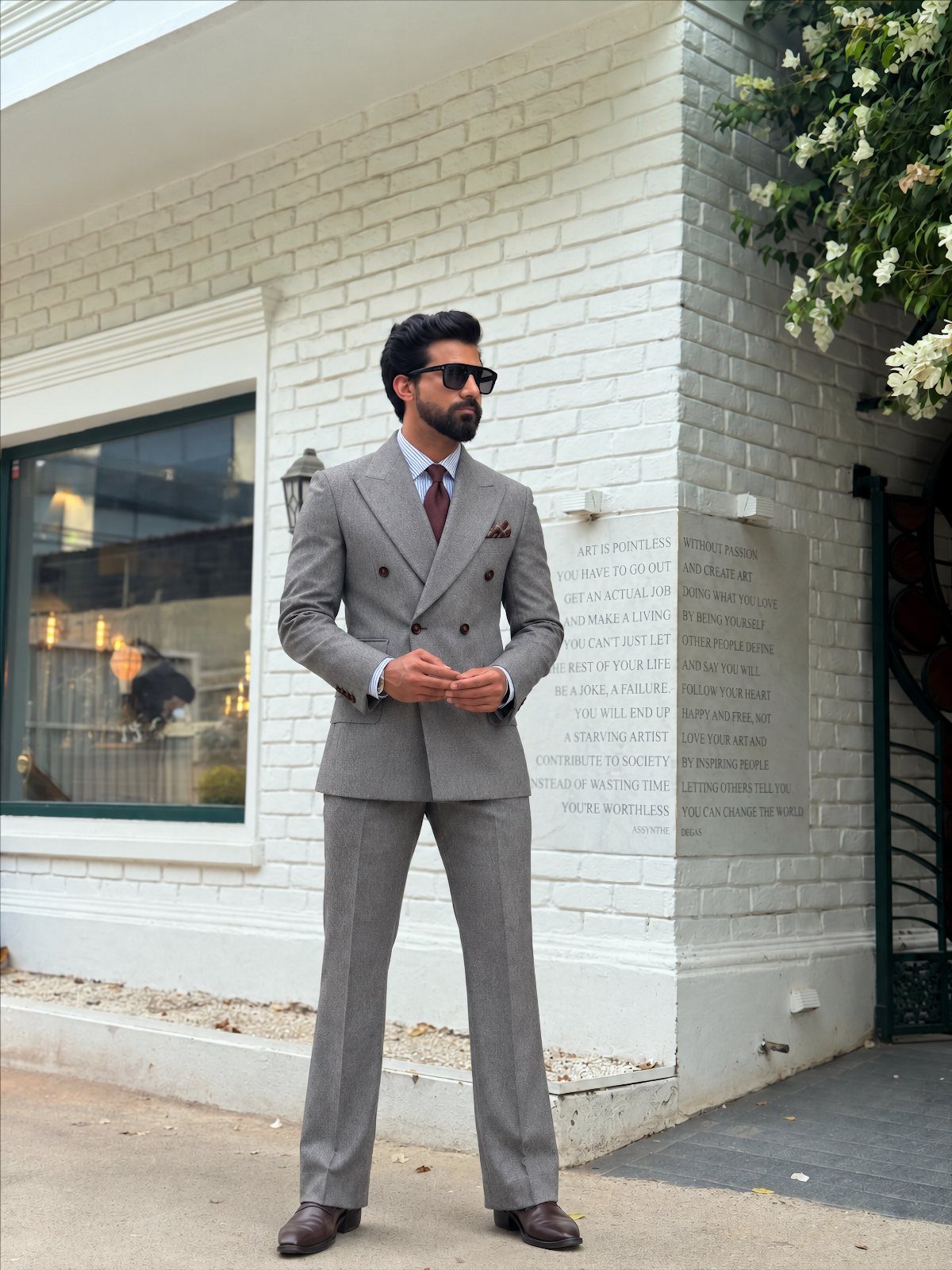
Grey is the quiet choice that still looks sharp, and a double-breasted cut gives it presence a basic single-breasted jacket lacks. A red tie, as in this look, adds the one spot of color it needs.
Pick a mid-grey over a very light one; it hides creases better and works with both black and brown shoes. Keep the jacket buttoned while standing, and check that the chest lies flat.
19. Silver-Patterned Prom Suit
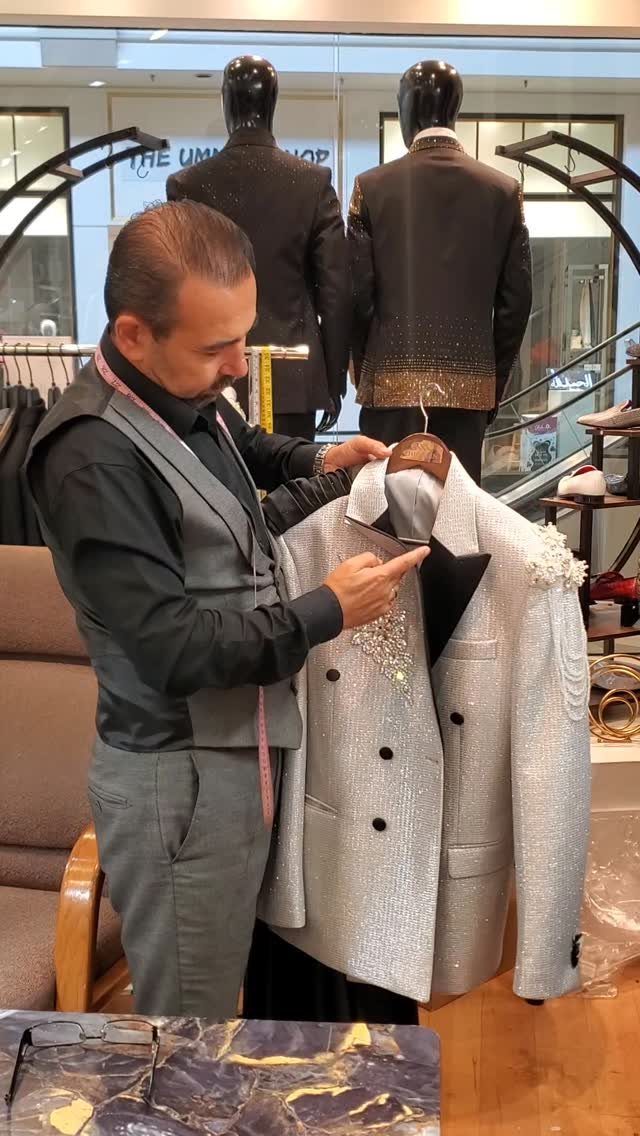
Silver with a woven or printed pattern throws light in a way plain fabric can’t, so it earns its place for a prom where photos are half the point.
This one reads silver-white, which is cooler and softer than a full metallic.
Let the jacket be the only busy piece: plain white shirt, solid trousers, black shoes. A tie or bow tie in black or deep grey keeps the shimmer from competing.
Check it under the store’s bright lights and again near a window, since patterned silver can look washed out in one and flashy in the other.
If it feels like a stretch for the price, rent it and save the budget.
Coordinating with a Date
An exact match with your date’s dress reads more like a group costume than a coordinated pair. A single accent color borrowed from her outfit, in a pocket square, tie, or vest, does the job with far less risk.
If her dress is emerald with gold beading, a navy or black suit with a gold pocket square ties the two together without copying anything.
Another route is colors that sit next to each other: her burgundy with your navy or charcoal. Or start from a grey or navy base, which works with nearly any dress color.
Wait until she has chosen the dress, or tell her your suit color first, so neither of you is surprised on the night.
Keep patterns from competing, so no floral jacket beside a floral dress, and avoid 2 identical fabrics like matching satin or velvet.
What sounds good in theory can fight in photos, so check mockups of the suit and dress together before you commit.
Buying Versus Renting
Renting makes sense in a few cases. Teens still growing taller or filling out can outgrow a suit within 6 months, which makes buying a gamble and renting the safer bet.
It also fits a one-time event with nothing formal coming up, or a strict black-tie night that calls for a specific tuxedo style.
Buying makes sense if a suit will see more occasions. Rentals often run boxy and use cheaper fabric, while a suit you own can be fitted to your measurements and worn for years.
If you buy, look for custom sizing, because fit shapes the look more than price does.
If you’re unsure, ask yourself how many formal events you expect over the next couple of years. More than one usually tips it toward buying.
Multi-use value includes prom, graduation, college formals, job interviews, and family weddings, one purchase covers 4+ events over two years. If rental costs $200 and you need formal wear for three events in two years, buying at $250 saves money by the second event.
Frequently Asked Questions
What is the difference between a prom suit and a tuxedo?
Satin on the lapels and bow tie is what separates a tuxedo from a suit, and under evening light that sheen is what reads as formal.
Because a suit is cut from a single fabric, it leaves more room to play with color and pattern. For a strict black-tie prom, I’d go with the tuxedo; for anything looser, a well-fitted suit does the same job.
Are double-breasted suits appropriate for prom?
Yes. Keep it buttoned while standing, since an open jacket loses its shape.
Is it better to rent or buy a prom suit?
Renting makes sense if you’re still growing, since a teen can outgrow a suit in about 6 months, or if prom is the only dressy event on the calendar.
If more formal occasions are coming in the next couple of years, buying wins.
Do prom suits come in custom sizing?
Some do, and it’s worth looking for when you buy. If custom isn’t an option, a tailor can adjust sleeves and trousers cheaply, as long as the shoulder seams already end where your shoulders do.