Fall skirt outfits range from a half-tuck and loafers to full suede-and-knit commitment, and the one that belongs to you depends on how much maintenance you’re willing to fold into your Sunday routine.
Suede in particular catches light like nothing else in October, but that nap mats by Thanksgiving without brushing and spot-cleaning. The $35 maroon flats that pull the whole palette together?
Those are real, and they matter more than the skirt price tag.
1. Pleated Mini With a Sweater and Trench
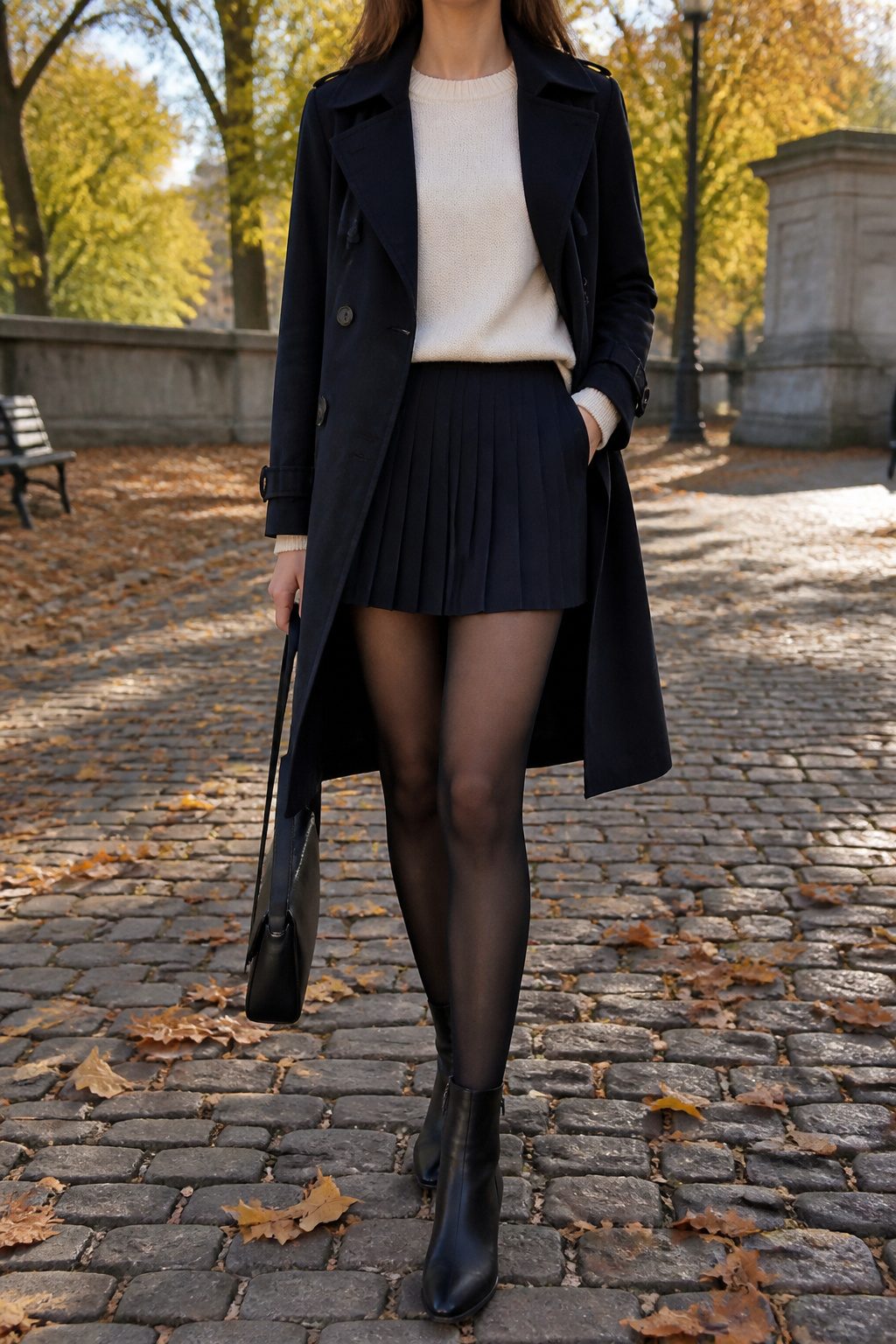
A pleated mini skirt needs something grounded on top, or the whole outfit reads as costume. The sweater is where the balance happens.
A mid-weight knit, something that drapes rather than balloons, keeps the volume in check without turning the silhouette into a box.
Chunky cables fight the pleats; a finer gauge or a relaxed cashmere blend lets the skirt keep its shape underneath.
The trench length matters more here than with trousers. A hem that falls to mid-thigh breaks the line at the wrong place, chopping the leg where the mini already stopped.
A longer trench, knee-length or just below, extends the vertical line so the short skirt reads as intentional proportion, not accident. Structured outerwear complements the flare rather than competing with it.
Tights underneath bridge the season. Sheer black keeps the look polished for an office that still wants some skin showing; opaque shifts it toward evening.
The half-tuck on the sweater, front only, defines the waist so the coat has a shape to follow when it opens.
2. Denim Skirt With an Oversized Button-Up
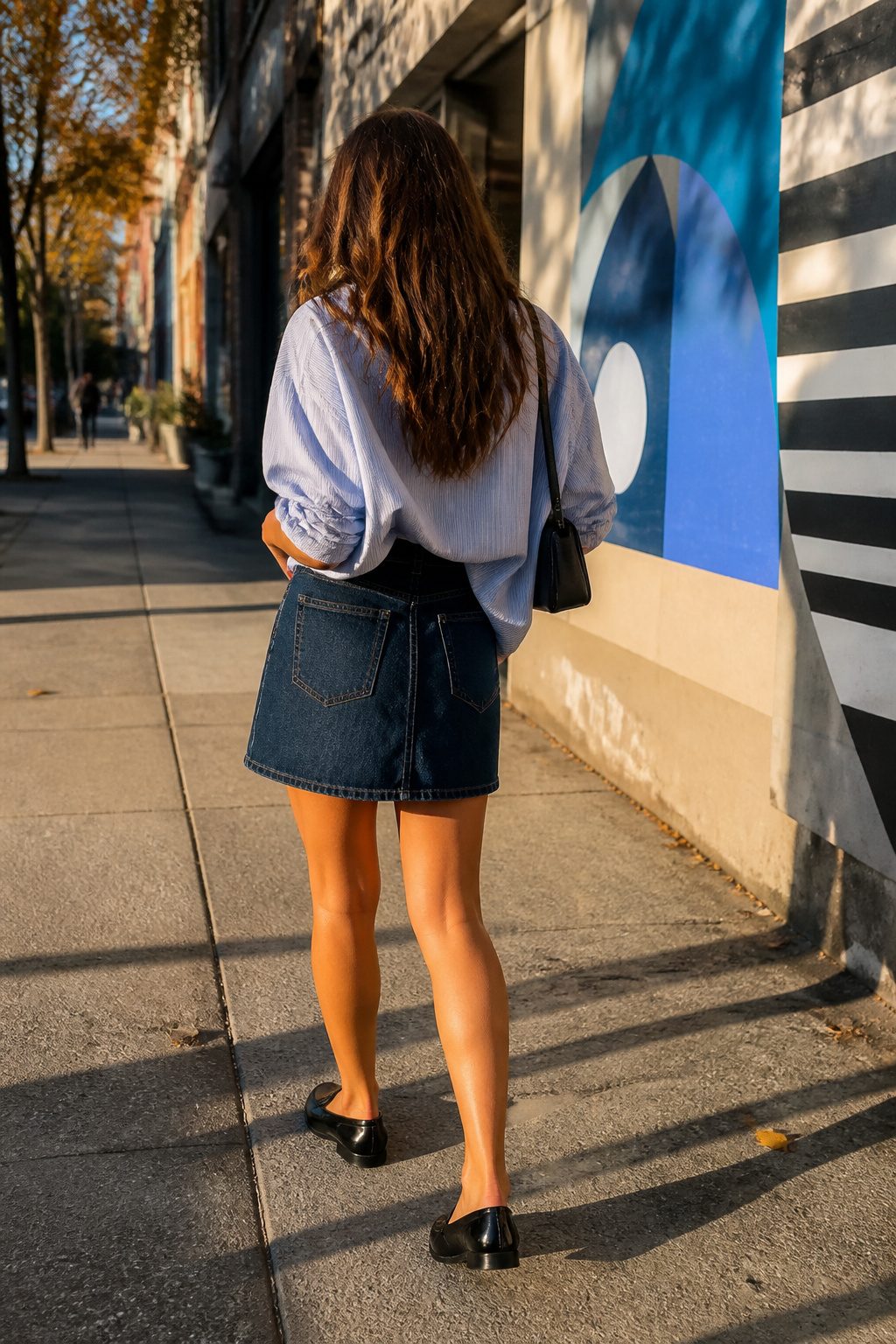
An oversized button-up with a denim skirt reads street-style without trying for it. The question is always the tuck: full, half, or none at all.
A full tuck can look too office, too fast. Half-tuck the front only, leave the tail out over the hip, and the volume stays intentional rather than sloppy.
Sleeve rolling matters almost as much. Push them to the elbow, or use a hair-tie hack to keep a loose roll from sliding down through the day.
Wash is where this pairing lives or dies for fall. Darker denim, especially a deep indigo or near-black wash, carries more weight against autumn light than summer’s pale blues.
A pleated denim mini in that darker range works with loafers while the weather holds, then shifts to tights and knee-high boots once the temperature drops.
The lighter washes that dominated summer read too breezy now; they fight the season instead of matching it.
3. Midi Skirt With a Graphic T-Shirt
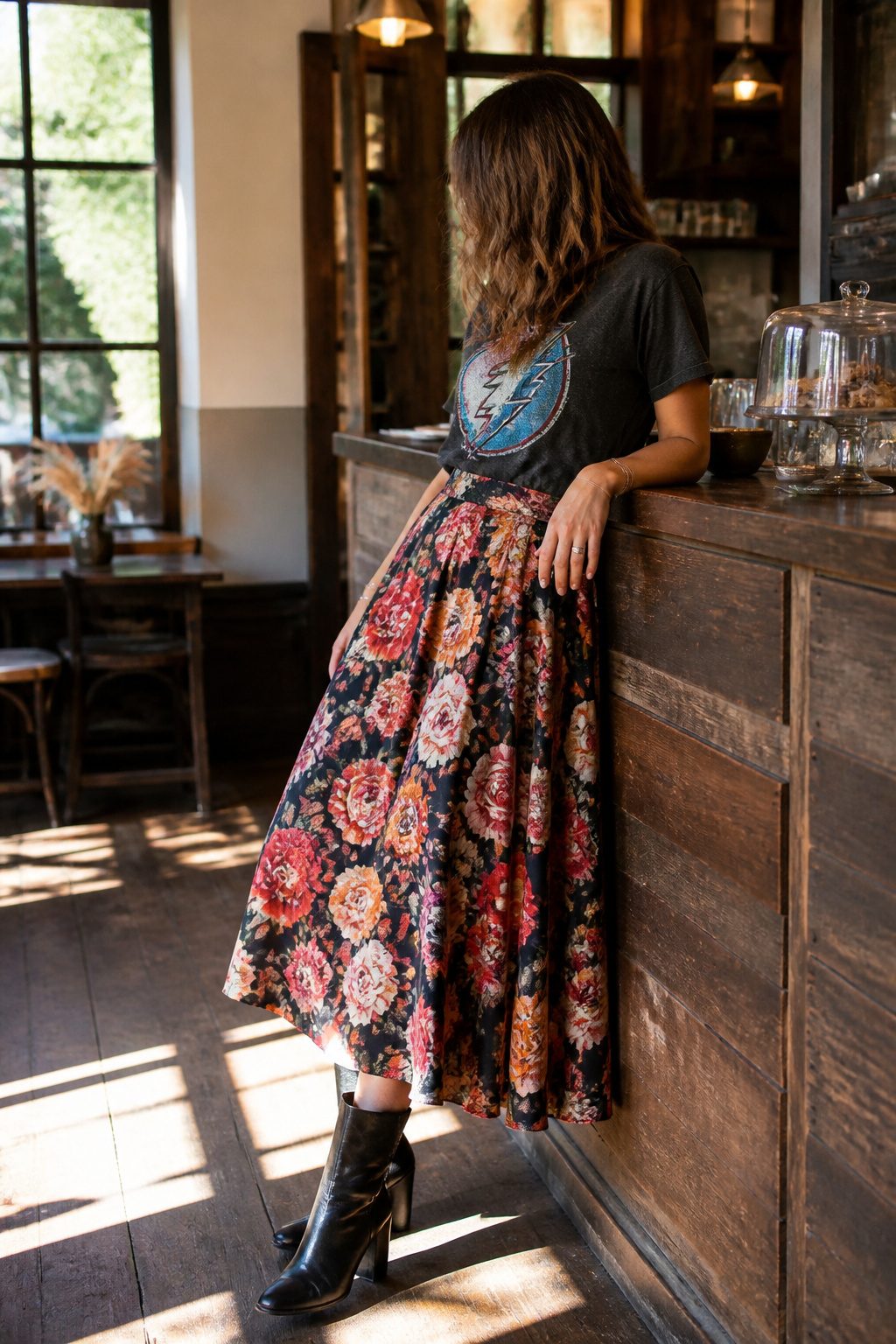
A midi skirt with a graphic t-shirt only works if you commit to the tension between the pieces. The casual tee can make the longer hemline look like you got dressed in the dark, or it can read as deliberate.
The difference is usually the graphic itself.
A small chest logo or single word disappears against the fabric and leaves the eye nowhere to go; a larger print, something that carries across the front, holds its own against the skirt’s volume and gives the outfit a center.
The shoe choice finishes the argument. Sneakers or flat sandals tip the look toward accidental, like you grabbed the nearest clean items.
Something with a little structure, a leather ankle boot or a clean loafer, signals that the pairing was intentional. The boot in particular grounds the longer line and carries the outfit straight through fall without needing another layer.
From the sources, this combination shows up with printed midis and band tees alike, which tells me the graphic itself can shift the mood.
A softer print with a ruffled skirt reads casual-weekend; a leopard mini with the same band tee turns toward something sharper. The graphic scale should match the statement you want the skirt to make, not compete with it.
4. Plaid Skirt With a Fitted Knit or Blouse
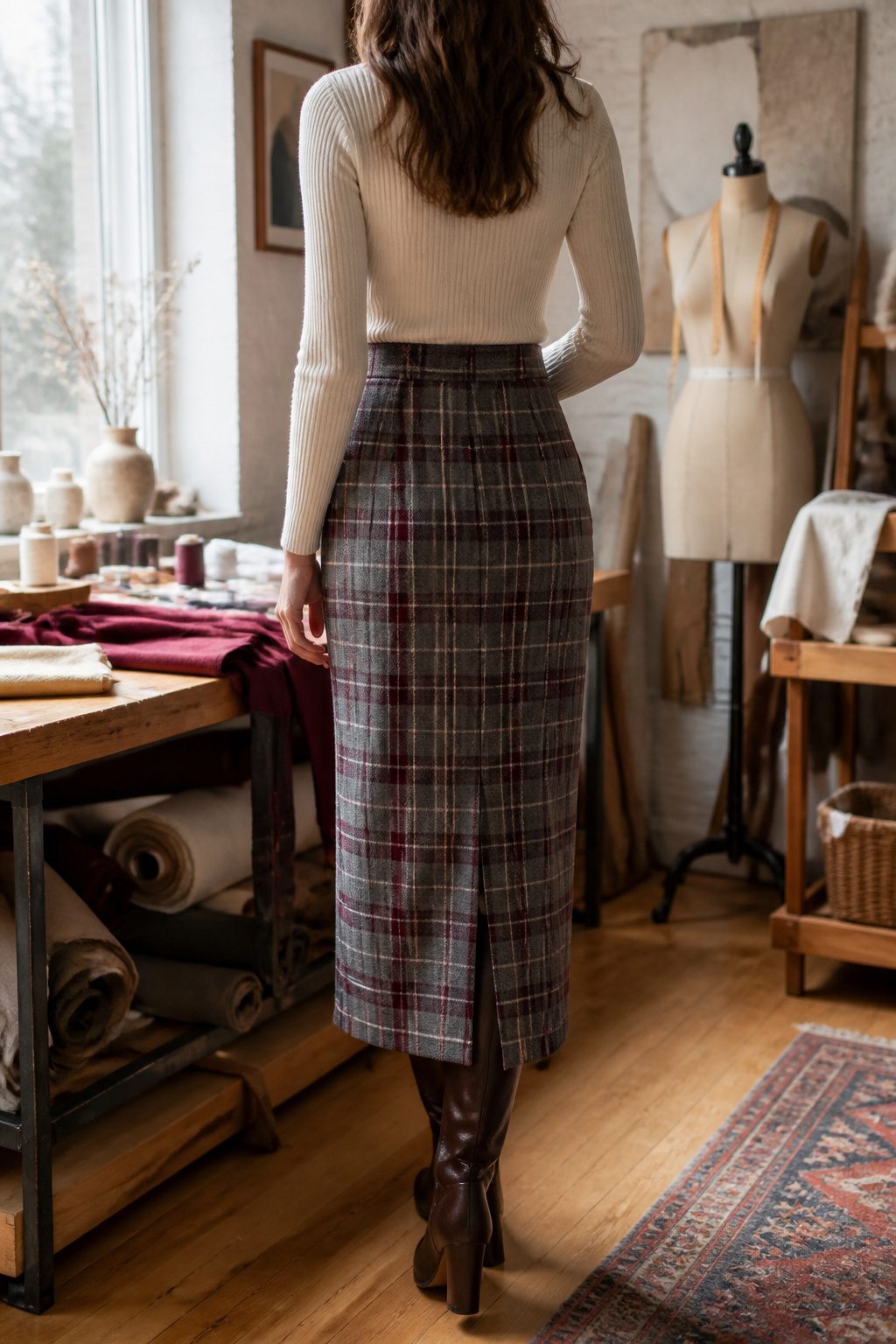
A plaid skirt with a fitted knit or blouse only looks intentional if you commit to the tuck.
The half-tuck that works with denim reads sloppy here; the waistband needs to sit clean so the skirt’s line stays uninterrupted from hip to hem.
Fitted means shaped to the body, not painted on. A knit should skim the ribcage without straining at the buttons, and a blouse should leave enough ease that you can raise an arm without the hem pulling free.
That margin is what lets the tuck hold all day.
Scale matters more with plaid than with most patterns. Smaller repeats keep a fuller hip quieter, while larger windowpane checks need structure in the skirt itself, a heavier wool or a sewn-down pleat, to keep the pattern from distorting.
A very large plaid on a very curved silhouette turns geometric lines into waves that fight the shape rather than frame it.
5. Suede Skirt With a Chunky Sweater
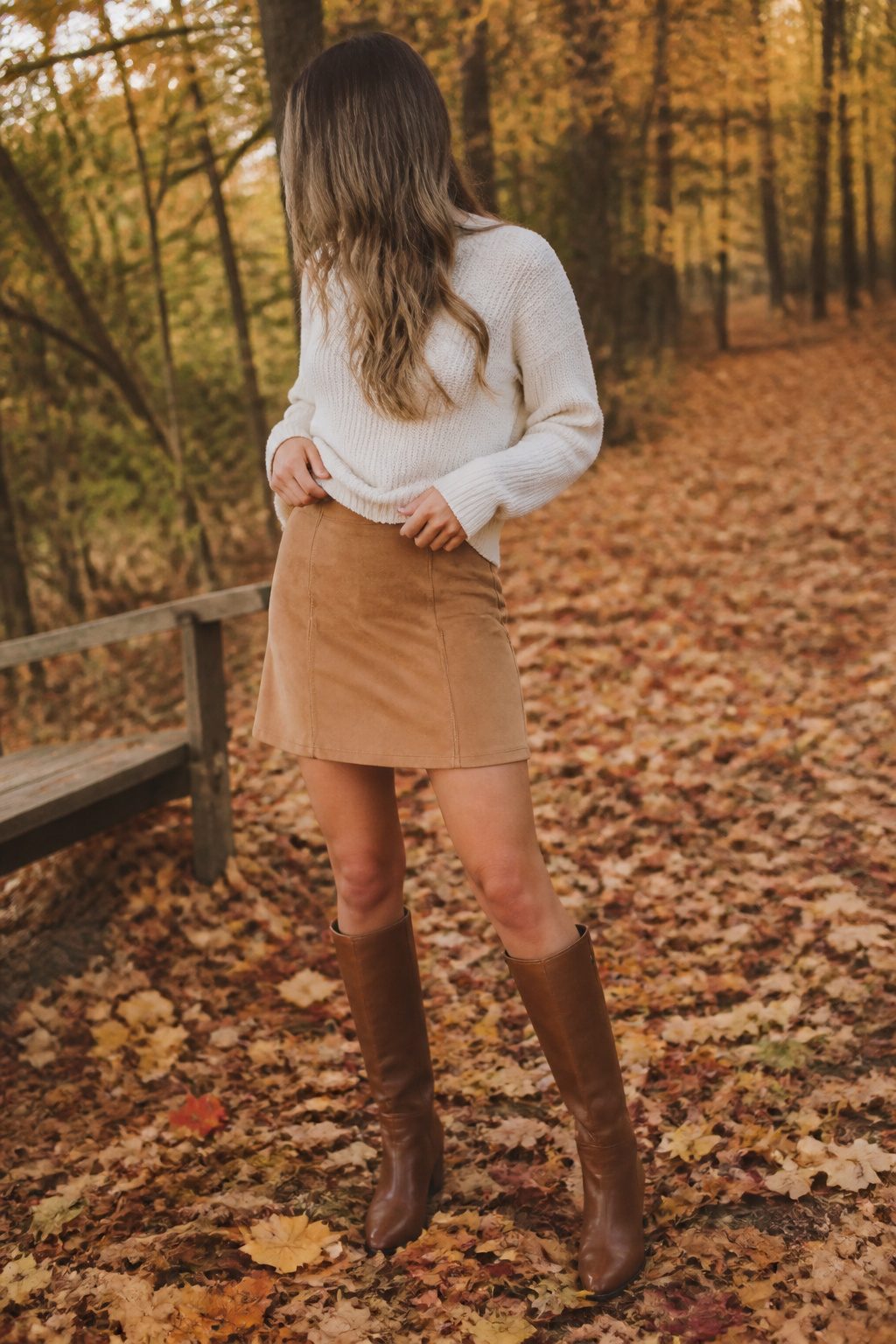
A suede skirt with a chunky sweater is the texture pairing that reads richest in fall light, but the combination can swallow your shape if both pieces carry equal weight.
The move is to keep the sweater hitting just above the hips or do a half-tuck so the eye finds a waist instead of a walking rectangle.
Claire Rose’s monochromatic suede-on-suede approach with matching jacket and pumps works for evening; for daylight, the chunkier knit against the napped skirt is the more useful version.
The real cost here is maintenance, not money. Suede demands brushing, waterproofing, and spot-cleaning with a specialized eraser or brush, not a trip through the wash.
Weekly wear means that care routine becomes part of your Sunday rhythm, or the nap mats and the piece looks tired by Thanksgiving.
A column skirt in a neutral like camel or olive gives the most outfit mileage against the time you’ll spend keeping it presentable.
6. Maxi Skirt With a T-Shirt and Leather Jacket
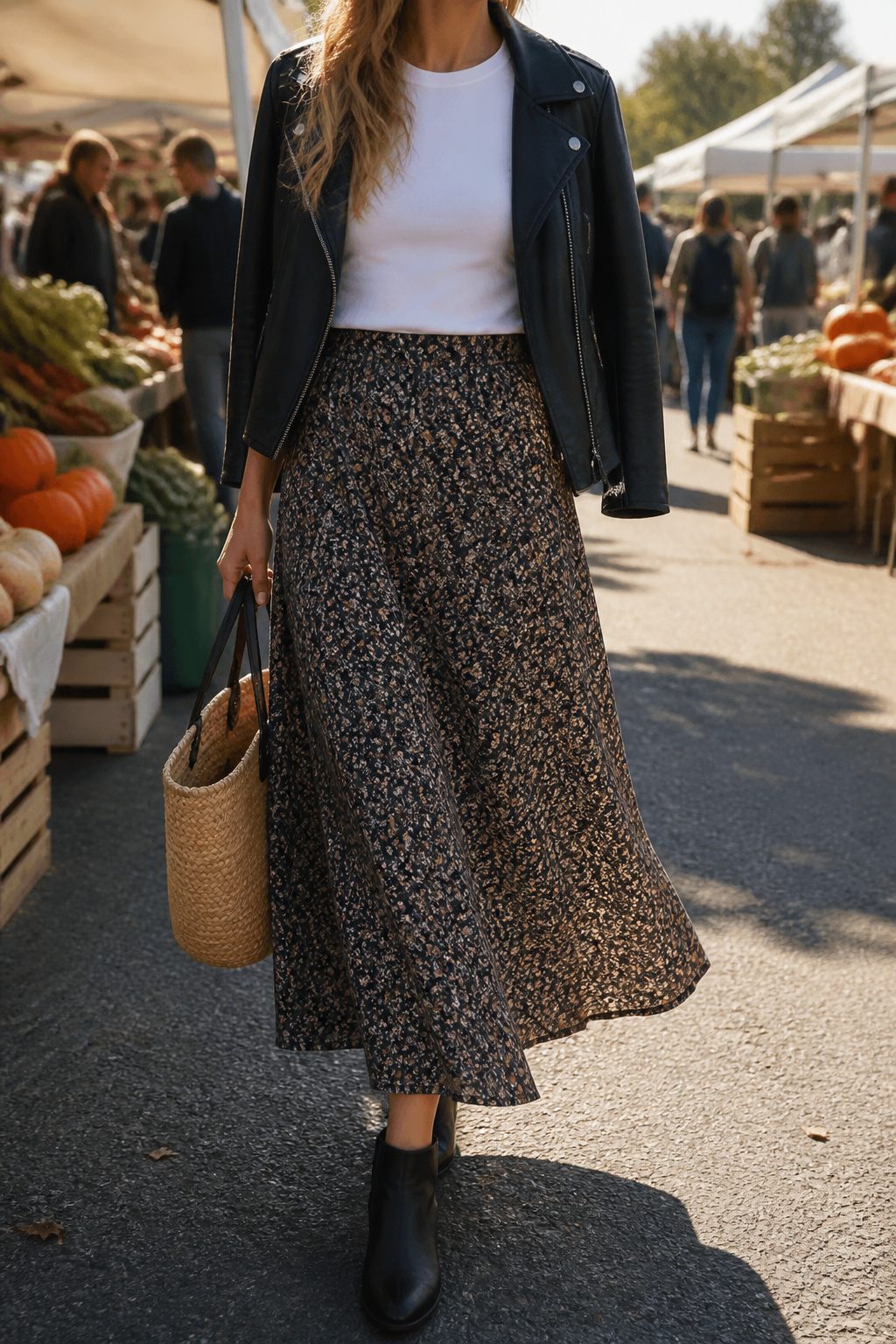
A maxi skirt with a t-shirt and leather jacket works because the skirt already covers your legs, so the jacket’s job is core warmth and structure, not full coverage.
The sources suggest throwing the jacket on as you head out, which only makes sense if the hem hits somewhere between mid-hip and upper thigh.
Any longer and the jacket fights the skirt line; any shorter and the proportions feel accidental.
Temperature swings are where this pairing earns its place. The maxi length keeps drafts off your legs while the t-shirt handles the midday sun that still breaks through in early fall.
The leather jacket adds a layer you can peel off when the afternoon warms, and the whole look stays intentional either way.
What keeps a maxi skirt wearable under a jacket is weight. The sources note that these skirts already keep you warm on those first colder fall days, which means the fabric has enough body to sit away from the legs.
A skirt that clings will bunch under a jacket and snag on static every time you walk. Medium-weight cotton, a light wool blend, or a denim pleat all hold their shape without turning stiff.
7. Wrap Skirt in Fall Hues With a Blouse
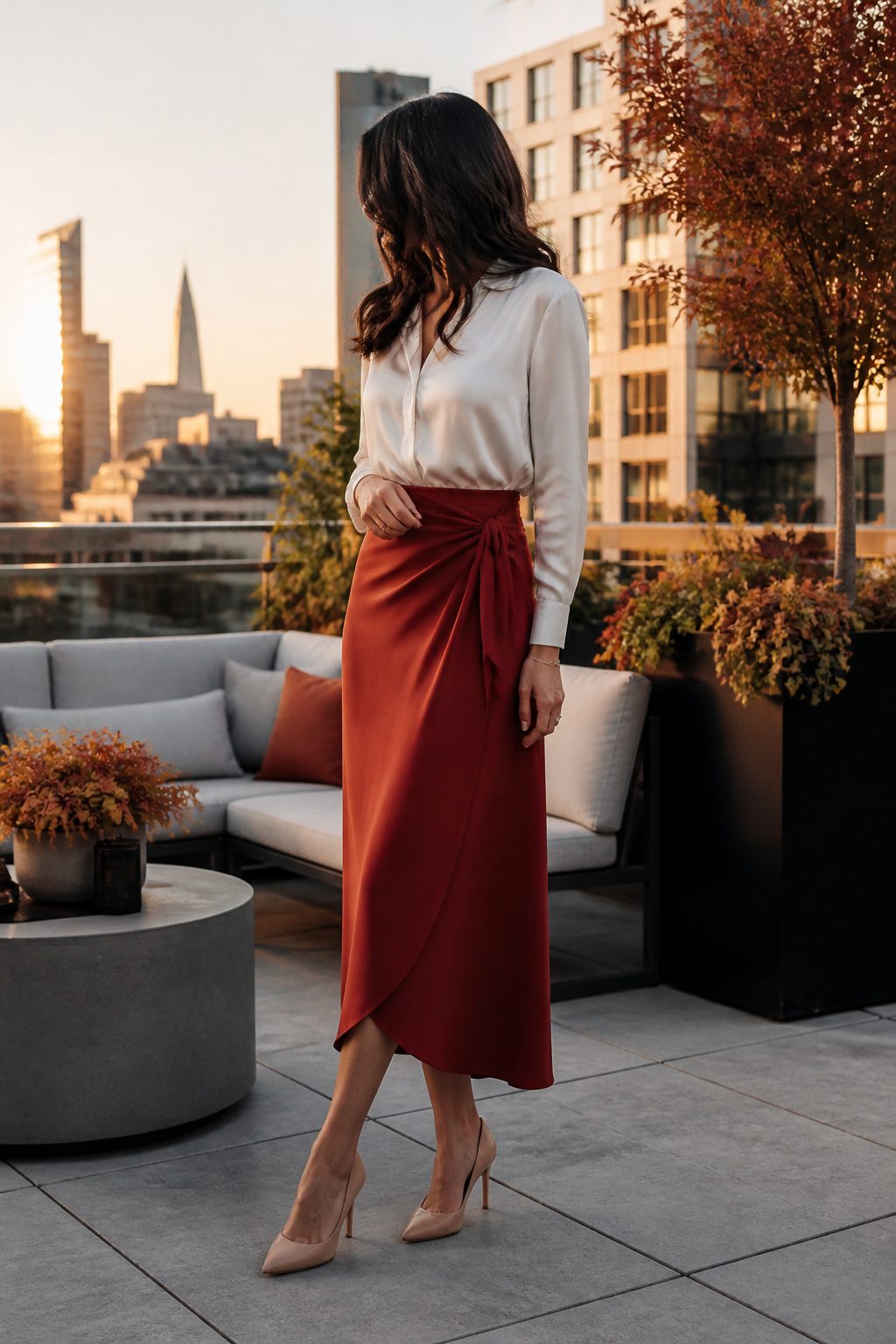
A wrap skirt in soft red reads as autumn without shouting it, and the closure sits flat enough over tights that you do not get the bulk you would from a zip or button band.
The overlap lands at the side or front depending on the cut, which matters when you are choosing a top: a printed blouse already carries enough weight, so the fabric underneath should be simple enough that the two do not fight.
Silk or a matte crepe works here; anything with its own sheen or heavy texture tips the outfit into too many competing finishes.
The Mara Wrap Skirt comes in three shades, which gives you options if soft red feels too specific for your wardrobe, and the same logic holds: pair it with a blouse, add heels, and the look stays refined rather than busy.
The wrap closure is what makes tights wearable here; a straight pencil skirt would need careful smoothing, but the slight give in the overlap lets you adjust through the day without the whole silhouette shifting.
8. Floral Skirt With a Tweed Blazer
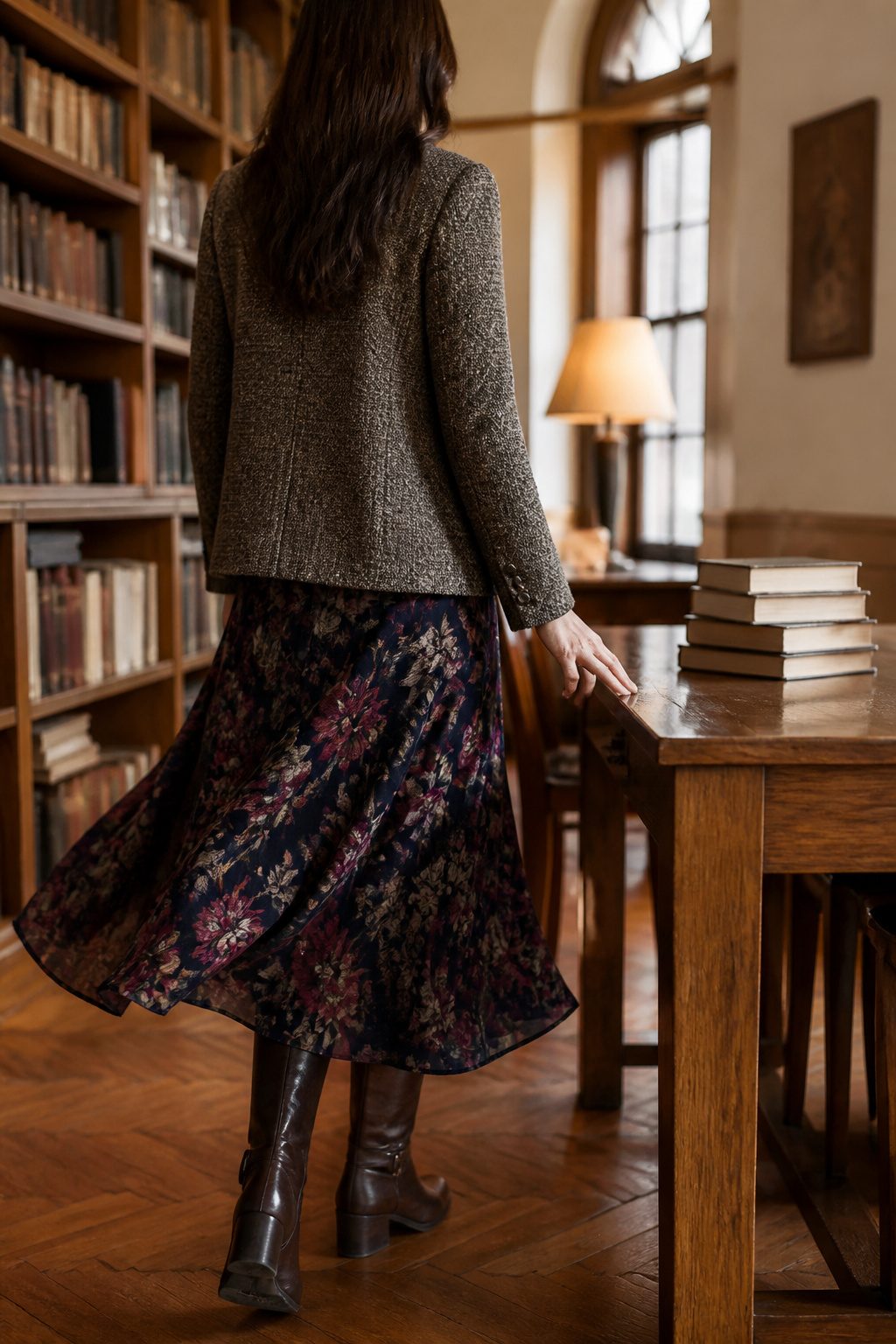
A floral skirt in fall only works if the print itself has crossed the seasonal line.
Look for backgrounds in navy, burgundy, or black rather than white or pale blue, and for blooms that read as dried or shadowed rather than freshly opened.
I have passed on too many "transition" pieces that still whispered Easter brunch once the blazer came off.
The tweed that balances this needs to be the lighter, open-weave kind, not the heavy suiting that holds its own shape like armor. A blazer around 10–12 oz lets the fabric drape over the skirt’s waistband without creating a shelf.
Stiffer tweeds fight the combination and leave you looking assembled rather than dressed.
Proportion matters most where the two pieces meet. The structured blazer should hit at or just below the hip, never longer, so the floral skirt has room to move beneath it.
A cropped or standard-length jacket keeps the eye traveling; a longline cut chops the body in half and turns volume into bulk.
The skirt itself needs some movement, a bias cut or soft pleating, to keep the bottom half from feeling like an afterthought to the tailoring above.
9. Leather Mini With a Turtleneck
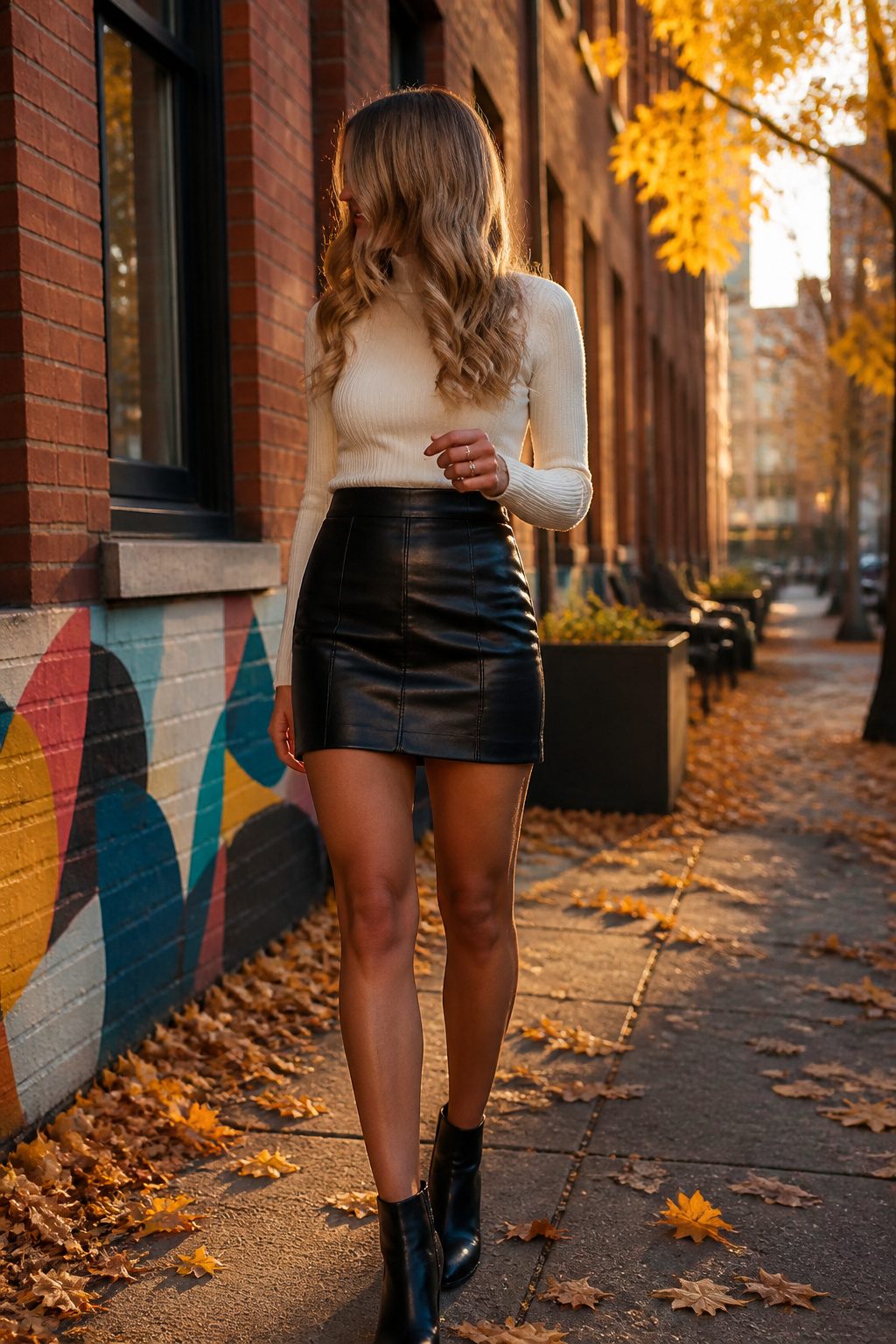
A leather mini skirt with a turtleneck is the combination that reads expensive without requiring much budget. The neck height matters more than most people notice.
A mock neck or slim crew sits cleanly whether hair is up or down; a full turtleneck works better with an updo or tucked hair, since a loose ponytail or heavy layers compete at the jawline and turn the silhouette bulky.
The skirt length decides the boot. A true mini, hem sitting mid-thigh or higher, needs a boot shaft that ends below the knee by at least a hand’s width.
Anything taller shortens the leg line. Ankle boots or a low Chelsea keep the proportion open.
Real leather drapes differently than good faux, and that changes how the outfit behaves. Real breaks in, softens at the hips, and pairs well with a finer-gauge knit that can tuck without adding volume.
Faux holds its structure; a slightly thicker turtleneck, left untucked with a half-tuck or French tuck, balances the stiffness rather than fighting it. Either works.
The mistake is treating them as interchangeable and forcing the same tuck on both.
10. Cargo Skirt With a Breton Striped Tee
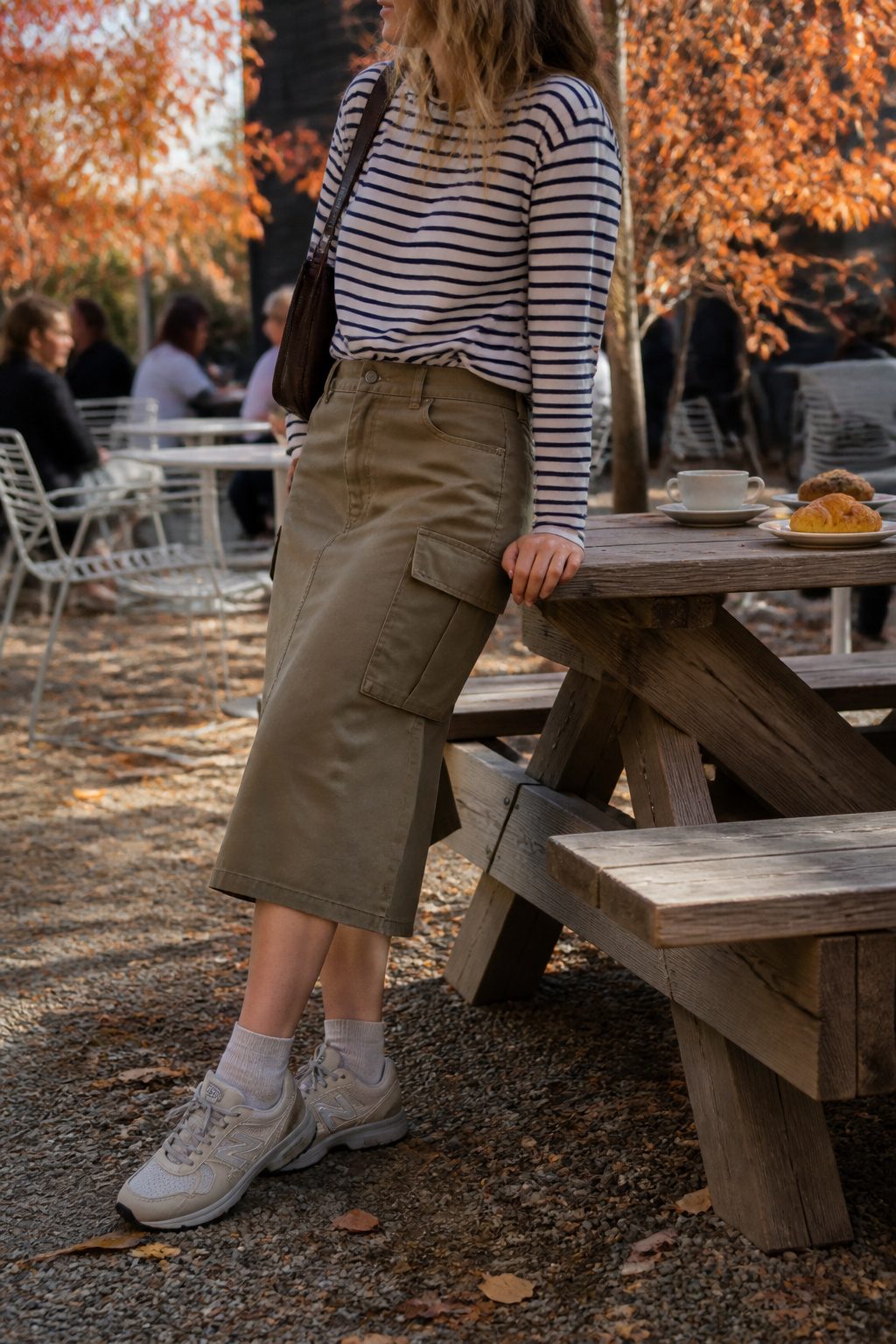
A cargo skirt with a Breton striped tee has become my fallback for days when summer still lingers in the afternoon but the morning air already carries that fall bite.
The pairing works because the stripes read as classic casual while the pockets add utility without tipping into full workwear mode. Narrow stripes, about a half-inch apart, keep the top half clean enough to balance all that pocket bulk below.
Wider bands fight the skirt’s horizontal seams and flaps, and the eye has nowhere to rest.
The mules VettedMag slots in here are the right call for that in-between weather, though I swap to ankle boots the instant the temperature drops below sixty.
Rails makes a Jaycee skirt that gets the proportions right, and Amanda Uprichard’s Gage Skort offers the same look if you’re still bike-commuting in September.
Both run cargo through fall with enough structure that the pockets don’t gap when you actually load them.
Layering Tights, Sweaters and Coats
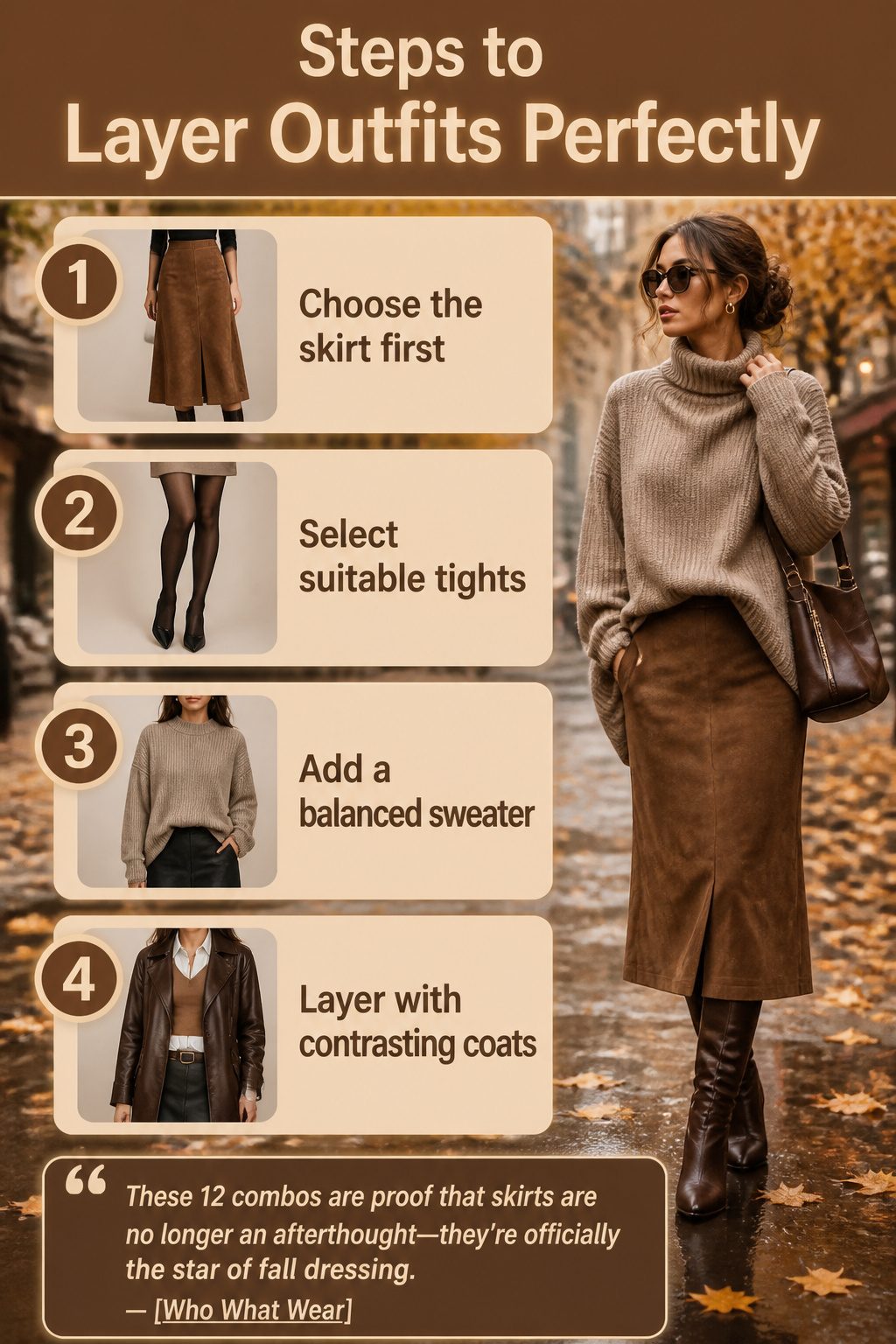
Tights change the math on which skirts work through fall.
A sheer black tight under a mini keeps the leg line intact without freezing you out, while a warmer knit legging under something longer, like a midi or maxi, adds bulk you have to plan around at the waistband.
The trick is choosing the skirt first, then the tight, not the other way around.
For tops, the slouchy sweater over an autumn midi has become a uniform for a reason.
The volume on top balances the narrow line below, and the hem of the skirt peeking out from under the knit gives the outfit its structure.
But that structure disappears if the sweater is too long or too heavy for the skirt’s fabric. A chunky knit needs a skirt with enough body to push back, or the whole silhouette collapses into a tent.
Coats are where the sources split. A leather trench over a long suede skirt, with a tank and button-down layered underneath, reads deliberate and expensive.
A baggy leather jacket over a leather mini with tall boots goes harder, more downtown. The common thread is contrast: rigid outerwear against soft layers underneath, or fluid outerwear holding in a fitted base.
Mixing weights, not matching them, is what keeps layered fall skirt outfits from looking like you got dressed in the dark.
These 12 combos are proof that skirts are no longer an afterthought—they’re officially the star of fall dressing.
What that means practically: build from the skirt outward, treat it as the anchor, and let every layer above and below respond to its length and weight.
Wool, Tweed, Suede and Denim Weights
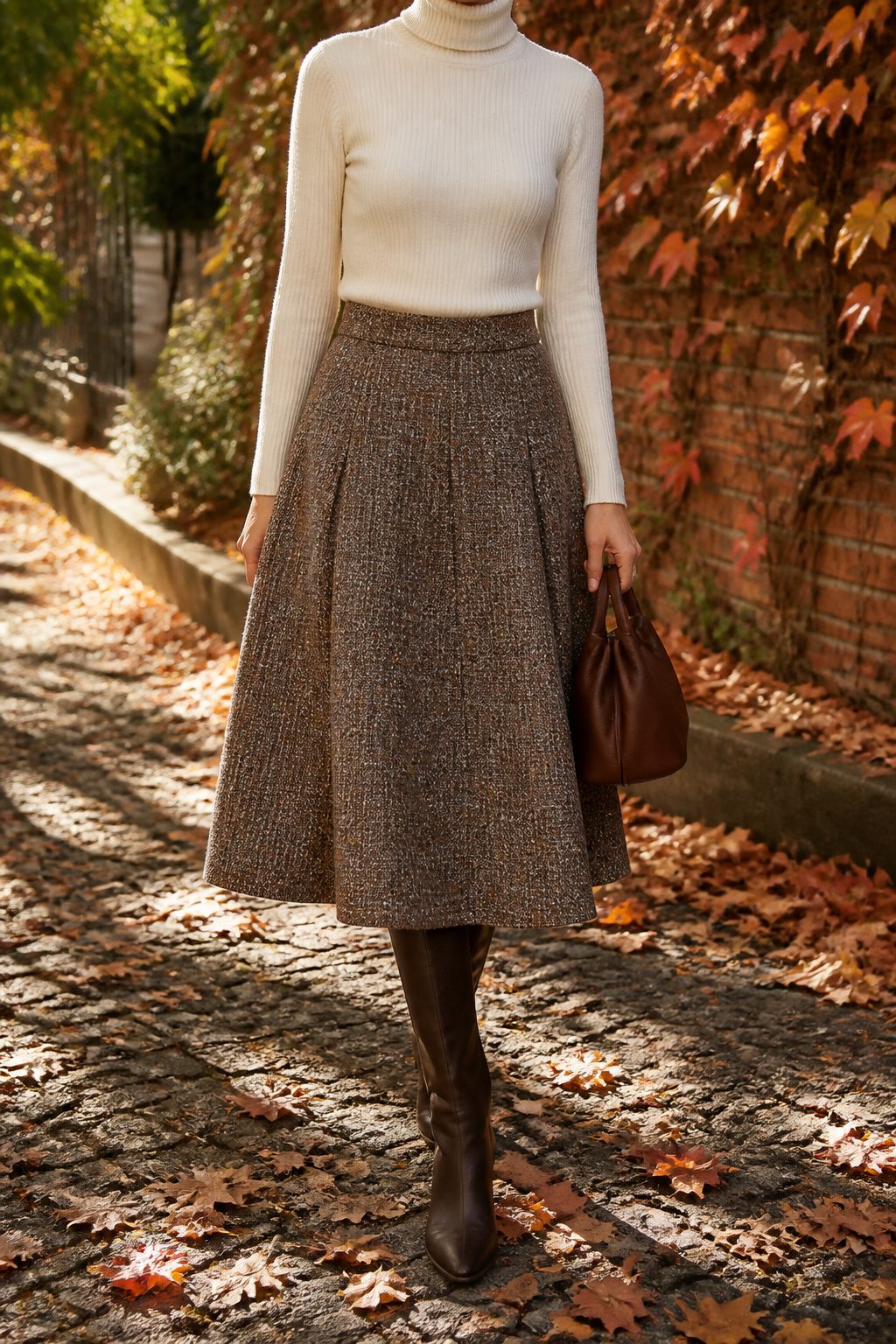
Wool and tweed carry the weight that makes fall dressing feel intentional rather than like summer clothes worn out of season.
A tweed skirt, whether cut mini or midi, has enough body to stand away from the leg and create a clean line with a tucked blouse and heels, or relax into a simple shirt and flats.
The texture does the visual work; you do not need to over-layer.
Suede operates differently. It reads as the fabric of the season for a reason: the nap catches light unevenly, which gives a monochromatic outfit depth without requiring contrast.
A matching suede jacket and pumps lean upscale, while a chunky sweater or denim shirt against the same skirt pulls the look toward daytime.
Denim skirts in fall depend entirely on wash and weight. Darker denim with some structure to it transitions into cooler weather; the same cut in a lighter wash still reads July.
Pleated denim minis pair with loafers or sneakers while temperatures hold, then shift to tights and knee-high boots when the morning turns cold. The fabric itself does not change, but the weight of what you put next to it does.
The heavier the skirt, the cleaner the top should be. A thick wool or tweed skirt needs a slim turtleneck or fitted knit to avoid bulk at the waist.
Suede, which reads softer, can handle more volume above. Denim sits in the middle: crisp button-downs balance its casualness, while oversized knits risk looking accidental unless the tuck is deliberate.
Burgundy, Camel, Olive and Plaid
Burgundy reads as a neutral in fall the way navy does in summer: it goes with camel, olive, black, cream, anything. I reach for it when I want color without the work of matching.
Camel and beige skirts function the same way, grounding louder pieces without fighting them. The sources back this up repeatedly, and my own closet confirms it.
Olive and forest green sit in the middle, acting as neutrals against jewel tones or as the quiet statement themselves.
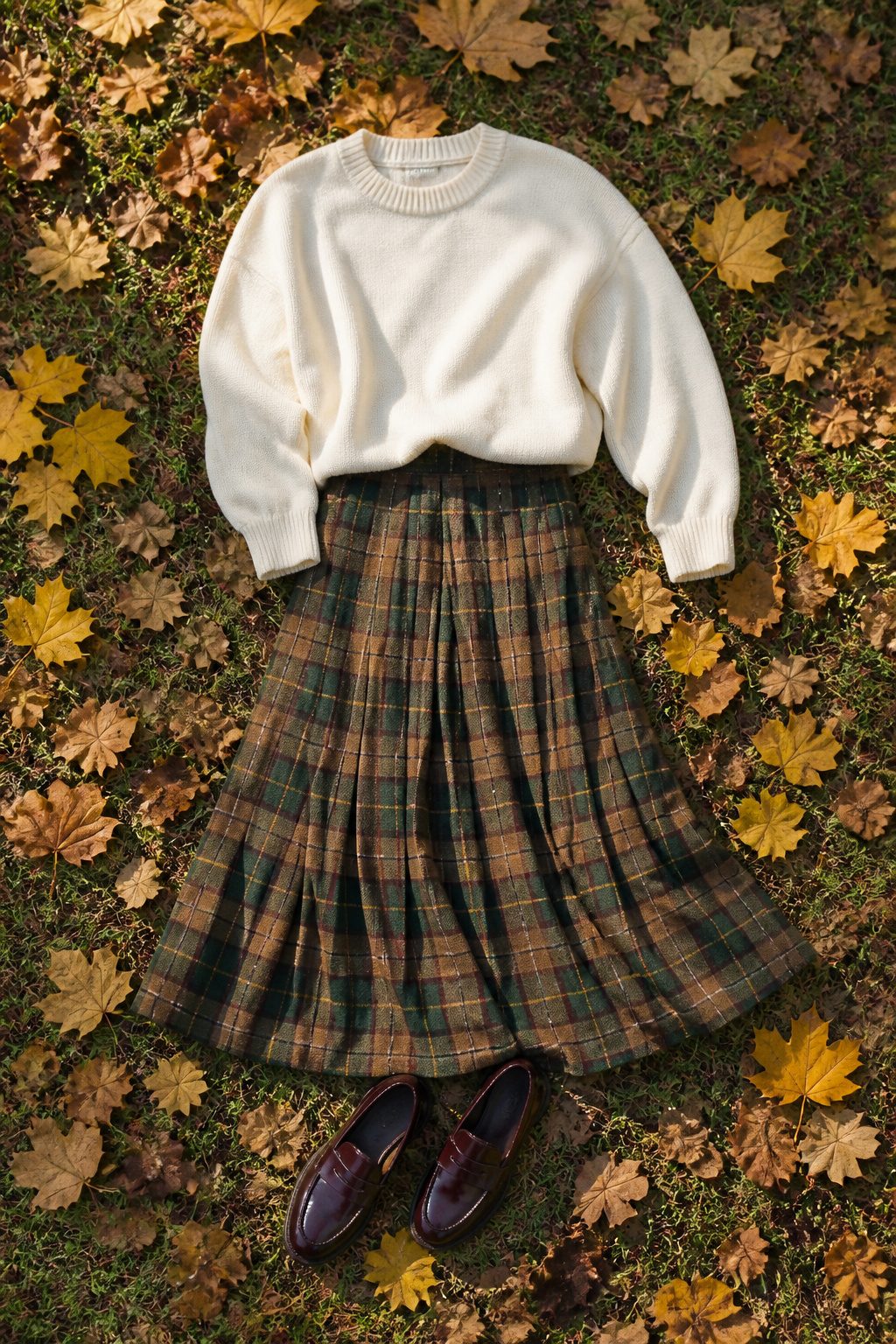
A plaid skirt in brown and forest green, like the Iris Pleat style, carries the pattern so the rest of the outfit stays simple. Fine-gauge sweater, opaque tights, loafers, done.
The plaid does the seasonal heavy lifting.
The $35 maroon flats one source mentions are the kind of buy that pulls this whole palette together. They have become a surprisingly versatile staple, and that price point means the color commitment stings less.
For those who want warmth without the usual autumn cliché, mustard yellow or burnt orange skirts bring it, though I find those harder to wear back to existing wardrobes than burgundy or olive.
The smarter money is on the deeper, dirtied tones that read expensive even at modest prices.
Boots, Loafers and What Hem Length Needs
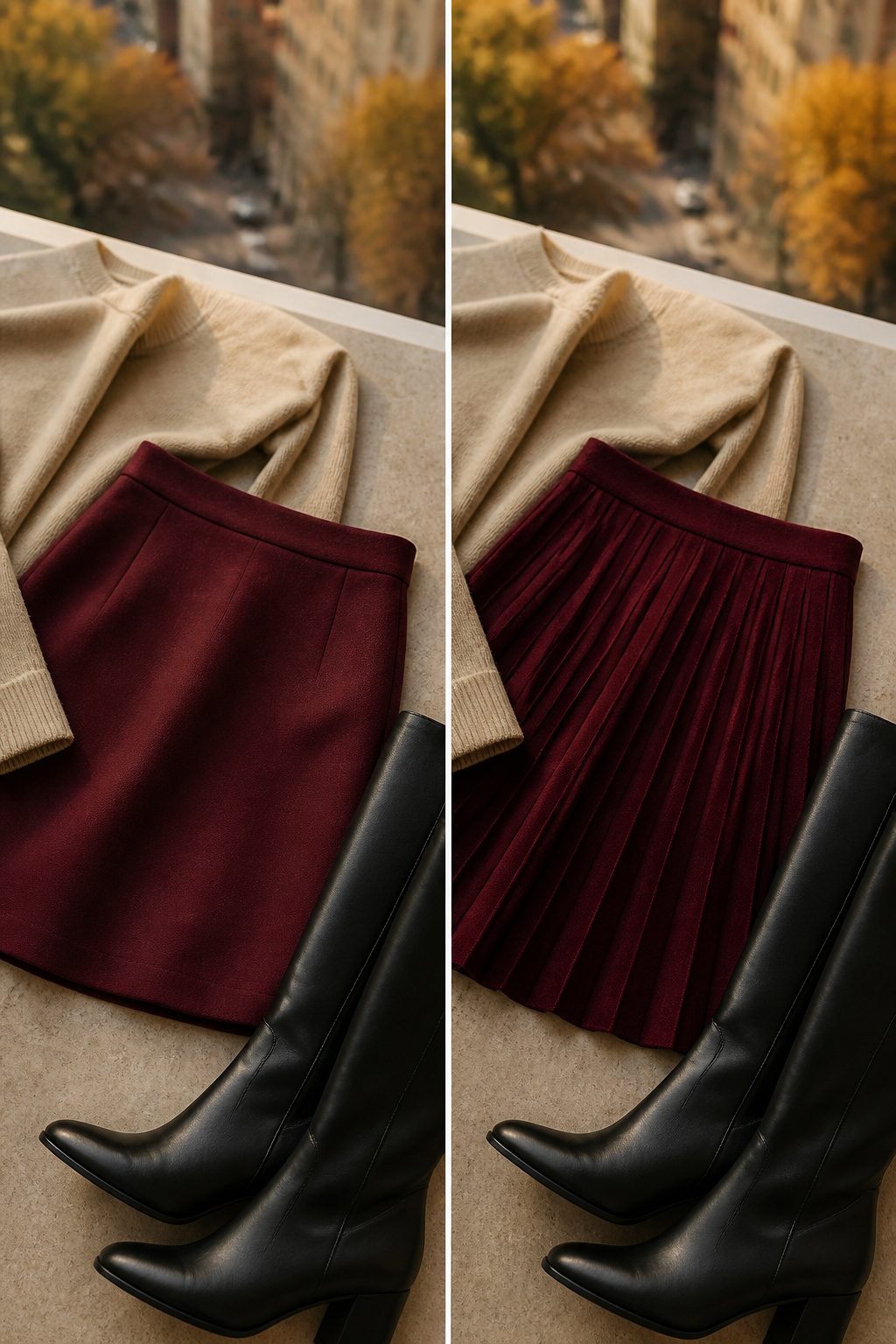
The shorter the skirt, the taller the boot.
A mini sits best with knee-high boots that fill the visual space between hem and ground, while a midi or maxi needs an ankle boot or a tall boot that keeps the leg line continuous rather than chopping it in two.
The gap between boot top and hem should be either minimal or deliberate; a few inches of bare leg or tights reads intentional, but a mid-calf expanse breaks the silhouette in a way that shortens the figure.
For casual days, loafers with a midi or longer skirt give that Parisian-chic balance the sources keep coming back to.
The key is the hem itself: loafers need enough skirt length to anchor the look, whereas boots can carry a shorter line.
Opaque tights make the transition work once the weather turns, and they matter more with loafers than with boots, since the boot itself provides visual weight.
Chocolate brown and burgundy tones in either footwear tie naturally into the wool and tweed pieces that dominate autumn dressing.
Frequently Asked Questions
What are the best ways to style skirts for fall?
Build from the skirt outward and treat it as the anchor, letting every layer respond to its length and weight.
Layer slouchy sweaters over autumn midis for balance, pair minis with knee-high boots that fill the visual space, and add tights underneath once temperatures drop.
The sources confirm that swapping shoes, tops, and outerwear lets the same skirt move from brunch to boardroom to evening.
Which fabrics are best for fall skirts?
Wool and tweed provide structure and insulation, making them ideal for office and professional looks. Suede catches light unevenly to give monochromatic outfits depth without requiring contrast.
Denim works in fall when you choose darker washes with some structure; lighter reads still read as summer.
The heavier the skirt, the cleaner the top should be, so thick wool or tweed needs a slim turtleneck or fitted knit to avoid bulk at the waist.
How can I wear skirts in colder weather?
Opaque tights add warmth without changing the silhouette, and a longer or heavier-fabric skirt holds heat better than a lighter one. Boots that reach above the tights line help keep cold out on the chilliest days.
For maxi skirts, medium-weight cotton, light wool blends, or denim pleats hold their shape without turning stiff, and the length itself keeps drafts off your legs while a t-shirt handles midday sun.
What colors are trending for fall skirts?
Burgundy reads as a neutral in fall and pairs with camel, olive, black, or cream. Camel and beige skirts ground louder pieces without fighting them.
Olive and forest green act as neutrals against jewel tones or as quiet statements themselves. Classic plaids in brown and forest green carry the seasonal weight so the rest of your outfit stays simple.
For those wanting warmth without autumn clichés, mustard yellow or burnt orange bring it, though deeper, dirtied tones read expensive even at modest prices.