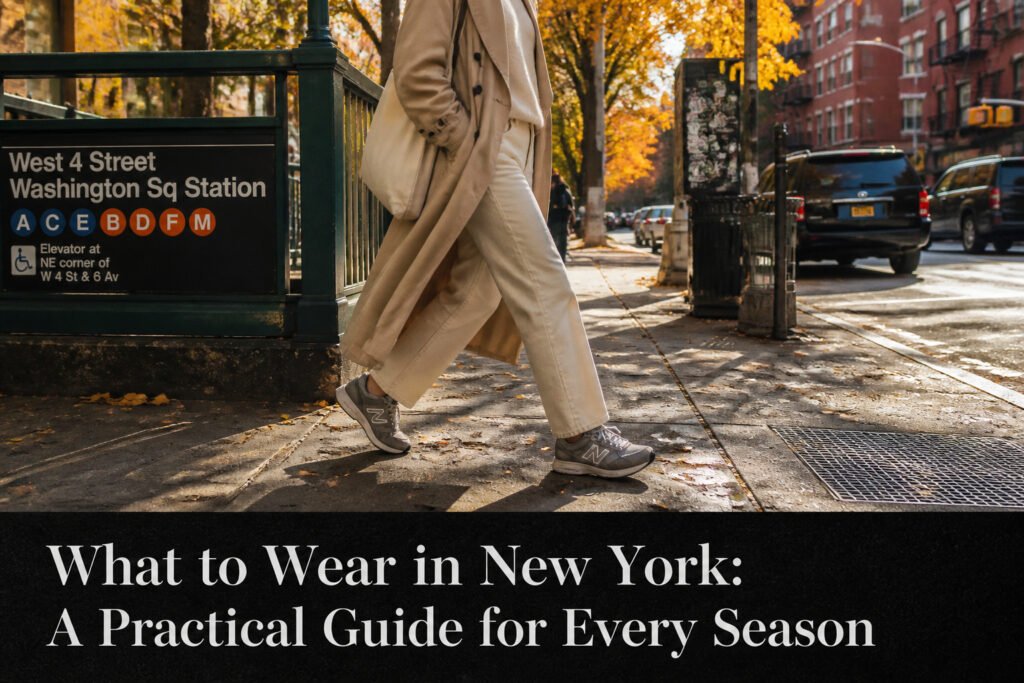
What to wear in New York depends on which hour of the day you are walking. October temperatures swing from 50°F at dawn to 64°F by afternoon, and the subway platform between them runs hotter still. A cotton trench you can strip off fast, plus one pair of broken-in sneakers handling 15,000 daily steps, matters more than any single statement piece.
Comfortable Shoes for Walking the City

A city built on walking demands shoes that keep pace without announcing you as a tourist. 15,000 steps per day is the baseline for exploring New York, and those steps are fast, far, and unforgiving on the wrong soles.
Fashion-forward sneakers are the foundation. White or darker neutrals read as local; neon does not. Adidas Gazelles or a chunky-soled option handle the miles while still looking intentional at a dinner table. Break them in before you land, not after.
For October, the math shifts. Average highs hit 64°F, lows drop to 50°F, and morning and evening call for closed-toe shoes. Supportive sandals and cushioned ballet flats still work for midday warmth, but pack them as secondary options, not your only pair. A low block heel in black or nude bridges day and evening without the wobble of a stiletto on subway grates. Minimalist loafers, similarly, move from gallery walk to reservation without a change.
Two pairs total is enough. One sneaker, one closed-toe alternative that handles cooler hours and possible drizzle. Blondo boots solve the rain problem without looking like gear, though any waterproof bootie you already own works if it is broken in. What ruins trips is the choice that looks right in the hotel mirror and fails by hour three.
Versatile Clothing That Shifts From Day to Night

Wide-leg trousers in a mid-weight fabric handle the shift better than anything else in my bag. The same pair that reads office-appropriate at breakfast with a tucked tee and loafers steps up for dinner with a low strappy heel and a swap to a smaller evening bag. I have worn them through a morning at the Met, lunch in Chelsea, and a last-minute reservation in the West Village without ever looking like I was trying to make one thing do too much.
A jean jacket is especially useful for overly air-conditioned spaces, while loafers keep the look more refined than a standard sneaker.
That balance, practical and polished, is what saves you from carrying half your closet. A midi skirt works the same way: striped tee and jean jacket for gallery-hopping downtown, then lose the jacket, add a heel and contemporary jewelry, and the same skirt holds its own at a jazz set afterward. Silky little dresses pack even lighter and layer under the same jacket until you need them bare for a nicer dinner. The only wrong move is packing something that works for just one slot and nothing else. One piece, three occasions, zero extra luggage is the number that matters.
Light Outerwear for Unpredictable Temperatures

A trench coat handles the widest gap between what the thermometer says outside and what the subway car delivers. October mornings in New York sit around 50°F, but by afternoon the same day can push to 64°F, and the train platform in between runs even hotter once the cars pull in. Cotton trenches layer over a sweater without the weight of wool, and they come off fast enough that you are not the person sweating through a seat on the Q train.
Lightweight puffers work for the same reason, though I would save them for days under 40°F. Leather jackets and bomber cuts split the difference on cooler October afternoons, and a long cardigan stuffed in your tote covers the office over-air conditioning that hits after the street wind. The mistake is packing one heavy coat and wearing it all day. The layer you can remove is the one you will actually use, because New York temperature swings do not wait for you to find a locker.
Accessories for Practical Style

A fully zip-able crossbody bag is the one accessory I will not visit New York without. The tourist-heavy areas make hands-free, closed storage non-negotiable if you are used to living somewhere pickpockets are not a daily concern. The strap also matters more than I expected: one hand on a coffee, the other gripping a subway pole, and suddenly anything requiring a clutch or a shoulder hold becomes impossible.
Scarves earn their space by doing three jobs at once. A lightweight wool or cashmere blend adds warmth under a coat in the morning, reads as intentional at dinner, and packs down to nothing when the afternoon warms. I keep one knotted around the strap of that crossbody so it is never left behind in a hotel room.
NYC averages 7 days of rain in October, which sounds manageable until you are caught in one of them without cover. A foldable umbrella that fits in the outer pocket of your bag beats every stylish trench coat for actual dryness. The cheap ones fail at the ribs after two uses; spending enough to get a frame that inverts without snapping pays back on the first windy corner.
Evening Wear for Dining and Shows

New York evenings run on a sliding scale of effort, and the Broadway dress code is looser than most tourists expect. A minidress with an oversize blazer and low-profile sneakers passes comfortably at the theater; the same outfit works for drinks after and the walk through crowded Times Square. For Lincoln Center opera or ballet, swap the sneakers for kitten heels and the look still holds.
Dinner follows the same rule of easy swaps. The jeans-and-tee combo from your daytime walking outfit upgrades with a low strappy heel, a nicer bag, and a blazer. Silky little dresses pack flat, take no space, and bridge the gap between a Brooklyn spot where anything goes and a fine-dining room that expects polish. Mini skirts or sleek jeans with a strong top and blazer hit the same note.
The mistake is packing separate formal wear for every night out. A few dresses that can dress up or down cover most reservations, and the rest is handled at the shoe-and-bag level.
Rain Gear for Fall and Spring Weather

Rain in New York is not like rain back home. You will not dash from a parked car to a covered doorway; you will walk two miles to dinner, then another mile to a show, with maybe a subway stairway in between. Wet feet ruin the day faster than wet hair, and October averages seven rainy days that can cluster into a complete washout.
A trench that hits at the knee works over dresses or jeans and layers easily under a sweater if the temperature drops. For shoes, waterproof boots that pass as ordinary footwear are the move I would make. Blondo makes booties that look like normal leather but keep water out, and they stay comfortable even on dry days. Skip anything open-toed; sandals in October look out of season and leave you cold besides.
One proper rain layer and one pair of sealed boots beats packing an umbrella you will forget in a cab.
Seasonal Adjustments Beyond October

The same packing logic I worked out for October holds across the rest of the year, though the fabric weights shift hard in either direction. Winter demands heavier layers that still peel off easily once the subway car overheats; summer calls for the lightest breathable pieces that won’t look limp after three blocks of walking. My own research focused on fall and spring, the seasons where New York’s temperature swings are most punishing. For the extremes, the principle stays identical: one base layer, one mid, one shell, but the materials change. Winter means wool rather than cotton, a down vest that compresses small, and a coat you actually want to wear to dinner. Summer means linen that wrinkles gracefully, a single airy dress that works with sneakers and sandals both, and a cardigan for aggressive air conditioning. The mistake is packing for the average temperature rather than the day’s range.
How Layering Works in Practice

The temperature swing between a July sidewalk and a subway platform can run thirty degrees in under two minutes. A lightweight sweater or tailored button-down you can tie around your waist by noon solves this without requiring a bag change. I learned the hard way that "lightweight" means different things: a fine-gauge cotton knit packs down to nothing, while even a thin wool layer turns into a furnace the moment you hit the turnstile.
Air-conditioned museums run genuinely cold, and a jean jacket there beats a blazer you have to babysit. The trick is wearing the layer you need for the indoor space, not the outdoor one; carrying it is the backup plan, not the default. For spring or fall, a classic trench over a tee handles the walk, then peels off to reveal something presentable for a lunch reservation. The loafer or ballet flat you chose for walking already made the outfit more polished than a sneaker; the layer just keeps you from shivering through the check.
What I Got Wrong on My First October Trip

The suede ankle boots looked exactly right for October, and by the third block they felt fine. By the tenth block the backs of my heels were raw. Fashion-forward sneakers or cushioned ballet flats would have saved that afternoon, but I had picked the boots because they matched the jacket, which was its own problem. A wool coat that felt perfect at 10 AM turned stifling when the afternoon sun hit the sidewalk, then left me shivering by 7 PM when the temperature dropped. The mistake was treating one jacket as enough. A light sweater layered under a jean jacket would have let me peel off a layer during the warm stretch and put it back on after dark. Chunky knits under anything are a bad call for New York in October; you heat up fast walking, and there is nowhere to stash a heavy sweater if the day turns warm.
Dress Codes That Actually Matter

Most of New York does not care what you wear. Jeans and sneakers carry you through museums, casual restaurants, and every subway line without a second glance. The exceptions are few, but they are expensive to get wrong.
Upscale dining rooms and theater events still enforce a real dress code. Jeans fail here, and sneakers usually do too. The safe move is non-denim pants and non-sneaker shoes, with a jacket worth packing for men since some venues still require one. Checking the restaurant or theater website in advance costs nothing and saves the awkwardness of being turned away at the door.
Comfort Against Style: The Real Choice

New York is a walking city, and that fact reshapes whatever you packed for looking good. The first morning in wide-leg pants and a cotton button-down feels styled and right. By afternoon, after subway stairs and a bridge crossing, the same outfit is a reminder that sneakers are the only shoe that survives a full day here. Sandals with a thicker sole work for shorter walks on warmer days, but the sidewalk grime makes them a compromise, not a solution.
The real choice is not comfort against style. It is finding pieces that do both, or watching the cute option stay in the hotel by day two. A lightweight trench or linen third piece layers over a tank without adding bulk, and the right roomy bag fits a water bottle and sunscreen without reading tourist backpack. Loafers or ballet flats split the difference for dinner, but for anything that involves Manhattan to Brooklyn to Governors Island, sneakers win. I have learned to build outfits from the shoes up, not the other way around.
Frequently Asked Questions
What do people wear in New York in October?
New Yorkers and visitors alike reach for classic autumn pieces in darker colors and neutral palettes. Fashion-forward sneakers, wide-leg trousers, midi skirts, and light layers like trenches or jean jackets handle the temperature swings. A few athleisure pieces work, but head-to-toe gym wear reads as tourist.
Is it cold in New York in October?
Not exactly cold, but you will want closed-toe shoes and a jacket for mornings and evenings. Average highs hit 64°F while lows drop to 50°F, and the gap between them matters more than either number alone. The layer you can remove is the one you will actually use.
Do I need boots in NYC in October?
Boots are not required, especially early in the month, though waterproof booties solve the rain problem without looking like gear. Comfortable sneakers are the real necessity, with 15,000 steps per day as the baseline for exploring. One sneaker plus one closed-toe alternative that handles drizzle is enough.