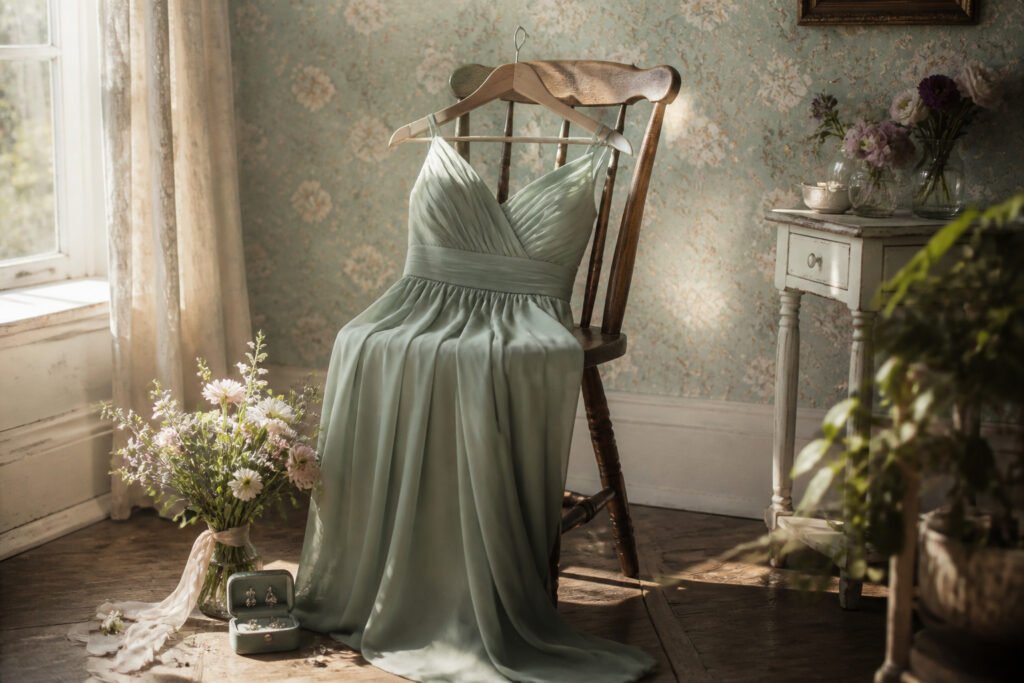
Bridesmaid dresses are the garment your closest friends will wear for eight hours while carrying your secrets, your emergency lipstick, and occasionally your nephew. The problem is that one brand’s "dusty sage" is another brand’s "wait, that’s mint," and a party scattered across Portland and Atlanta can’t exactly share a fitting room. I spent time with Kennedy Blue, Birdy Grey, Azazie, Revelry, and David’s Bridal to see which ones actually solve that logistics puzzle without the maid of honor losing her mind.
Kennedy Blue

Kennedy Blue built its reputation on sizes 00 through 32, a range that actually covers most bridal parties without splitting the group across different brands. The color catalog runs past 90 options, which sounds excessive until you’re trying to match a dusty sage bridesmaid dress to a groomsmen’s tie and a table linen swatch. Having everything under one roof means the maid of honor isn’t stuck coordinating three separate orders while the wedding clock runs down.
The ordering process runs through online selection with home try-on available, though the real value shows up in the color consistency. Ordering swatches first is the move here; screen colors shift, and 90-plus shades leaves room for mistakes. What convinced me, reading through the return stories, is that Kennedy Blue’s volume in extended sizing doesn’t read as an afterthought. The same silhouettes run across the full size range rather than dropping into simpler cuts at the top end.
For bridal parties mixing body types, that continuity matters more than the color count. One bride noted her party of eight landed in four different size brackets and still matched without the "similar but not quite" problem that plagues some inclusive lines. The trade-off is lead time: popular colors in popular sizes move fast during peak wedding season, and rush orders add cost.
Revelry

Revelry runs sizes 0–36 (XS–4XL), which means the same collection actually fits a bridal party without anyone getting sidelined into a different brand. The mix-and-match setup lets each bridesmaid pick her own silhouette within the same color and fabric, so the group looks coordinated instead of uniform. Satin, chiffon, velvet, and crepe are the main fabric options, and they photograph differently enough that the choice matters for the season and the lighting.
The digital showroom is where Revelry tries to solve the logistics headache. A bride can line up the party, assign specific dresses to specific people, and send reminders without chasing anyone through group texts. It is the kind of tool that sounds minor until you are managing six women in three time zones.
Birdy Grey
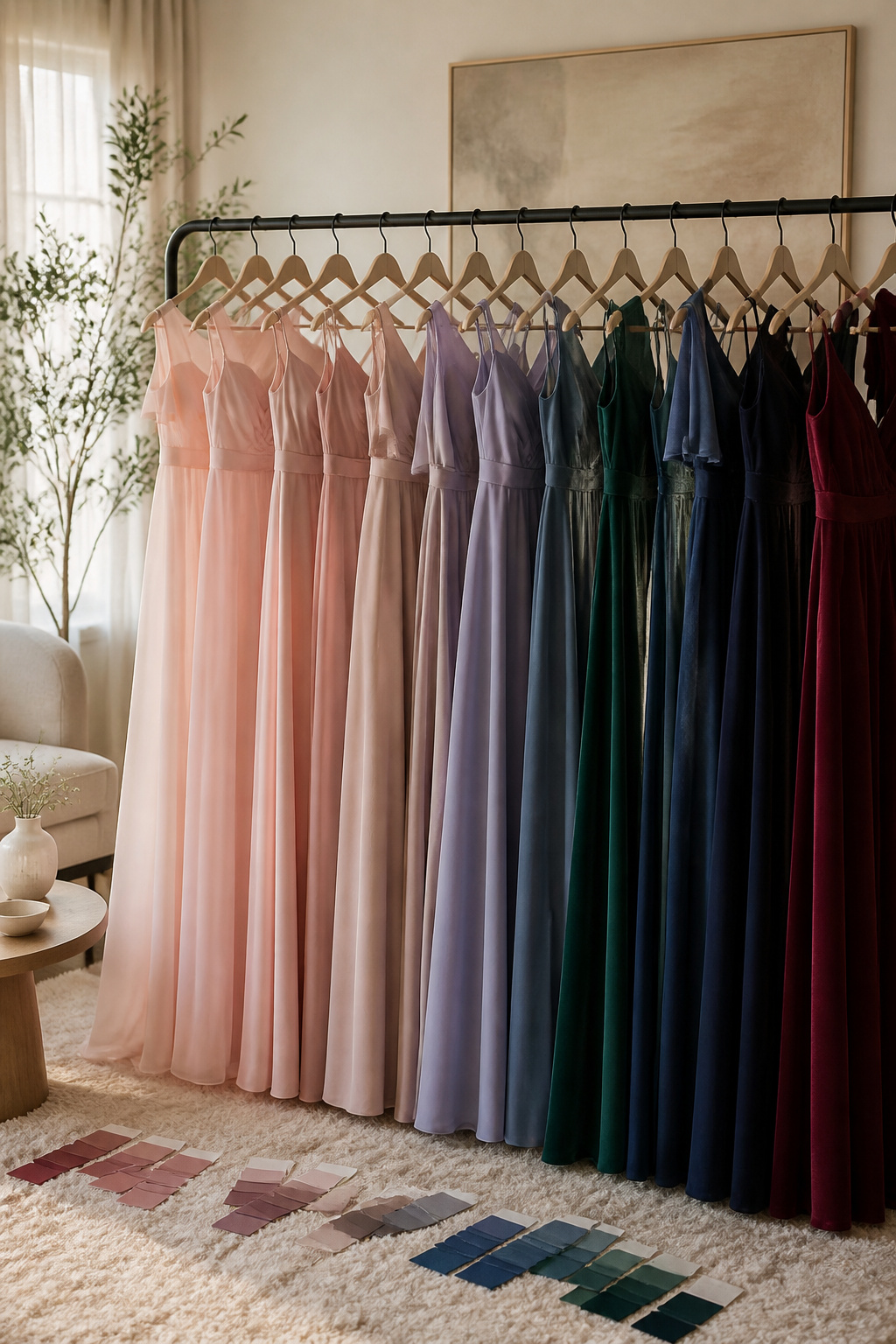
Birdy Grey’s bridesmaid dresses start at $89, which is where the math gets interesting for bridal parties watching the bottom line. The collection runs through chiffon, satin, and velvet in enough colors that most wedding palettes won’t hit a wall.
The lower price point works because it leaves room for alterations, shoes, or the shipping back-and-forth that always happens when one bridesmaid is in Portland and another is in Atlanta. AAPI female-founded, with a mostly female team running the experience side. Free swatches help, since screen color is a liar. Ready-to-ship dresses cut the panic window for late planners. Returns and exchanges are built in, which matters when six women are guessing at sizes they haven’t worn since college.
The chiffon and satin read summer; the velvet in emerald or cabernet reads fall and winter. Pastels mix and match for spring. That seasonal framing is useful, though the real win is the price ceiling holding under a hundred dollars while the fabric options don’t look like a compromise from across the aisle.
Azazie

Azazie built its name on custom sizing that actually fits, not just the standard 2–16 range with a tape measure held tighter. The order form asks for bust, waist, hip, height, and hollow-to-hem length, then cuts the dress to those numbers. For bridal parties scattered across states, this matters more than it should in 2024, because "order your usual size and hope" still ruins weddings.
The color coordination tools are where Azazie separates from the pack. Their swatch program mails fabric samples for a few dollars, and the online color viewer shows the same shade across chiffon, satin, velvet, and crepe. A bride can set a palette, then let each bridesmaid pick her own neckline or sleeve length without the colors drifting. The fabric weights behave differently in photographs, something the tool accounts for better than a static chart.
Style variety runs wide, maybe too wide. Floor-length gowns with pockets sit next to cocktail cuts with thigh slits, and the quality inconsistency shows in the reviews. The dresses that work, work well: structured bodices, linings that don’t cling, zippers that survive the reception. The misses tend to be the trend-forward pieces, the ones with cutouts or draping that needs heavier fabric than Azazie priced in.
For a bridal party mixing body types and budgets, the tradeoff is clear. You get coordination without a dictatorial single dress, and custom sizing that removes the alteration scramble. You also get some gamble on which specific style arrives exactly as photographed.
David’s Bridal
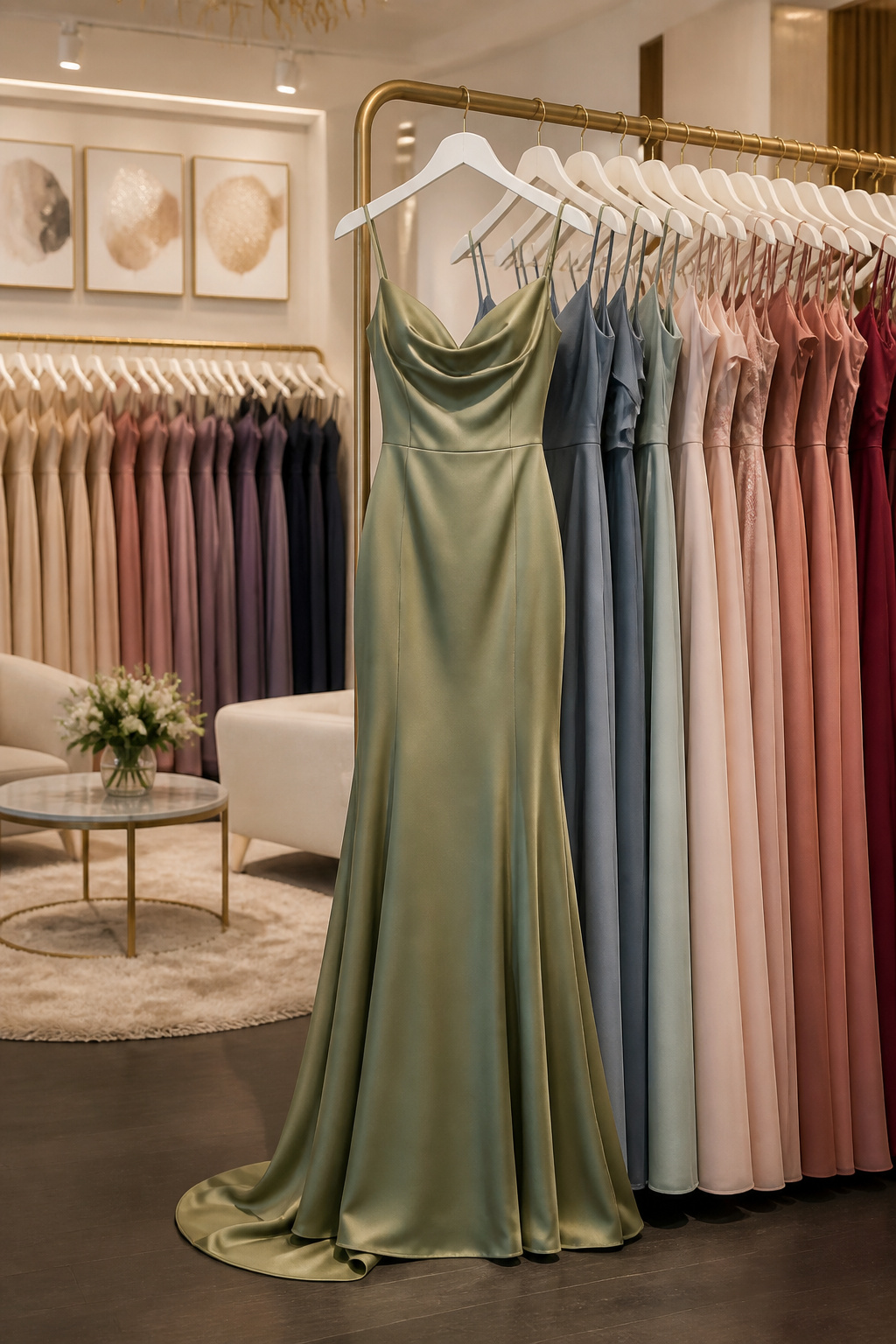
David’s Bridal lists 410 bridesmaid dresses in its current lineup, with most styles sitting well under the $100 mark. That volume matters when you are outfitting six or eight or ten people who share almost nothing in common except the wedding date. Chiffon pleated A-lines, satin mermaid cuts, cowl neck sheaths, and strapless columns with back cascades all sit in the same price bracket, so the bride can pick a silhouette that actually flatters each body without splitting the party into budget tiers.
The color range runs wide enough that I have seen bridal parties match everything from dusty sage to deep navy without leaving the same order batch. For a tight budget, this is the practical path: one store, one shipping conversation, and enough leftover money to cover alterations or shoes. The tradeoff is that the fabrics read as entry-level up close. Polyester chiffon and matte satin photograph beautifully but do not breathe like the silk blends you will find at double the price. For a summer outdoor ceremony, that matters. For a two-hour church service and a reception in air conditioning, it usually does not.
What convinced me, scrolling through those 410 options, was how many carried the "Celebrate DB Studio" label. Those pieces hit the lowest price points while still offering flutter sleeves, surplice necklines, and the kind of details that used to live only in the $200 range. A bridesmaid who wears a size 16 and one who wears a 2 can both order from the same style page, which cuts the group-chat chaos considerably.
Color Options
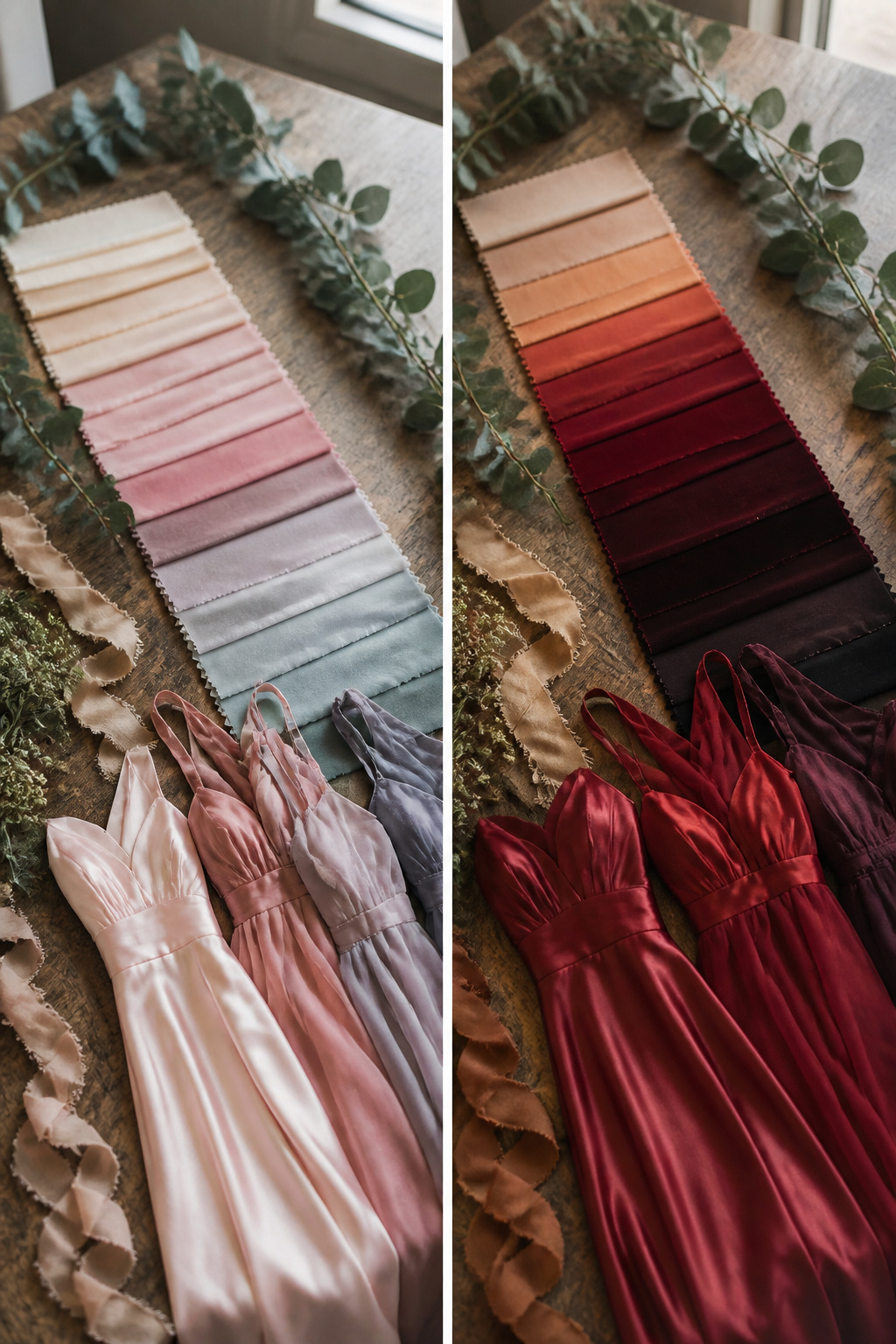
Color is where a wedding party either comes together or falls apart, and the brands I looked at handle this very differently. Birdy Grey pushes effortless color coordination as a selling point, with free swatches and a palette built for mix-and-match dusty tones and pastels in spring, then richer velvets like emerald green and cabernet for fall. The chiffon and satin lines run in those same colors year-round, so a summer bride and a winter bride might both shop the same fabric in completely different moods.
Kennedy Blue takes a stricter approach: order the same color and fabric within six months, and the dye lot matches exactly. That matters more than it sounds, since bridesmaid orders often trickle in as people confirm flights or budgets. The brand also sells suits and ties in coordinated shades, olive green to sage to cocoa, which saves the groomsmen from guessing.
What I noticed comparing the two is that Birdy Grey wants you to play, while Kennedy Blue wants you to lock in. If your wedding colors are still shifting three months out, the six-month matching window at Kennedy Blue starts to feel like a deadline. Birdy Grey’s $89 starting price makes experimenting cheaper, but "cheap" only helps if the color on the swatch matches what arrives. Both brands ship swatches free, and both times I ordered them, the fabric under my living room light looked different from the screen. That is not a flaw; it is the reason swatches exist.
Sizing and Fit
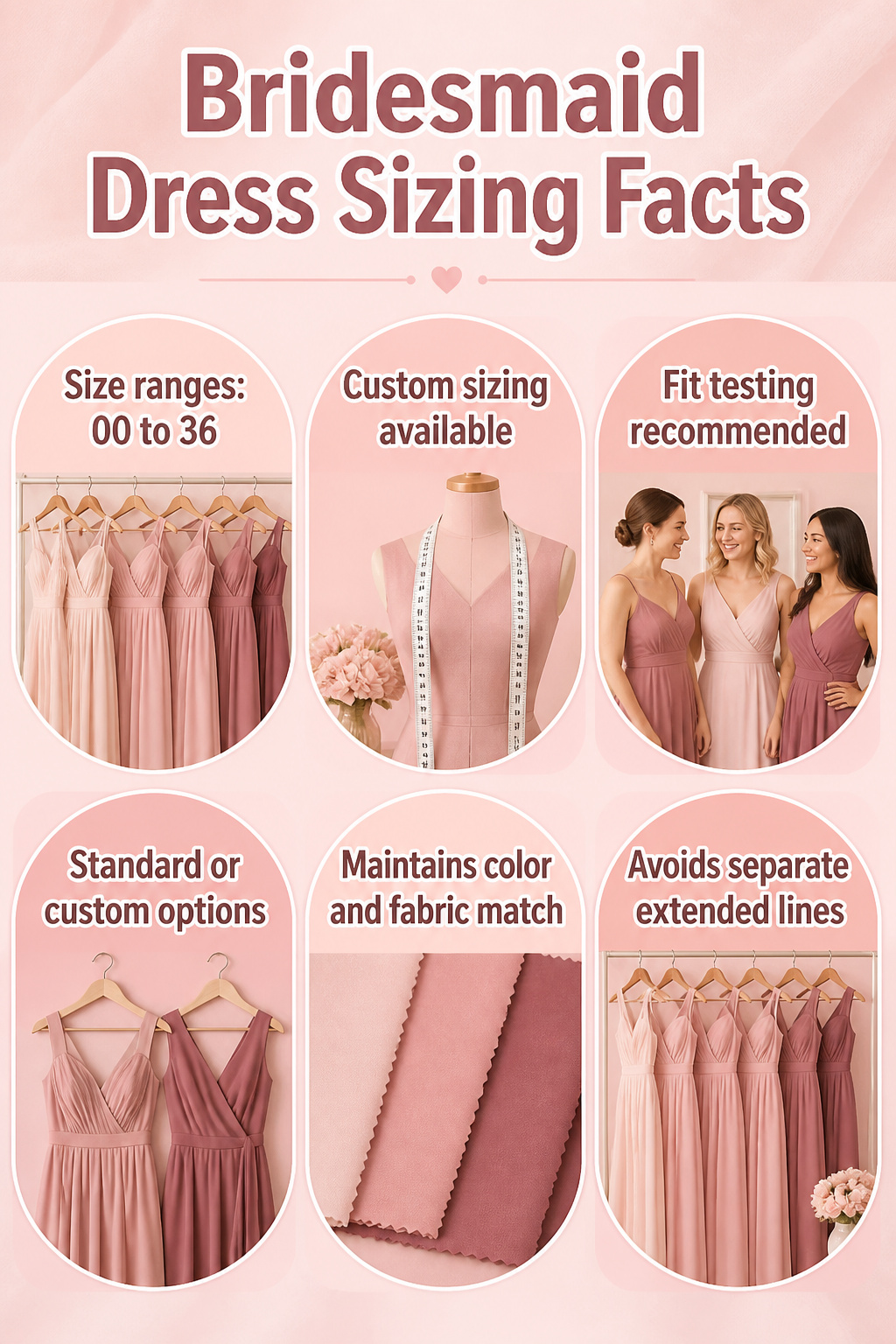
Bridesmaid dresses that actually fit every member of the wedding party start with size ranges from 00 to 36, though not every brand covers the full span the same way. Kennedy Blue runs 00–32 on its core styles, while Revelry pushes to 36 (XS–4XL) across its entire collection so no one orders from a separate "extended" line. That distinction matters when you’re trying to keep the color and fabric identical; a split catalog often means dye lots or construction details shift between the standard and plus ranges.
Custom sizing is where the gap shows. Some brands let you submit measurements and build the dress to those numbers, which helps if you’re between sizes or carrying your height in your torso rather than your legs. What none of these sources provide is detailed measurement instructions upfront, so you’re left holding a tape measure and guessing whether to pull snug or leave breathing room. From what I’ve seen comparing these sites, the bridesmaid usually shoulders that risk: order the standard size and plan for alterations, or pay extra for custom and hope the interpretation matches your body.
The practical move is to have one person in the party test the fit first if the brand offers a home try-on program, then the rest order based on what that dress actually did on a real body.
Home Try-On Services

Home try-on programs are the one place where bridesmaid shopping actually makes sense. Kennedy Blue runs a $10 per dress trial with free shipping both ways and a 7-day window, which is enough time to sit down in the thing and check whether the skirt rides up when you bend to pick up a toddler. Revelry also offers home try-on, though their site pushes the 5 free swatches harder, so the dress program may work differently. The swatch step matters more than it sounds: "dusty rose" from one brand and "dusty rose" from another can be two entirely different moods under your venue’s lighting, and free swatches let you pin them to the actual table linens before anyone orders. Built-in bra cups and fully lined skirts, which Kennedy Blue advertises, are details you only really test by wearing the sample around your own house for an evening, not by staring at a model photo. Most of your bridal party lives scattered across three time zones now, so the individual ordering, separate from the group try-on, is the practical piece that keeps a maid of honor in Chicago from having to collect six dresses in her guest room.
Mix-and-Match Styles
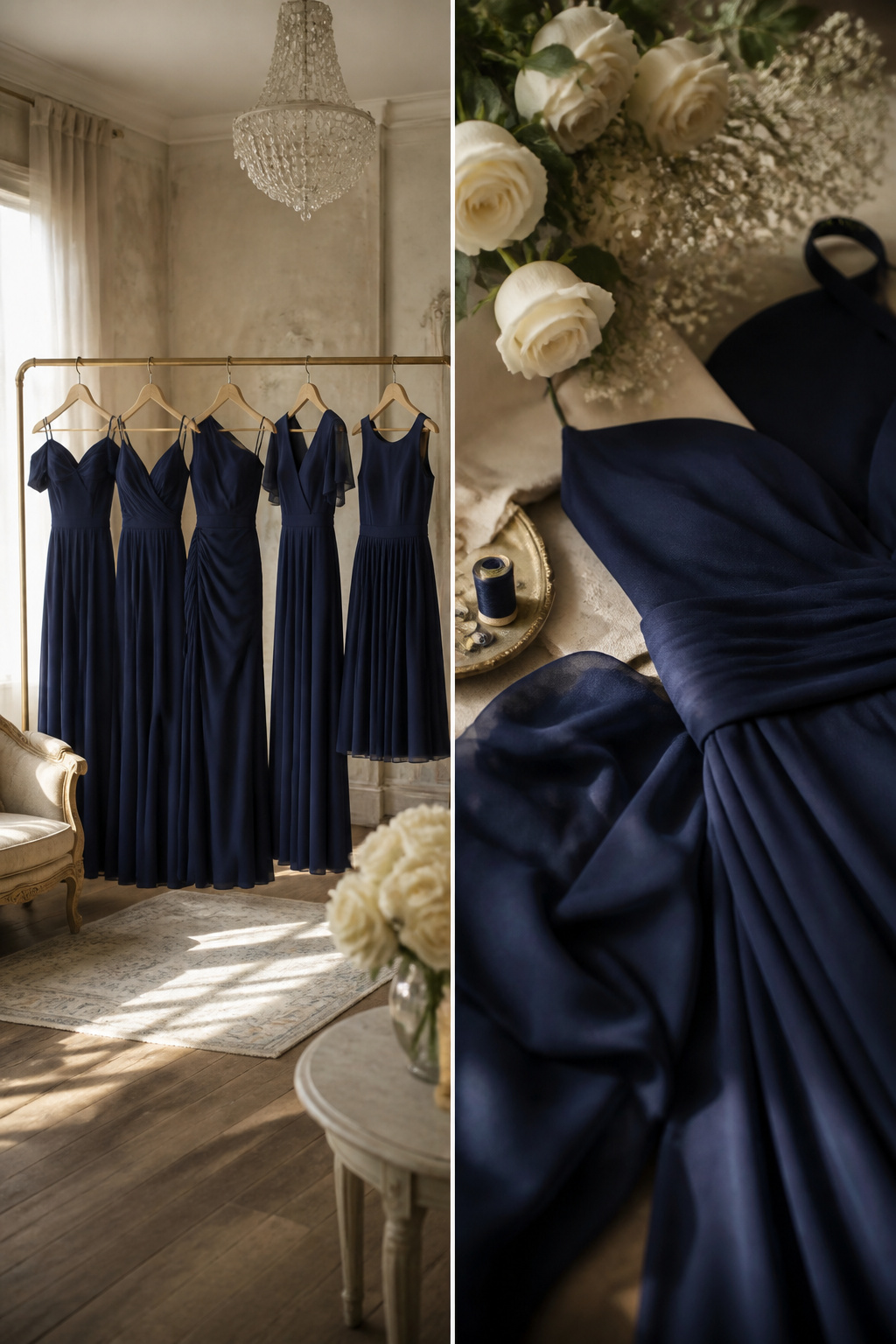
A single color in chiffon or satin can still give five women five completely different dresses. One bridesmaid wears the A-line with a V-neck, another takes the same fabric in a one-shoulder cut, and the third chooses a midi length while the rest stay long. The fabric and dye lot do the unifying work, so the neckline or sleeve length becomes a matter of what actually fits each body rather than what a bride dictated from a Pinterest board.
Kennedy Blue will match the color exactly if every order lands within six months, which removes the risk of one dress arriving slightly off. Birdy Grey builds its whole spring line around this idea: dusty and pastel tones meant to be mixed rather than matched identically. The practical result is a bridal party that photographs as cohesive in the group shot but lets each person pick the silhouette that works for a broad back, a preference for sleeves, or simply a hatred of strapless.
Fabric Choices
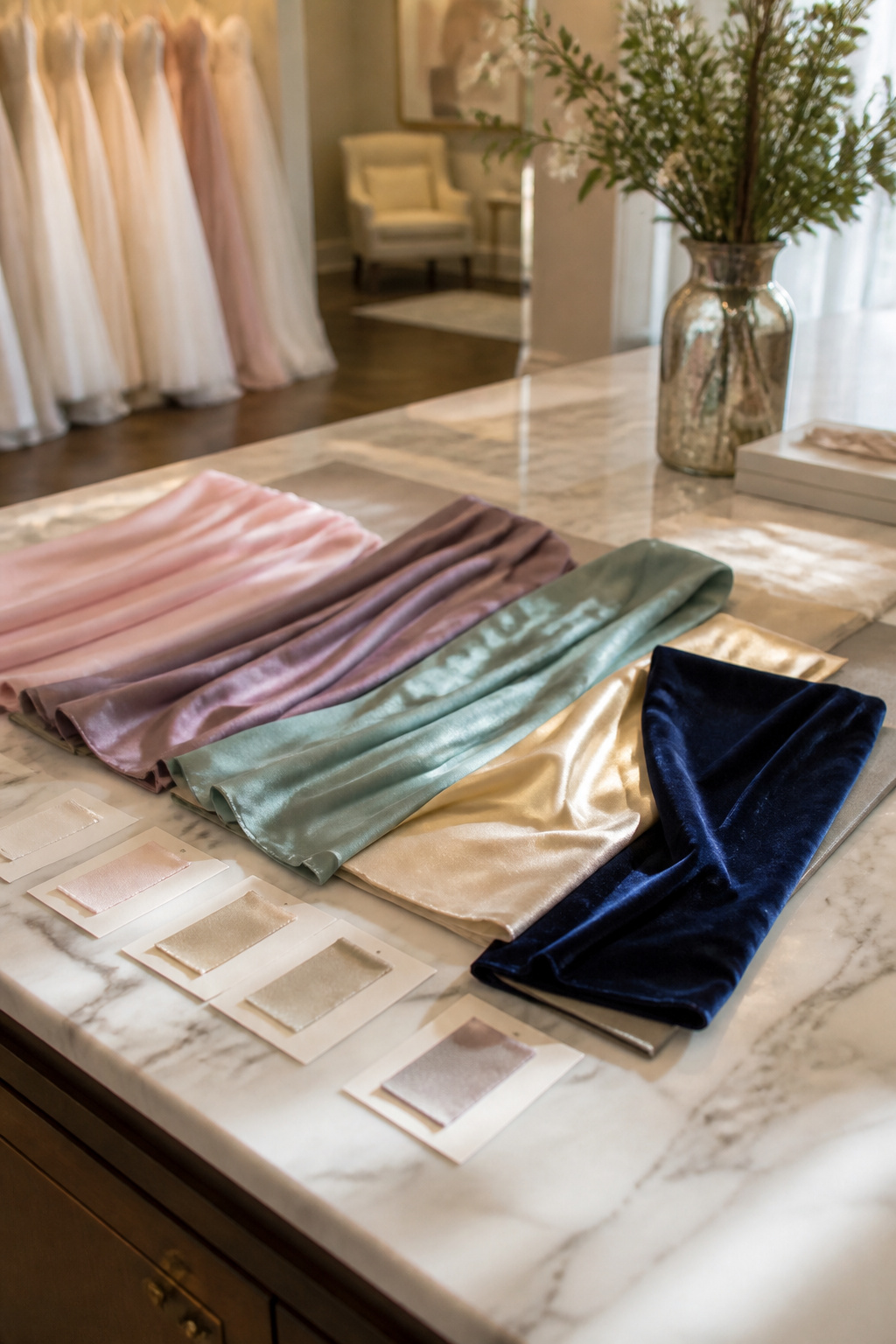
Chiffon, satin, and velvet are the three fabrics that actually matter for bridesmaid dresses, and the difference between them is the difference between a comfortable wedding and a miserable one. Birdy Grey starts at $89 and uses all three, with chiffon and satin flagged for summer weddings and velvet reserved for fall and winter in emerald green or cabernet. That seasonal guidance is useful, though the site does not explain what makes chiffon breathable or why velvet reads as formal, just that brides "love" the result.
Azazie and Revelry also carry these fabrics, but neither site breaks down which weave suits which temperature or venue. The reader is left to guess whether satin’s weight works for an outdoor July ceremony, or if chiffon’s transparency needs a particular lining. Birdy Grey at least pairs fabric to season, even if the reasoning stays vague. Without that detail elsewhere, the practical shopper is comparing color swatches while the material itself, the thing that touches skin for six hours, stays unexplained.
What I Actually Paid and What I Got

Ordering bridesmaid dresses online means a dozen small costs that stack up before anyone reaches the checkout page. Birdy Grey lists bridesmaid dresses starting at $89, which sounds like the floor until shipping, rush fees, and alterations enter the picture. Kennedy Blue runs a home try-on program at $10 per dress with free shipping both ways and a seven-day window, a service that saves money only if the bride actually uses it to narrow the field before the whole party orders. Their dye-lot matching promise covers orders placed within six months of each other, a detail that matters because most brands won’t guarantee color consistency across separate orders. Swatches help, but free swatches still cost time, and color under warehouse lighting never quite matches a midday garden ceremony. The real price of a bridesmaid dress is the quoted number plus the anxiety of whether that dusty sage arrives dusty or sage at all.
Ordering Without the Stress

Order at least ten weeks out if anyone needs alterations, and twelve if the dresses ship from overseas. Fabric dye lots shift between batches, so the group needs to place the order in one transaction or risk mismatched colors. One bride I watched closely split her party into two payment groups to chase a coupon; the second batch arrived a shade duskier, and three bridesmaids spent the week before the wedding hunting replacement sashes.
Return windows vary sharply. Some houses allow two weeks from delivery, others from the event date, and a few tag on restocking fees for anything not in the original plastic. Check whether the policy holds for the color swatch or just the dress; ordering a swatch first can save the whole group from a collective mistake.
Coordinating without friction means giving two or three vetted options, not an open catalog. Too many choices paralyze the group, and too few reads as controlling. The balance that worked, watching friends manage it, was narrowing to two silhouettes in one fabric, then letting each woman pick her neckline. Everyone felt some ownership, and the photos still looked intentional.
Frequently Asked Questions
What are the best bridesmaid dress colors?
Popular choices include soft pastels and dusty tones for spring, airy chiffons in light shades for summer, and rich jewel tones like emerald green or cabernet velvet for fall and winter. Kennedy Blue offers over 90 colors with a six-month dye-lot matching window, while Birdy Grey builds its palette specifically for mix-and-match coordination across seasons.
How do I choose bridesmaid dresses?
Start with fabric and color that fit your season and venue, then narrow to two or three silhouettes so each bridesmaid can pick what flatters her body. Order swatches first, since screen colors rarely match real fabric, and place the full group’s order in one transaction to avoid dye-lot shifts.
What sizes do bridesmaid dresses come in?
Kennedy Blue covers 00–32, Revelry runs 0–36 (XS–4XL), and Azazie adds custom sizing based on individual measurements. The key difference is whether extended sizes live in the same collection with identical construction, or get split into a separate line with different dye lots and details.