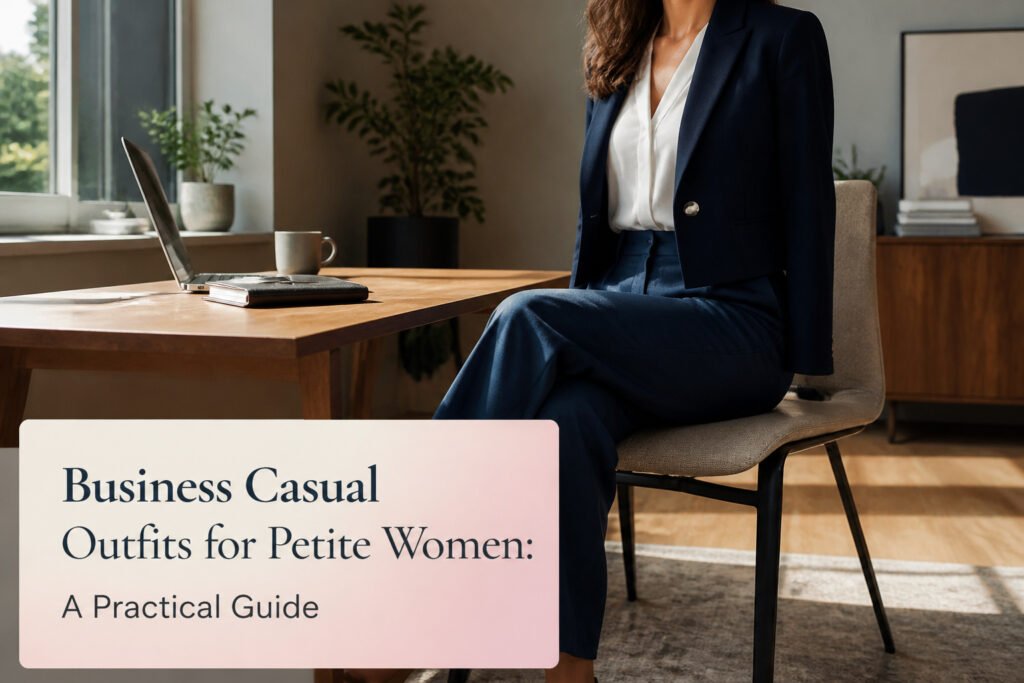
Business casual outfits for petite women are built on a single principle: a defined waist and an unbroken vertical line. The challenge is that most office clothing is graded for taller frames, so standard blazers hit at the wrong hip and trousers pool at the ankle. A cropped blazer that ends at the waist, not below it, keeps the leg line intact and avoids the oversized tailoring that turns office pieces into tents on shorter torsos.
Cropped Blazers

A standard blazer that hits at the hip swallows a petite frame whole. The fabric pools past the waist, the shoulders droop even in the right size, and suddenly your legs look half their actual length. A cropped blazer that hits at the waist, not below it, keeps the leg line intact and avoids the oversized tailoring problem that turns so many office pieces into tents on shorter torsos.
Black or camel are the two colors worth owning first. Black reads sharp against any bottom and disappears enough to let the shape do the work. Camel adds warmth without fighting the neutral palette most business casual dress codes expect. Both pair cleanly with ankle-length trousers or a tucked-in fitted top without demanding constant adjustment.
The waist-level hem is the functional detail here. It sits where your actual waist is, not where a designer assumed it might be on a taller frame, so the proportion reads deliberate rather than accidental. You get the structure of a blazer without the fabric bulk that standard lengths dump onto a petite build.
Ankle-Length Trousers

Ankle-length trousers hit exactly where they should on a petite frame: right at the ankle bone, where the leg narrows before the foot begins. That slight break creates a continuous vertical line from hip to heel without the fabric pooling that shortens full-length styles, and without the visual chop of a true crop. The gap of skin, or the nude pump that fills it, keeps the eye traveling downward.
A 28-inch inseam is the benchmark to look for in petite sizing. Standard trousers run 30–32 inches and bunch at the shoe, which costs you the length you are working to preserve. Brands like J.Crew, Madewell, and Abercrombie build this inseam into their dedicated petite lines, and Quince’s ankle styles run reliably short enough that an XS 32 length works at 5’2". High-rise cuts keep the proportions right by raising the waist and lengthening the leg line above, while slim or straight legs maintain that uninterrupted column. Wide-leg versions only work here if they are cropped to this same ankle point and paired with a fitted, tucked-in top to define the waist.
Fitted Tops

Bodysuits and mock necks solve the one problem that ruins a tucked-in look for petites: the fabric puddle at the waistline. A standard tee, even a fitted one, shifts during the day and bunches under a belt or waistband. A bodysuit stays put, so the line from torso to trouser stays clean without the midday tuck-and-smooth routine.
I learned this the hard way after cycling through half a dozen "slim fit" woven blouses that all managed to balloon at the side zipper by lunch. The mock neck works the same way, skimming close enough to disappear into high-waisted trousers rather than fighting them. Three fitted tops, one in each of those styles plus a satin blouse, are enough to rotate through a full work week. They share the same job: defining where the torso ends so the legs read longer. Anything boxy or oversized works against that effect, adding bulk precisely where petites need structure.
Midi Skirts

A true midi on a 5’2" frame lands somewhere between the bottom of the kneecap and the widest point of the calf. That window, roughly mid-calf but above the bulge, is what keeps the leg line from being chopped in two. The proportion works because the eye still sees ankle and still sees knee; the silhouette stays continuous. A full midi that skims the calf’s widest part does the opposite, creating a horizontal break exactly where a petite frame needs vertical flow.
Maxi skirts are the riskier move for the same reason. All that fabric pools at the ankle and erases the leg entirely; on a shorter torso-to-leg ratio, the effect is wearing a tent rather than a column. The sources agree on what to reach for instead: high-waisted pencil or A-line cuts that sit at the natural waist, pulling the visual starting point upward. Flared, tiered, or ruffled versions add volume at the hip or mid-thigh that a compact frame simply doesn’t have the height to absorb.
Pointed-Toe Flats and Loafers

Pointed-toe flats and loafers are the most reliable way to elongate a petite leg line without adding any actual height. The sharp toe extends the foot visually, which pulls the eye downward and makes the whole leg look longer. A rounded toe on a flat shoe does the opposite: it stops the line abruptly right at the foot, which can make a petite frame look even smaller.
Loafers work the same way if you keep the toe narrow and the sole slim. Chunky soles or thick platforms add visual weight that breaks the clean line you are trying to create. The same rule applies to ballet flats, which can work for petites but only when the toe is pointed or almond-shaped rather than rounded.
On days with more walking, a neutral pump in nude, beige, or taupe will extend your leg line by blending into your skin tone. They make your legs look longer than black pumps do, and they work whether the heel is a kitten height or completely flat.
Structured Dresses

A structured dress earns its place in a petite work wardrobe through three details that sound small until they are missing. The waist must be defined by the cut itself or by a belt, not left to guesswork under a boxy shift. Seams that trace the body, fabric with enough body to hold a shape rather than cling or collapse, and a hem that hits at or above the knee keep the silhouette legible on a smaller frame. Anything longer, especially a full skirt dropping to mid-calf, lands at the exact point that visually shortens the leg line. I have watched the same A-line dress read as polished on one colleague and as a tent on another; the difference was two inches of hem and whether the waist sat at her actual waist. Sheath and fit-and-flare shapes both work if they stay inside those guardrails. What fails is the dropped waist, the super full skirt, anything that adds volume where a petite frame needs clean line.
Wide-Leg Pants

Wide-leg pants work for petites, but only when the hem is cropped or tailored so the fabric never pools at the shoe. The Abercrombie & Fitch Sloan Tailored Wide Leg Pant gets this right with multiple inseam lengths, which means you can buy the proportion instead of paying a tailor to fix it afterward. The leg opening matters just as much as the length: it should balance your hip width, not exceed it. Go wider than your hips and the silhouette swallows the frame; keep the opening in proportion and the high rise plus full leg still create that long, lean line. I reach for these with a fitted knit or structured blazer, and the drape reads polished without feeling stiff through a full day of meetings. The Madewell Petite Wide-Leg Jean in Super Stretch offers the same logic in denim, structured enough for casual office days when the dress code loosens. The hem must hit clean at the ankle, never pooling, and the leg opening should mirror, not balloon past, your own hip width.
Tailored Trousers

Full-length trousers with a precise hem, sitting right at the shoe with no break, do more for a petite frame than ankle-length ever could. That uninterrupted vertical line is what keeps the eye moving upward, and even a slight fold or puddle at the floor breaks it completely. The catch is that off-the-rack petite inseams often still need hemming, so budget for a tailor even when the label says petite. One blogger noted her Ann Taylor trouser jeans carried a 28" petite inseam, which still required adjustment to hit that clean, no-break point. A contrast skinny belt can help visually break up a higher rise if the proportions feel off, but the hem itself should stay spare and exact.
A-Line Skirts

An A-line skirt narrows at the waist and flares gradually, which keeps volume from pooling at the hips where a petite frame can’t absorb it. That gradual slope creates proportion without the boxiness that swallows a smaller silhouette. I learned this the hard way after buying a flared midi that hit at mid-calf; the extra fabric at the thigh made me look like I was standing in a tent. The fix was switching to a high-rise A-line that sits at the natural waist and ends right at or just above the knee, which defines the waist and keeps the leg line continuous. Banana Republic makes a stretch-cotton utility version with an elastic waistband that holds this shape without needing tailoring. Tuck in a fitted knit or a slim blouse so the waistband stays visible; anything loose or untucked breaks the vertical line the skirt is doing the work to create.
Casual Friday Outfits

Dark wash straight-leg jeans with zero distressing are the only denim that reads as business casual rather than weekend errand. The straight leg hits at the ankle naturally on a petite frame, which means no hemming and no pooling fabric that shortens the line. Pair them with the same cropped blazer from earlier sections; its structured shoulder and shorter length keep the silhouette intentional rather than thrown-together. A fitted bodysuit underneath eliminates bulk at the waist, and pointed pumps finish the look. The formula is simple, but the details matter: the jeans must be dark enough to pass for trousers from ten feet away, and the blazer must stay on. Without it, the outfit slides into casual territory fast. I size down in the blazer to an XXS for a closer fit through the shoulders, which prevents the boxiness that overwhelms a smaller frame.
Proportions for Petite Frames

The difference between a business casual outfit that works and one that swallows you whole usually comes down to one thing: whether the proportions respect your frame. A defined waist and a clean vertical line are the two non-negotiables. Everything else builds from there.
Structured pieces do the heavy lifting. A cropped blazer that ends at the hip, not mid-thigh, keeps your silhouette compact. The same logic applies to ankle-length trousers; that cropped hem creates one continuous line from waist to foot, especially when the top is tucked in and fitted. I see the temptation to leave a blouse untucked for comfort, but on a petite frame that boxy volume erases the waist entirely and the whole outfit goes shapeless.
Wide-leg pants can work, though they need to be cropped or hemmed to hit cleanly at the ankle. Anything that pools on the floor breaks that vertical line and drags the eye downward. Pair them with a tucked-in fitted top and a pointed-toe flat, and the proportions hold.
One layer of structure is usually enough. Two starts to read heavy, and by three you’re wearing your clothes instead of the other way around. The goal is pieces that hold their own shape so you don’t disappear inside them.
Outfit Formulas That Work

A crisp white shirt tucked into black crop pants with tan loafers is the simplest reliable combination for most offices. The high contrast draws the eye upward, and the cropped length keeps the leg line clean without pooling at the ankle. For petites, this is the outfit that requires zero morning decision-making.
A non-clingy sweater dress cinched with a belt at the waist does the proportion work automatically. Coordinating neutral pumps finish it, and the whole look stays warm through winter without adding bulk that swallows a smaller frame. The belt placement matters more than the belt itself; sitting right at the natural waist is what creates the longer leg line that makes this formula work on a shorter torso.
For days when color feels necessary, a vibrant midi skirt paired with a tailored navy blazer grounds the brightness while adding structure up top. Keep the blouse simple so the skirt carries the visual interest. Straight-leg denim works similarly with a belted blazer; the external waist definition pulls the look together, and a pointed-toe pump or loafer extends the foot just enough. The satin funnel-neck blouse with neutral tailored trousers is underrated right now, elegant without trying, and keeping everything in the same tonal family avoids horizontal breaks that chop up a petite frame.
What to Avoid

Oversized blazers that hit mid-thigh swallowed my frame whole the one time I tried one for a client presentation. The fabric pooled past my hips and my legs looked stubbier than they actually are, which is the exact opposite of what a petite frame needs in a professional setting. Anything that hides the waist or shortens the leg line works against you.
Maxi skirts fall in the same trap unless your office is genuinely relaxed and you are committed to heels. On a shorter frame, that much vertical fabric reads weekend brunch, not boardroom, and the hem drags even on me at five feet. Wide-leg pants that are not hemmed or cropped bunch at the ankle and create the same pooling effect; I have learned to check inseam length before ordering and to look for petite sizing or a built-in crop rather than planning to tailor later.
Low-rise bottoms are perhaps the sneakiest problem. They sit below the natural waist and visually cut the leg line at its worst possible point, making torso look long and legs look short no matter what the mirror promises in the fitting room. Boxy, untucked tops compound the issue by erasing the waist entirely; one structured layer works, but two or more start to feel heavy and shapeless.
The common thread is proportion. Anything that breaks the body into awkward halves rather than elongating it will fight you all day.
Capsule Wardrobe for Petites

A capsule wardrobe for petite workwear lives or dies by whether the pieces actually come in petite sizing, not just sized down. J.Crew’s petite section runs strong on tailored trousers and blazers with the shoulder and sleeve proportions already corrected; I reach for their suiting when I need a jacket that does not swallow my frame. Ann Taylor builds its petite workwear around the same principle of balanced proportion through shoulder, waist, sleeve, and hem, and their petite blazers and ankle pants layer together without the bunching or dragging that regular sizes need altered out. Abercrombie’s petite line surprised me most for work pants; the fit through the rise and inseam lands right for shorter frames in a way that used to require a tailor. Between the three, you can cover blazers, trousers, polished tops, and sheath dresses in neutrals that mix without fighting each other for attention.
Frequently Asked Questions
What should petite women wear to the office?
Structured, fitted pieces with clean proportions work best. Cropped blazers that hit at the waist, ankle-length trousers with a 28-inch inseam, fitted bodysuits or mock necks tucked in, and midi skirts that land between the kneecap and calf’s widest point keep the silhouette professional without overwhelming a smaller frame. The goal is preserving a defined waist and an unbroken vertical line from top to bottom.
Can petite women wear wide leg pants to work?
Yes, but only when cropped or tailored to hit cleanly at the ankle with no pooling. The leg opening should balance your hip width, not exceed it, and they need a fitted, tucked-in top to define the waist. Abercrombie’s Sloan pant and Madewell’s Petite Wide-Leg Jean both offer inseam options that work off the rack for shorter frames.
What shoes make petite women look taller at work?
Pointed-toe flats and slim loafers extend the foot visually and pull the eye downward, which lengthens the whole leg. A neutral pump in nude, beige, or taupe blends with skin tone and extends the leg line more than black does. Avoid rounded toes on flat shoes and chunky soles, both of which stop the line abruptly or add visual weight that breaks it.
What should petite women avoid wearing to work?
Avoid oversized blazers that hit below the hip, low-rise bottoms that cut the leg line at its worst point, maxi skirts that pool at the ankle, and boxy untucked tops that erase the waist. Pants that bunch at the shoe, wide-leg styles that are not hemmed, and anything with a drop waist also work against a petite frame by shortening visual leg length.
What are the best brands for petite office wear?
J.Crew, Ann Taylor, and Abercrombie all build petite lines with corrected shoulder, sleeve, and inseam proportions rather than simply sizing down. J.Crew excels at tailored trousers and blazers, Ann Taylor covers blazers and ankle pants that layer cleanly, and Abercrombie’s work pants fit through the rise and inseam without needing a tailor.