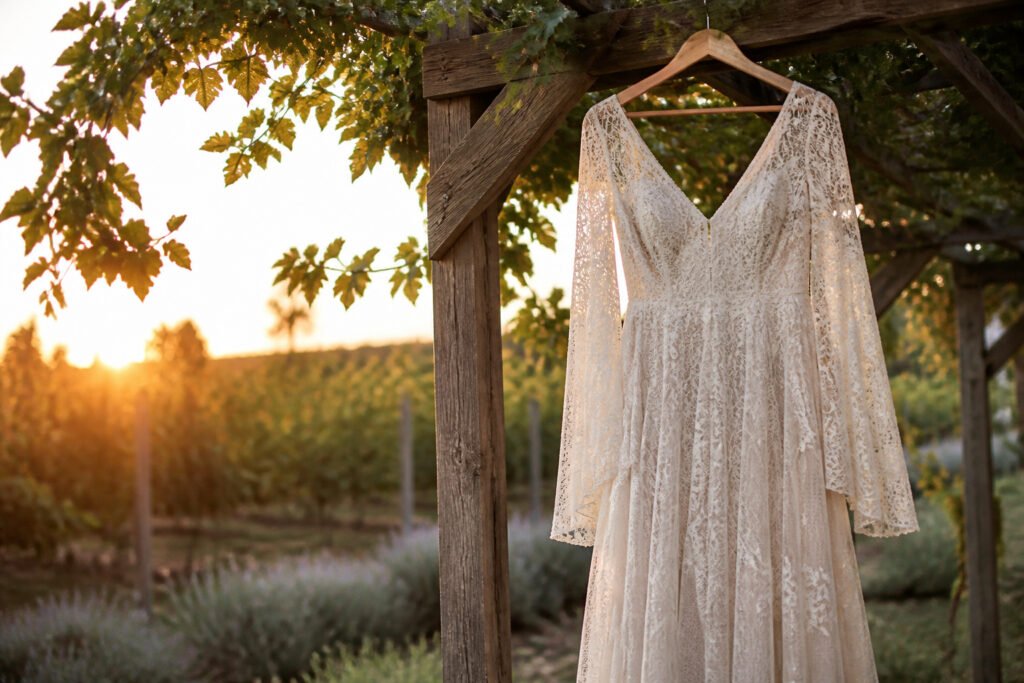
A boho wedding dress is any bridal gown that borrows from bohemian style: flowing fabric, natural materials, and details like botanical lace or bell sleeves rather than stiff structure and heavy beading. The catch is that the same silhouette can look formal or relaxed depending entirely on what it is made of; a cotton lace A-line reads boho, while satin in the identical cut reads ballroom. Cotton lace breathes through a summer ceremony and softens against your skin instead of trapping heat like polyester blends, which is why it shows up in nearly every style here, from backless gowns to long-sleeved vineyard dresses.
1. Flowy A-Line Dresses
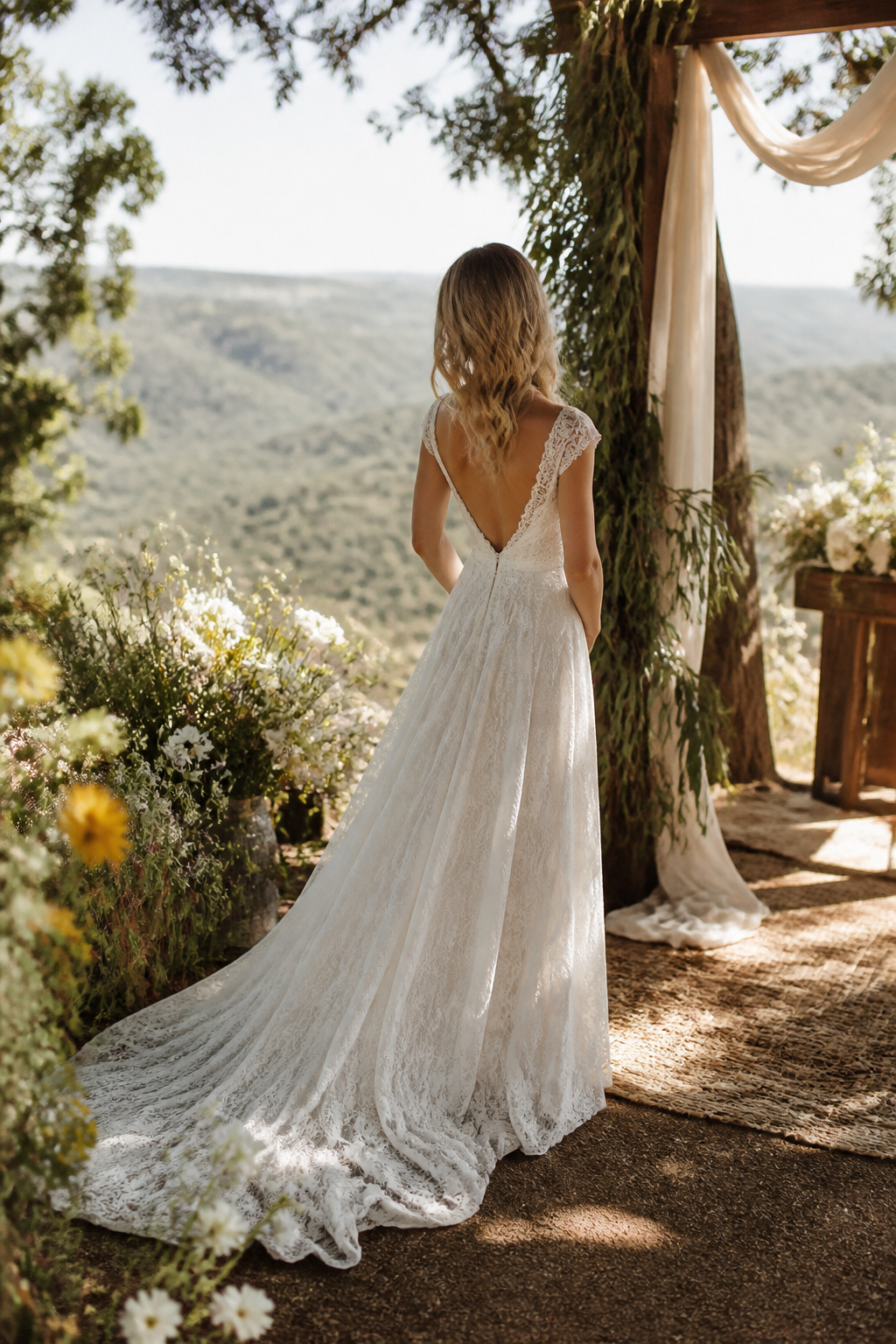
The A-line became boho’s default silhouette for a simple mechanical reason: fabric hangs from a fitted bodice and widens gradually, creating that triangle shape without any internal structure forcing it. Cotton lace or chiffon versions read relaxed because the material itself does the work. Lighter fabrics move when you move, catching air at an outdoor ceremony rather than holding a stiff cone shape like structured satin A-lines do.
This shape flatters broadly because the waist definition stays narrow while the skirt skims rather than clings. The same cut in satin can look formal; swap in real cotton lace with its natural breathability and softer drape, and the dress photographs differently in natural light, less reflective, more caught-in-a-breeze. Sources describe these designs as having "a little less structure, and more draped and flowing fabrications," which is exactly what separates the boho A-line from its ballroom cousin. The bodice still matters, but the skirt’s movement becomes the point.
2. Long Sleeve Dresses

Long sleeves on a boho dress do more than cover skin; they set the entire tone. Fitted lace arms keep the silhouette clean and slightly vintage, which works well for spring ceremonies when the air still carries a chill. Billowing bishop sleeves, wider at the wrist than the shoulder, catch wind and movement and read instantly romantic; they dominate outdoor fall weddings for exactly that reason, where a gust becomes part of the photograph rather than a problem to fix.
Cotton lace is the practical choice here, especially for all-day wear. It breathes better than synthetic blends, softens as the hours pass instead of stiffening, and holds up against the snags of real outdoor settings: branches, chair arms, a nephew stepping on the train. The comfort is structural, not just sentimental; a bride in long sleeves already has enough to manage without fighting her fabric.
3. Off-the-Shoulder Dresses
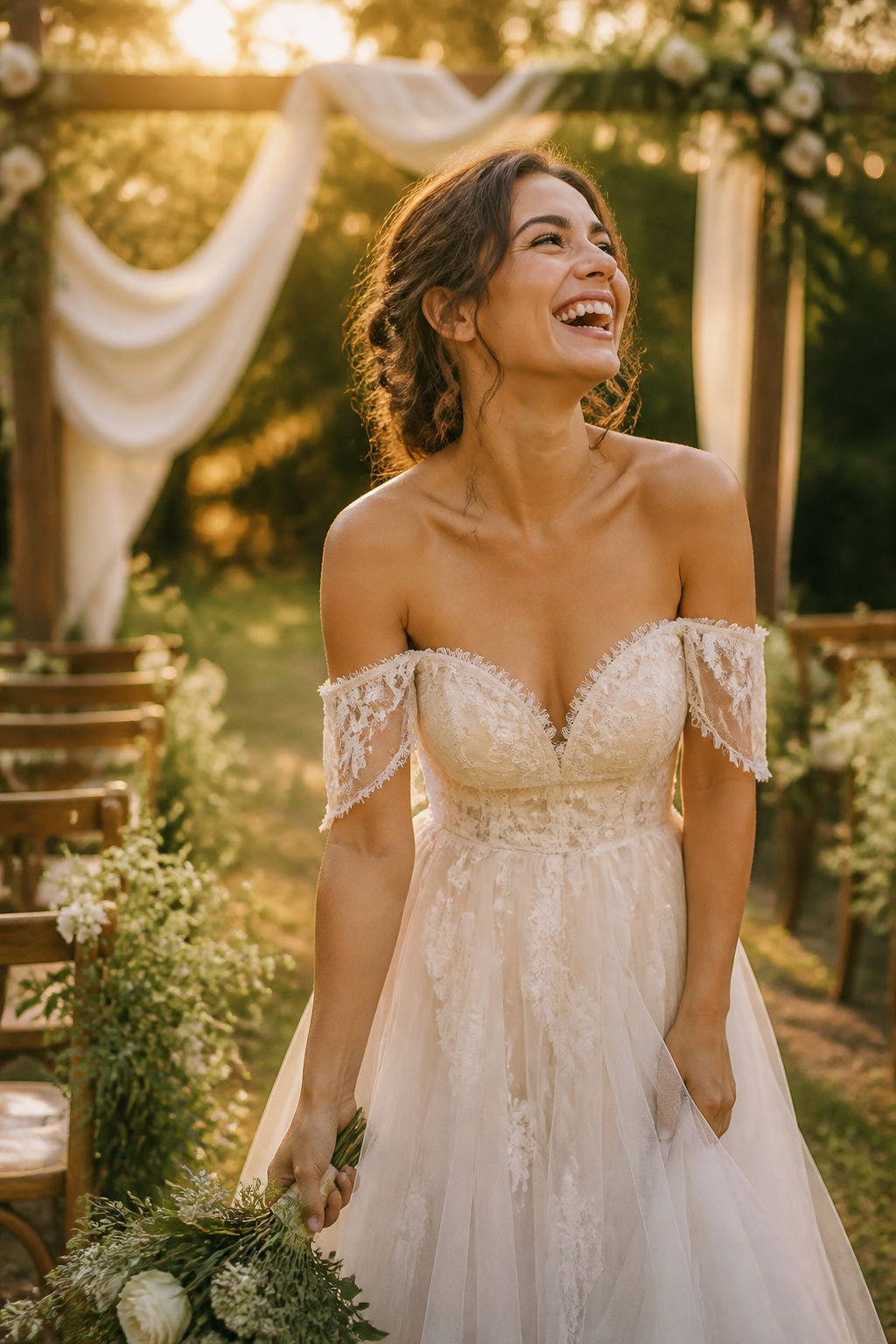
The neckline sits just below the collarbones, which sounds precarious but actually frames the face so cleanly that heavy jewelry feels unnecessary. I noticed this most when styling looks for outdoor ceremonies: the bare shoulder line does the visual work a necklace would, so a pair of thin drop earrings and loose hair usually completes it. That relaxed pairing is where the boho register really lands.
What keeps the dress from sliding is construction most brides do not think to check until they are tugging at it in a fitting room. Stretch panels hidden at the upper back, or ribbon ties that cinch across the inside of the bodice, are the common fixes. Ask to see the interior anchoring before you order, because an off-the-shoulder dress that relies only on gravity will spend your reception inching downward. The good versions stay put while you move, which is the difference between a silhouette that feels romantic and one that feels like a costume you are babysitting.
4. Backless Dresses
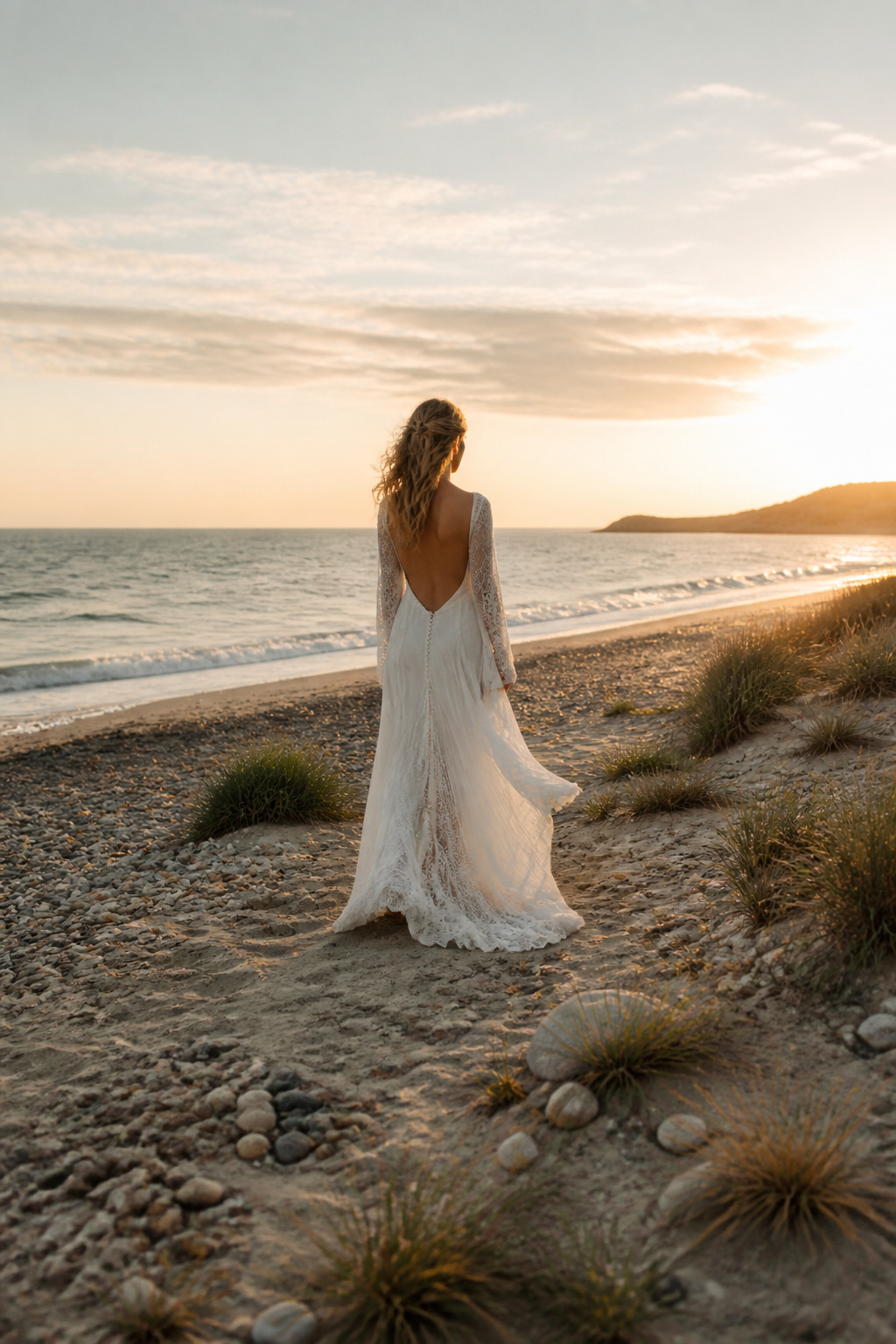
A backless boho wedding dress trades the built-in corsetry of traditional gowns for a single dramatic gesture. The cut typically drops to the natural waist or lower, held in place by illusion tulle, a row of silk-covered buttons, or ribbon lacing that lets you adjust the tension yourself. That transparency is what keeps it wearable; without some structural trick, the dress would need constant hitching.
Outdoor light is where these dresses earn their keep. The open back catches late-afternoon sun at the edges, giving photographers a rim-lit silhouette that reads as movement even in still shots. Indoor venues with overhead lighting flatten the effect, so this is a choice that really wants grass or sand underfoot. What convinced me, paging through enough galleries to spot the pattern, was how consistently the backless versions outperformed sleeved alternatives in golden-hour portraits. The skin itself becomes the detail, and no lace appliqué competes with it.
The risk is practical: you will need adhesive cups or a seam-sewn panel, and dancing means testing that setup beforehand. A dress that dips low enough to show the curve of the spine is not forgiving of last-minute fixes.
5. Two-Piece Dresses
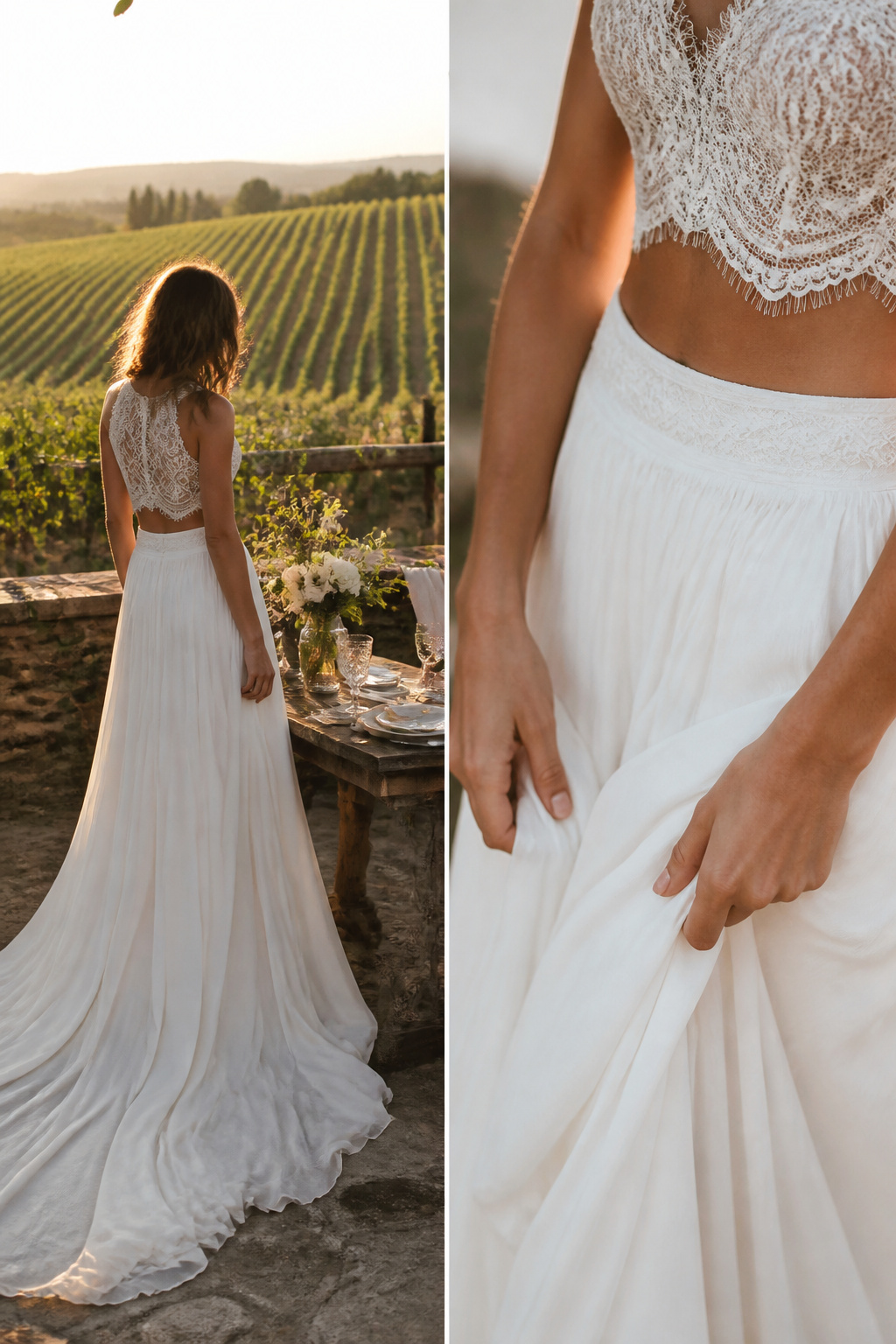
A lace crop top and flowing maxi skirt bought separately started as a fix for sizing that never lines up. Brides could order a small bodice and a larger skirt, or the reverse, without paying for custom alterations. Somewhere along the way the mix-and-match approach became its own look, and now the two-piece boho wedding dress is something brides seek out rather than settle for.
The practical edge still matters. Swapping the full ceremony skirt for a shorter reception piece takes about two minutes in the venue bathroom and costs less than a second complete outfit. What started as problem-solving has turned into freedom: the lace top stays, the vibe shifts, and you have not bought two dresses you will never wear again.
6. Fitted Lace Dresses
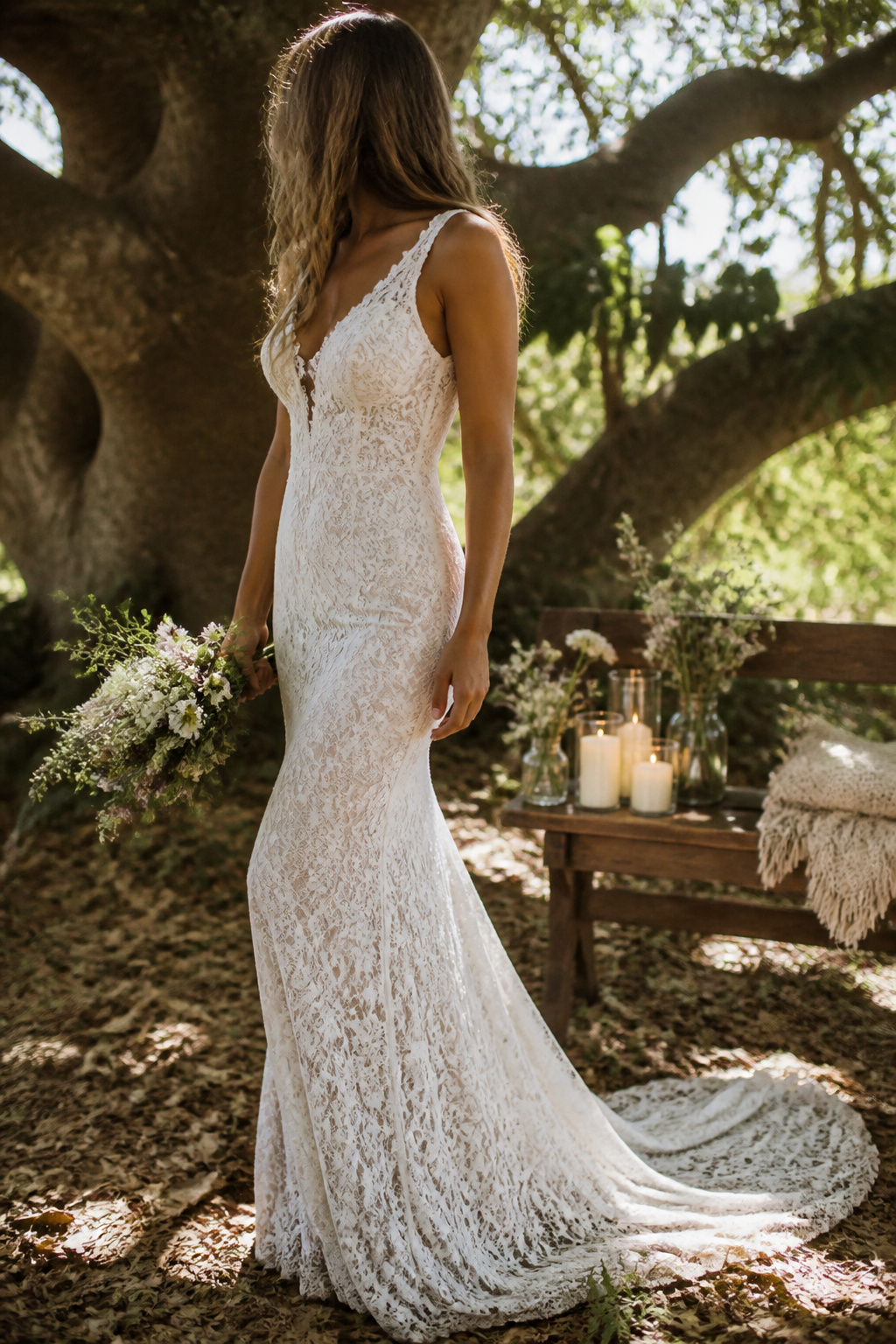
Sheath and column shapes keep the line close to the body from shoulder to hem, a different take on boho wedding dresses than the volume most people picture. The bohemian feel comes through in the details: botanical lace patterns that read like pressed leaves, scalloped edges where the lace meets skin, and sleeves left deliberately unlined so light passes through the pattern. Cotton lace works best for this, chosen for breathability and movement so the gown stays wearable rather than stiff.
This closer silhouette suits figures that do not need the strategic volume of an A-line to balance proportions. If you carry your weight through the hips or prefer structure that shows the line of your body without clinging, the sheath gives that. The trade is less forgiveness at the midsection, and the lace here does the work of distraction rather than draping. Long sleeves in this cut add coverage without adding bulk, and the unlined construction keeps them from reading as heavy even when they reach the wrist.
7. Mermaid Silhouettes
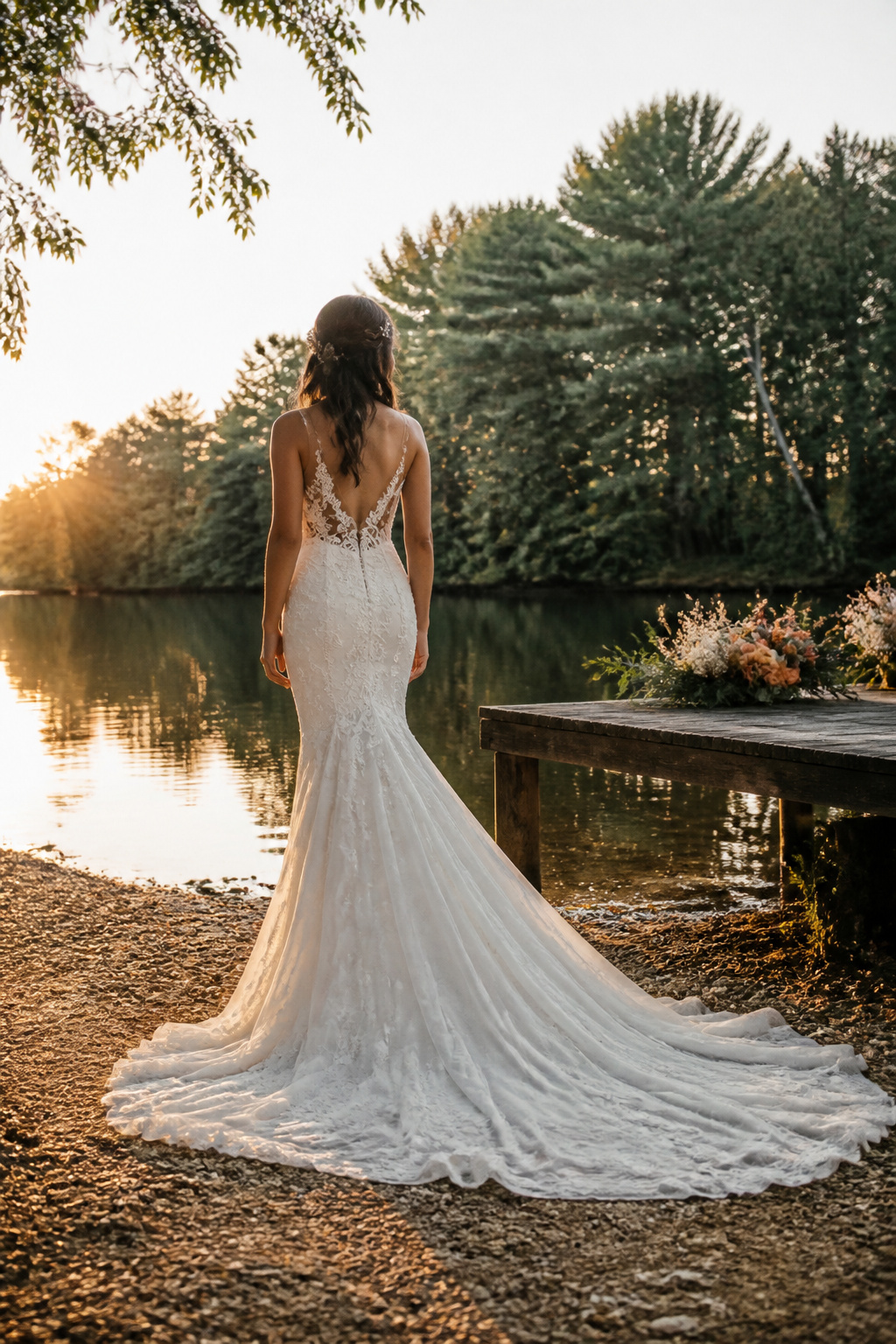
A mermaid silhouette fitted through the hip and flaring at or below the knee is the most structured shape that still reads as boho, but only when the fabric and ornamentation stay soft. Heavy satin or dense beading pushes it straight into formal territory, while chiffon overlays, scattered lace appliqué, or a raw-edged tulle skirt keep the spirit intact. I noticed this tension most when helping a friend narrow her search: the same cut on a crepe body with clean seams felt like a red-carpet borrow, but the version with an unlined lace bodice and a skirt that broke into soft panels at mid-calf suddenly fit her outdoor venue. The flare point matters too. At the knee, the shape stays dramatic; dropped to the lower calf, it loosens up and moves more like the relaxed dresses she was originally considering. For anyone shopping online, the product photos that show the dress in motion reveal the difference. A still image of a mermaid gown can hide how much structure the skirt holds; video or a back-angle shot where the fabric lifts and settles tells you whether it will feel like a costume or like something you could actually dance in.
8. Vintage-Inspired Designs
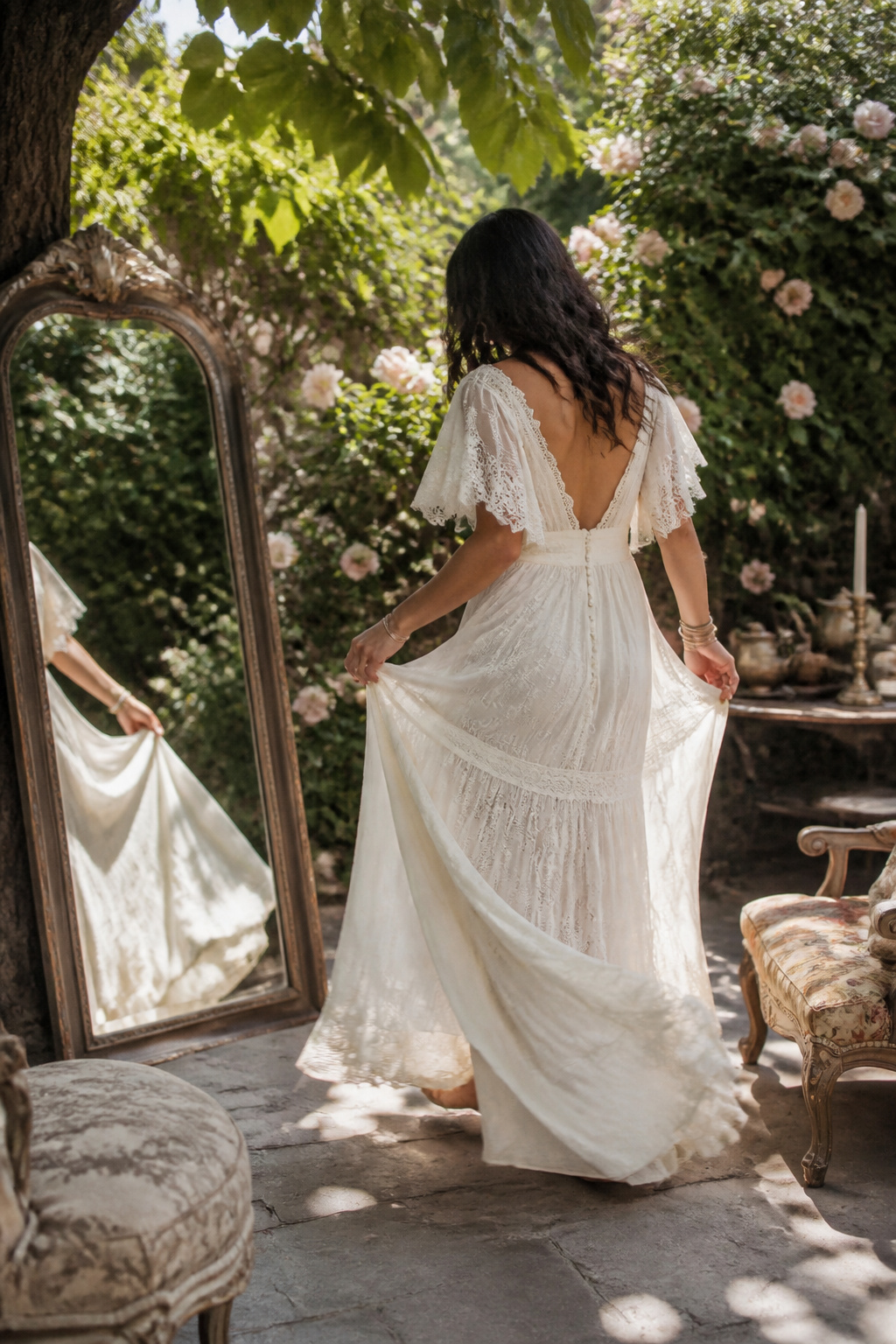
Dropped waists, flutter sleeves, and crochet panels keep surfacing in boho wedding dresses because they carry the silhouette of something found rather than copied. A 1920s dropped waist reads differently when the skirt is cut from modern georgette instead of bias-cut silk; the line nods to the era without demanding the boyish frame that made the original work. Flutter sleeves borrow from 1930s tea dresses, but the armhole is raised now so the sleeve stays put when you lift your arms to dance. Crochet panels nod to 1970s craft, though today’s versions are lined and backed so the pattern shows without the snag risk of true vintage.
The gap between vintage-inspired and actual vintage is mostly in the wearing. A 1960s lace shift was built for a corseted understructure or a different proportion through the hips; the reproduction keeps the neckline and sleeve but cuts the bodice for a bra you can actually buy. Vintage-inspired boho wedding dresses let you move the way a modern bride moves, which is to say sitting in a car, eating dinner, and reaching for a drink without thinking about the seams. True vintage demands a tolerance for fragility and fit that most wedding days won’t accommodate.
9. Floral Lace and Botanical Motifs
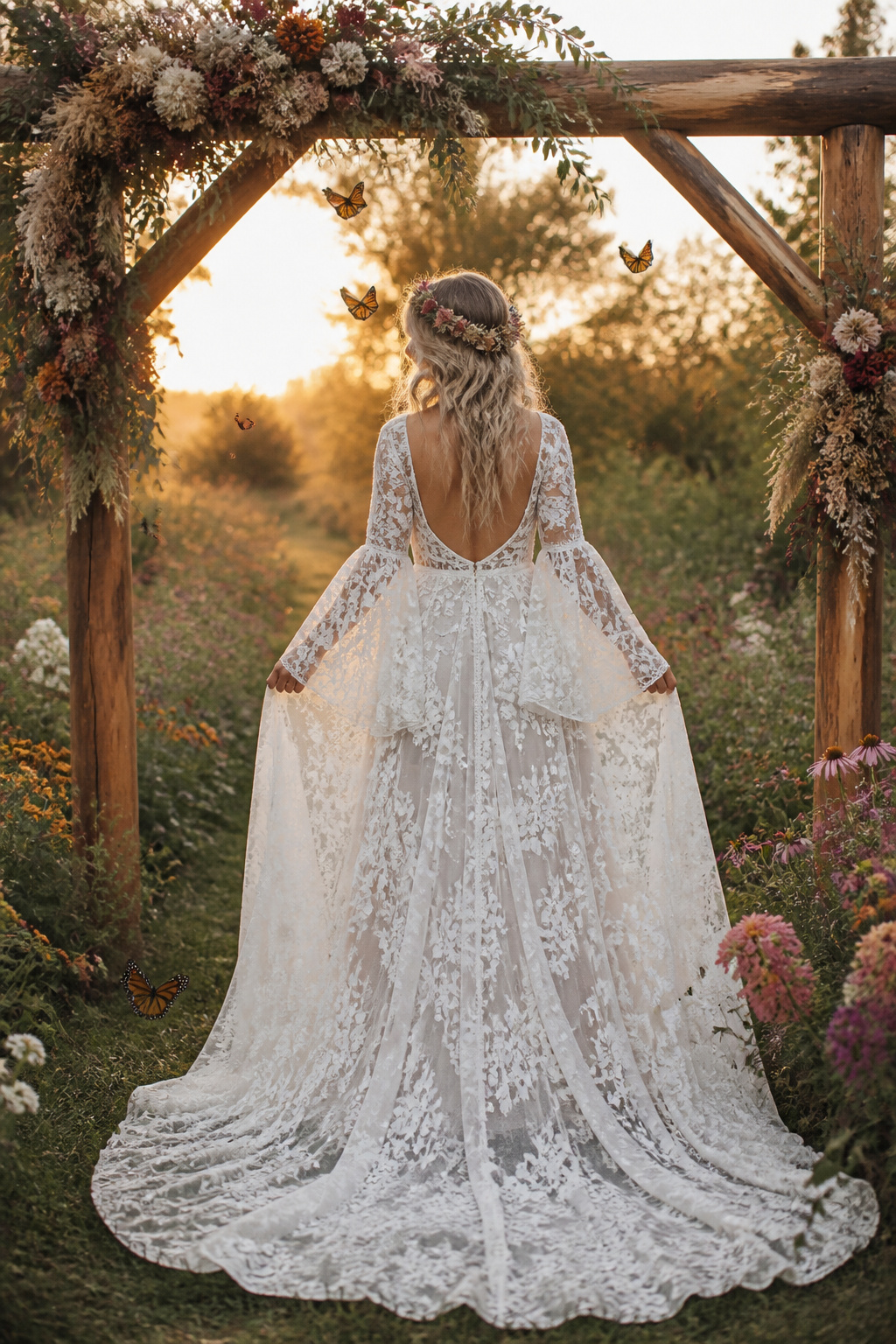
Cotton lace carries botanical detail better than anything synthetic, and that single material choice does more to signal "boho" than the cut of the skirt or the depth of the neckline. The wildflower embroidery, appliqued leaves, and three-dimensional vines that define this style need a ground fabric with actual texture and movement. Stiff polyester lace holds those elements like a bulletin board; cotton lets them sway and settle with the body.
Breathability matters here too, especially for outdoor ceremonies where heat and humidity turn a beautiful gown into a trap. Real cotton lace photographs softly in natural light, where synthetic alternatives throw back a slight glare that reads cheap in candid shots. The difference shows up in movement more than stillness: cotton lace catches air and settles back into place, while stiffer materials either cling or flare without intention.
The botanical motifs themselves run toward the untamed rather than the formal. Think embroidered wildflowers scattered irregularly, not symmetrical rose garlands. Vines that trail from the bodice onto the skirt without a predictable endpoint. That studied randomness is what separates boho from vintage revival, and cotton lace is the medium that makes it convincing rather than costume.
10. Intricate Embroidery
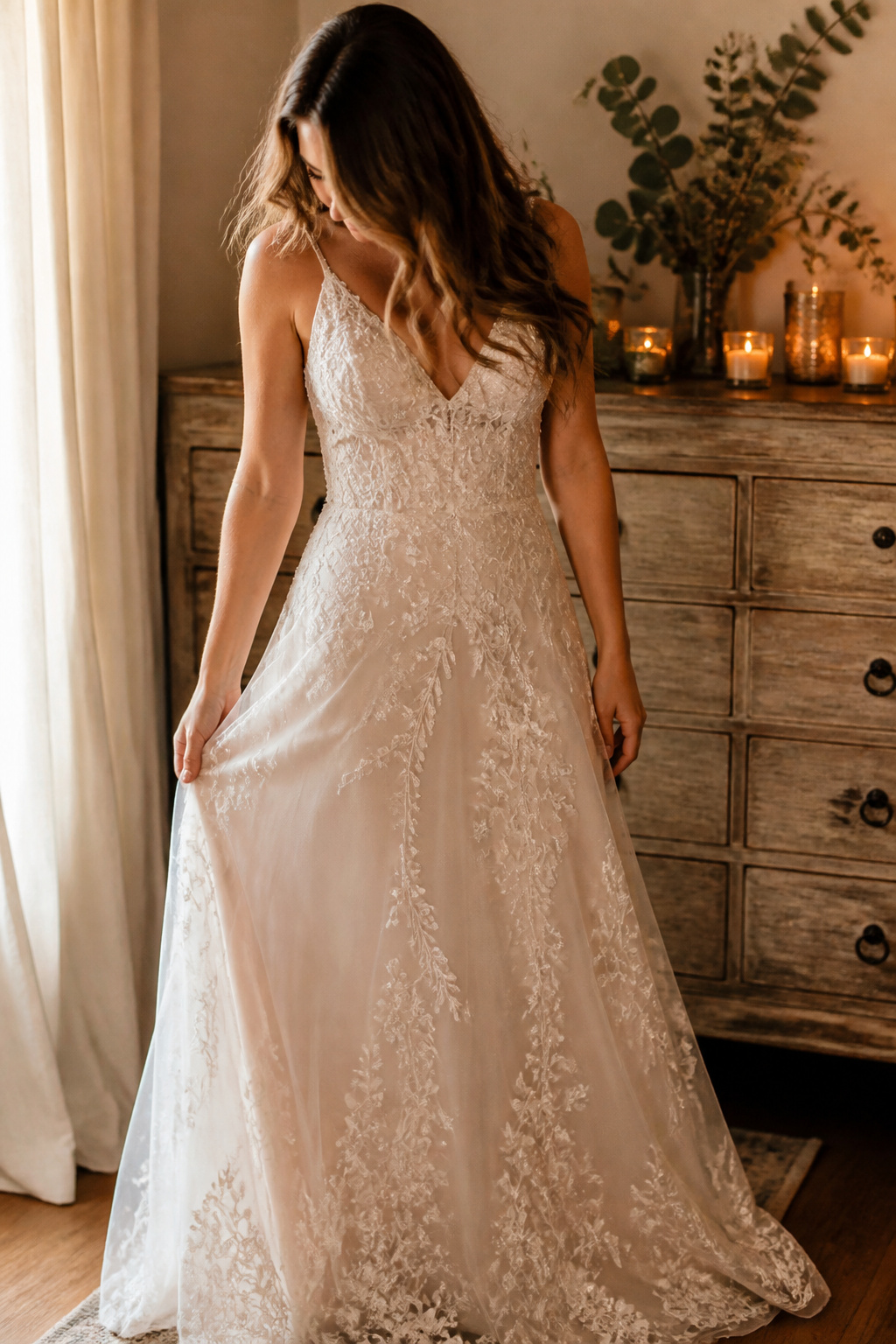
Hand-worked embroidery is what separates a boho wedding dress you remember from one you forget. The densest needlework usually concentrates at the bodice, the hemline, and the sleeve cuffs, places where movement catches light and a camera lingers. Motifs lean botanical: trailing vines, scattered wildflowers, tiny leaves that look grown rather than stamped. What convinced me, looking through enough of these gowns to spot the difference, is that the thread itself carries variation. Machine work repeats perfectly; hand stitches wobble slightly, and that irregularity reads as texture in person.
Expect to add roughly 30 to 50 percent to the base price for genuine hand embroidery, and budget for dry cleaning only, stored flat or on a padded hanger so the raised work does not crush against itself. A mass-produced print can mimic the pattern from six feet away, but up close the absence of dimension gives it away. If the budget allows one splurge in a boho gown, this is where it belongs.
11. Casual and Relaxed Styles
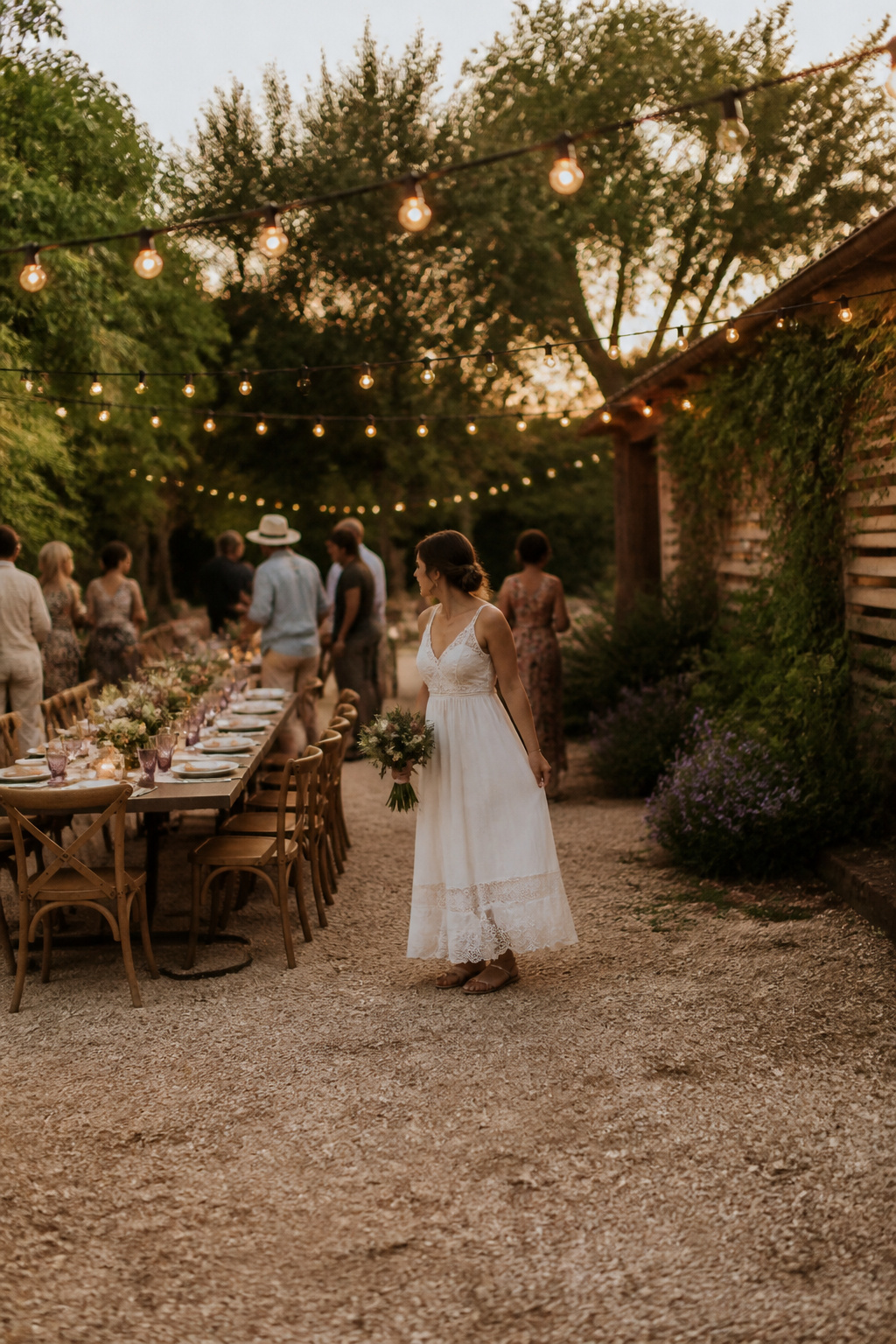
A sundress cut translates surprisingly well to a wedding when the setting is small and the mood is unguarded. Simpler seams mean less structure pressing against you during a courthouse signing or a backyard toast under string lights. Fewer layers keep the skirt from swallowing a casual space, and an ankle-length hem reads intentional without demanding the floor-length formality that empty banquet halls were built for.
What convinced me, reading through how these are built, is the practical freedom in the construction. Without a cathedral train or six layers of crinoline, you move through a kitchen or a garden path without calculation. An ankle hem also survives grass, gravel, and courthouse steps without the invisible panic of dragging silk through city grit. The dress stays clean, you stay present.
The risk is looking underdressed rather than intentionally relaxed. Lace trim, a defined waist, or sleeves that actually finish at the wrist rather than dissolving into spaghetti straps usually solves this. A boho wedding dress in this category works best when one detail carries the romance so the rest of the garment can breathe.
12. Outdoor and Beach Wedding Dresses
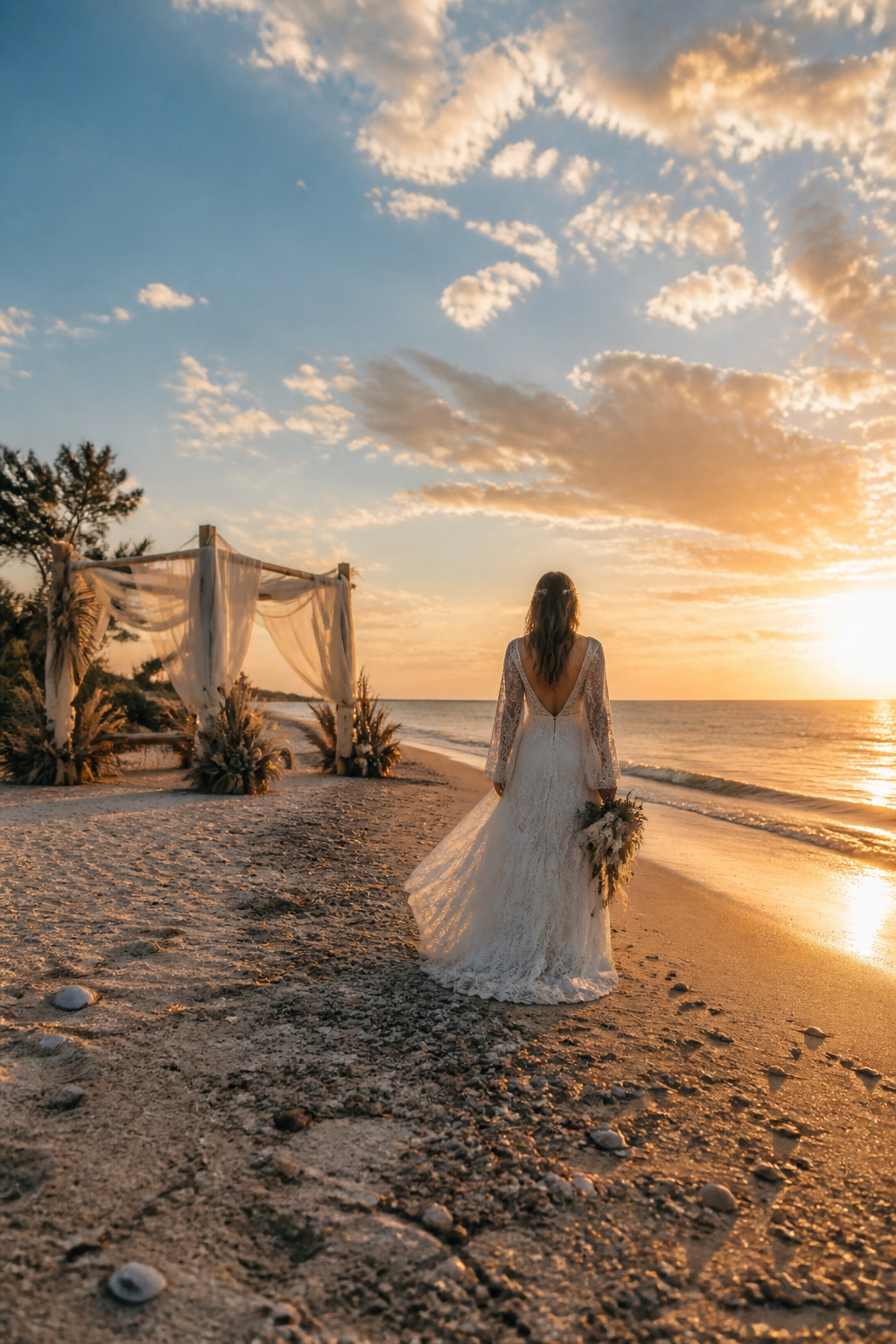
Sand and grass change what a wedding dress needs to do. The boho wedding dresses that read romantic at a vineyard can look like a mistake at the shoreline if the train is too heavy or the lace too delicate. Lightweight cotton lace breathes in warm weather and moves with a breeze, which is why so many destination brides reach for it. A shorter train or no train at all keeps you from dragging debris, and washable or forgiving fabrics mean red wine on grass or salt on hemline is not a disaster. The same A-line or fit-and-flare silhouette with draped, flowing fabrication feels barefoot-elegant on a beach and sunlit-easy in a garden. Fit-and-flare and A-line shapes with less structure handle uneven ground better than stiff, structured gowns. Madi Lane alone works with more than 800 stockists, which tells you how mainstream outdoor boho has become. The dress does not change, but the setting does, so buy for the ground you will actually stand on.
Materials That Matter
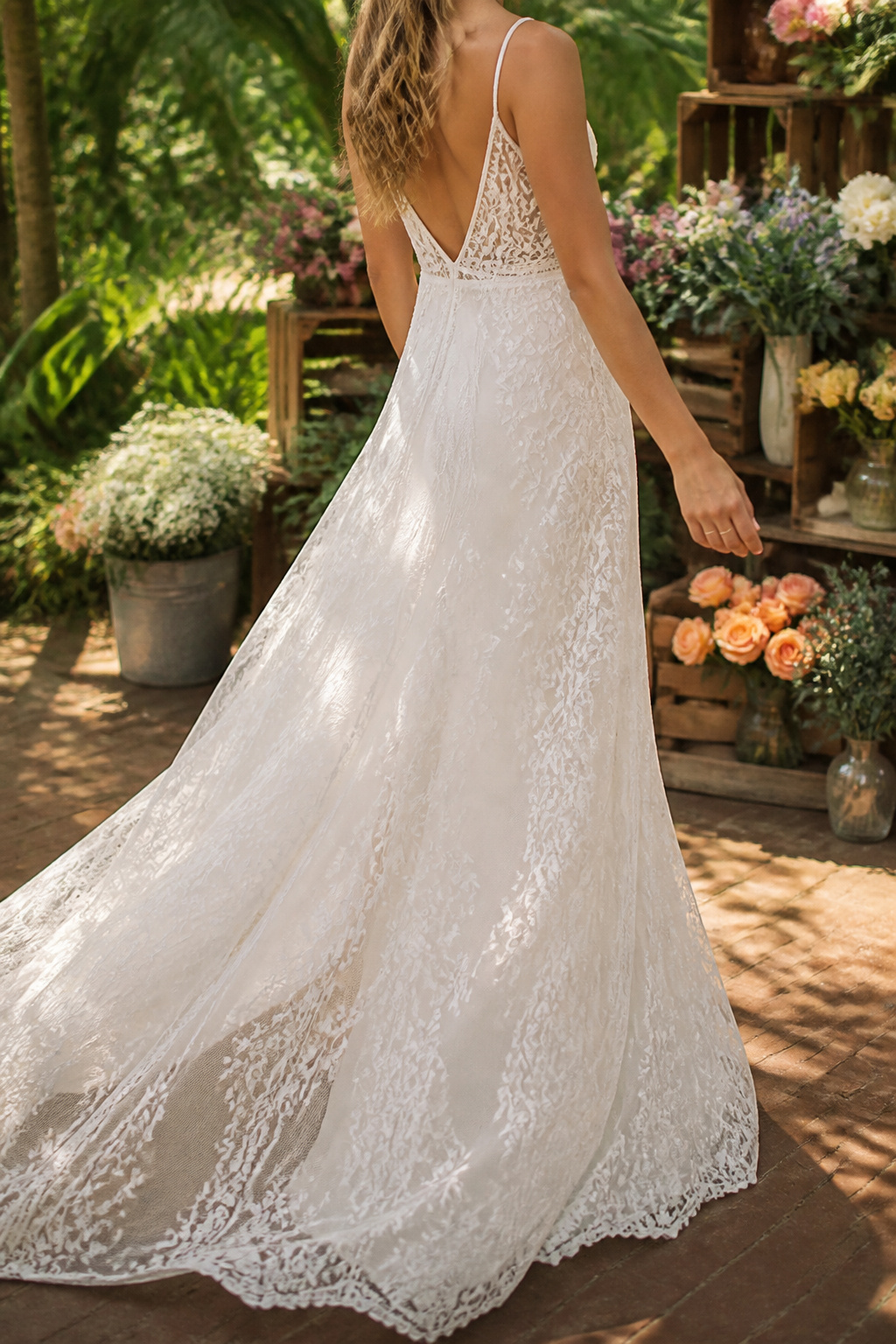
Cotton lace sits at the center of boho wedding dresses for a reason that becomes obvious about two hours into a summer ceremony. The fabric breathes, it moves when you move, and it softens against your skin instead of stiffening into something that photographs like upholstery. I have watched polyester lace under afternoon sun turn a bride’s back into a heat trap; cotton keeps air moving.
Silk or chiffon gives the drape that makes a boho silhouette flow rather than stand at attention. The weight matters here: these fabrics fall in lines that follow your body instead of holding a shape the designer imposed. Linen adds texture, the slight irregularity that reads as intentional rather than unfinished.
The difference against your skin across eight or twelve hours is not subtle. Synthetic alternatives can look similar in a flash photo, but they do not wick, they do not soften with wear, and they start to smell like a gym bag by the time you cut the cake. Real cotton lace is the detail that separates a boho dress from a costume with fringe on it.
Silhouette and Body Shape
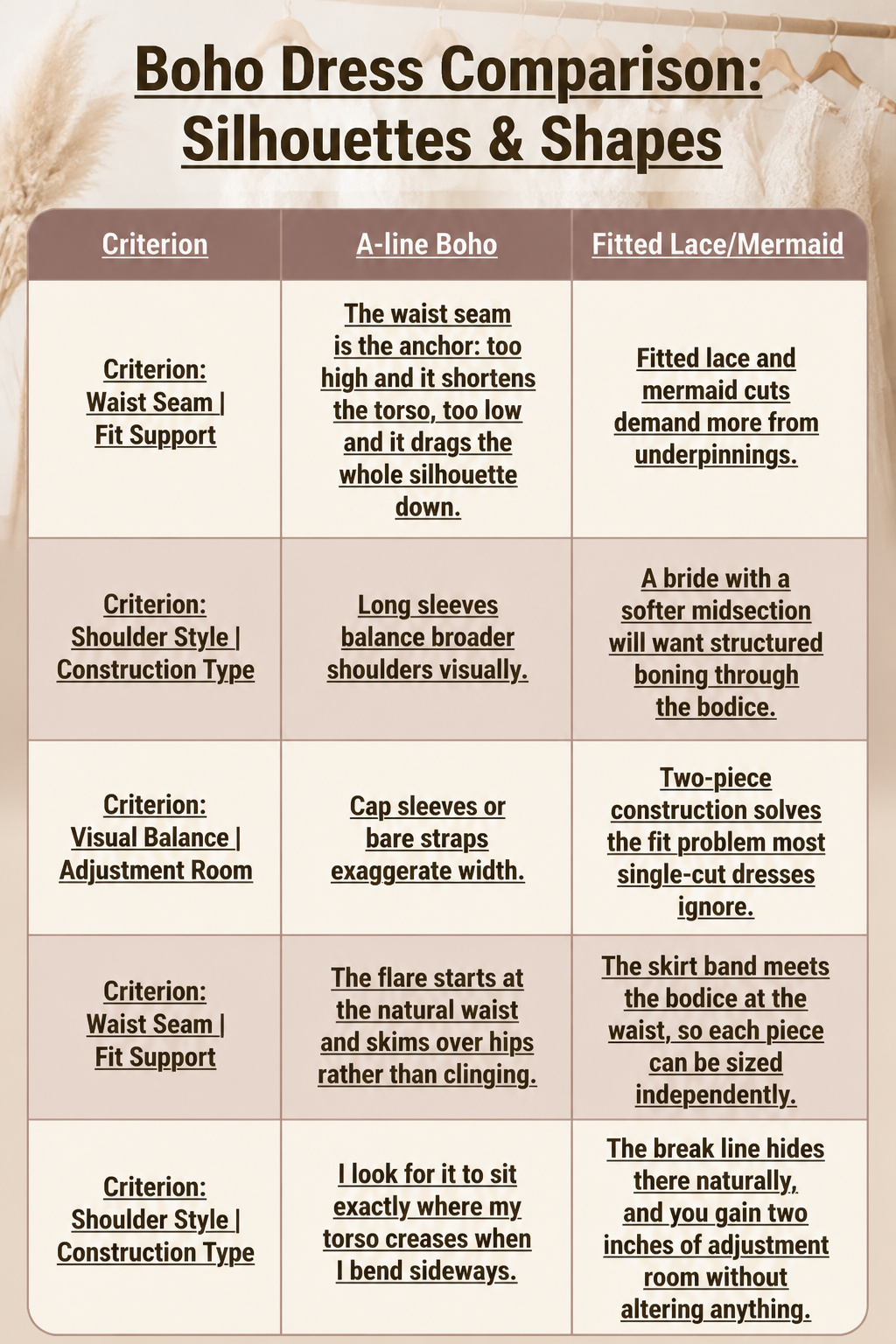
A-line boho wedding dresses do the heavy lifting for pear-shaped and hourglass figures alike, because the flare starts at the natural waist and skims over hips rather than clinging. The waist seam is the anchor: too high and it shortens the torso, too low and it drags the whole silhouette down. I look for it to sit exactly where my torso creases when I bend sideways.
Fitted lace and mermaid cuts demand more from underpinnings. A bride with a softer midsection will want structured boning through the bodice, not just the dress fabric, or the lace will pouch and shift through the reception. Long sleeves balance broader shoulders visually, but cap sleeves or bare straps exaggerate width. Two-piece construction solves the fit problem most single-cut dresses ignore. The skirt band meets the bodice at the waist, so each piece can be sized independently. A smaller rib cage with wider hips, a longer torso with shorter legs, the usual mismatches that send brides to tailors. The break line hides there naturally, and you gain two inches of adjustment room without altering anything.
Styling the Rest of the Look
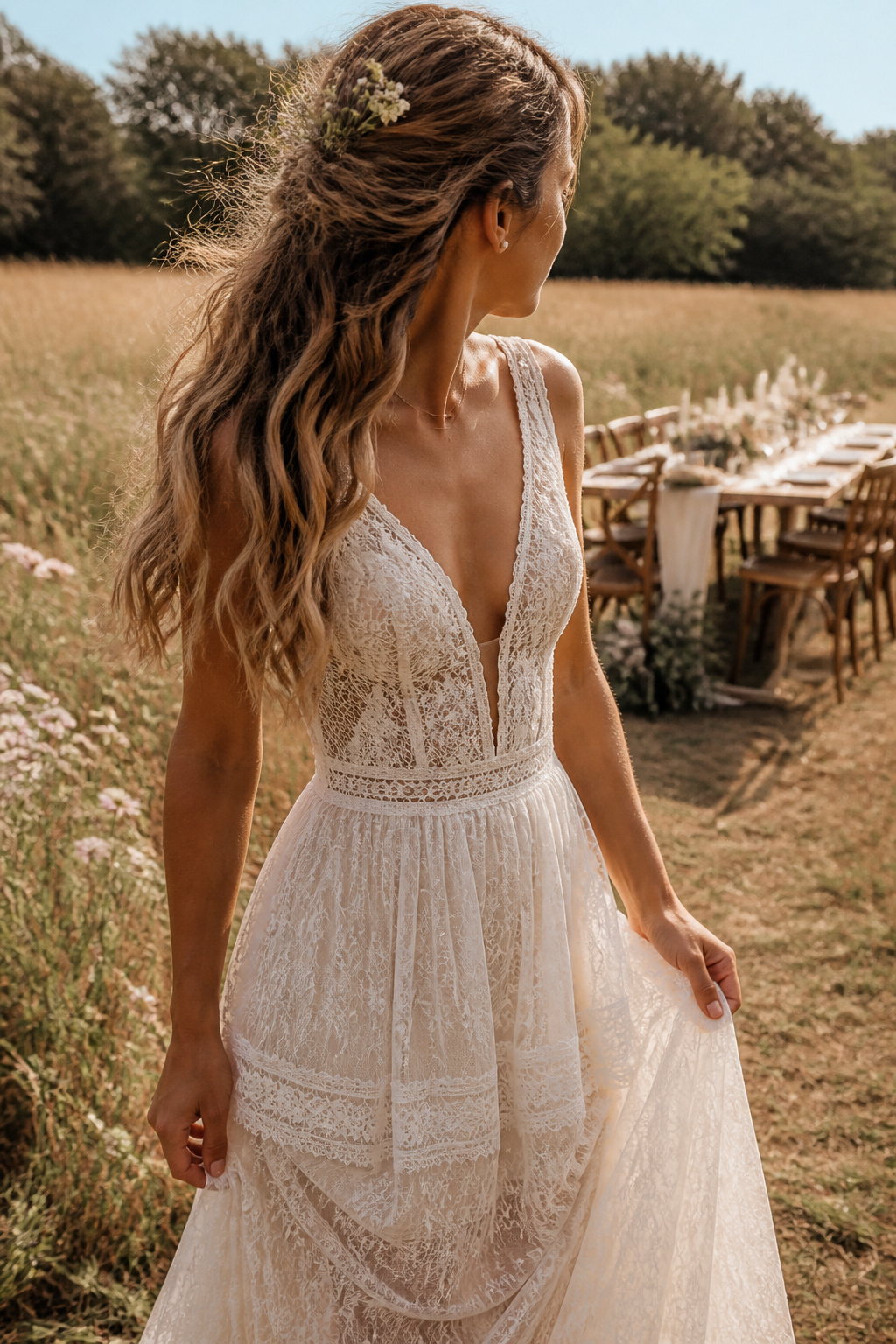
Loose, tousled waves or a relaxed braid set the right tone for a boho wedding dress, keeping the hair looking like you styled it yourself five minutes before walking out the door. Earthy makeup tones with a touch of highlighter give skin that sun-warmed glow without reading as overdone. The jewelry stays minimal, maybe a single delicate chain or small stud earrings, because the dress itself carries enough texture and detail. The whole aim is to look like you dressed yourself rather than were dressed, which means stopping one accessory short of where a traditional bridal look would pile on more. An outdoor location that celebrates nature completes the picture, letting the setting do some of the work so the styling does not have to shout.
Trying On at Home
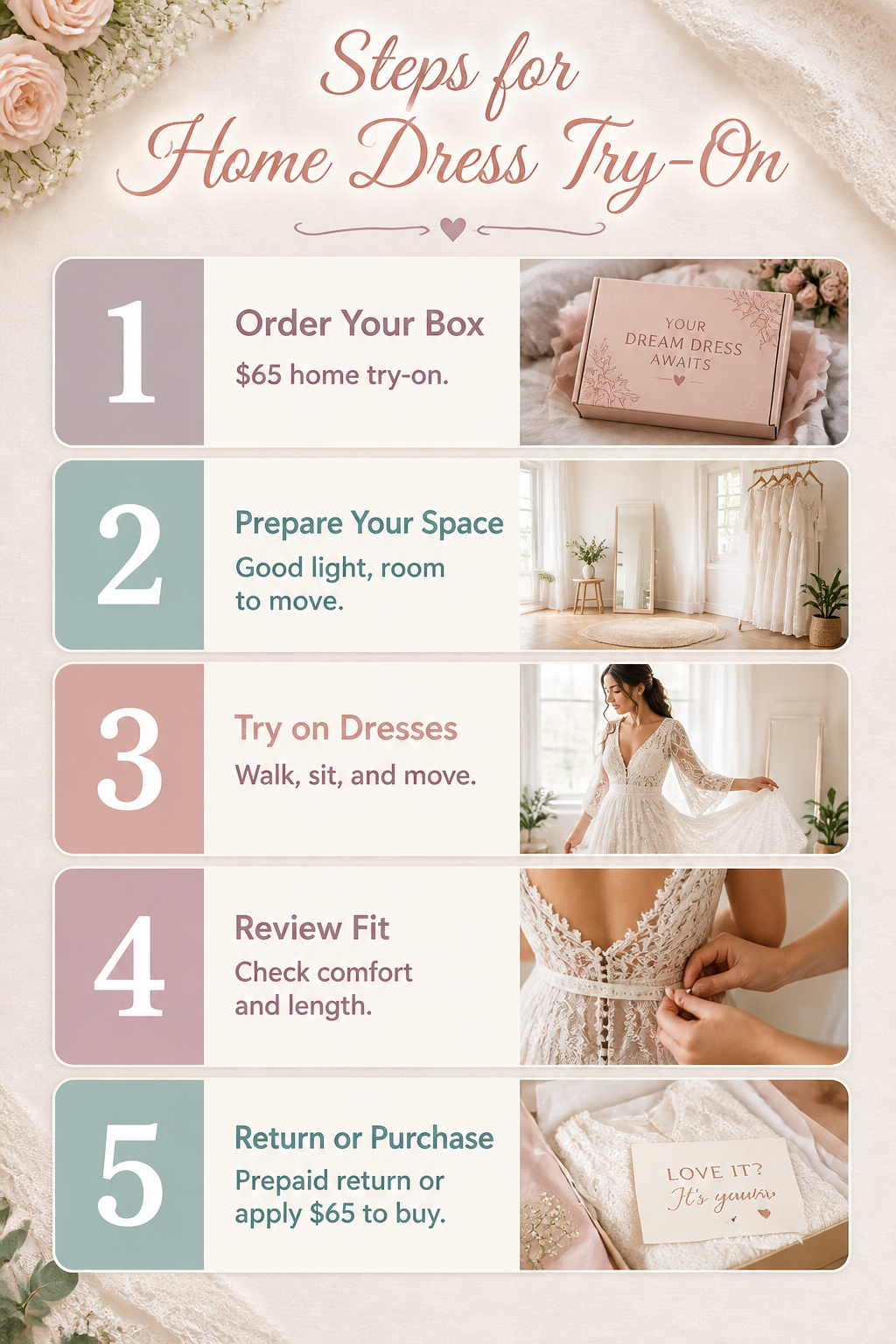
A $65 home try-on sends three boho wedding dress samples to your door with prepaid return shipping, and that fee applies to whatever you end up buying. You get the space to walk, sit, and move the way you actually will on the day, which a showroom under fluorescent lights rarely replicates. Over half of brides who try this route buy from it.
The catch is timing and fit. Hemming, taking in a bodice, or adjusting straps still happens at a local tailor, so budget for that separately and book early. A showroom wins when you need hands-on guidance from a stylist or want to compare ten silhouettes in an hour. The at-home box works better once you have narrowed the shape down to two or three contenders and need to see them in your own light, with your own shoes, without someone hovering.
Venue Versatility
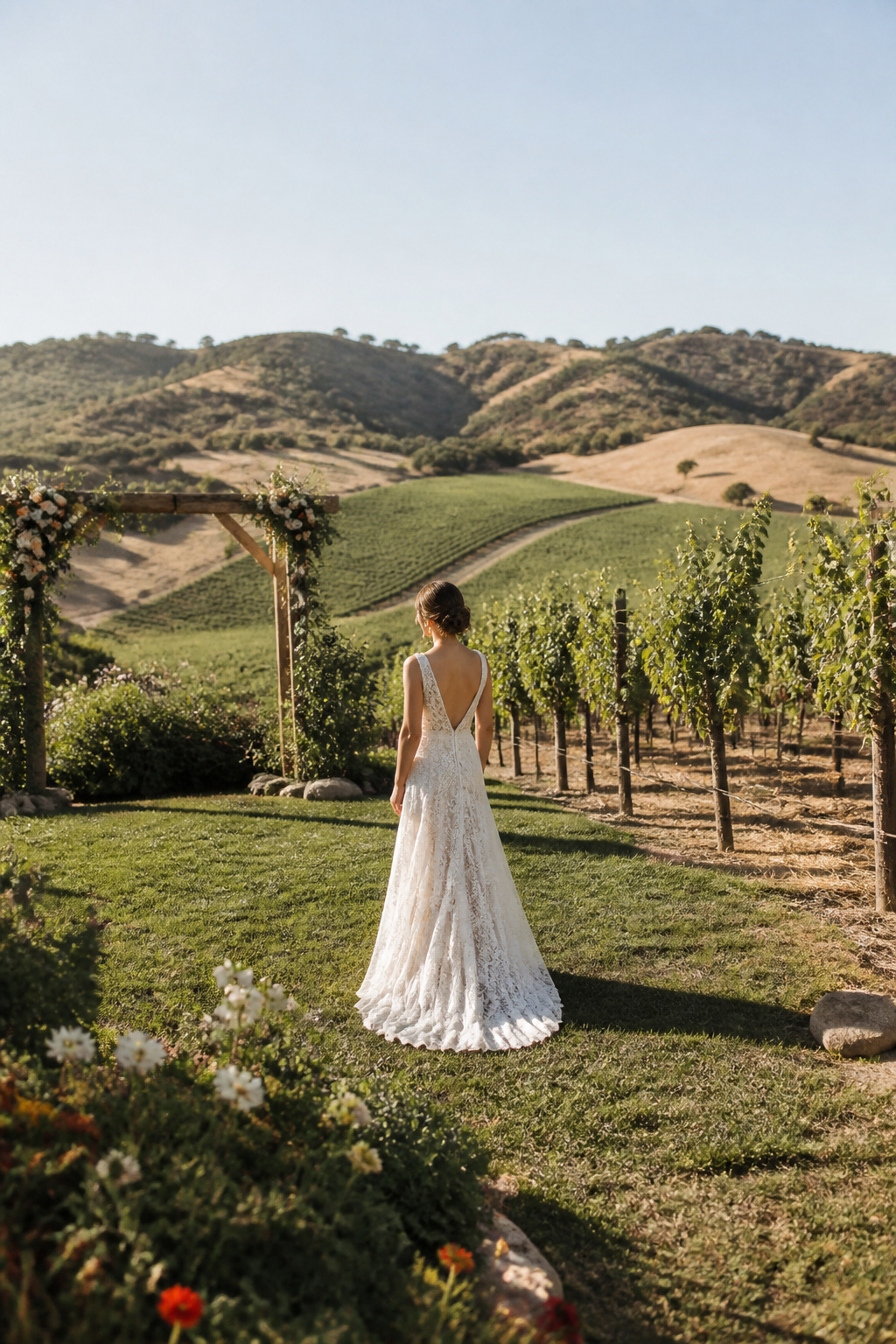
A cotton lace boho wedding dress breathes in warm weather and moves with a breeze, which is why the same gown can anchor a beach ceremony at noon, a garden wedding at four, and a vineyard dinner after sunset. What shifts is the support system underneath and around it. For sand, bare feet or flat leather sandals keep the hem from dragging; add a lightweight slip if the lace is sheer against strong sun. In a garden, block heels or wedges lift the skirt clear of grass and gravel, and a nude underlayer keeps floral motifs visible without going opaque. A vineyard calls for more structure: a slightly heavier shoe, maybe a bootie, and a long-sleeved lace topper or wrap when the temperature drops after dark.
The dress itself sometimes needs to change, not just the styling. A fit-and-flare or mermaid silhouette with less structure and more draped fabrication, like those Madi Lane favors, works beautifully on flat ground where movement matters. But a steep vineyard aisle or uneven stone steps can tangle a flowing train. In those cases, an A-line with a shorter hem or a detachable skirt solves the problem without abandoning the bohemian feel. The embroidery and botanical motifs stay; the practicality catches up.
Frequently Asked Questions
What makes a wedding dress boho?
Boho is short for "bohemian," a fashion style that is unconventional, artistic, and embraced by free-spirited, creative individuals. In wedding terms, it means a more relaxed, casual, and somewhat eclectic celebration, often connected to nature through beach or garden settings. The dresses themselves use flowing silhouettes, delicate lace, and botanical details rather than heavy structure or formal satin.
How should I style a boho wedding dress?
Wear loose, tousled waves or a relaxed braid, paired with soft makeup in earthy tones and a touch of highlighter. Keep jewelry minimal, maybe one delicate chain or small studs, since the dress already carries enough texture. The goal is to look like you dressed yourself, not like someone dressed you.
Can you wear a boho wedding dress for a beach or outdoor wedding?
Absolutely. Boho wedding dresses are one of the most versatile choices for outdoor ceremonies. Lightweight cotton lace breathes in warm weather and moves with a breeze, while shorter trains or no train at all keep you from dragging debris. Fit-and-flare and A-line shapes with less structure handle uneven ground better than stiff gowns.
What should I look for in a boho wedding dress?
Look for nature-inspired elements like floral lace, leaves, vines, beaded details, or 3D botanical motifs. Choose silhouettes with a little less structure and more draped, flowing fabric, such as A-line, fit-and-flare, or mermaid cuts in breathable cotton lace or soft chiffon. The fabric itself does much of the work in making a dress read as boho rather than formal.